

This presentation was presented at the Ecotourism and Sustainable Tourism Conference 2011 (ESTC 2011), held in Hilton Head Island, South Carolina, USA, from September 19th-21st. Organized by The International Ecotourism Society (TIES), the ESTC is a unique annual conference providing practical solutions to advance sustainability goals for the tourism industry.Learn more about the ESTC: http://www.ecotourismconference.orgESTC on Twitter: http://www.twitter.com/ESTC_TourismESTC on Facebook: http://www.facebook.com/ESTC.TourismThe International Ecotourism Society |  web www.ecotourism.orgemail info@ecotourism.org | tel +1 202 506 5033
BEACH RENOURISHMENT & MARINE ENVIRONMENTScott P. Liggett, P.E.ScottL@hiltonheadislandsc.govEcotourism and Sustainable Tourism ConferenceSeptember 19-21, 2011 – Hilton Head Island, SC
Presentation OverviewTown’s Beach Management Program
Overview
Project History
Funding
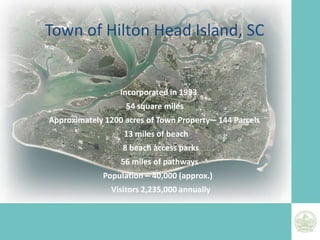
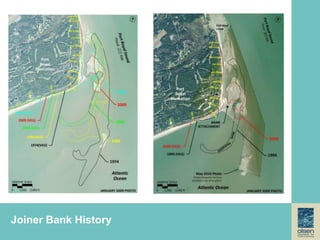
Port Royal Sound Shoreline Restoration and Stabilization ProjectTown of Hilton Head Island, SCIncorporated in 198354 square milesApproximately 1200 acres of Town Property – 144 Parcels13 miles of beach8 beach access parks56 miles of pathwaysPopulation – 40,000 (approx.) Visitors 2,235,000 annually
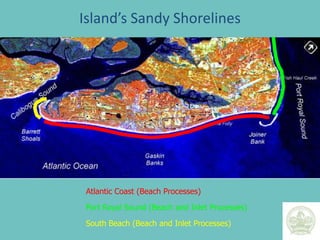
Atlantic Coast (Beach Processes)Port Royal Sound (Beach and Inlet Processes)South Beach (Beach and Inlet Processes)Island’s Sandy Shorelines
Early PlanningIncorporated Town immediately identified the need for a beach management strategy
1986 - Shore Protection Task Group was created
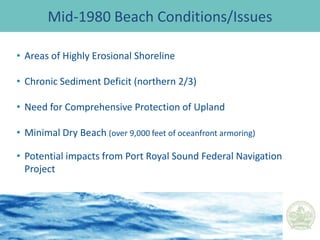
Semi-annual beach monitoring initiatedMid-1980 Beach Conditions/IssuesAreas of Highly Erosional Shoreline
Chronic Sediment Deficit (northern 2/3)
Need for Comprehensive Protection of Upland
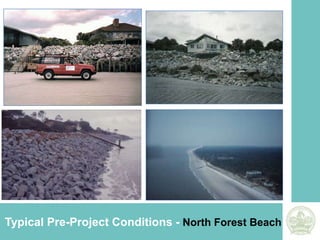
Minimal Dry Beach (over 9,000 feet of oceanfront armoring)
Potential impacts from Port Royal Sound Federal Navigation Project Typical Pre-Project Conditions - North Forest Beach
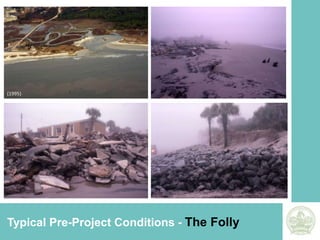
(1995)Typical Pre-Project Conditions - The Folly
1995Typical Pre-Project Conditions – Port Royal Sound
Alternatives for Long-Term Strategy (1986)(Initial Program Philosophy)No Action
Encourage Individuals to Protect Themselves (walls, limited                                                             sand placement, etc.)
Restore and Maintain Entire Beach System with    Comprehensive Approach
Program FoundationComprehensive Beach Restoration
Comprehensive Beach Monitoring
Strategic use of shore-stabilizing structures to improve performance/increase longevity of beach nourishment
Use of near-island sand sources, as available
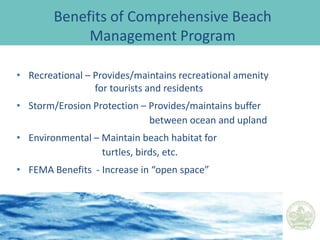
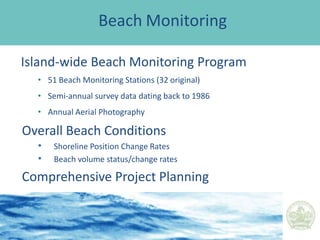
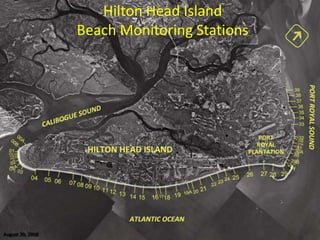
Attempt to control seaward advancement of development and protect beach/dune resourcesBenefits of Comprehensive Beach Management ProgramRecreational – Provides/maintains recreational amenity			      for tourists and residentsStorm/Erosion Protection – Provides/maintains bufferbetween ocean and uplandEnvironmental – Maintain beach habitat for			         turtles, birds, etc.FEMA Benefits  - Increase in “open space”BeachMonitoringIsland-wide Beach Monitoring Program51 Beach Monitoring Stations (32 original)
Semi-annual survey data dating back to 1986
Annual Aerial PhotographyOverall Beach ConditionsShoreline Position Change Rates
Beach volume status/change ratesComprehensive Project Planning
Hilton Head IslandBeach Monitoring StationsAugust 20, 2008
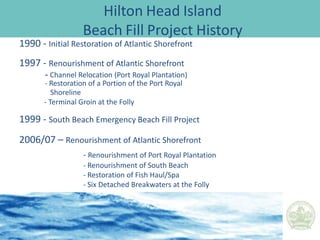
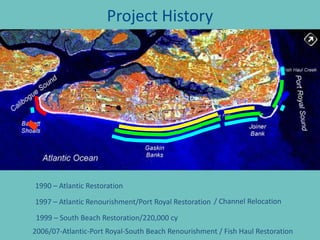
HiltonHeadIslandBeachFillProjectHistory1990 - Initial Restoration of Atlantic Shorefront1997 - Renourishment of Atlantic Shorefront             - Channel Relocation (Port Royal Plantation)              - Restoration of a Portion of the Port Royal                 Shoreline	  - Terminal Groin at the Folly1999 - South Beach Emergency Beach Fill Project2006/07 – Renourishment of Atlantic Shorefront- Renourishment of Port Royal Plantation			- Renourishment of South Beach			- Restoration of Fish Haul/Spa			- Six Detached Breakwaters at the Folly
1990 – Atlantic Restoration/ Channel Relocation1997 – Atlantic Renourishment/Port Royal Restoration1999 – South Beach Restoration/220,000 cy2006/07-Atlantic-Port Royal-South Beach Renourishment / Fish Haul RestorationProject History
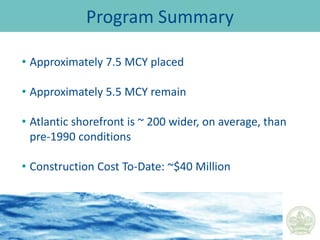
Program SummaryApproximately 7.5 MCY placed
Approximately 5.5 MCY remain
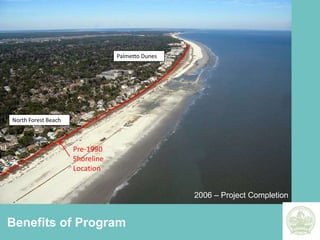
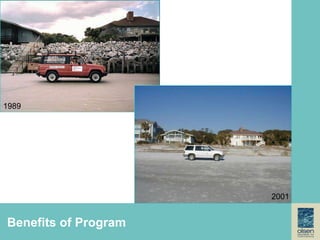
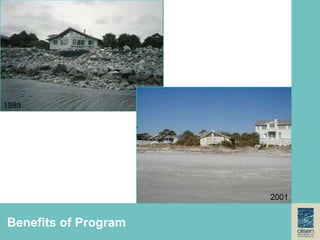
Atlantic shorefront is ~ 200 wider, on average, than pre-1990 conditions

ESTC 2011 Presentation by Scott Liggett, Beach Renourishment

  • 1.
    This presentation waspresented at the Ecotourism and Sustainable Tourism Conference 2011 (ESTC 2011), held in Hilton Head Island, South Carolina, USA, from September 19th-21st. Organized by The International Ecotourism Society (TIES), the ESTC is a unique annual conference providing practical solutions to advance sustainability goals for the tourism industry.Learn more about the ESTC: http://www.ecotourismconference.orgESTC on Twitter: http://www.twitter.com/ESTC_TourismESTC on Facebook: http://www.facebook.com/ESTC.TourismThe International Ecotourism Society | web www.ecotourism.orgemail info@ecotourism.org | tel +1 202 506 5033
  • 2.
    BEACH RENOURISHMENT &MARINE ENVIRONMENTScott P. Liggett, P.E.ScottL@hiltonheadislandsc.govEcotourism and Sustainable Tourism ConferenceSeptember 19-21, 2011 – Hilton Head Island, SC
  • 3.
  • 4.
  • 5.
  • 6.
  • 7.
    Port Royal SoundShoreline Restoration and Stabilization ProjectTown of Hilton Head Island, SCIncorporated in 198354 square milesApproximately 1200 acres of Town Property – 144 Parcels13 miles of beach8 beach access parks56 miles of pathwaysPopulation – 40,000 (approx.) Visitors 2,235,000 annually
  • 8.
    Atlantic Coast (BeachProcesses)Port Royal Sound (Beach and Inlet Processes)South Beach (Beach and Inlet Processes)Island’s Sandy Shorelines
  • 9.
    Early PlanningIncorporated Townimmediately identified the need for a beach management strategy
  • 10.
    1986 - ShoreProtection Task Group was created
  • 11.
    Semi-annual beach monitoringinitiatedMid-1980 Beach Conditions/IssuesAreas of Highly Erosional Shoreline
  • 12.
  • 13.
    Need for ComprehensiveProtection of Upland
  • 14.
    Minimal Dry Beach(over 9,000 feet of oceanfront armoring)
  • 15.
    Potential impacts fromPort Royal Sound Federal Navigation Project Typical Pre-Project Conditions - North Forest Beach
  • 16.
  • 17.
  • 18.
    Alternatives for Long-TermStrategy (1986)(Initial Program Philosophy)No Action
  • 19.
    Encourage Individuals toProtect Themselves (walls, limited sand placement, etc.)
  • 20.
    Restore and MaintainEntire Beach System with Comprehensive Approach
  • 21.
  • 22.
  • 23.
    Strategic use ofshore-stabilizing structures to improve performance/increase longevity of beach nourishment
  • 24.
    Use of near-islandsand sources, as available
  • 25.
    Attempt to controlseaward advancement of development and protect beach/dune resourcesBenefits of Comprehensive Beach Management ProgramRecreational – Provides/maintains recreational amenity for tourists and residentsStorm/Erosion Protection – Provides/maintains bufferbetween ocean and uplandEnvironmental – Maintain beach habitat for turtles, birds, etc.FEMA Benefits - Increase in “open space”BeachMonitoringIsland-wide Beach Monitoring Program51 Beach Monitoring Stations (32 original)
  • 26.
    Semi-annual survey datadating back to 1986
  • 27.
    Annual Aerial PhotographyOverallBeach ConditionsShoreline Position Change Rates
  • 28.
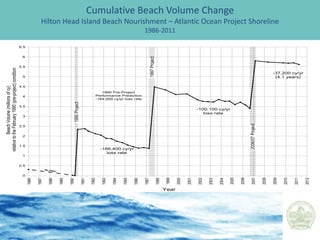
    Beach volume status/changeratesComprehensive Project Planning
  • 29.
    Hilton Head IslandBeachMonitoring StationsAugust 20, 2008
  • 30.
    HiltonHeadIslandBeachFillProjectHistory1990 - InitialRestoration of Atlantic Shorefront1997 - Renourishment of Atlantic Shorefront - Channel Relocation (Port Royal Plantation) - Restoration of a Portion of the Port Royal Shoreline - Terminal Groin at the Folly1999 - South Beach Emergency Beach Fill Project2006/07 – Renourishment of Atlantic Shorefront- Renourishment of Port Royal Plantation - Renourishment of South Beach - Restoration of Fish Haul/Spa - Six Detached Breakwaters at the Folly
  • 31.
    1990 – AtlanticRestoration/ Channel Relocation1997 – Atlantic Renourishment/Port Royal Restoration1999 – South Beach Restoration/220,000 cy2006/07-Atlantic-Port Royal-South Beach Renourishment / Fish Haul RestorationProject History
  • 32.
  • 33.
  • 34.
    Atlantic shorefront is~ 200 wider, on average, than pre-1990 conditions