Martin County Artificial Reef Program	Kathy FitzPatrick, P.E., Coastal Engineer
A unique location…Florida and Subtropical Counter CurrentsTropical and temperate faunaPelagic speciesLarval transport
Estuary - Lagoon SystemImportant nursery habitatsSystem results in highest number of marine and estuarine fish in North America
The St. Lucie Inlet	The vital link between systemsAdults come in to spawnJuveniles transition to offshoreFlushing action keeps estuary healthy
OffshoreReef linesComposed of rock outcropSupport growth of attaching organismsAlgae, Soft corals, Sponges, Hard corals, Hydroids, Polychaete worms and moreHard substrate provides shelter and food for reef fishes
Offshore	Sand and shell hashComprises up to 95% of bottom surface inside 150 ft.Home to 3 commercially important invertebrates Rock shrimp, pink shrimp and golden crabsImportant food source  to many reef fish “halo effect”Perfect substrate for artificial reef deploymentCurrently permitted sites  comprise less that 0.1% of soft bottom
Estuaries	St. Lucie River historically productive oyster habitatLost 95% of oyster population in last 40 yearsIndian River Lagoon transformedSeawalls and hardened shorelinesImpoundment of mangroves for mosquito controlImportant juvenile habitat lostMajor impact on bird population – nothing to eat!
Socioeconomic Value of ReefsIn Martin CountyAnnual  public expenditure $7.2 millionSupports over 100 jobsResults in approximately $3.2  million in income
What is an Artificial Reef?
It is……… one or more objects of natural or human origin deployed purposefully on the sea floor to influence physical, biological or socioeconomic processes related to living marine resources.   (Seaman, 2000)
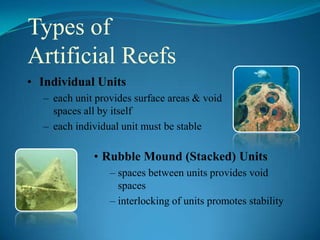
Typesof Artificial ReefsIndividual Units
each unit provides surface areas & void spaces all by itself
each individual unit must be stable
Rubble Mound (Stacked) Units
spaces between units provides void spaces
interlocking of units promotes stabilityEngineeringDesign Factorswater depth - structure purposeunit size - weight, stability, anchoringvertical & horizontal reliefsurface area & void spacesdurability & longevitywaves , currents, and tidesscour, deposition, settlement
Acceptable MaterialsNatural Florida RockCustom Fabricated UnitsConcrete - new or waste, w/wo additivesWaste Disposal (material of opportunity)Metals - ships, planes, etc.Concrete structures –bridge material, culverts, construction debris, etc. Hybridsmaterials of opportunity combined into reef units
Custom Artificial Reef Units
Recycled Materials
Composite Units
Florida Artificial Reef Development Plan, 1992Acknowledged the:  “Growing recognition of the potential of artificial reef as management tools for yielding long-term benefits to both the resource and the resource user.”
Martin CountyArtificial Reef ProgramGoal:  Help a struggling environmentRestore lost resourcesCreate additional fishery habitatReduce pressure on existing natural reefs by providing alternative recreational destinationsFuel a “green” economic engineProtect the Martin County  way of life
Martin County’s Reef Sites
Program  ElementsConstruction of artificial reefsMonitoringMappingFish countBenthic identificationProject assessmentPublic EducationGrant acquisition
Donaldson ReefSite
Mapping
Donaldson Reef Site
ErnstReef Site
ErnstReef Site
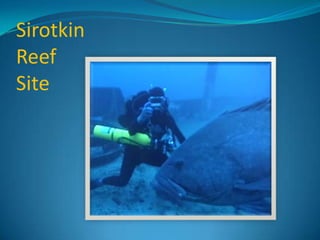
Sirotkin Reef Site
SirotkinReef Site
South County Reef SiteNewest Reef SiteFFWCC  Construction Grant$60,000 in grant fundsRecycled material6-8 low relief sitesComingSoon
Nearshore ReefsMi
Estuary RestorationThe loss of hard substrates has impacted the population of … benthic species…As living reefs grow, They attract other fish and shellfish by providing food and shelter.Indian River Lagoon – South Feasibility Study
Oyster Restoration
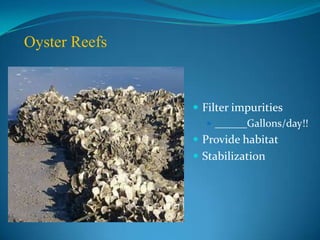
Oyster ReefsFilter impurities______Gallons/day!!Provide habitatStabilization
Reef Ball Construction
Reef Ball Deployment
One year later……sponges, algaeand tunicates . . .. . . and a shrimpbut not big enough for dinnerPhotos 2006 by Kerry Dillon, Marine Consultant
Camp W.E.T.  Is:A hands-on learning experience in which students explore and investigate ecosystems of south Florida, focusing on the Indian River Lagoon  and Martin County.
Community InvolvementMartin County  Anglers ClubArtificial Reef fund501.c.3 non-profitMartin County  Anglers Club
Stuart Sailfish Club
Safari 1 Deep Sea Fishing
Marine Industries
Marine Industries of the Treasure CoastEducation
Other Projects	Bathtub Beach
October5th, 2007August17th, 2006September 29th, 2007November 12th
Other Projects	Bathtub BeachSt. Lucie InletManatee PocketHutchinson Island Beach Project
Nearshore Reefs	Nearshore reefs 	are constructed 	with pilings from 	the 	Evans Crary 	Bridge•	… at NO COST to 	Martin  County
May 5th 2007	September  30th 2007October 1st 2007
May9th2007September 1st, 2007October 1st, 2007 September  30th, 2007
Evans Crary BridgeArtificial ReefsMartin CountyNearshore - Site 1Nearshore - Site 2Nearshore - Site 3Sirotkin ReefDonaldson ReefErnst Reef
ernst
Martin County’s “Plan”
                                                                                                        "Who let the Reef Balls Out?"Bridget ConnerThe Walker School
                                                                                                      "I felt like I was making a difference when I helped constrct a Reef Ball."Katey Ceccarelli
The River Reefs Project is just one aspect of the Martin County Artificial Reef Plan (MCARP).The MCARP is part of the State of Florida’s initiatives to restore and enhance our marine resources.  These initiatives are a part of the great world-wide movement to sustain and maintain the oceans of our earth and all the vital resources connected to it.  By becoming a participant of our River Reefs Project, you will be doing your part in aiding the preservation   of our oceans, which contribute much of the living forces for sustaining our world.
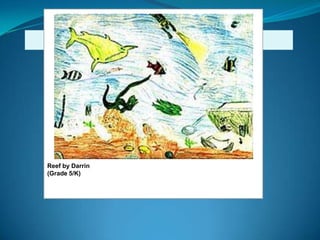
                                                                                                 Reef by Darrin(Grade 5/K)
Thank YouMartin County Coastal Engineering Divisionwww.martin.fl.us/GOVT/
Types of Artificial ReefsIndividual Unitseach unit provides surface areas & void spaces all by itselfeach individual unit must be stableRubble Mound (Stacked) Unitsspaces between units provides void spacesinterlocking of units promotes stability
Ship Disposal for Artificial Reefs
Deployment of Concrete Tetrahedrons
Colonization of Tetrahedron Reefs
Inlet Rock SiteDonaldson Reef
Evans Crary BridgeErnst Reef
Tetrahedron SiteSirotkin Reef
Reef Balls
Stresses to the LagoonPopulation increase“Improvements”Freshwater discharges and runoffExotic invasive species
Pressures on Natural ReefsOverfishingBoatsDivingAlgal bloomsSedimentation
Reef Balls are concrete bee-hive type structures
The MCARP Mobile Reef Building Unit aka "The Trailer"
mixing the ingredients

Martin County Florida, Artificial Reef Program

Editor's Notes

  • #3 Setting the stage Atlantic Ocean with the gulf Stream and Florida currents moderate temperatures allowing both tropical fauna found to our south and temperate fauna found to our north to survive SLR and IRL provide important nursery habitats for fish from both of these climates – most of which spend their adult lives on the offshore reefs, and the St. Lucie inlet provides the portal The presence of the 2 currents also brings the pelagic species to the area as well as transporting larvae from the Bahamas chain. In the end the IRL and coastal waters around Martin County support the settlement and survival of the hightes number of marine/estuarine fish in North America.
  • #4 Setting the stage Atlantic Ocean with the gulf Stream and Florida currents moderate temperatures allowing both tropical fauna found to our south and temperate fauna found to our north to survive SLR and IRL provide important nursery habitats for fish from both of these climates – most of which spend their adult lives on the offshore reefs, and the St. Lucie inlet provides the portal The presence of the 2 currents also brings the pelagic species to the area as well as transporting larvae from the Bahamas chain. In the end the IRL and coastal waters around Martin County support the settlement and survival of the hightes number of marine/estuarine fish in North America.
  • #5 The inlet allows adult reef fish access to protected waters for spawning allows juvenile fish to transition to the offshore reefs at the proper point in their lifecycle provides the flushing action to keep the estuaries healthy and able to support their very valuable residents.
  • #7 This is where the 3 main reeflines begin to disappear – from the southMC is transition area.
  • #9 Between 1994 and 2006, decrease of 9% in finfish landing
  • #50 Insert cover of new plan