Dr. Than Win
Deputy Director
Environmental Sanitation Division
Department of Health
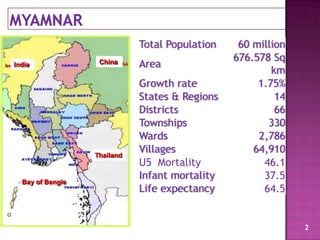
Total Population
India

China

Thailand

Bay of Bengle

Area
Growth rate
States & Regions
Districts
Townships
Wards
Villages
U5 Mortality
Infant mortality
Life expectancy

60 million
676.578 Sq
km
1.75%
14
66
330
2,786
64,910
46.1
37.5
64.5

2
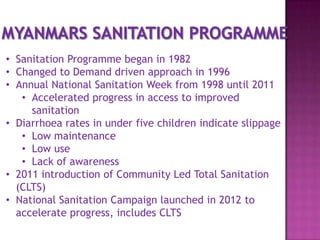
• Sanitation Programme began in 1982
• Changed to Demand driven approach in 1996
• Annual National Sanitation Week from 1998 until 2011
• Accelerated progress in access to improved
sanitation
• Diarrhoea rates in under five children indicate slippage
• Low maintenance
• Low use
• Lack of awareness
• 2011 introduction of Community Led Total Sanitation
(CLTS)
• National Sanitation Campaign launched in 2012 to
accelerate progress, includes CLTS
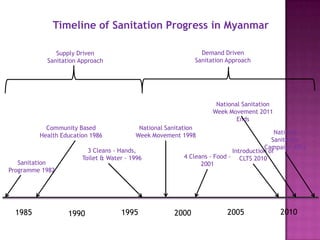
Timeline of Sanitation Progress in Myanmar
Demand Driven
Sanitation Approach

Supply Driven
Sanitation Approach

National Sanitation
Week Movement 2011
Ends

Community Based
Health Education 1986

Sanitation
Programme 1982

1985

National Sanitation
Week Movement 1998

3 Cleans - Hands,
Toilet & Water - 1996

1990

1995

National
Sanitation
Campaign 2012
Introduction of
4 Cleans - Food - CLTS 2010
2001

2000

2005

2010
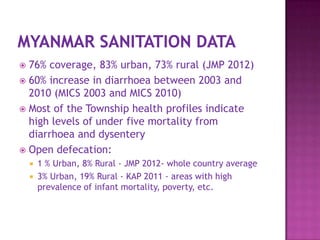
76% coverage, 83% urban, 73% rural (JMP 2012)
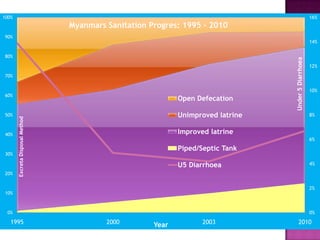
 60% increase in diarrhoea between 2003 and
2010 (MICS 2003 and MICS 2010)
 Most of the Township health profiles indicate
high levels of under five mortality from
diarrhoea and dysentery
 Open defecation:





1 % Urban, 8% Rural - JMP 2012- whole country average
3% Urban, 19% Rural - KAP 2011 - areas with high
prevalence of infant mortality, poverty, etc.
16%

100%

Myanmars Sanitation Progres: 1995 - 2010
90%

80%

70%

Open Defecation

50%

Unimproved latrine

40%

30%

20%

Excreta Disposal Method

60%

12%

10%

8%

Improved latrine
6%

Piped/Septic Tank
U5 Diarrhoea

4%

2%

10%

0%

0%

1995

Under 5 Diarrhoea

14%

2000

Year

2003

2010
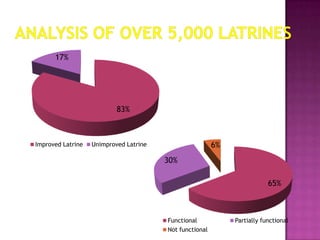
17%

83%

Improved Latrine

6%

Unimproved Latrine

30%
65%

Functional
Not functional

Partially functional


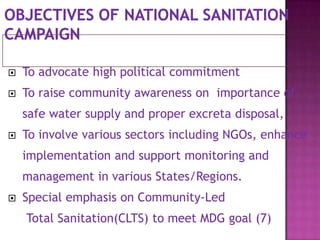
To advocate high political commitment



To raise community awareness on importance of
safe water supply and proper excreta disposal,



To involve various sectors including NGOs, enhance
implementation and support monitoring and
management in various States/Regions.



Special emphasis on Community-Led
Total Sanitation(CLTS) to meet MDG goal (7)
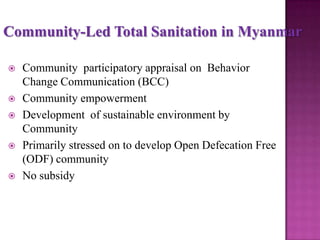
Community-Led Total Sanitation in Myanmar









Community participatory appraisal on Behavior
Change Communication (BCC)
Community empowerment
Development of sustainable environment by
Community
Primarily stressed on to develop Open Defecation Free
(ODF) community
No subsidy
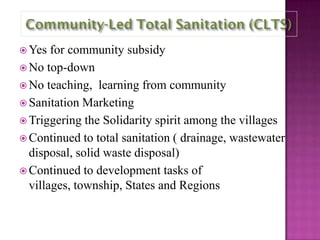
 Yes

for community subsidy
 No top-down
 No teaching, learning from community
 Sanitation Marketing
 Triggering the Solidarity spirit among the villages
 Continued to total sanitation ( drainage, wastewater
disposal, solid waste disposal)
 Continued to development tasks of
villages, township, States and Regions
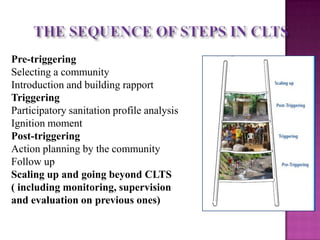
Pre-triggering
Selecting a community
Introduction and building rapport
Triggering
Participatory sanitation profile analysis
Ignition moment
Post-triggering
Action planning by the community
Follow up
Scaling up and going beyond CLTS
( including monitoring, supervision
and evaluation on previous ones)











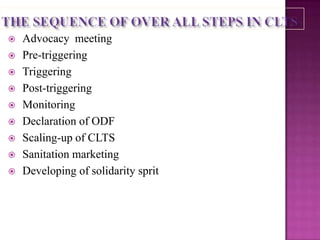
Advocacy meeting
Pre-triggering
Triggering
Post-triggering
Monitoring
Declaration of ODF
Scaling-up of CLTS
Sanitation marketing
Developing of solidarity sprit
 Capacity

improvement and empowerment of
community
 Developing of solidarity sprit
 Leading role carrying-out for all sanitation
activities
 Leadership of development tasks for village and
township
 Scaling-up from villages to Townships, States and
Regions
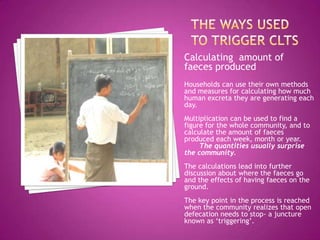
Calculating amount of
faeces produced
Households can use their own methods
and measures for calculating how much
human excreta they are generating each
day.
Multiplication can be used to find a
figure for the whole community, and to
calculate the amount of faeces
produced each week, month or year.
The quantities usually surprise
the community.
The calculations lead into further
discussion about where the faeces go
and the effects of having faeces on the
ground.
The key point in the process is reached
when the community realizes that open
defecation needs to stop- a juncture
known as ‘triggering’.
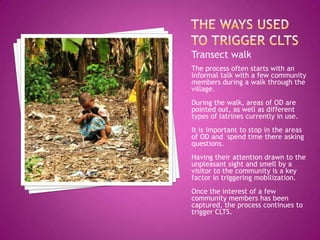
Transect walk
The process often starts with an
informal talk with a few community
members during a walk through the
village.
During the walk, areas of OD are
pointed out, as well as different
types of latrines currently in use.
It is important to stop in the areas
of OD and spend time there asking
questions.
Having their attention drawn to the
unpleasant sight and smell by a
visitor to the community is a key
factor in triggering mobilization.

Once the interest of a few
community members has been
captured, the process continues to
trigger CLTS.
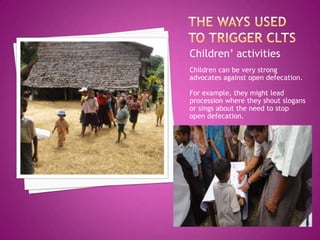
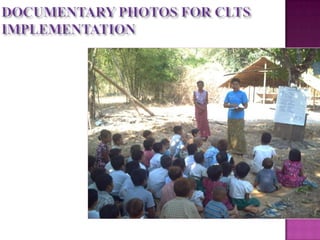
Children’ activities
Children can be very strong
advocates against open defecation.
For example, they might lead
procession where they shout slogans
or sings about the need to stop
open defecation.
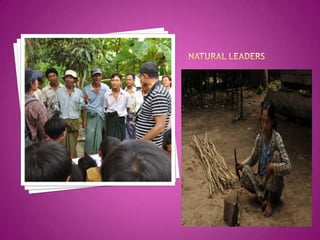
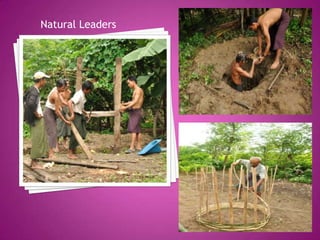
Natural Leaders
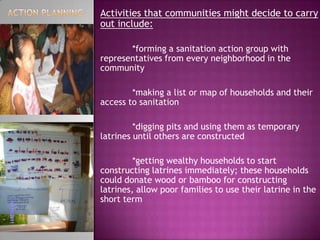
Activities that communities might decide to carry
out include:
*forming a sanitation action group with
representatives from every neighborhood in the
community
*making a list or map of households and their
access to sanitation
*digging pits and using them as temporary
latrines until others are constructed
*getting wealthy households to start
constructing latrines immediately; these households
could donate wood or bamboo for constructing
latrines, allow poor families to use their latrine in the
short term
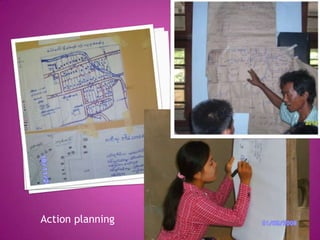
Action planning








CLTS TOT training course was conducted at (2) times
in Myanmar during 2011 and trained by
with sponsorship of UNICEF
Government staffs from Department of
Health, Department of Development
Affairs, Department of Education and personnel from
NGOs, INGOs
Field implementation at Two Townships
Achieved the active participation in both trainings
New approach was very interesting for all participants









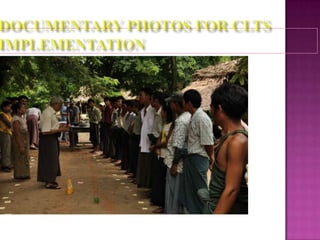
Pilot CLTS IN Tatkon Township nearer to Nay Pyi
Taw, new capital of Myanmar
Implemented by means of no subsidy and no topdown
Active participation of Tatkon community
Able to trigger to community and BHS staff
Five villages became CLTS village
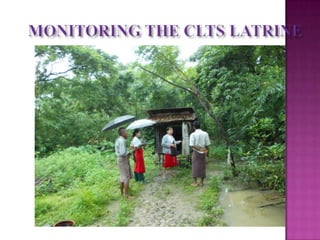
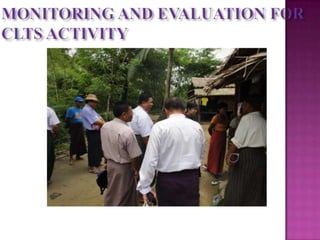
Monitoring, supervision and evaluation
Superior Requirement in CLTS approach










1 % Urban, 8% Rural (JMP 2012)
3% Urban, 19% Rural (KAP 2011)
MICS is whole country average
KAP study looks a areas with high prevalence of infant
mortality, poverty, etc.
62% of households had family members working in the
field and 69% defecate openly while working in the field
(KAP 2011)
Extent of practice of open defecation is a threat to health









CLTS Pilot project implementation in Tatkone township in
Nay Pyi Taw
CLTS implementation in (10) townships
Kawa , Tanutbin, Waw and Paungde townships in Bago
Region
Nyaungdon, Kyaunggon , Hintada, Kyaiklat, Bogalay and
Ngaputaw townships in Ayeyawady Region
Successful implementation in above (11) townships
including pilot township Tatkone
 Through

the developing of many OD Free villages
 Scaling-up is under piping
 Monitoring, supervision and evaluation
Superior Requirement in on-going
Sustainability is Still problematic in some flooded
villages due very recent flood of heavy rain
4

5
 Convert

knowledge of good hygiene into practice
 Concerted
and coordinated efforts of the
Government, Local NGOs , INGOs and People
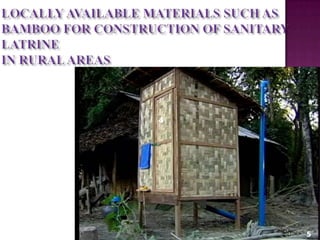
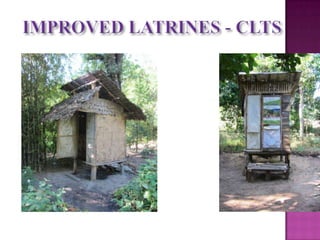
 Acceptable and functioning community latrine
designs.
 CLTS results in maintainable latrines, within
community's budget
 Donors and other stakeholders desire to subsidize
latrine construction
 Get accurate sanitation indicators in 2014 census
 Dramatically

increased the Sanitation Coverage from 45% in

1995 to 84.6% in 2010
 Successful 4 Cleans Campaign since 1996 has improved
peoples knowledge of hygiene and sanitation
 "Sanitation

for all by year 2015" Guideline based on

National Health Policy - High level political commitment
down to grass-root level - National Sanitation Campaign
(NSC) through CLTS
Act now!
CLTS, to achieving

Millennium Development Goal.

Thank you

Es 8 2-2013

  • 1.
    Dr. Than Win DeputyDirector Environmental Sanitation Division Department of Health
  • 2.
    Total Population India China Thailand Bay ofBengle Area Growth rate States & Regions Districts Townships Wards Villages U5 Mortality Infant mortality Life expectancy 60 million 676.578 Sq km 1.75% 14 66 330 2,786 64,910 46.1 37.5 64.5 2
  • 3.
    • Sanitation Programmebegan in 1982 • Changed to Demand driven approach in 1996 • Annual National Sanitation Week from 1998 until 2011 • Accelerated progress in access to improved sanitation • Diarrhoea rates in under five children indicate slippage • Low maintenance • Low use • Lack of awareness • 2011 introduction of Community Led Total Sanitation (CLTS) • National Sanitation Campaign launched in 2012 to accelerate progress, includes CLTS
  • 4.
    Timeline of SanitationProgress in Myanmar Demand Driven Sanitation Approach Supply Driven Sanitation Approach National Sanitation Week Movement 2011 Ends Community Based Health Education 1986 Sanitation Programme 1982 1985 National Sanitation Week Movement 1998 3 Cleans - Hands, Toilet & Water - 1996 1990 1995 National Sanitation Campaign 2012 Introduction of 4 Cleans - Food - CLTS 2010 2001 2000 2005 2010
  • 5.
    76% coverage, 83%urban, 73% rural (JMP 2012)  60% increase in diarrhoea between 2003 and 2010 (MICS 2003 and MICS 2010)  Most of the Township health profiles indicate high levels of under five mortality from diarrhoea and dysentery  Open defecation:    1 % Urban, 8% Rural - JMP 2012- whole country average 3% Urban, 19% Rural - KAP 2011 - areas with high prevalence of infant mortality, poverty, etc.
  • 6.
    16% 100% Myanmars Sanitation Progres:1995 - 2010 90% 80% 70% Open Defecation 50% Unimproved latrine 40% 30% 20% Excreta Disposal Method 60% 12% 10% 8% Improved latrine 6% Piped/Septic Tank U5 Diarrhoea 4% 2% 10% 0% 0% 1995 Under 5 Diarrhoea 14% 2000 Year 2003 2010
  • 7.
  • 8.
     To advocate highpolitical commitment  To raise community awareness on importance of safe water supply and proper excreta disposal,  To involve various sectors including NGOs, enhance implementation and support monitoring and management in various States/Regions.  Special emphasis on Community-Led Total Sanitation(CLTS) to meet MDG goal (7)
  • 9.
    Community-Led Total Sanitationin Myanmar      Community participatory appraisal on Behavior Change Communication (BCC) Community empowerment Development of sustainable environment by Community Primarily stressed on to develop Open Defecation Free (ODF) community No subsidy
  • 10.
     Yes for communitysubsidy  No top-down  No teaching, learning from community  Sanitation Marketing  Triggering the Solidarity spirit among the villages  Continued to total sanitation ( drainage, wastewater disposal, solid waste disposal)  Continued to development tasks of villages, township, States and Regions
  • 11.
    Pre-triggering Selecting a community Introductionand building rapport Triggering Participatory sanitation profile analysis Ignition moment Post-triggering Action planning by the community Follow up Scaling up and going beyond CLTS ( including monitoring, supervision and evaluation on previous ones)
  • 12.
  • 13.
     Capacity improvement andempowerment of community  Developing of solidarity sprit  Leading role carrying-out for all sanitation activities  Leadership of development tasks for village and township  Scaling-up from villages to Townships, States and Regions
  • 14.
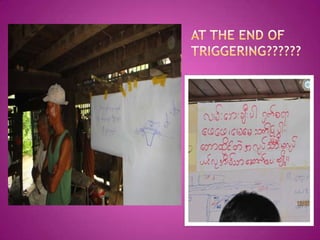
    Calculating amount of faecesproduced Households can use their own methods and measures for calculating how much human excreta they are generating each day. Multiplication can be used to find a figure for the whole community, and to calculate the amount of faeces produced each week, month or year. The quantities usually surprise the community. The calculations lead into further discussion about where the faeces go and the effects of having faeces on the ground. The key point in the process is reached when the community realizes that open defecation needs to stop- a juncture known as ‘triggering’.
  • 15.
    Transect walk The processoften starts with an informal talk with a few community members during a walk through the village. During the walk, areas of OD are pointed out, as well as different types of latrines currently in use. It is important to stop in the areas of OD and spend time there asking questions. Having their attention drawn to the unpleasant sight and smell by a visitor to the community is a key factor in triggering mobilization. Once the interest of a few community members has been captured, the process continues to trigger CLTS.
  • 16.
    Children’ activities Children canbe very strong advocates against open defecation. For example, they might lead procession where they shout slogans or sings about the need to stop open defecation.
  • 18.
  • 19.
    Activities that communitiesmight decide to carry out include: *forming a sanitation action group with representatives from every neighborhood in the community *making a list or map of households and their access to sanitation *digging pits and using them as temporary latrines until others are constructed *getting wealthy households to start constructing latrines immediately; these households could donate wood or bamboo for constructing latrines, allow poor families to use their latrine in the short term
  • 20.
  • 22.
         CLTS TOT trainingcourse was conducted at (2) times in Myanmar during 2011 and trained by with sponsorship of UNICEF Government staffs from Department of Health, Department of Development Affairs, Department of Education and personnel from NGOs, INGOs Field implementation at Two Townships Achieved the active participation in both trainings New approach was very interesting for all participants
  • 23.
          Pilot CLTS INTatkon Township nearer to Nay Pyi Taw, new capital of Myanmar Implemented by means of no subsidy and no topdown Active participation of Tatkon community Able to trigger to community and BHS staff Five villages became CLTS village Monitoring, supervision and evaluation Superior Requirement in CLTS approach
  • 24.
          1 % Urban,8% Rural (JMP 2012) 3% Urban, 19% Rural (KAP 2011) MICS is whole country average KAP study looks a areas with high prevalence of infant mortality, poverty, etc. 62% of households had family members working in the field and 69% defecate openly while working in the field (KAP 2011) Extent of practice of open defecation is a threat to health
  • 25.
         CLTS Pilot projectimplementation in Tatkone township in Nay Pyi Taw CLTS implementation in (10) townships Kawa , Tanutbin, Waw and Paungde townships in Bago Region Nyaungdon, Kyaunggon , Hintada, Kyaiklat, Bogalay and Ngaputaw townships in Ayeyawady Region Successful implementation in above (11) townships including pilot township Tatkone
  • 26.
     Through the developingof many OD Free villages  Scaling-up is under piping  Monitoring, supervision and evaluation Superior Requirement in on-going Sustainability is Still problematic in some flooded villages due very recent flood of heavy rain
  • 29.
  • 33.
     Convert knowledge ofgood hygiene into practice  Concerted and coordinated efforts of the Government, Local NGOs , INGOs and People  Acceptable and functioning community latrine designs.  CLTS results in maintainable latrines, within community's budget  Donors and other stakeholders desire to subsidize latrine construction  Get accurate sanitation indicators in 2014 census
  • 34.
     Dramatically increased theSanitation Coverage from 45% in 1995 to 84.6% in 2010  Successful 4 Cleans Campaign since 1996 has improved peoples knowledge of hygiene and sanitation  "Sanitation for all by year 2015" Guideline based on National Health Policy - High level political commitment down to grass-root level - National Sanitation Campaign (NSC) through CLTS
  • 35.
    Act now! CLTS, toachieving Millennium Development Goal. Thank you