GROUP 2
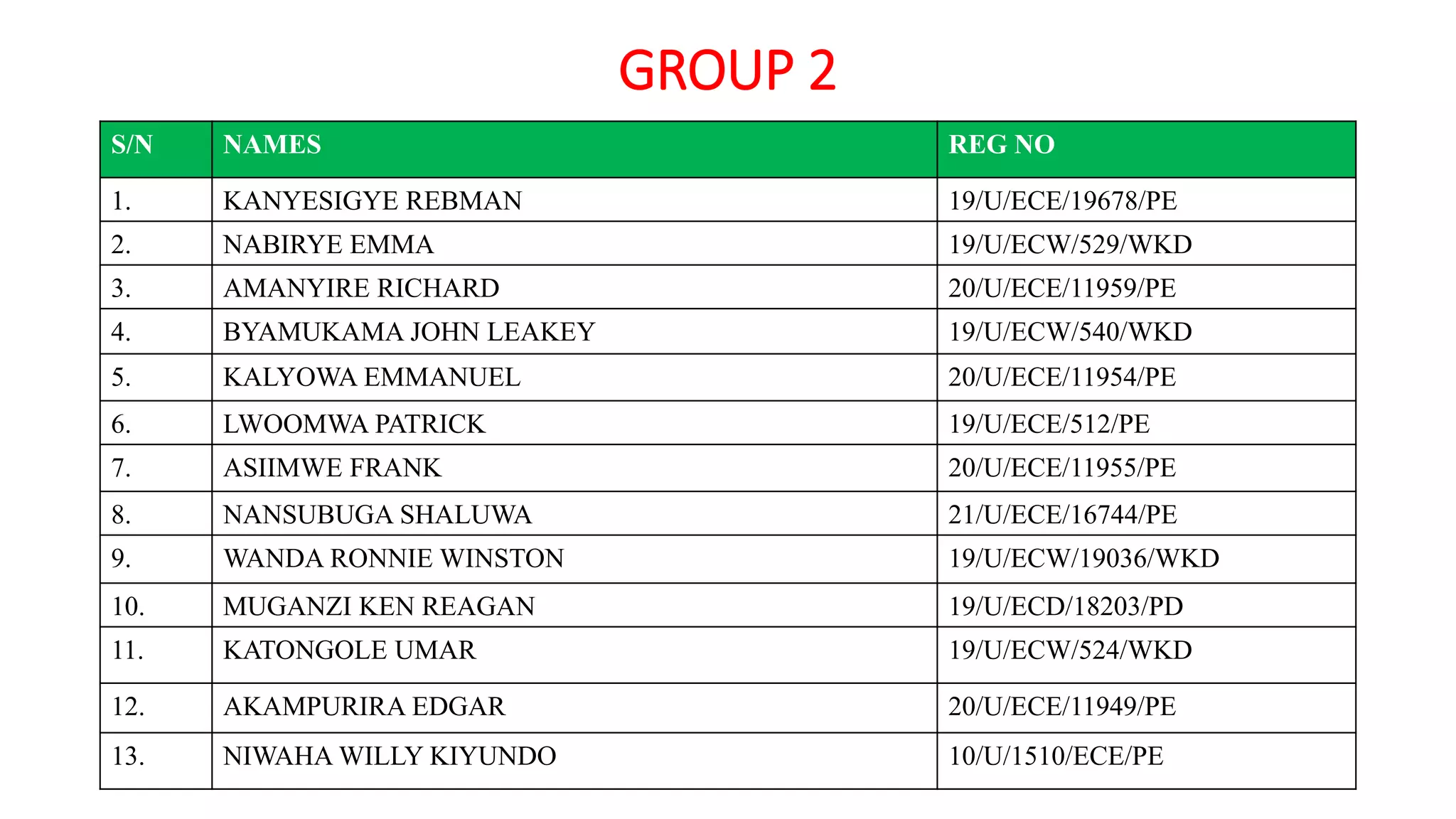
S/N NAMES REG NO
1. KANYESIGYE REBMAN 19/U/ECE/19678/PE
2. NABIRYE EMMA 19/U/ECW/529/WKD
3. AMANYIRE RICHARD 20/U/ECE/11959/PE
4. BYAMUKAMA JOHN LEAKEY 19/U/ECW/540/WKD
5. KALYOWA EMMANUEL 20/U/ECE/11954/PE
6. LWOOMWA PATRICK 19/U/ECE/512/PE
7. ASIIMWE FRANK 20/U/ECE/11955/PE
8. NANSUBUGA SHALUWA 21/U/ECE/16744/PE
9. WANDA RONNIE WINSTON 19/U/ECW/19036/WKD
10. MUGANZI KEN REAGAN 19/U/ECD/18203/PD
11. KATONGOLE UMAR 19/U/ECW/524/WKD
12. AKAMPURIRA EDGAR 20/U/ECE/11949/PE
13. NIWAHA WILLY KIYUNDO 10/U/1510/ECE/PE
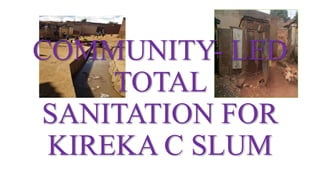
COMMUNITY- LED
TOTAL
SANITATION FOR
KIREKA C SLUM
WHAT IS CLTS?
Way of promoting sanitation by
stimulating a sense of disgust and
shame among the community as they
confront the crude facts about mass
open defecation and its negative
impacts on the entire community.
OBJECTIVES OF CLTS
•To ignite a change in sanitation behavior within
the whole community rather than on
individuals.
•To achieve new behaviors such as;
Stopping all open defecation (OD)
Ensuring that all people use a hygienic toilet
Washing hands with soap after using the
toilet or getting in contact with babies’ feaces
FIELD WORK METHODOLOGY
1. Pre-triggering. Involves selection of a community
As a group we chose Kireka- C slum. It is located between
the Jinja high-way and the Kampala railway and borders
with Banda-Kasenyi and Kireka market. The slum
characteristics include;
•Unprotected vulnerable and currently polluted water
supplies;
•Visibly filthy conditions;
•Existence of active groups within the community.
2. Triggering
•This was the actual fieldwork
•We introduced ourselves as a learning
team not facilitators
•We walked through the slum with the
chairman and a few locals to identify the
water sources and the pit latrines
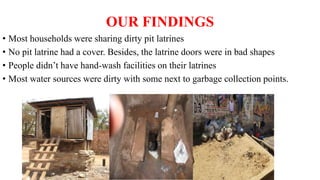
OUR FINDINGS
• Most households were sharing dirty pit latrines
• No pit latrine had a cover. Besides, the latrine doors were in bad shapes
• People didn’t have hand-wash facilities on their latrines
• Most water sources were dirty with some next to garbage collection points.
Triggering contn’
•After mapping the OD places, we asked people from
the community if they could drink a glass of water
contaminated with solid human waste from the open
defecation areas. The community, in response, said
they could not.
•The community later found out that the water they
drink is actually contaminated after our discussion.
•This created disgust and shame among them.
WHAT WERE THEIR REACTIONS?
The community decided to;
1.Create wooden covers for their pit latrines.
2.Wash hands with soap form their latrines
3.Keep latrines clean.
4.Build more pit latrines to minimize sharing
FURTHER STEPS DURING CLTS
3. Post triggering
Visiting the triggered community to
monitor progress. It is done after 3
weeks to 3 months. In this period and
ODF status can be achieved.
4. Scaling up and going beyond CLTS
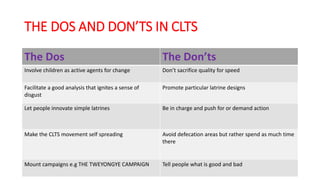
THE DOS AND DON’TS IN CLTS
The Dos The Don’ts
Involve children as active agents for change Don’t sacrifice quality for speed
Facilitate a good analysis that ignites a sense of
disgust
Promote particular latrine designs
Let people innovate simple latrines Be in charge and push for or demand action
Make the CLTS movement self spreading Avoid defecation areas but rather spend as much time
there
Mount campaigns e.g THE TWEYONGYE CAMPAIGN Tell people what is good and bad
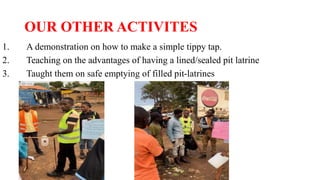
OUR OTHER ACTIVITES
1. A demonstration on how to make a simple tippy tap.
2. Teaching on the advantages of having a lined/sealed pit latrine
3. Taught them on safe emptying of filled pit-latrines
CHALLENGES
1. People were afraid of camera thinking
we were spies from government.
2. We didn’t get a big turn up since
people wanted to be paid. The people
live badly and don’t get helped
participating in free things.
RECOMMENDATIONS
•Students should always be assisted in
such community outreaches by the
University through providing
identification letters and finance
•Government should conduct more of
CLTS drives in slum settlements
CONCLUSION
The people in Kireka C slum are living in a non-
hygienic settlement. This is mainly due to high
levels of poverty and lack of sensitization.
CLTS should be intensified and the leaders
motivated to carry it on. Otherwise, there could an
outbreak of deadly diseases like cholera which
could claim many lives.
Thank you for listening

CLTS NEW.pptx

  • 1.
    GROUP 2 S/N NAMESREG NO 1. KANYESIGYE REBMAN 19/U/ECE/19678/PE 2. NABIRYE EMMA 19/U/ECW/529/WKD 3. AMANYIRE RICHARD 20/U/ECE/11959/PE 4. BYAMUKAMA JOHN LEAKEY 19/U/ECW/540/WKD 5. KALYOWA EMMANUEL 20/U/ECE/11954/PE 6. LWOOMWA PATRICK 19/U/ECE/512/PE 7. ASIIMWE FRANK 20/U/ECE/11955/PE 8. NANSUBUGA SHALUWA 21/U/ECE/16744/PE 9. WANDA RONNIE WINSTON 19/U/ECW/19036/WKD 10. MUGANZI KEN REAGAN 19/U/ECD/18203/PD 11. KATONGOLE UMAR 19/U/ECW/524/WKD 12. AKAMPURIRA EDGAR 20/U/ECE/11949/PE 13. NIWAHA WILLY KIYUNDO 10/U/1510/ECE/PE
  • 2.
  • 3.
    WHAT IS CLTS? Wayof promoting sanitation by stimulating a sense of disgust and shame among the community as they confront the crude facts about mass open defecation and its negative impacts on the entire community.
  • 4.
    OBJECTIVES OF CLTS •Toignite a change in sanitation behavior within the whole community rather than on individuals. •To achieve new behaviors such as; Stopping all open defecation (OD) Ensuring that all people use a hygienic toilet Washing hands with soap after using the toilet or getting in contact with babies’ feaces
  • 5.
    FIELD WORK METHODOLOGY 1.Pre-triggering. Involves selection of a community As a group we chose Kireka- C slum. It is located between the Jinja high-way and the Kampala railway and borders with Banda-Kasenyi and Kireka market. The slum characteristics include; •Unprotected vulnerable and currently polluted water supplies; •Visibly filthy conditions; •Existence of active groups within the community.
  • 6.
    2. Triggering •This wasthe actual fieldwork •We introduced ourselves as a learning team not facilitators •We walked through the slum with the chairman and a few locals to identify the water sources and the pit latrines
  • 7.
    OUR FINDINGS • Mosthouseholds were sharing dirty pit latrines • No pit latrine had a cover. Besides, the latrine doors were in bad shapes • People didn’t have hand-wash facilities on their latrines • Most water sources were dirty with some next to garbage collection points.
  • 8.
    Triggering contn’ •After mappingthe OD places, we asked people from the community if they could drink a glass of water contaminated with solid human waste from the open defecation areas. The community, in response, said they could not. •The community later found out that the water they drink is actually contaminated after our discussion. •This created disgust and shame among them.
  • 9.
    WHAT WERE THEIRREACTIONS? The community decided to; 1.Create wooden covers for their pit latrines. 2.Wash hands with soap form their latrines 3.Keep latrines clean. 4.Build more pit latrines to minimize sharing
  • 10.
    FURTHER STEPS DURINGCLTS 3. Post triggering Visiting the triggered community to monitor progress. It is done after 3 weeks to 3 months. In this period and ODF status can be achieved. 4. Scaling up and going beyond CLTS
  • 11.
    THE DOS ANDDON’TS IN CLTS The Dos The Don’ts Involve children as active agents for change Don’t sacrifice quality for speed Facilitate a good analysis that ignites a sense of disgust Promote particular latrine designs Let people innovate simple latrines Be in charge and push for or demand action Make the CLTS movement self spreading Avoid defecation areas but rather spend as much time there Mount campaigns e.g THE TWEYONGYE CAMPAIGN Tell people what is good and bad
  • 12.
    OUR OTHER ACTIVITES 1.A demonstration on how to make a simple tippy tap. 2. Teaching on the advantages of having a lined/sealed pit latrine 3. Taught them on safe emptying of filled pit-latrines
  • 13.
    CHALLENGES 1. People wereafraid of camera thinking we were spies from government. 2. We didn’t get a big turn up since people wanted to be paid. The people live badly and don’t get helped participating in free things.
  • 14.
    RECOMMENDATIONS •Students should alwaysbe assisted in such community outreaches by the University through providing identification letters and finance •Government should conduct more of CLTS drives in slum settlements
  • 15.
    CONCLUSION The people inKireka C slum are living in a non- hygienic settlement. This is mainly due to high levels of poverty and lack of sensitization. CLTS should be intensified and the leaders motivated to carry it on. Otherwise, there could an outbreak of deadly diseases like cholera which could claim many lives.
  • 16.
    Thank you forlistening