This document discusses equine nutrition and digestive physiology. Key points include:
- Horses are hindgut fermenters with a large cecum that requires a slow transition between diets. Improper feeding can cause digestive issues like colic.
- Proper dental care, grazing time, and small frequent meals are important for digestion. Changes should be gradual to avoid problems.
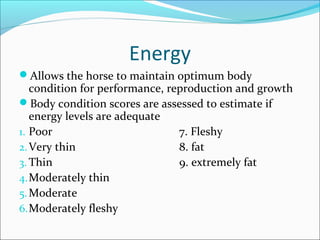
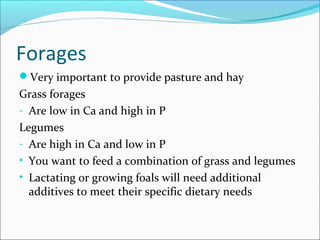
- Nutritional needs vary depending on a horse's life stage, from foals to aging horses. Macronutrients, vitamins, and minerals must be balanced accordingly.
- Feeding management can help prevent conditions like laminitis, azoturia, and deficiencies. Sudden diet changes or neglect can compromise a horse's