Equine
Management
AnS216
Basic requirements of a horse
 Food
 Water
 Shelter
 Health care
 Hoof care
 Exercise
Nutrition
 Requirementsmay change
 Temperature(season)
 Typeof use/ activity
 Age
 Feeding Plan
 Roughagesource
 Concentratefeed
 Tracemineral salt block
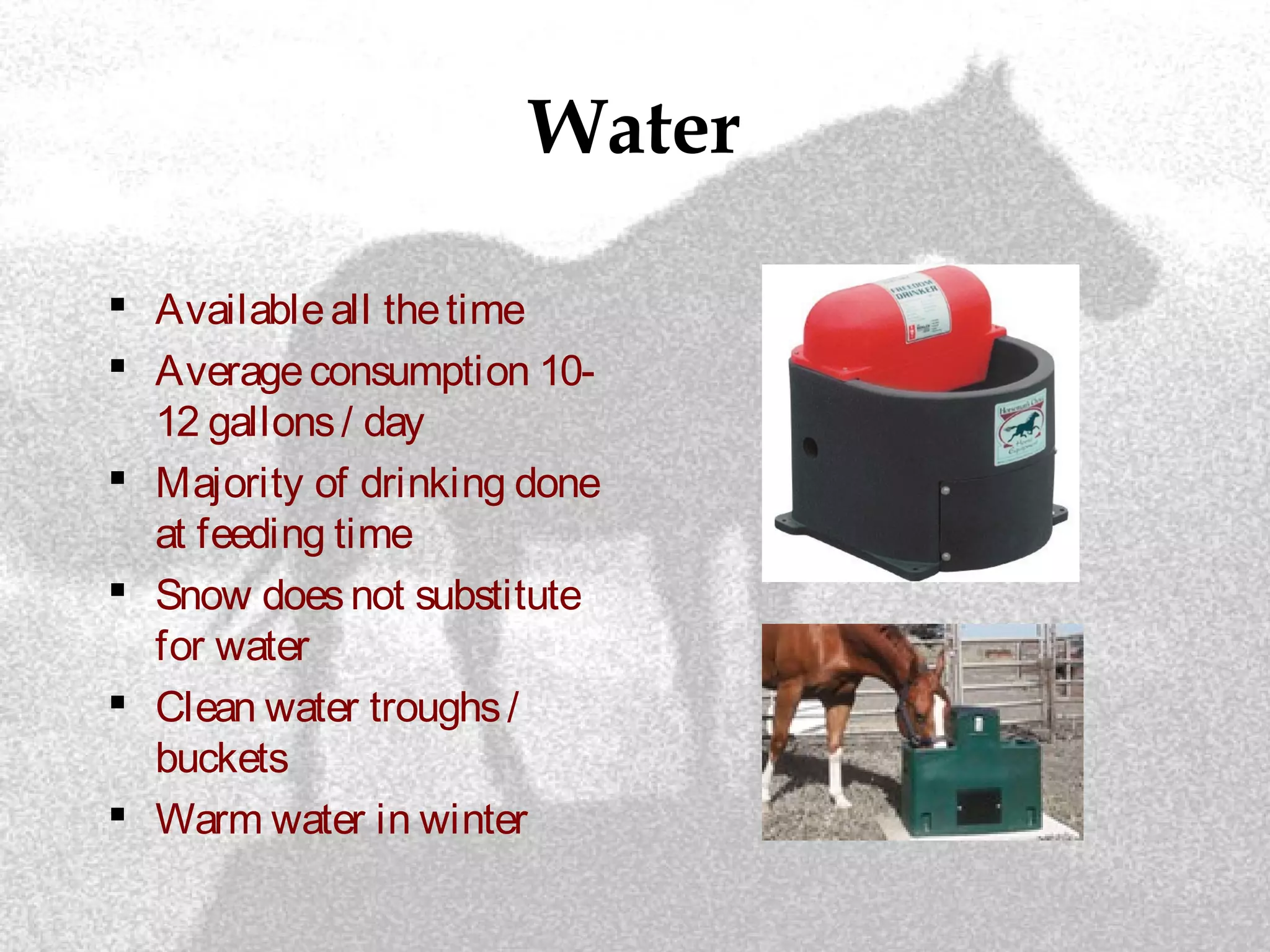
Water
 Availableall thetime
 Averageconsumption 10-
12 gallons/ day
 Majority of drinking done
at feeding time
 Snow doesnot substitute
for water
 Clean water troughs/
buckets
 Warm water in winter
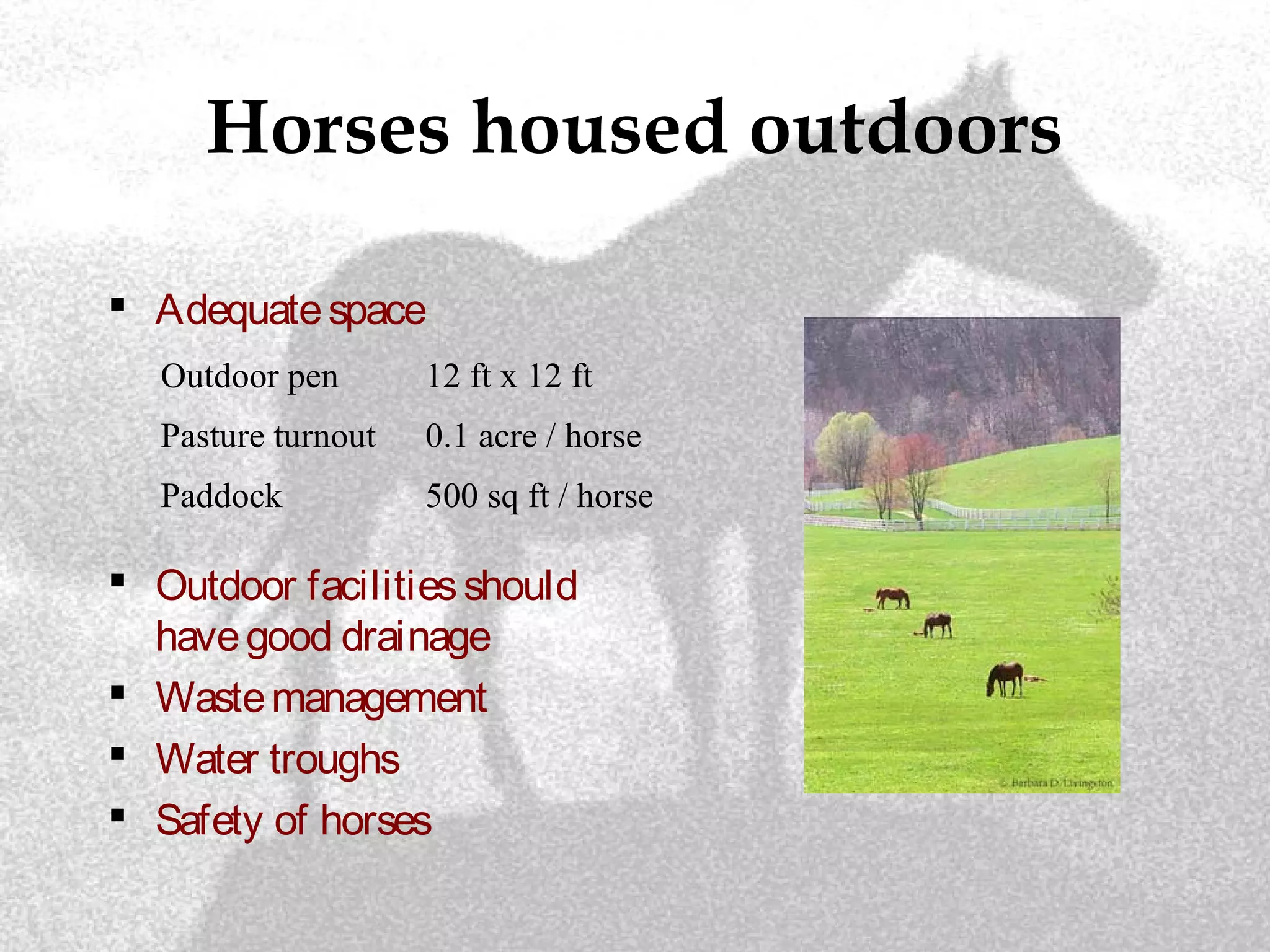
Horses housed outdoors
 Adequatespace
 Outdoor facilitiesshould
havegood drainage
 Wastemanagement
 Water troughs
 Safety of horses
Outdoor pen 12 ft x 12 ft
Pasture turnout 0.1 acre / horse
Paddock 500 sq ft / horse
Fencing
 Considerations
 Sturdy & durable
 Safety
 Height requirement
 Maintenance
 Cost
 Types
 Wire
 Wooden board
 Post & rail
 Electric fencing
 High Tensilewire
 PVC
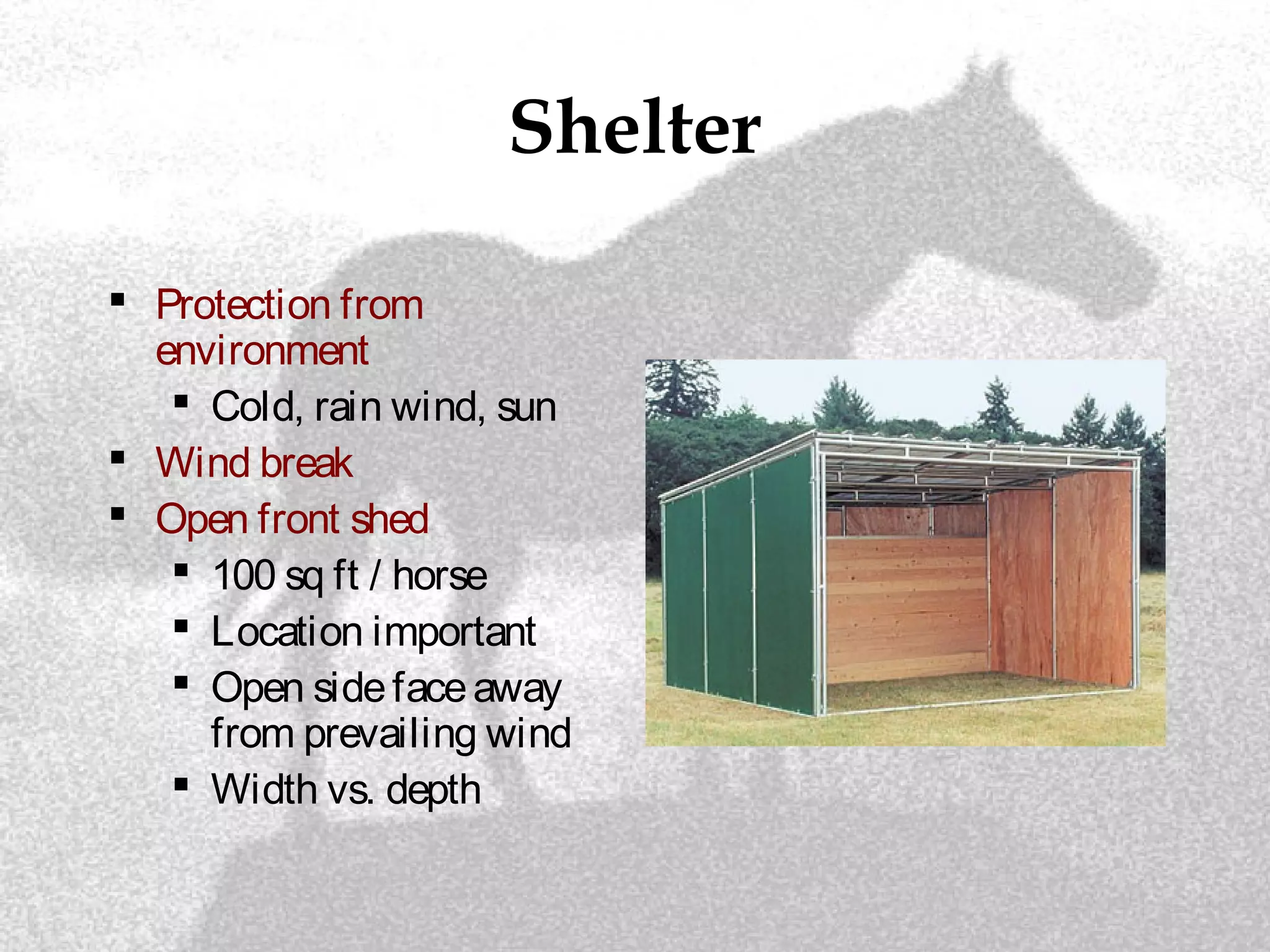
Shelter
 Protection from
environment
 Cold, rain wind, sun
 Wind break
 Open front shed
 100 sq ft / horse
 Location important
 Open sidefaceaway
from prevailing wind
 Width vs. depth
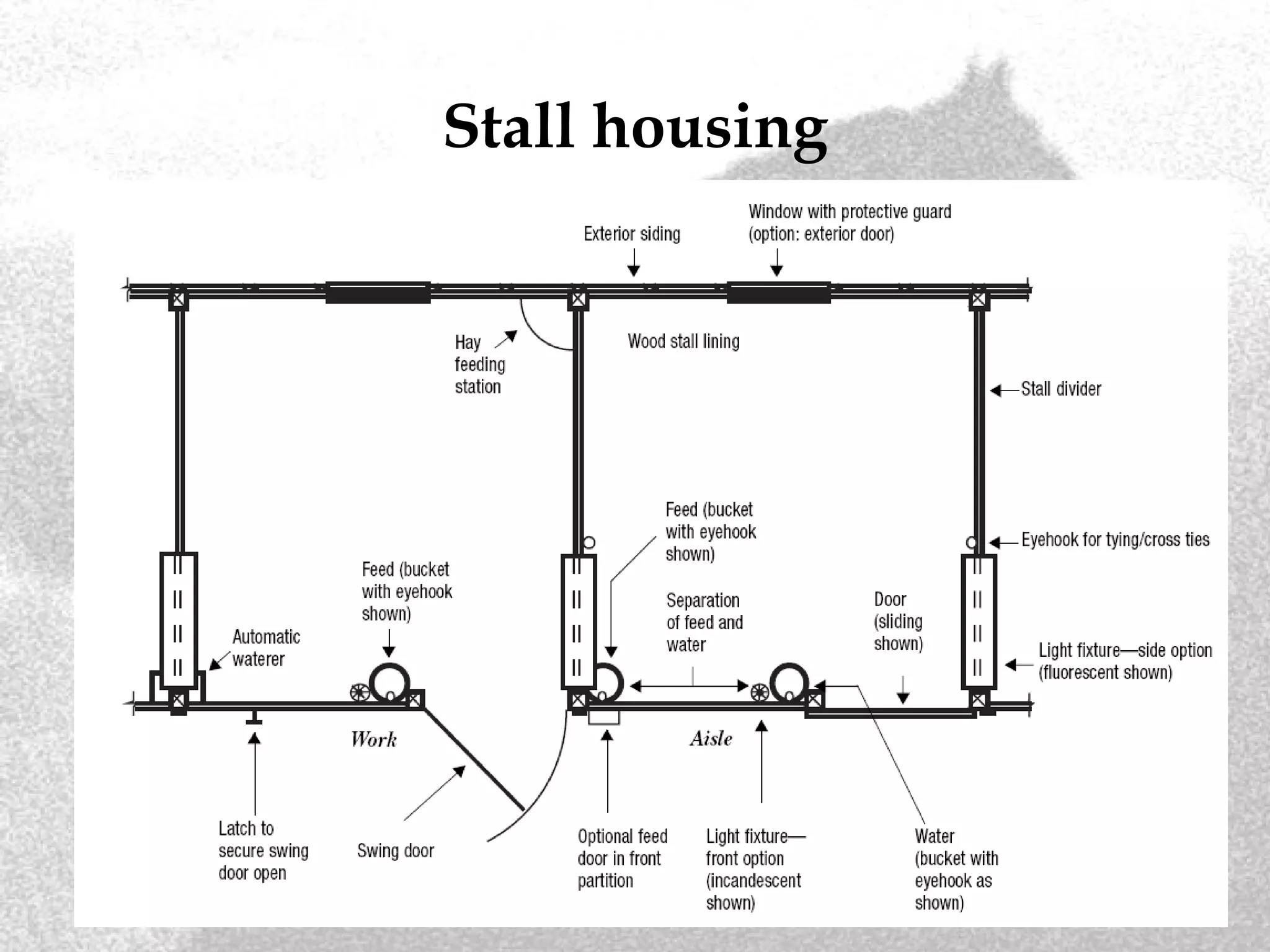
Stall housing
 Ventilation
 Adequatelighting
 Safety
 Watering device
 Feeding area
Stall housing
Stall housing
 Sizerequirements
Minimum size 10 ft x 10 ft
Preferred size 12 ft x 12 ft
Stallion stall 14 ft x 14 ft
Foaling stall 16 ft x 16 ft
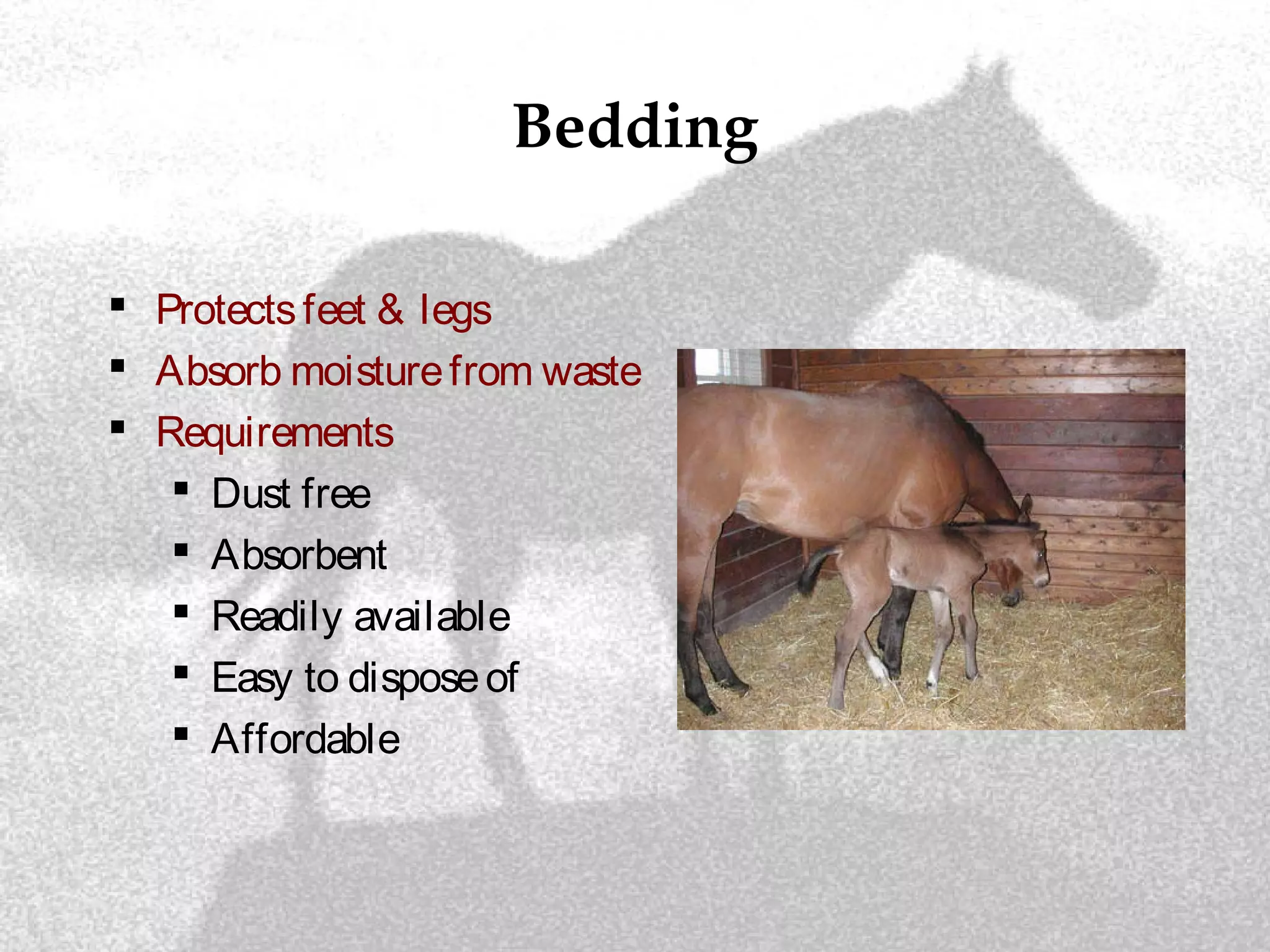
Bedding
 Protectsfeet & legs
 Absorb moisturefrom waste
 Requirements
 Dust free
 Absorbent
 Readily available
 Easy to disposeof
 Affordable
Bedding
 Straw
 High comfort
 Littledust
 Highly combustible
 High labor
 Largevolumeof waste
 Wood shavings
 Moreeasily disposed
 Lesslabor
 Moredust
 Moreexpensive
 Careful of black walnut
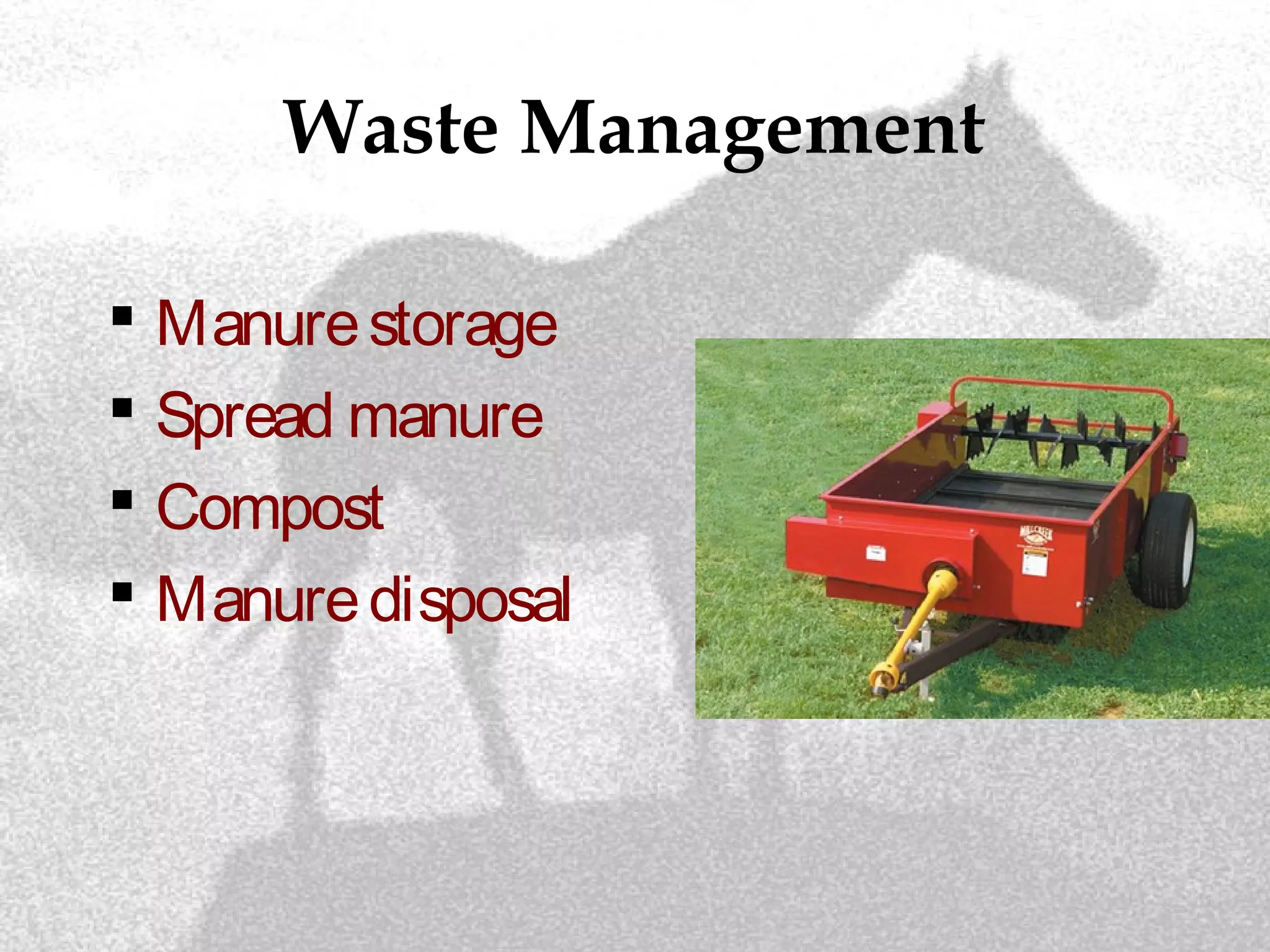
Waste Management
 37 lbsfeces/ day
 2.4 gallonsurine/ day
 51 lbswaste/ day
 70 lbswaste/ day
(including soiled
bedding)
 12-13 tonsof waste/
year for 1 horse!
Waste Management
 Manurestorage
 Spread manure
 Compost
 Manuredisposal
Health Care
 Know what isnormal for your horse
 Regular vaccinations
 Geographical location
 Typeof use/ activity
 Age
 Regular deworming
 Rotational program
 Awarenessof parasitelifecycles
 Annual dental exam
Health Care
 First aid kit
 Know your veterinarian’s
phonenumber
 Quarantinestall
 New horses
 Sick horses
Hoof care
 Trim every 6-8 weeks
 Shoes
 Work
 Therapeutic
 Know your farrier’s
phonenumber
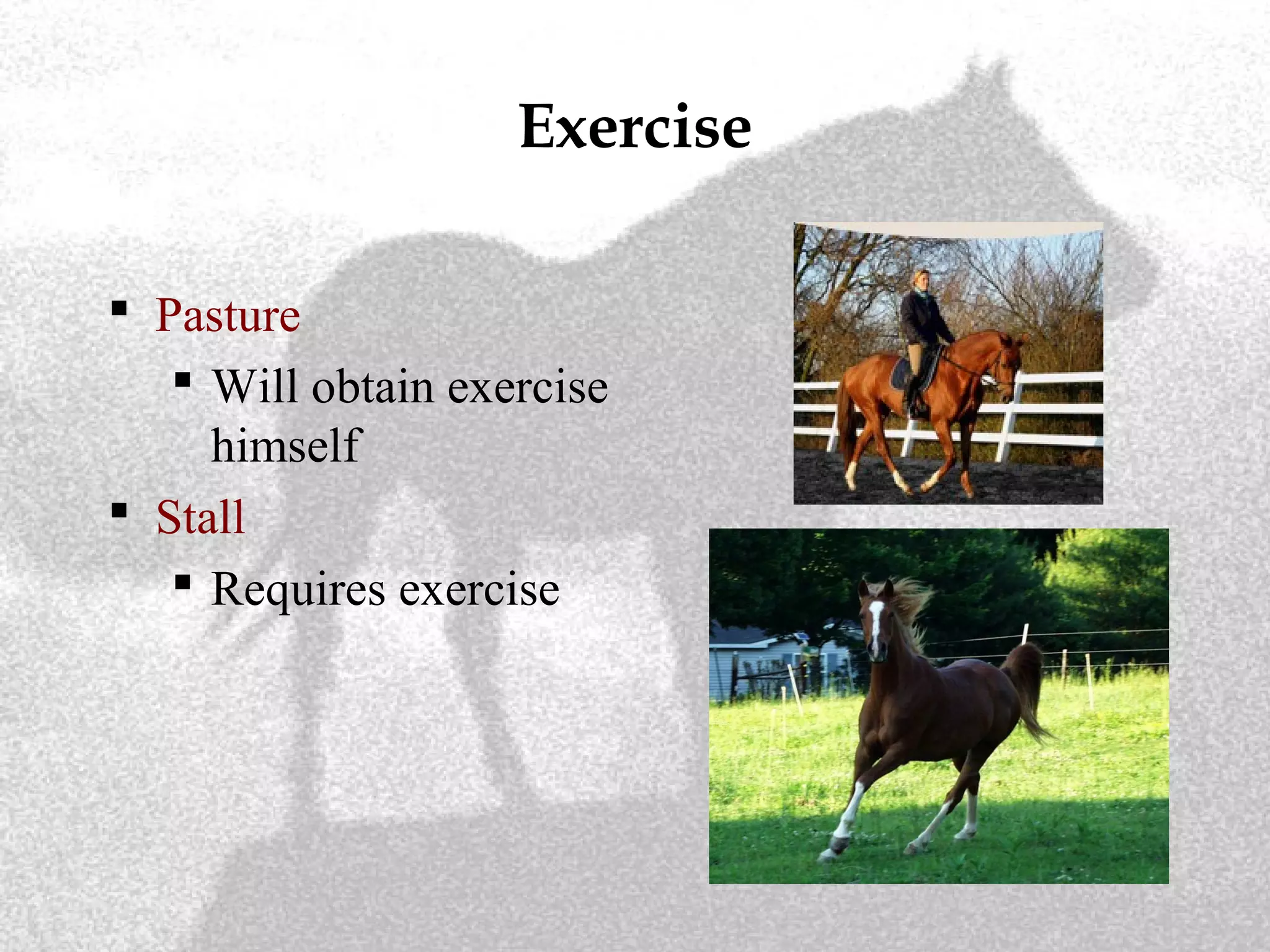
Exercise
 Pasture
 Will obtain exercise
himself
 Stall
 Requires exercise
Costs of maintaining a horse
 Initial costs
 Horse
 Equipment
 Board / pasture rent
 Feed
 Bedding
Costs of maintaining a horse
 Veterinary care
 Farrier
 Vaccinations
 Dewormer
 Riding lessons / training
 Estimated cost - $2458.50
(HIH 120-5)
Costs of maintaining a horse
 Other Costs?

Equine Management

  • 1.
  • 2.
    Basic requirements ofa horse  Food  Water  Shelter  Health care  Hoof care  Exercise
  • 3.
    Nutrition  Requirementsmay change Temperature(season)  Typeof use/ activity  Age  Feeding Plan  Roughagesource  Concentratefeed  Tracemineral salt block
  • 4.
    Water  Availableall thetime Averageconsumption 10- 12 gallons/ day  Majority of drinking done at feeding time  Snow doesnot substitute for water  Clean water troughs/ buckets  Warm water in winter
  • 5.
    Horses housed outdoors Adequatespace  Outdoor facilitiesshould havegood drainage  Wastemanagement  Water troughs  Safety of horses Outdoor pen 12 ft x 12 ft Pasture turnout 0.1 acre / horse Paddock 500 sq ft / horse
  • 6.
    Fencing  Considerations  Sturdy& durable  Safety  Height requirement  Maintenance  Cost  Types  Wire  Wooden board  Post & rail  Electric fencing  High Tensilewire  PVC
  • 7.
    Shelter  Protection from environment Cold, rain wind, sun  Wind break  Open front shed  100 sq ft / horse  Location important  Open sidefaceaway from prevailing wind  Width vs. depth
  • 8.
    Stall housing  Ventilation Adequatelighting  Safety  Watering device  Feeding area
  • 9.
  • 10.
    Stall housing  Sizerequirements Minimumsize 10 ft x 10 ft Preferred size 12 ft x 12 ft Stallion stall 14 ft x 14 ft Foaling stall 16 ft x 16 ft
  • 11.
    Bedding  Protectsfeet &legs  Absorb moisturefrom waste  Requirements  Dust free  Absorbent  Readily available  Easy to disposeof  Affordable
  • 12.
    Bedding  Straw  Highcomfort  Littledust  Highly combustible  High labor  Largevolumeof waste  Wood shavings  Moreeasily disposed  Lesslabor  Moredust  Moreexpensive  Careful of black walnut
  • 13.
    Waste Management  37lbsfeces/ day  2.4 gallonsurine/ day  51 lbswaste/ day  70 lbswaste/ day (including soiled bedding)  12-13 tonsof waste/ year for 1 horse!
  • 14.
    Waste Management  Manurestorage Spread manure  Compost  Manuredisposal
  • 15.
    Health Care  Knowwhat isnormal for your horse  Regular vaccinations  Geographical location  Typeof use/ activity  Age  Regular deworming  Rotational program  Awarenessof parasitelifecycles  Annual dental exam
  • 16.
    Health Care  Firstaid kit  Know your veterinarian’s phonenumber  Quarantinestall  New horses  Sick horses
  • 17.
    Hoof care  Trimevery 6-8 weeks  Shoes  Work  Therapeutic  Know your farrier’s phonenumber
  • 18.
    Exercise  Pasture  Willobtain exercise himself  Stall  Requires exercise
  • 19.
    Costs of maintaininga horse  Initial costs  Horse  Equipment  Board / pasture rent  Feed  Bedding
  • 20.
    Costs of maintaininga horse  Veterinary care  Farrier  Vaccinations  Dewormer  Riding lessons / training  Estimated cost - $2458.50 (HIH 120-5)
  • 21.
    Costs of maintaininga horse  Other Costs?

Editor's Notes

  • #4 Temperature: Cold weather – increase metabolism to create heat (maintain body temp). Fermentation of fiber in cecum releases heat. Hot weather – more sweating, need to provide adequate TMS Age: Younger horses have higher requirements Feeding Plan: Roughage source – may be pasture, grass hay, alfalfa hay etc. Concentrate feed – may select to feed a number of concentrate feeds to meet requirements, or provide a well-balanced pelleted feed
  • #5 Average consumption for a maintenance horse is 10-12 gallons per day – this will increase with activity
  • #6 Good drainage – prevent standing water, muddy conditions – bacteria develop Waste management – could be an issue due to contamination of groundwater
  • #7 Note – Barbed wire fencing not recommended (safety concerns) Wooden – wood chewing may be problem Post & rail – more aesthetic, expensive High tensile wire – horses may not see as well Electric – not usually used alone, horses may not see very well PVC – initial cost may be high, low maintenance, strong & flexible
  • #8 Wind break – can be trees Shed Location – should on well drained land, or have floor built up so stays dry If building your own shelter – build for width rather than depth, a dominant horse can block shelter for less dominant horses
  • #9 Ventilation – need to have good ventilation system, horse can do well in most environments if there is enough air movement through building to keep humidity down Lighting – poor lighting can create shadows, and dark spaces which may spook horse Safety - interior walls should be smooth, free from sharp objects, light fixtures recessed etc.
  • #13 Straw – preferred bedding for foaling Black walnut – blister beetles (cantharadin) – poisonous Other less used forms of bedding are – ground corn cobs (cheap, may eat), newspaper (absorbent, highly combustible)
  • #16 Rotational deworming – to prevent resistance Parasite life cycles – don’t want to deworm at time of year when parasite not present, or when dewormer will be ineffective Eg. Usually give dewormer with boticide in early spring & fall (after first frost) – intent is to kill larvae in horses stomach.