NANDEESHA S
Department of plant
science
Bangalore central
Introduction
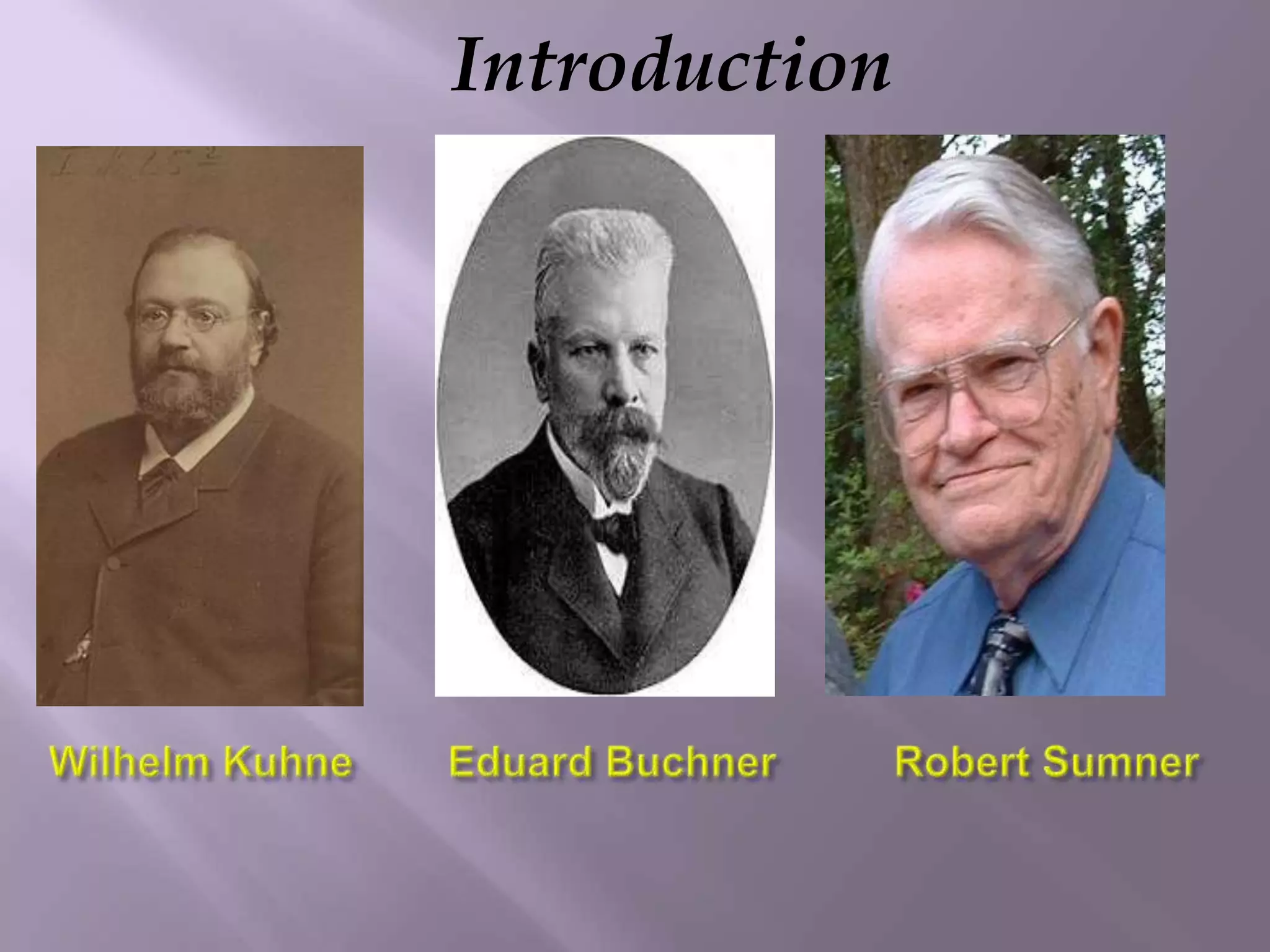
 Wilhelm kuhne –in 1878 was working on
fermentation.
 Bucher –extract of enzyme from yeast cells.
 Robert sumner –in 1926 was the purify and
crystallize revealing the proteinaceous nature.
Introduction
 Enzymes are simple or compound proteins acting
as specific catalysts.
 Defined as organic substances capable of
catalyzing reaction in the living systems.
Or
Enzymes are the biomolecul which contain proteins of high
molecular mass and specific reaction.

The international union of biochemistry (I.U.B) initiated
standards of enzyme nomenclature which recommend
that enzyme names indicate both the,
i)Substrate on which the enzyme acts.
ii)The type of action of the enzyme.
The naming of enzymes will be done by just changing the
supix of the substrate by “ase”
Ex. Hydrolysis of urea  urease
formation of carbonic acid  carbonic anhydrase
Except some enzymes like pepsin, renin, and trypsin most
enzymes names end in “ase”.
Enzymes are mainly classified in to 6 type
1) oxido-reductases –the enzyme which catalyzed
oxidoreduction reactions are classify under this group.
A) Oxidases –ex. oxalate oxidase
B ) Reductase-ex. Nitrate reductase.
2) Transferases – this enzymes catalyzes those reactions
which in values transfer of molecular group from a
substrate to reactant.
Ex. Glucose + ATP ↔ glucose 6 phosphate
Glucokinase
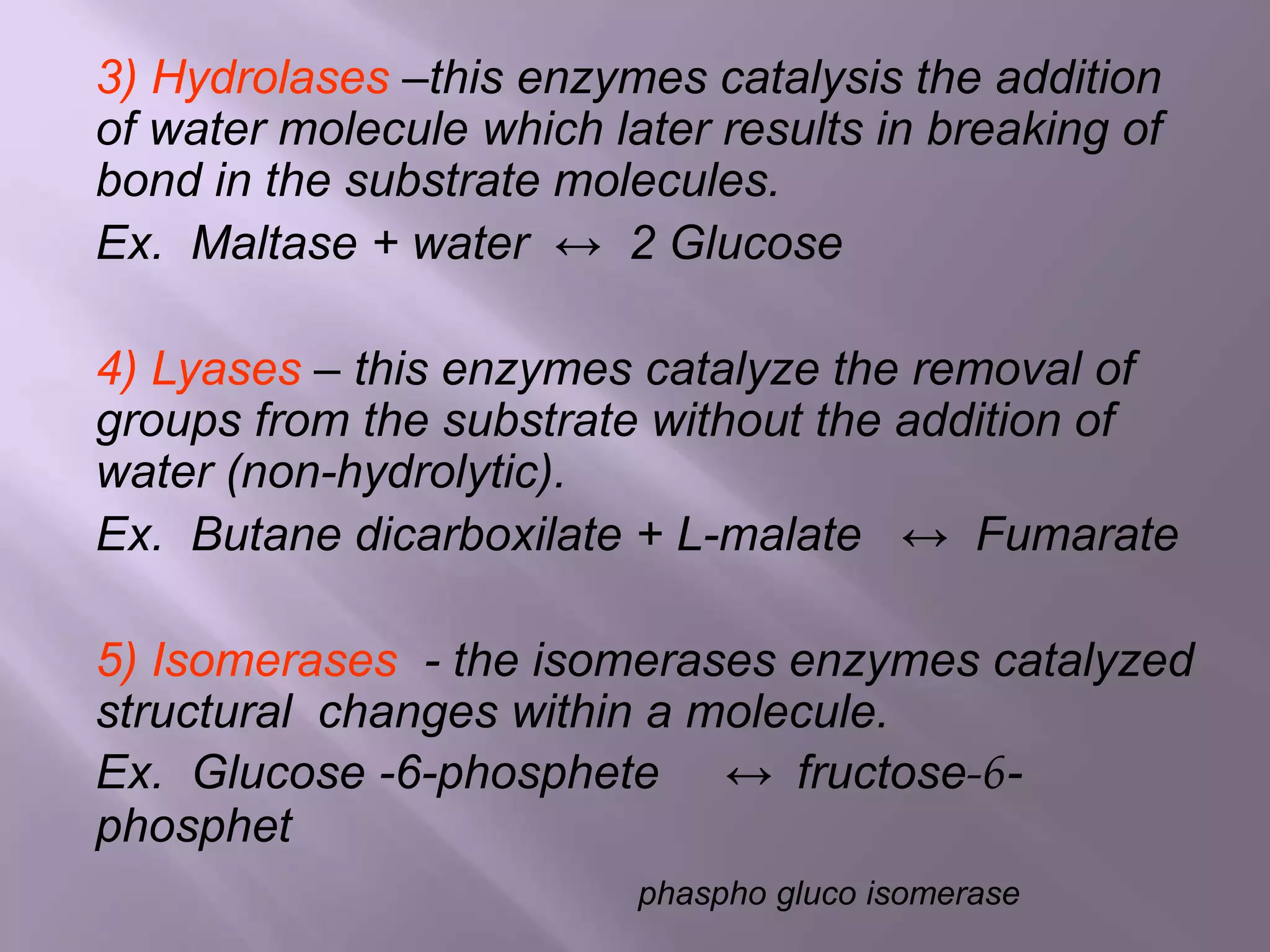
3) Hydrolases –this enzymes catalysis the addition
of water molecule which later results in breaking of
bond in the substrate molecules.
Ex. Maltase + water ↔ 2 Glucose
4) Lyases – this enzymes catalyze the removal of
groups from the substrate without the addition of
water (non-hydrolytic).
Ex. Butane dicarboxilate + L-malate ↔ Fumarate
5) Isomerases - the isomerases enzymes catalyzed
structural changes within a molecule.
Ex. Glucose -6-phosphete ↔ fructose-6-
phosphet
phaspho gluco isomerase
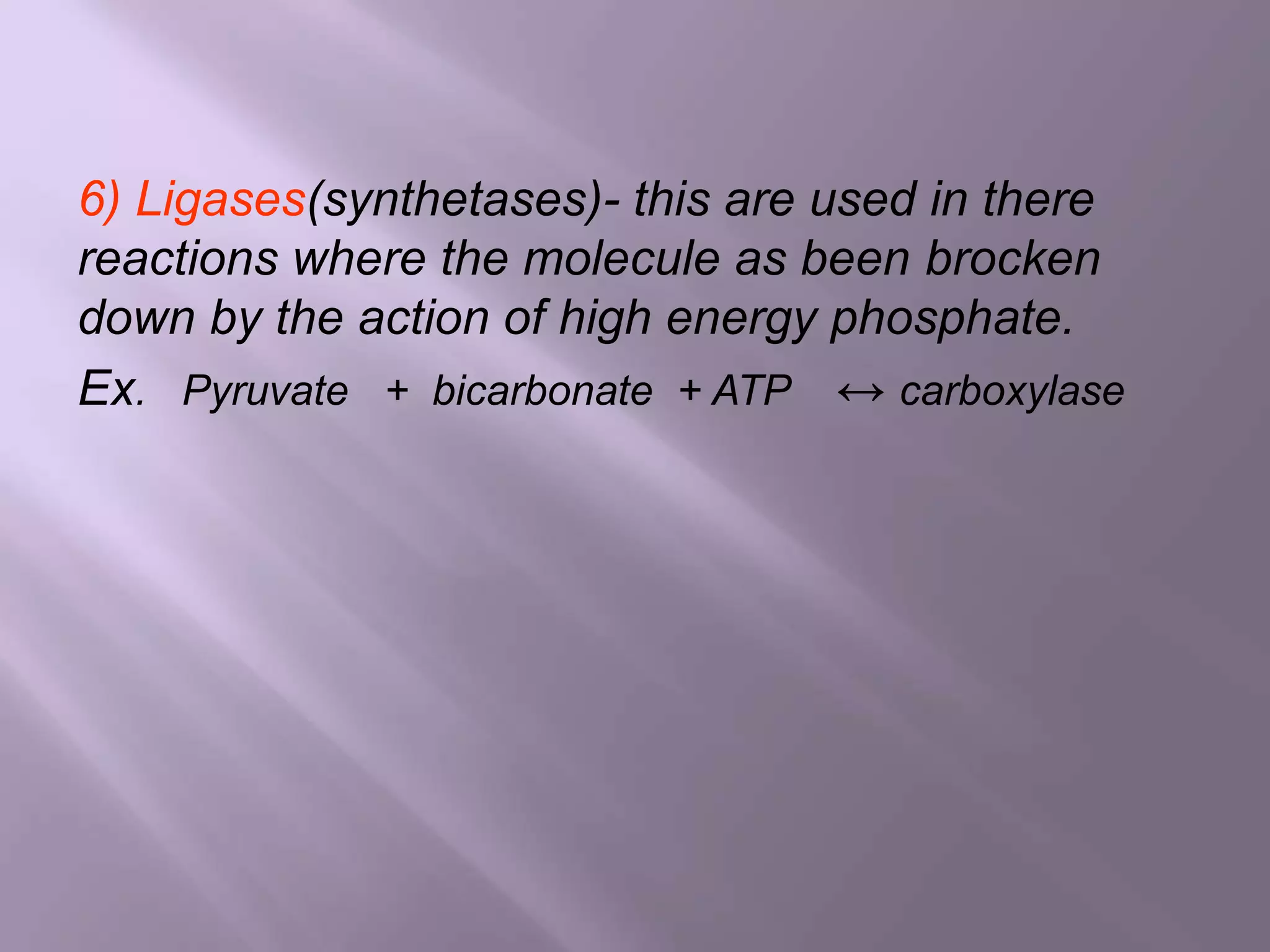
6) Ligases(synthetases)- this are used in there
reactions where the molecule as been brocken
down by the action of high energy phosphate.
Ex. Pyruvate + bicarbonate + ATP ↔ carboxylase
Thanking you

Enzyme introduction, nomenclature, properties, and classification

  • 1.
    NANDEESHA S Department ofplant science Bangalore central
  • 2.
  • 3.
     Wilhelm kuhne–in 1878 was working on fermentation.  Bucher –extract of enzyme from yeast cells.  Robert sumner –in 1926 was the purify and crystallize revealing the proteinaceous nature. Introduction
  • 4.
     Enzymes aresimple or compound proteins acting as specific catalysts.  Defined as organic substances capable of catalyzing reaction in the living systems. Or Enzymes are the biomolecul which contain proteins of high molecular mass and specific reaction.
  • 5.
  • 6.
    The international unionof biochemistry (I.U.B) initiated standards of enzyme nomenclature which recommend that enzyme names indicate both the, i)Substrate on which the enzyme acts. ii)The type of action of the enzyme. The naming of enzymes will be done by just changing the supix of the substrate by “ase” Ex. Hydrolysis of urea  urease formation of carbonic acid  carbonic anhydrase Except some enzymes like pepsin, renin, and trypsin most enzymes names end in “ase”.
  • 7.
    Enzymes are mainlyclassified in to 6 type 1) oxido-reductases –the enzyme which catalyzed oxidoreduction reactions are classify under this group. A) Oxidases –ex. oxalate oxidase B ) Reductase-ex. Nitrate reductase. 2) Transferases – this enzymes catalyzes those reactions which in values transfer of molecular group from a substrate to reactant. Ex. Glucose + ATP ↔ glucose 6 phosphate Glucokinase
  • 8.
    3) Hydrolases –thisenzymes catalysis the addition of water molecule which later results in breaking of bond in the substrate molecules. Ex. Maltase + water ↔ 2 Glucose 4) Lyases – this enzymes catalyze the removal of groups from the substrate without the addition of water (non-hydrolytic). Ex. Butane dicarboxilate + L-malate ↔ Fumarate 5) Isomerases - the isomerases enzymes catalyzed structural changes within a molecule. Ex. Glucose -6-phosphete ↔ fructose-6- phosphet phaspho gluco isomerase
  • 9.
    6) Ligases(synthetases)- thisare used in there reactions where the molecule as been brocken down by the action of high energy phosphate. Ex. Pyruvate + bicarbonate + ATP ↔ carboxylase
  • 10.