ENZyMES INVOLVED IN BIOLOGICAL OXIDATION
Dr Rina Das
Professor
MM College of Pharmacy
Mullana, HR
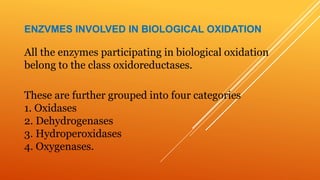
ENZVMES INVOLVED IN BIOLOGICAL OXIDATION
All the enzymes participating in biological oxidation
belong to the class oxidoreductases.
These are further grouped into four categories
1. Oxidases
2. Dehydrogenases
3. Hydroperoxidases
4. Oxygenases.
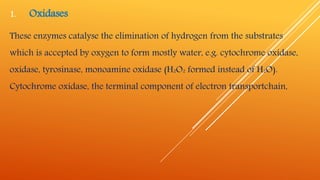
1. Oxidases
These enzymes catalyse the elimination of hydrogen from the substrates
which is accepted by oxygen to form mostly water, e.g. cytochrome oxidase,
oxidase, tyrosinase, monoamine oxidase (H2O2 formed instead of H2O).
Cytochrome oxidase, the terminal component of electron transportchain,
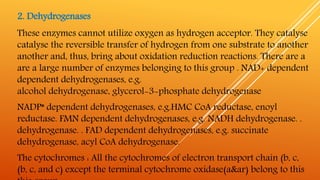
2. Dehydrogenases
These enzymes cannot utilize oxygen as hydrogen acceptor. They catalyse
catalyse the reversible transfer of hydrogen from one substrate to another
another and, thus, bring about oxidation reduction reactions. There are a
are a large number of enzymes belonging to this group . NAD+ dependent
dependent dehydrogenases, e.g.
alcohol dehydrogenase, glycerol-3-phosphate dehydrogenase
NADP* dependent dehydrogenases, e.g.HMC CoA reductase, enoyl
reductase. FMN dependent dehydrogenases, e.g. NADH dehydrogenase. .
dehydrogenase. . FAD dependent dehydrogenases, e.g. succinate
dehydrogenase, acyl CoA dehydrogenase.
The cytochromes : All the cytochromes of electron transport chain (b, c,
(b, c, and c) except the terminal cytochrome oxidase(a&ar) belong to this
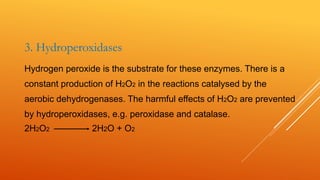
3. Hydroperoxidases
Hydrogen peroxide is the substrate for these enzymes. There is a
constant production of H2O2 in the reactions catalysed by the
aerobic dehydrogenases. The harmful effects of H2O2 are prevented
by hydroperoxidases, e.g. peroxidase and catalase.
2H2O2 2H2O + O2
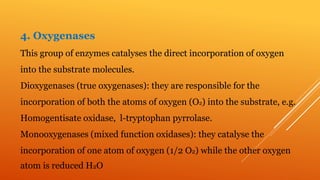
4. Oxygenases
This group of enzymes catalyses the direct incorporation of oxygen
into the substrate molecules.
Dioxygenases (true oxygenases): they are responsible for the
incorporation of both the atoms of oxygen (O2) into the substrate, e.g.
Homogentisate oxidase, l-tryptophan pyrrolase.
Monooxygenases (mixed function oxidases): they catalyse the
incorporation of one atom of oxygen (1/2 O2) while the other oxygen
atom is reduced H2O

Biochem enzymes slide share 2

  • 1.
    ENZyMES INVOLVED INBIOLOGICAL OXIDATION Dr Rina Das Professor MM College of Pharmacy Mullana, HR
  • 2.
    ENZVMES INVOLVED INBIOLOGICAL OXIDATION All the enzymes participating in biological oxidation belong to the class oxidoreductases. These are further grouped into four categories 1. Oxidases 2. Dehydrogenases 3. Hydroperoxidases 4. Oxygenases.
  • 3.
    1. Oxidases These enzymescatalyse the elimination of hydrogen from the substrates which is accepted by oxygen to form mostly water, e.g. cytochrome oxidase, oxidase, tyrosinase, monoamine oxidase (H2O2 formed instead of H2O). Cytochrome oxidase, the terminal component of electron transportchain,
  • 4.
    2. Dehydrogenases These enzymescannot utilize oxygen as hydrogen acceptor. They catalyse catalyse the reversible transfer of hydrogen from one substrate to another another and, thus, bring about oxidation reduction reactions. There are a are a large number of enzymes belonging to this group . NAD+ dependent dependent dehydrogenases, e.g. alcohol dehydrogenase, glycerol-3-phosphate dehydrogenase NADP* dependent dehydrogenases, e.g.HMC CoA reductase, enoyl reductase. FMN dependent dehydrogenases, e.g. NADH dehydrogenase. . dehydrogenase. . FAD dependent dehydrogenases, e.g. succinate dehydrogenase, acyl CoA dehydrogenase. The cytochromes : All the cytochromes of electron transport chain (b, c, (b, c, and c) except the terminal cytochrome oxidase(a&ar) belong to this
  • 5.
    3. Hydroperoxidases Hydrogen peroxideis the substrate for these enzymes. There is a constant production of H2O2 in the reactions catalysed by the aerobic dehydrogenases. The harmful effects of H2O2 are prevented by hydroperoxidases, e.g. peroxidase and catalase. 2H2O2 2H2O + O2
  • 6.
    4. Oxygenases This groupof enzymes catalyses the direct incorporation of oxygen into the substrate molecules. Dioxygenases (true oxygenases): they are responsible for the incorporation of both the atoms of oxygen (O2) into the substrate, e.g. Homogentisate oxidase, l-tryptophan pyrrolase. Monooxygenases (mixed function oxidases): they catalyse the incorporation of one atom of oxygen (1/2 O2) while the other oxygen atom is reduced H2O