ENVIRONMENTAL DECISIONS IN THE
MANAGEMENT OF RESOURCES
By
Dr (Mrs.) Mogo
Contact me: felichimogo@yahoo.com
Find me on Linkedin: Felicia Chinwe Mogo
PhD (Ecology/Ecotoxicology)
M.Sc. (Environmental Science and Technology: Ecotoxicology)
PGD (Environmental Science & Technology)
B.Sc. (Biological Science)
 Introduction; What is Environment and Natural
Resources
 Management of Natural Resources
 Sustainable Development
 Environmental Impact Assessment (EIA); a
Decision Making Tool
 Responsibility of Leaders
 Case Study
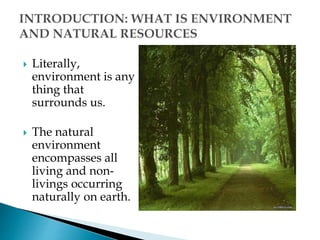
 Literally,
environment is any
thing that
surrounds us.
 The natural
environment
encompasses all
living and non-
livings occurring
naturally on earth.
The concept of the natural environment can be
distinguished by components:
Complete ecological
units that function as
natural systems
without massive
human intervention,
including all
vegetation, organisms
and natural
phenomena that occur
within their
boundaries.
Universal natural
resources and
physical
phenomena that
lack clear-cut
boundaries, such as
air, water, and
climate, as well as
energy, etc.
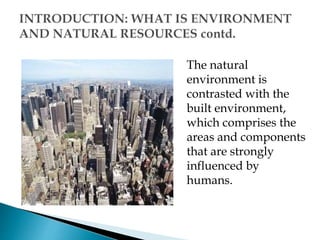
The natural
environment is
contrasted with the
built environment,
which comprises the
areas and components
that are strongly
influenced by
humans.
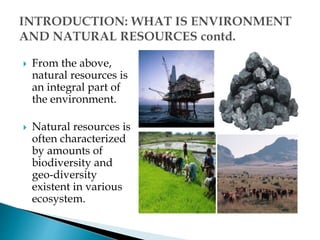
 From the above,
natural resources is
an integral part of
the environment.
 Natural resources is
often characterized
by amounts of
biodiversity and
geo-diversity
existent in various
ecosystem.
 Depending on the stage of development, natural
resources may be referred to as Potential, Actual
Reserved, or Stock resources:
 Prevention of Depletion
 Ensure Environmental Sustainability
 Management of natural resources focuses on
issues that affects both present and future
generations, in other words, sustainable
development.
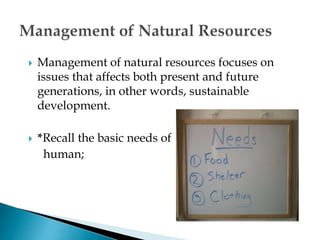
 *Recall the basic needs of
human;
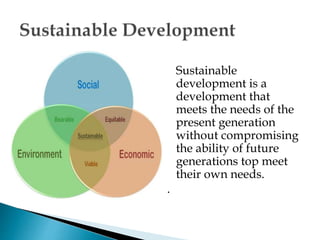
Sustainable
development is a
development that
meets the needs of the
present generation
without compromising
the ability of future
generations top meet
their own needs.
.
 According to the Brundtland Commission,
sustainable development is a mode of human
development in which resource use aims to meet
human needs while ensuring the sustainability of
natural systems and the environment, so that
these needs can be met not only in the present, but
also for generations to come.
 EIA is an
important
decision making
tool as it enables
us make effective
decisions as it
concerns the
management of
resources
 EIA is an assessment of the possible positive or
negative impact that a proposed project may have
on the environment, together consisting of the
environmental, social and economic aspects.
 The purpose of the assessment is to ensure that
decision makers consider the ensuing
environmental impacts when deciding whether to
proceed with a project.
 Public sector operations
invariably consume
natural resources, such as
fossil fuels and water, and
lead to the generation of
waste products, including
greenhouse gas emissions,
paper and obsolete
Information and
Communications
Technology (ICT)
equipment.
1. Identify and
understand the
legislative,
regulatory and
policy requirements
that underpin the
environmental
management
framework e.g. the
EIA Act 1992 and
comply with the
requirements.
2. Review existing operations and environmental
impacts
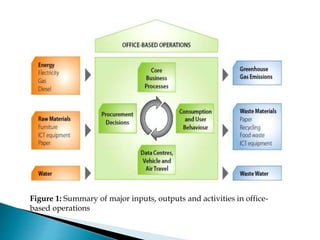
Figure 1 illustrates a simple approach to establish:
 what is brought into the office, principally through
procurement activities;
 how it is used inside the office and influenced by
core business processes and user behaviour; and
 what leaves the office as waste or as a by-product of
these activities.
Figure 1: Summary of major inputs, outputs and activities in office-
based operations
3. Prioritise, plan and
commit to action:
The prioritisation of
environmental issues will
help to target action plans
and resources, and should
have regard to an entity’s:
 obligations under the
environmental
management framework
and
 activities and
environmental impacts
4. Build an environmentally aware culture
 Commit to improving environmental performance
activities and environmental impacts
 Create awareness through training and
communication
 Empower staff through engagement
 Many of the generally acknowledged global
environmental problems are directly or indirectly
caused by the creation, operation, or disposal of
the built environment undertaken by man
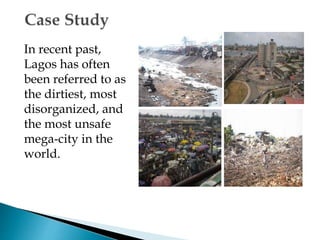
In recent past,
Lagos has often
been referred to as
the dirtiest, most
disorganized, and
the most unsafe
mega-city in the
world.
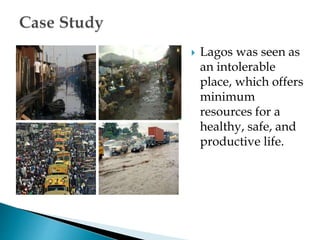
 Lagos was seen as
an intolerable
place, which offers
minimum
resources for a
healthy, safe, and
productive life.
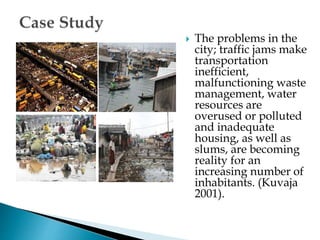
 The problems in the
city; traffic jams make
transportation
inefficient,
malfunctioning waste
management, water
resources are
overused or polluted
and inadequate
housing, as well as
slums, are becoming
reality for an
increasing number of
inhabitants. (Kuvaja
2001).
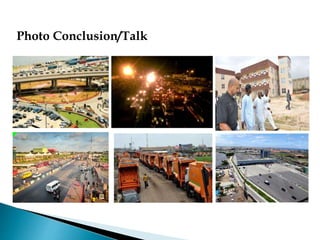
 How ever there is a gradual reversal of these
trend that used to characterize the “old” Lagos.
 Environmental decisions and committment in line
within the millennium development goals
(MDGs) specifically target 11, 12 and 13 have
been made and the results are visible for all to see.
 Target 11: Integrate the principles of sustainable
development into the state policies and
programmes and reverse the loss of environmental
resources.
 Target 12: Halve by 2015, the proportion of people
without sustainable access to safe drinking water
and basic sanitation.
 Target 13: By 2015, To Achieve A Significant
Improvement in the Lives of at Least 100 Million
Slum Dwellers.
Photo Conclusion/Talk
THANK YOU

Leadership in Environmental Resource Management

  • 1.
    ENVIRONMENTAL DECISIONS INTHE MANAGEMENT OF RESOURCES By Dr (Mrs.) Mogo Contact me: felichimogo@yahoo.com Find me on Linkedin: Felicia Chinwe Mogo PhD (Ecology/Ecotoxicology) M.Sc. (Environmental Science and Technology: Ecotoxicology) PGD (Environmental Science & Technology) B.Sc. (Biological Science)
  • 2.
     Introduction; Whatis Environment and Natural Resources  Management of Natural Resources  Sustainable Development  Environmental Impact Assessment (EIA); a Decision Making Tool  Responsibility of Leaders  Case Study
  • 3.
     Literally, environment isany thing that surrounds us.  The natural environment encompasses all living and non- livings occurring naturally on earth.
  • 4.
    The concept ofthe natural environment can be distinguished by components: Complete ecological units that function as natural systems without massive human intervention, including all vegetation, organisms and natural phenomena that occur within their boundaries. Universal natural resources and physical phenomena that lack clear-cut boundaries, such as air, water, and climate, as well as energy, etc.
  • 5.
    The natural environment is contrastedwith the built environment, which comprises the areas and components that are strongly influenced by humans.
  • 6.
     From theabove, natural resources is an integral part of the environment.  Natural resources is often characterized by amounts of biodiversity and geo-diversity existent in various ecosystem.
  • 7.
     Depending onthe stage of development, natural resources may be referred to as Potential, Actual Reserved, or Stock resources:
  • 8.
     Prevention ofDepletion  Ensure Environmental Sustainability
  • 9.
     Management ofnatural resources focuses on issues that affects both present and future generations, in other words, sustainable development.  *Recall the basic needs of human;
  • 10.
    Sustainable development is a developmentthat meets the needs of the present generation without compromising the ability of future generations top meet their own needs. .
  • 11.
     According tothe Brundtland Commission, sustainable development is a mode of human development in which resource use aims to meet human needs while ensuring the sustainability of natural systems and the environment, so that these needs can be met not only in the present, but also for generations to come.
  • 12.
     EIA isan important decision making tool as it enables us make effective decisions as it concerns the management of resources
  • 13.
     EIA isan assessment of the possible positive or negative impact that a proposed project may have on the environment, together consisting of the environmental, social and economic aspects.  The purpose of the assessment is to ensure that decision makers consider the ensuing environmental impacts when deciding whether to proceed with a project.
  • 14.
     Public sectoroperations invariably consume natural resources, such as fossil fuels and water, and lead to the generation of waste products, including greenhouse gas emissions, paper and obsolete Information and Communications Technology (ICT) equipment.
  • 15.
    1. Identify and understandthe legislative, regulatory and policy requirements that underpin the environmental management framework e.g. the EIA Act 1992 and comply with the requirements.
  • 16.
    2. Review existingoperations and environmental impacts Figure 1 illustrates a simple approach to establish:  what is brought into the office, principally through procurement activities;  how it is used inside the office and influenced by core business processes and user behaviour; and  what leaves the office as waste or as a by-product of these activities.
  • 17.
    Figure 1: Summaryof major inputs, outputs and activities in office- based operations
  • 18.
    3. Prioritise, planand commit to action: The prioritisation of environmental issues will help to target action plans and resources, and should have regard to an entity’s:  obligations under the environmental management framework and  activities and environmental impacts
  • 19.
    4. Build anenvironmentally aware culture  Commit to improving environmental performance activities and environmental impacts  Create awareness through training and communication  Empower staff through engagement
  • 20.
     Many ofthe generally acknowledged global environmental problems are directly or indirectly caused by the creation, operation, or disposal of the built environment undertaken by man
  • 21.
    In recent past, Lagoshas often been referred to as the dirtiest, most disorganized, and the most unsafe mega-city in the world.
  • 22.
     Lagos wasseen as an intolerable place, which offers minimum resources for a healthy, safe, and productive life.
  • 23.
     The problemsin the city; traffic jams make transportation inefficient, malfunctioning waste management, water resources are overused or polluted and inadequate housing, as well as slums, are becoming reality for an increasing number of inhabitants. (Kuvaja 2001).
  • 24.
     How everthere is a gradual reversal of these trend that used to characterize the “old” Lagos.  Environmental decisions and committment in line within the millennium development goals (MDGs) specifically target 11, 12 and 13 have been made and the results are visible for all to see.
  • 25.
     Target 11:Integrate the principles of sustainable development into the state policies and programmes and reverse the loss of environmental resources.  Target 12: Halve by 2015, the proportion of people without sustainable access to safe drinking water and basic sanitation.  Target 13: By 2015, To Achieve A Significant Improvement in the Lives of at Least 100 Million Slum Dwellers.
  • 26.
  • 27.