LIFE CYCLE ASSESSMENT
AND POLICY MAKING
1
Dr. Stefanos Fotiou, UNEP
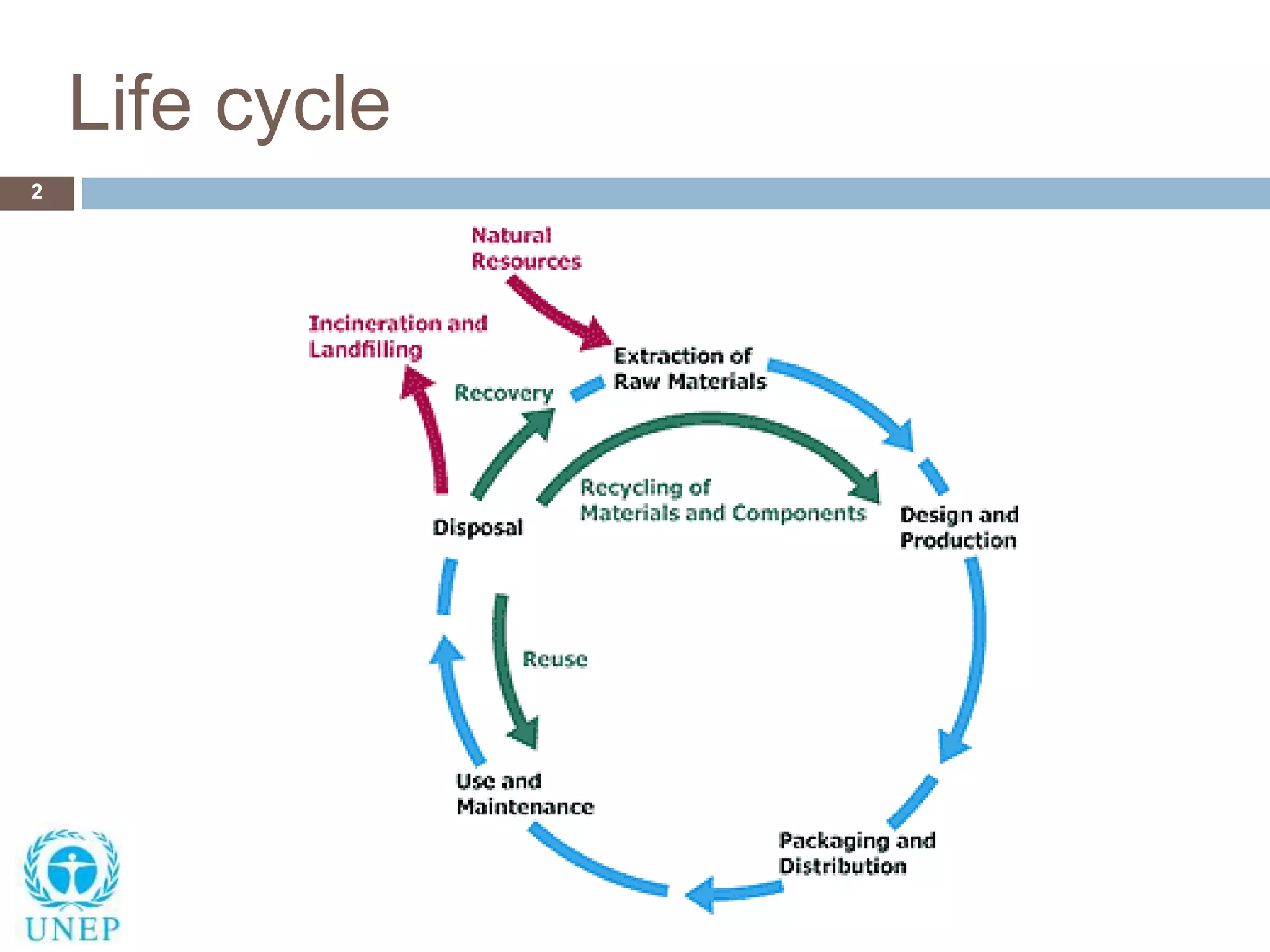
Life cycle
2
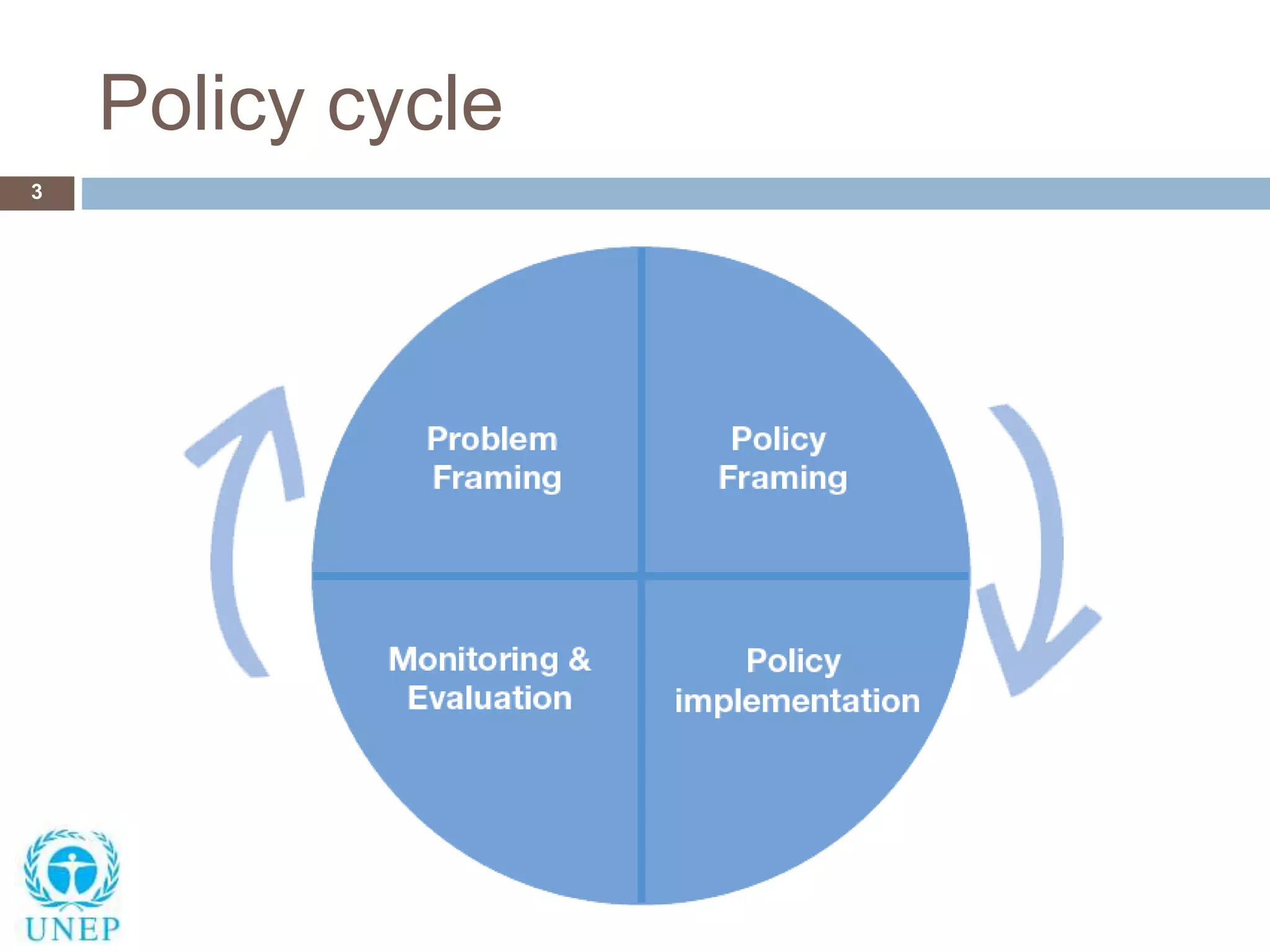
Policy cycle
3
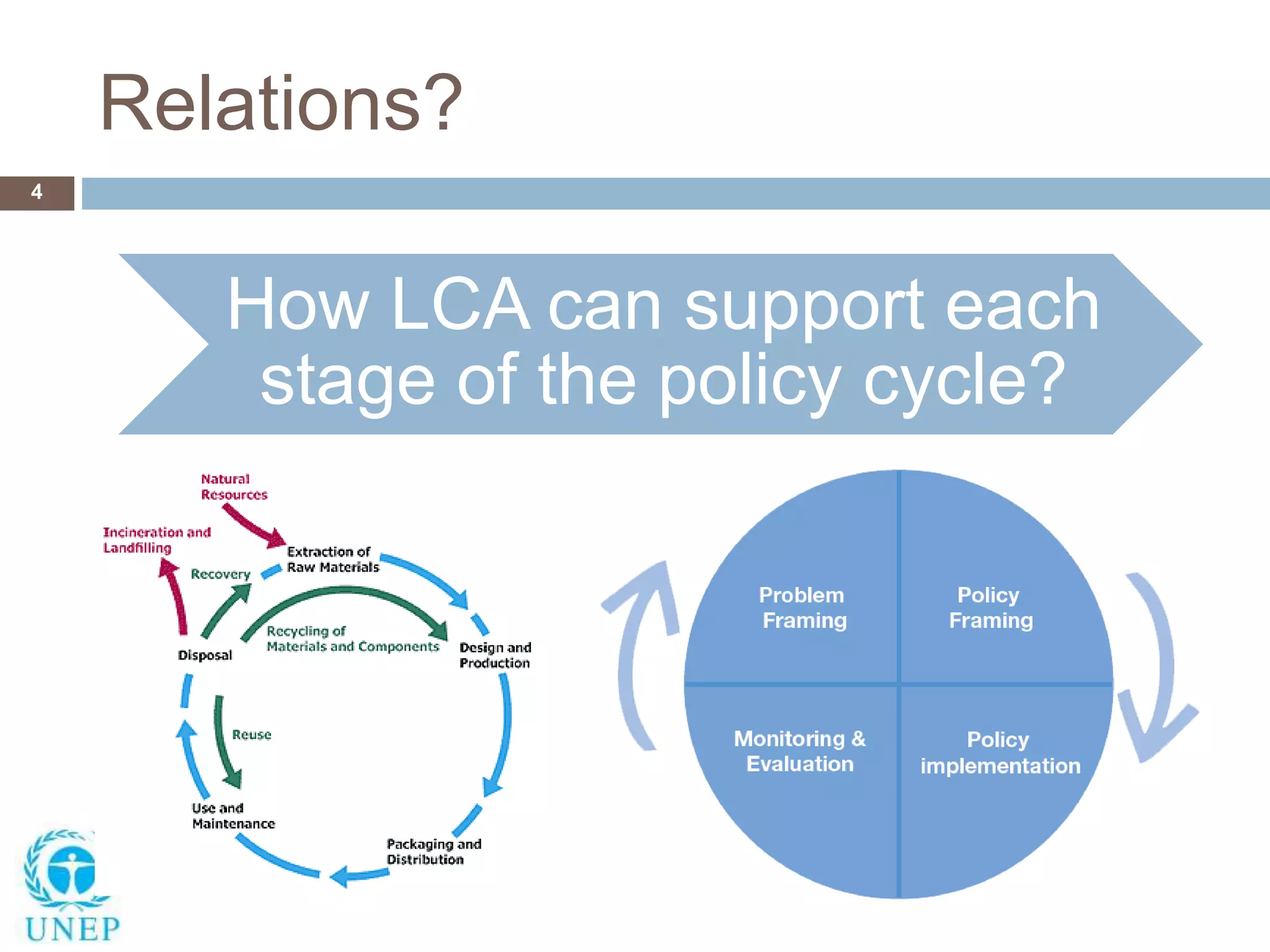
Relations?
4
How LCA can support each
stage of the policy cycle?
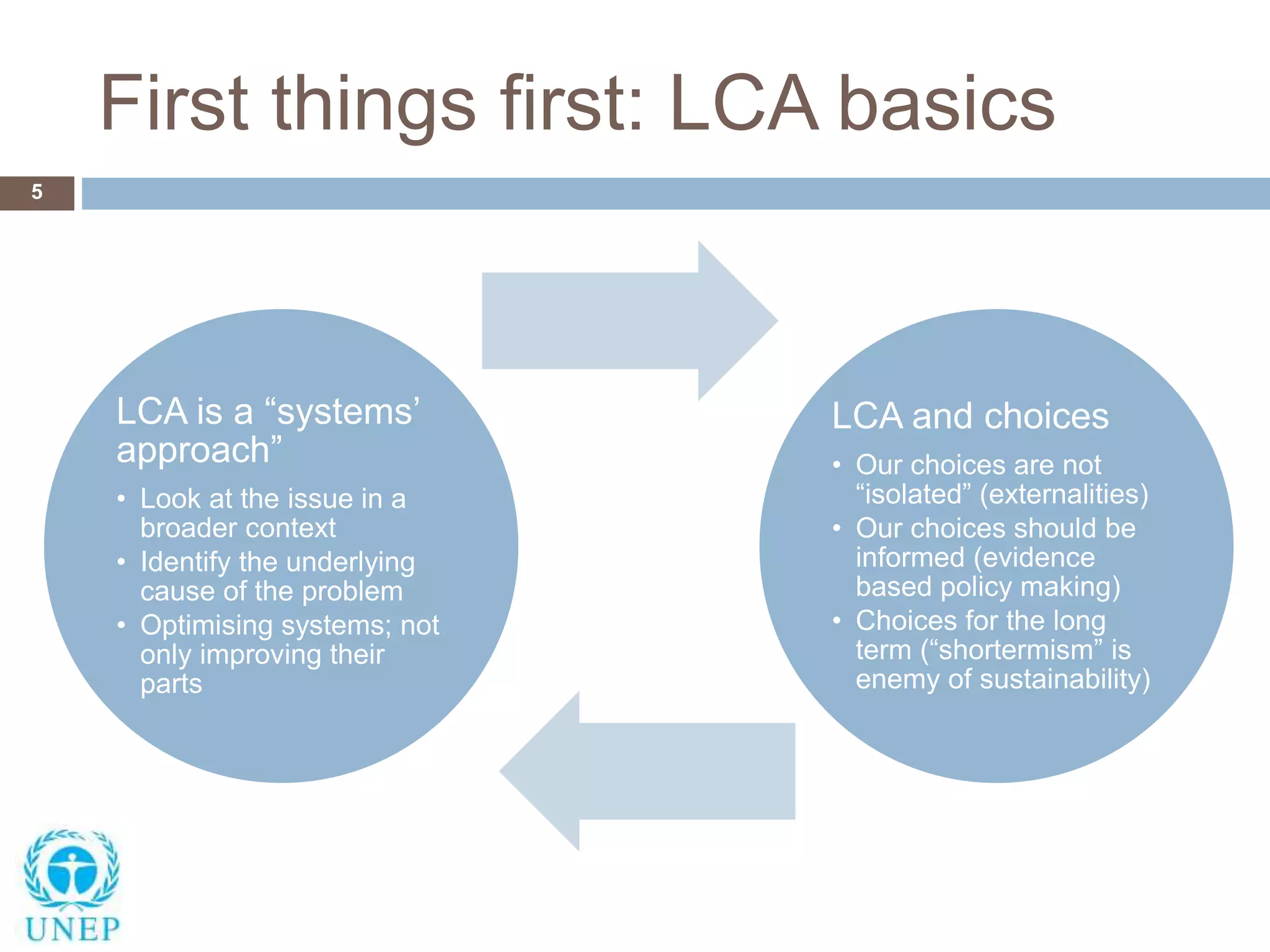
First things first: LCA basics
5
LCA is a “systems’
approach”
• Look at the issue in a
broader context
• Identify the underlying
cause of the problem
• Optimising systems; not
only improving their
parts
LCA and choices
• Our choices are not
“isolated” (externalities)
• Our choices should be
informed (evidence
based policy making)
• Choices for the long
term (“shortermism” is
enemy of sustainability)
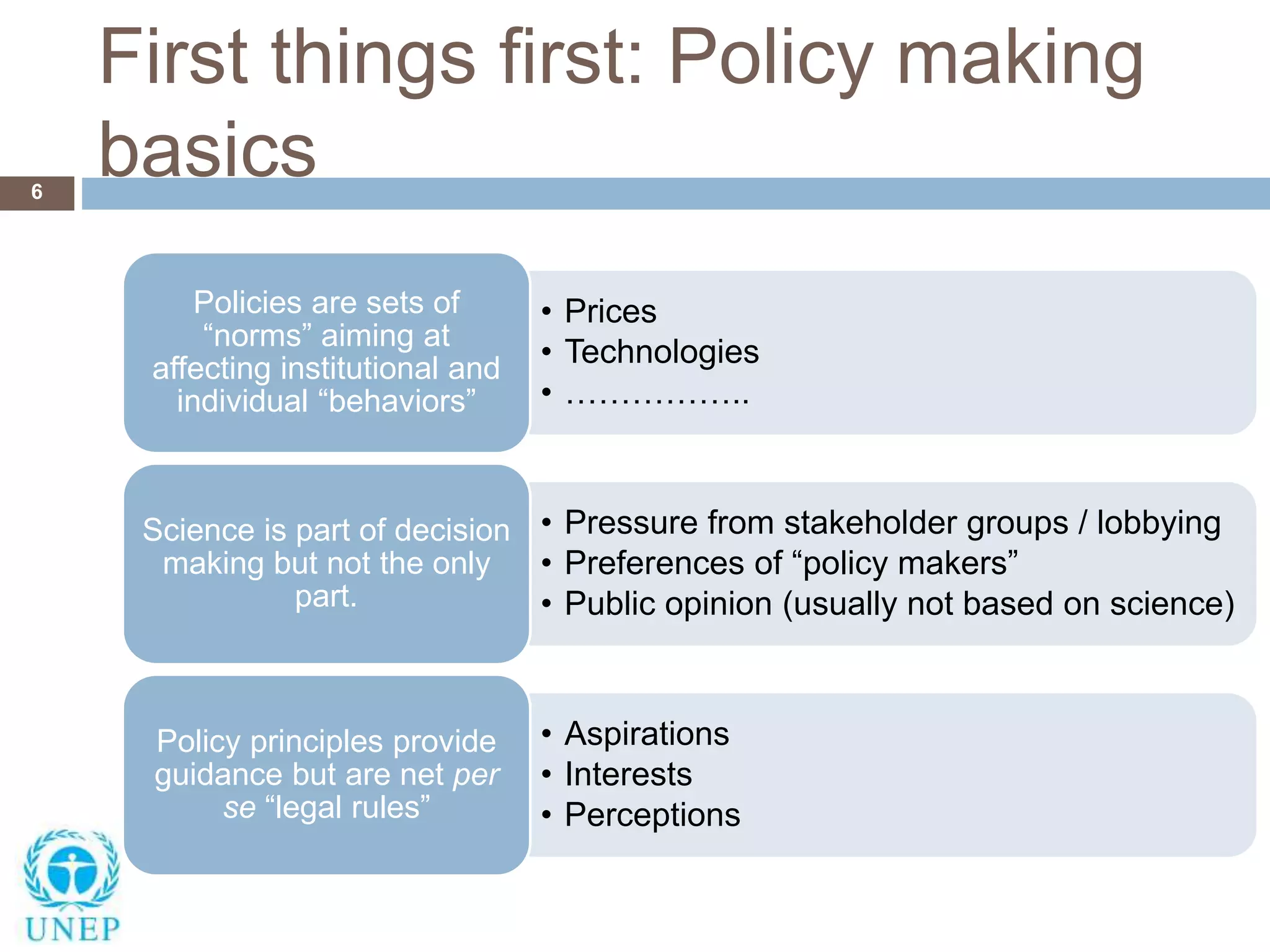
First things first: Policy making
basics6
• Prices
• Technologies
• ……………..
Policies are sets of
“norms” aiming at
affecting institutional and
individual “behaviors”
• Pressure from stakeholder groups / lobbying
• Preferences of “policy makers”
• Public opinion (usually not based on science)
Science is part of decision
making but not the only
part.
• Aspirations
• Interests
• Perceptions
Policy principles provide
guidance but are net per
se “legal rules”
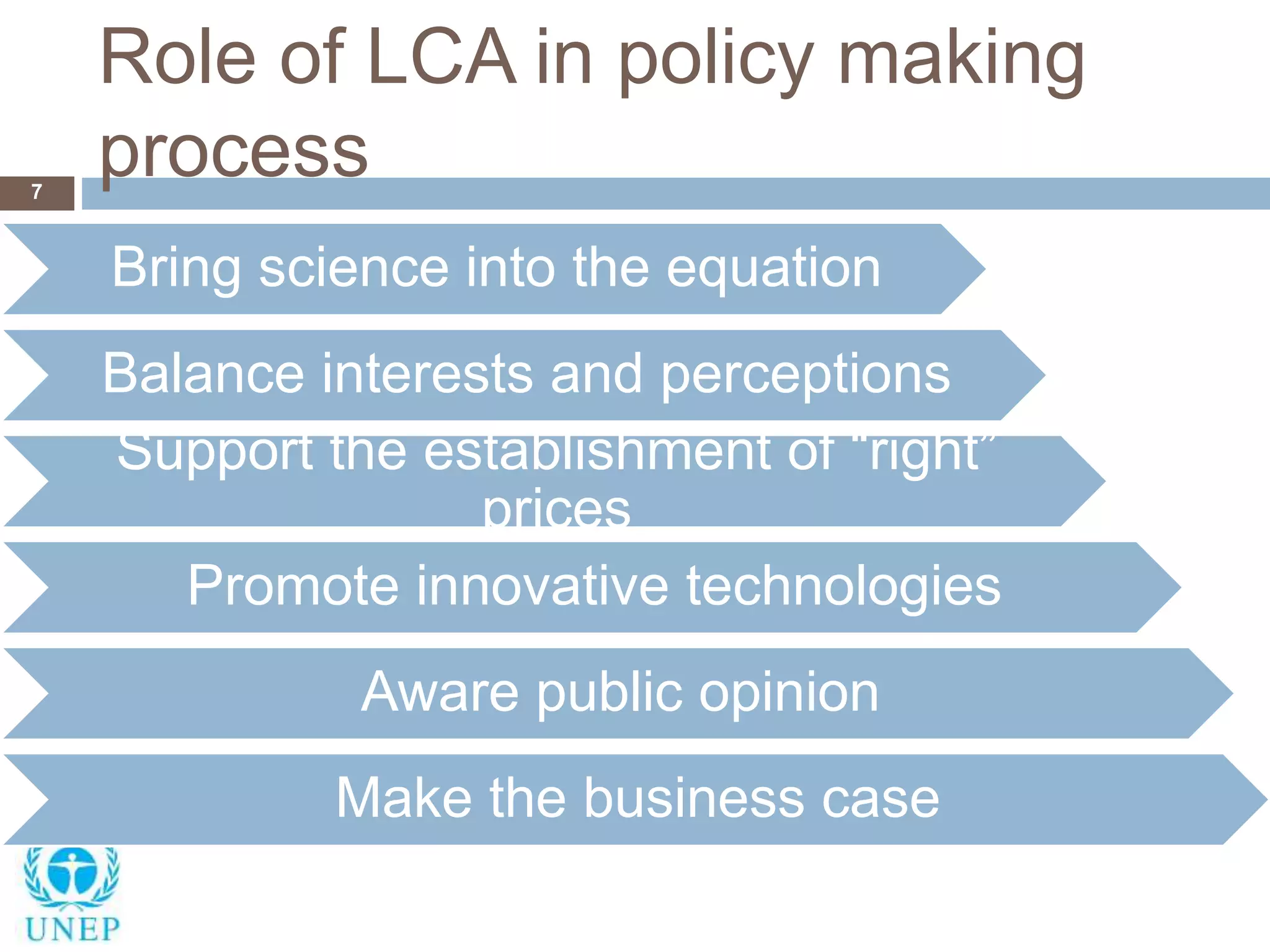
Role of LCA in policy making
process7
Bring science into the equation
Balance interests and perceptions
Support the establishment of “right”
prices
Promote innovative technologies
Aware public opinion
Make the business case
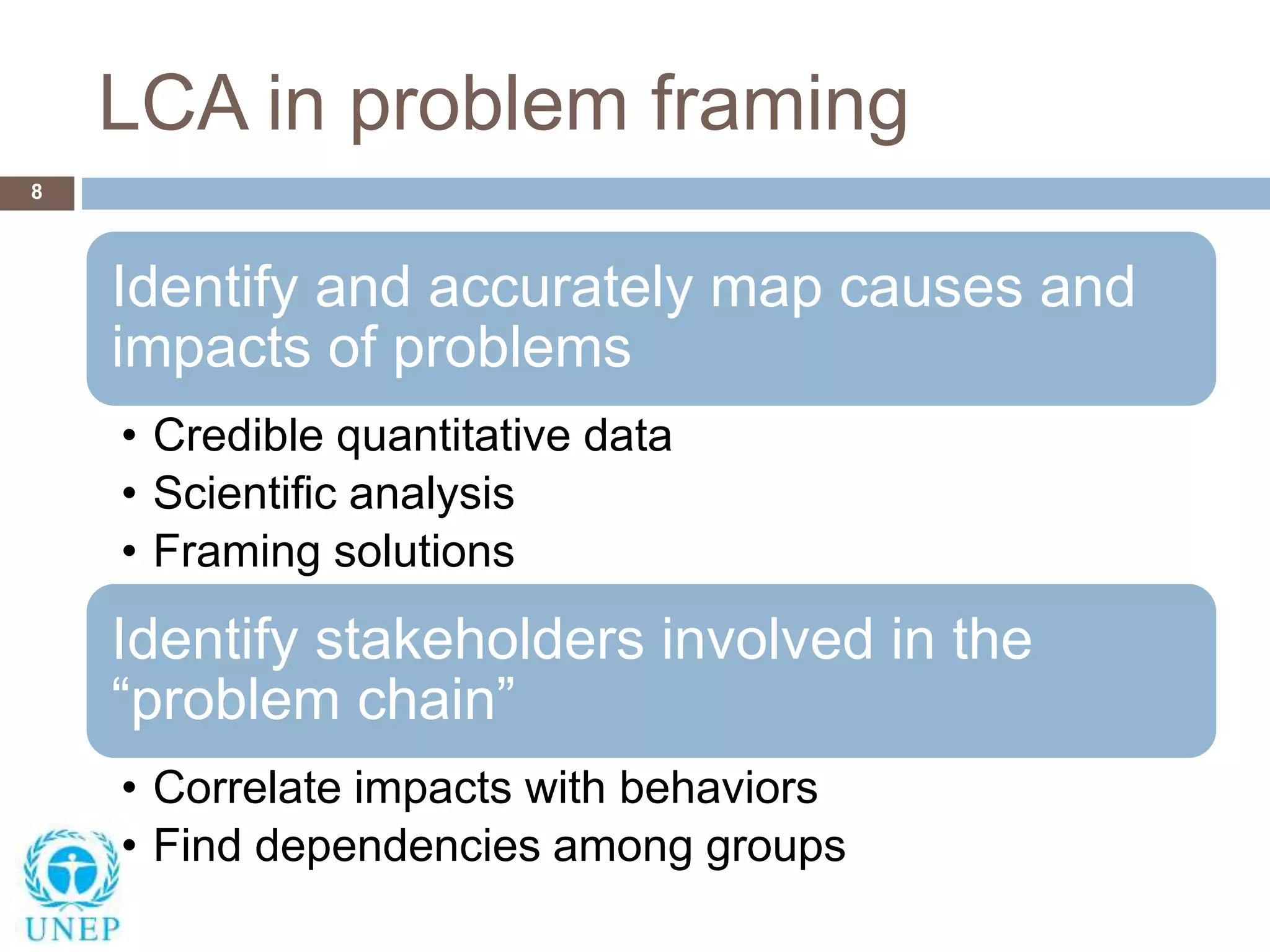
LCA in problem framing
8
Identify and accurately map causes and
impacts of problems
• Credible quantitative data
• Scientific analysis
• Framing solutions
Identify stakeholders involved in the
“problem chain”
• Correlate impacts with behaviors
• Find dependencies among groups
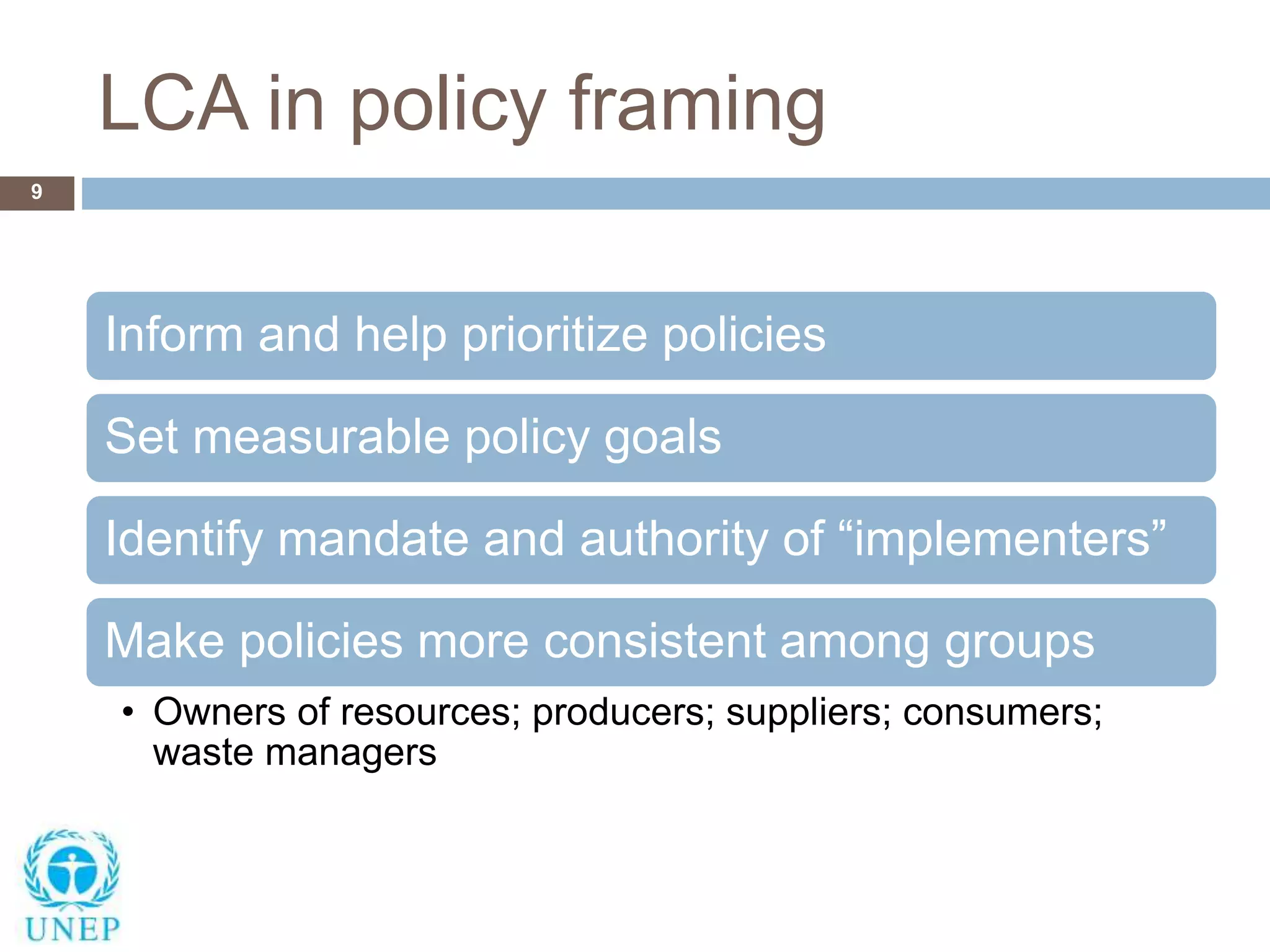
LCA in policy framing
9
Inform and help prioritize policies
Set measurable policy goals
Identify mandate and authority of “implementers”
Make policies more consistent among groups
• Owners of resources; producers; suppliers; consumers;
waste managers
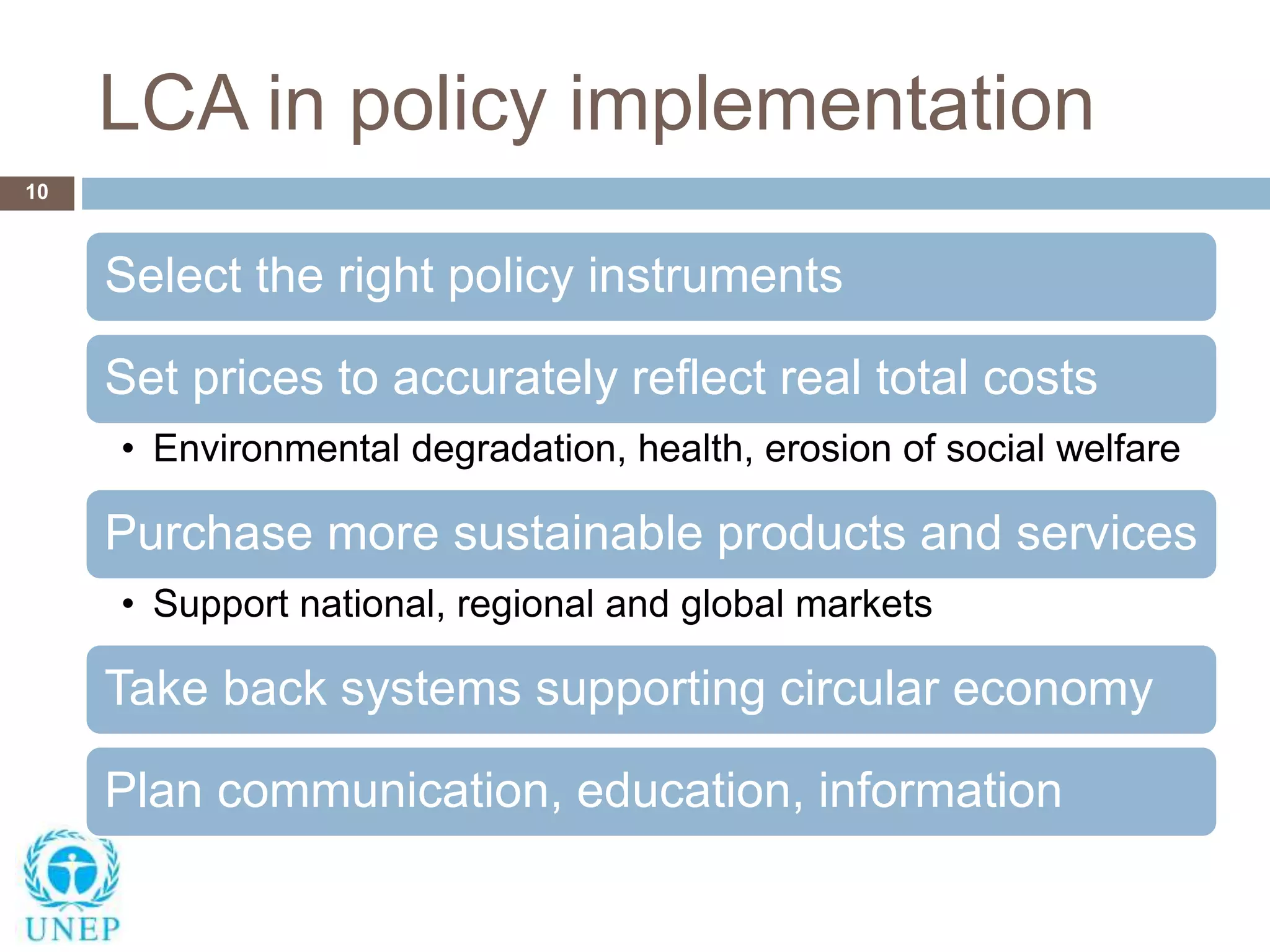
LCA in policy implementation
10
Select the right policy instruments
Set prices to accurately reflect real total costs
• Environmental degradation, health, erosion of social welfare
Purchase more sustainable products and services
• Support national, regional and global markets
Take back systems supporting circular economy
Plan communication, education, information
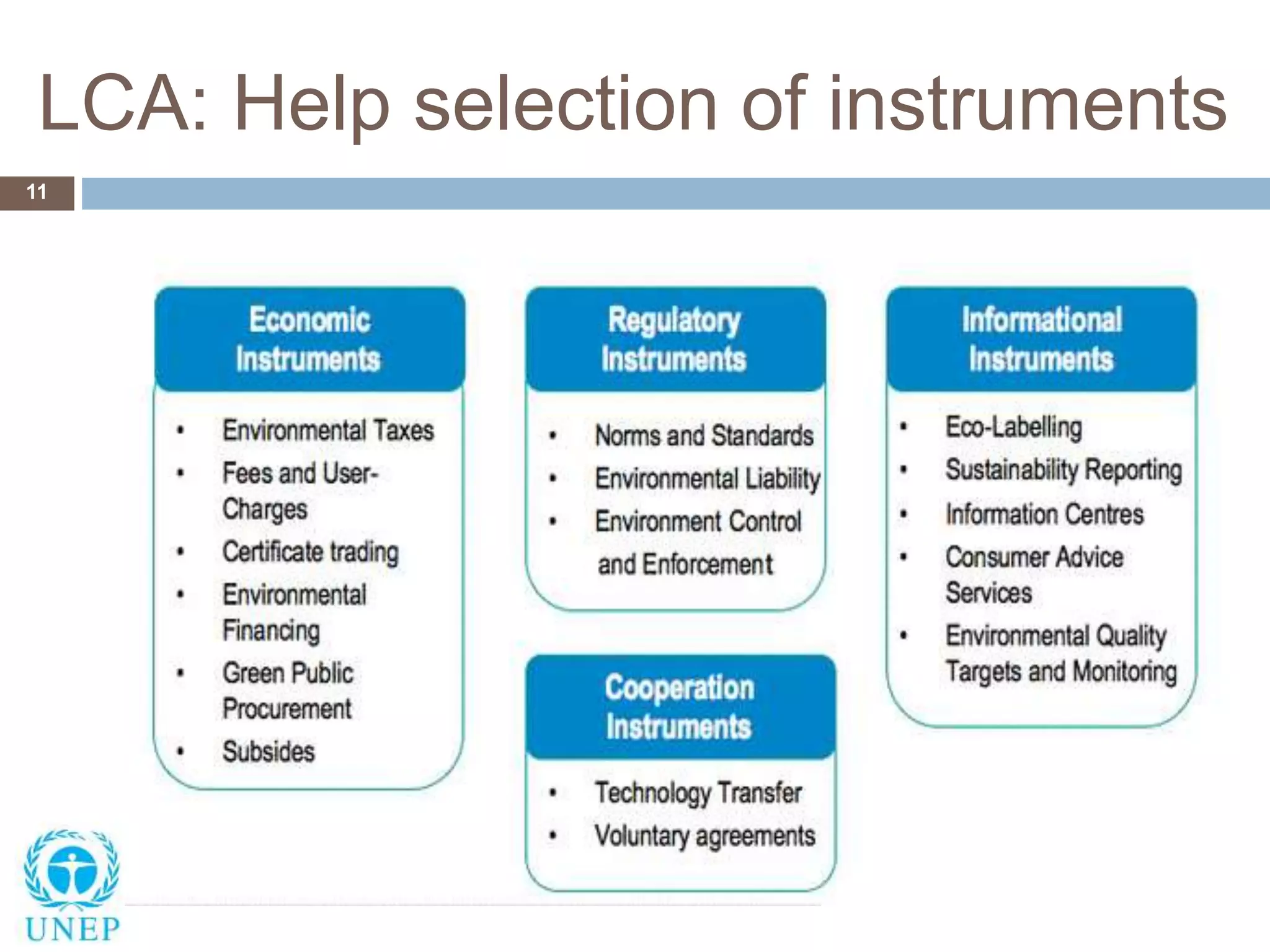
LCA: Help selection of instruments
11
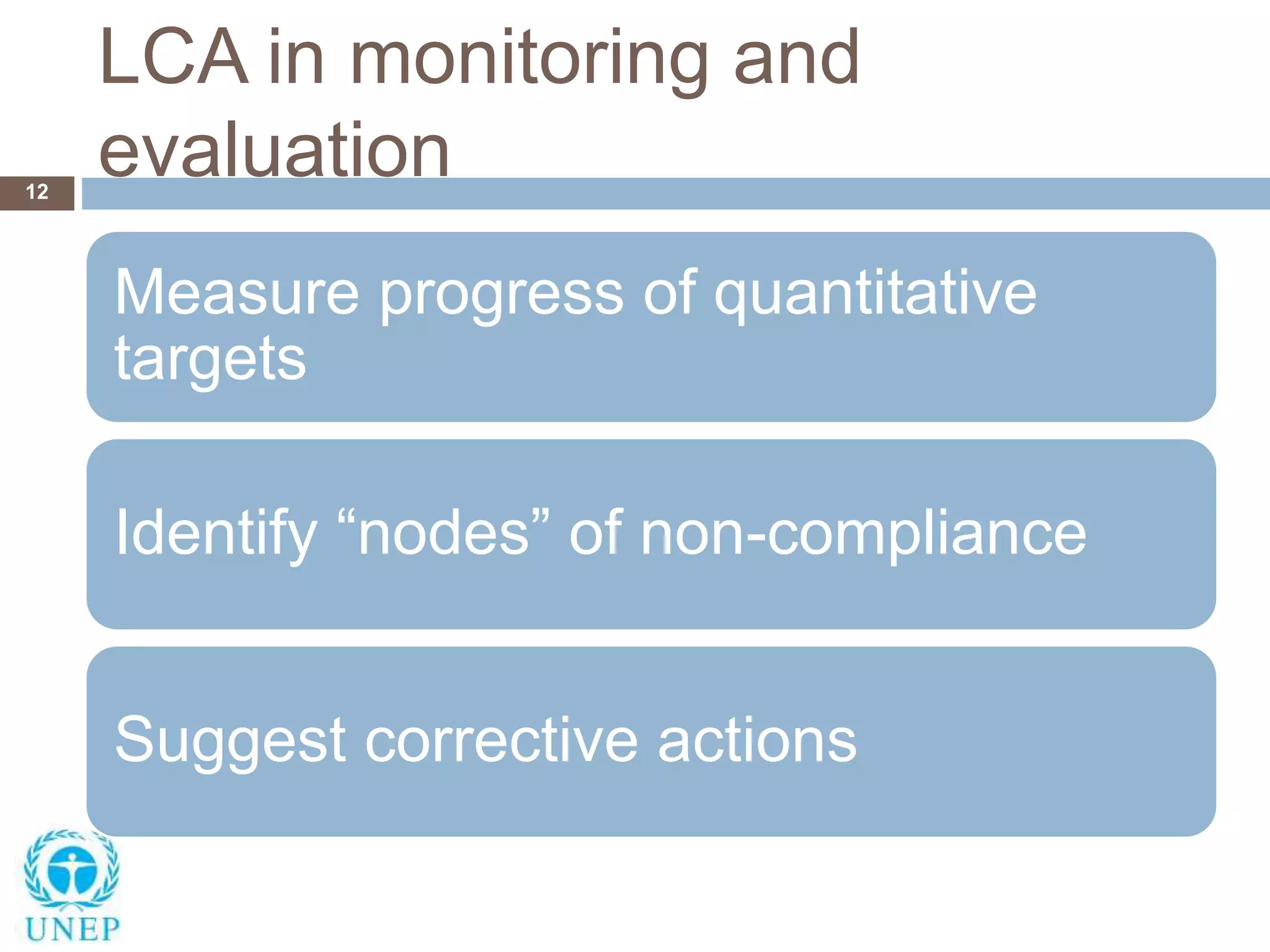
LCA in monitoring and
evaluation12
Measure progress of quantitative
targets
Identify “nodes” of non-compliance
Suggest corrective actions
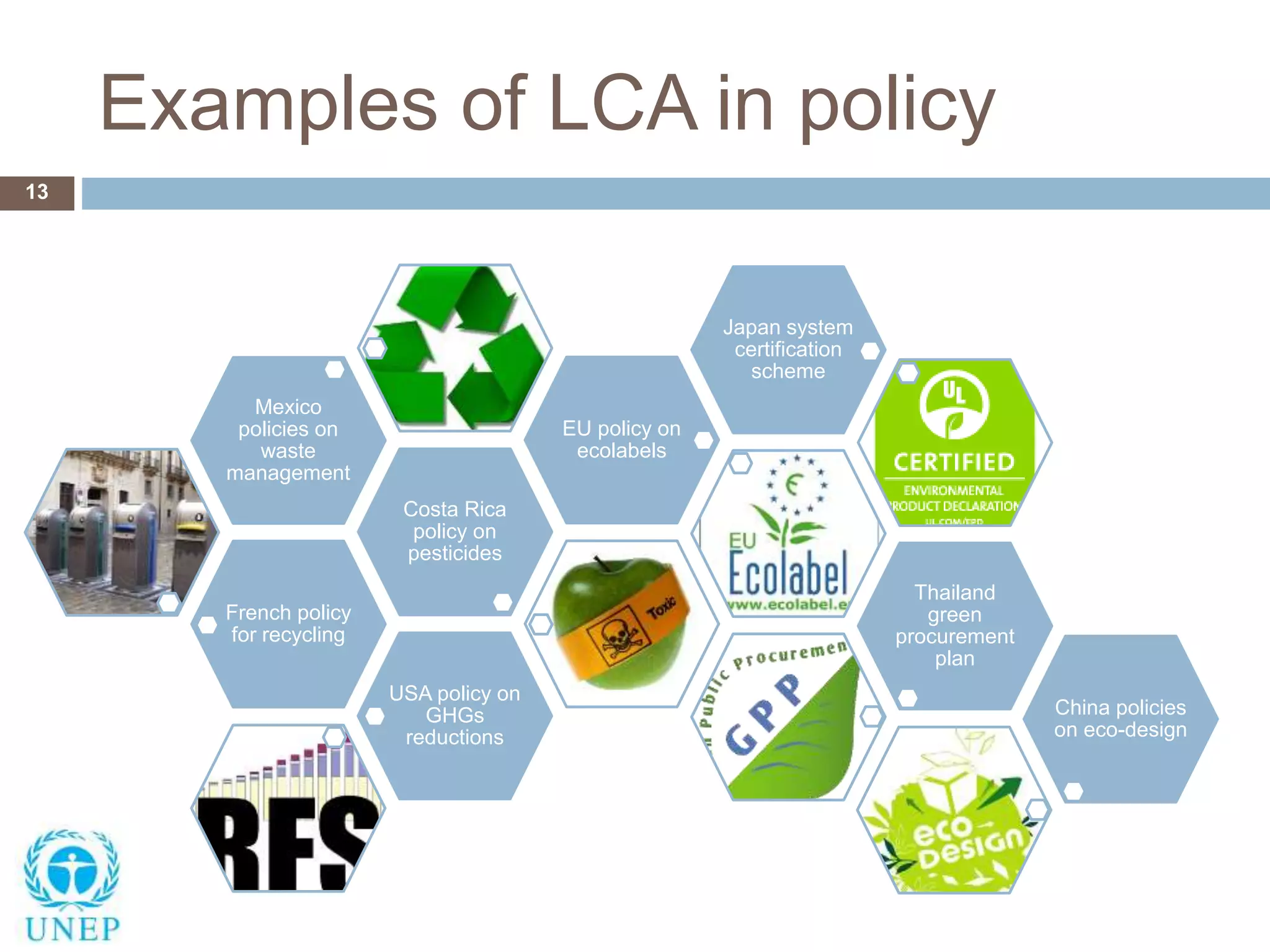
Examples of LCA in policy
13
French policy
for recycling
Costa Rica
policy on
pesticides
Mexico
policies on
waste
management
EU policy on
ecolabels
Japan system
certification
scheme
Thailand
green
procurement
plan
USA policy on
GHGs
reductions
China policies
on eco-design
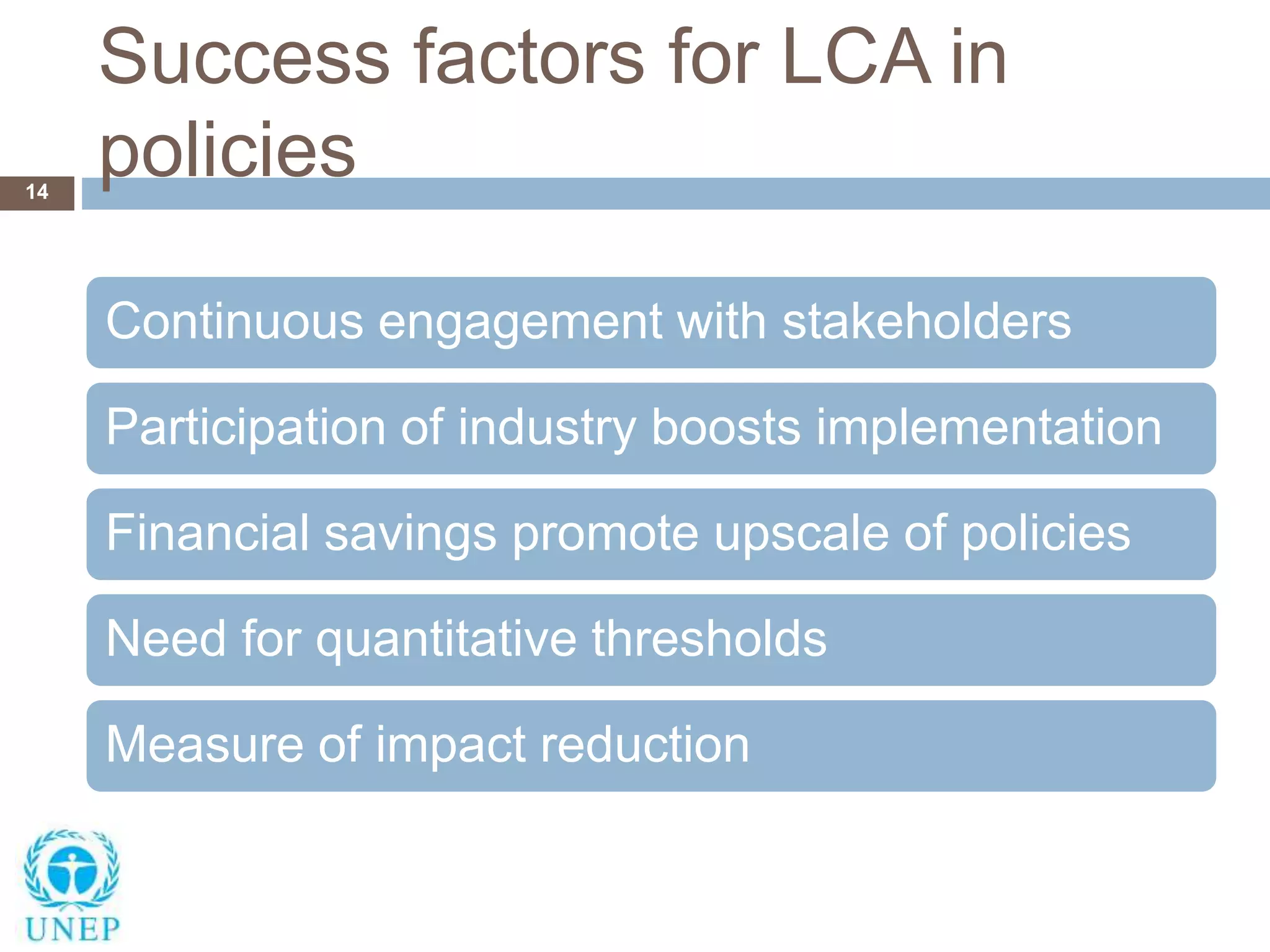
Success factors for LCA in
policies14
Continuous engagement with stakeholders
Participation of industry boosts implementation
Financial savings promote upscale of policies
Need for quantitative thresholds
Measure of impact reduction
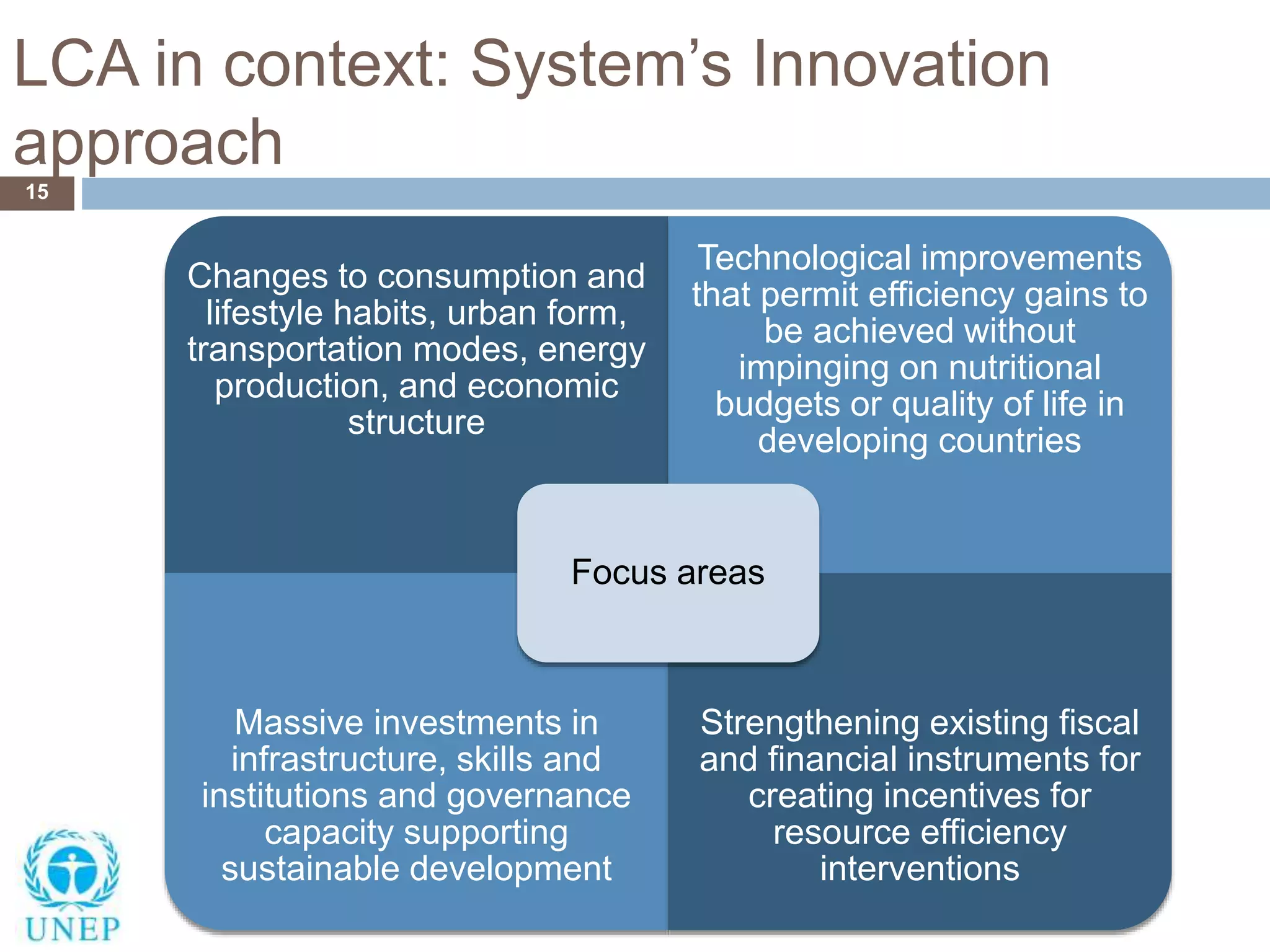
LCA in context: System’s Innovation
approach
15
Changes to consumption and
lifestyle habits, urban form,
transportation modes, energy
production, and economic
structure
Technological improvements
that permit efficiency gains to
be achieved without
impinging on nutritional
budgets or quality of life in
developing countries
Massive investments in
infrastructure, skills and
institutions and governance
capacity supporting
sustainable development
Strengthening existing fiscal
and financial instruments for
creating incentives for
resource efficiency
interventions
Focus areas
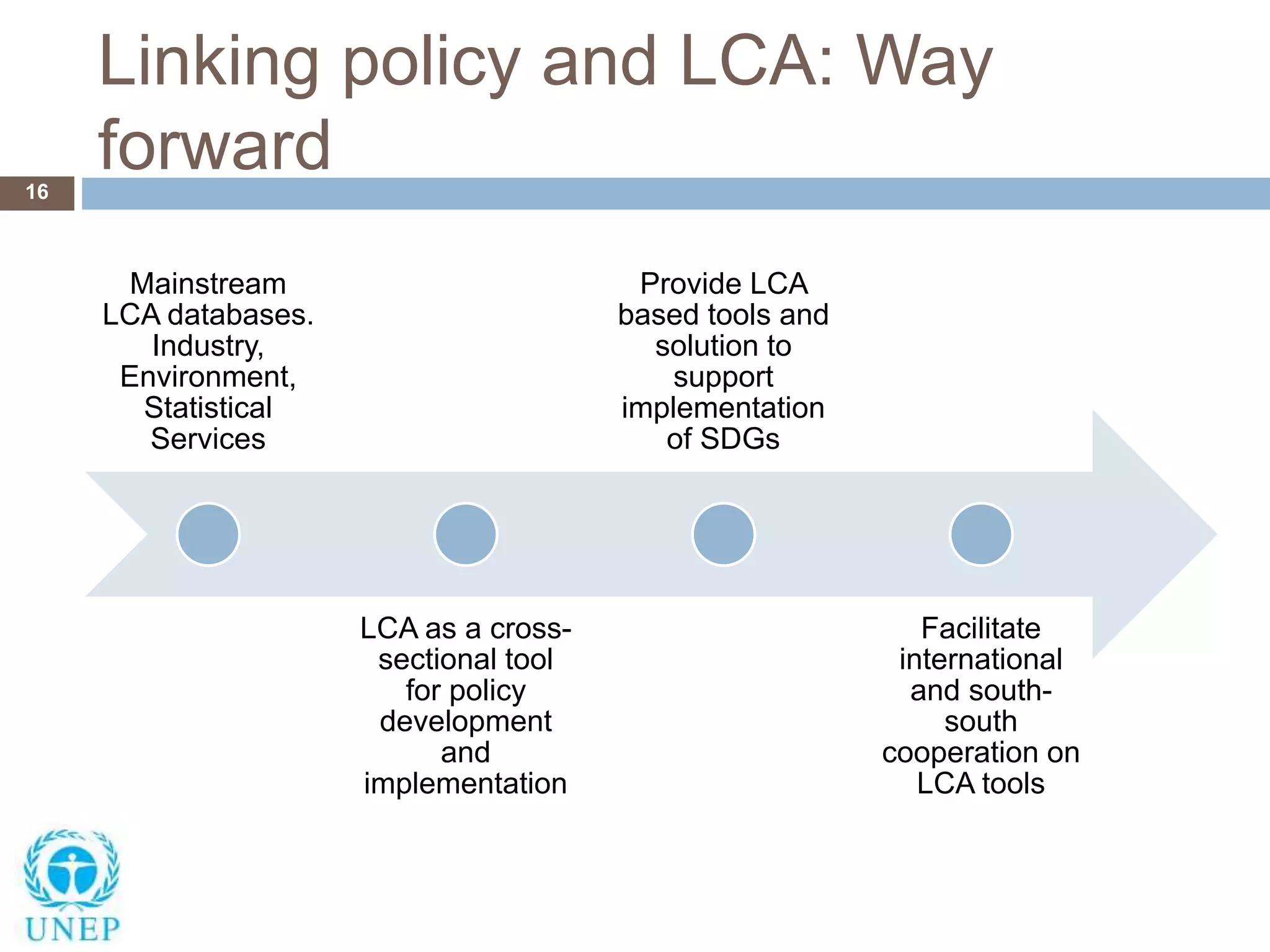
Linking policy and LCA: Way
forward16
Mainstream
LCA databases.
Industry,
Environment,
Statistical
Services
LCA as a cross-
sectional tool
for policy
development
and
implementation
Provide LCA
based tools and
solution to
support
implementation
of SDGs
Facilitate
international
and south-
south
cooperation on
LCA tools
stefanos.fotiou@unep.org
@stefanosfotiou
Thank you!17

Life Cycle Assessment and the Policy Cycle

  • 1.
    LIFE CYCLE ASSESSMENT ANDPOLICY MAKING 1 Dr. Stefanos Fotiou, UNEP
  • 2.
  • 3.
  • 4.
    Relations? 4 How LCA cansupport each stage of the policy cycle?
  • 5.
    First things first:LCA basics 5 LCA is a “systems’ approach” • Look at the issue in a broader context • Identify the underlying cause of the problem • Optimising systems; not only improving their parts LCA and choices • Our choices are not “isolated” (externalities) • Our choices should be informed (evidence based policy making) • Choices for the long term (“shortermism” is enemy of sustainability)
  • 6.
    First things first:Policy making basics6 • Prices • Technologies • …………….. Policies are sets of “norms” aiming at affecting institutional and individual “behaviors” • Pressure from stakeholder groups / lobbying • Preferences of “policy makers” • Public opinion (usually not based on science) Science is part of decision making but not the only part. • Aspirations • Interests • Perceptions Policy principles provide guidance but are net per se “legal rules”
  • 7.
    Role of LCAin policy making process7 Bring science into the equation Balance interests and perceptions Support the establishment of “right” prices Promote innovative technologies Aware public opinion Make the business case
  • 8.
    LCA in problemframing 8 Identify and accurately map causes and impacts of problems • Credible quantitative data • Scientific analysis • Framing solutions Identify stakeholders involved in the “problem chain” • Correlate impacts with behaviors • Find dependencies among groups
  • 9.
    LCA in policyframing 9 Inform and help prioritize policies Set measurable policy goals Identify mandate and authority of “implementers” Make policies more consistent among groups • Owners of resources; producers; suppliers; consumers; waste managers
  • 10.
    LCA in policyimplementation 10 Select the right policy instruments Set prices to accurately reflect real total costs • Environmental degradation, health, erosion of social welfare Purchase more sustainable products and services • Support national, regional and global markets Take back systems supporting circular economy Plan communication, education, information
  • 11.
    LCA: Help selectionof instruments 11
  • 12.
    LCA in monitoringand evaluation12 Measure progress of quantitative targets Identify “nodes” of non-compliance Suggest corrective actions
  • 13.
    Examples of LCAin policy 13 French policy for recycling Costa Rica policy on pesticides Mexico policies on waste management EU policy on ecolabels Japan system certification scheme Thailand green procurement plan USA policy on GHGs reductions China policies on eco-design
  • 14.
    Success factors forLCA in policies14 Continuous engagement with stakeholders Participation of industry boosts implementation Financial savings promote upscale of policies Need for quantitative thresholds Measure of impact reduction
  • 15.
    LCA in context:System’s Innovation approach 15 Changes to consumption and lifestyle habits, urban form, transportation modes, energy production, and economic structure Technological improvements that permit efficiency gains to be achieved without impinging on nutritional budgets or quality of life in developing countries Massive investments in infrastructure, skills and institutions and governance capacity supporting sustainable development Strengthening existing fiscal and financial instruments for creating incentives for resource efficiency interventions Focus areas
  • 16.
    Linking policy andLCA: Way forward16 Mainstream LCA databases. Industry, Environment, Statistical Services LCA as a cross- sectional tool for policy development and implementation Provide LCA based tools and solution to support implementation of SDGs Facilitate international and south- south cooperation on LCA tools
  • 17.