SUSTAINABLE PUBLIC PROCUREMENT
(SPP)
Natalia Alexeeva
Head of Central Asia Sub-regional Office
UN Environment
27 October 2017
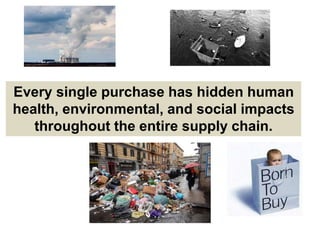
Every single purchase has hidden human
health, environmental, and social impacts
throughout the entire supply chain.
SUSTAINABLE
PROCUREMENT?
A HUGE OPPORTUNITY TO
PROMOTE SUSTAINABLE
DEVELOPMENT AND THE 2030
DEVELOPMENT AGENDA
..
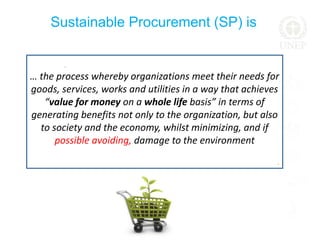
Sustainable Procurement (SP) is
… the process whereby organizations meet their needs for
goods, services, works and utilities in a way that achieves
“value for money on a whole life basis” in terms of
generating benefits not only to the organization, but also
to society and the economy, whilst minimizing, and if
possible avoiding, damage to the environment
,
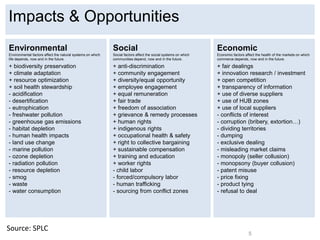
Environmental
Environmental factors affect the natural systems on which
life depends, now and in the future.
+ biodiversity preservation
+ climate adaptation
+ resource optimization
+ soil health stewardship
- acidification
- desertification
- eutrophication
- freshwater pollution
- greenhouse gas emissions
- habitat depletion
- human health impacts
- land use change
- marine pollution
- ozone depletion
- radiation pollution
- resource depletion
- smog
- waste
- water consumption
Social
Social factors affect the social systems on which
communities depend, now and in the future.
+ anti-discrimination
+ community engagement
+ diversity/equal opportunity
+ employee engagement
+ equal remuneration
+ fair trade
+ freedom of association
+ grievance & remedy processes
+ human rights
+ indigenous rights
+ occupational health & safety
+ right to collective bargaining
+ sustainable compensation
+ training and education
+ worker rights
- child labor
- forced/compulsory labor
- human trafficking
- sourcing from conflict zones
Economic
Economic factors affect the health of the markets on which
commerce depends, now and in the future.
+ fair dealings
+ innovation research / investment
+ open competition
+ transparency of information
+ use of diverse suppliers
+ use of HUB zones
+ use of local suppliers
- conflicts of interest
- corruption (bribery, extortion…)
- dividing territories
- dumping
- exclusive dealing
- misleading market claims
- monopoly (seller collusion)
- monopsony (buyer collusion)
- patent misuse
- price fixing
- product tying
- refusal to deal
Impacts & Opportunities
5
Source: SPLC
6
• The 10YFP Programme on Sustainable
Public Procurement (SPP), led by UN
Environment, is a global multi-stakeholder
platform that supports the implementation of
SPP.
• 107 Partner Organizations and 14 Individual
Experts in more than 40 countries around the
globe
• Builds synergies between partners to achieve
the Sustainable Development Goals (SDG)
target on SPP.
The 10YFP SPP Programme - working
together to accelerate the shift to SPP
Mauritius
Costa Rica
Colombia
Ecuador
Peru
Brazil
Chile
Argentina
Morocco
India Vietnam
Ukraine
Moldova
Belarus
Mongolia
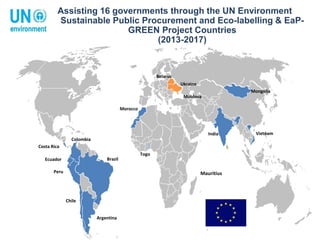
Assisting 16 governments through the UN Environment
Sustainable Public Procurement and Eco-labelling & EaP-
GREEN Project Countries
(2013-2017)
Togo
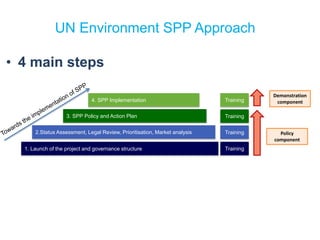
UN Environment SPP Approach
1. Launch of the project and governance structure
2.Status Assessment, Legal Review, Prioritisation, Market analysis
3. SPP Policy and Action Plan
4. SPP Implementation Training
Training
Training
Training
Policy
component
Demonstration
component
• 4 main steps
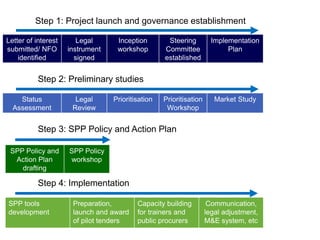
Step 1: Project launch and governance establishment
Letter of interest
submitted/ NFO
identified
Legal
instrument
signed
Inception
workshop
Steering
Committee
established
Implementation
Plan
Step 2: Preliminary studies
Status
Assessment
Legal
Review
Prioritisation Prioritisation
Workshop
Market Study
Step 3: SPP Policy and Action Plan
Step 4: Implementation
SPP Policy and
Action Plan
drafting
SPP Policy
workshop
SPP tools
development
Preparation,
launch and award
of pilot tenders
Capacity building
for trainers and
public procurers
Communication,
legal adjustment,
M&E system, etc
10
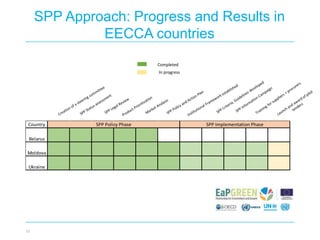
SPP Approach: Progress and Results in
EECCA countries
In progress
Completed
Country
Belarus
Moldova
Ukraine
SPP Policy Phase SPP Implementation Phase
11
• The 10YFP Programme SPP, led by UN
Environment, is a global multi-stakeholder
platform that supports the implementation of
SPP.
• 107 Partner Organizations and 14 Individual
Experts in more than 40 countries around the
globe
• Builds synergies between partners to achieve
the Sustainable Development Goals (SDG)
target on SPP.
The 10YFP SPP Programme - working
together to accelerate the shift to SPP
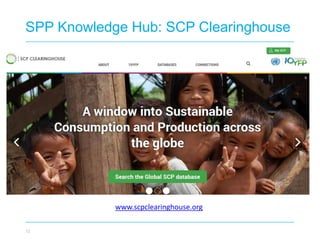
SPP Knowledge Hub: SCP Clearinghouse
12
www.scpclearinghouse.org
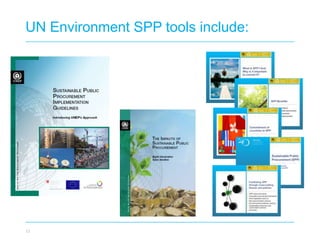
UN Environment SPP tools include:
13
14
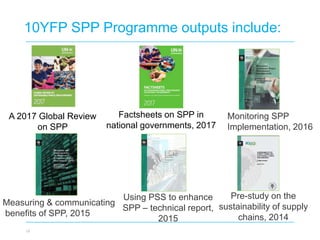
10YFP SPP Programme outputs include:
Factsheets on SPP in
national governments, 2017
Monitoring SPP
Implementation, 2016
Measuring & communicating
benefits of SPP, 2015
Using PSS to enhance
SPP – technical report,
2015
Pre-study on the
sustainability of supply
chains, 2014
A 2017 Global Review
on SPP
Thanks!
www.unep.org

Sustainable Public Procurement

  • 1.
    SUSTAINABLE PUBLIC PROCUREMENT (SPP) NataliaAlexeeva Head of Central Asia Sub-regional Office UN Environment 27 October 2017
  • 2.
    Every single purchasehas hidden human health, environmental, and social impacts throughout the entire supply chain.
  • 3.
    SUSTAINABLE PROCUREMENT? A HUGE OPPORTUNITYTO PROMOTE SUSTAINABLE DEVELOPMENT AND THE 2030 DEVELOPMENT AGENDA
  • 4.
    .. Sustainable Procurement (SP)is … the process whereby organizations meet their needs for goods, services, works and utilities in a way that achieves “value for money on a whole life basis” in terms of generating benefits not only to the organization, but also to society and the economy, whilst minimizing, and if possible avoiding, damage to the environment ,
  • 5.
    Environmental Environmental factors affectthe natural systems on which life depends, now and in the future. + biodiversity preservation + climate adaptation + resource optimization + soil health stewardship - acidification - desertification - eutrophication - freshwater pollution - greenhouse gas emissions - habitat depletion - human health impacts - land use change - marine pollution - ozone depletion - radiation pollution - resource depletion - smog - waste - water consumption Social Social factors affect the social systems on which communities depend, now and in the future. + anti-discrimination + community engagement + diversity/equal opportunity + employee engagement + equal remuneration + fair trade + freedom of association + grievance & remedy processes + human rights + indigenous rights + occupational health & safety + right to collective bargaining + sustainable compensation + training and education + worker rights - child labor - forced/compulsory labor - human trafficking - sourcing from conflict zones Economic Economic factors affect the health of the markets on which commerce depends, now and in the future. + fair dealings + innovation research / investment + open competition + transparency of information + use of diverse suppliers + use of HUB zones + use of local suppliers - conflicts of interest - corruption (bribery, extortion…) - dividing territories - dumping - exclusive dealing - misleading market claims - monopoly (seller collusion) - monopsony (buyer collusion) - patent misuse - price fixing - product tying - refusal to deal Impacts & Opportunities 5 Source: SPLC
  • 6.
    6 • The 10YFPProgramme on Sustainable Public Procurement (SPP), led by UN Environment, is a global multi-stakeholder platform that supports the implementation of SPP. • 107 Partner Organizations and 14 Individual Experts in more than 40 countries around the globe • Builds synergies between partners to achieve the Sustainable Development Goals (SDG) target on SPP. The 10YFP SPP Programme - working together to accelerate the shift to SPP
  • 7.
    Mauritius Costa Rica Colombia Ecuador Peru Brazil Chile Argentina Morocco India Vietnam Ukraine Moldova Belarus Mongolia Assisting16 governments through the UN Environment Sustainable Public Procurement and Eco-labelling & EaP- GREEN Project Countries (2013-2017) Togo
  • 8.
    UN Environment SPPApproach 1. Launch of the project and governance structure 2.Status Assessment, Legal Review, Prioritisation, Market analysis 3. SPP Policy and Action Plan 4. SPP Implementation Training Training Training Training Policy component Demonstration component • 4 main steps
  • 9.
    Step 1: Projectlaunch and governance establishment Letter of interest submitted/ NFO identified Legal instrument signed Inception workshop Steering Committee established Implementation Plan Step 2: Preliminary studies Status Assessment Legal Review Prioritisation Prioritisation Workshop Market Study Step 3: SPP Policy and Action Plan Step 4: Implementation SPP Policy and Action Plan drafting SPP Policy workshop SPP tools development Preparation, launch and award of pilot tenders Capacity building for trainers and public procurers Communication, legal adjustment, M&E system, etc
  • 10.
    10 SPP Approach: Progressand Results in EECCA countries In progress Completed Country Belarus Moldova Ukraine SPP Policy Phase SPP Implementation Phase
  • 11.
    11 • The 10YFPProgramme SPP, led by UN Environment, is a global multi-stakeholder platform that supports the implementation of SPP. • 107 Partner Organizations and 14 Individual Experts in more than 40 countries around the globe • Builds synergies between partners to achieve the Sustainable Development Goals (SDG) target on SPP. The 10YFP SPP Programme - working together to accelerate the shift to SPP
  • 12.
    SPP Knowledge Hub:SCP Clearinghouse 12 www.scpclearinghouse.org
  • 13.
    UN Environment SPPtools include: 13
  • 14.
    14 10YFP SPP Programmeoutputs include: Factsheets on SPP in national governments, 2017 Monitoring SPP Implementation, 2016 Measuring & communicating benefits of SPP, 2015 Using PSS to enhance SPP – technical report, 2015 Pre-study on the sustainability of supply chains, 2014 A 2017 Global Review on SPP
  • 15.

Editor's Notes

  • #2 UN Environment promotes the worldwide implementation of Sustainable Public Procurement (SPP), a powerful instrument that has the ability to accelerate the shift to more sustainable consumption and production practices. Through its various projects, UN Environment supports the development and implementation of SPP policies in 13 countries and fosters regional cooperation and exchange of know how in Latin America Asia Pacific, Eastern Europe. UN Environment is also the lead of the 10YFP SPP programme, an international collaborative platform that aims at making the case for SPP and supporting all organizations on SPP implementation.
  • #5 4
  • #6 SPLC has identified over 60 impacts and opportunities that can (and should) be addressed via institutional purchasing.
  • #11 In the frame of the EU-funded EaP GREEN project, the UN Environment SPP approach has been rolled out in Belarus, Moldova and Ukraine. While all three countries have significantly progressed or finalized the policy phase with the establishment of national steering committees, the development of assessments on the status of SPP, the legislative conditions and market capacity, as well as the prioritization of sustainable product groups, both Ukraine and Moldova have also adopted National SPP Policy and Action Plans and are successfully progressing on their implementation. In that context, Ukraine and Moldova have established a national task force for SPP implementation, developed SPP tools (such as sustainability criteria and SPP guidelines), received substantive trainings for suppliers and procurers on new sustainability criteria and upcoming changes in tender processes, and are in the process of finalizing the launch and award of initial pilot tenders with sustainability criteria by the end of this year. The scaling up of these activities including the launch and award of additional pilot tenders, the revision of procurement laws, as well as the roll out of UN Environment’s SPP approach in other countries of the EECCA region is planned to be carried out in the coming 4 years.
  • #14 SPP Approach Case studies shared online in the SCP ClearingHouse SPP training toolkit