ENVIRONMENT, DISASTER
MANAGEMENT AND FORESTS
Dr. N. Sai Bhaskar Reddy
Dr. W. G.Prasanna Kumar
Dr. K. Tirupataiah
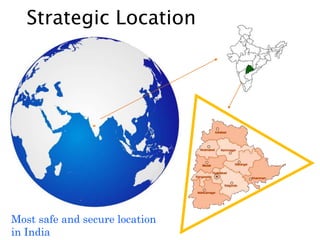
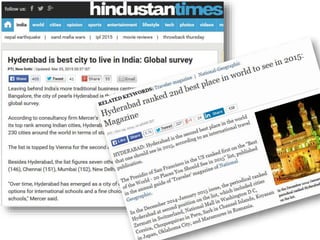
Strategic Location
Most safe and secure location
in India
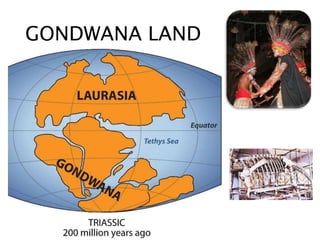
GONDWANA LAND
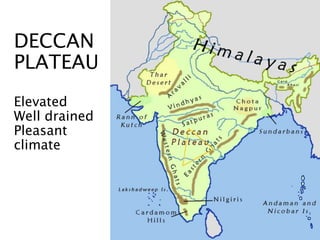
DECCAN
PLATEAU
Elevated
Well drained
Pleasant
climate
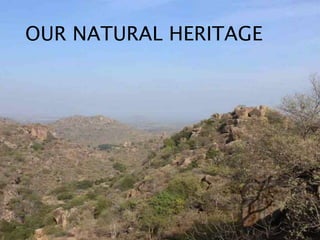
OUR NATURAL HERITAGE
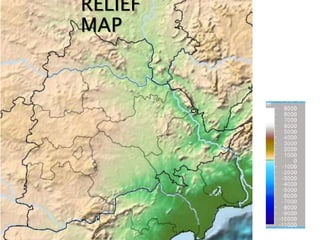
RELIEF
MAP
CLIMATE CHANGE
VARIABILITY IN SEMI-
ARID REGIONS
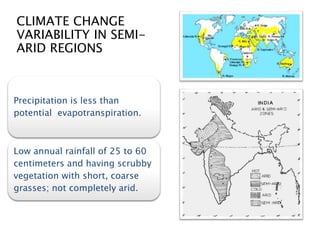
Precipitation is less than
potential evapotranspiration.
Low annual rainfall of 25 to 60
centimeters and having scrubby
vegetation with short, coarse
grasses; not completely arid.
CLIMATE CHANGE VARIABILITY IN
SEMI-ARID REGIONS
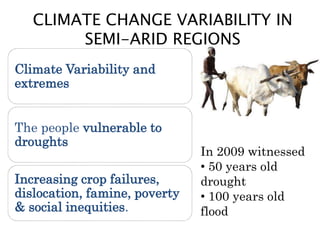
Climate Variability and
extremes
The people vulnerable to
droughts
Increasing crop failures,
dislocation, famine, poverty
& social inequities.
In 2009 witnessed
• 50 years old
drought
• 100 years old
flood
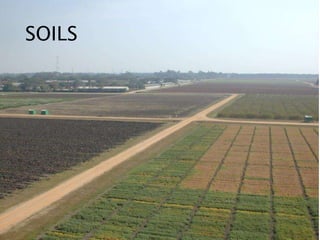
SOILS
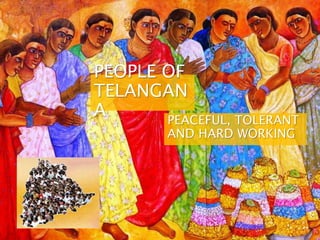
PEOPLE OF
TELANGAN
A PEACEFUL, TOLERANT
AND HARD WORKING
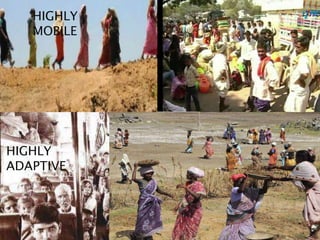
HIGHLY
ADAPTIVE
HIGHLY
MOBILE
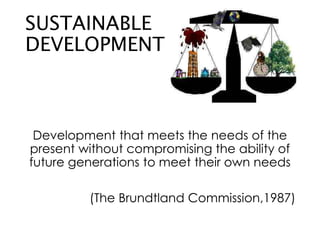
SUSTAINABLE
DEVELOPMENT
Development that meets the needs of the
present without compromising the ability of
future generations to meet their own needs
(The Brundtland Commission,1987)
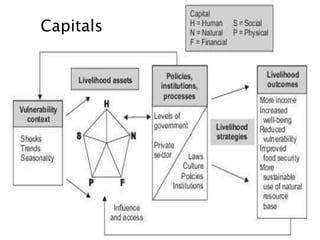
Capitals
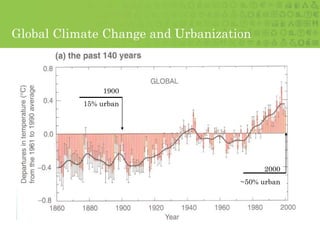
Global Climate Change and Urbanization
1900
15% urban
2000
~50% urban
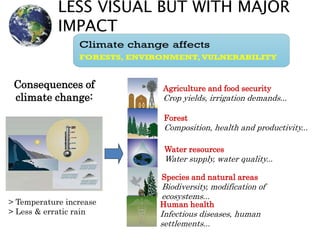
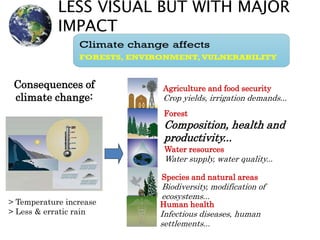
LESS VISUAL BUT WITH MAJOR
IMPACT
> Temperature increase
> Less & erratic rain
Agriculture and food security
Crop yields, irrigation demands...
Forest
Composition, health and productivity...
Water resources
Water supply, water quality...
Species and natural areas
Biodiversity, modification of
ecosystems...
Human health
Infectious diseases, human
settlements...
Consequences of
climate change:
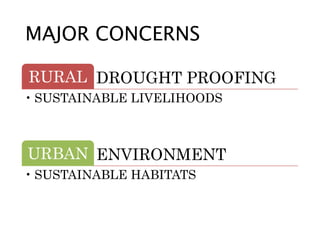
MAJOR CONCERNS
DROUGHT PROOFINGRURAL
• SUSTAINABLE LIVELIHOODS
ENVIRONMENTURBAN
• SUSTAINABLE HABITATS
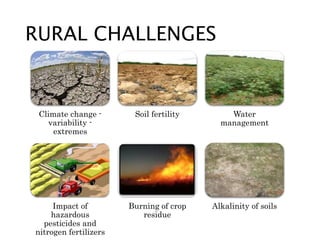
RURAL CHALLENGES
Climate change -
variability -
extremes
Soil fertility Water
management
Impact of
hazardous
pesticides and
nitrogen fertilizers
Burning of crop
residue
Alkalinity of soils
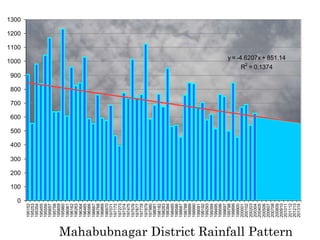
Mahabubnagar District Rainfall Pattern
y = -4.6207x + 851.14
R2
= 0.1374
0
100
200
300
400
500
600
700
800
900
1000
1100
1200
1300
195152
195253
195354
195455
195556
195657
195758
195859
195960
196061
196162
196263
196364
196465
196566
196667
196768
196869
196970
197071
197172
197273
197374
197475
197576
197677
197778
197879
197980
198081
198182
198283
198384
198485
198586
198687
198788
198889
198990
199091
199192
199293
199394
199495
199596
199697
199798
199899
199900
200001
200102
200203
200304
200405
200506
200607
200708
200809
200910
201011
201112
201213
201314
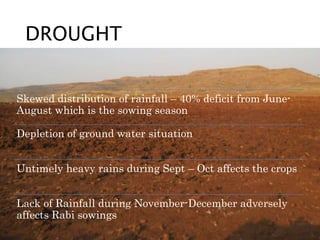
DROUGHT
Skewed distribution of rainfall – 40% deficit from June-
August which is the sowing season
Depletion of ground water situation
Untimely heavy rains during Sept – Oct affects the crops
Lack of Rainfall during November-December adversely
affects Rabi sowings
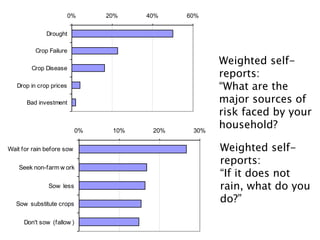
0% 20% 40% 60%
Drought
Crop Failure
Crop Disease
Drop in crop prices
Bad investment
0% 10% 20% 30%
Wait for rain before sow
Seek non-farm w ork
Sow less
Sow substitute crops
Don't sow (fallow )
Weighted self-
reports:
“What are the
major sources of
risk faced by your
household?
Weighted self-
reports:
“If it does not
rain, what do you
do?”
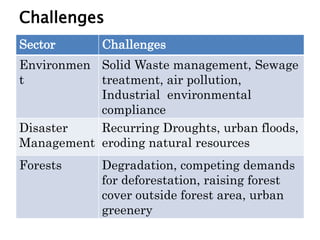
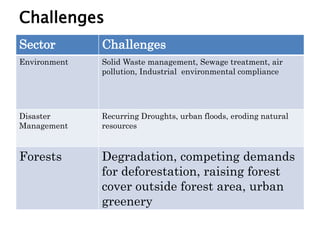
Challenges
Sector Challenges
Environmen
t
Solid Waste management, Sewage
treatment, air pollution,
Industrial environmental
compliance
Disaster
Management
Recurring Droughts, urban floods,
eroding natural resources
Forests Degradation, competing demands
for deforestation, raising forest
cover outside forest area, urban
greenery
•
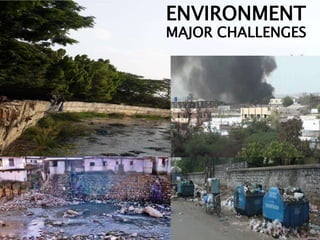
ENVIRONMENT
MAJOR CHALLENGES
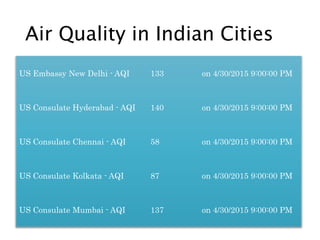
Air Quality in Indian Cities
US Embassy New Delhi - AQI 133 on 4/30/2015 9:00:00 PM
US Consulate Hyderabad - AQI 140 on 4/30/2015 9:00:00 PM
US Consulate Chennai - AQI 58 on 4/30/2015 9:00:00 PM
US Consulate Kolkata - AQI 87 on 4/30/2015 9:00:00 PM
US Consulate Mumbai - AQI 137 on 4/30/2015 9:00:00 PM
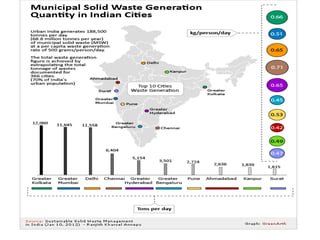
Solid Waste in cities in India
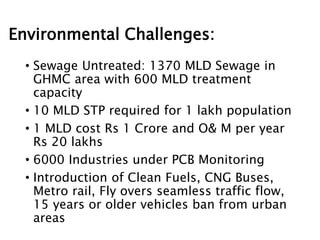
Environmental Challenges:
• Sewage Untreated: 1370 MLD Sewage in
GHMC area with 600 MLD treatment
capacity
• 10 MLD STP required for 1 lakh population
• 1 MLD cost Rs 1 Crore and O& M per year
Rs 20 lakhs
• 6000 Industries under PCB Monitoring
• Introduction of Clean Fuels, CNG Buses,
Metro rail, Fly overs seamless traffic flow,
15 years or older vehicles ban from urban
areas
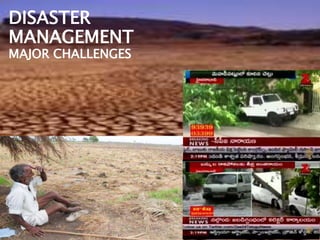
DISASTER
MANAGEMENT
MAJOR CHALLENGES
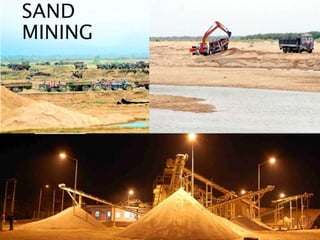
SAND
MINING
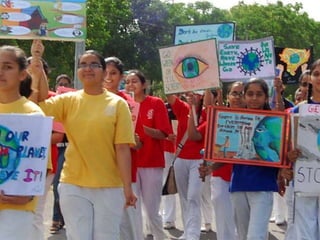
Dealing with Waste
management in
School
Engaging in School based activity
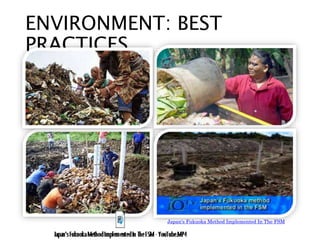
ENVIRONMENT: BEST
PRACTICES
Japan's Fukuoka Method Implemented In The FSM
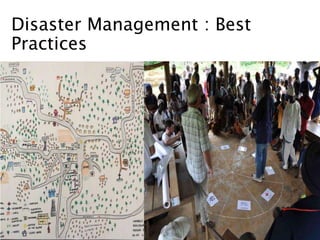
Disaster Management : Best
Practices
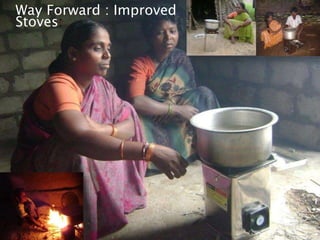
Way Forward : Improved
Stoves:
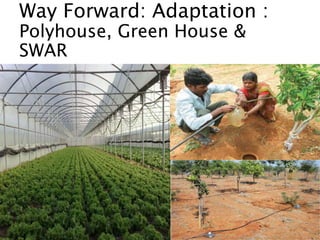
Way Forward: Adaptation :
Polyhouse, Green House &
SWAR
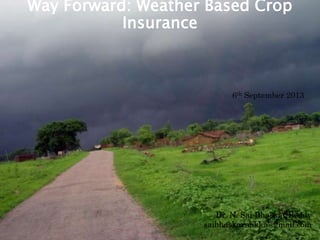
Way Forward: Weather Based Crop
Insurance
Dr. N. Sai Bhaskar Reddy
saibhaskarnakka@gmail.com
6th September 2013
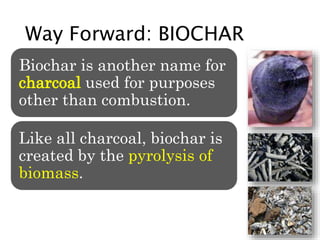
Way Forward: BIOCHAR
Biochar is another name for
charcoal used for purposes
other than combustion.
Like all charcoal, biochar is
created by the pyrolysis of
biomass.
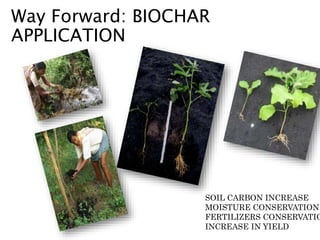
Way Forward: BIOCHAR
APPLICATION
SOIL CARBON INCREASE
MOISTURE CONSERVATION
FERTILIZERS CONSERVATIO
INCREASE IN YIELD
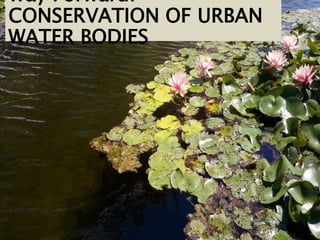
Way Forward:
CONSERVATION OF URBAN
WATER BODIES
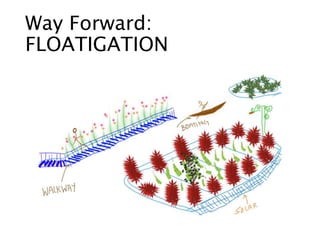
Way Forward:
FLOATIGATION
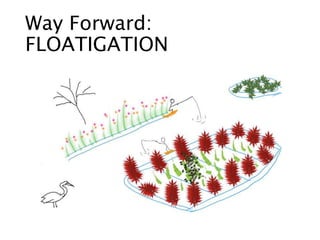
Way Forward:
FLOATIGATION
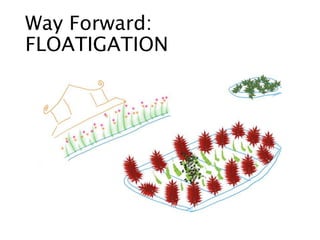
Way Forward:
FLOATIGATION
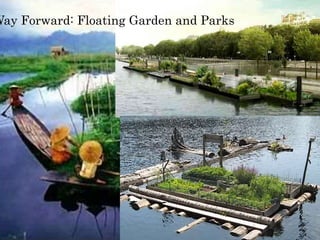
Way Forward: Floating Garden and Parks
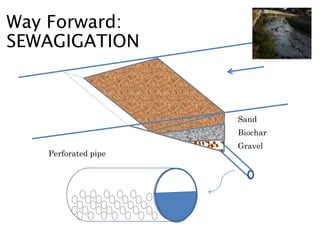
Perforated pipe
Sand
Biochar
Gravel
Way Forward:
SEWAGIGATION
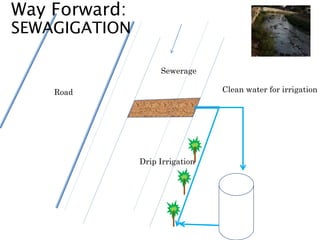
Road
Sewerage
Clean water for irrigation
Drip Irrigation
Way Forward:
SEWAGIGATION
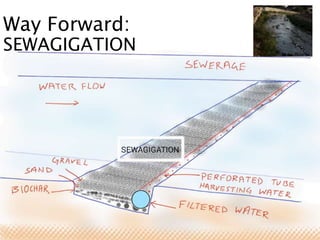
Way Forward:
SEWAGIGATION
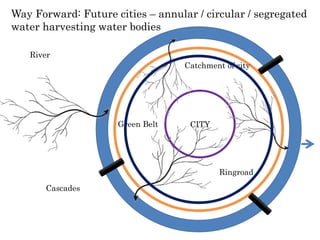
CITY
River
Catchment of city
Green Belt
Ringroad
Cascades
Way Forward: Future cities – annular / circular / segregated
water harvesting water bodies
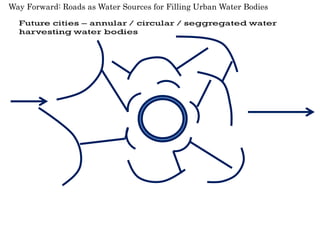
Way Forward: Roads as Water Sources for Filling Urban Water Bodies
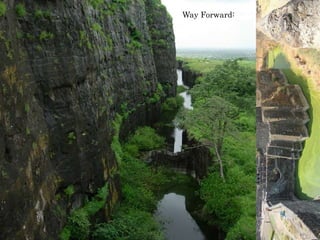
Way Forward:
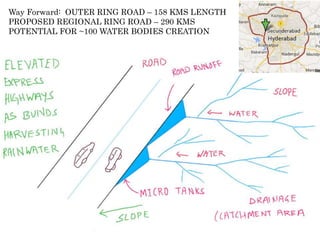
Way Forward: OUTER RING ROAD – 158 KMS LENGTH
PROPOSED REGIONAL RING ROAD – 290 KMS
POTENTIAL FOR ~100 WATER BODIES CREATION
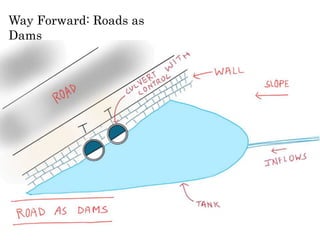
Way Forward: Roads as
Dams
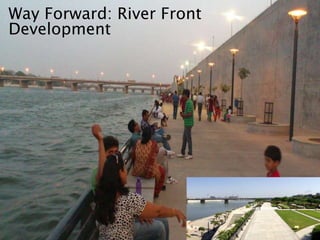
Way Forward:Way Forward: River Front
Development
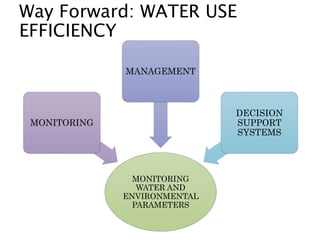
Way Forward: WATER USE
EFFICIENCY
MONITORING
WATER AND
ENVIRONMENTAL
PARAMETERS
MONITORING
MANAGEMENT
DECISION
SUPPORT
SYSTEMS
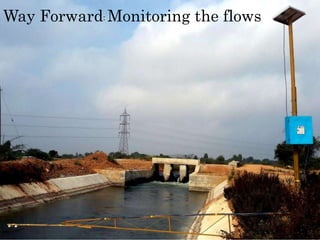
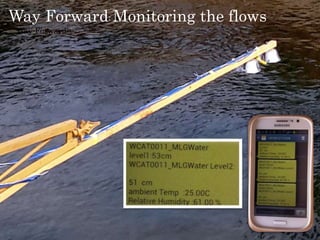
Way Forward: Monitoring the flows
Way Forward:
Way Forward: Monitoring the flows
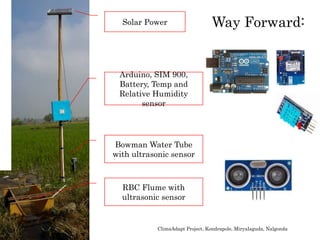
Solar Power
Arduino, SIM 900,
Battery, Temp and
Relative Humidity
sensor
Bowman Water Tube
with ultrasonic sensor
RBC Flume with
ultrasonic sensor
ClimaAdapt Project, Kondrapole, Miryalaguda, Nalgonda
Way Forward:
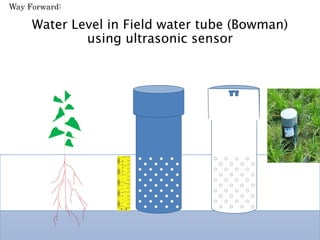
Water Level in Field water tube (Bowman)
using ultrasonic sensor
Way Forward:
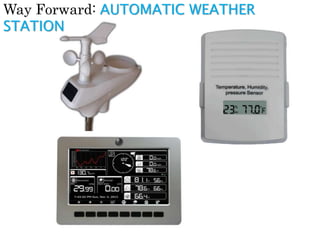
Way Forward: AUTOMATIC WEATHER
STATION
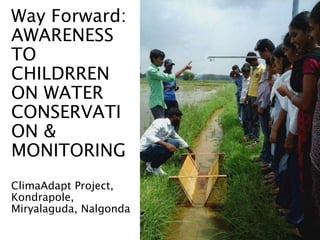
Way Forward:
AWARENESS
TO
CHILDRREN
ON WATER
CONSERVATI
ON &
MONITORING
ClimaAdapt Project,
Kondrapole,
Miryalaguda, Nalgonda
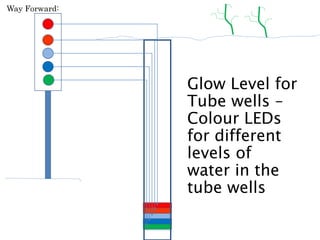
Glow Level for
Tube wells –
Colour LEDs
for different
levels of
water in the
tube wells
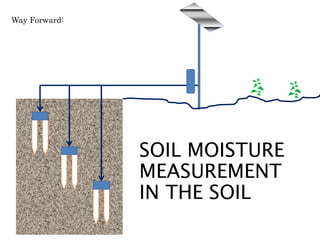
Way Forward:
SOIL MOISTURE
MEASUREMENT
IN THE SOIL
Way Forward:
Way Forward:
Way Forward:
NAPCC – Match NATIONAL
MISSIONS
National Solar Mission: Development and use
of solar energy for power generation
National Mission for Enhanced Energy
Efficiency: yield savings of 10,000 MW.
National Mission on Sustainable Habitat:
energy efficiency for urban planning.
National Water Mission: 20% improvement in
water use efficiency: Water Grid
Way Forward:
NAPCC – Match National
Missions
National Mission for Sustaining the Himalayan
Ecosystem
National Mission for a “Green India”: afforestation of
6 million hectares of forest cover from 23% to 33%
Haritha Haram
National Mission for Sustainable Agriculture: climate-
resilient crops, weather insurance and agriculture :
Mission Kakatiya
National Mission on Strategic Knowledge for Climate
Change for a better understanding.
Way Forward:
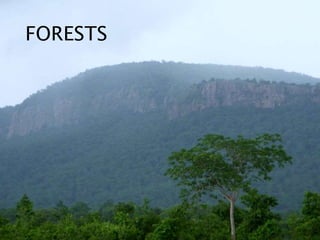
FORESTS
Important forest species
• Teak is the important species growing in,
Adilabad, Nizamabad, Warangal, Karimnagar
and Khammam.
• Fine quality of bamboo is available in the
districts of khammam, Mahaboobnagar,
Adilabad, warangal,
• Abnus leaf (Beedi leaf) major MFP in
Telangana
• custard apples- a livelihoods source
LESS VISUAL BUT WITH MAJOR
IMPACT
> Temperature increase
> Less & erratic rain
Agriculture and food security
Crop yields, irrigation demands...
Forest
Composition, health and
productivity...
Water resources
Water supply, water quality...
Species and natural areas
Biodiversity, modification of
ecosystems...
Human health
Infectious diseases, human
settlements...
Consequences of
climate change:
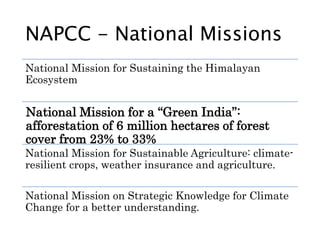
NAPCC - National Missions
National Mission for Sustaining the Himalayan
Ecosystem
National Mission for a “Green India”:
afforestation of 6 million hectares of forest
cover from 23% to 33%
National Mission for Sustainable Agriculture: climate-
resilient crops, weather insurance and agriculture.
National Mission on Strategic Knowledge for Climate
Change for a better understanding.
Important forest species
• Teak is the important species growing in,
Adilabad, Nizamabad, Warangal, Karimnagar
and Khammam.
• Fine quality of bamboo is available in the
districts of khammam, Mahaboobnagar,
Adilabad, warangal,
• Abnus leaf (Beedi leaf) major MFP in
Telangana
• custard apples- a livelihoods source
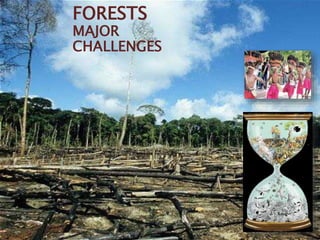
FORESTS
MAJOR
CHALLENGES
Challenges
Sector Challenges
Environment Solid Waste management, Sewage treatment, air
pollution, Industrial environmental compliance
Disaster
Management
Recurring Droughts, urban floods, eroding natural
resources
Forests Degradation, competing demands
for deforestation, raising forest
cover outside forest area, urban
greenery
Telangana ku HARITHA HAARAM
• Aim: to increase green cover up to 33% of
Geographical Area (present 25.16%)
• 230 crore saplings ( 100 cr inside forest,
120 cr outside forest, 10 cr urban areas)
• 40 lakh saplings per assembly
constituency
• Out lay Rs.800 cr/year
• 2015-16 : 41 cr saplings
• 3300 nurseries
• FD, DWMA, Agriculture, Horticulture, TW
depts
Telangana ku HARITHA HAARAM
• Forest area
• Protection, afforestation (blanks), rejuvenation
(degraded), SMC, plantation in RoFR areas
• Outside forest
• Avenue, institutional, Barren hills, Tank
foreshores, river banks, homestead & industrial,
agro-forestry, Smrithivanams, urban residential
areas
Best Practices- GREAT GREEN
WALL OF CHINA
• To raise 90 million acres of new forest
• A Band stretching 2800 miles across North
China
• Largest ecological restoration project in
the world
• Aim to arrest spread of Gobi desert and
“yellow dragons’(dust storms) in to Beijing
• Period 1978 till 2050
GREAT GREEN WALL OF
CHINA
• Criticism
• Monoculture, no biodiversity
• Non-native species, loss of native species
• Depletion of groundwater further
• Massive death of trees after initial growth
GREAT GREEN WALL OF
CHINA• Alternative
• Nurturing land by land itself (Jiang Gaoming,
ecologist), Ex: Inner Mongolia Hunshandak sandy
land project
• Prevent further degradation and allow natural
growth .
• Conservation International & China Centre for
Nature and Society- 100,000 sq. mile ecosystem
restoration from conifers to grasslands
• 12,000 acres restored so far
• 5 projects taken up in collaboration mode
THAR DESERT OF INDIA
• 2.34 million sq.kms area
• Spreading @ 12,000 ha /year
• Moving towards Delhi @ 0.5 kms per year
• CAZRI/AFRI took up ‘stabilization of shifting
sand dunes’, created micro-climates, tree-
screens and shelterbelts
• 649 kms of Indira Nahar canal runs in the
desert
THAR DESERT OF INDIA
• Central Arid Zone Research Institute,
Jodhpur
• Arid Forest Research Institute, Jodhpur
• To develop techniques for rain water harvesting
in arid areas.
• To develop technology for afforestation on stress
sites.
• Eco-stabilization of deserts with emphasis on
sand dune fixation.
• To develop techniques for production of high
quality planting material.
Social Forestry in Malaysia
• In the Peninsula, social forestry programmes are
designed to provide amenity through the
establishment of recreational parks within the
Permanent Forest Estate, urban planting of trees
for aesthetic values and the planting of traditional
fruit trees along forest fringes by the rural
communities, primarily to create local awareness
on the importance of forestry to their living
environment.
• In short, social forestry development programmes
will be most likely to succeed in areas where an
integrated approach is being taken towards rural
development; where these perceived needs are
being met and where forestry is included as part
of an overall development package.
Ideas for consideration
• Can Forest Department, TS alone handle
‘Haritha Haaram’?
• Collaboration with national organisations
like –CRIDA, CAZRI, AFRI
• Collaboration with International
organisations like- ICRISAT, Climate
Community & Biodiversity Alliance (CCBA)
and Conservational International
• Set up a centre for dryland agriculture
research in Professor Jayashankar TSAU
Ideas for consideration
• Review the past efforts
• Wastelands development programme,GoI
• CIDA social forestry in our state
• consider
• Multi-culture, not monoculture
• Native species, not non-natives
• Multi-purpose plants, not non-grazing type
• Farming systems approach
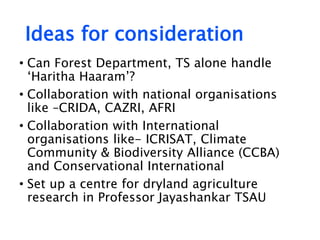
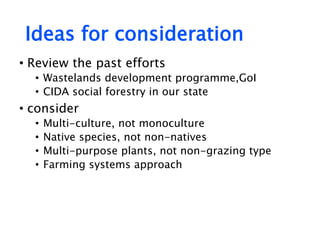
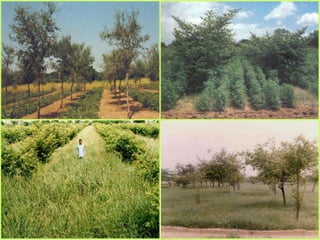
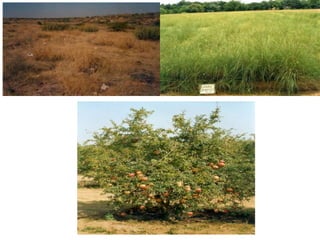
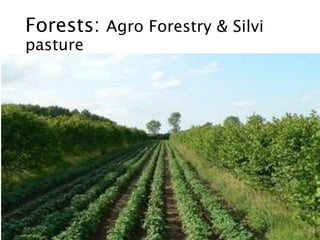
Forests: Agro Forestry & Silvi
pasture
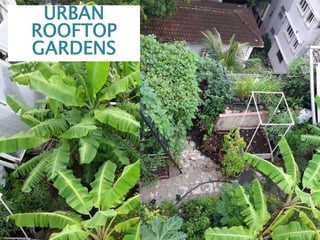
URBAN
ROOFTOP
GARDENS
Thank you.

Environment issues & disaster management

  • 1.
    ENVIRONMENT, DISASTER MANAGEMENT ANDFORESTS Dr. N. Sai Bhaskar Reddy Dr. W. G.Prasanna Kumar Dr. K. Tirupataiah
  • 2.
    Strategic Location Most safeand secure location in India
  • 3.
  • 4.
  • 5.
  • 6.
  • 9.
    CLIMATE CHANGE VARIABILITY INSEMI- ARID REGIONS Precipitation is less than potential evapotranspiration. Low annual rainfall of 25 to 60 centimeters and having scrubby vegetation with short, coarse grasses; not completely arid.
  • 10.
    CLIMATE CHANGE VARIABILITYIN SEMI-ARID REGIONS Climate Variability and extremes The people vulnerable to droughts Increasing crop failures, dislocation, famine, poverty & social inequities. In 2009 witnessed • 50 years old drought • 100 years old flood
  • 11.
  • 12.
    PEOPLE OF TELANGAN A PEACEFUL,TOLERANT AND HARD WORKING
  • 13.
  • 14.
    SUSTAINABLE DEVELOPMENT Development that meetsthe needs of the present without compromising the ability of future generations to meet their own needs (The Brundtland Commission,1987)
  • 15.
  • 16.
    Global Climate Changeand Urbanization 1900 15% urban 2000 ~50% urban
  • 17.
    LESS VISUAL BUTWITH MAJOR IMPACT > Temperature increase > Less & erratic rain Agriculture and food security Crop yields, irrigation demands... Forest Composition, health and productivity... Water resources Water supply, water quality... Species and natural areas Biodiversity, modification of ecosystems... Human health Infectious diseases, human settlements... Consequences of climate change:
  • 18.
    MAJOR CONCERNS DROUGHT PROOFINGRURAL •SUSTAINABLE LIVELIHOODS ENVIRONMENTURBAN • SUSTAINABLE HABITATS
  • 19.
    RURAL CHALLENGES Climate change- variability - extremes Soil fertility Water management Impact of hazardous pesticides and nitrogen fertilizers Burning of crop residue Alkalinity of soils
  • 20.
    Mahabubnagar District RainfallPattern y = -4.6207x + 851.14 R2 = 0.1374 0 100 200 300 400 500 600 700 800 900 1000 1100 1200 1300 195152 195253 195354 195455 195556 195657 195758 195859 195960 196061 196162 196263 196364 196465 196566 196667 196768 196869 196970 197071 197172 197273 197374 197475 197576 197677 197778 197879 197980 198081 198182 198283 198384 198485 198586 198687 198788 198889 198990 199091 199192 199293 199394 199495 199596 199697 199798 199899 199900 200001 200102 200203 200304 200405 200506 200607 200708 200809 200910 201011 201112 201213 201314
  • 21.
    DROUGHT Skewed distribution ofrainfall – 40% deficit from June- August which is the sowing season Depletion of ground water situation Untimely heavy rains during Sept – Oct affects the crops Lack of Rainfall during November-December adversely affects Rabi sowings
  • 22.
    0% 20% 40%60% Drought Crop Failure Crop Disease Drop in crop prices Bad investment 0% 10% 20% 30% Wait for rain before sow Seek non-farm w ork Sow less Sow substitute crops Don't sow (fallow ) Weighted self- reports: “What are the major sources of risk faced by your household? Weighted self- reports: “If it does not rain, what do you do?”
  • 23.
    Challenges Sector Challenges Environmen t Solid Wastemanagement, Sewage treatment, air pollution, Industrial environmental compliance Disaster Management Recurring Droughts, urban floods, eroding natural resources Forests Degradation, competing demands for deforestation, raising forest cover outside forest area, urban greenery
  • 24.
  • 25.
    Air Quality inIndian Cities US Embassy New Delhi - AQI 133 on 4/30/2015 9:00:00 PM US Consulate Hyderabad - AQI 140 on 4/30/2015 9:00:00 PM US Consulate Chennai - AQI 58 on 4/30/2015 9:00:00 PM US Consulate Kolkata - AQI 87 on 4/30/2015 9:00:00 PM US Consulate Mumbai - AQI 137 on 4/30/2015 9:00:00 PM
  • 26.
    Solid Waste incities in India
  • 27.
    Environmental Challenges: • SewageUntreated: 1370 MLD Sewage in GHMC area with 600 MLD treatment capacity • 10 MLD STP required for 1 lakh population • 1 MLD cost Rs 1 Crore and O& M per year Rs 20 lakhs • 6000 Industries under PCB Monitoring • Introduction of Clean Fuels, CNG Buses, Metro rail, Fly overs seamless traffic flow, 15 years or older vehicles ban from urban areas
  • 28.
  • 29.
  • 30.
    Dealing with Waste managementin School Engaging in School based activity
  • 31.
    ENVIRONMENT: BEST PRACTICES Japan's FukuokaMethod Implemented In The FSM
  • 33.
    Disaster Management :Best Practices
  • 34.
    Way Forward :Improved Stoves:
  • 35.
    Way Forward: Adaptation: Polyhouse, Green House & SWAR
  • 36.
    Way Forward: WeatherBased Crop Insurance Dr. N. Sai Bhaskar Reddy saibhaskarnakka@gmail.com 6th September 2013
  • 37.
    Way Forward: BIOCHAR Biocharis another name for charcoal used for purposes other than combustion. Like all charcoal, biochar is created by the pyrolysis of biomass.
  • 38.
    Way Forward: BIOCHAR APPLICATION SOILCARBON INCREASE MOISTURE CONSERVATION FERTILIZERS CONSERVATIO INCREASE IN YIELD
  • 39.
    Way Forward: CONSERVATION OFURBAN WATER BODIES
  • 40.
  • 41.
  • 42.
  • 43.
    Way Forward: FloatingGarden and Parks
  • 44.
  • 45.
    Road Sewerage Clean water forirrigation Drip Irrigation Way Forward: SEWAGIGATION
  • 46.
  • 47.
    CITY River Catchment of city GreenBelt Ringroad Cascades Way Forward: Future cities – annular / circular / segregated water harvesting water bodies
  • 48.
    Way Forward: Roadsas Water Sources for Filling Urban Water Bodies
  • 49.
  • 50.
    Way Forward: OUTERRING ROAD – 158 KMS LENGTH PROPOSED REGIONAL RING ROAD – 290 KMS POTENTIAL FOR ~100 WATER BODIES CREATION
  • 51.
  • 52.
    Way Forward:Way Forward:River Front Development
  • 53.
    Way Forward: WATERUSE EFFICIENCY MONITORING WATER AND ENVIRONMENTAL PARAMETERS MONITORING MANAGEMENT DECISION SUPPORT SYSTEMS
  • 54.
  • 55.
    Way Forward: Way Forward:Monitoring the flows
  • 56.
    Solar Power Arduino, SIM900, Battery, Temp and Relative Humidity sensor Bowman Water Tube with ultrasonic sensor RBC Flume with ultrasonic sensor ClimaAdapt Project, Kondrapole, Miryalaguda, Nalgonda Way Forward:
  • 57.
    Water Level inField water tube (Bowman) using ultrasonic sensor Way Forward:
  • 58.
    Way Forward: AUTOMATICWEATHER STATION
  • 59.
    Way Forward: AWARENESS TO CHILDRREN ON WATER CONSERVATI ON& MONITORING ClimaAdapt Project, Kondrapole, Miryalaguda, Nalgonda
  • 60.
    Glow Level for Tubewells – Colour LEDs for different levels of water in the tube wells Way Forward:
  • 61.
  • 62.
  • 63.
  • 64.
    NAPCC – MatchNATIONAL MISSIONS National Solar Mission: Development and use of solar energy for power generation National Mission for Enhanced Energy Efficiency: yield savings of 10,000 MW. National Mission on Sustainable Habitat: energy efficiency for urban planning. National Water Mission: 20% improvement in water use efficiency: Water Grid Way Forward:
  • 65.
    NAPCC – MatchNational Missions National Mission for Sustaining the Himalayan Ecosystem National Mission for a “Green India”: afforestation of 6 million hectares of forest cover from 23% to 33% Haritha Haram National Mission for Sustainable Agriculture: climate- resilient crops, weather insurance and agriculture : Mission Kakatiya National Mission on Strategic Knowledge for Climate Change for a better understanding. Way Forward:
  • 66.
  • 67.
    Important forest species •Teak is the important species growing in, Adilabad, Nizamabad, Warangal, Karimnagar and Khammam. • Fine quality of bamboo is available in the districts of khammam, Mahaboobnagar, Adilabad, warangal, • Abnus leaf (Beedi leaf) major MFP in Telangana • custard apples- a livelihoods source
  • 68.
    LESS VISUAL BUTWITH MAJOR IMPACT > Temperature increase > Less & erratic rain Agriculture and food security Crop yields, irrigation demands... Forest Composition, health and productivity... Water resources Water supply, water quality... Species and natural areas Biodiversity, modification of ecosystems... Human health Infectious diseases, human settlements... Consequences of climate change:
  • 69.
    NAPCC - NationalMissions National Mission for Sustaining the Himalayan Ecosystem National Mission for a “Green India”: afforestation of 6 million hectares of forest cover from 23% to 33% National Mission for Sustainable Agriculture: climate- resilient crops, weather insurance and agriculture. National Mission on Strategic Knowledge for Climate Change for a better understanding.
  • 70.
    Important forest species •Teak is the important species growing in, Adilabad, Nizamabad, Warangal, Karimnagar and Khammam. • Fine quality of bamboo is available in the districts of khammam, Mahaboobnagar, Adilabad, warangal, • Abnus leaf (Beedi leaf) major MFP in Telangana • custard apples- a livelihoods source
  • 71.
  • 75.
    Challenges Sector Challenges Environment SolidWaste management, Sewage treatment, air pollution, Industrial environmental compliance Disaster Management Recurring Droughts, urban floods, eroding natural resources Forests Degradation, competing demands for deforestation, raising forest cover outside forest area, urban greenery
  • 76.
    Telangana ku HARITHAHAARAM • Aim: to increase green cover up to 33% of Geographical Area (present 25.16%) • 230 crore saplings ( 100 cr inside forest, 120 cr outside forest, 10 cr urban areas) • 40 lakh saplings per assembly constituency • Out lay Rs.800 cr/year • 2015-16 : 41 cr saplings • 3300 nurseries • FD, DWMA, Agriculture, Horticulture, TW depts
  • 77.
    Telangana ku HARITHAHAARAM • Forest area • Protection, afforestation (blanks), rejuvenation (degraded), SMC, plantation in RoFR areas • Outside forest • Avenue, institutional, Barren hills, Tank foreshores, river banks, homestead & industrial, agro-forestry, Smrithivanams, urban residential areas
  • 78.
    Best Practices- GREATGREEN WALL OF CHINA • To raise 90 million acres of new forest • A Band stretching 2800 miles across North China • Largest ecological restoration project in the world • Aim to arrest spread of Gobi desert and “yellow dragons’(dust storms) in to Beijing • Period 1978 till 2050
  • 79.
    GREAT GREEN WALLOF CHINA • Criticism • Monoculture, no biodiversity • Non-native species, loss of native species • Depletion of groundwater further • Massive death of trees after initial growth
  • 80.
    GREAT GREEN WALLOF CHINA• Alternative • Nurturing land by land itself (Jiang Gaoming, ecologist), Ex: Inner Mongolia Hunshandak sandy land project • Prevent further degradation and allow natural growth . • Conservation International & China Centre for Nature and Society- 100,000 sq. mile ecosystem restoration from conifers to grasslands • 12,000 acres restored so far • 5 projects taken up in collaboration mode
  • 81.
    THAR DESERT OFINDIA • 2.34 million sq.kms area • Spreading @ 12,000 ha /year • Moving towards Delhi @ 0.5 kms per year • CAZRI/AFRI took up ‘stabilization of shifting sand dunes’, created micro-climates, tree- screens and shelterbelts • 649 kms of Indira Nahar canal runs in the desert
  • 82.
    THAR DESERT OFINDIA • Central Arid Zone Research Institute, Jodhpur • Arid Forest Research Institute, Jodhpur • To develop techniques for rain water harvesting in arid areas. • To develop technology for afforestation on stress sites. • Eco-stabilization of deserts with emphasis on sand dune fixation. • To develop techniques for production of high quality planting material.
  • 83.
    Social Forestry inMalaysia • In the Peninsula, social forestry programmes are designed to provide amenity through the establishment of recreational parks within the Permanent Forest Estate, urban planting of trees for aesthetic values and the planting of traditional fruit trees along forest fringes by the rural communities, primarily to create local awareness on the importance of forestry to their living environment. • In short, social forestry development programmes will be most likely to succeed in areas where an integrated approach is being taken towards rural development; where these perceived needs are being met and where forestry is included as part of an overall development package.
  • 84.
    Ideas for consideration •Can Forest Department, TS alone handle ‘Haritha Haaram’? • Collaboration with national organisations like –CRIDA, CAZRI, AFRI • Collaboration with International organisations like- ICRISAT, Climate Community & Biodiversity Alliance (CCBA) and Conservational International • Set up a centre for dryland agriculture research in Professor Jayashankar TSAU
  • 85.
    Ideas for consideration •Review the past efforts • Wastelands development programme,GoI • CIDA social forestry in our state • consider • Multi-culture, not monoculture • Native species, not non-natives • Multi-purpose plants, not non-grazing type • Farming systems approach
  • 88.
    Forests: Agro Forestry& Silvi pasture
  • 89.
  • 91.