Presented By
Md. Sahed Khan
Department of Rural Sociology
 The complex of physical, chemical and biotic
factors that act upon an organism or an
ecological community and ultimately
determine its form and survival
Have intrinsic value of their own
Have value for the longer term
sustainability
Elements of the Human Environment
‘Intangible’ in Nature
Scarce in Absolute Terms
Environmental Resources
Based on Source of Origin Based on Renewability Based on Stage of Development
1. Biotic Resources 1. Renewable
Resources
1. Potential Resources
2. Actual Resources
2. Non-biotic
Resources
2. Non-Renewable
Resources
3. Reserve Resources
4. Stock Resources
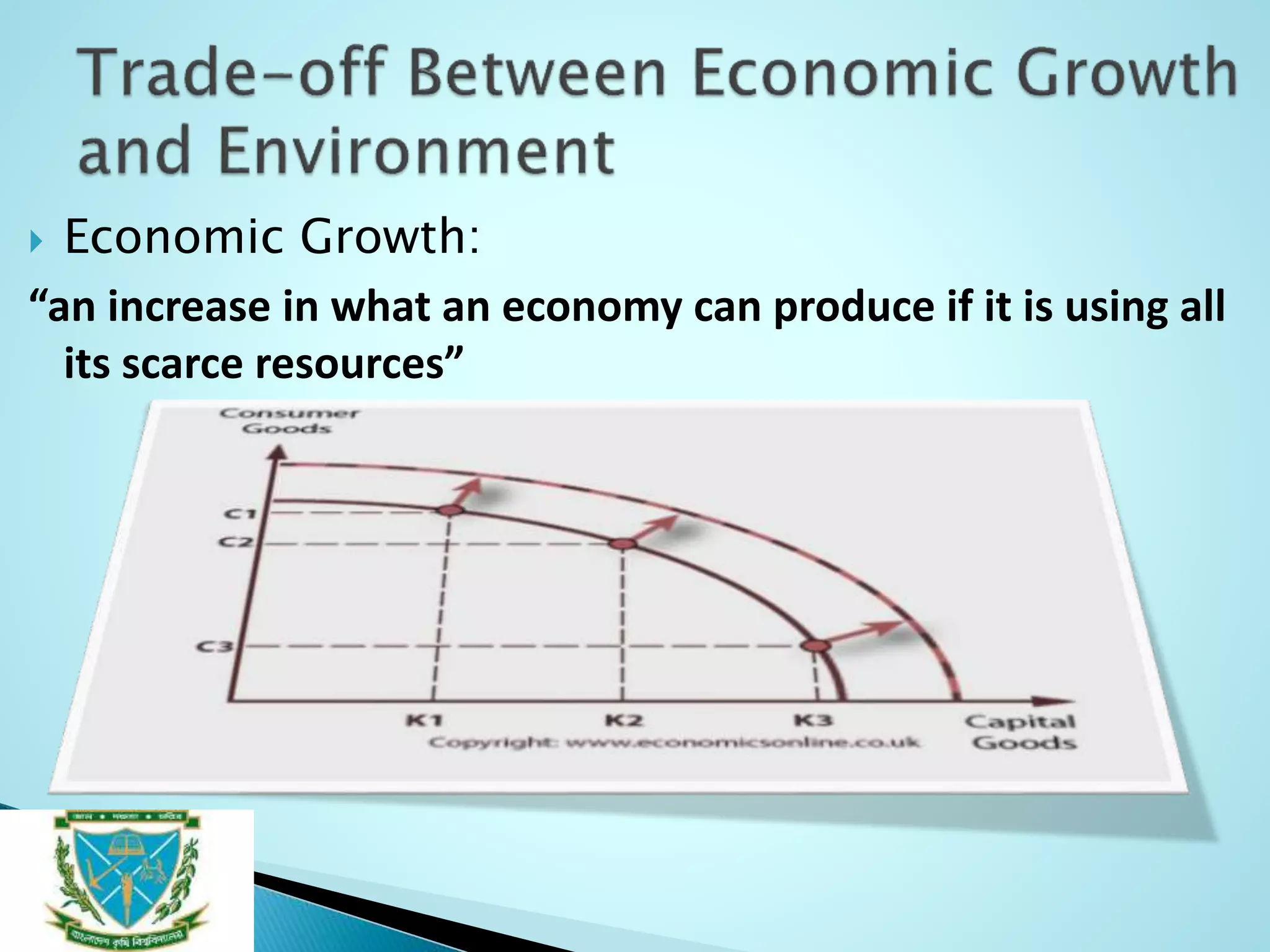
 Economic Growth:
“an increase in what an economy can produce if it is using all
its scarce resources”
Global Resource
Constraints
Desperate Need
by Nations to
Achieve High
Growth Rate
Overuse of
Resources
Environmental
Degradation and
Pollution
 Balance between Economic Growth and
Environmental Degradation by:
1. Less Energy Intensive and More Environmentally
Sound Models of Development
2. Breakdown of the Cycle of Poverty and
Environmental Destruction in LDCs
3. New Environmentally Safe Technologies
 Total Greenhouse Emissions across the Globe
 60.4% done by China, United States, Russia,
Japan, Germany, South Korea and Canada
 Heavy Deforestation by Developed Countries
 In the name of Industrialization
 United States:
 2% Global Population Holding
 25 % of Global Resources Use
 Generating More Wastes
 Unethical disposal of wastes by Developed
Countries through:
1. Shifting of Dirty Industries
2. Chemical Wastes dumplings
3. Electronic-Wastes dumplings
 Global welfare through
 Cooperation among Countries
 Economic theory defines two types of goods:
1. Private goods: Principle of competition among
agents for good Consumption
2. Public goods:
 Do not follow this principle
 Limitless Consumption of Goods
 No Contribution for the use of Public Resources
 Initially individuals Better-off
 Ultimately Everyone Worse-off
 Failure to
 Monetize Environmental Service
 Quantify their economic value
 Possibility of Solvency
 Cooperative Game theory
Cooperation at Local level brings Better result for Human and Environment
Difficult to achieve International Cooperation
International Cooperation: Possible with Enforceable Agreements
Application of Cooperative Game Theory: Achievement of Global Welfare
THANK YOU
Environment and sustainable economic development

Environment and sustainable economic development

  • 1.
    Presented By Md. SahedKhan Department of Rural Sociology
  • 2.
     The complexof physical, chemical and biotic factors that act upon an organism or an ecological community and ultimately determine its form and survival
  • 3.
    Have intrinsic valueof their own Have value for the longer term sustainability Elements of the Human Environment ‘Intangible’ in Nature Scarce in Absolute Terms
  • 4.
    Environmental Resources Based onSource of Origin Based on Renewability Based on Stage of Development 1. Biotic Resources 1. Renewable Resources 1. Potential Resources 2. Actual Resources 2. Non-biotic Resources 2. Non-Renewable Resources 3. Reserve Resources 4. Stock Resources
  • 5.
     Economic Growth: “anincrease in what an economy can produce if it is using all its scarce resources”
  • 7.
    Global Resource Constraints Desperate Need byNations to Achieve High Growth Rate Overuse of Resources Environmental Degradation and Pollution
  • 8.
     Balance betweenEconomic Growth and Environmental Degradation by: 1. Less Energy Intensive and More Environmentally Sound Models of Development 2. Breakdown of the Cycle of Poverty and Environmental Destruction in LDCs 3. New Environmentally Safe Technologies
  • 9.
     Total GreenhouseEmissions across the Globe  60.4% done by China, United States, Russia, Japan, Germany, South Korea and Canada  Heavy Deforestation by Developed Countries  In the name of Industrialization
  • 11.
     United States: 2% Global Population Holding  25 % of Global Resources Use  Generating More Wastes  Unethical disposal of wastes by Developed Countries through: 1. Shifting of Dirty Industries 2. Chemical Wastes dumplings 3. Electronic-Wastes dumplings
  • 12.
     Global welfarethrough  Cooperation among Countries  Economic theory defines two types of goods: 1. Private goods: Principle of competition among agents for good Consumption 2. Public goods:  Do not follow this principle  Limitless Consumption of Goods
  • 13.
     No Contributionfor the use of Public Resources  Initially individuals Better-off  Ultimately Everyone Worse-off  Failure to  Monetize Environmental Service  Quantify their economic value  Possibility of Solvency  Cooperative Game theory
  • 15.
    Cooperation at Locallevel brings Better result for Human and Environment Difficult to achieve International Cooperation International Cooperation: Possible with Enforceable Agreements Application of Cooperative Game Theory: Achievement of Global Welfare
  • 17.