
Practitioners Day
Enterprise Architecture
Specialist Interest Group
Daljit Banger MSc FBCS
Business Architecture ~
ICT Strategy
Rapid Formulation &
Production
• Introduction
• Format
• Objectives
• Approach
• Level 0
• Approach / Duration
• Approach Dissected
• Work Package Breakdown
• Project Plan Discussed
• Deliverables
• Core & subsidiary deliverable
• Operating Model Definition
• Subsidiary deliverable : Road Maps on a Page
• Summary
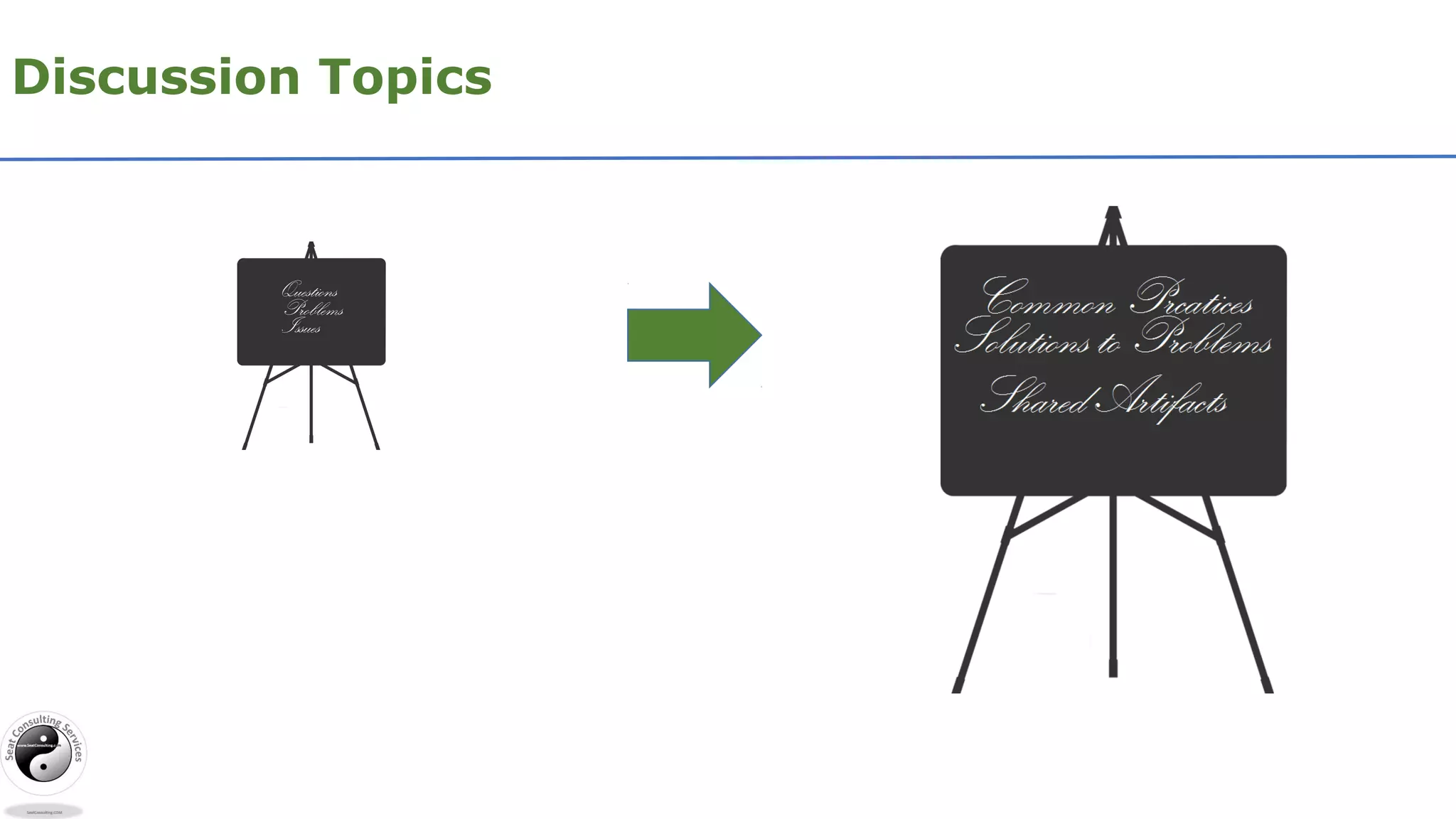
• Discussion Topics
Agenda
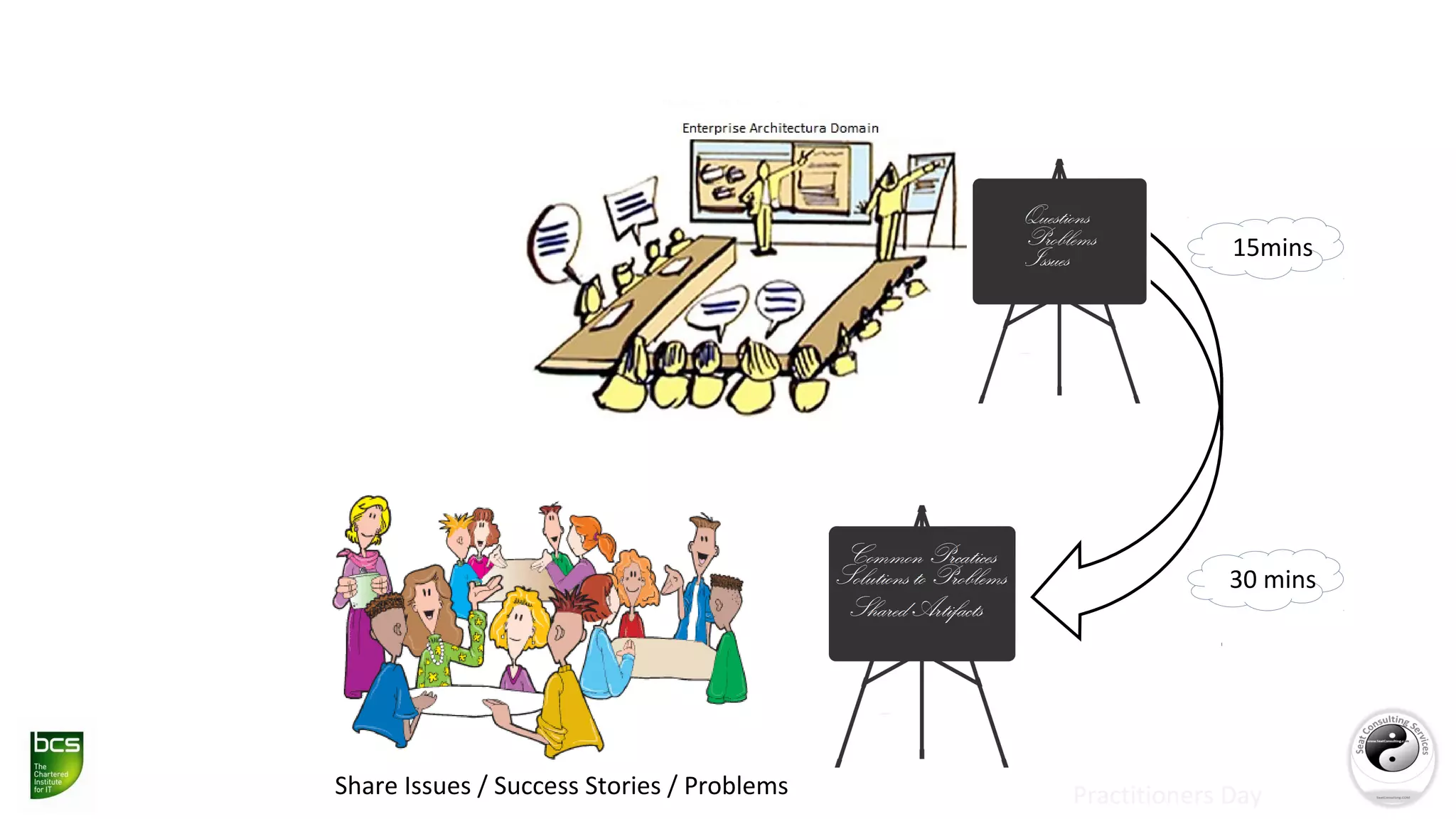
Practitioners DayShare Issues / Success Stories / Problems
15mins
30 mins
Approach
1
2
3
4
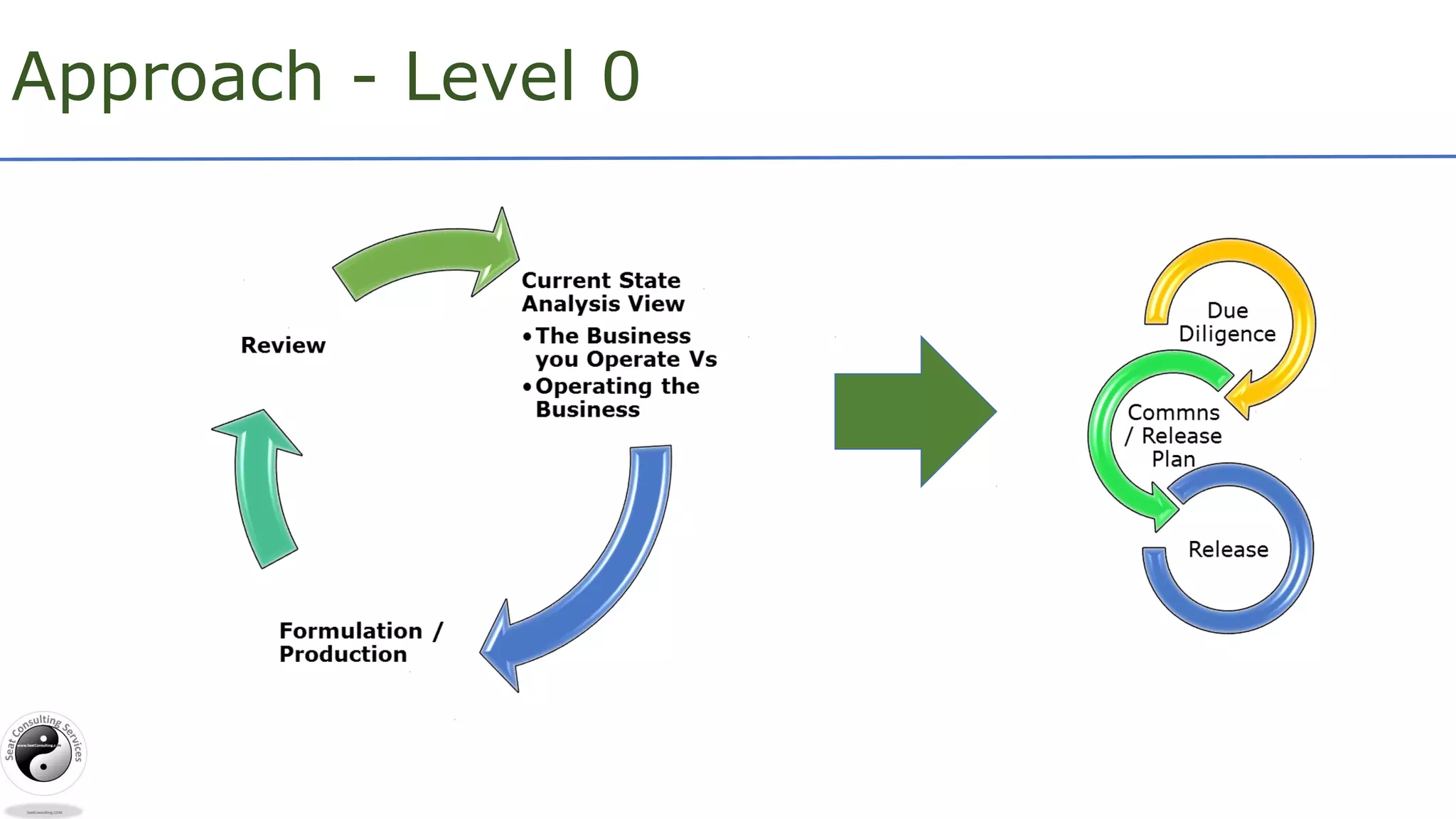
Approach - Level 0
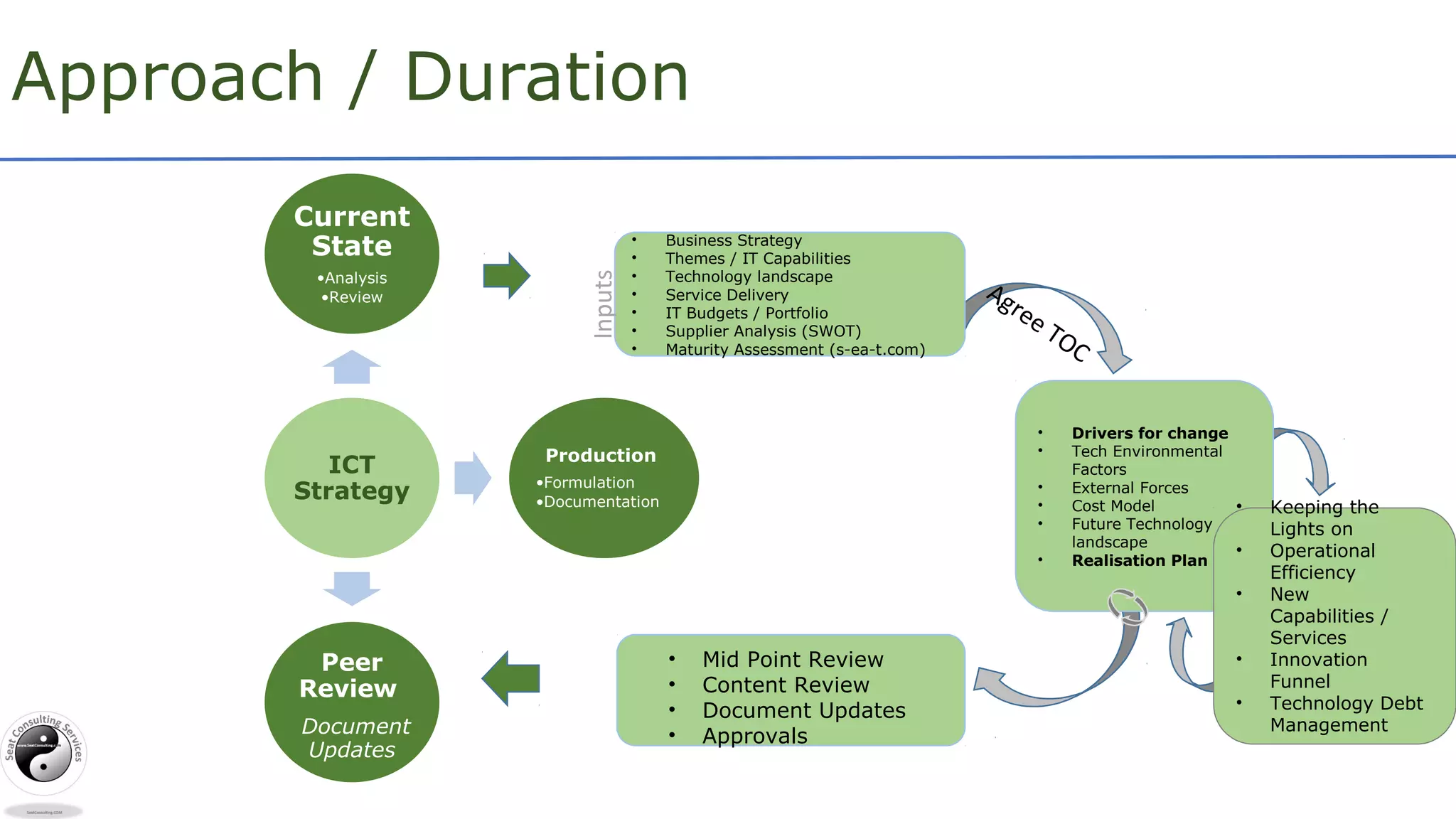
Approach / Duration
ICT
Strategy
Current
State
•Analysis
•Review
Production
•Formulation
•Documentation
Peer
Review
Document
Updates
Delivery
•Release Plan
•Communications
Plan
• Drivers for change
• Tech Environmental
Factors
• External Forces
• Cost Model
• Future Technology
landscape
• Realisation Plan
• Mid Point Review
• Content Review
• Document Updates
• Approvals
• Business Strategy
• Themes / IT Capabilities
• Technology landscape
• Service Delivery
• IT Budgets / Portfolio
• Supplier Analysis (SWOT)
• Maturity Assessment (s-ea-t.com)
Inputs
Agree TOC
• Keeping the
Lights on
• Operational
Efficiency
• New
Capabilities /
Services
• Innovation
Funnel
• Technology Debt
Management
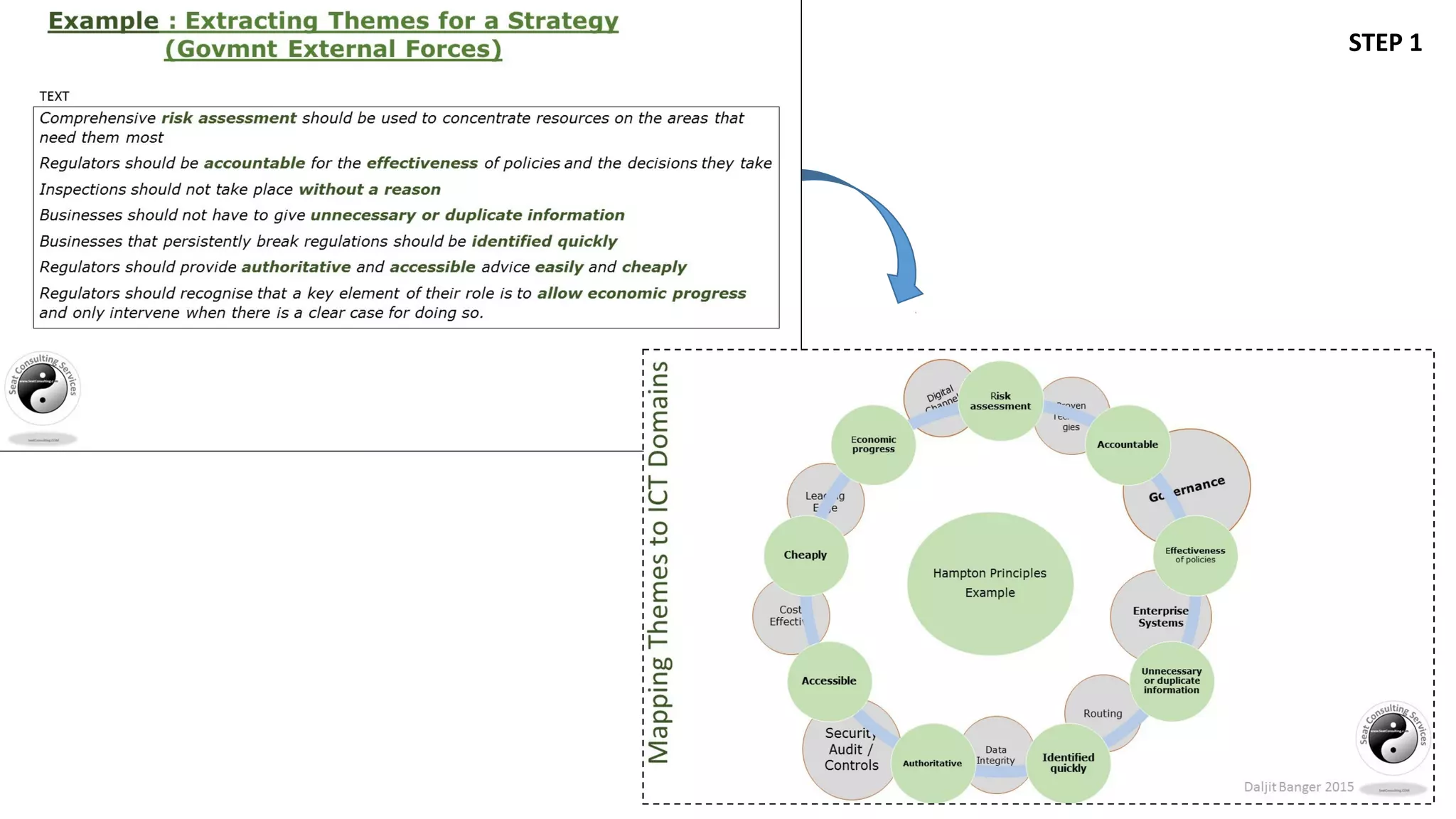
STEP 1
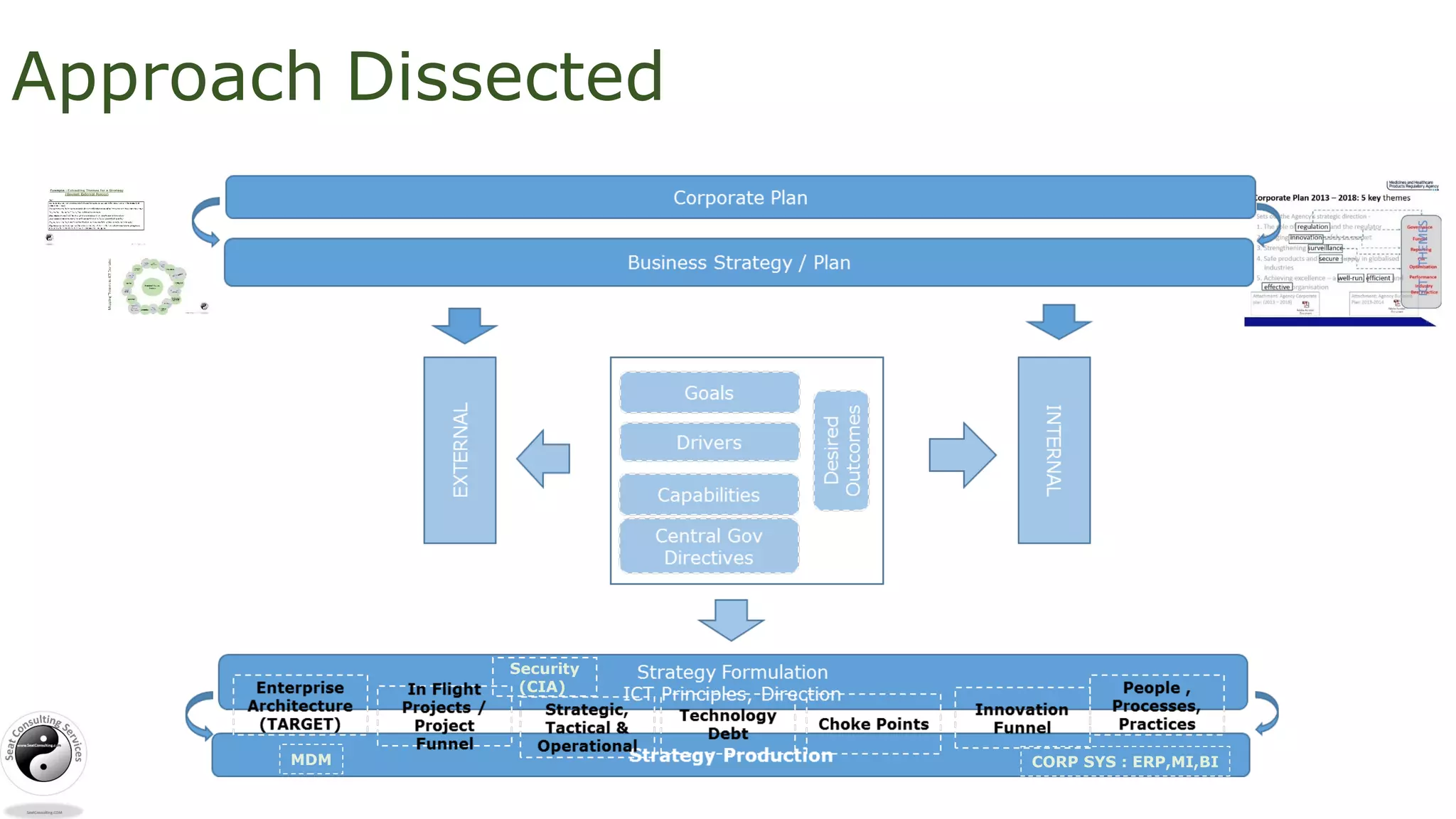
Approach Dissected
Security
(CIA)
CORP SYS : ERP,MI,BIMDM
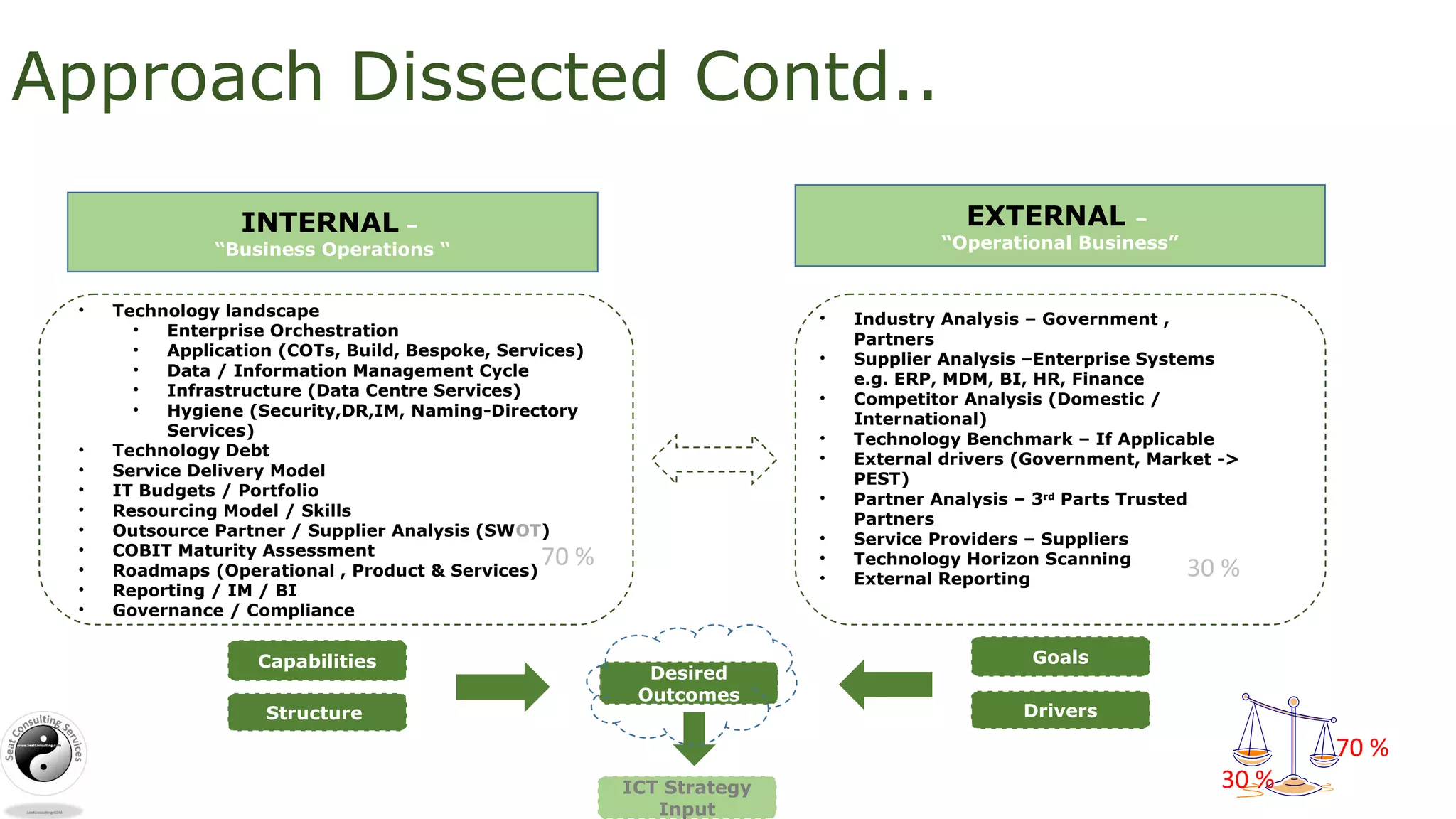
Approach Dissected Contd..
EXTERNAL –
“Operational Business”
INTERNAL –
“Business Operations “
Goals
Desired
Outcomes
Capabilities
• Industry Analysis – Government ,
Partners
• Supplier Analysis –Enterprise Systems
e.g. ERP, MDM, BI, HR, Finance
• Competitor Analysis (Domestic /
International)
• Technology Benchmark – If Applicable
• External drivers (Government, Market ->
PEST)
• Partner Analysis – 3rd
Parts Trusted
Partners
• Service Providers – Suppliers
• Technology Horizon Scanning
• External Reporting
Structure Drivers
• Technology landscape
• Enterprise Orchestration
• Application (COTs, Build, Bespoke, Services)
• Data / Information Management Cycle
• Infrastructure (Data Centre Services)
• Hygiene (Security,DR,IM, Naming-Directory
Services)
• Technology Debt
• Service Delivery Model
• IT Budgets / Portfolio
• Resourcing Model / Skills
• Outsource Partner / Supplier Analysis (SWOT)
• COBIT Maturity Assessment
• Roadmaps (Operational , Product & Services)
• Reporting / IM / BI
• Governance / Compliance
70 % 30 %
70 %
30 %ICT Strategy
Input
Delivery Breakdown
Project Plan
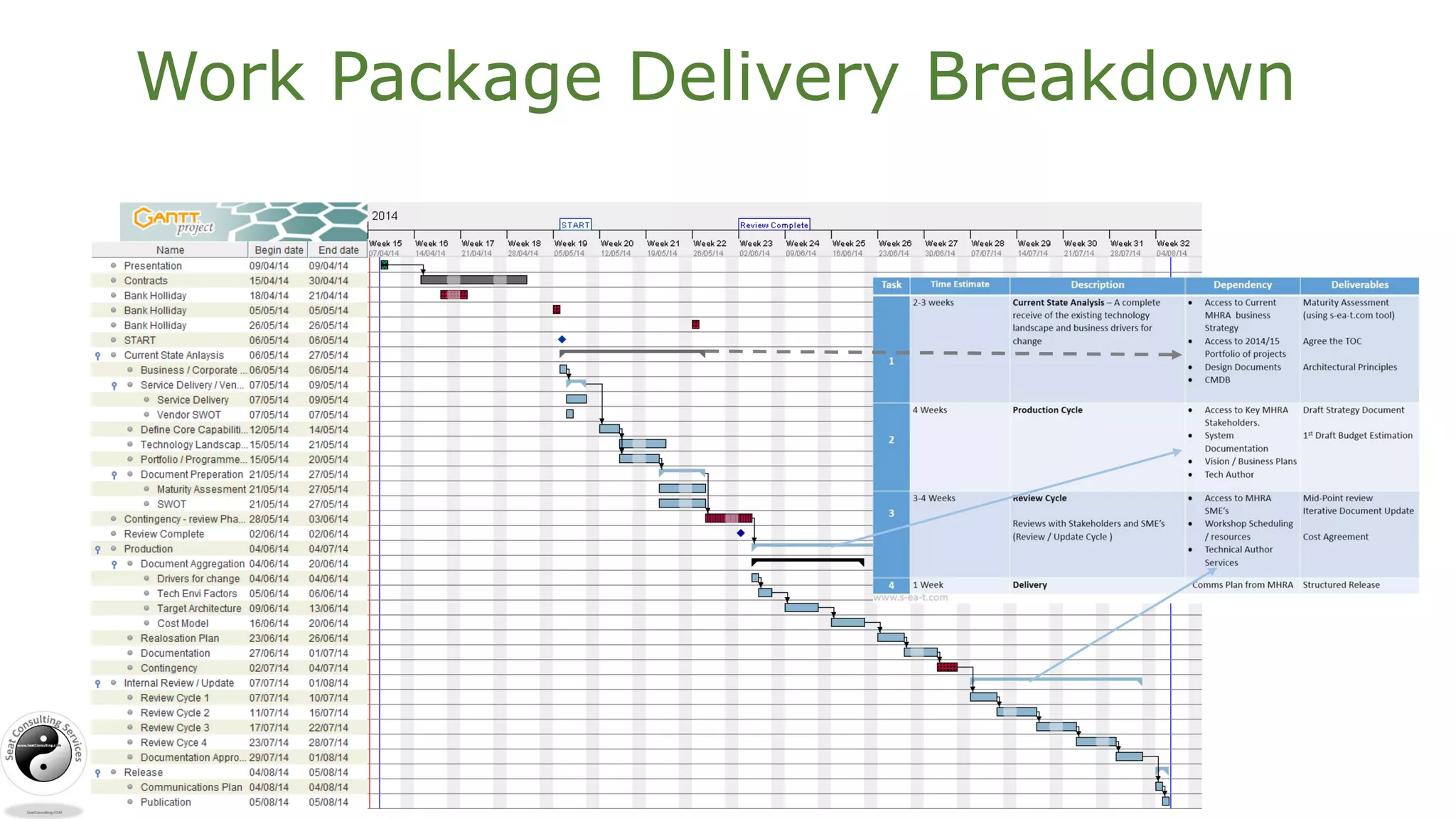
Work Package Delivery Breakdown
Deliverables
Core & By-Products
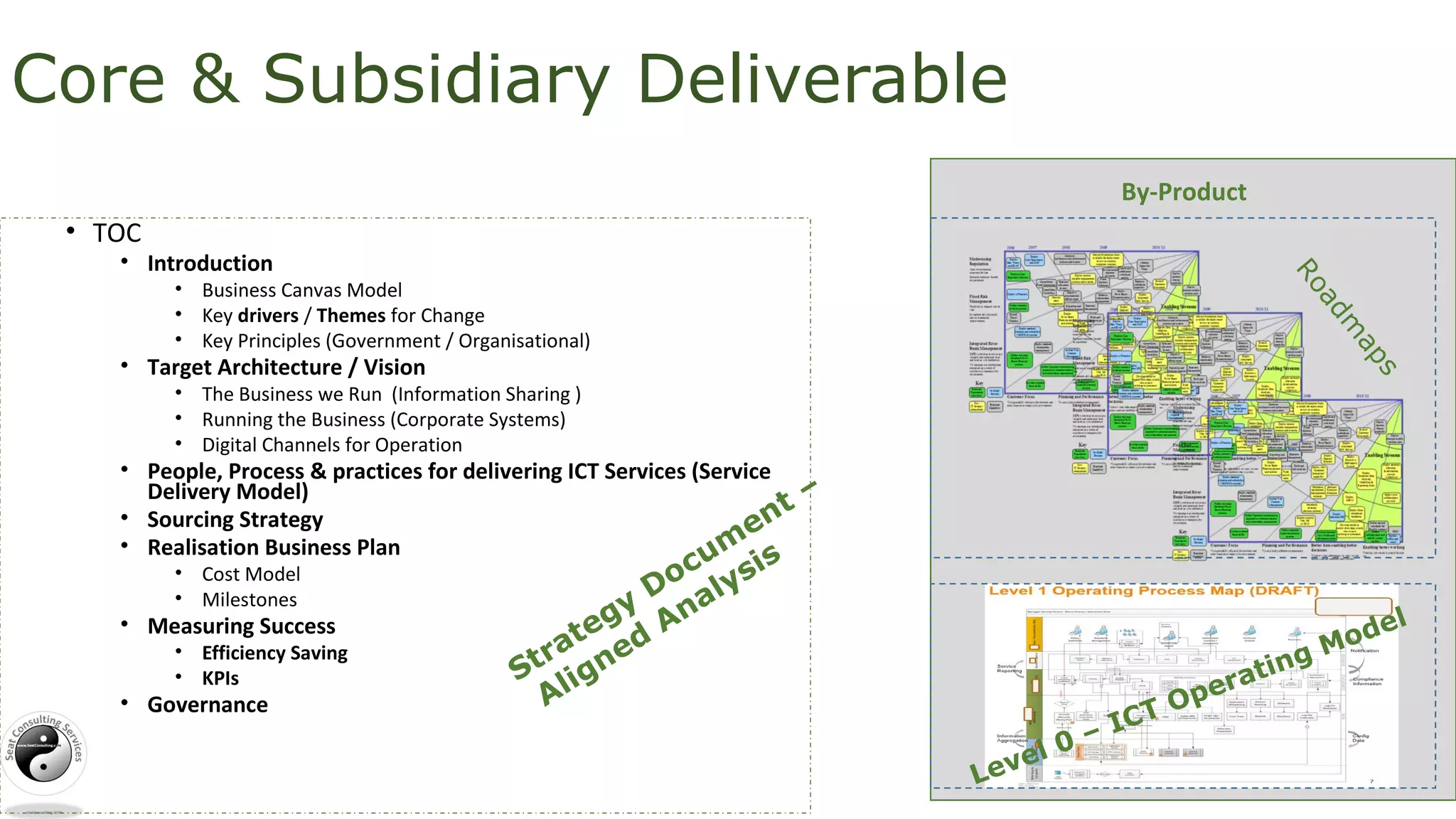
Core & Subsidiary Deliverable
• TOC
• Introduction
• Business Canvas Model
• Key drivers / Themes for Change
• Key Principles (Government / Organisational)
• Target Architecture / Vision
• The Business we Run (Information Sharing )
• Running the Business (Corporate Systems)
• Digital Channels for Operation
• People, Process & practices for delivering ICT Services (Service
Delivery Model)
• Sourcing Strategy
• Realisation Business Plan
• Cost Model
• Milestones
• Measuring Success
• Efficiency Saving
• KPIs
• Governance
Strategy
Docum
ent –
Aligned
Analysis
Roadm
aps
Level 0 – ICT Operating Model
By-Product
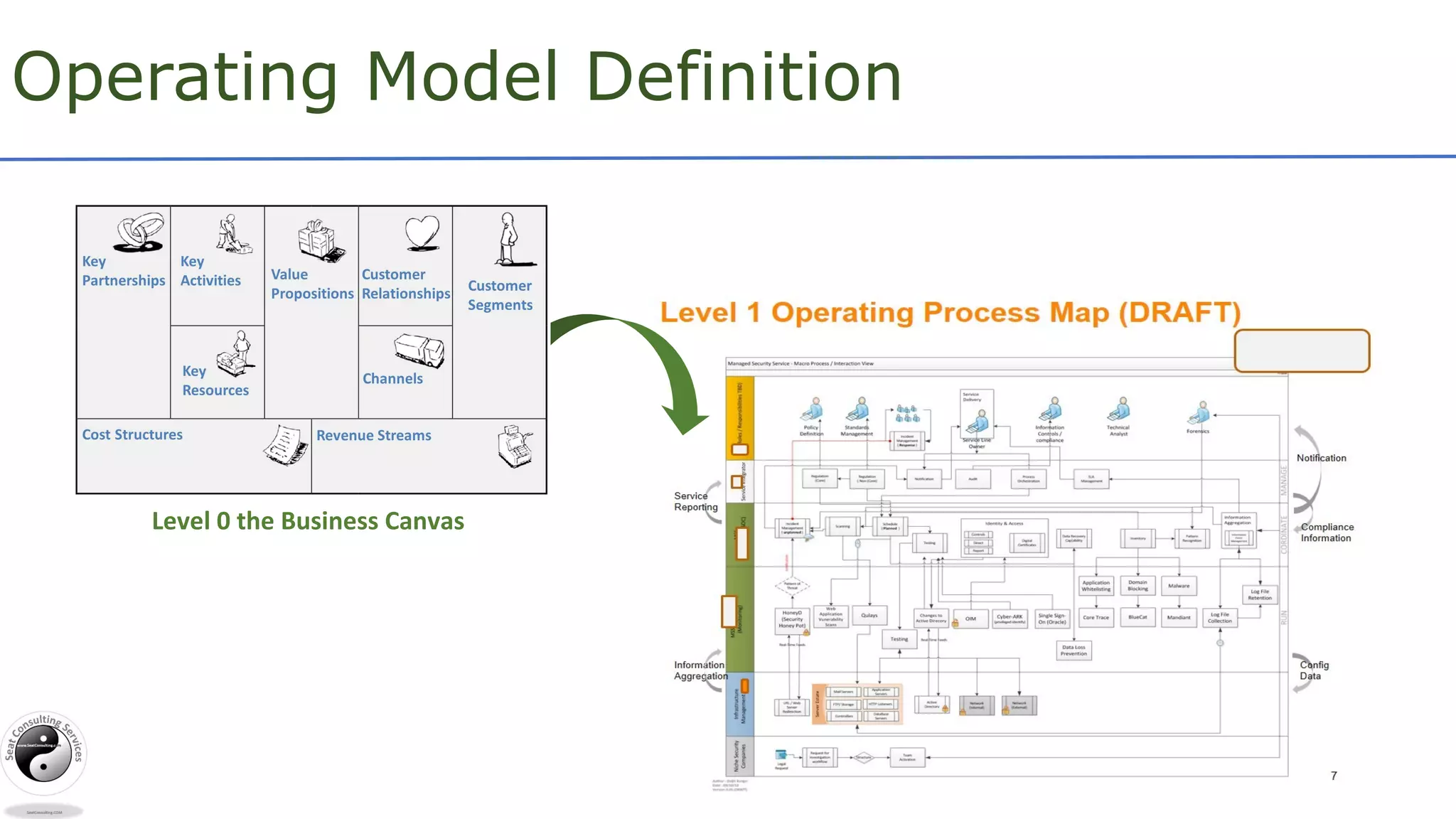
Operating Model Definition
Level 0 the Business Canvas
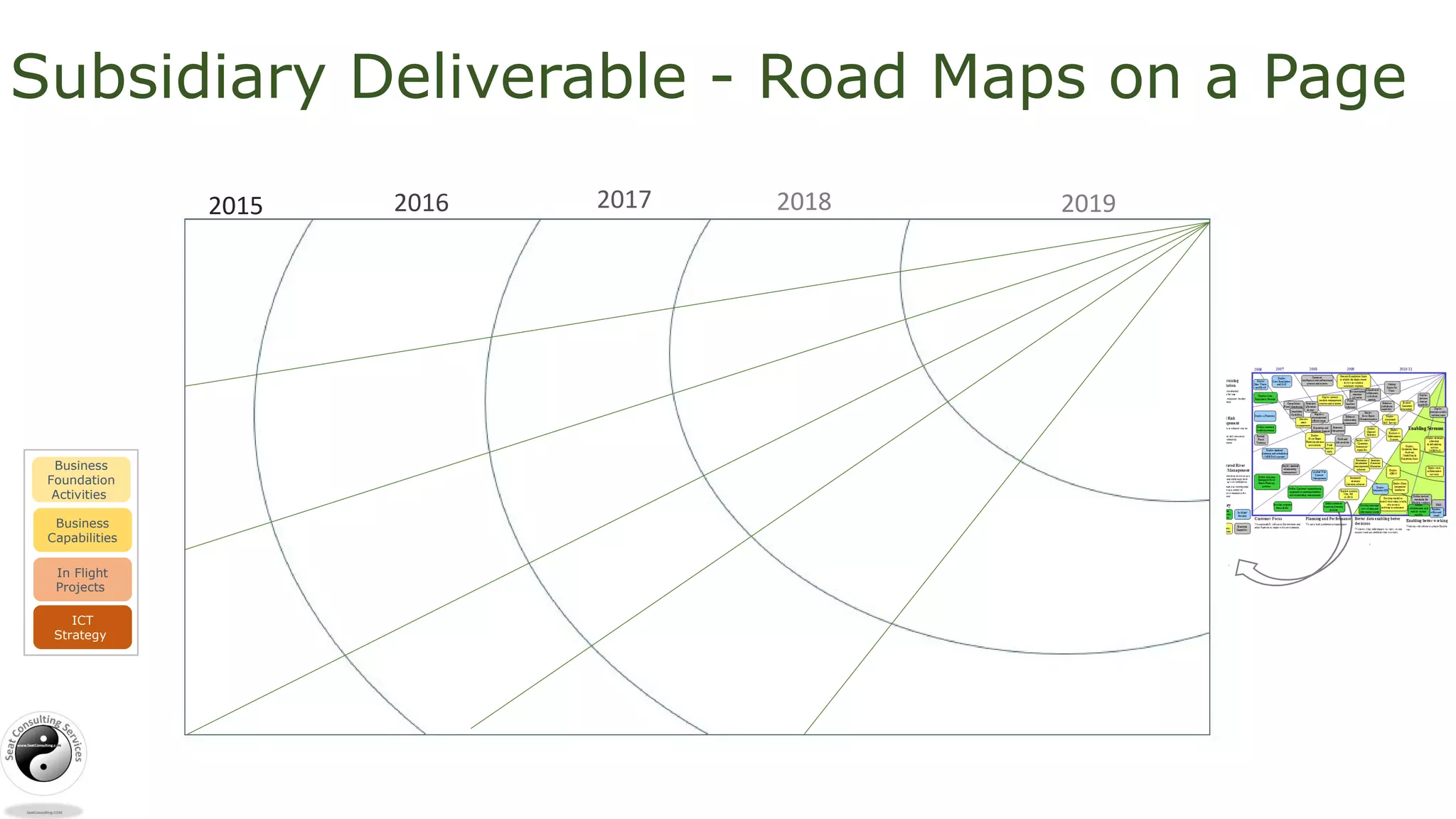
Subsidiary Deliverable - Road Maps on a Page
2015 2016 2017 2018 2019
Business
Foundation
Activities
Business
Capabilities
In Flight
Projects
ICT
Strategy
Summary
• Early Stakeholder identification and engagement
• Strategy Formulation, whilst on-going, should be structured and ‘time
boxed’
• Key Milestones & Dependencies should be encapsulated and
highlighted in any Programme Plan
• The Strategy will have a ICT bias and have traceability.
• Heavy Dependency on Organisation to make resources and
Information available.
• The use of Organisational resources e.g. Business Analyst , Technical
Author will reduce analysis and document production costs
Discussion Topics
Website : www.s-ea-t.com (Tools, Papers Downloads)
Blog : https://dalbanger.wordpress.com/
Email : dal@s-ea-t.com
Thank
You

ICT Strategy Development Slides

  • 1.
    Practitioners Day Enterprise Architecture SpecialistInterest Group Daljit Banger MSc FBCS Business Architecture ~ ICT Strategy Rapid Formulation & Production
  • 2.
    • Introduction • Format •Objectives • Approach • Level 0 • Approach / Duration • Approach Dissected • Work Package Breakdown • Project Plan Discussed • Deliverables • Core & subsidiary deliverable • Operating Model Definition • Subsidiary deliverable : Road Maps on a Page • Summary • Discussion Topics Agenda
  • 3.
    Practitioners DayShare Issues/ Success Stories / Problems 15mins 30 mins
  • 5.
  • 6.
  • 7.
    Approach / Duration ICT Strategy Current State •Analysis •Review Production •Formulation •Documentation Peer Review Document Updates Delivery •ReleasePlan •Communications Plan • Drivers for change • Tech Environmental Factors • External Forces • Cost Model • Future Technology landscape • Realisation Plan • Mid Point Review • Content Review • Document Updates • Approvals • Business Strategy • Themes / IT Capabilities • Technology landscape • Service Delivery • IT Budgets / Portfolio • Supplier Analysis (SWOT) • Maturity Assessment (s-ea-t.com) Inputs Agree TOC • Keeping the Lights on • Operational Efficiency • New Capabilities / Services • Innovation Funnel • Technology Debt Management
  • 8.
  • 9.
  • 10.
    Approach Dissected Contd.. EXTERNAL– “Operational Business” INTERNAL – “Business Operations “ Goals Desired Outcomes Capabilities • Industry Analysis – Government , Partners • Supplier Analysis –Enterprise Systems e.g. ERP, MDM, BI, HR, Finance • Competitor Analysis (Domestic / International) • Technology Benchmark – If Applicable • External drivers (Government, Market -> PEST) • Partner Analysis – 3rd Parts Trusted Partners • Service Providers – Suppliers • Technology Horizon Scanning • External Reporting Structure Drivers • Technology landscape • Enterprise Orchestration • Application (COTs, Build, Bespoke, Services) • Data / Information Management Cycle • Infrastructure (Data Centre Services) • Hygiene (Security,DR,IM, Naming-Directory Services) • Technology Debt • Service Delivery Model • IT Budgets / Portfolio • Resourcing Model / Skills • Outsource Partner / Supplier Analysis (SWOT) • COBIT Maturity Assessment • Roadmaps (Operational , Product & Services) • Reporting / IM / BI • Governance / Compliance 70 % 30 % 70 % 30 %ICT Strategy Input
  • 11.
  • 12.
  • 13.
  • 14.
    Core & SubsidiaryDeliverable • TOC • Introduction • Business Canvas Model • Key drivers / Themes for Change • Key Principles (Government / Organisational) • Target Architecture / Vision • The Business we Run (Information Sharing ) • Running the Business (Corporate Systems) • Digital Channels for Operation • People, Process & practices for delivering ICT Services (Service Delivery Model) • Sourcing Strategy • Realisation Business Plan • Cost Model • Milestones • Measuring Success • Efficiency Saving • KPIs • Governance Strategy Docum ent – Aligned Analysis Roadm aps Level 0 – ICT Operating Model By-Product
  • 15.
    Operating Model Definition Level0 the Business Canvas
  • 16.
    Subsidiary Deliverable -Road Maps on a Page 2015 2016 2017 2018 2019 Business Foundation Activities Business Capabilities In Flight Projects ICT Strategy
  • 17.
    Summary • Early Stakeholderidentification and engagement • Strategy Formulation, whilst on-going, should be structured and ‘time boxed’ • Key Milestones & Dependencies should be encapsulated and highlighted in any Programme Plan • The Strategy will have a ICT bias and have traceability. • Heavy Dependency on Organisation to make resources and Information available. • The use of Organisational resources e.g. Business Analyst , Technical Author will reduce analysis and document production costs
  • 18.
  • 19.
    Website : www.s-ea-t.com(Tools, Papers Downloads) Blog : https://dalbanger.wordpress.com/ Email : dal@s-ea-t.com Thank You

Editor's Notes

  • #13 Switch to GANT CHART