Data and Analytics Services
PRESENTED BY Kapil Singhal
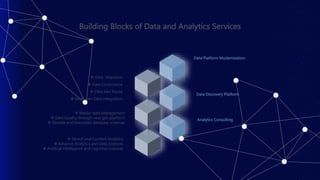
Building Blocks of Data and Analytics Services
Data Platform Modernization
Analytics Consulting
Data Discovery Platform
 Data Migration
 Data Governance
 Data lake house
 Next Gen Data integration
 Search and Content Analytics
 Advance Analytics and Data Sciences
 Artificial intelligence and cognitive sciences
 Master data Management
 Data Quality through next gen platform
 Flexible and Extensible database schemas
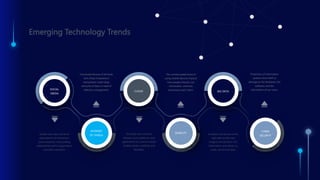
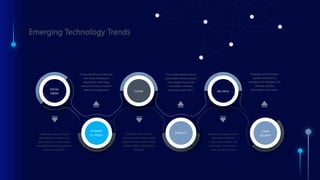
Emerging Technology Trends
SOCIAL
MEDIA
CLOUD BIG DATA
INTERNET
OF THINGS
MOBILITY
CYBER
SECURITY
Analytics and access to the
right data enable new
insights and decision-rich
information, and allows us
make use of such data.
Virtualize and consume
infrastructure, platforms, and
applications as a service (XaaS)
enables better scalability and
flexibility.
Enable new ways and drive
expectations of interaction,
personalization, and building
relationships within organization
and with customers.
Protection of information
systems from theft or
damage to the hardware, the
software, and the
information of our users.
The uninterrupted trend of
using mobile devices impacts
how people interact, use
information, and how
businesses reach them.
Connected devices of all kinds
and cheap integrations
everywhere create large
amounts of data in need of
effective management.
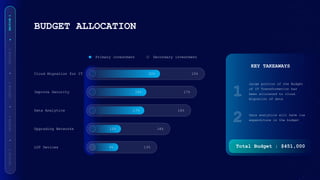
BUDGET ALLOCATION
15%
22%
13%
9%
16%
10%
16%
17%
17%
18%
Cloud Migration for IT
LOT Devices
Upgrading Networks
Data Analytics
Improve Security
Primary investment Secondary investment
Large portion of the Budget
of IT Transformation has
been allocated to cloud
migration of data
Data analytics will have low
expenditure in the budget
KEY TAKEAWAYS
Total Budget : $451,000
SECTION
1
SECTION
1
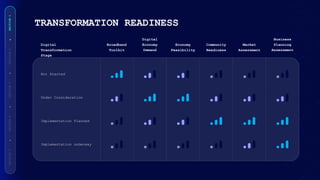
TRANSFORMATION READINESS
Not Started
Implementation underway
Implementation Planned
Under Consideration
Broadband
Toolkit
Business
Planning
Assessment
Market
Assessment
Community
Readiness
Economy
Feasibility
Digital
Economy
Demand
Digital
Transformation
Stage
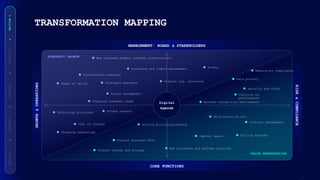
MANAGEMENT: BOARD & STAKEHOLDERS
CORE FUNCTIONS
RISK
&
COMPLIANCE
GROWTH
&
OPERATIONS
TRANSFORMATION MAPPING
SECTION
1
● Contract management
● Regulatory compliance
● Data privacy
● Security and fraud
● Controls vs.
performance
● Revenue recognition/settlements
● Self-reporting env.
● Billing systems
● Capital spend
● New processes and systems required
● Digital business KPIs
● Service pricing/packaging
VALUE PRESERVATION
STRATEGIC GROWTH
Digital
Agenda
● Unique content
● Changing consumer needs
● Talent management
● Share of wallet ● Strategic partners
● Distribution channels
● New business models (content monetization)
● Licensing and rights management ● Piracy
● Content access and storage
● Digital org. structure
● Changing technology
● Cost of content
● Technology platforms
SECTION
3
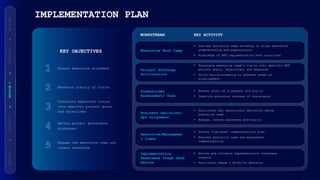
IMPLEMENTATION PLAN
Implementation
Readiness Stage Gate
Review
• Review and validate implementation readiness
outputs
• Facilitate Phase 1 Go/No-Go decision
Executive Boot Camp
• One-day Executive team workshop to align executive
understanding and expectations
• Knowledge of ERP implementation best practices
WORKSTREAM KEY ACTIVITY
Project Strategy
Articulation
• Translate executive team’s vision into specific ERP
project goals, objectives, and measures
• Drive Decision-making to address areas of
misalignment
Stakeholder
Assessment/ Plan
• Assess level of alignment and buy-in
• Identify potential sources of resistance
Business Decisions/
Ops Alignment
• Facilitate key operational decisions among
executive team
• Engage, create awareness and buy-in
Executive/Managemen
t Comms
• Define “top-down” communications plan
• Execute executive team and management
communications
Ensure executive alignment
KEY OBJECTIVES
Reassure clarity of vision
Translate executive vision
into specific project goals
and objectives
Define project governance
processes
Engage the executive team and
create ownership
SECTION
3
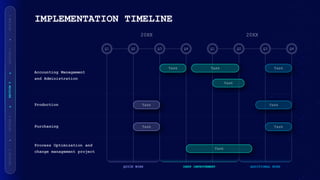
IMPLEMENTATION TIMELINE
Q1 Q2 Q3 Q4 Q1 Q2 Q3 Q4
Task Task Task
Task
Task Task
Task Task
Task
QUICK WINS DEEP IMPROVEMENT ADDITIONAL WINS
20XX 20XX
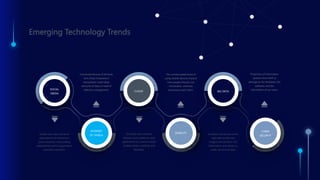
Emerging Technology Trends
SOCIAL
MEDIA
CLOUD BIG DATA
INTERNET
OF THINGS
MOBILITY
CYBER
SECURITY
Analytics and access to the
right data enable new
insights and decision-rich
information, and allows us
make use of such data.
Virtualize and consume
infrastructure, platforms, and
applications as a service (XaaS)
enables better scalability and
flexibility.
Enable new ways and drive
expectations of interaction,
personalization, and building
relationships within organization
and with customers.
Protection of information
systems from theft or
damage to the hardware, the
software, and the
information of our users.
The uninterrupted trend of
using mobile devices impacts
how people interact, use
information, and how
businesses reach them.
Connected devices of all kinds
and cheap integrations
everywhere create large
amounts of data in need of
effective management.
Emerging Technology Trends
SOCIAL
MEDIA
CLOUD BIG DATA
INTERNET
OF THINGS
MOBILITY
CYBER
SECURITY
Analytics and access to the
right data enable new
insights and decision-rich
information, and allows us
make use of such data.
Virtualize and consume
infrastructure, platforms, and
applications as a service (XaaS)
enables better scalability and
flexibility.
Enable new ways and drive
expectations of interaction,
personalization, and building
relationships within organization
and with customers.
Protection of information
systems from theft or
damage to the hardware, the
software, and the
information of our users.
The uninterrupted trend of
using mobile devices impacts
how people interact, use
information, and how
businesses reach them.
Connected devices of all kinds
and cheap integrations
everywhere create large
amounts of data in need of
effective management.
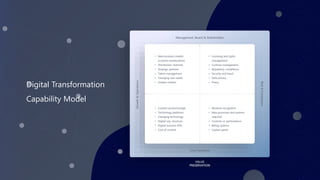
VALUE
PRESERVATION
Digital Transformation
Capability Model
Management: Board & Stakeholders
Core Functions
Risk
&
Compliance
Growth
&
Operations
• New business models
(content monetization)
• Distribution channels
• Strategic partners
• Talent management
• Changing user needs
• Unique content
• Licensing and rights
management
• Contract management
• Regulatory compliance
• Security and fraud
• Data privacy
• Piracy
• Content access/storage
• Technology platforms
• Changing technology
• Digital org. structure
• Digital business KPIs
• Cost of content
• Revenue recognition
• New processes and systems
required
• Controls vs. performance
• Billing systems
• Capital spend
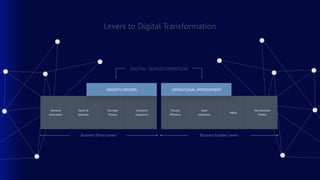
Levers to Digital Transformation
Demand
Generation
Reach &
Selection
Purchase
Process
Customer
Experience
New Business
Models
Agility
Asset
Utilization
Process
Efficiency
Business Driver Levers Business Enabler Levers
OPERATIONAL IMPROVEMENT
GROWTH DRIVERS
DIGITAL TRANSFORMATION
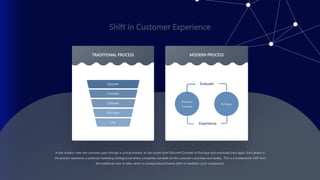
TRADITIONAL PROCESS
Discover
Consider
Evaluate
Purchase
Use
MODERN PROCESS
Discover/
Consider
Purchase
Evaluate
Experience
Shift in Customer Experience
In the modern view, the customer goes through a cyclical process, as she moves from Discover/Consider to Purchase and eventually back again. Each phase in
the process represents a potential marketing battleground where companies compete for the customer’s purchase and loyalty. This is a fundamental shift from
the traditional view of sales, which is conceptualized linearly (with no feedback cycle component).
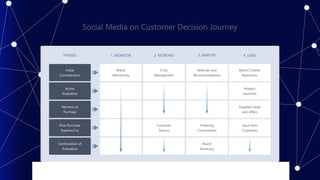
Social Media on Customer Decision Journey
Initial
Consideration
Moment of
Purchase
Active
Evaluation
Continuation of
Evaluation
Post-Purchase
Experien1ce
PHASES
Brand
Monitoring
1. MONITOR
Crisis
Management
Customer
Service
2. RESPOND
Referrals and
Recommendations
Brand
Advocacy
Fostering
Communities
3. AMPLIFY
Targeted Deals
and Offers
Brand Content
Awareness
Product
Launches
Input from
Customers
4. LEAD
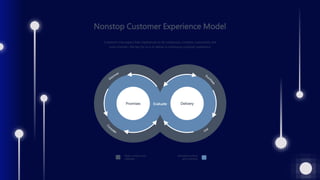
Nonstop Customer Experience Model
Customers now expect their experiences to be continuous, constant, customized, and
cross-channel—the key for us is to deliver a continuous customer experience.
Open content and
channels
Branded content
and channels
Promises Delivery
Evaluate
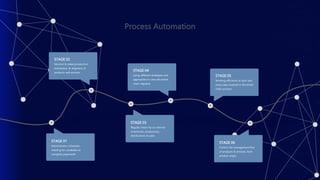
STAGE 02
Monitor & relate production,
distribution & shipment of
products and services
STAGE 01
Administrator schedules
meeting for candidate to
complete paperwork
STAGE 03
Regular check-ins on internal
inventories, productions,
distributions & sales
STAGE 04
Using different strategies and
approaches to view the entire
chain regularly.
STAGE 06
Control the management flow
of products & services, from
product origin.
STAGE 05
Working efficiently at each and
every step involved in the entire
chain process.
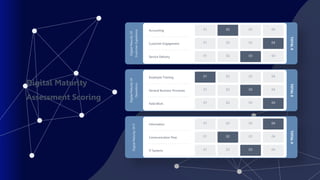
Process Automation
Digital
Maturity
Of
Customer
Experience
Accounting
Customer Engagement
Service Delivery
04
03
01 02
04
03
01 02
04
03
01 02
TOTAL
9
Digital
Maturity
Of
Operations
Employee Training
General Business Processes
Field Work
04
03
01 02
04
03
01 02
04
03
01 02
TOTAL
8
Digital
Maturity
Of
IT
Information
Communication Flow
IT Systems
04
03
01 02
04
03
01 02
04
03
01 02
TOTAL
9
Digital Maturity
Assessment Scoring
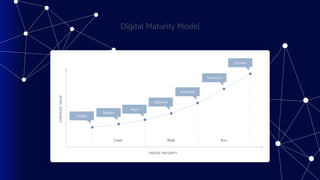
Digital Maturity Model
Improve
Transform
Initiate
Radiate
Align
Optimize
Automate
Crawl Walk Run
DIGITAL MATURITY
STRATEGIC
VALUE

Data and Analytics Services.pptx

  • 1.
    Data and AnalyticsServices PRESENTED BY Kapil Singhal
  • 2.
    Building Blocks ofData and Analytics Services Data Platform Modernization Analytics Consulting Data Discovery Platform  Data Migration  Data Governance  Data lake house  Next Gen Data integration  Search and Content Analytics  Advance Analytics and Data Sciences  Artificial intelligence and cognitive sciences  Master data Management  Data Quality through next gen platform  Flexible and Extensible database schemas
  • 3.
    Emerging Technology Trends SOCIAL MEDIA CLOUDBIG DATA INTERNET OF THINGS MOBILITY CYBER SECURITY Analytics and access to the right data enable new insights and decision-rich information, and allows us make use of such data. Virtualize and consume infrastructure, platforms, and applications as a service (XaaS) enables better scalability and flexibility. Enable new ways and drive expectations of interaction, personalization, and building relationships within organization and with customers. Protection of information systems from theft or damage to the hardware, the software, and the information of our users. The uninterrupted trend of using mobile devices impacts how people interact, use information, and how businesses reach them. Connected devices of all kinds and cheap integrations everywhere create large amounts of data in need of effective management.
  • 4.
    BUDGET ALLOCATION 15% 22% 13% 9% 16% 10% 16% 17% 17% 18% Cloud Migrationfor IT LOT Devices Upgrading Networks Data Analytics Improve Security Primary investment Secondary investment Large portion of the Budget of IT Transformation has been allocated to cloud migration of data Data analytics will have low expenditure in the budget KEY TAKEAWAYS Total Budget : $451,000 SECTION 1
  • 5.
    SECTION 1 TRANSFORMATION READINESS Not Started Implementationunderway Implementation Planned Under Consideration Broadband Toolkit Business Planning Assessment Market Assessment Community Readiness Economy Feasibility Digital Economy Demand Digital Transformation Stage
  • 6.
    MANAGEMENT: BOARD &STAKEHOLDERS CORE FUNCTIONS RISK & COMPLIANCE GROWTH & OPERATIONS TRANSFORMATION MAPPING SECTION 1 ● Contract management ● Regulatory compliance ● Data privacy ● Security and fraud ● Controls vs. performance ● Revenue recognition/settlements ● Self-reporting env. ● Billing systems ● Capital spend ● New processes and systems required ● Digital business KPIs ● Service pricing/packaging VALUE PRESERVATION STRATEGIC GROWTH Digital Agenda ● Unique content ● Changing consumer needs ● Talent management ● Share of wallet ● Strategic partners ● Distribution channels ● New business models (content monetization) ● Licensing and rights management ● Piracy ● Content access and storage ● Digital org. structure ● Changing technology ● Cost of content ● Technology platforms
  • 7.
    SECTION 3 IMPLEMENTATION PLAN Implementation Readiness StageGate Review • Review and validate implementation readiness outputs • Facilitate Phase 1 Go/No-Go decision Executive Boot Camp • One-day Executive team workshop to align executive understanding and expectations • Knowledge of ERP implementation best practices WORKSTREAM KEY ACTIVITY Project Strategy Articulation • Translate executive team’s vision into specific ERP project goals, objectives, and measures • Drive Decision-making to address areas of misalignment Stakeholder Assessment/ Plan • Assess level of alignment and buy-in • Identify potential sources of resistance Business Decisions/ Ops Alignment • Facilitate key operational decisions among executive team • Engage, create awareness and buy-in Executive/Managemen t Comms • Define “top-down” communications plan • Execute executive team and management communications Ensure executive alignment KEY OBJECTIVES Reassure clarity of vision Translate executive vision into specific project goals and objectives Define project governance processes Engage the executive team and create ownership
  • 8.
    SECTION 3 IMPLEMENTATION TIMELINE Q1 Q2Q3 Q4 Q1 Q2 Q3 Q4 Task Task Task Task Task Task Task Task Task QUICK WINS DEEP IMPROVEMENT ADDITIONAL WINS 20XX 20XX
  • 9.
    Emerging Technology Trends SOCIAL MEDIA CLOUDBIG DATA INTERNET OF THINGS MOBILITY CYBER SECURITY Analytics and access to the right data enable new insights and decision-rich information, and allows us make use of such data. Virtualize and consume infrastructure, platforms, and applications as a service (XaaS) enables better scalability and flexibility. Enable new ways and drive expectations of interaction, personalization, and building relationships within organization and with customers. Protection of information systems from theft or damage to the hardware, the software, and the information of our users. The uninterrupted trend of using mobile devices impacts how people interact, use information, and how businesses reach them. Connected devices of all kinds and cheap integrations everywhere create large amounts of data in need of effective management.
  • 10.
    Emerging Technology Trends SOCIAL MEDIA CLOUDBIG DATA INTERNET OF THINGS MOBILITY CYBER SECURITY Analytics and access to the right data enable new insights and decision-rich information, and allows us make use of such data. Virtualize and consume infrastructure, platforms, and applications as a service (XaaS) enables better scalability and flexibility. Enable new ways and drive expectations of interaction, personalization, and building relationships within organization and with customers. Protection of information systems from theft or damage to the hardware, the software, and the information of our users. The uninterrupted trend of using mobile devices impacts how people interact, use information, and how businesses reach them. Connected devices of all kinds and cheap integrations everywhere create large amounts of data in need of effective management.
  • 11.
    VALUE PRESERVATION Digital Transformation Capability Model Management:Board & Stakeholders Core Functions Risk & Compliance Growth & Operations • New business models (content monetization) • Distribution channels • Strategic partners • Talent management • Changing user needs • Unique content • Licensing and rights management • Contract management • Regulatory compliance • Security and fraud • Data privacy • Piracy • Content access/storage • Technology platforms • Changing technology • Digital org. structure • Digital business KPIs • Cost of content • Revenue recognition • New processes and systems required • Controls vs. performance • Billing systems • Capital spend
  • 12.
    Levers to DigitalTransformation Demand Generation Reach & Selection Purchase Process Customer Experience New Business Models Agility Asset Utilization Process Efficiency Business Driver Levers Business Enabler Levers OPERATIONAL IMPROVEMENT GROWTH DRIVERS DIGITAL TRANSFORMATION
  • 13.
    TRADITIONAL PROCESS Discover Consider Evaluate Purchase Use MODERN PROCESS Discover/ Consider Purchase Evaluate Experience Shiftin Customer Experience In the modern view, the customer goes through a cyclical process, as she moves from Discover/Consider to Purchase and eventually back again. Each phase in the process represents a potential marketing battleground where companies compete for the customer’s purchase and loyalty. This is a fundamental shift from the traditional view of sales, which is conceptualized linearly (with no feedback cycle component).
  • 14.
    Social Media onCustomer Decision Journey Initial Consideration Moment of Purchase Active Evaluation Continuation of Evaluation Post-Purchase Experien1ce PHASES Brand Monitoring 1. MONITOR Crisis Management Customer Service 2. RESPOND Referrals and Recommendations Brand Advocacy Fostering Communities 3. AMPLIFY Targeted Deals and Offers Brand Content Awareness Product Launches Input from Customers 4. LEAD
  • 15.
    Nonstop Customer ExperienceModel Customers now expect their experiences to be continuous, constant, customized, and cross-channel—the key for us is to deliver a continuous customer experience. Open content and channels Branded content and channels Promises Delivery Evaluate
  • 16.
    STAGE 02 Monitor &relate production, distribution & shipment of products and services STAGE 01 Administrator schedules meeting for candidate to complete paperwork STAGE 03 Regular check-ins on internal inventories, productions, distributions & sales STAGE 04 Using different strategies and approaches to view the entire chain regularly. STAGE 06 Control the management flow of products & services, from product origin. STAGE 05 Working efficiently at each and every step involved in the entire chain process. Process Automation
  • 17.
    Digital Maturity Of Customer Experience Accounting Customer Engagement Service Delivery 04 03 0102 04 03 01 02 04 03 01 02 TOTAL 9 Digital Maturity Of Operations Employee Training General Business Processes Field Work 04 03 01 02 04 03 01 02 04 03 01 02 TOTAL 8 Digital Maturity Of IT Information Communication Flow IT Systems 04 03 01 02 04 03 01 02 04 03 01 02 TOTAL 9 Digital Maturity Assessment Scoring
  • 18.

Editor's Notes