Building your
IT strategy

Dan Simms
Housing Technology Conference 2014
Welcome
 Today we’ll look at some
tips for building your IT
strategy

 As we go through please
keep note of any tips you
would like to share with
the audience after the
presentation
 2013 is the year of large scale adoption of big data
technologies.

 By 2015, 20% of Global 1000 orgs will have a strategic
focus on information infrastructure equal to that of
application management.

 Most enterprises have yet to explore the possibilities of an
expanded Internet and are not ready for it.

 The smart machine era will be the most disruptive in the
history of IT.

 Large cloud services providers such as Amazon are reinventing the way in which IT services can be delivered.
What is
strategy?

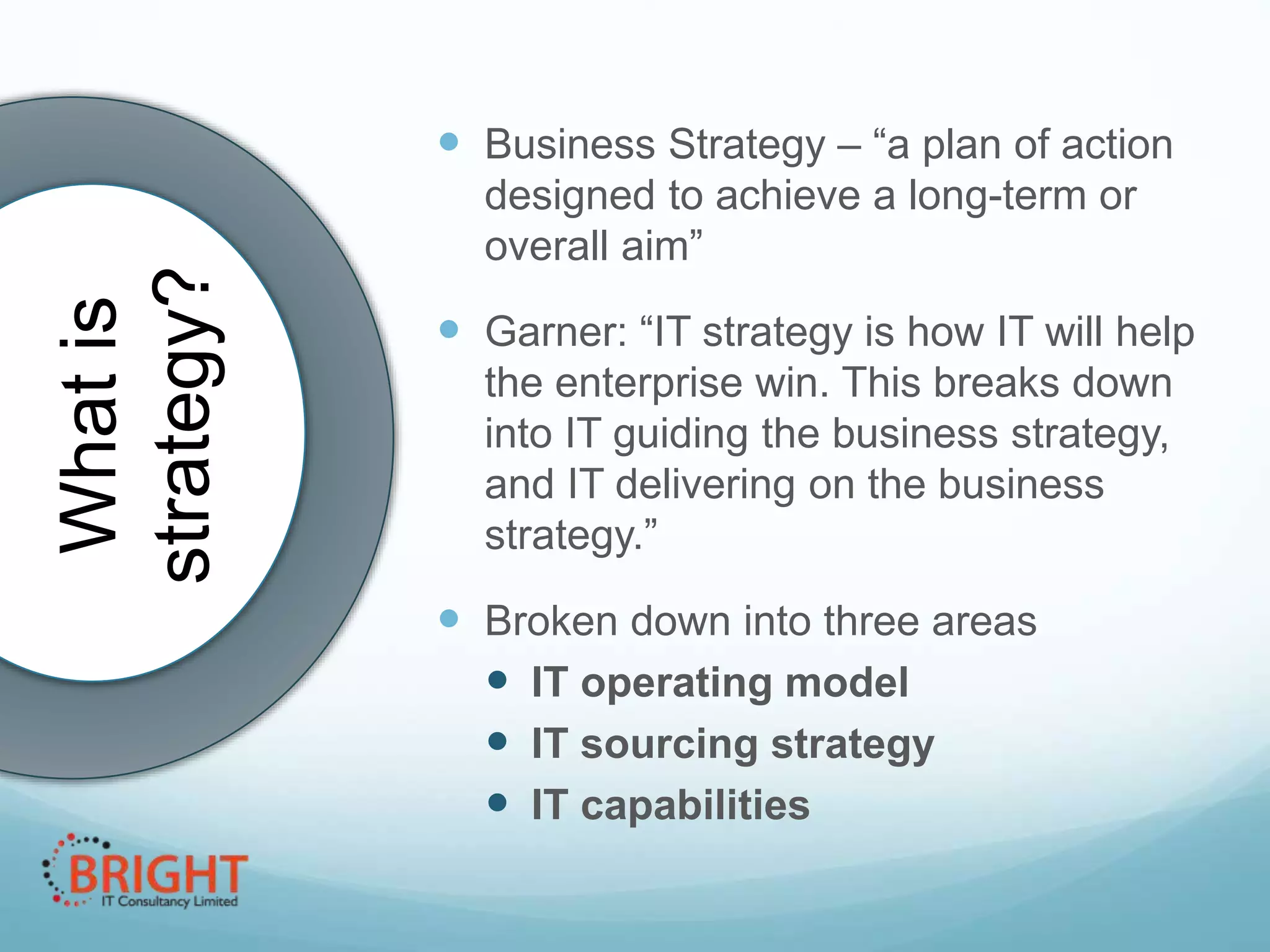
 Business Strategy – “a plan of action
designed to achieve a long-term or
overall aim”

 Garner: “IT strategy is how IT will help
the enterprise win. This breaks down
into IT guiding the business
strategy, and IT delivering on the
business strategy.”

 Broken down into three areas
 IT operating model
 IT sourcing strategy
 IT capabilities
Steps
 Discovery

 Analysis
 Development
 Approval
 Delivery
 Review
Ground rules for success
 Review the business strategy if

exists… IT strategy should always
underpin this

 If it doesn’t exist, work with key
business stakeholders to agree
general principles

 Innovation runs across all areas and
is rarely something that is done in
isolation… however make sure you
have permission….

 Be clear about your “what’s” and
“how’s” – more later

 Be disruptive
IT Operating Model
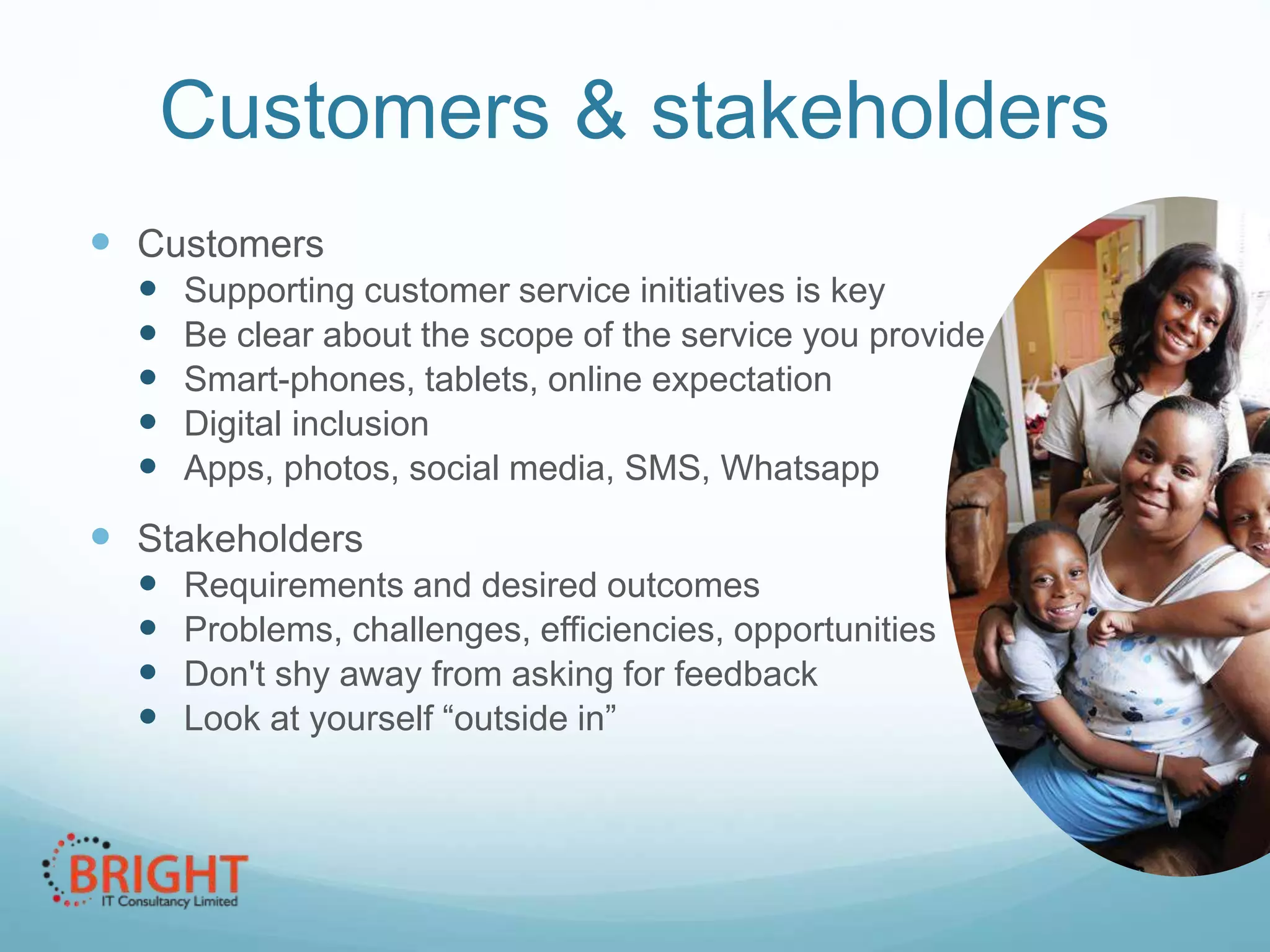
Customers & stakeholders
 Customers






Supporting customer service initiatives is key
Be clear about the scope of the service you provide
Smart-phones, tablets, online expectation
Digital inclusion
Apps, photos, social media, SMS, Whatsapp

 Stakeholders





Requirements and desired outcomes
Problems, challenges, efficiencies, opportunities
Don't shy away from asking for feedback
Look at yourself “outside in”
Governance
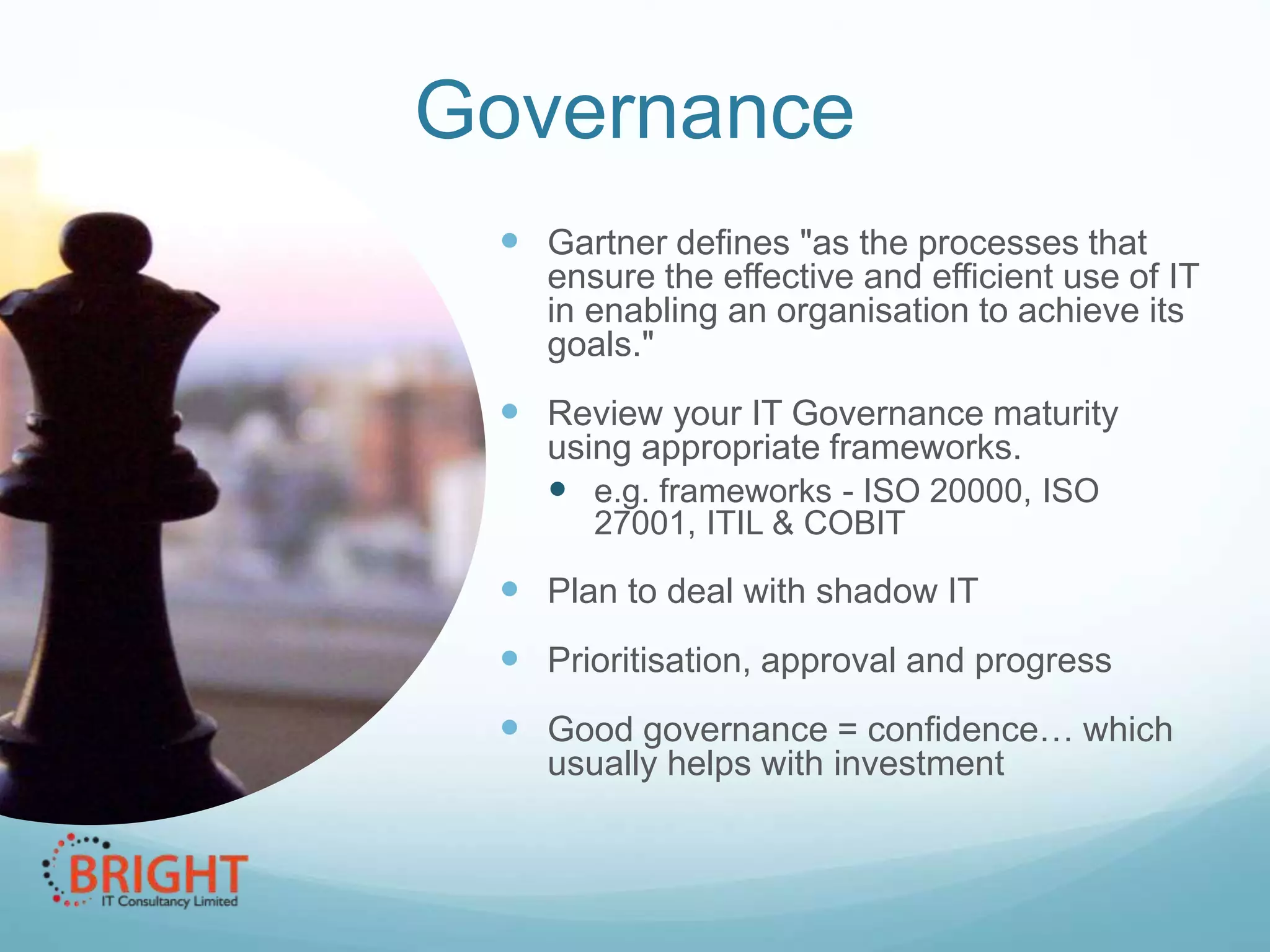
 Gartner defines "as the processes that
ensure the effective and efficient use of IT
in enabling an organisation to achieve its
goals."

 Review your IT Governance maturity
using appropriate frameworks.
 e.g. frameworks - ISO 20000, ISO
27001, ITIL & COBIT

 Plan to deal with shadow IT
 Prioritisation, approval and progress
 Good governance = confidence… which
usually helps with investment
Service Delivery
 Look for gaps where business
capabilities do not meet with existing
service provision
 People, training, processes, reporting,
measurement, delivery, tools

 Benchmark using frameworks
 Create programme to deliver
improvements

 Measure progress – balanced scorecard
Change Delivery
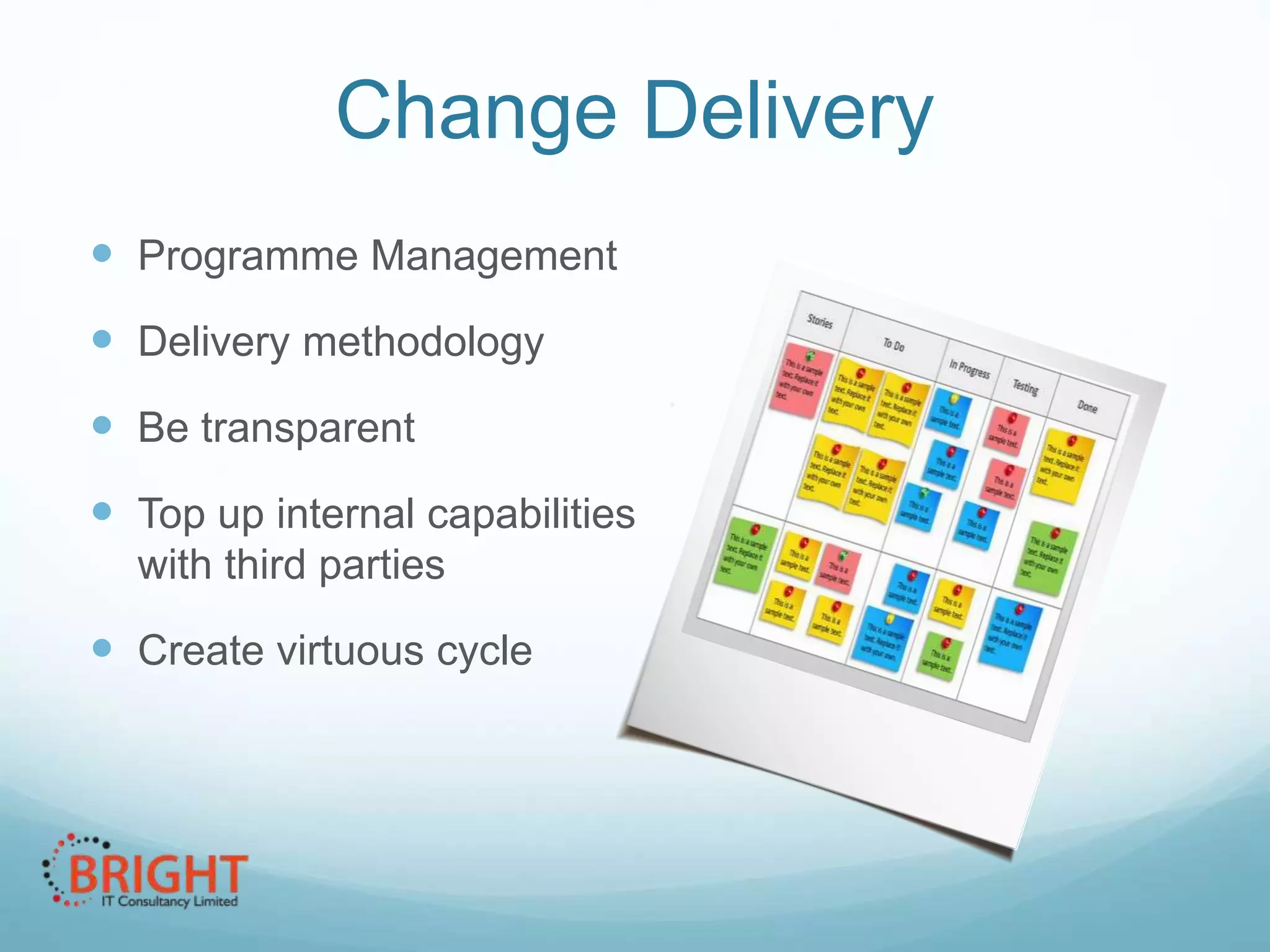
 Programme Management

 Delivery methodology
 Be transparent
 Top up internal capabilities
with third parties

 Create virtuous cycle
Information Security, Risk
& Compliance
 Information Security (ISO 27001)

 Data Protection
 Business Continuity / Disaster
recovery

 Contractual obligations

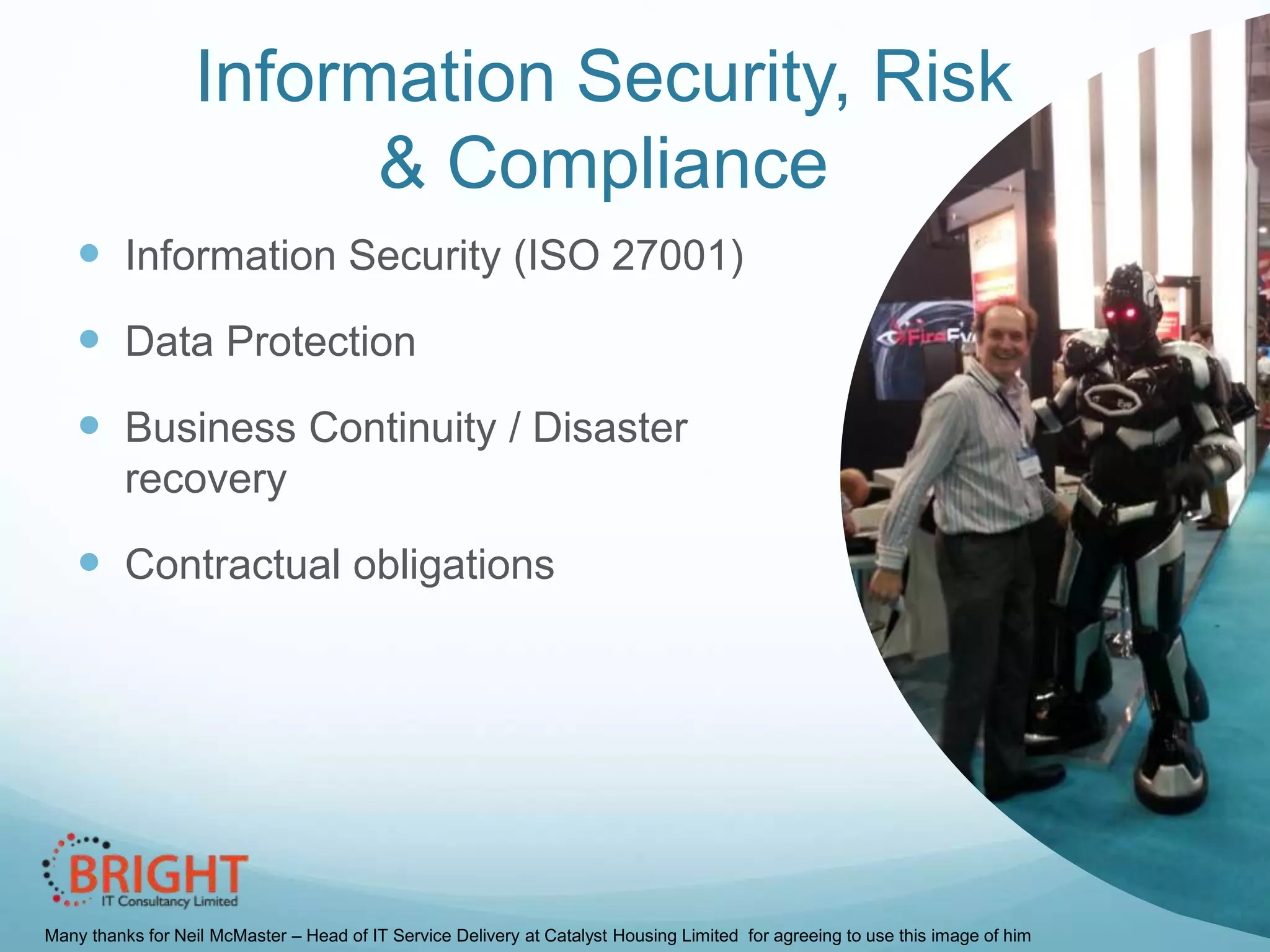
Many thanks for Neil McMaster – Head of IT Service Delivery at Catalyst Housing Limited for agreeing to use this image of him
IT Sourcing strategy
Sourcing strategy
 In-House, Managed
Services, Outsourcing, Multisourcing, co-sourcing or in the
cloud?

 Selecting the right third parties

 If you’re not clear then
complete a review to give you
the strengths and weaknesses
Budget
 A solid budget is key to delivering
change

 Include contingency
 Budget at the macro level rather
than the micro level

 Budget without business case –
release budget with business case

 Work closely with finance team
 Tip: structure your budget to allow
easy monthly reporting against
budget
Procurement & value for money
 Tendering for big ticket items
 Buying smartly for smaller items
 Measure and demonstrate
 Build confidence to release more
budget

 Get your suppliers working for
you

 Sourcing needs managing
IT Capabilities
Enterprise Architecture
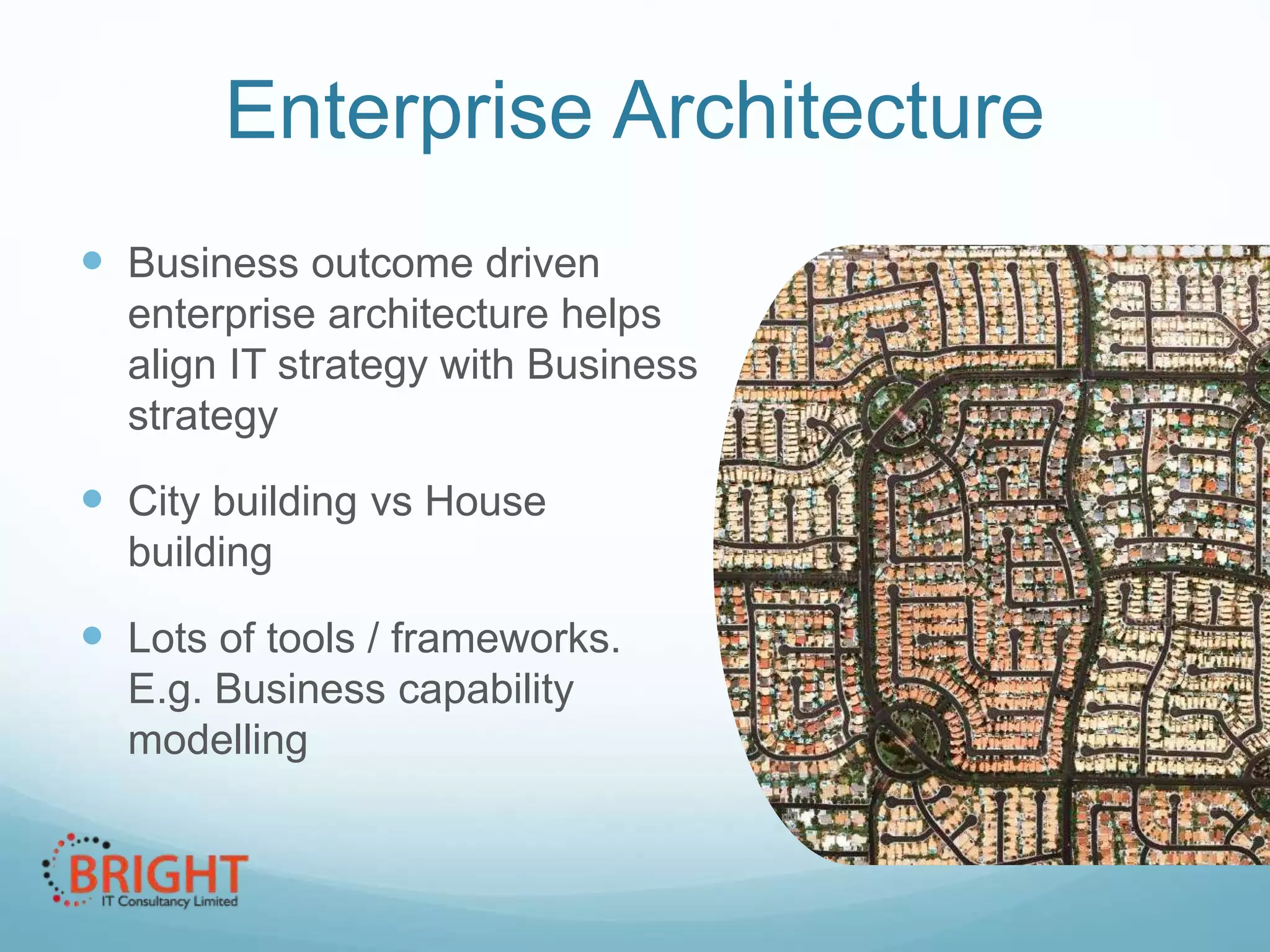
 Business outcome driven
enterprise architecture helps
align IT strategy with Business
strategy

 City building vs House
building

 Lots of tools / frameworks.
E.g. Business capability
modelling
Business Capability Modelling
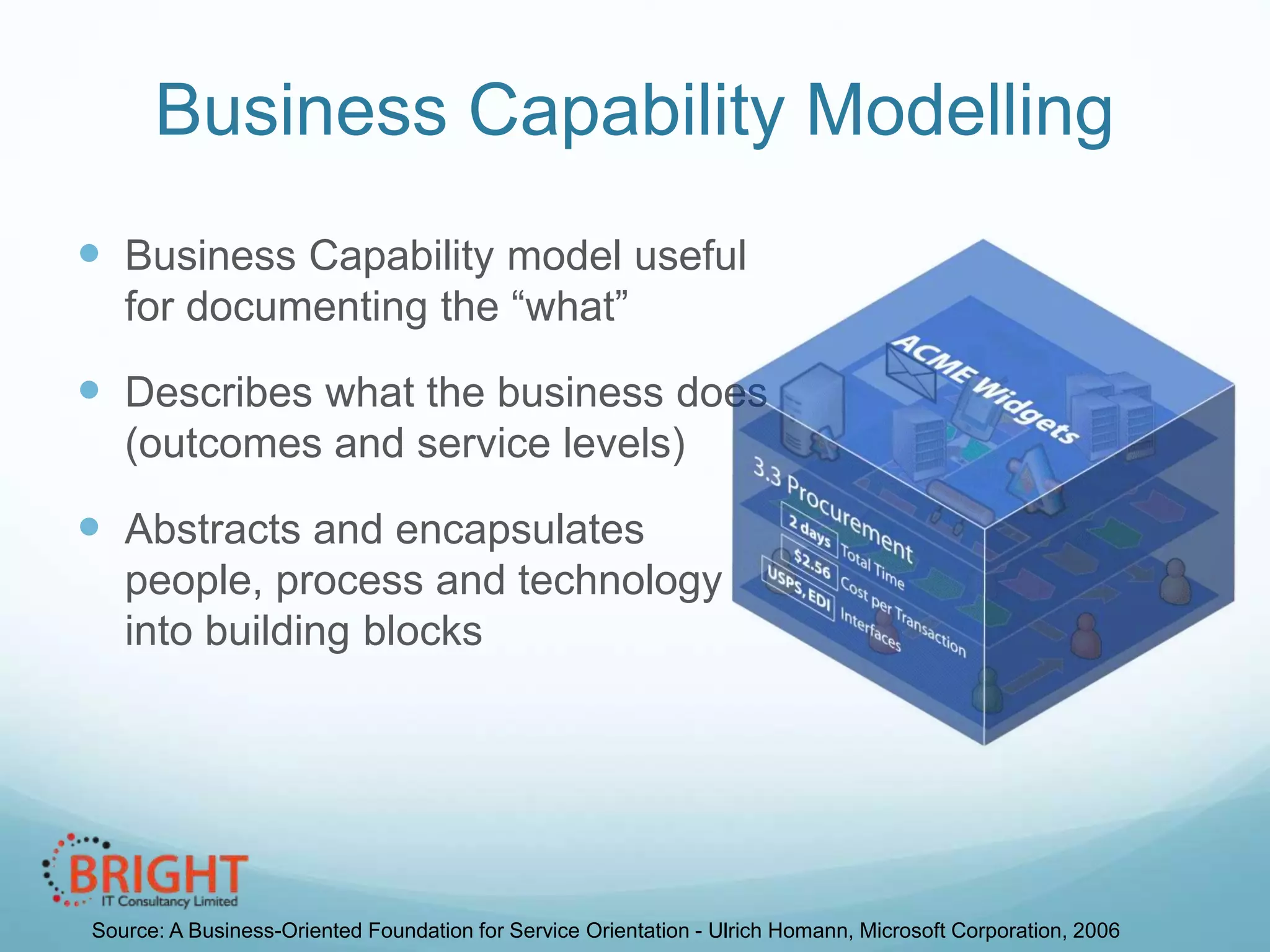
 Business Capability model useful
for documenting the “what”

 Describes what the business does
(outcomes and service levels)

 Abstracts and encapsulates
people, process and technology
into building blocks

Source: A Business-Oriented Foundation for Service Orientation - Ulrich Homann, Microsoft Corporation, 2006
Your team capabilities
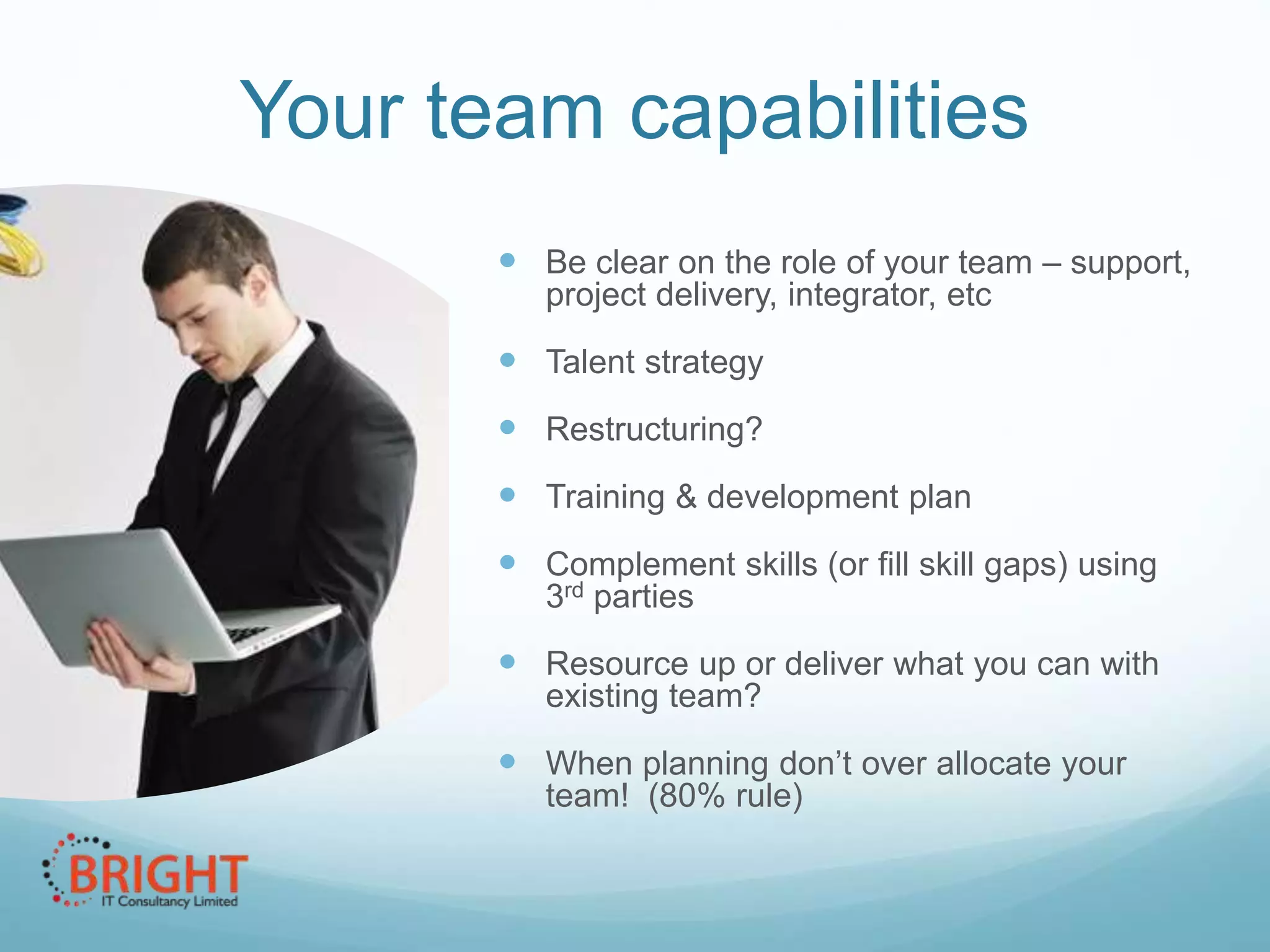
 Be clear on the role of your team –
support, project delivery, integrator, etc

 Talent strategy
 Restructuring?
 Training & development plan
 Complement skills (or fill skill gaps) using
3rd parties

 Resource up or deliver what you can with
existing team?

 When planning don’t over allocate your
team! (80% rule)
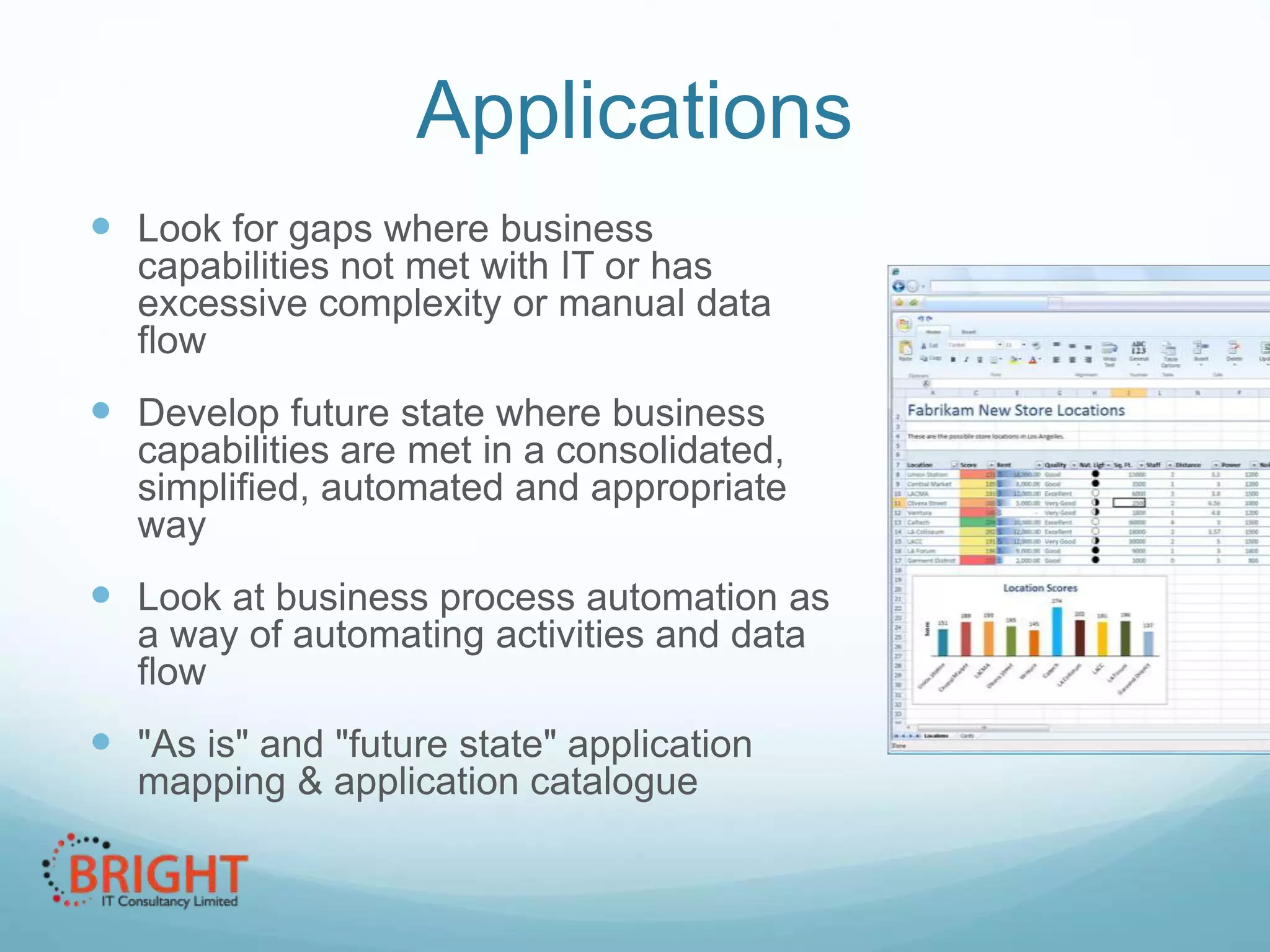
Applications
 Look for gaps where business
capabilities not met with IT or has
excessive complexity or manual data
flow

 Develop future state where business
capabilities are met in a
consolidated, simplified, automated and
appropriate way

 Look at business process automation as
a way of automating activities and data
flow

 "As is" and "future state" application
mapping & application catalogue
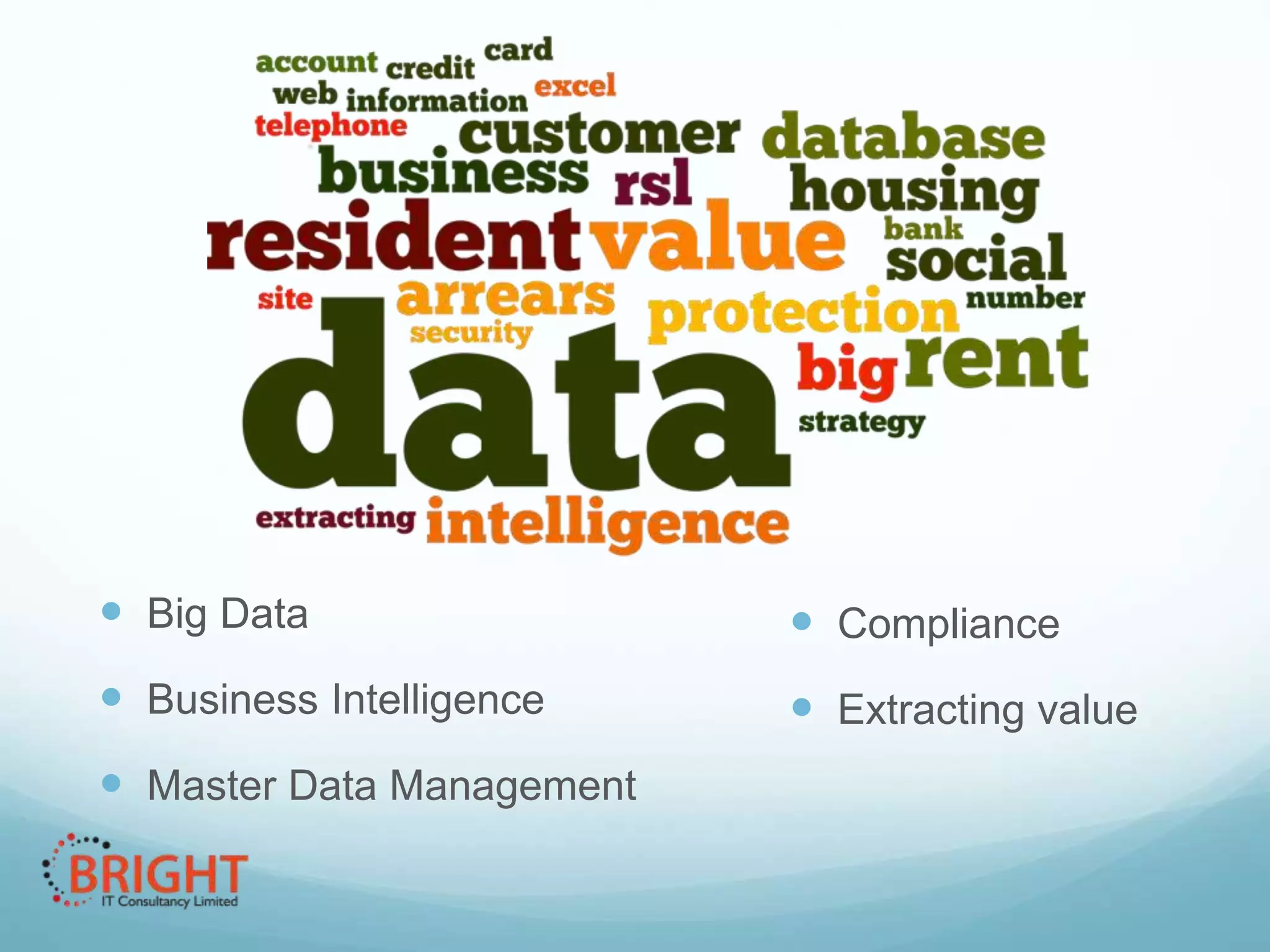
 Big Data

 Compliance

 Business Intelligence

 Extracting value

 Master Data Management
Mobility & Social Media
 Both internal and external
 Large growth area
 It will not be long before the principal tool of a RSL
and resident / customers is a smart phone (B2B)

 Residents want to consume via smart phone
technology (B2C)

 Huge opportunities to innovate and standout
 Social media = public stage to succeed or fail
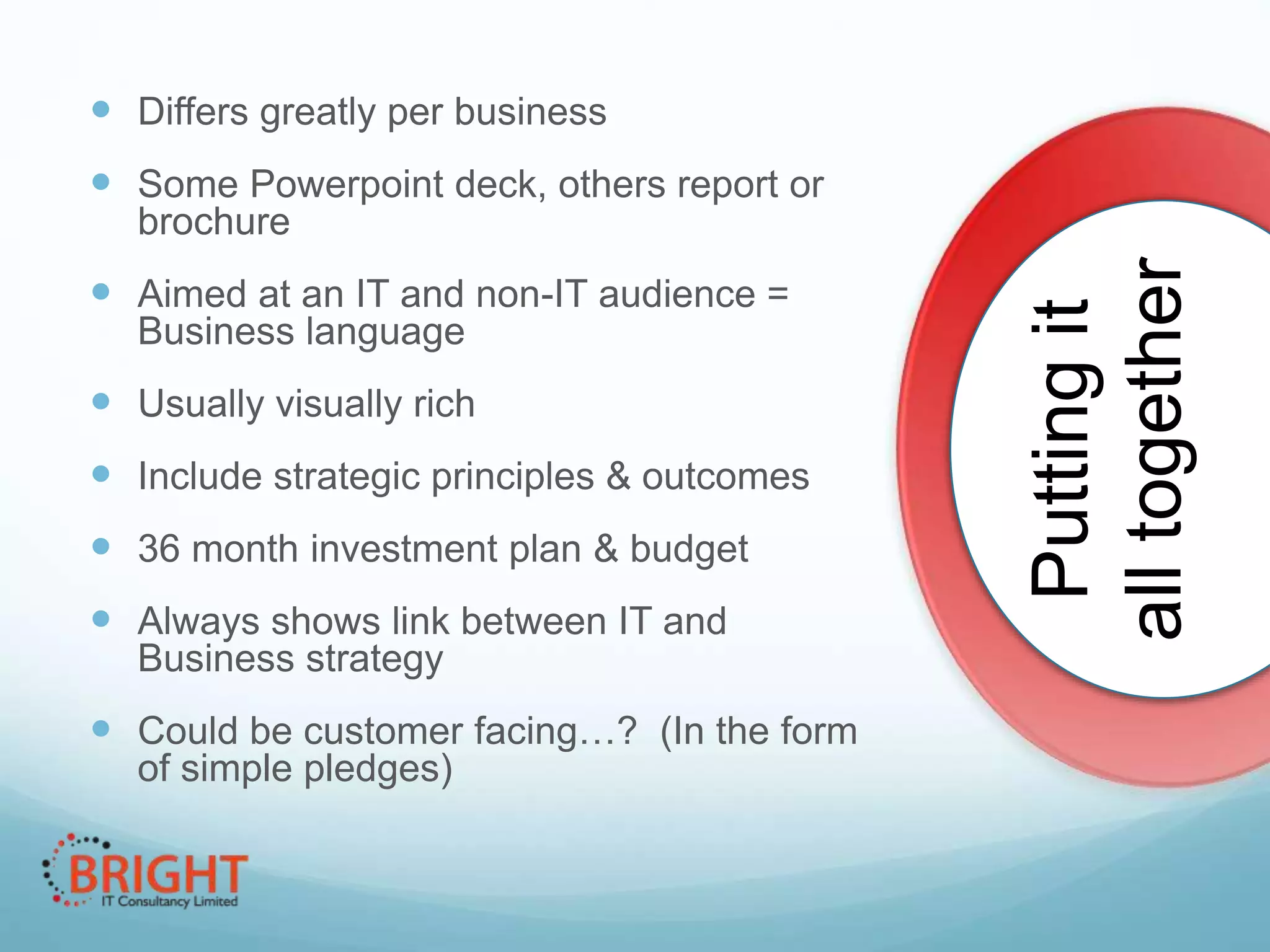
Putting it all together
 Differs greatly per business

 Some Powerpoint deck, others report or
 Aimed at an IT and non-IT audience =
Business language

 Usually visually rich
 Include strategic principles & outcomes
 36 month investment plan & budget

 Always shows link between IT and
Business strategy

 Could be customer facing…? (In the form
of simple pledges)

Putting it
all together

brochure

§
What’s hot in Housing….
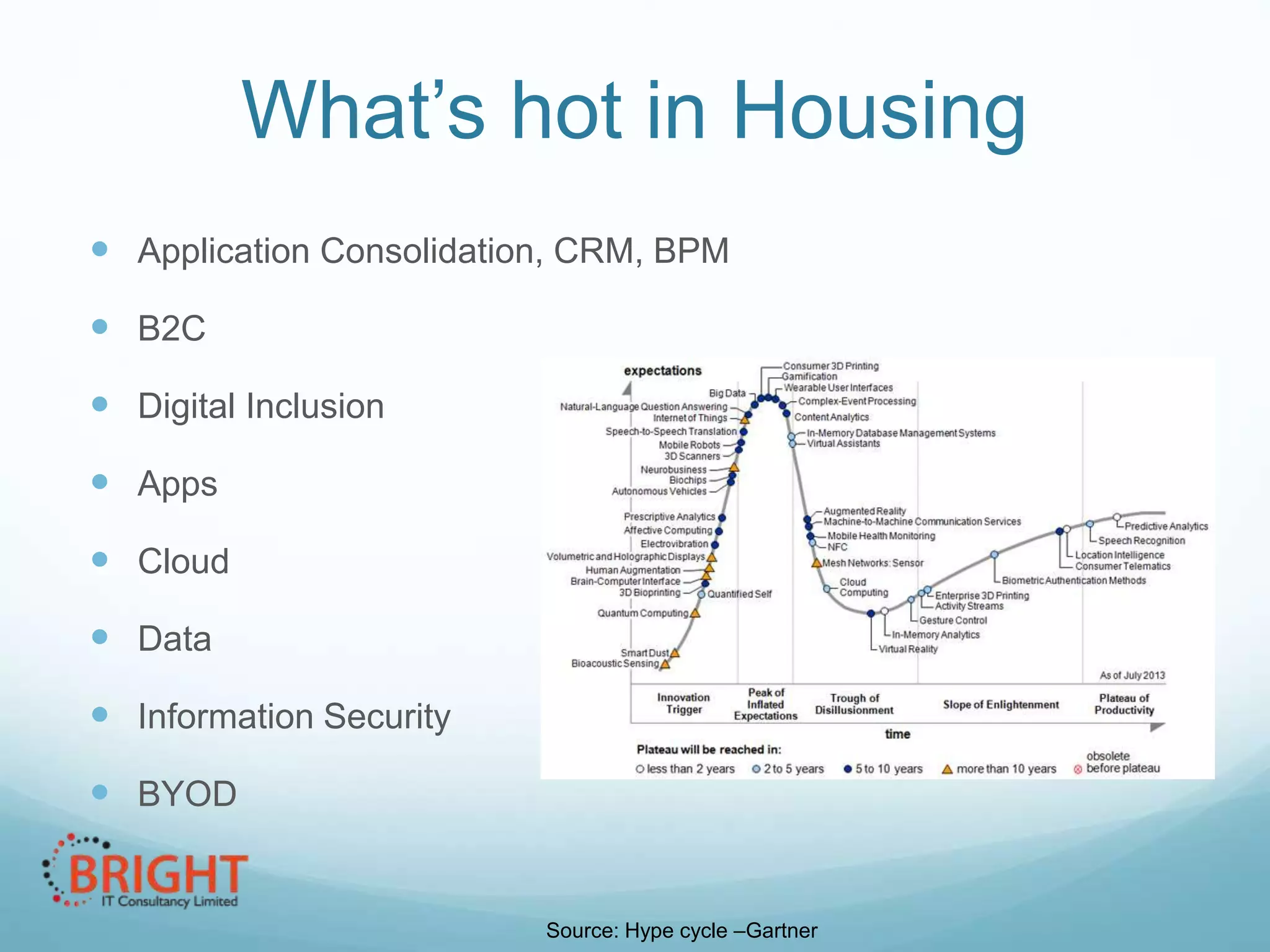
What’s hot in Housing
 Application Consolidation, CRM, BPM
 B2C
 Digital Inclusion
 Apps
 Cloud
 Data
 Information Security

 BYOD

Source: Hype cycle –Gartner
Any questions?
Please feel free to connect with me on Linked-in or email
me:

E: dan.simms@brightconsult.co.uk

L: www.linkedin.com/in/dansimms

Building your IT strategy (Housing Technology Conference 2014)

  • 1.
    Building your IT strategy DanSimms Housing Technology Conference 2014
  • 2.
    Welcome  Today we’lllook at some tips for building your IT strategy  As we go through please keep note of any tips you would like to share with the audience after the presentation
  • 3.
     2013 isthe year of large scale adoption of big data technologies.  By 2015, 20% of Global 1000 orgs will have a strategic focus on information infrastructure equal to that of application management.  Most enterprises have yet to explore the possibilities of an expanded Internet and are not ready for it.  The smart machine era will be the most disruptive in the history of IT.  Large cloud services providers such as Amazon are reinventing the way in which IT services can be delivered.
  • 4.
    What is strategy?  BusinessStrategy – “a plan of action designed to achieve a long-term or overall aim”  Garner: “IT strategy is how IT will help the enterprise win. This breaks down into IT guiding the business strategy, and IT delivering on the business strategy.”  Broken down into three areas  IT operating model  IT sourcing strategy  IT capabilities
  • 5.
    Steps  Discovery  Analysis Development  Approval  Delivery  Review
  • 6.
    Ground rules forsuccess  Review the business strategy if exists… IT strategy should always underpin this  If it doesn’t exist, work with key business stakeholders to agree general principles  Innovation runs across all areas and is rarely something that is done in isolation… however make sure you have permission….  Be clear about your “what’s” and “how’s” – more later  Be disruptive
  • 7.
  • 8.
    Customers & stakeholders Customers      Supporting customer service initiatives is key Be clear about the scope of the service you provide Smart-phones, tablets, online expectation Digital inclusion Apps, photos, social media, SMS, Whatsapp  Stakeholders     Requirements and desired outcomes Problems, challenges, efficiencies, opportunities Don't shy away from asking for feedback Look at yourself “outside in”
  • 9.
    Governance  Gartner defines"as the processes that ensure the effective and efficient use of IT in enabling an organisation to achieve its goals."  Review your IT Governance maturity using appropriate frameworks.  e.g. frameworks - ISO 20000, ISO 27001, ITIL & COBIT  Plan to deal with shadow IT  Prioritisation, approval and progress  Good governance = confidence… which usually helps with investment
  • 10.
    Service Delivery  Lookfor gaps where business capabilities do not meet with existing service provision  People, training, processes, reporting, measurement, delivery, tools  Benchmark using frameworks  Create programme to deliver improvements  Measure progress – balanced scorecard
  • 11.
    Change Delivery  ProgrammeManagement  Delivery methodology  Be transparent  Top up internal capabilities with third parties  Create virtuous cycle
  • 12.
    Information Security, Risk &Compliance  Information Security (ISO 27001)  Data Protection  Business Continuity / Disaster recovery  Contractual obligations Many thanks for Neil McMaster – Head of IT Service Delivery at Catalyst Housing Limited for agreeing to use this image of him
  • 13.
  • 14.
    Sourcing strategy  In-House,Managed Services, Outsourcing, Multisourcing, co-sourcing or in the cloud?  Selecting the right third parties  If you’re not clear then complete a review to give you the strengths and weaknesses
  • 15.
    Budget  A solidbudget is key to delivering change  Include contingency  Budget at the macro level rather than the micro level  Budget without business case – release budget with business case  Work closely with finance team  Tip: structure your budget to allow easy monthly reporting against budget
  • 16.
    Procurement & valuefor money  Tendering for big ticket items  Buying smartly for smaller items  Measure and demonstrate  Build confidence to release more budget  Get your suppliers working for you  Sourcing needs managing
  • 17.
  • 18.
    Enterprise Architecture  Businessoutcome driven enterprise architecture helps align IT strategy with Business strategy  City building vs House building  Lots of tools / frameworks. E.g. Business capability modelling
  • 19.
    Business Capability Modelling Business Capability model useful for documenting the “what”  Describes what the business does (outcomes and service levels)  Abstracts and encapsulates people, process and technology into building blocks Source: A Business-Oriented Foundation for Service Orientation - Ulrich Homann, Microsoft Corporation, 2006
  • 20.
    Your team capabilities Be clear on the role of your team – support, project delivery, integrator, etc  Talent strategy  Restructuring?  Training & development plan  Complement skills (or fill skill gaps) using 3rd parties  Resource up or deliver what you can with existing team?  When planning don’t over allocate your team! (80% rule)
  • 21.
    Applications  Look forgaps where business capabilities not met with IT or has excessive complexity or manual data flow  Develop future state where business capabilities are met in a consolidated, simplified, automated and appropriate way  Look at business process automation as a way of automating activities and data flow  "As is" and "future state" application mapping & application catalogue
  • 22.
     Big Data Compliance  Business Intelligence  Extracting value  Master Data Management
  • 23.
    Mobility & SocialMedia  Both internal and external  Large growth area  It will not be long before the principal tool of a RSL and resident / customers is a smart phone (B2B)  Residents want to consume via smart phone technology (B2C)  Huge opportunities to innovate and standout  Social media = public stage to succeed or fail
  • 24.
  • 25.
     Differs greatlyper business  Some Powerpoint deck, others report or  Aimed at an IT and non-IT audience = Business language  Usually visually rich  Include strategic principles & outcomes  36 month investment plan & budget  Always shows link between IT and Business strategy  Could be customer facing…? (In the form of simple pledges) Putting it all together brochure §
  • 26.
    What’s hot inHousing….
  • 27.
    What’s hot inHousing  Application Consolidation, CRM, BPM  B2C  Digital Inclusion  Apps  Cloud  Data  Information Security  BYOD Source: Hype cycle –Gartner
  • 28.
    Any questions? Please feelfree to connect with me on Linked-in or email me: E: dan.simms@brightconsult.co.uk L: www.linkedin.com/in/dansimms

Editor's Notes

  • #7 Innovation runs through everythingTalk about recording studio at law firm.Talk about using video to connect with residents - blending personal touch and online. Skype integrated into call centre to provide another low cost mechanism for keeping in touch.
  • #9 Lots of groups of people to consider – two focus on here are customer and stakeholdersSupporting customer initiatives is keyTalk about providing technology to underpin what the customer wants and not just for the sake of it. Need to filter out the oiseLook for ways to optimise
  • #10 Right governance is key – without this the department won’t function effectively and you won’t be able to deliver change
  • #23 Big dataAsking Chewy questions Specific yet open ended Forward looking rather than backward lookingRadically changing business processes Introducing new products & services new markets