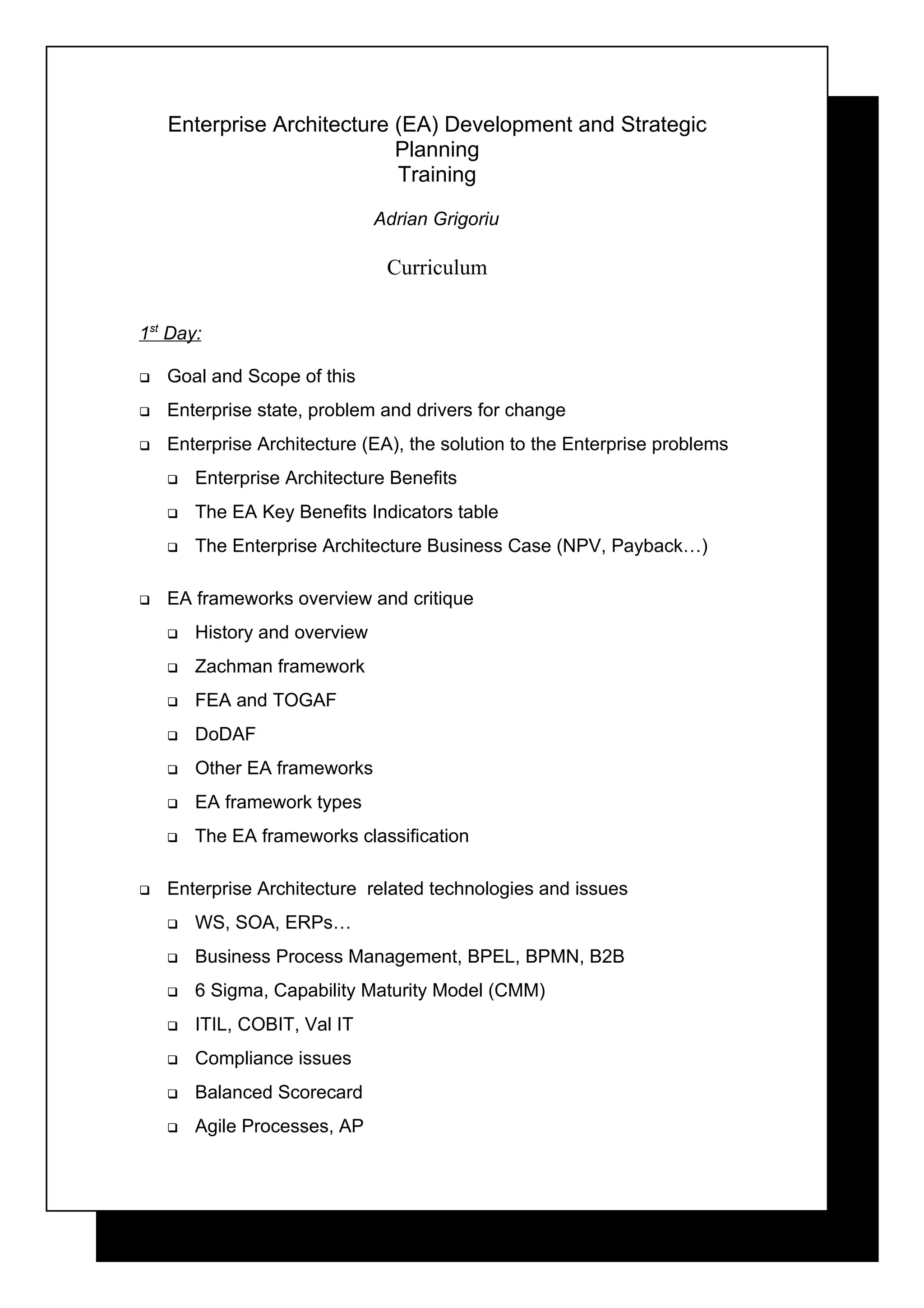
Enterprise Architecture (EA) Development and Strategic
                            Planning
                            Training

                               Adrian Grigoriu

                                Curriculum

1st Day:

   Goal and Scope of this
   Enterprise state, problem and drivers for change
   Enterprise Architecture (EA), the solution to the Enterprise problems
       Enterprise Architecture Benefits
       The EA Key Benefits Indicators table
       The Enterprise Architecture Business Case (NPV, Payback…)

   EA frameworks overview and critique
       History and overview
       Zachman framework
       FEA and TOGAF
       DoDAF
       Other EA frameworks
       EA framework types
       The EA frameworks classification

   Enterprise Architecture related technologies and issues
       WS, SOA, ERPs…
       Business Process Management, BPEL, BPMN, B2B
       6 Sigma, Capability Maturity Model (CMM)
       ITIL, COBIT, Val IT
       Compliance issues
       Balanced Scorecard
       Agile Processes, AP
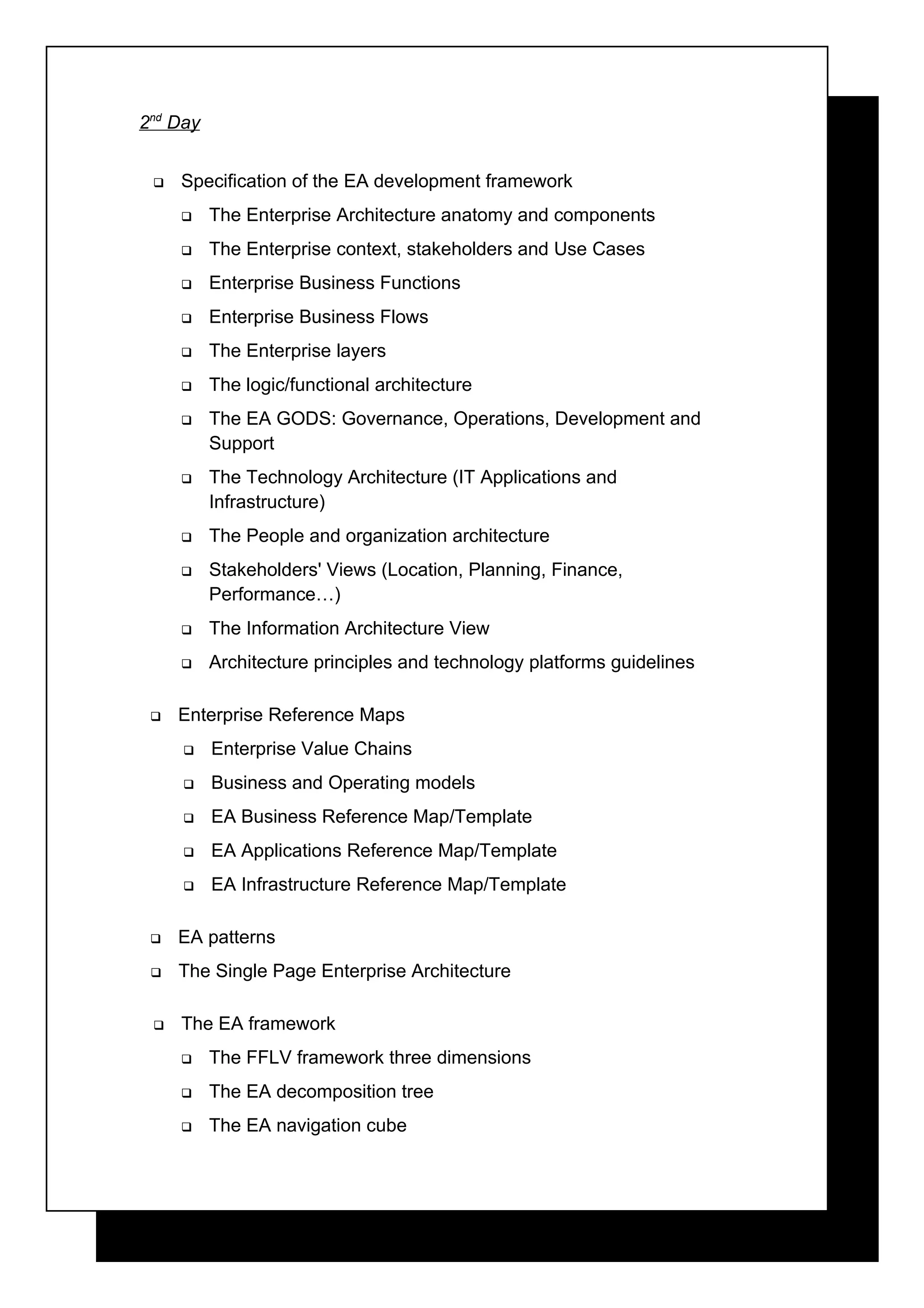
2nd Day


    Specification of the EA development framework
         The Enterprise Architecture anatomy and components
         The Enterprise context, stakeholders and Use Cases
         Enterprise Business Functions
         Enterprise Business Flows
         The Enterprise layers
         The logic/functional architecture
         The EA GODS: Governance, Operations, Development and
          Support
         The Technology Architecture (IT Applications and
          Infrastructure)
         The People and organization architecture
         Stakeholders' Views (Location, Planning, Finance,
          Performance…)
         The Information Architecture View
         Architecture principles and technology platforms guidelines

    Enterprise Reference Maps
         Enterprise Value Chains
         Business and Operating models
         EA Business Reference Map/Template
         EA Applications Reference Map/Template
         EA Infrastructure Reference Map/Template

    EA patterns
    The Single Page Enterprise Architecture

    The EA framework
         The FFLV framework three dimensions
         The EA decomposition tree
         The EA navigation cube
   The EA key views of the basic EA framework
   The basic EA navigation
   The EA framework metamodel
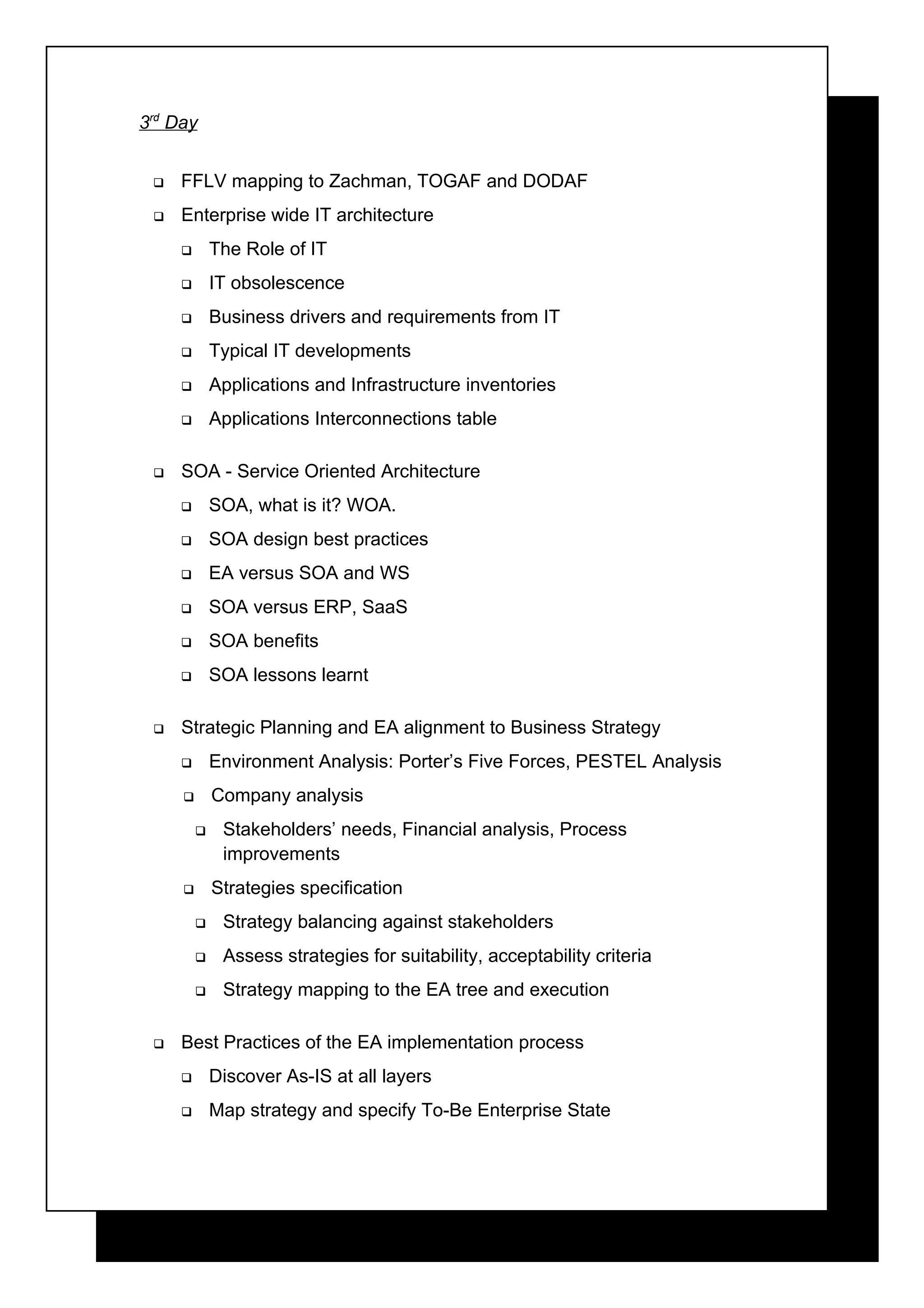
3rd Day


    FFLV mapping to Zachman, TOGAF and DODAF
    Enterprise wide IT architecture
            The Role of IT
            IT obsolescence
            Business drivers and requirements from IT
            Typical IT developments
            Applications and Infrastructure inventories
            Applications Interconnections table

    SOA - Service Oriented Architecture
            SOA, what is it? WOA.
            SOA design best practices
            EA versus SOA and WS
            SOA versus ERP, SaaS
            SOA benefits
            SOA lessons learnt

    Strategic Planning and EA alignment to Business Strategy
            Environment Analysis: Porter’s Five Forces, PESTEL Analysis
            Company analysis
             Stakeholders’ needs, Financial analysis, Process
              improvements
            Strategies specification
             Strategy balancing against stakeholders
             Assess strategies for suitability, acceptability criteria
             Strategy mapping to the EA tree and execution

    Best Practices of the EA implementation process
            Discover As-IS at all layers
            Map strategy and specify To-Be Enterprise State
   Assess gaps and roadmap the Enterprise Transformation
   Execute transformation and re-iterate
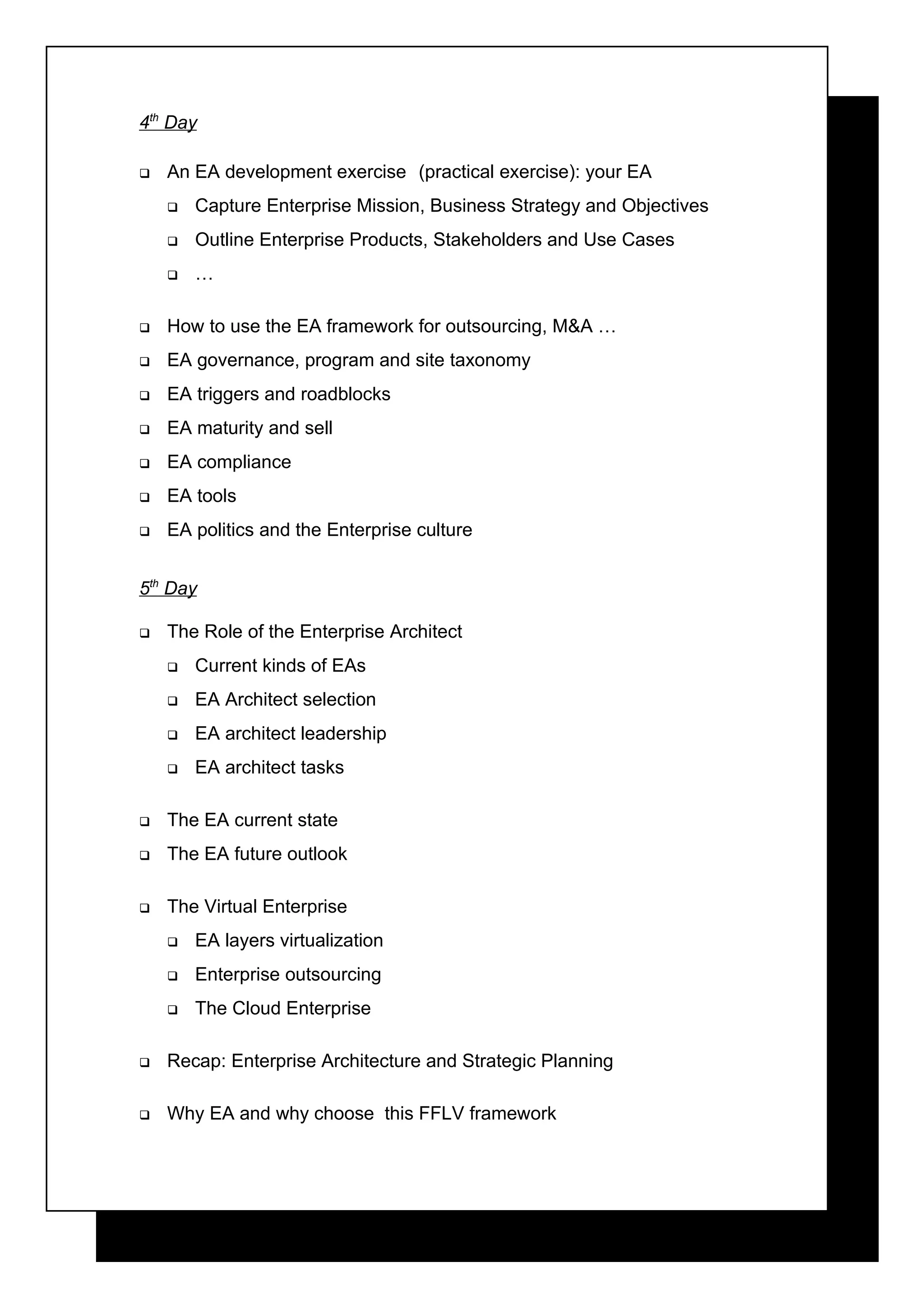
4th Day

   An EA development exercise (practical exercise): your EA
       Capture Enterprise Mission, Business Strategy and Objectives
       Outline Enterprise Products, Stakeholders and Use Cases
       …

   How to use the EA framework for outsourcing, M&A …
   EA governance, program and site taxonomy
   EA triggers and roadblocks
   EA maturity and sell
   EA compliance
   EA tools
   EA politics and the Enterprise culture


5th Day

   The Role of the Enterprise Architect
       Current kinds of EAs
       EA Architect selection
       EA architect leadership
       EA architect tasks

   The EA current state
   The EA future outlook

   The Virtual Enterprise
       EA layers virtualization
       Enterprise outsourcing
       The Cloud Enterprise

   Recap: Enterprise Architecture and Strategic Planning

   Why EA and why choose this FFLV framework
   EA: To Be or Not To BE

Training course: Enterprise and Business Architecture

  • 1.
    Enterprise Architecture (EA)Development and Strategic Planning Training Adrian Grigoriu Curriculum 1st Day:  Goal and Scope of this  Enterprise state, problem and drivers for change  Enterprise Architecture (EA), the solution to the Enterprise problems  Enterprise Architecture Benefits  The EA Key Benefits Indicators table  The Enterprise Architecture Business Case (NPV, Payback…)  EA frameworks overview and critique  History and overview  Zachman framework  FEA and TOGAF  DoDAF  Other EA frameworks  EA framework types  The EA frameworks classification  Enterprise Architecture related technologies and issues  WS, SOA, ERPs…  Business Process Management, BPEL, BPMN, B2B  6 Sigma, Capability Maturity Model (CMM)  ITIL, COBIT, Val IT  Compliance issues  Balanced Scorecard  Agile Processes, AP
  • 3.
    2nd Day  Specification of the EA development framework  The Enterprise Architecture anatomy and components  The Enterprise context, stakeholders and Use Cases  Enterprise Business Functions  Enterprise Business Flows  The Enterprise layers  The logic/functional architecture  The EA GODS: Governance, Operations, Development and Support  The Technology Architecture (IT Applications and Infrastructure)  The People and organization architecture  Stakeholders' Views (Location, Planning, Finance, Performance…)  The Information Architecture View  Architecture principles and technology platforms guidelines  Enterprise Reference Maps  Enterprise Value Chains  Business and Operating models  EA Business Reference Map/Template  EA Applications Reference Map/Template  EA Infrastructure Reference Map/Template  EA patterns  The Single Page Enterprise Architecture  The EA framework  The FFLV framework three dimensions  The EA decomposition tree  The EA navigation cube
  • 4.
    The EA key views of the basic EA framework  The basic EA navigation  The EA framework metamodel
  • 5.
    3rd Day  FFLV mapping to Zachman, TOGAF and DODAF  Enterprise wide IT architecture  The Role of IT  IT obsolescence  Business drivers and requirements from IT  Typical IT developments  Applications and Infrastructure inventories  Applications Interconnections table  SOA - Service Oriented Architecture  SOA, what is it? WOA.  SOA design best practices  EA versus SOA and WS  SOA versus ERP, SaaS  SOA benefits  SOA lessons learnt  Strategic Planning and EA alignment to Business Strategy  Environment Analysis: Porter’s Five Forces, PESTEL Analysis  Company analysis  Stakeholders’ needs, Financial analysis, Process improvements  Strategies specification  Strategy balancing against stakeholders  Assess strategies for suitability, acceptability criteria  Strategy mapping to the EA tree and execution  Best Practices of the EA implementation process  Discover As-IS at all layers  Map strategy and specify To-Be Enterprise State
  • 6.
    Assess gaps and roadmap the Enterprise Transformation  Execute transformation and re-iterate
  • 7.
    4th Day  An EA development exercise (practical exercise): your EA  Capture Enterprise Mission, Business Strategy and Objectives  Outline Enterprise Products, Stakeholders and Use Cases  …  How to use the EA framework for outsourcing, M&A …  EA governance, program and site taxonomy  EA triggers and roadblocks  EA maturity and sell  EA compliance  EA tools  EA politics and the Enterprise culture 5th Day  The Role of the Enterprise Architect  Current kinds of EAs  EA Architect selection  EA architect leadership  EA architect tasks  The EA current state  The EA future outlook  The Virtual Enterprise  EA layers virtualization  Enterprise outsourcing  The Cloud Enterprise  Recap: Enterprise Architecture and Strategic Planning  Why EA and why choose this FFLV framework
  • 8.
    EA: To Be or Not To BE