A MATTER OF PERSPECTIVE
Tom Graves
Tetradian Consulting
KONFERENCE ENTERPRISE ARCHITEKTURA 2017
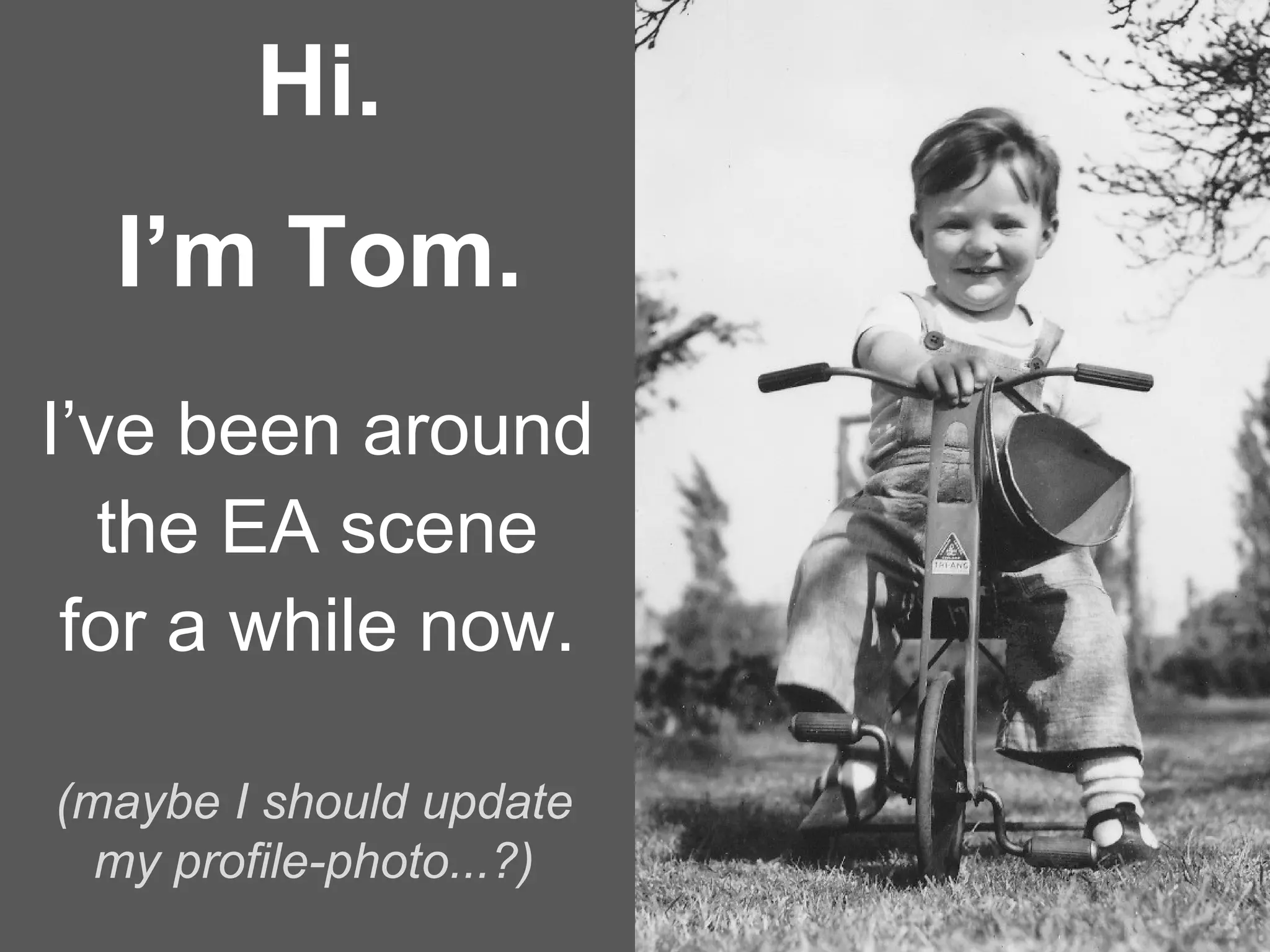
Hi.
(maybe I should update
my profile-photo...?)
I’m Tom.
I’ve been around
the EA scene
for a while now.
These days
I’d describe myself as
a maker of tools for change
– all sorts of tools...
This work is licensed under the Creative Commons Attribution-ShareAlike 4.0 International License (CC BY-SA 4.0).
To view a copy of this license, visit https://creativecommons.org/licenses/by-sa/4.0/
Tetradian www.tetradian.com
Project By Date
VersionHolomap
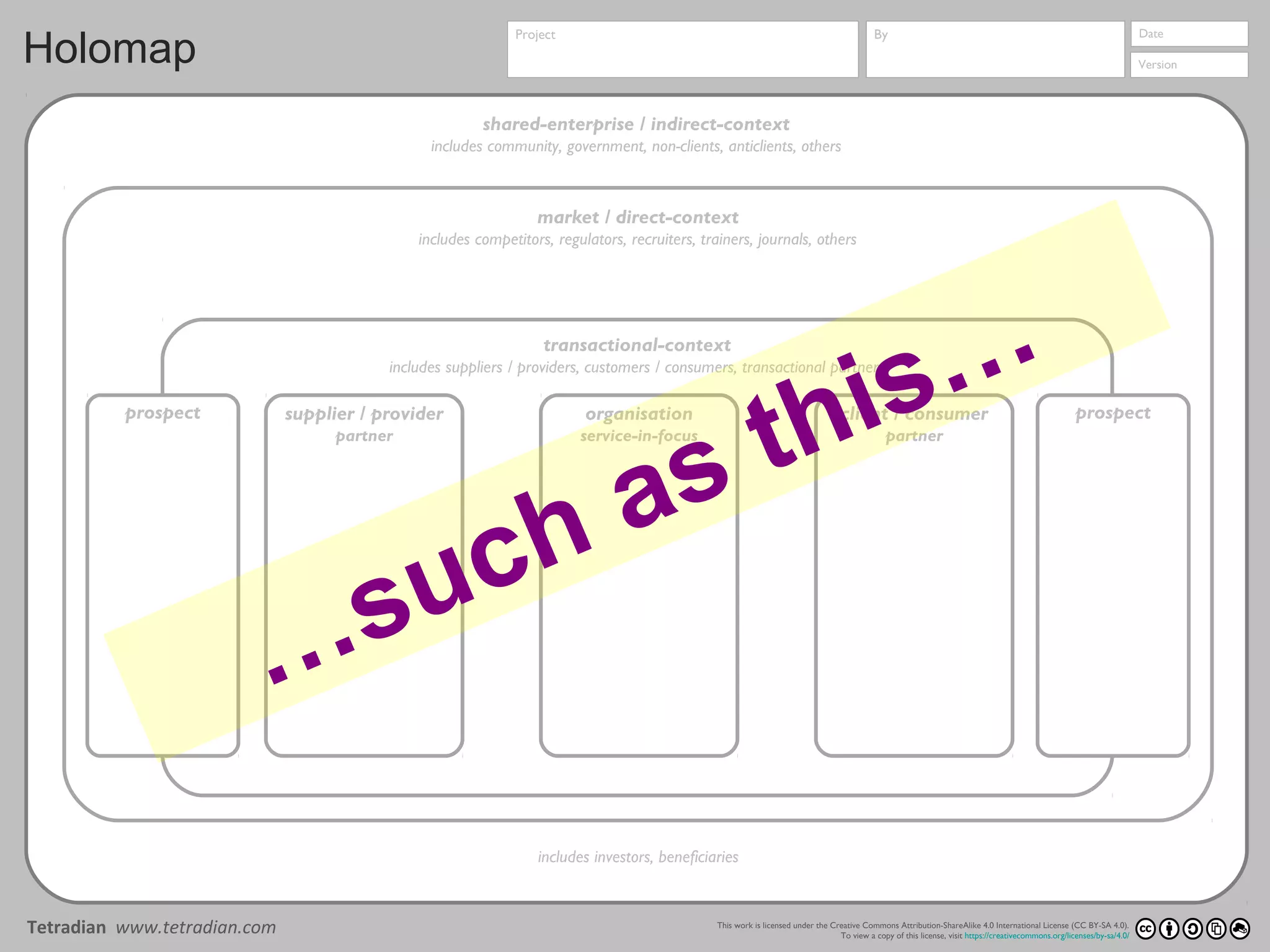
shared-enterprise / indirect-context
includes community, government, non-clients, anticlients, others
includes investors, beneficiaries
market / direct-context
includes competitors, regulators, recruiters, trainers, journals, others
transactional-context
includes suppliers / providers, customers / consumers, transactional partners
prospect prospectsupplier / provider
partner
client / consumer
partner
organisation
service-in-focus
…such as this…
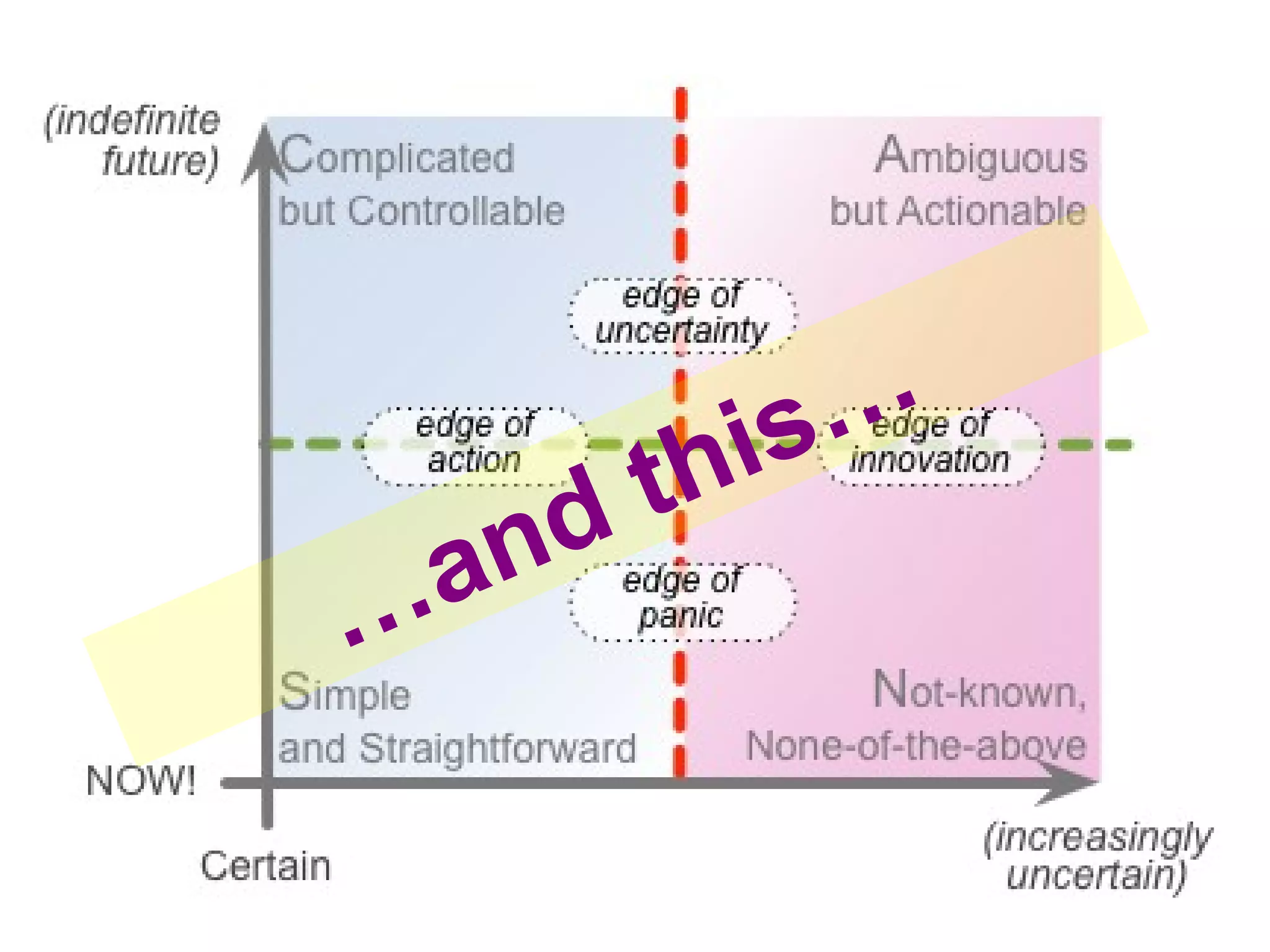
…and this…
…and this…
Sales-
pitch!
https://leanpub.com/tb-changes/
New
book!
…enough of an intro?
Okay, let’s get on with the show!
Perspectives
on architecture
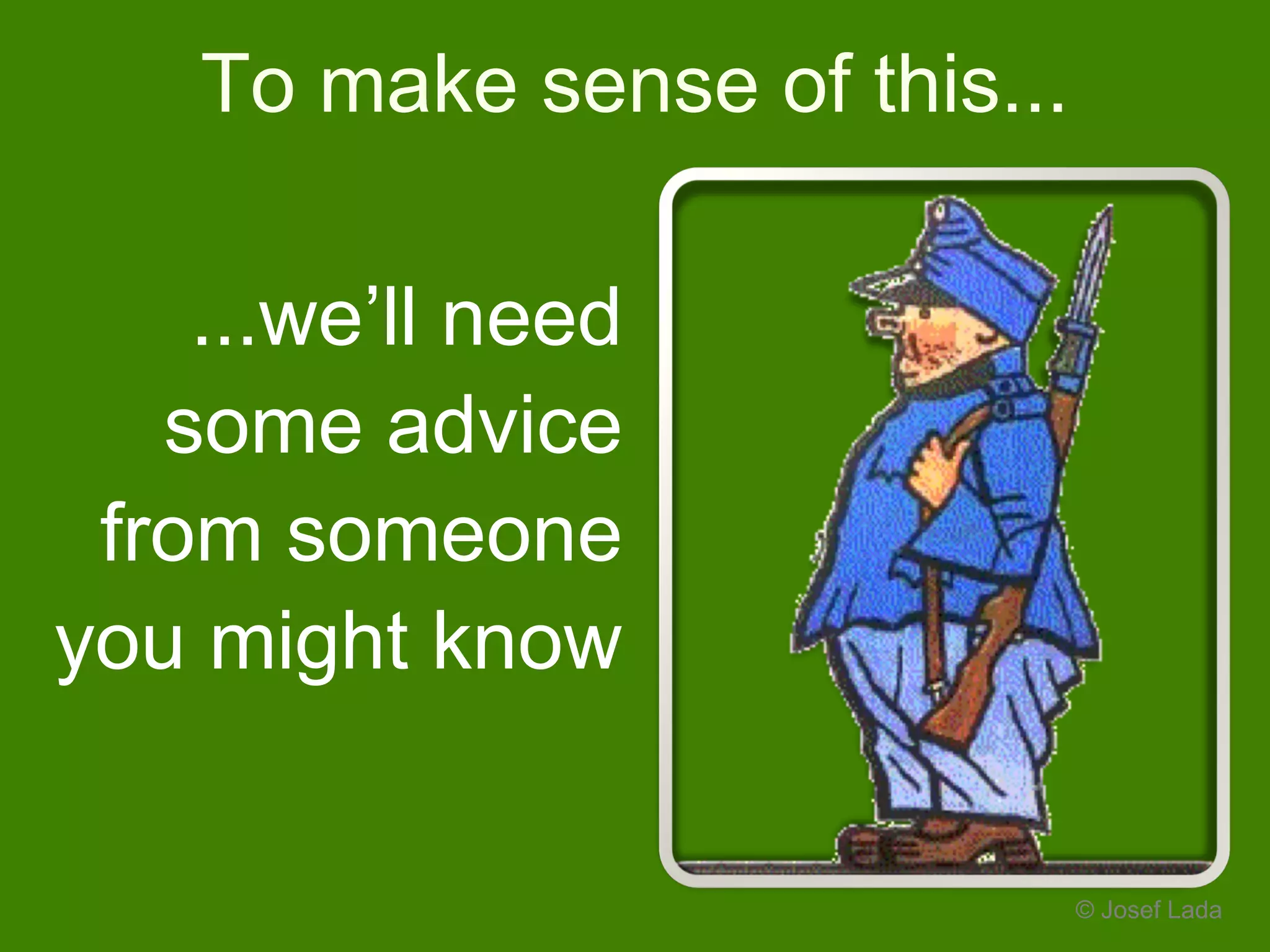
To make sense of this...
© Josef Lada
...we’ll need
some advice
from someone
you might know
As Švejk himself might ask:
What’s the point?
What’s the purpose?
What are we striving for?
(well, he might say something like that, anyway…)
Why architecture?
What is its real purpose?
The aim of all architecture...
Things work better
when they work together,
on purpose.
(It’s about effectiveness.)
What are the keys to
architecture?
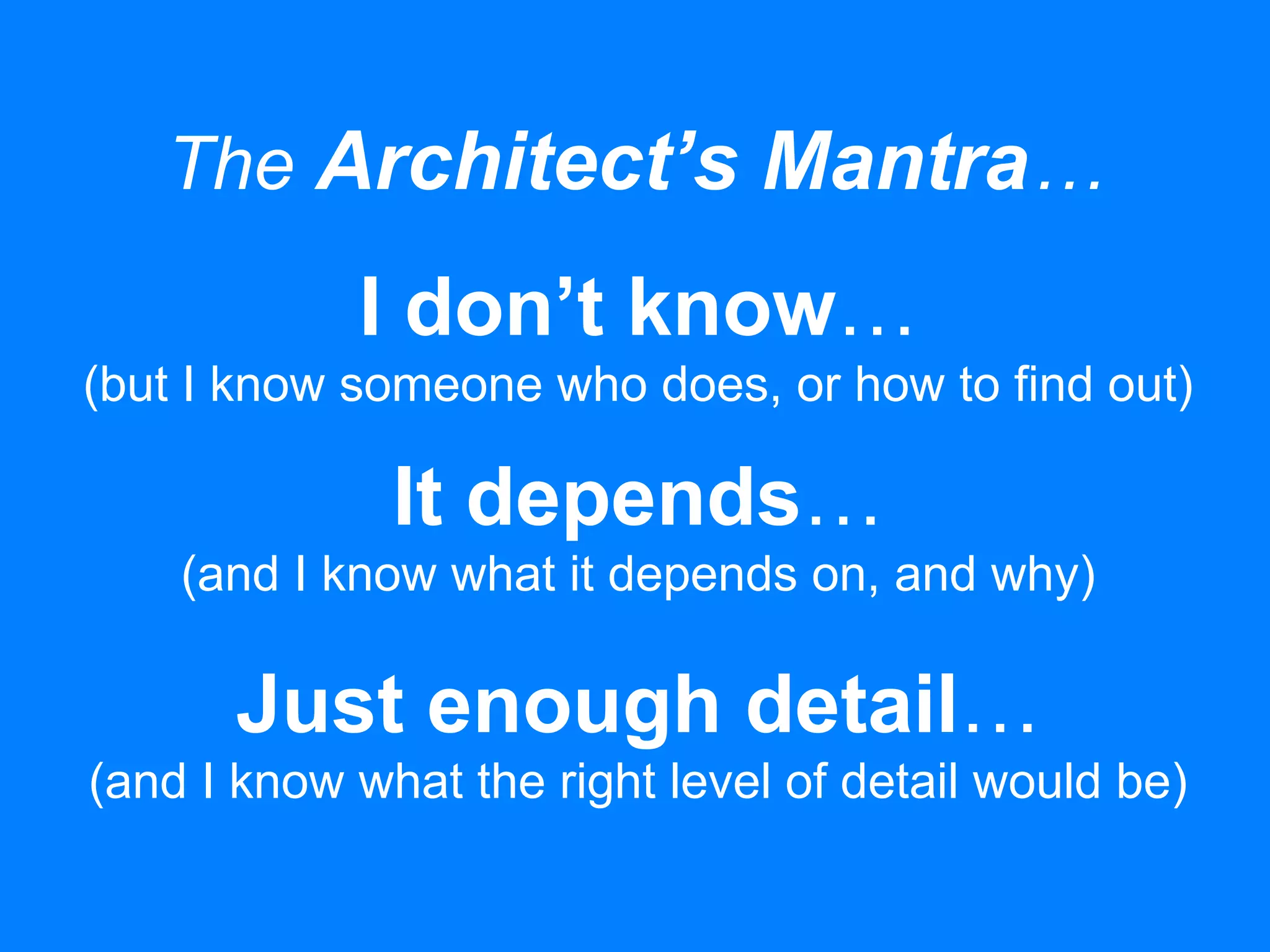
The Architect’s Mantra…
I don’t know…
(but I know someone who does, or how to find out)
It depends…
(and I know what it depends on, and why)
Just enough detail…
(and I know what the right level of detail would be)
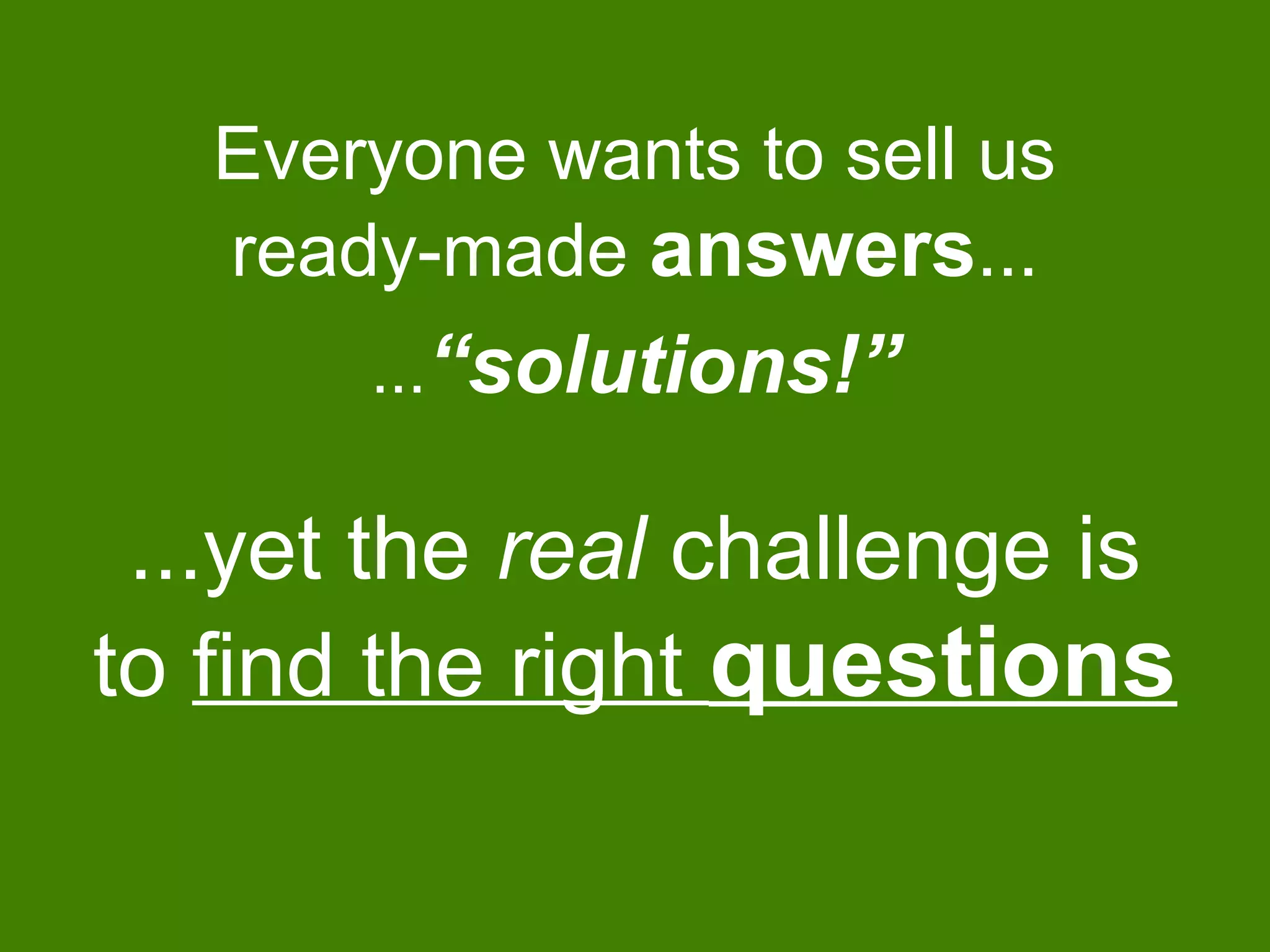
Everyone wants to sell us
ready-made answers...
...yet the real challenge is
to find the right questions
...“solutions!”
Finding the right questions
can be even more important
than finding the right answers
(in part because questions
tend to stay the same,
whereas answers will change
with time and context)
Architecture and its ‘experts’
© Josef Lada
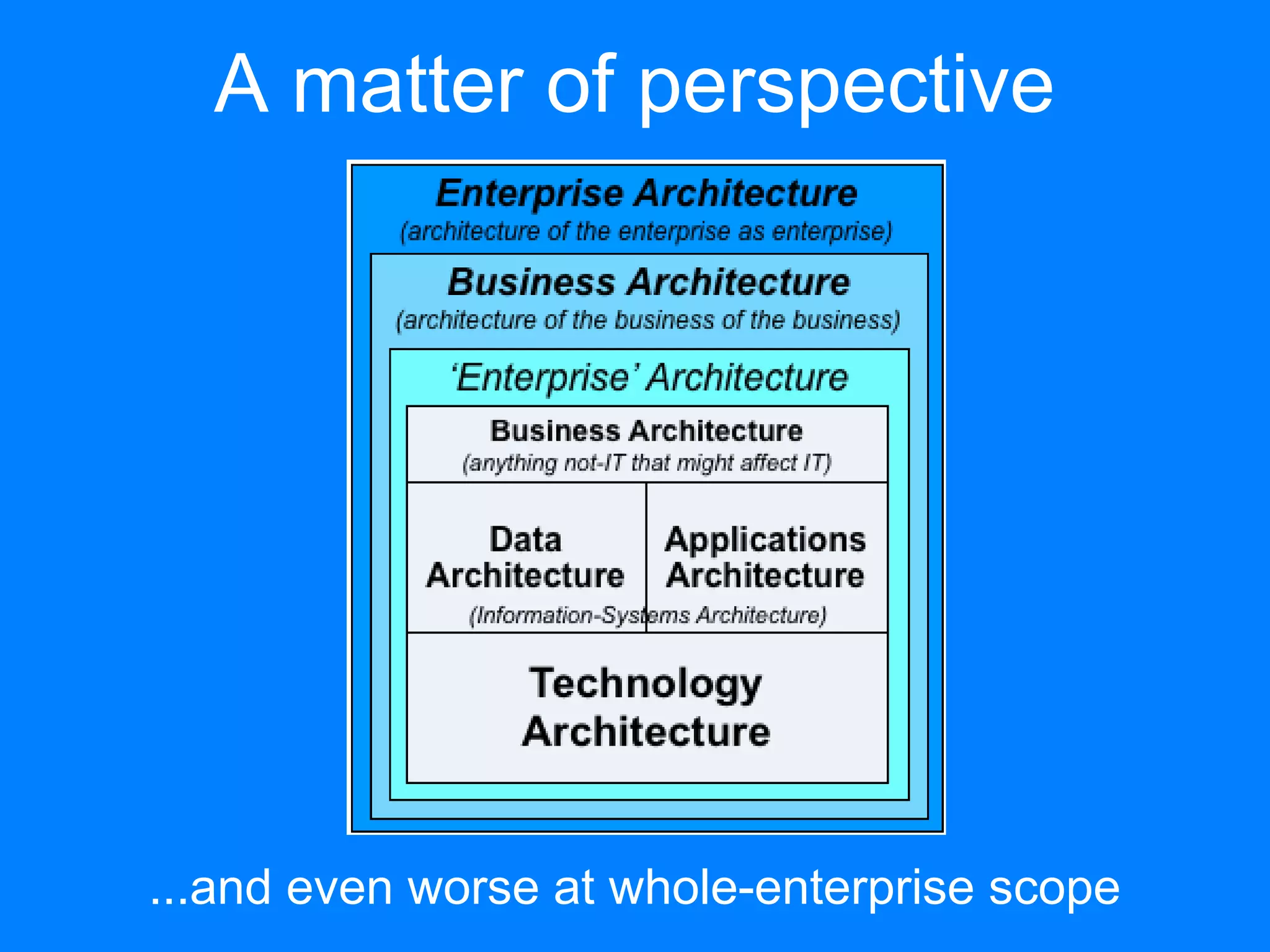
Anglo-dominated, IT-centric, hidden assumptions...
A matter of perspective
...in reality, the BDAT-stack is an arbitrary special-case
A matter of perspective
...further confused by misframed ‘Business Architecture’
A matter of perspective
...and even worse at whole-enterprise scope
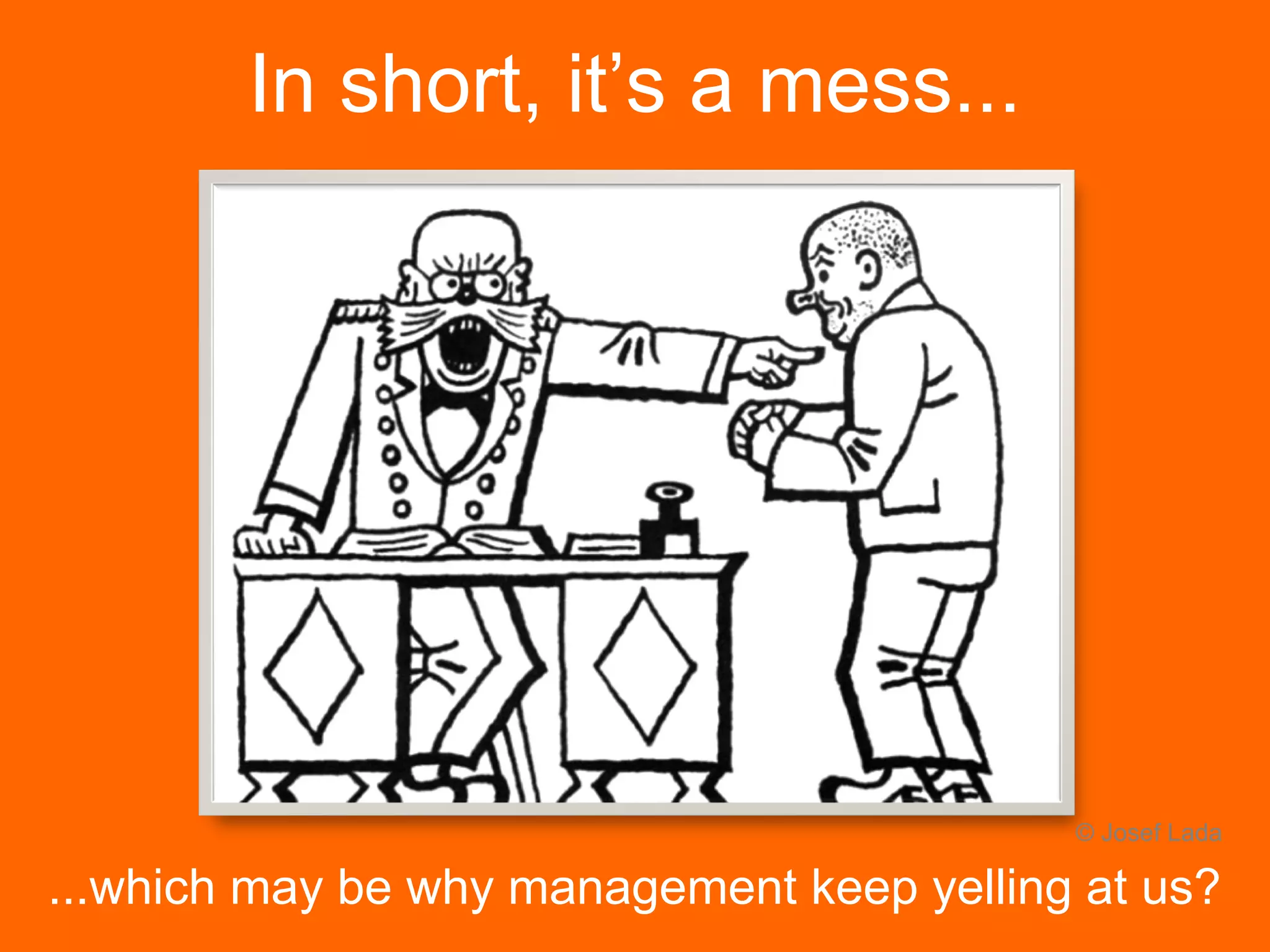
In short, it’s a mess...
...which may be why management keep yelling at us?
© Josef Lada
So how do we
get out of this mess?
Expose the assumptions...
If we change the perspective,
we can expose, explore and highlight
the hidden assumptions
Let’s ask Švejk for some help here?
© Josef Lada (?)
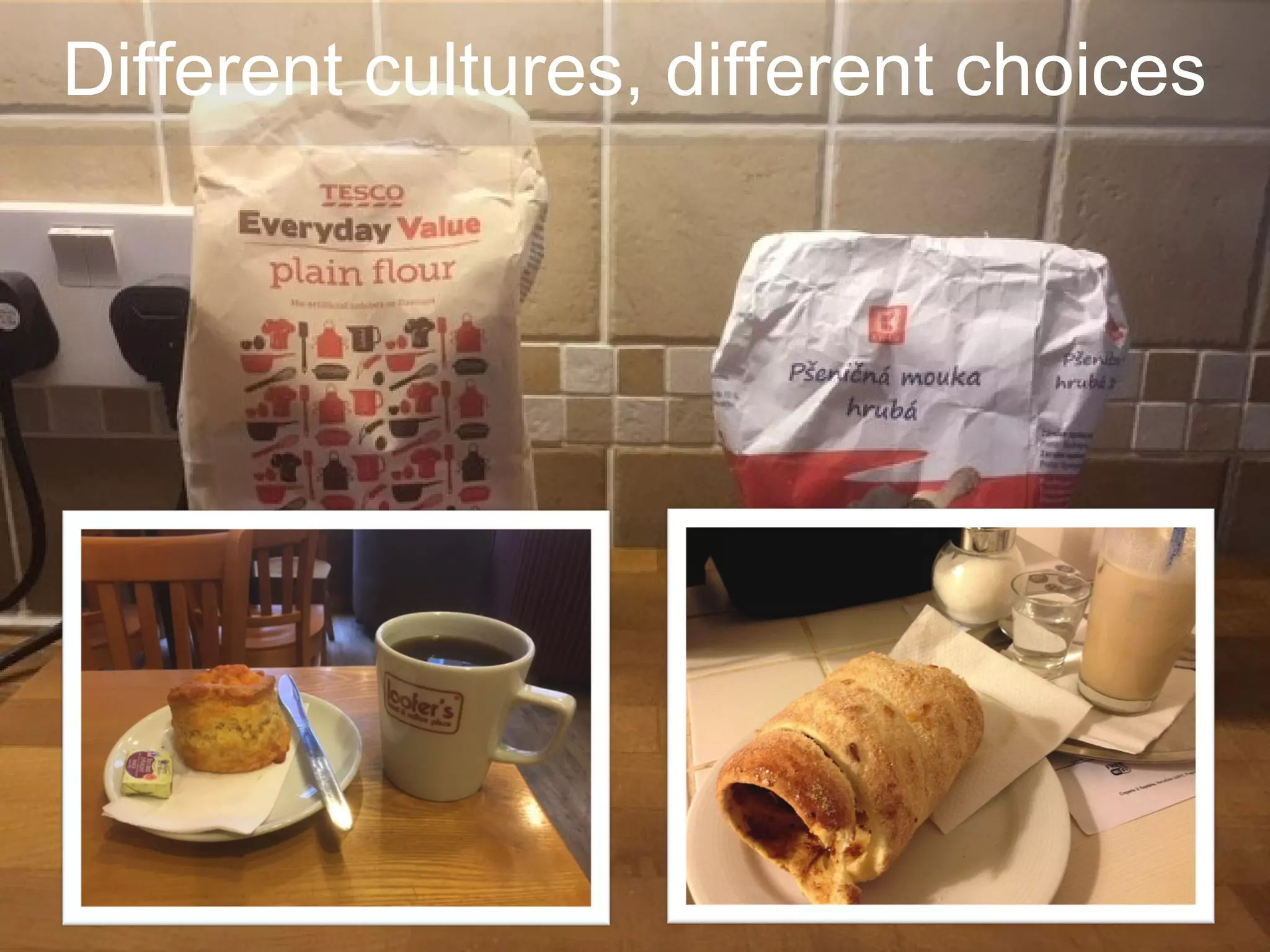
Different cultures, different choices
in which case…
What would EA look like
if it were Czech?
© The Open Group
EA as the adventures of Švejk?
© Josef Lada
© The Open Group
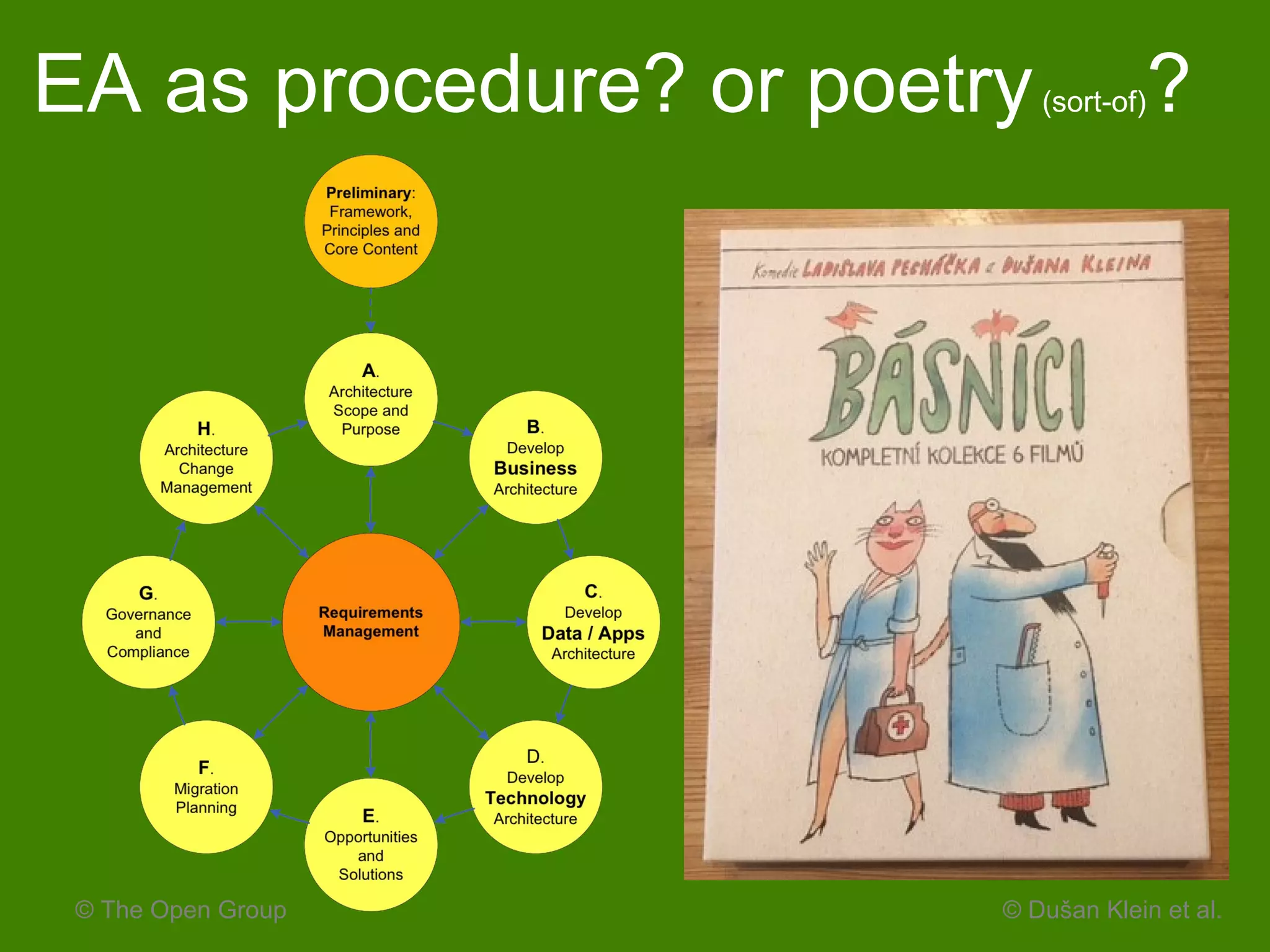
EA as procedure? or poetry(sort-of)?
© Dušan Klein et al.
© The Open Group
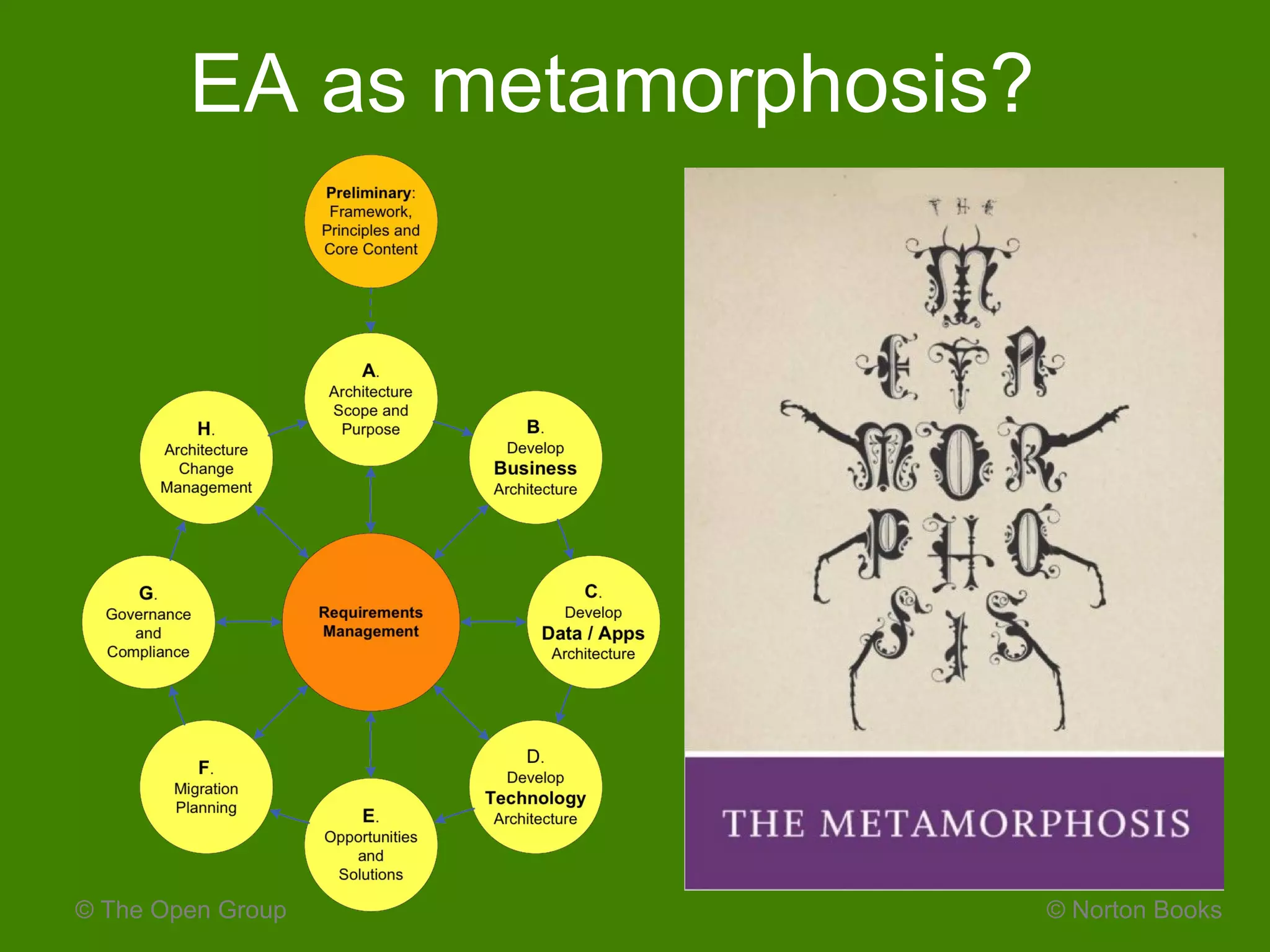
EA as metamorphosis?
© Norton Books
© The Open Group
EA as a trial?
© Penguin
Trials indeed for Švejk...
© Josef Lada
...carrying everyone’s load, under fire...
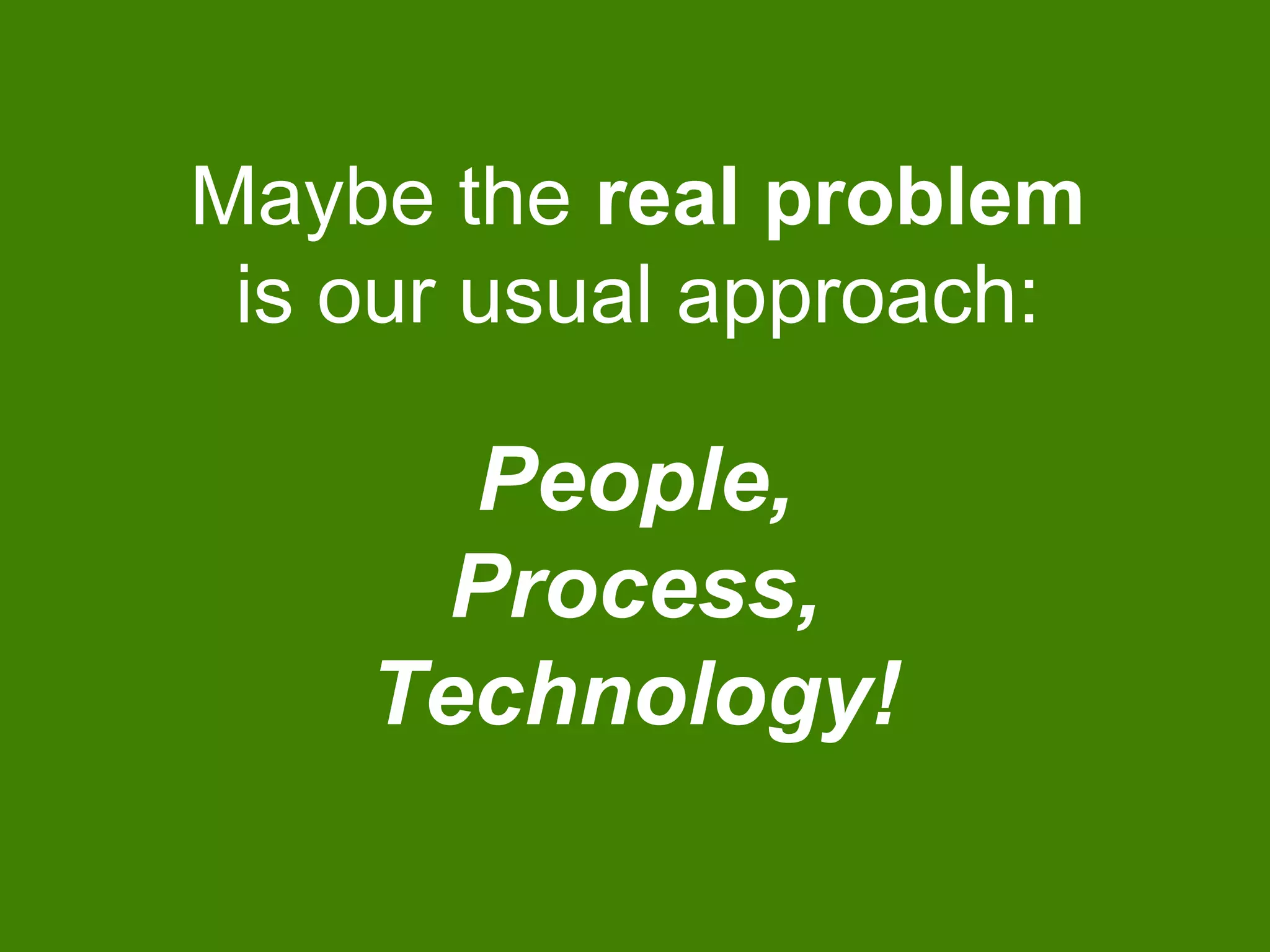
People,
Process,
Technology!
Maybe the real problem
is our usual approach:
Technology
CC-BY-SA xdxd_vs_xdxd via Flickr
Process
People
The usual architecture view
which gives us...
…yawn…
…“can I go to sleep now, please?”
No fun at all...
© Josef Lada
Could we just kick it all out?
So how do we find these
‘missing perspectives’?
- and maybe have some fun doing it, too…
Short answer:
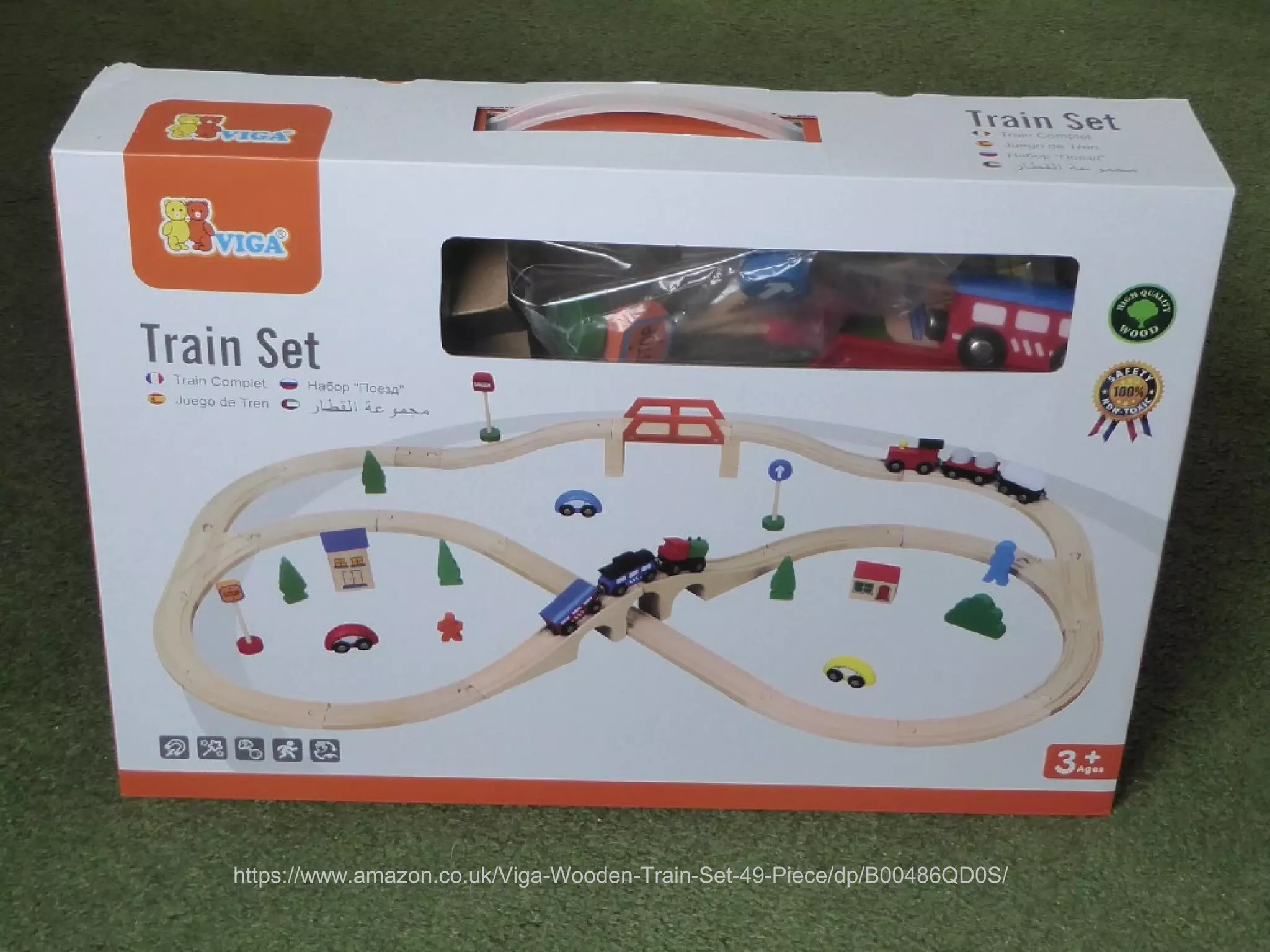
Raid the kids’ toy-box!
https://www.amazon.co.uk/Viga-Wooden-Train-Set-49-Piece/dp/B00486QD0S/
Toy-train as
service-metaphor…
…who or what are the various
uses / users of the service?
…how do those uses intersect?
…how might those uses conflict?
…what decisions
need to be made?
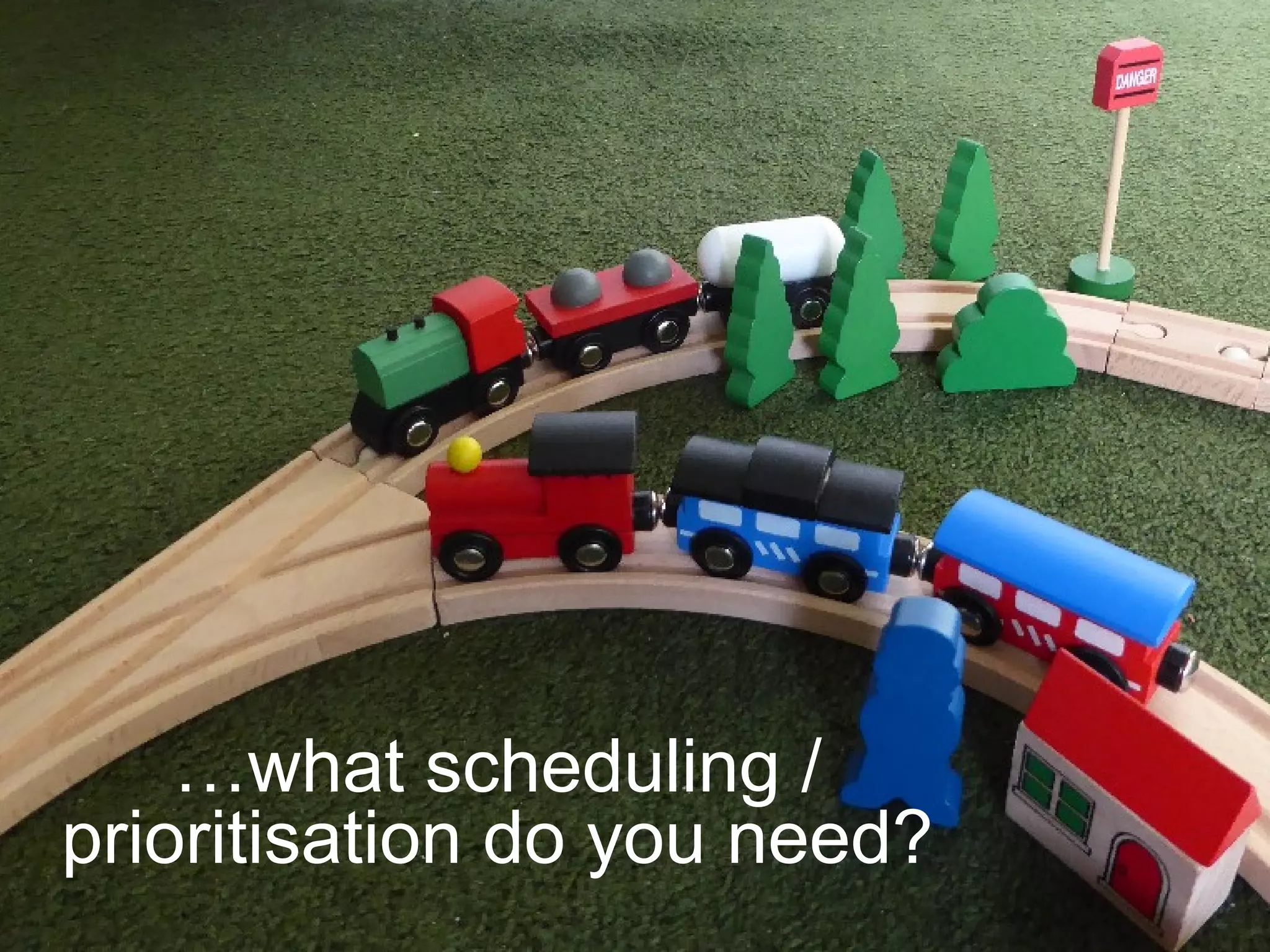
…what scheduling /
prioritisation do you need?
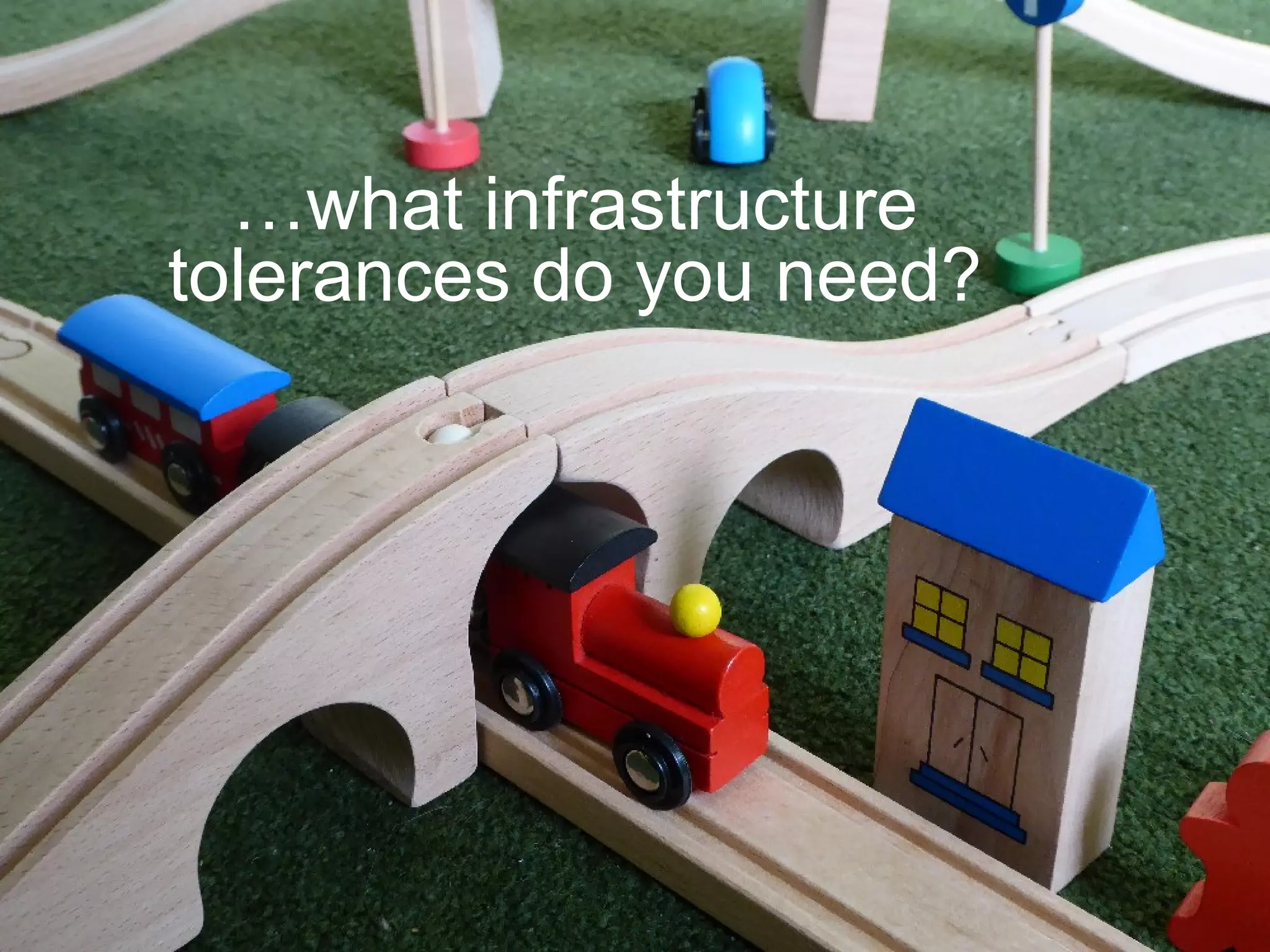
…what infrastructure
tolerances do you need?
…how does it interconnect
with other services?
…what disruptions
could careless
users cause?
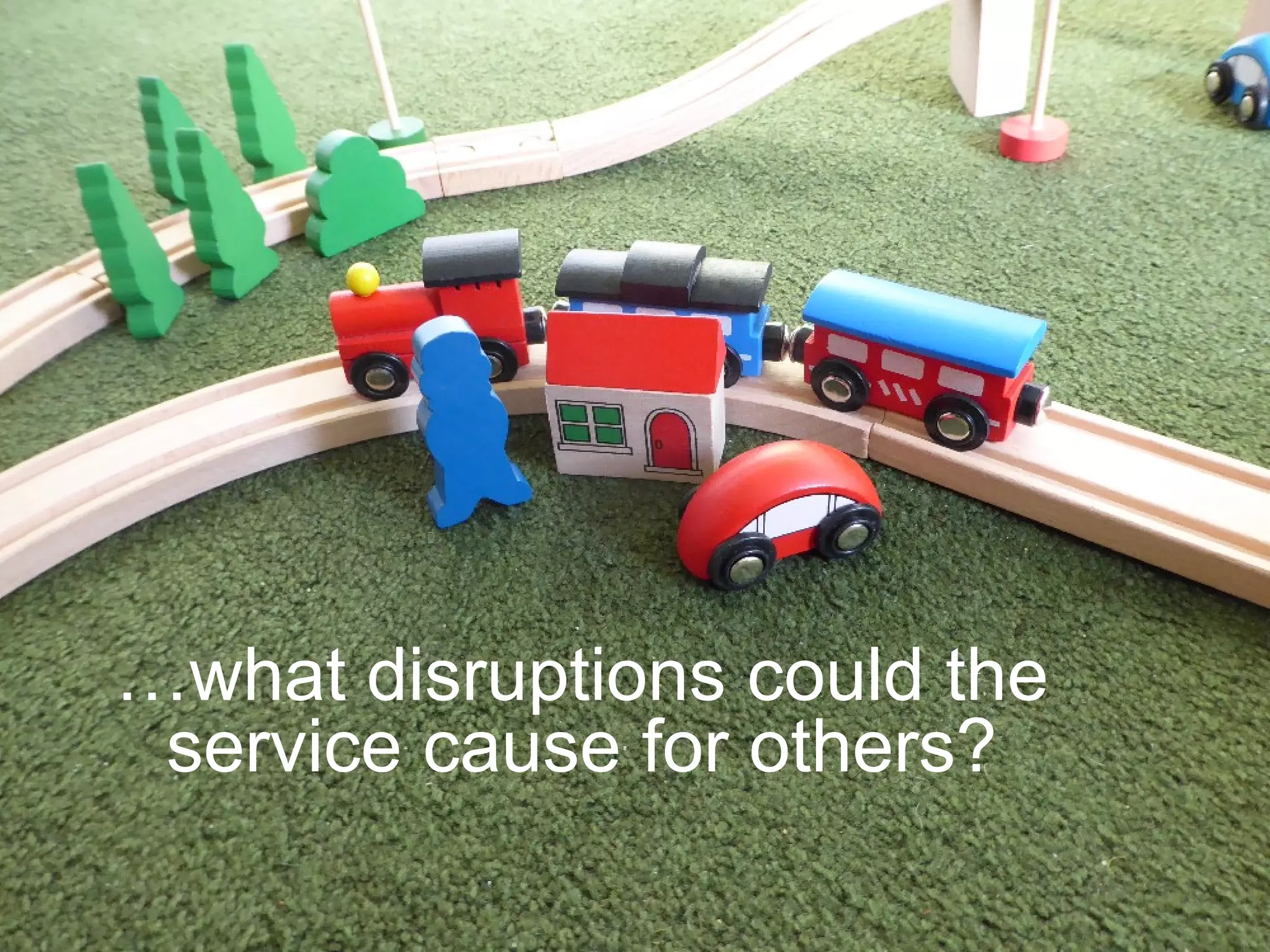
…what disruptions could the
service cause for others?
…how, where, with what must it
intersect without connecting?
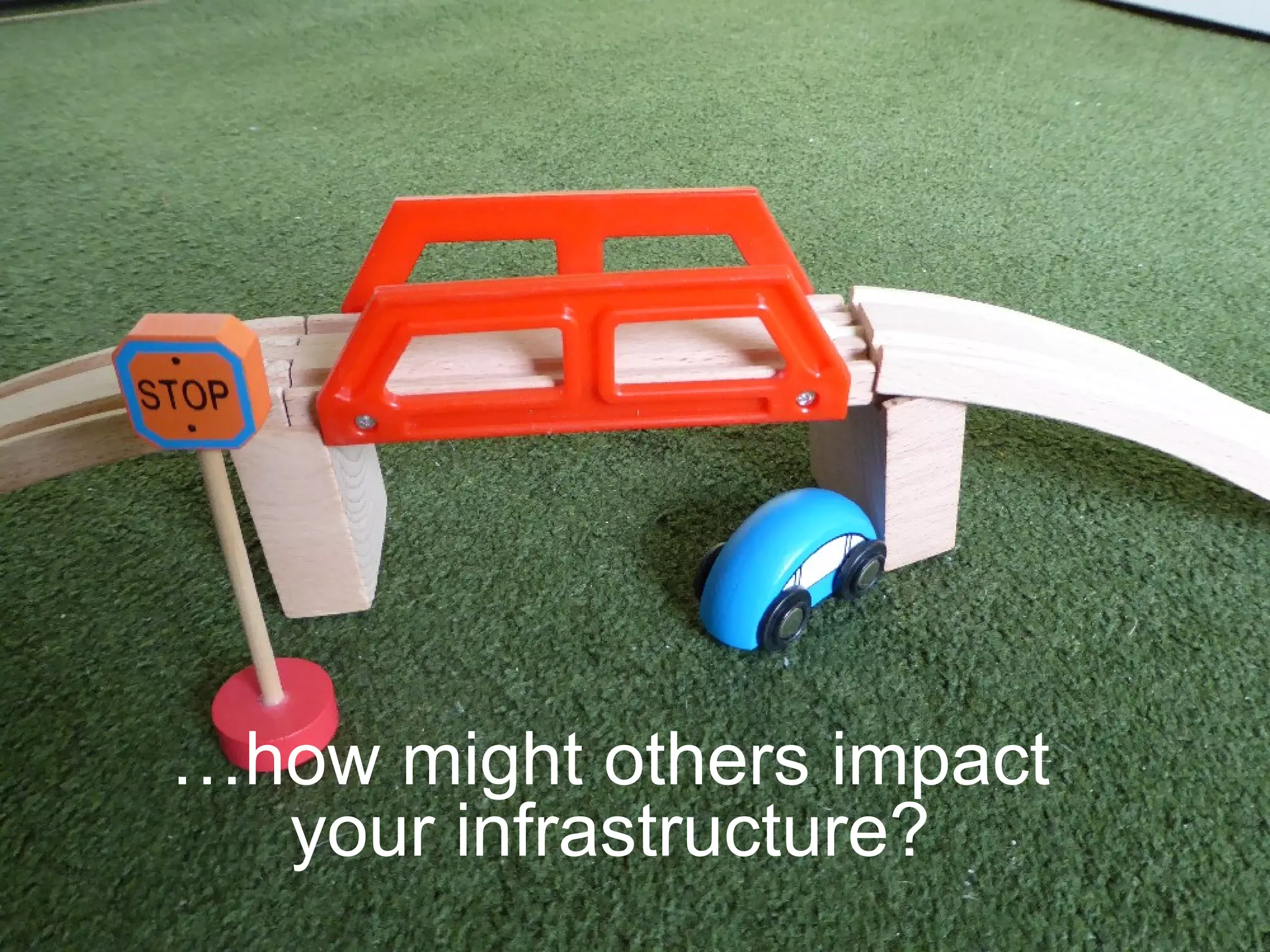
…how might others impact
your infrastructure?
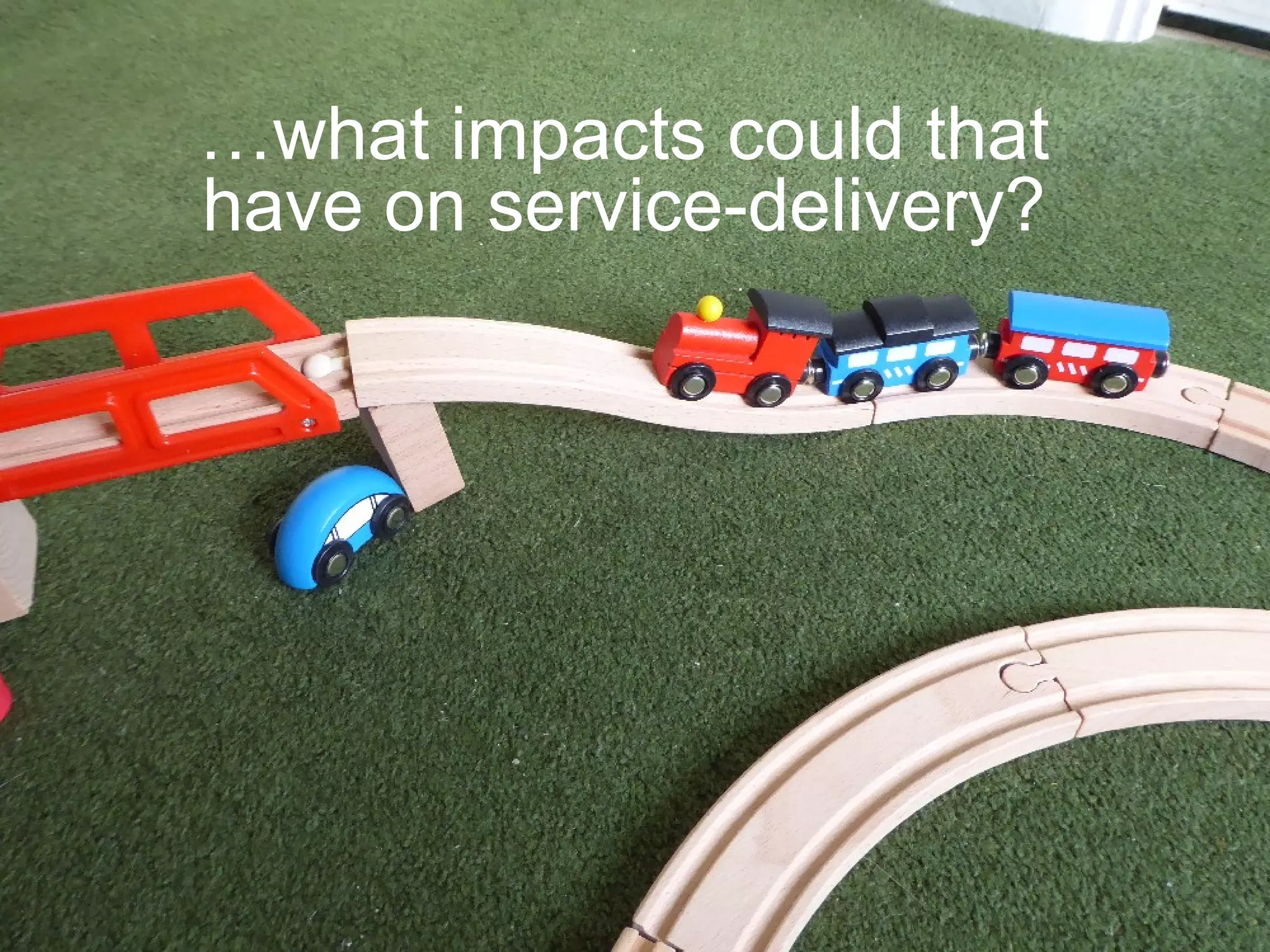
…what impacts could that
have on service-delivery?
…what are the hazards,
potential sources of disruption?
…what happens
when
external risks
eventuate?
…what happens when
the service itself fails?
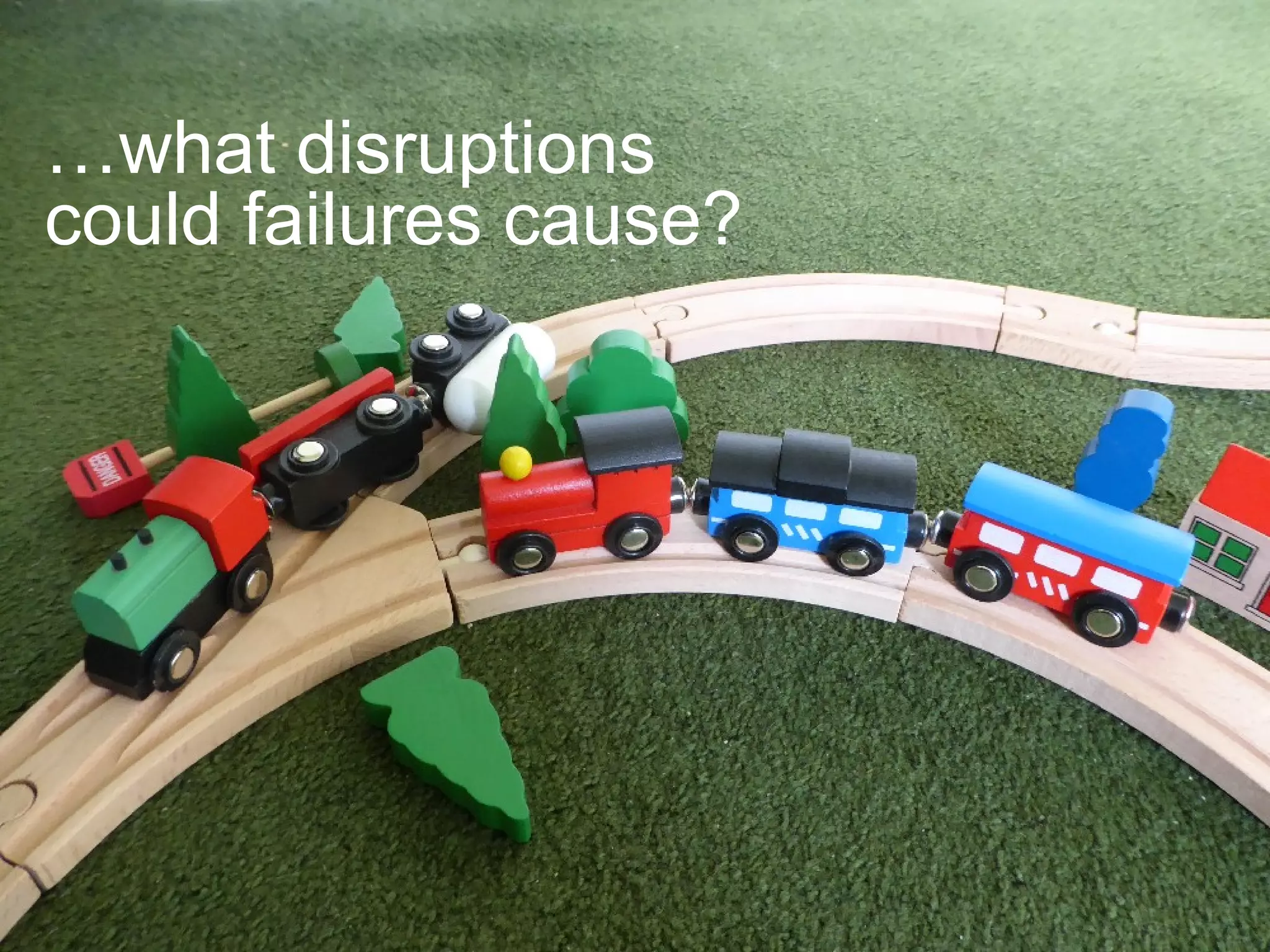
…what disruptions
could failures cause?
…or, in other words…
…context, context,
context!
Maybe we’ll give Švejk a medal...
© Josef Lada
…which brings us back to…
a matter
of perspective!
- yeah, which way we look at things does kinda matter here…
Perspectives and journeys
Service-delivery is a journey of interactions
where ‘inside-out’ (the organisation’s perspective)
touches ‘outside-in’ (the customer’s / supplier’s perspective)
Outside-in…
CC-BY Fretro via Flickr
“Customers
do not appear
in our processes,
we appear in
their experiences”
Chris Potts, recrEAtion, Technics, 2010
Every service has its own myriad of stakeholders
Whose story?
A stakeholder
is anyone
who can wield
a sharp-pointed
stake
in our direction…
CC-BY-NC-SA evilpeacock via Flickr
Who are the stakeholders?
(Hint: there are a lot
more of them than we
might at first think…)
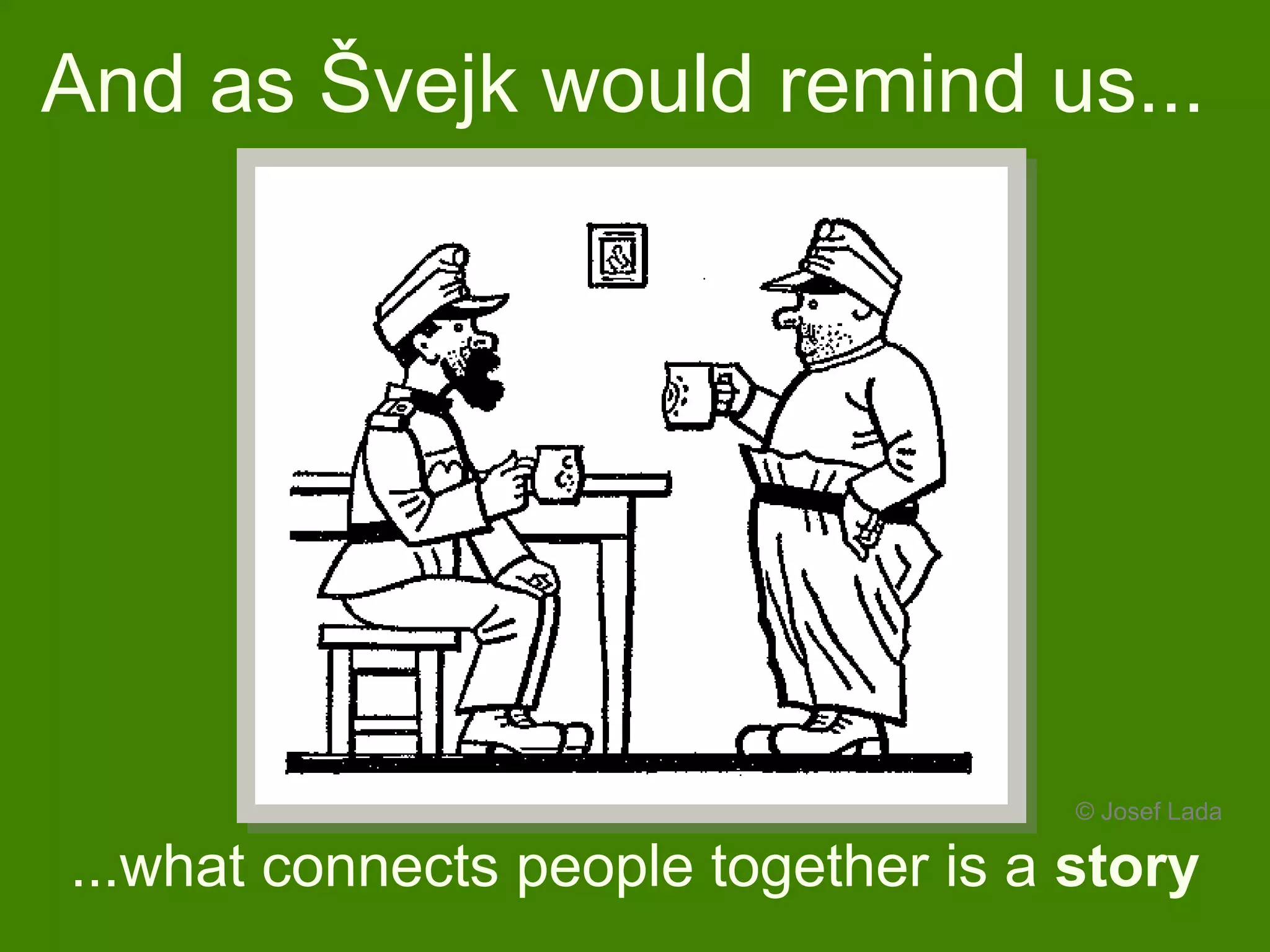
And as Švejk would remind us...
© Josef Lada
...what connects people together is a story
All kinds of stories...
SCRIPTED
(simple rules and checklists)
CC-BY The-Vikkodamus via Flickr CC-BY-SA seeminglee via Flickr
IMPROVISED
(guidelines and principles)
ANALYSED
(complicated algorithms)
ADAPTED
(complex patterns)
PREDICTABLE UNPREDICTABLE
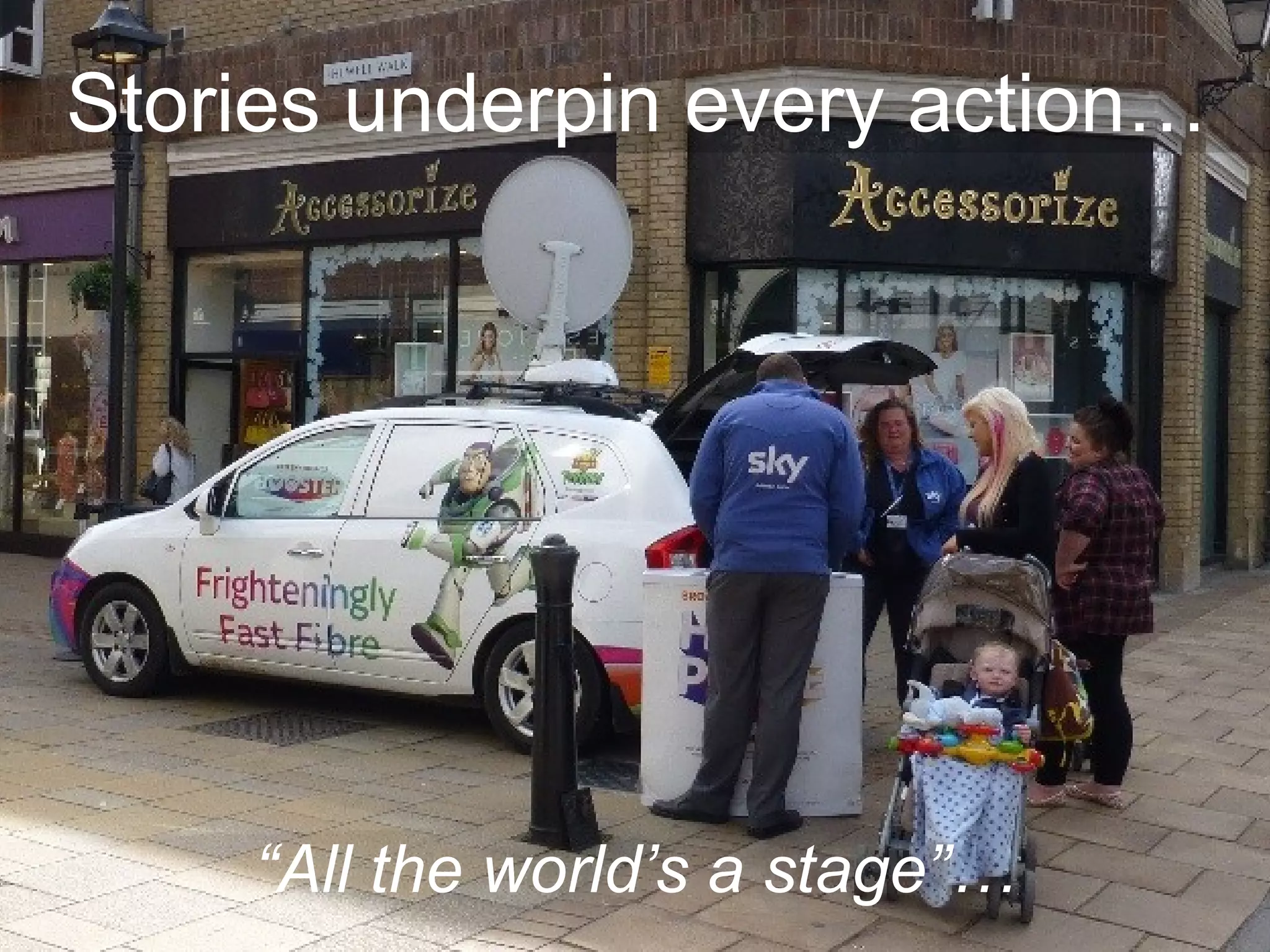
“All the world’s a stage”…
Stories underpin every action…
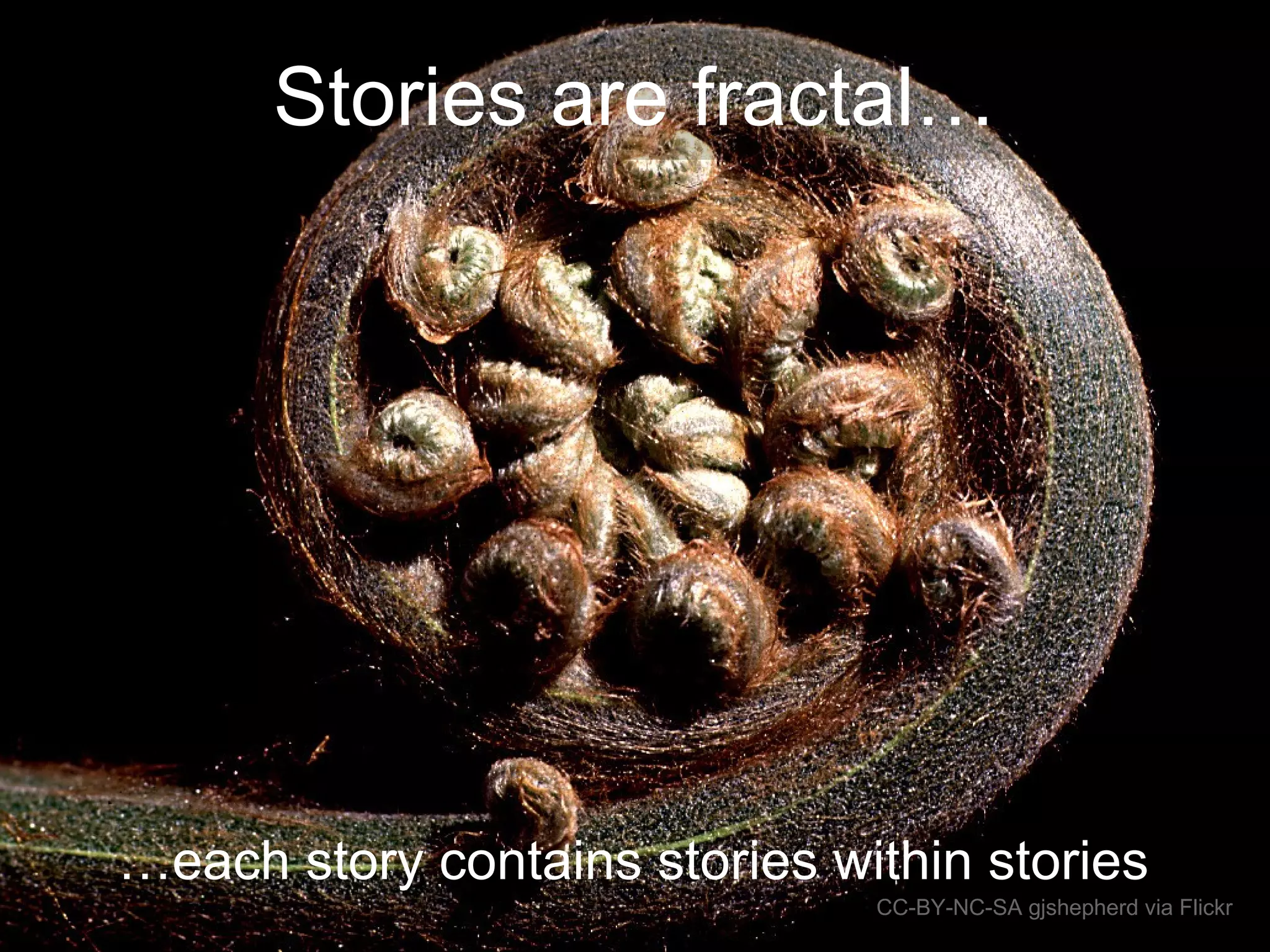
Stories are fractal…
…each story contains stories within stories
CC-BY-NC-SA gjshepherd via Flickr
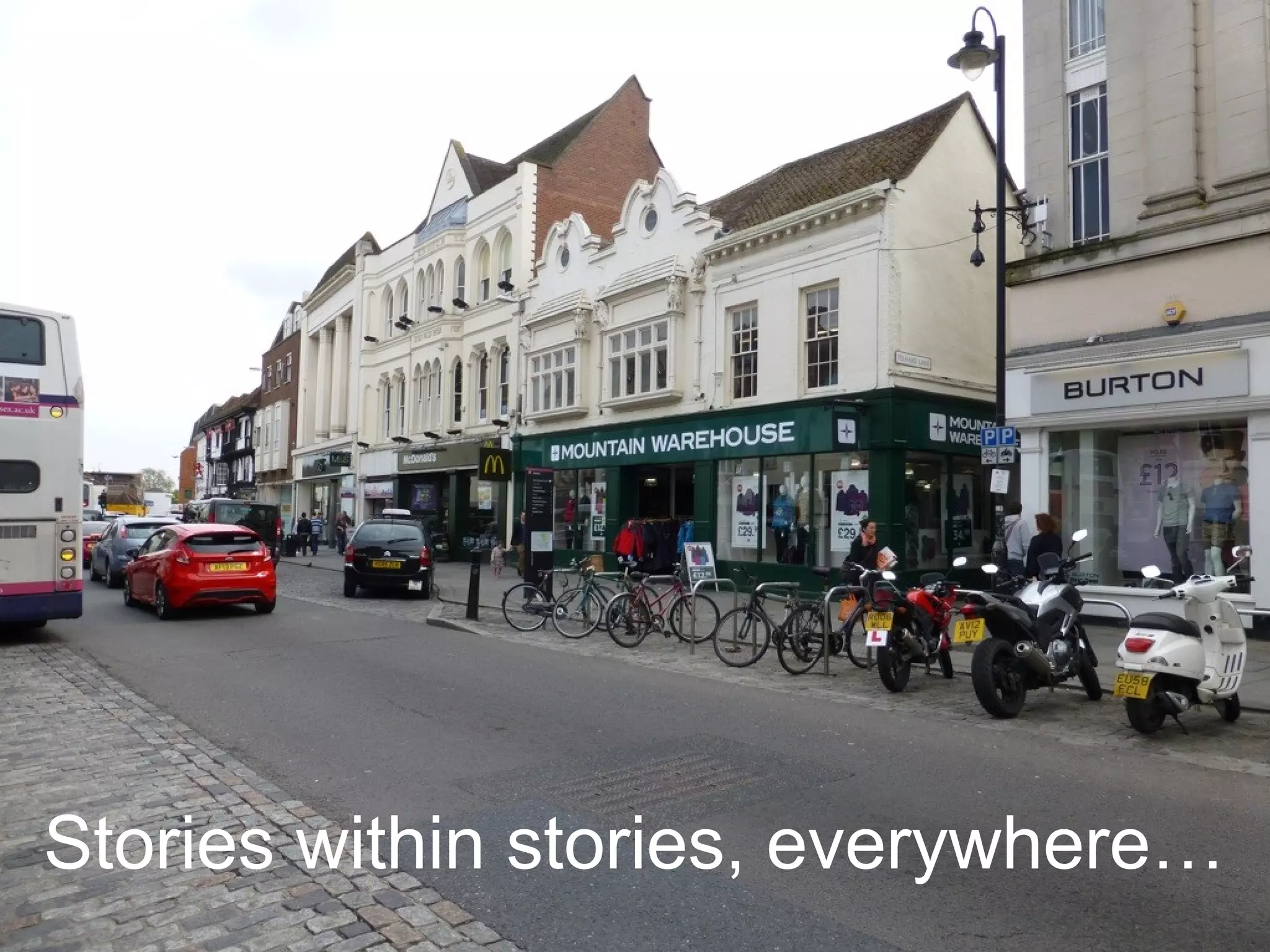
Stories within stories, everywhere…
…but to make this work...
we’ll need a different approach
to our architecture
- a more story-oriented approach…
Technology
CC-BY-SA xdxd_vs_xdxd via Flickr
Process
People
The usual architecture view
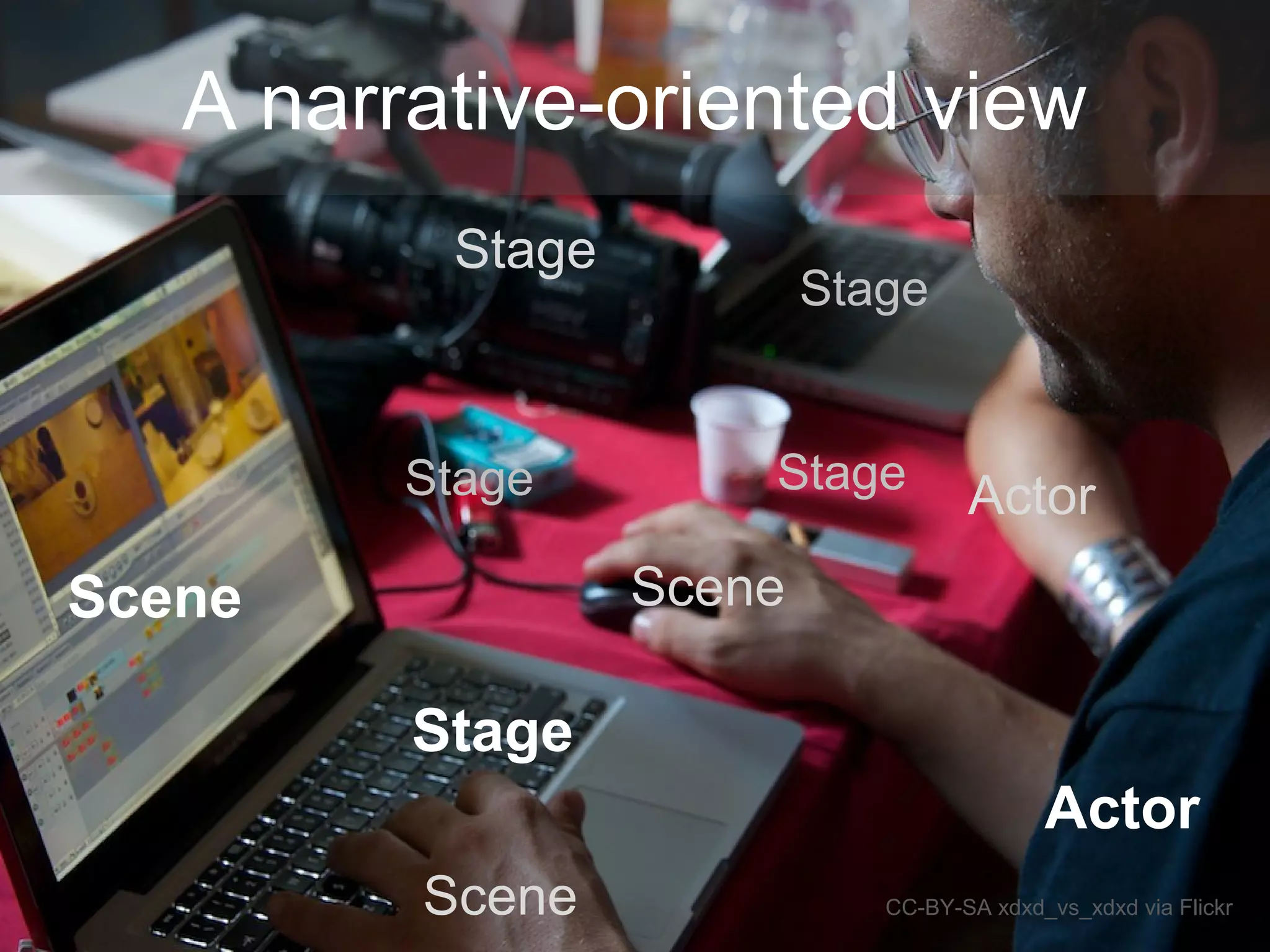
Stage
CC-BY-SA xdxd_vs_xdxd via Flickr
Scene
Actor
ActorStage
Stage
Stage
A narrative-oriented view
Scene
Scene
Stage
So how to explore this
with execs and others?
Short answer:
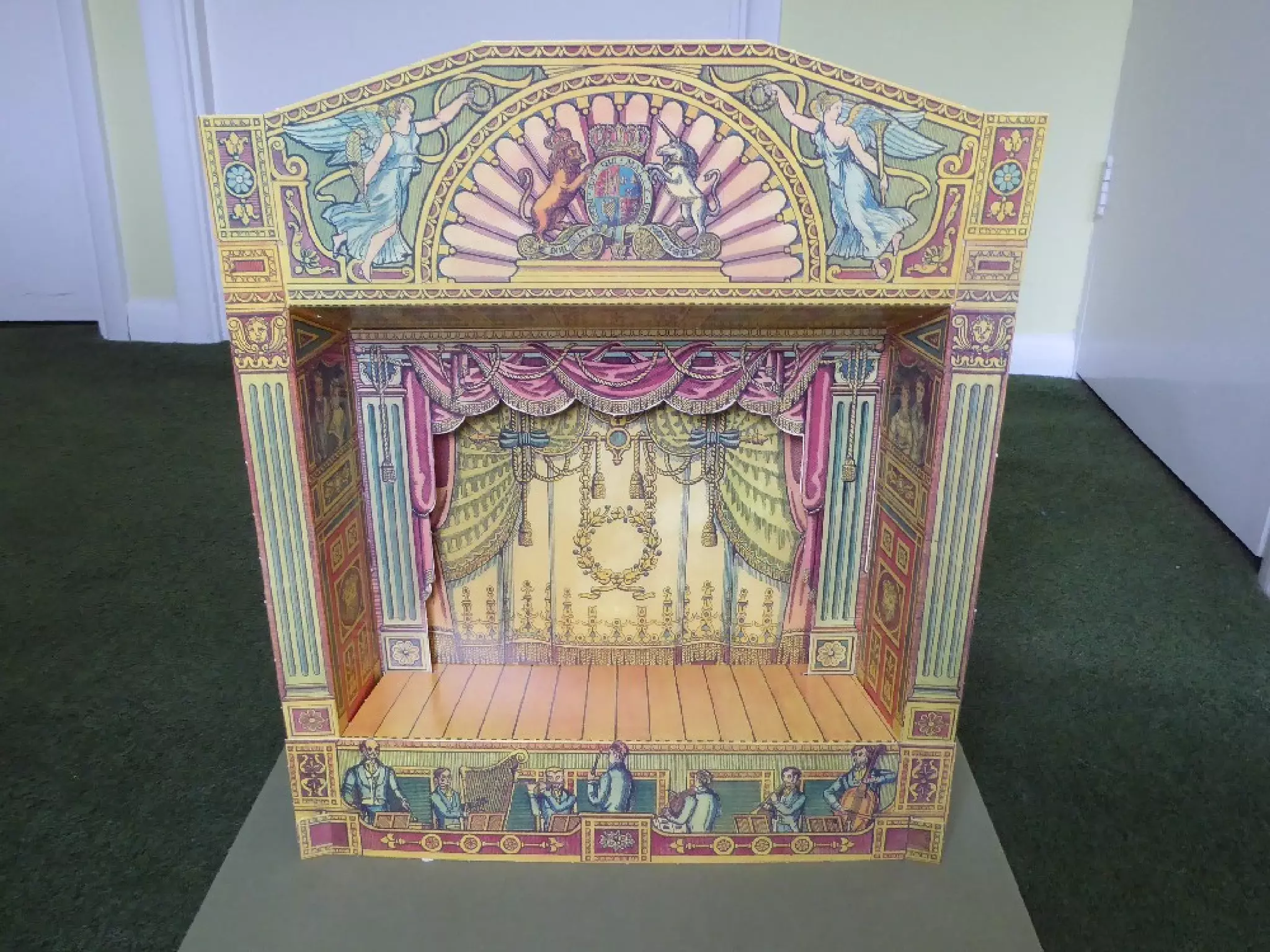
Back to the toy-box!
http://www.pollocks-coventgarden.co.uk/index.php/pantomime-theatre-with-cinderella.html
…the architect as hero?
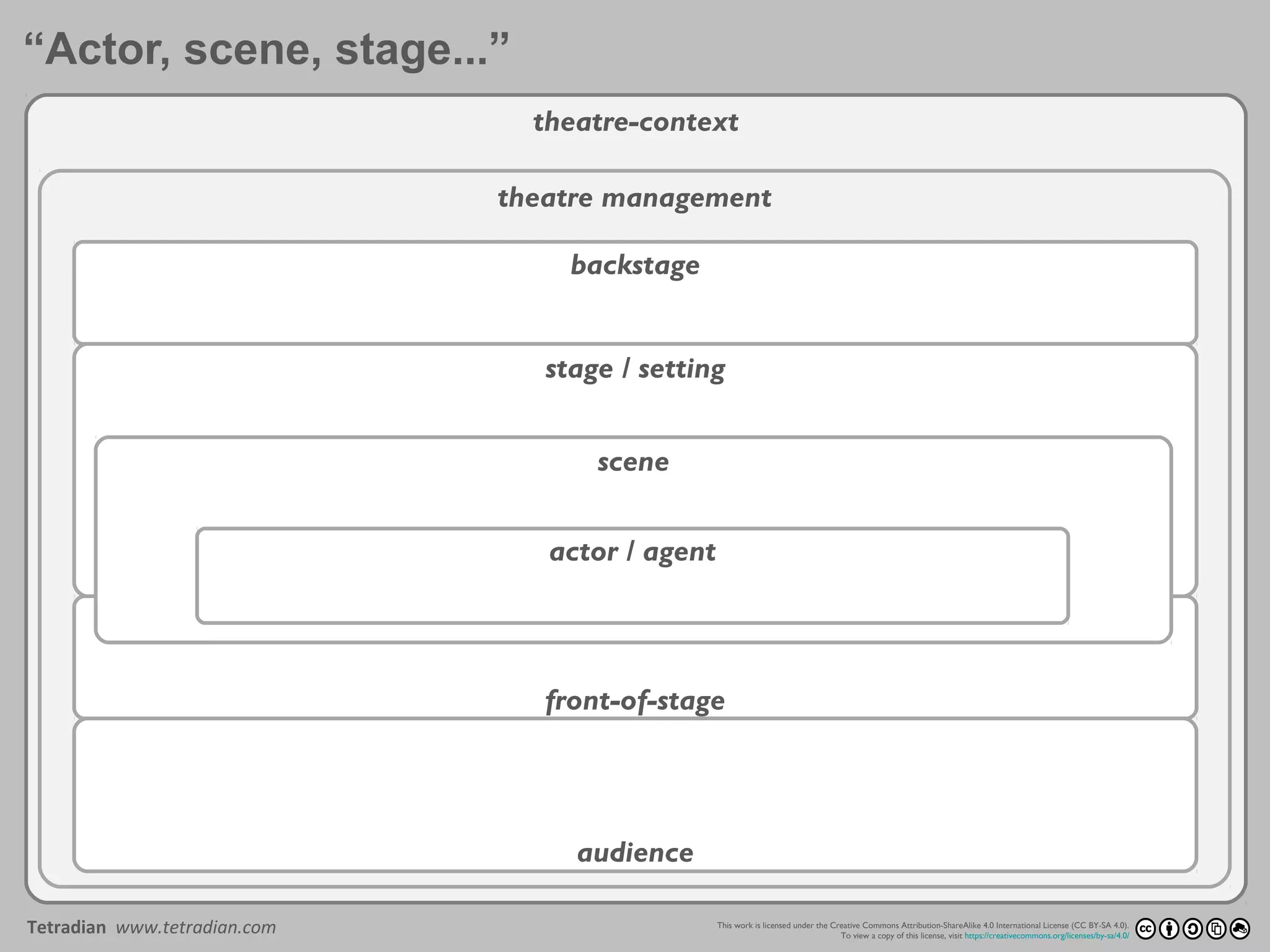
Let’s use
a visual cheat-sheet
to help us…
- you could call it a Canvas, if you like…
This work is licensed under the Creative Commons Attribution-ShareAlike 4.0 International License (CC BY-SA 4.0).
To view a copy of this license, visit https://creativecommons.org/licenses/by-sa/4.0/
Tetradian www.tetradian.com
Project By Date
Version
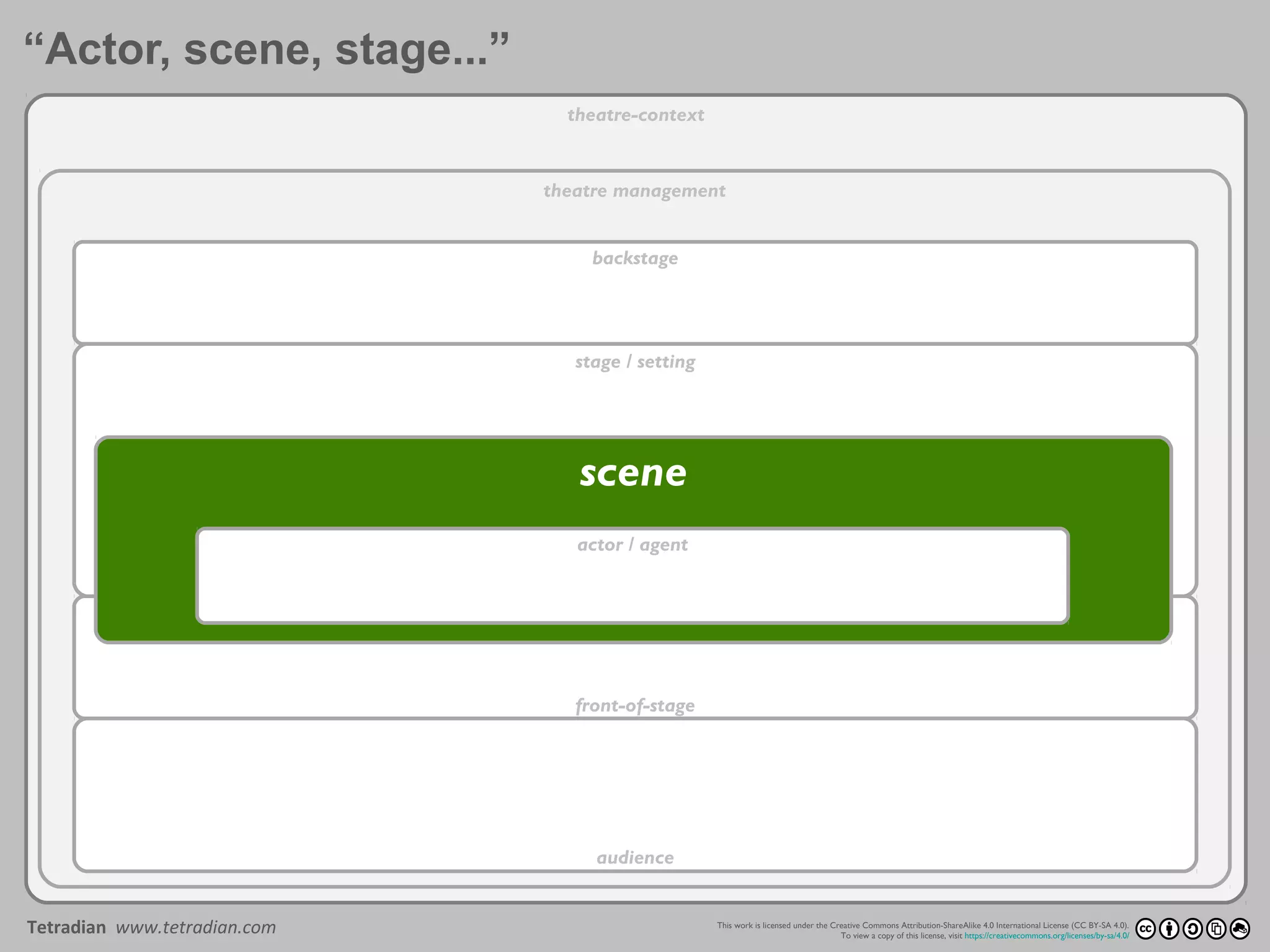
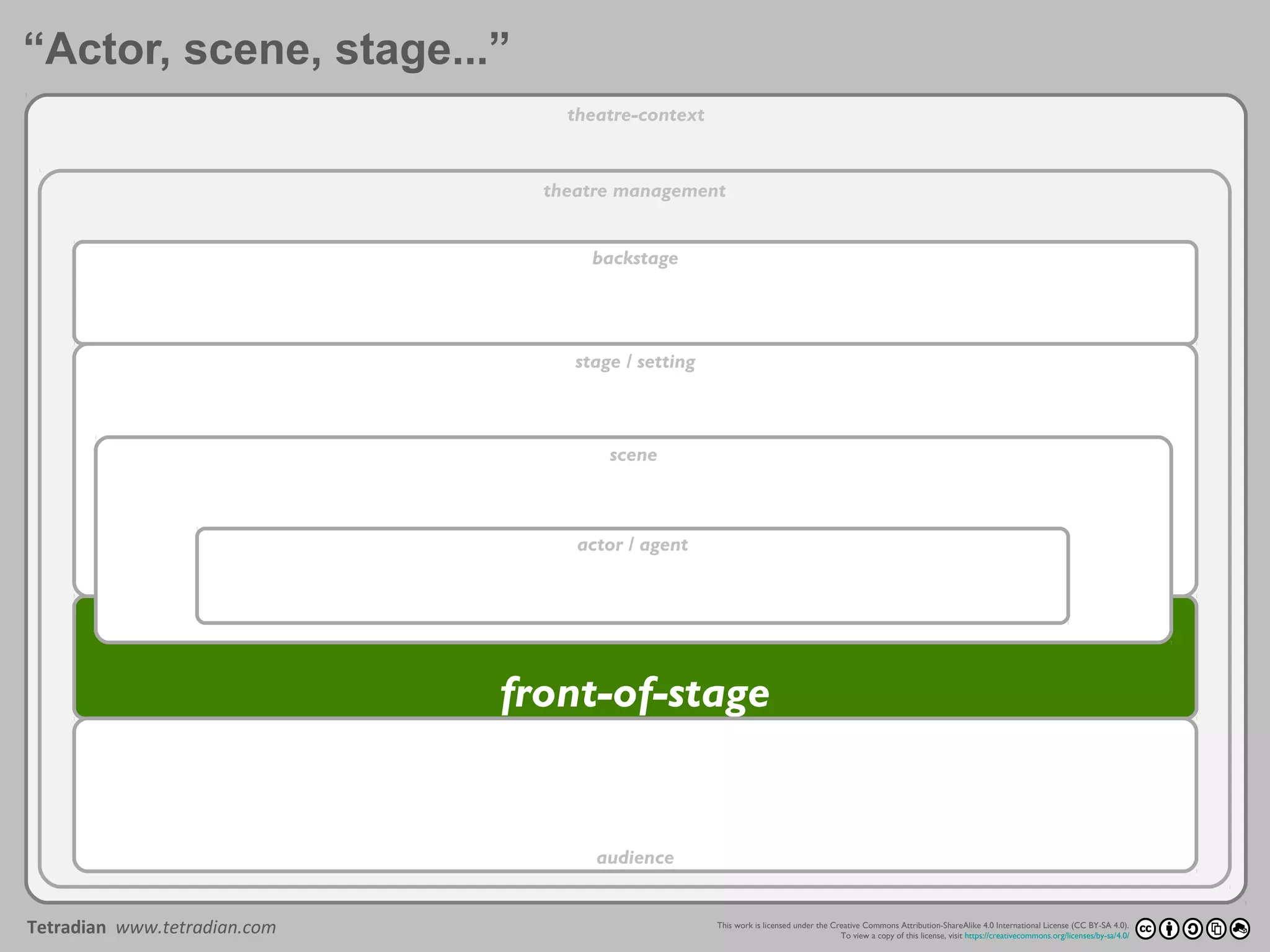
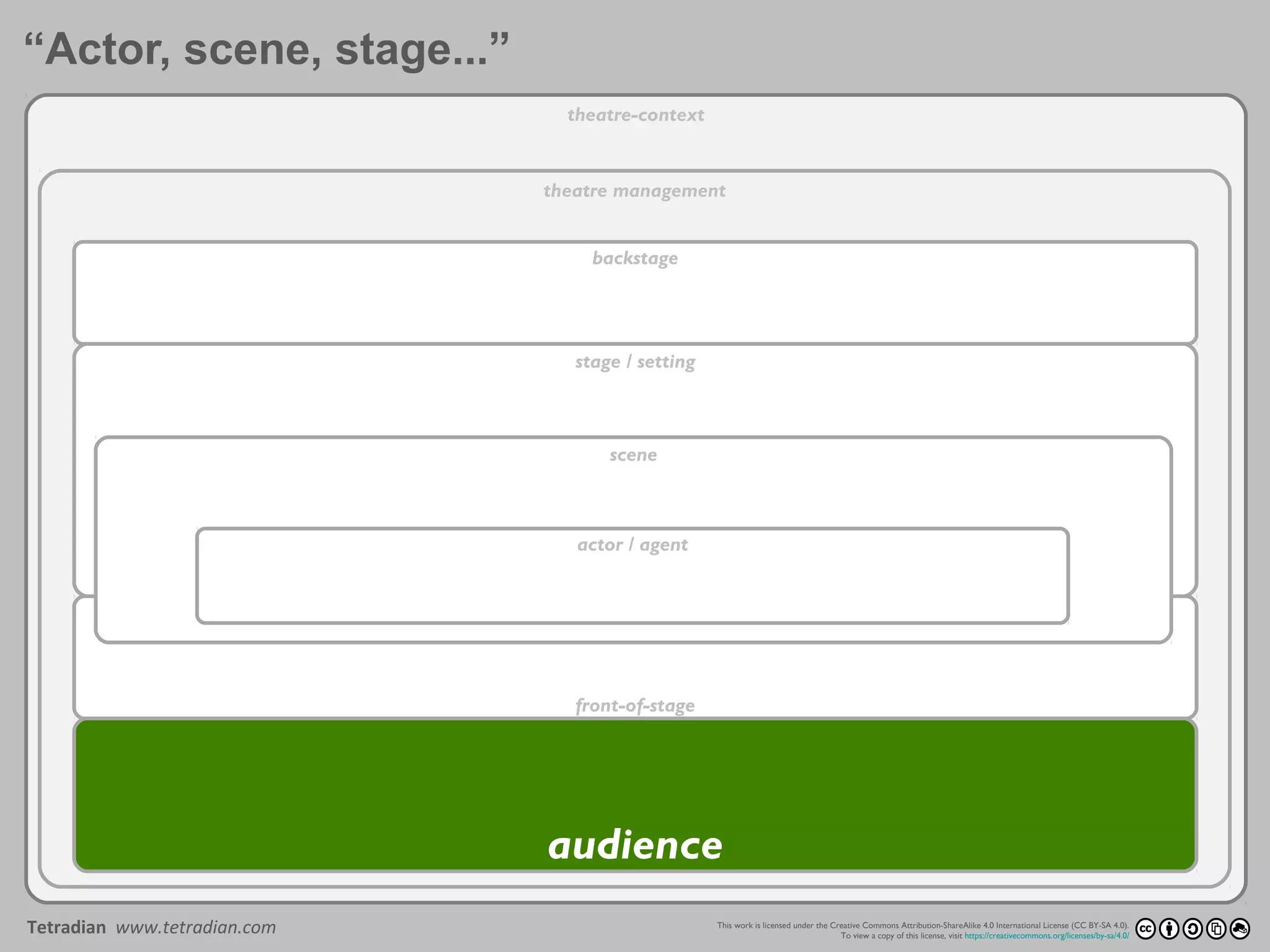
theatre-context
theatre management
stage / setting
front-of-stage
backstage
audience
scene
actor / agent
“Actor, scene, stage...”
This work is licensed under the Creative Commons Attribution-ShareAlike 4.0 International License (CC BY-SA 4.0).
To view a copy of this license, visit https://creativecommons.org/licenses/by-sa/4.0/
Tetradian www.tetradian.com
Project By Date
Version
theatre-context
theatre management
stage / setting
front-of-stage
backstage
audience
scene
actor / agent
“Actor, scene, stage...”
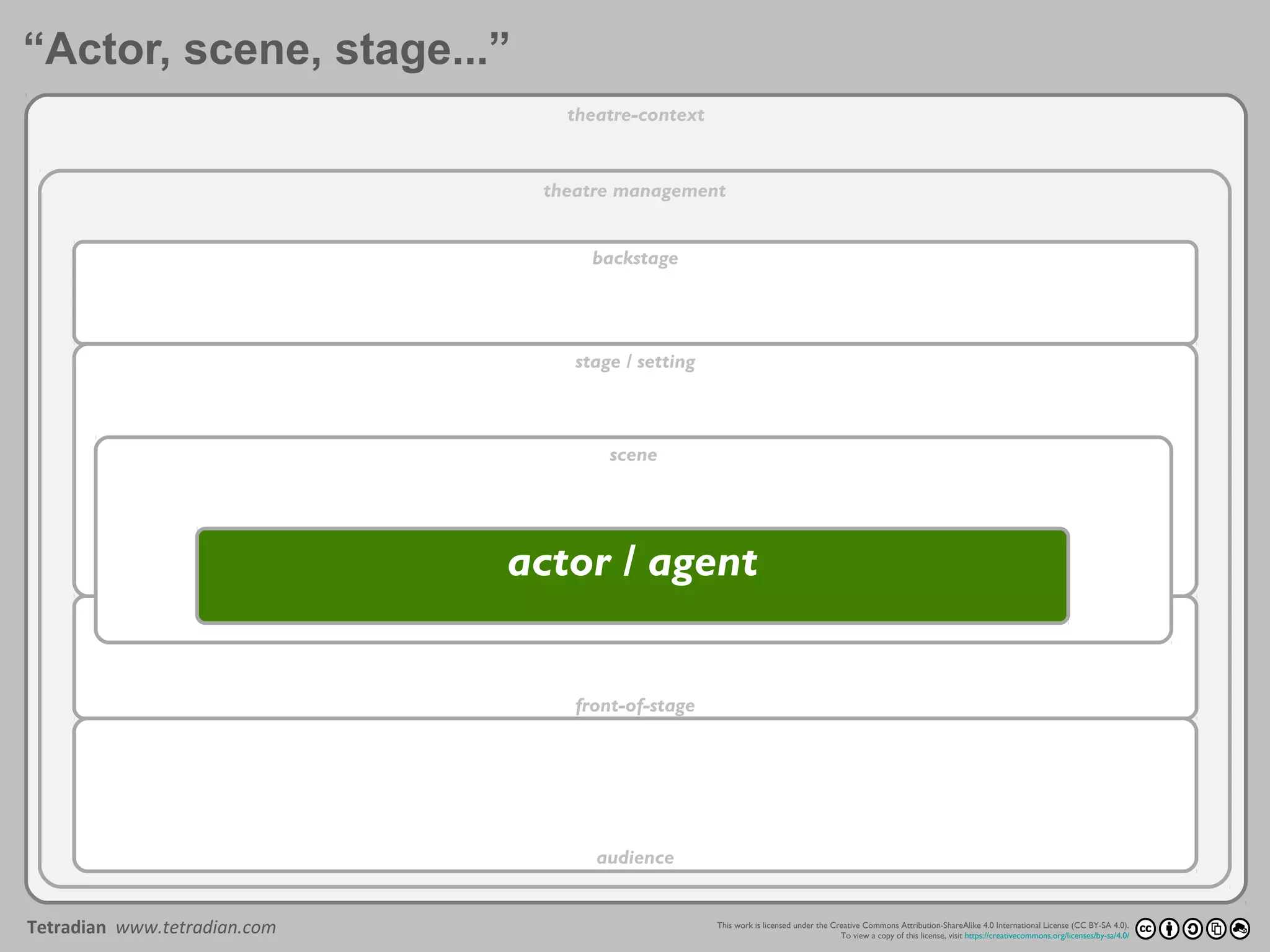
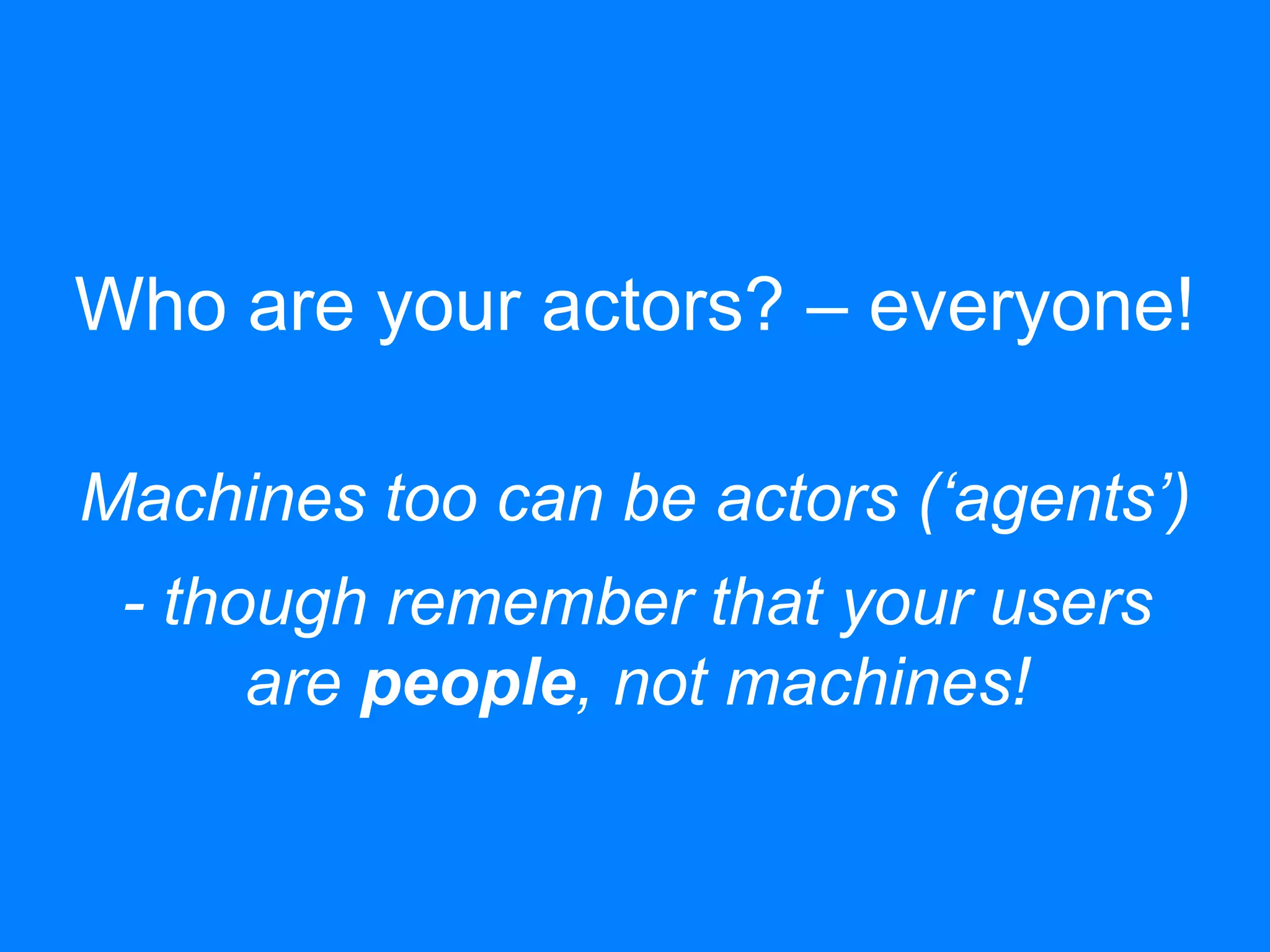
Who are your actors? – everyone!
Machines too can be actors (‘agents’)
- though remember that your users
are people, not machines!
…who are the actors?
…and also, why these actors?
…what changes if we change actor?
This work is licensed under the Creative Commons Attribution-ShareAlike 4.0 International License (CC BY-SA 4.0).
To view a copy of this license, visit https://creativecommons.org/licenses/by-sa/4.0/
Tetradian www.tetradian.com
Project By Date
Version
theatre-context
theatre management
stage / setting
front-of-stage
backstage
audience
scene
actor / agent / extras
“Actor, scene, stage...”
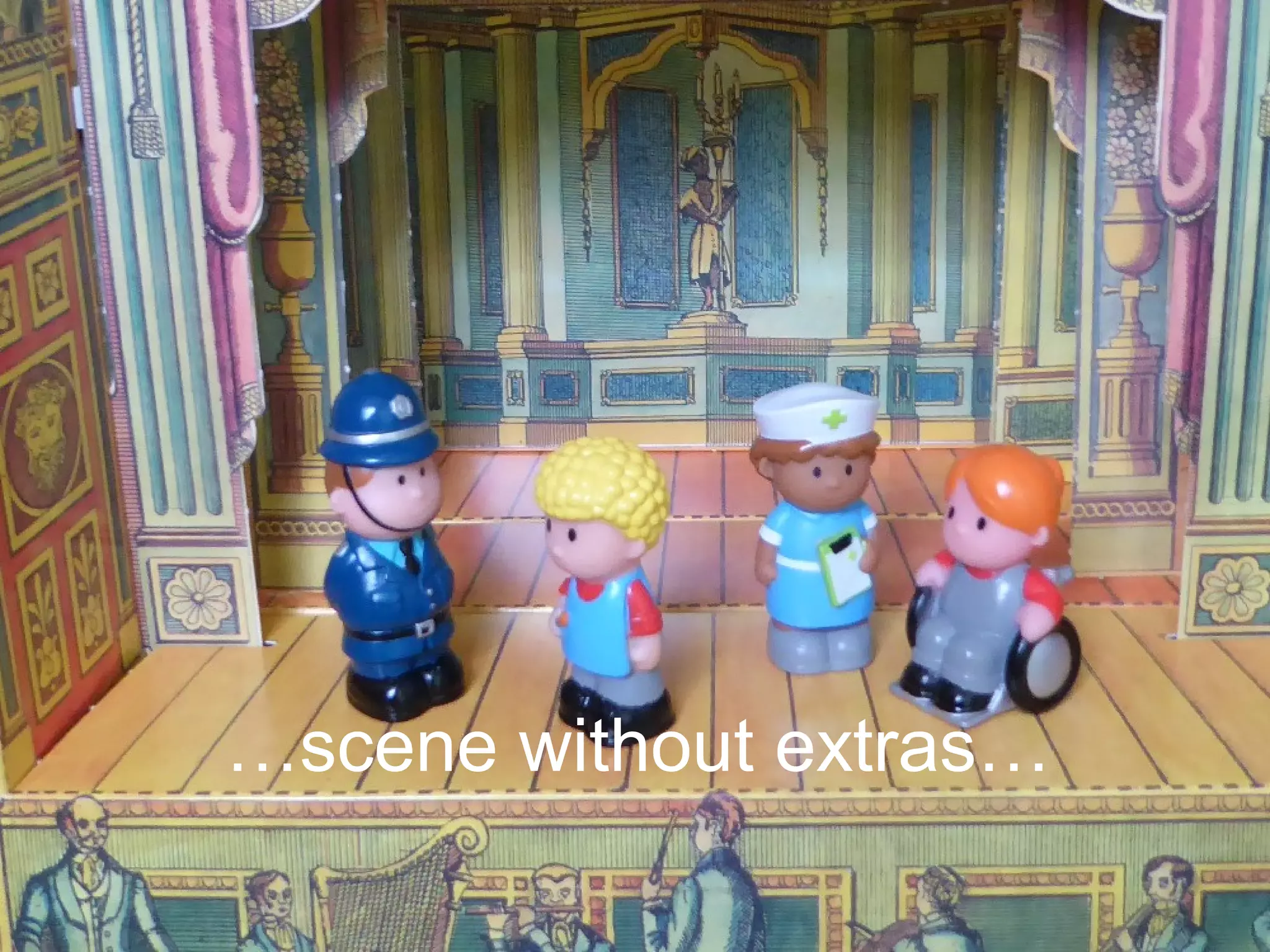
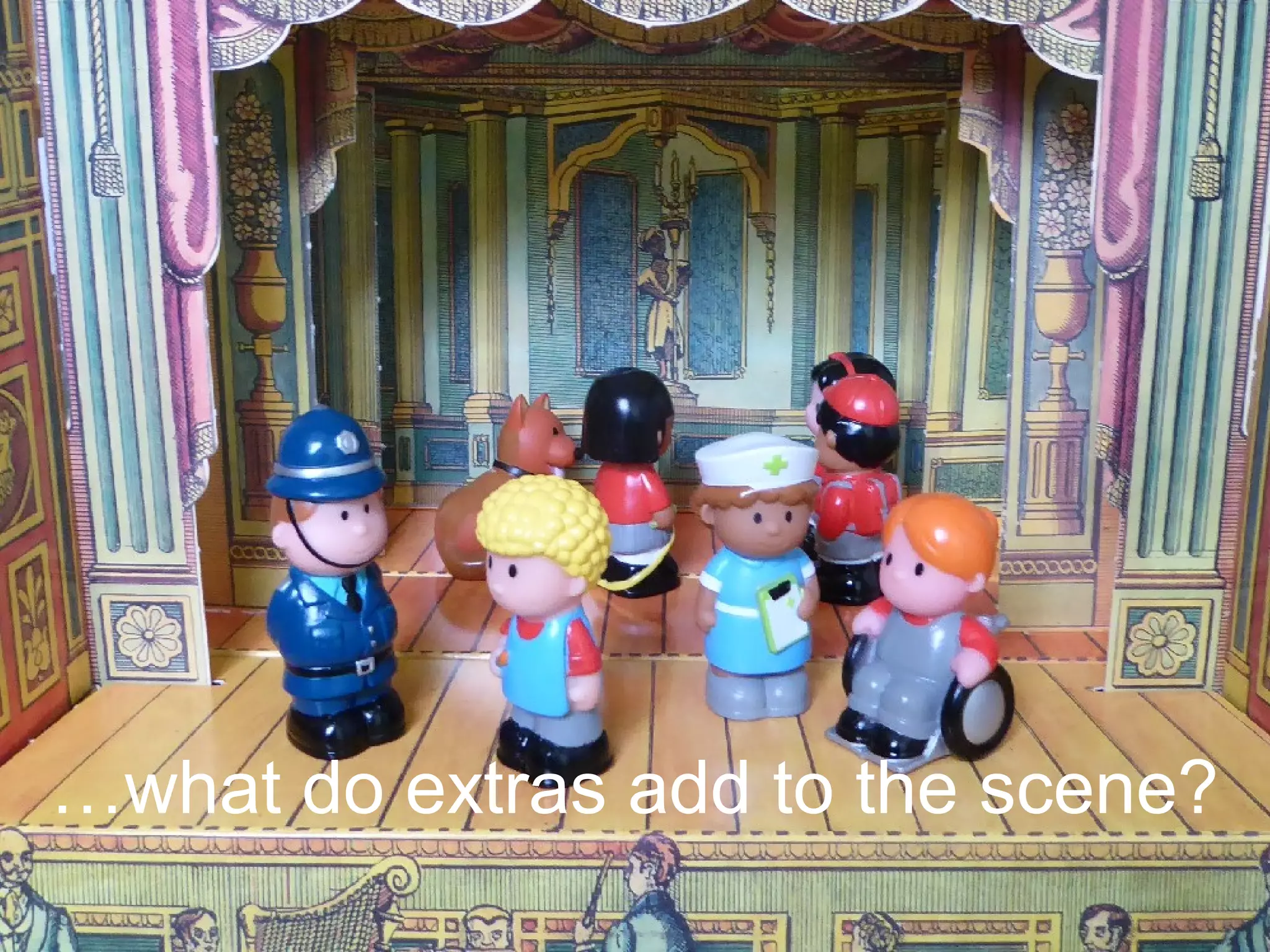
Extras are kind of
‘active scenery’…
- they’re not part of the story as such,
but the scene won’t work well
without them…
…scene without extras…
…what do extras add to the scene?
This work is licensed under the Creative Commons Attribution-ShareAlike 4.0 International License (CC BY-SA 4.0).
To view a copy of this license, visit https://creativecommons.org/licenses/by-sa/4.0/
Tetradian www.tetradian.com
Project By Date
Version
theatre-context
theatre management
stage / setting
front-of-stage
backstage
audience
scene
actor / agent
“Actor, scene, stage...”
Each segment of a story
is a scene…
- each scene should have
a distinct begin, middle, end
and outcome…
…what’s the story in the scene?
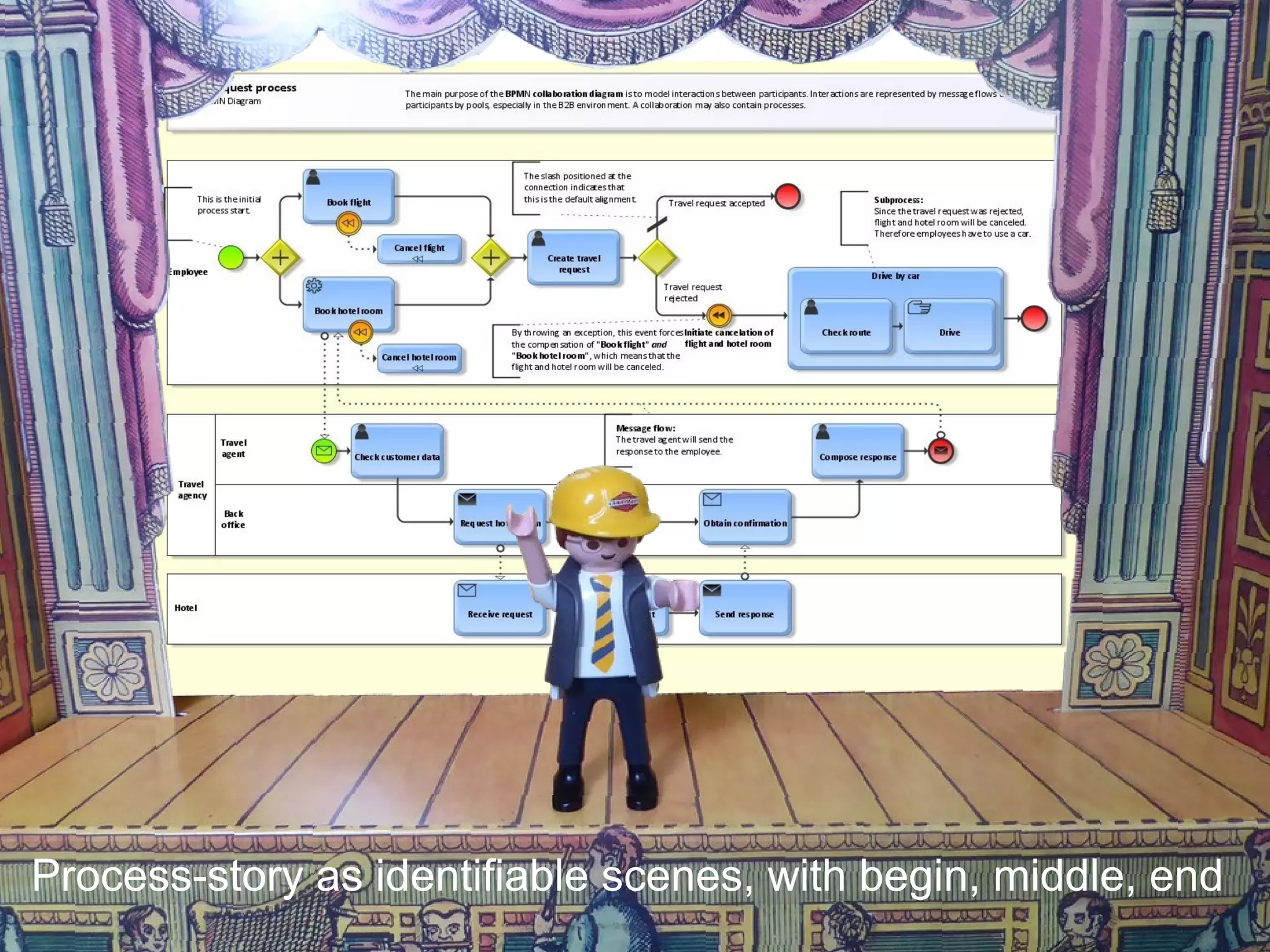
Process as story
Tom Graves, The Enterprise As Story, Tetradian, 2012
“Each traverse through
a business-process
is a self-contained story
with its own actors,
actions and events”
Scenes in the story
Process-story as identifiable scenes, with begin, middle, end
Remember the screenwriters’ mantra:
Show, don’t tell
- each line of action
must drive the story onward
This work is licensed under the Creative Commons Attribution-ShareAlike 4.0 International License (CC BY-SA 4.0).
To view a copy of this license, visit https://creativecommons.org/licenses/by-sa/4.0/
Tetradian www.tetradian.com
Project By Date
Version
theatre-context
theatre management
stage / setting
front-of-stage
backstage
audience
scene / props
actor / agent
“Actor, scene, stage...”
The role of props:
Each item has a place in the story,
and drives the story onward
(In a business context,
another term for ‘prop’ is ‘asset’)
…what props do we need?
This work is licensed under the Creative Commons Attribution-ShareAlike 4.0 International License (CC BY-SA 4.0).
To view a copy of this license, visit https://creativecommons.org/licenses/by-sa/4.0/
Tetradian www.tetradian.com
Project By Date
Version
theatre-context
theatre management
stage / setting
front-of-stage
backstage
audience
scene
actor / agent
“Actor, scene, stage...”
Scenery provides a backdrop
for the story…
- if we change the scenery
or the lighting,
we may change the ‘feel’
or the sense of the whole story…
…what difference with scenery?
…what difference with lighting?
Staging the story:
infrastructure, systems etc as the stage
Setting the mood:
how does stage-set itself drive story forward?
People have feelings:
how does stage-set support the mood we need?
Framing the action:
in what ways does frame itself constrain the story?
This work is licensed under the Creative Commons Attribution-ShareAlike 4.0 International License (CC BY-SA 4.0).
To view a copy of this license, visit https://creativecommons.org/licenses/by-sa/4.0/
Tetradian www.tetradian.com
Project By Date
Version
theatre-context
theatre management
stage / setting
front-of-stage
backstage
audience
scene
actor / agent
“Actor, scene, stage...”
Framing the stage:
What do people see
that surrounds the stage?
What support is there for other senses?
- sound, scent, texture, taste?
http://www.pollocks-coventgarden.co.uk/index.php/pantomime-theatre-with-cinderella.html
…what music should play? – to what effect?
This work is licensed under the Creative Commons Attribution-ShareAlike 4.0 International License (CC BY-SA 4.0).
To view a copy of this license, visit https://creativecommons.org/licenses/by-sa/4.0/
Tetradian www.tetradian.com
Project By Date
Version
theatre-context
theatre management
stage / setting
front-of-stage
backstage
audience
scene
actor / agent
“Actor, scene, stage...”
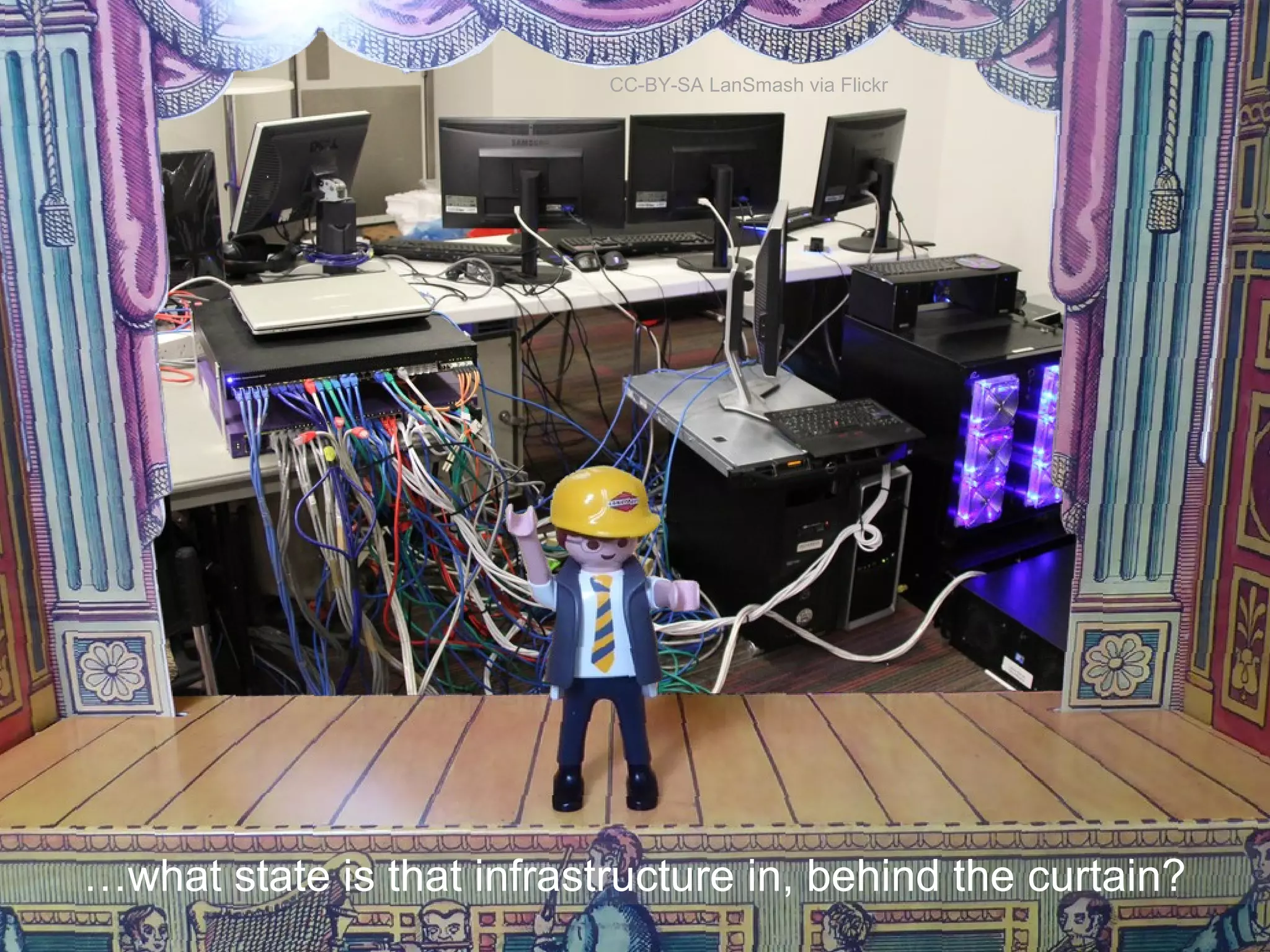
‘Backstage’:
the invisible infrastructure
that supports the story…
…what state is that infrastructure in,
behind the curtain?
Visible and invisible
…what state is that infrastructure in, behind the curtain?
CC-BY Princess Theatre via Flickr
…what state is that infrastructure in, behind the curtain?
CC-BY-SA LanSmash via Flickr
This work is licensed under the Creative Commons Attribution-ShareAlike 4.0 International License (CC BY-SA 4.0).
To view a copy of this license, visit https://creativecommons.org/licenses/by-sa/4.0/
Tetradian www.tetradian.com
Project By Date
Version
theatre-context
theatre management
stage / setting
front-of-stage
backstage
audience
scene
actor / agent
“Actor, scene, stage...”
The audience observe the story
- they are not in the story...
…that’s an important distinction!
…who are the audience?
…what are audience expectations?
This work is licensed under the Creative Commons Attribution-ShareAlike 4.0 International License (CC BY-SA 4.0).
To view a copy of this license, visit https://creativecommons.org/licenses/by-sa/4.0/
Tetradian www.tetradian.com
Project By Date
Version
theatre-context
theatre management
stage / setting
front-of-stage
backstage
audience
scene
actor / agent
“Actor, scene, stage...”
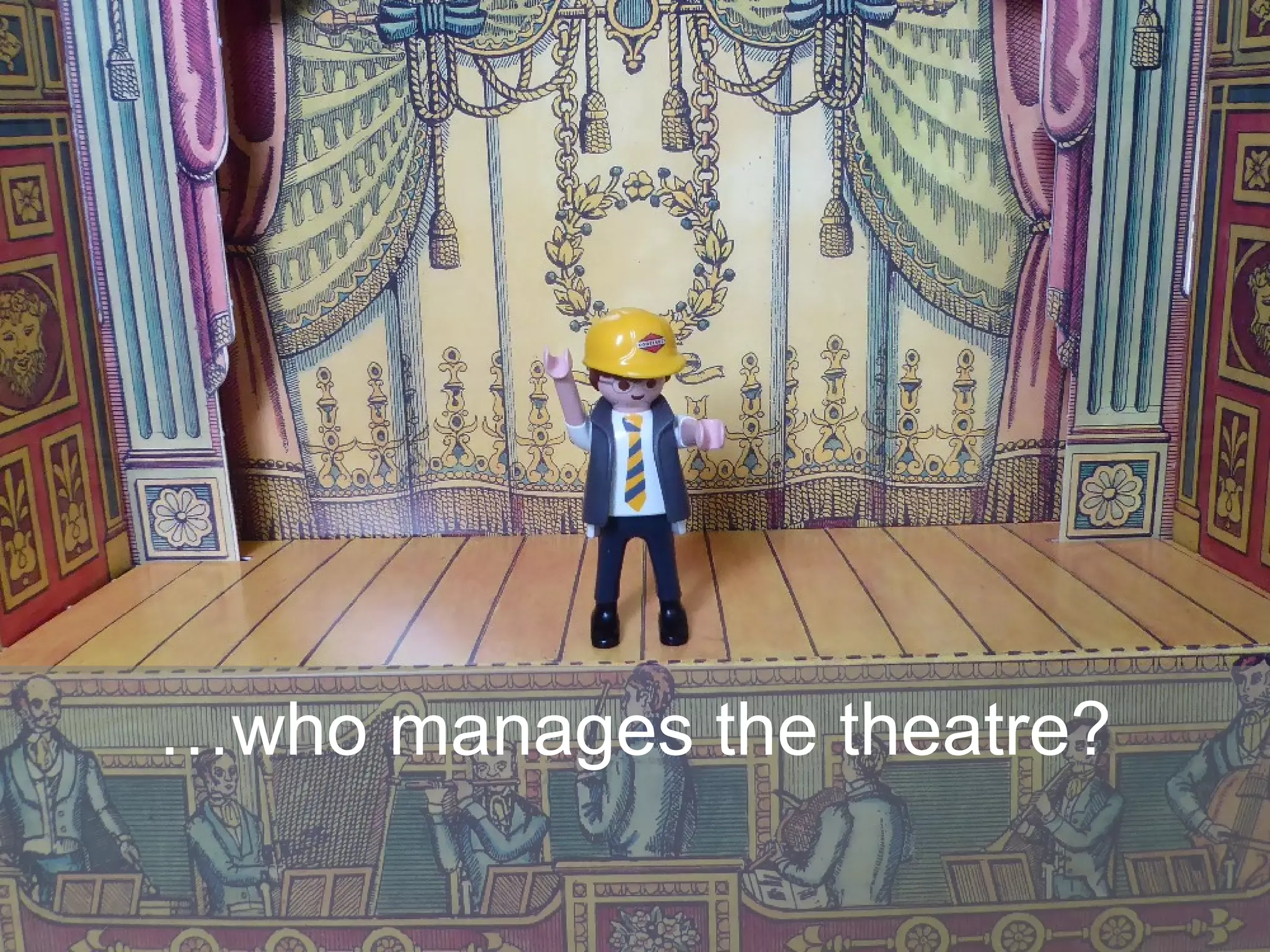
We need management to guide:
running (operation) of the story
changing the story
overall purpose of the story
…who manages the theatre?
How will you promote your identity?
How will others find your story?
Who would you want
(or not-want) as clientele?
How will you keep it busy?
How will you keep it running?
This work is licensed under the Creative Commons Attribution-ShareAlike 4.0 International License (CC BY-SA 4.0).
To view a copy of this license, visit https://creativecommons.org/licenses/by-sa/4.0/
Tetradian www.tetradian.com
Project By Date
Version
theatre-context
theatre management
stage / setting
front-of-stage
backstage
audience
scene
actor / agent
“Actor, scene, stage...”
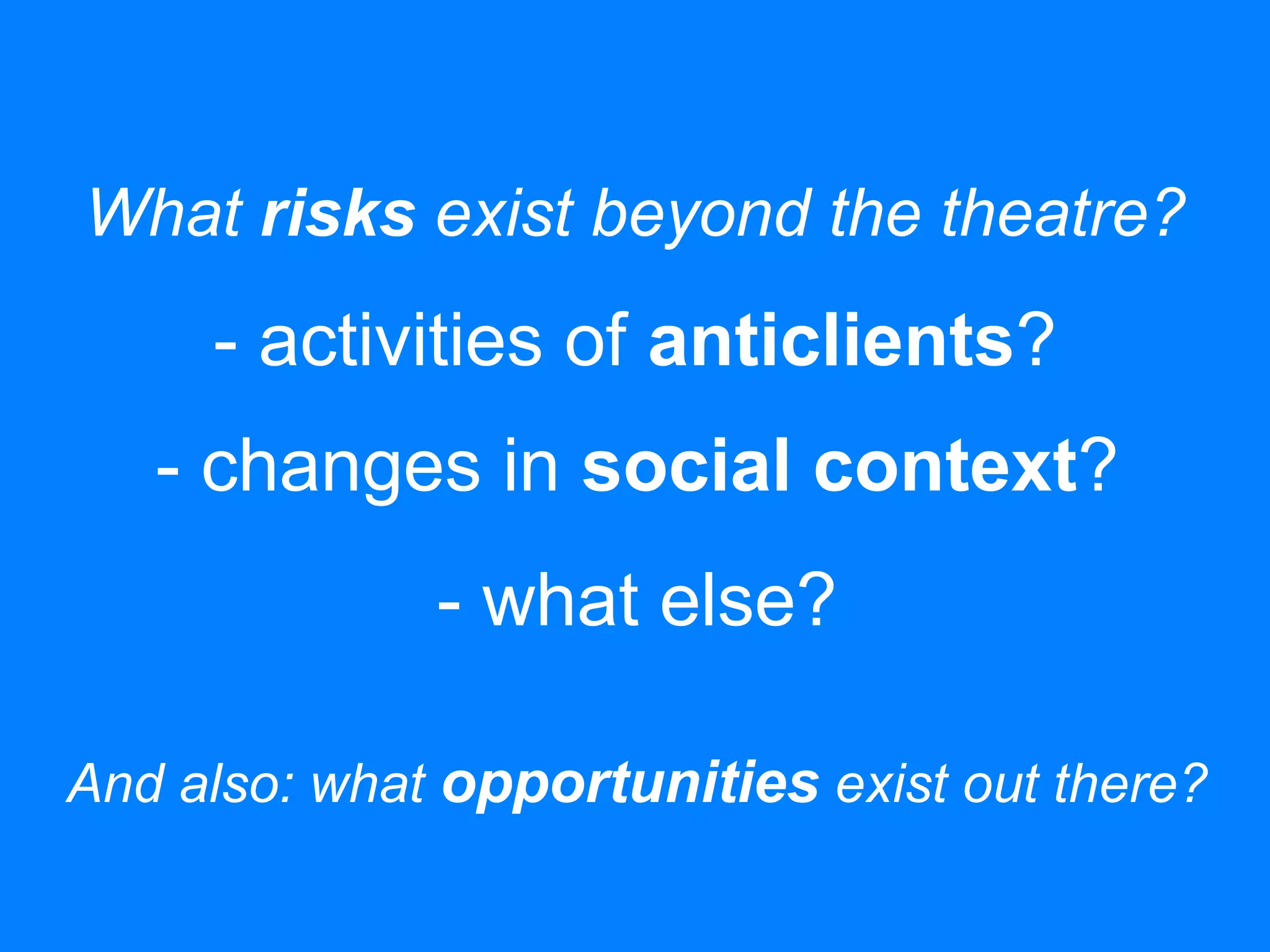
What risks exist beyond the theatre?
- activities of anticlients?
- changes in social context?
- what else?
And also: what opportunities exist out there?
…who is an anticlient for theatre?
This work is licensed under the Creative Commons Attribution-ShareAlike 4.0 International License (CC BY-SA 4.0).
To view a copy of this license, visit https://creativecommons.org/licenses/by-sa/4.0/
Tetradian www.tetradian.com
Project By Date
Version
theatre-context
theatre management
stage / setting
front-of-stage
backstage
audience
scene / props
actor / agent / extras
“Actor, scene, stage...”
http://www.pollocks-coventgarden.co.uk/index.php/pantomime-theatre-with-cinderella.html
In short…
…we must pay attention
to the story as a whole!
- not just the easy bits…
Context, context, context…
“The world* is made of stories”
• The enterprise is a story – an overarching theme
• Enterprise as an ongoing story of relations
between people – the actors of the story
• Enterprise-story comprised of many smaller stories
– the scenes or story-lines (aka ‘processes’)
• Enterprise-story takes place in a setting – the stage
and its context, location, props etc
• Stories thrive on tension, conflict and uncertainty
– whereas machines generally don’t…
*‘the world’ including – perhaps especially – the business-world…
Though Švejk again reminds us...
© Josef Lada
...where and how we tell stories will matter too!
It’s easier to engage people
in exploring perspectives
of the architecture
if they can have fun
whilst they’re doing it!
The real punchline for this story:
Thank you!
Contact: Tom Graves
Company: Tetradian Consulting
Email: tom@tetradian.com
Twitter: @tetradian ( http://twitter.com/tetradian )
Weblog: http://weblog.tetradian.com
Slidedecks: http://www.slideshare.net/tetradian
Publications: http://tetradianbooks.com and http://leanpub.com/u/tetradian
Books: • The enterprise as story: the role of narrative in enterprise-
architecture (2012)
• Mapping the enterprise: modelling the enterprise as services
with the Enterprise Canvas (2010)
• Everyday enterprise-architecture: sensemaking, strategy,
structures and solutions (2010)
• Doing enterprise-architecture: process and practice in the real
enterprise (2009)
Further information:
Support our work! – become a patron on Patreon:
https://www.patreon.com/tetradian

Enterprise Architecture - A Matter of Perspective

  • 1.
    A MATTER OFPERSPECTIVE Tom Graves Tetradian Consulting KONFERENCE ENTERPRISE ARCHITEKTURA 2017
  • 2.
    Hi. (maybe I shouldupdate my profile-photo...?) I’m Tom. I’ve been around the EA scene for a while now.
  • 3.
    These days I’d describemyself as a maker of tools for change – all sorts of tools...
  • 4.
    This work islicensed under the Creative Commons Attribution-ShareAlike 4.0 International License (CC BY-SA 4.0). To view a copy of this license, visit https://creativecommons.org/licenses/by-sa/4.0/ Tetradian www.tetradian.com Project By Date VersionHolomap shared-enterprise / indirect-context includes community, government, non-clients, anticlients, others includes investors, beneficiaries market / direct-context includes competitors, regulators, recruiters, trainers, journals, others transactional-context includes suppliers / providers, customers / consumers, transactional partners prospect prospectsupplier / provider partner client / consumer partner organisation service-in-focus …such as this…
  • 5.
  • 6.
  • 7.
  • 8.
    …enough of anintro? Okay, let’s get on with the show!
  • 9.
  • 10.
    To make senseof this... © Josef Lada ...we’ll need some advice from someone you might know
  • 11.
    As Švejk himselfmight ask: What’s the point? What’s the purpose? What are we striving for? (well, he might say something like that, anyway…)
  • 12.
    Why architecture? What isits real purpose?
  • 13.
    The aim ofall architecture... Things work better when they work together, on purpose. (It’s about effectiveness.)
  • 14.
    What are thekeys to architecture?
  • 15.
    The Architect’s Mantra… Idon’t know… (but I know someone who does, or how to find out) It depends… (and I know what it depends on, and why) Just enough detail… (and I know what the right level of detail would be)
  • 16.
    Everyone wants tosell us ready-made answers... ...yet the real challenge is to find the right questions ...“solutions!”
  • 17.
    Finding the rightquestions can be even more important than finding the right answers (in part because questions tend to stay the same, whereas answers will change with time and context)
  • 18.
    Architecture and its‘experts’ © Josef Lada Anglo-dominated, IT-centric, hidden assumptions...
  • 19.
    A matter ofperspective ...in reality, the BDAT-stack is an arbitrary special-case
  • 20.
    A matter ofperspective ...further confused by misframed ‘Business Architecture’
  • 21.
    A matter ofperspective ...and even worse at whole-enterprise scope
  • 22.
    In short, it’sa mess... ...which may be why management keep yelling at us? © Josef Lada
  • 23.
    So how dowe get out of this mess?
  • 24.
    Expose the assumptions... Ifwe change the perspective, we can expose, explore and highlight the hidden assumptions
  • 25.
    Let’s ask Švejkfor some help here? © Josef Lada (?)
  • 26.
  • 27.
    in which case… Whatwould EA look like if it were Czech?
  • 28.
    © The OpenGroup EA as the adventures of Švejk? © Josef Lada
  • 29.
    © The OpenGroup EA as procedure? or poetry(sort-of)? © Dušan Klein et al.
  • 30.
    © The OpenGroup EA as metamorphosis? © Norton Books
  • 31.
    © The OpenGroup EA as a trial? © Penguin
  • 32.
    Trials indeed forŠvejk... © Josef Lada ...carrying everyone’s load, under fire...
  • 33.
    People, Process, Technology! Maybe the realproblem is our usual approach:
  • 34.
    Technology CC-BY-SA xdxd_vs_xdxd viaFlickr Process People The usual architecture view
  • 35.
  • 36.
  • 37.
    …“can I goto sleep now, please?”
  • 38.
    No fun atall... © Josef Lada Could we just kick it all out?
  • 39.
    So how dowe find these ‘missing perspectives’? - and maybe have some fun doing it, too…
  • 40.
    Short answer: Raid thekids’ toy-box!
  • 41.
  • 42.
  • 43.
    …who or whatare the various uses / users of the service?
  • 44.
    …how do thoseuses intersect?
  • 45.
    …how might thoseuses conflict?
  • 46.
  • 47.
  • 48.
  • 49.
    …how does itinterconnect with other services?
  • 50.
  • 51.
    …what disruptions couldthe service cause for others?
  • 52.
    …how, where, withwhat must it intersect without connecting?
  • 53.
    …how might othersimpact your infrastructure?
  • 54.
    …what impacts couldthat have on service-delivery?
  • 55.
    …what are thehazards, potential sources of disruption?
  • 56.
  • 57.
    …what happens when theservice itself fails?
  • 58.
  • 59.
  • 60.
  • 61.
    Maybe we’ll giveŠvejk a medal... © Josef Lada
  • 62.
    …which brings usback to… a matter of perspective! - yeah, which way we look at things does kinda matter here…
  • 63.
    Perspectives and journeys Service-deliveryis a journey of interactions where ‘inside-out’ (the organisation’s perspective) touches ‘outside-in’ (the customer’s / supplier’s perspective)
  • 64.
    Outside-in… CC-BY Fretro viaFlickr “Customers do not appear in our processes, we appear in their experiences” Chris Potts, recrEAtion, Technics, 2010
  • 65.
    Every service hasits own myriad of stakeholders Whose story?
  • 66.
    A stakeholder is anyone whocan wield a sharp-pointed stake in our direction… CC-BY-NC-SA evilpeacock via Flickr Who are the stakeholders? (Hint: there are a lot more of them than we might at first think…)
  • 67.
    And as Švejkwould remind us... © Josef Lada ...what connects people together is a story
  • 68.
    All kinds ofstories... SCRIPTED (simple rules and checklists) CC-BY The-Vikkodamus via Flickr CC-BY-SA seeminglee via Flickr IMPROVISED (guidelines and principles) ANALYSED (complicated algorithms) ADAPTED (complex patterns) PREDICTABLE UNPREDICTABLE
  • 69.
    “All the world’sa stage”… Stories underpin every action…
  • 70.
    Stories are fractal… …eachstory contains stories within stories CC-BY-NC-SA gjshepherd via Flickr
  • 71.
  • 72.
    …but to makethis work... we’ll need a different approach to our architecture - a more story-oriented approach…
  • 73.
    Technology CC-BY-SA xdxd_vs_xdxd viaFlickr Process People The usual architecture view
  • 74.
    Stage CC-BY-SA xdxd_vs_xdxd viaFlickr Scene Actor ActorStage Stage Stage A narrative-oriented view Scene Scene Stage
  • 75.
    So how toexplore this with execs and others?
  • 76.
  • 77.
  • 78.
  • 79.
  • 80.
    Let’s use a visualcheat-sheet to help us… - you could call it a Canvas, if you like…
  • 81.
    This work islicensed under the Creative Commons Attribution-ShareAlike 4.0 International License (CC BY-SA 4.0). To view a copy of this license, visit https://creativecommons.org/licenses/by-sa/4.0/ Tetradian www.tetradian.com Project By Date Version theatre-context theatre management stage / setting front-of-stage backstage audience scene actor / agent “Actor, scene, stage...”
  • 82.
    This work islicensed under the Creative Commons Attribution-ShareAlike 4.0 International License (CC BY-SA 4.0). To view a copy of this license, visit https://creativecommons.org/licenses/by-sa/4.0/ Tetradian www.tetradian.com Project By Date Version theatre-context theatre management stage / setting front-of-stage backstage audience scene actor / agent “Actor, scene, stage...”
  • 83.
    Who are youractors? – everyone! Machines too can be actors (‘agents’) - though remember that your users are people, not machines!
  • 84.
  • 85.
    …and also, whythese actors?
  • 86.
    …what changes ifwe change actor?
  • 87.
    This work islicensed under the Creative Commons Attribution-ShareAlike 4.0 International License (CC BY-SA 4.0). To view a copy of this license, visit https://creativecommons.org/licenses/by-sa/4.0/ Tetradian www.tetradian.com Project By Date Version theatre-context theatre management stage / setting front-of-stage backstage audience scene actor / agent / extras “Actor, scene, stage...”
  • 88.
    Extras are kindof ‘active scenery’… - they’re not part of the story as such, but the scene won’t work well without them…
  • 89.
  • 90.
    …what do extrasadd to the scene?
  • 91.
    This work islicensed under the Creative Commons Attribution-ShareAlike 4.0 International License (CC BY-SA 4.0). To view a copy of this license, visit https://creativecommons.org/licenses/by-sa/4.0/ Tetradian www.tetradian.com Project By Date Version theatre-context theatre management stage / setting front-of-stage backstage audience scene actor / agent “Actor, scene, stage...”
  • 92.
    Each segment ofa story is a scene… - each scene should have a distinct begin, middle, end and outcome…
  • 93.
    …what’s the storyin the scene?
  • 94.
    Process as story TomGraves, The Enterprise As Story, Tetradian, 2012 “Each traverse through a business-process is a self-contained story with its own actors, actions and events”
  • 95.
    Scenes in thestory Process-story as identifiable scenes, with begin, middle, end
  • 96.
    Remember the screenwriters’mantra: Show, don’t tell - each line of action must drive the story onward
  • 97.
    This work islicensed under the Creative Commons Attribution-ShareAlike 4.0 International License (CC BY-SA 4.0). To view a copy of this license, visit https://creativecommons.org/licenses/by-sa/4.0/ Tetradian www.tetradian.com Project By Date Version theatre-context theatre management stage / setting front-of-stage backstage audience scene / props actor / agent “Actor, scene, stage...”
  • 98.
    The role ofprops: Each item has a place in the story, and drives the story onward (In a business context, another term for ‘prop’ is ‘asset’)
  • 99.
  • 100.
    This work islicensed under the Creative Commons Attribution-ShareAlike 4.0 International License (CC BY-SA 4.0). To view a copy of this license, visit https://creativecommons.org/licenses/by-sa/4.0/ Tetradian www.tetradian.com Project By Date Version theatre-context theatre management stage / setting front-of-stage backstage audience scene actor / agent “Actor, scene, stage...”
  • 101.
    Scenery provides abackdrop for the story… - if we change the scenery or the lighting, we may change the ‘feel’ or the sense of the whole story…
  • 102.
  • 103.
  • 104.
  • 105.
    Staging the story: infrastructure,systems etc as the stage Setting the mood: how does stage-set itself drive story forward? People have feelings: how does stage-set support the mood we need? Framing the action: in what ways does frame itself constrain the story?
  • 106.
    This work islicensed under the Creative Commons Attribution-ShareAlike 4.0 International License (CC BY-SA 4.0). To view a copy of this license, visit https://creativecommons.org/licenses/by-sa/4.0/ Tetradian www.tetradian.com Project By Date Version theatre-context theatre management stage / setting front-of-stage backstage audience scene actor / agent “Actor, scene, stage...”
  • 107.
    Framing the stage: Whatdo people see that surrounds the stage? What support is there for other senses? - sound, scent, texture, taste?
  • 108.
  • 109.
    …what music shouldplay? – to what effect?
  • 110.
    This work islicensed under the Creative Commons Attribution-ShareAlike 4.0 International License (CC BY-SA 4.0). To view a copy of this license, visit https://creativecommons.org/licenses/by-sa/4.0/ Tetradian www.tetradian.com Project By Date Version theatre-context theatre management stage / setting front-of-stage backstage audience scene actor / agent “Actor, scene, stage...”
  • 111.
    ‘Backstage’: the invisible infrastructure thatsupports the story… …what state is that infrastructure in, behind the curtain?
  • 112.
    Visible and invisible …whatstate is that infrastructure in, behind the curtain? CC-BY Princess Theatre via Flickr
  • 113.
    …what state isthat infrastructure in, behind the curtain? CC-BY-SA LanSmash via Flickr
  • 114.
    This work islicensed under the Creative Commons Attribution-ShareAlike 4.0 International License (CC BY-SA 4.0). To view a copy of this license, visit https://creativecommons.org/licenses/by-sa/4.0/ Tetradian www.tetradian.com Project By Date Version theatre-context theatre management stage / setting front-of-stage backstage audience scene actor / agent “Actor, scene, stage...”
  • 115.
    The audience observethe story - they are not in the story... …that’s an important distinction!
  • 116.
    …who are theaudience?
  • 117.
    …what are audienceexpectations?
  • 118.
    This work islicensed under the Creative Commons Attribution-ShareAlike 4.0 International License (CC BY-SA 4.0). To view a copy of this license, visit https://creativecommons.org/licenses/by-sa/4.0/ Tetradian www.tetradian.com Project By Date Version theatre-context theatre management stage / setting front-of-stage backstage audience scene actor / agent “Actor, scene, stage...”
  • 119.
    We need managementto guide: running (operation) of the story changing the story overall purpose of the story
  • 120.
  • 121.
    How will youpromote your identity? How will others find your story? Who would you want (or not-want) as clientele? How will you keep it busy? How will you keep it running?
  • 122.
    This work islicensed under the Creative Commons Attribution-ShareAlike 4.0 International License (CC BY-SA 4.0). To view a copy of this license, visit https://creativecommons.org/licenses/by-sa/4.0/ Tetradian www.tetradian.com Project By Date Version theatre-context theatre management stage / setting front-of-stage backstage audience scene actor / agent “Actor, scene, stage...”
  • 123.
    What risks existbeyond the theatre? - activities of anticlients? - changes in social context? - what else? And also: what opportunities exist out there?
  • 124.
    …who is ananticlient for theatre?
  • 125.
    This work islicensed under the Creative Commons Attribution-ShareAlike 4.0 International License (CC BY-SA 4.0). To view a copy of this license, visit https://creativecommons.org/licenses/by-sa/4.0/ Tetradian www.tetradian.com Project By Date Version theatre-context theatre management stage / setting front-of-stage backstage audience scene / props actor / agent / extras “Actor, scene, stage...”
  • 126.
  • 127.
    In short… …we mustpay attention to the story as a whole! - not just the easy bits… Context, context, context…
  • 128.
    “The world* ismade of stories” • The enterprise is a story – an overarching theme • Enterprise as an ongoing story of relations between people – the actors of the story • Enterprise-story comprised of many smaller stories – the scenes or story-lines (aka ‘processes’) • Enterprise-story takes place in a setting – the stage and its context, location, props etc • Stories thrive on tension, conflict and uncertainty – whereas machines generally don’t… *‘the world’ including – perhaps especially – the business-world…
  • 129.
    Though Švejk againreminds us... © Josef Lada ...where and how we tell stories will matter too!
  • 130.
    It’s easier toengage people in exploring perspectives of the architecture if they can have fun whilst they’re doing it! The real punchline for this story:
  • 131.
  • 132.
    Contact: Tom Graves Company:Tetradian Consulting Email: tom@tetradian.com Twitter: @tetradian ( http://twitter.com/tetradian ) Weblog: http://weblog.tetradian.com Slidedecks: http://www.slideshare.net/tetradian Publications: http://tetradianbooks.com and http://leanpub.com/u/tetradian Books: • The enterprise as story: the role of narrative in enterprise- architecture (2012) • Mapping the enterprise: modelling the enterprise as services with the Enterprise Canvas (2010) • Everyday enterprise-architecture: sensemaking, strategy, structures and solutions (2010) • Doing enterprise-architecture: process and practice in the real enterprise (2009) Further information: Support our work! – become a patron on Patreon: https://www.patreon.com/tetradian