Downloaded 69 times











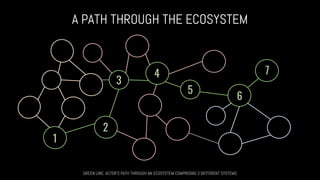




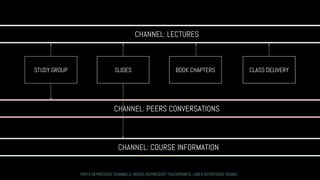





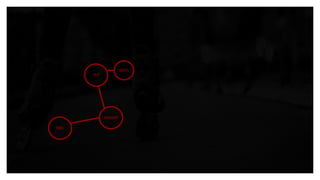
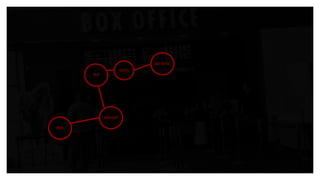
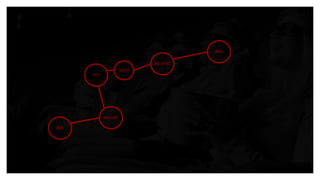
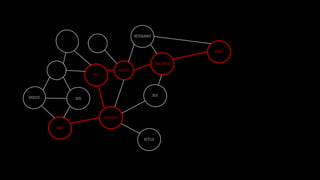
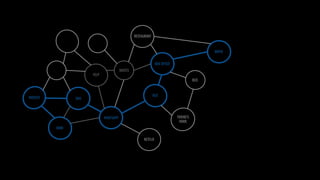
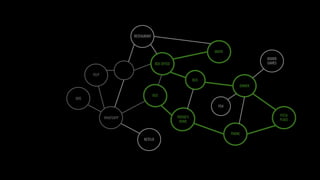
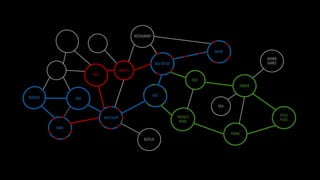
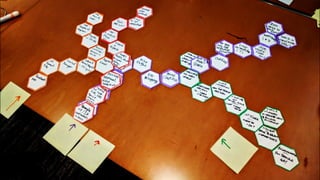
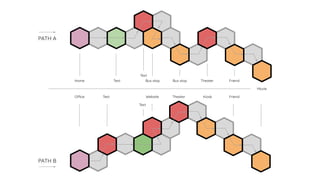
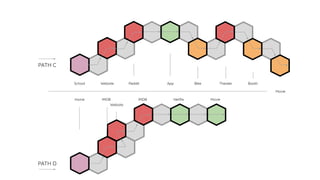
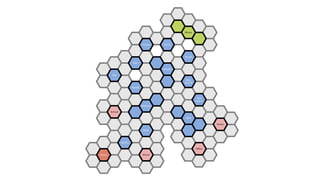
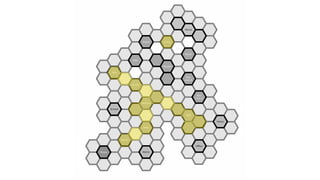
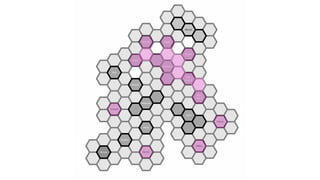


1) The document discusses the shift from traditional design focusing on tangible "things" to designing intangible experiences and ecosystems. It describes ecosystems as complex networks involving actors, tasks, touchpoints, seams, and channels. 2) An example ecosystem is described for improving university courses. The initial pain of wanting better courses leads to investigating primary actors (students) to understand their goals and experience. Different student goals would shape different ecosystems. 3) The key aspects of ecosystems are described as transient networks instantiated by actors and their goals. Elements can take different roles, touchpoints can belong to multiple channels, and channels are containers for certain types of information that flow through the ecosystem.


