Disintegrated-EA?
how to fight against fragmentation
of the architecture
Tom Graves, Tetradian Consulting
Integrated EA Conference, London, March 2016
the futures of business
Hi.
I’m Tom Graves.
(that’s the introductions done.)
“Things work better
because they work together,
on purpose.”
The key to all architecture:
Integrated
Enterprise Architecture!
What a great idea! CC-BY cornelii via Flickr
Bridge tall silos at a single bound!
CC-BY St_A_Sh via Flickr
Rebuild old legacy systems…
…with modern building-blocks!
Functional replica of the Antikythera device
created in Lego
All the pieces fit together…
…everything runs like clockwork!
CC-BY mikemccaffrey via Flickr
Miracles worked every day!
CC-BY yashna13 via Flickr
A wondrous performance!
CC-BY usfwsmtnprairie via Flickr
After all that, you’d take a bow…
CC-BY-ND rosengrant via Flickr
to rapturous applause…
CC-BY Incase via Flickr
…even senior management take notice!
CC-BY rquinett via Flickr
That’s how it’s supposed to go,
isn’t it?
So how’s it really going, so far?
CC-BY milos milosevic via Flickr
(Don’t all cry at once…)CC-BY-SA skippyjon via Flickr
If we can’t fix this…
…our prospects may not look too good.(image source not known)
Right now,
it’s a bit like a video-game…
It looks easy enough at the start, but…
image from ‘Lara Croft Go’, Square Enix Montreal
soon we’re sidestepping sawblades…
image from ‘Lara Croft Go’, Square Enix Montreal
having to think and act ahead…
image from ‘Lara Croft Go’, Square Enix Montreal
searching for solutions…
image from ‘Lara Croft Go’, Square Enix Montreal
dodging disasters every day…
image from ‘Lara Croft Go’, Square Enix Montreal
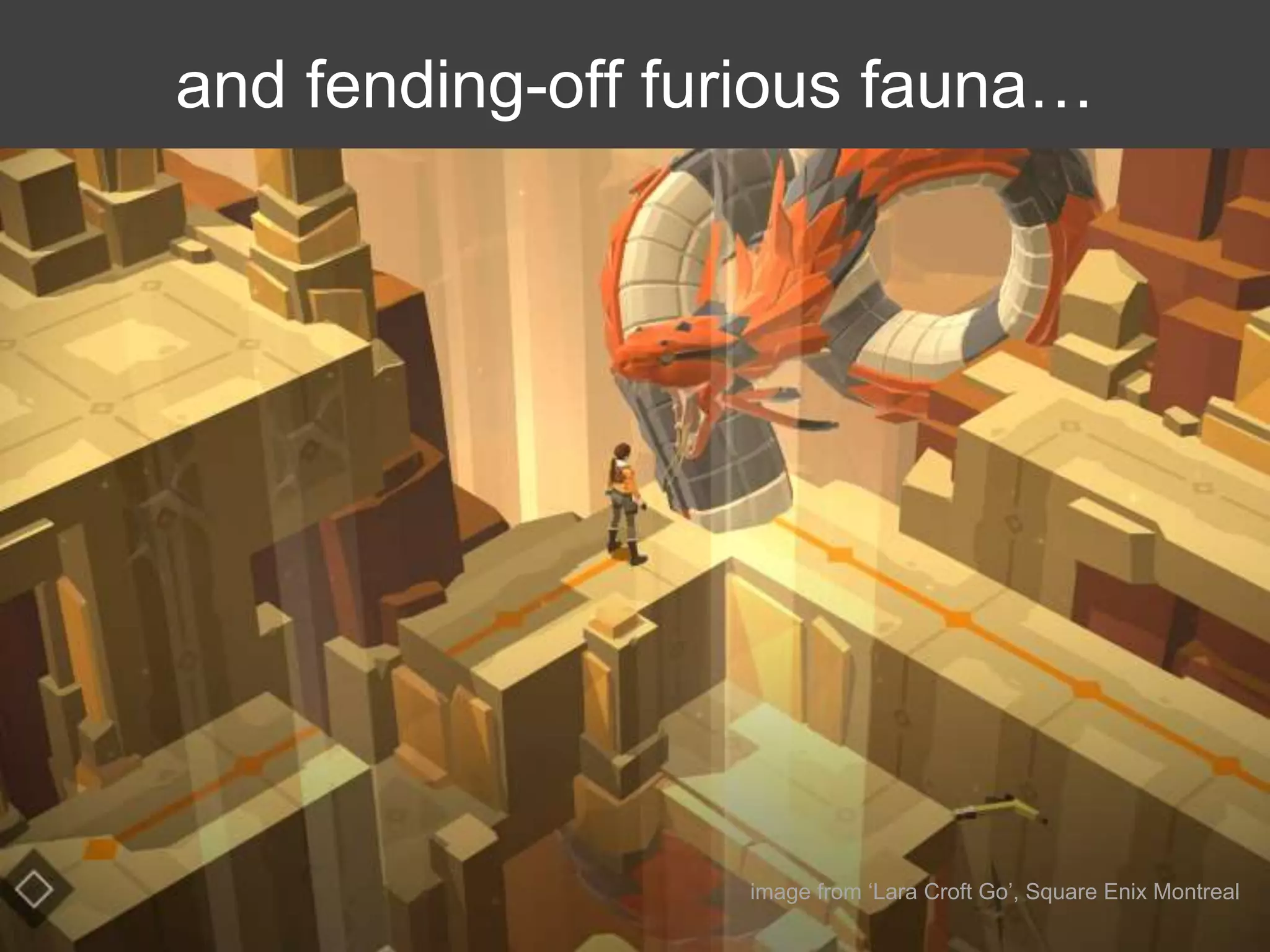
and fending-off furious fauna…
image from ‘Lara Croft Go’, Square Enix Montreal
In short:
it ain’t as easy as it looks…
So often it seems as soon as
we’ve designed
developed
delivered
the perfect architecture
along comes something else
to knock it all down once more!
We work with the Squiggle…
uncertain certain
…as a model and metaphor of change
We’re busy joining the dots…
uncertain certain
…but meanwhile, someone else…
…is busy dotting all the joins…
uncertain certain
…breaking up the architecture again!
Why is it that
an integrated EA
so often seems like
an impossible dream?
More to the point,
what can we do about it?
We need to understand
the pressures
towards fragmentation
On one side,
everywhere there’s
uncertainty
inherent in what we do,
with different aims, goals
and drivers…
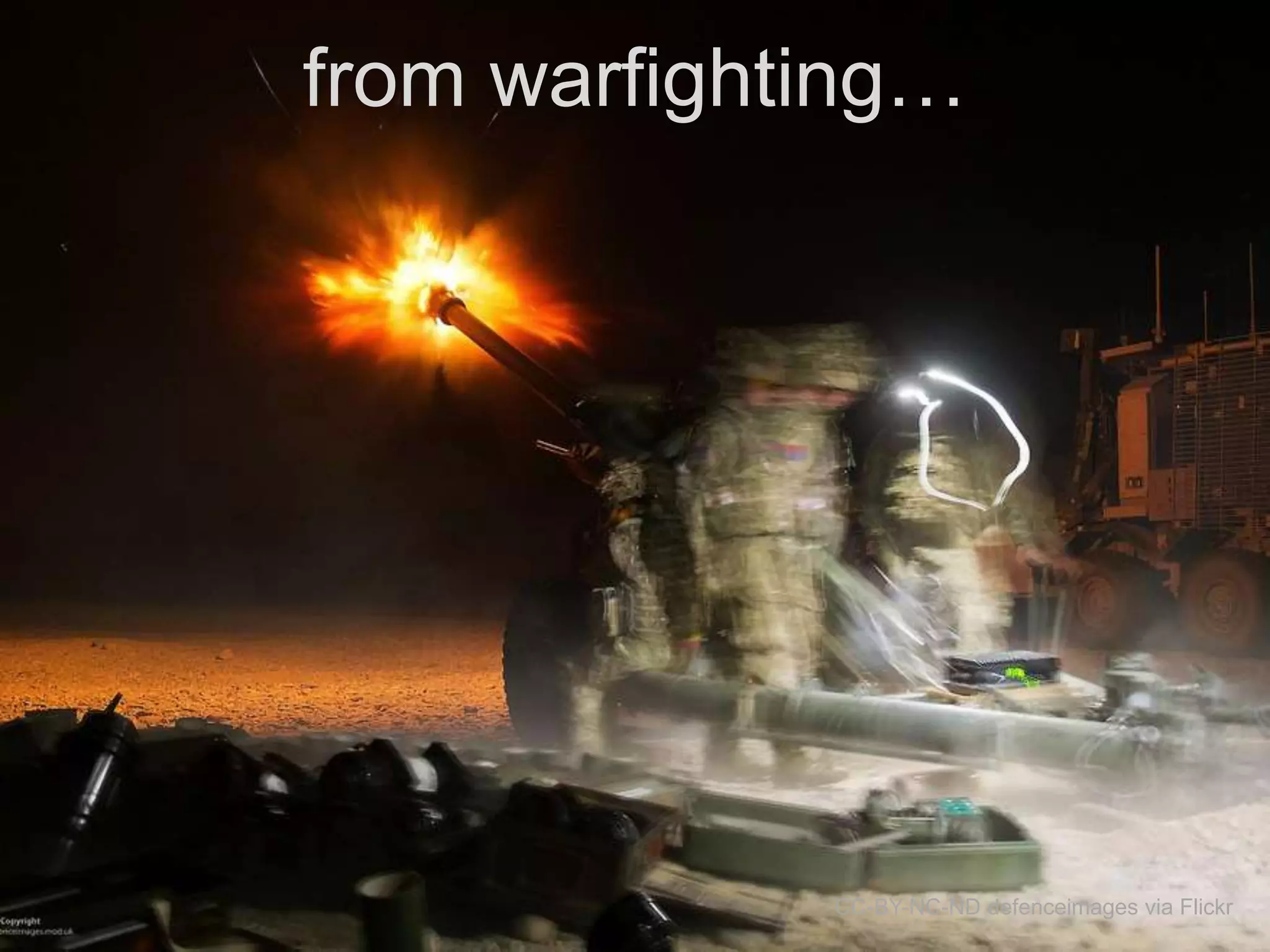
from warfighting…
CC-BY-NC-ND defenceimages via Flickr
counter-
insurgency…
CC-BY-NC-ND defenceimages via Flickr
peacekeeping…
CC-BY-NC-ND un_photo via Flickr
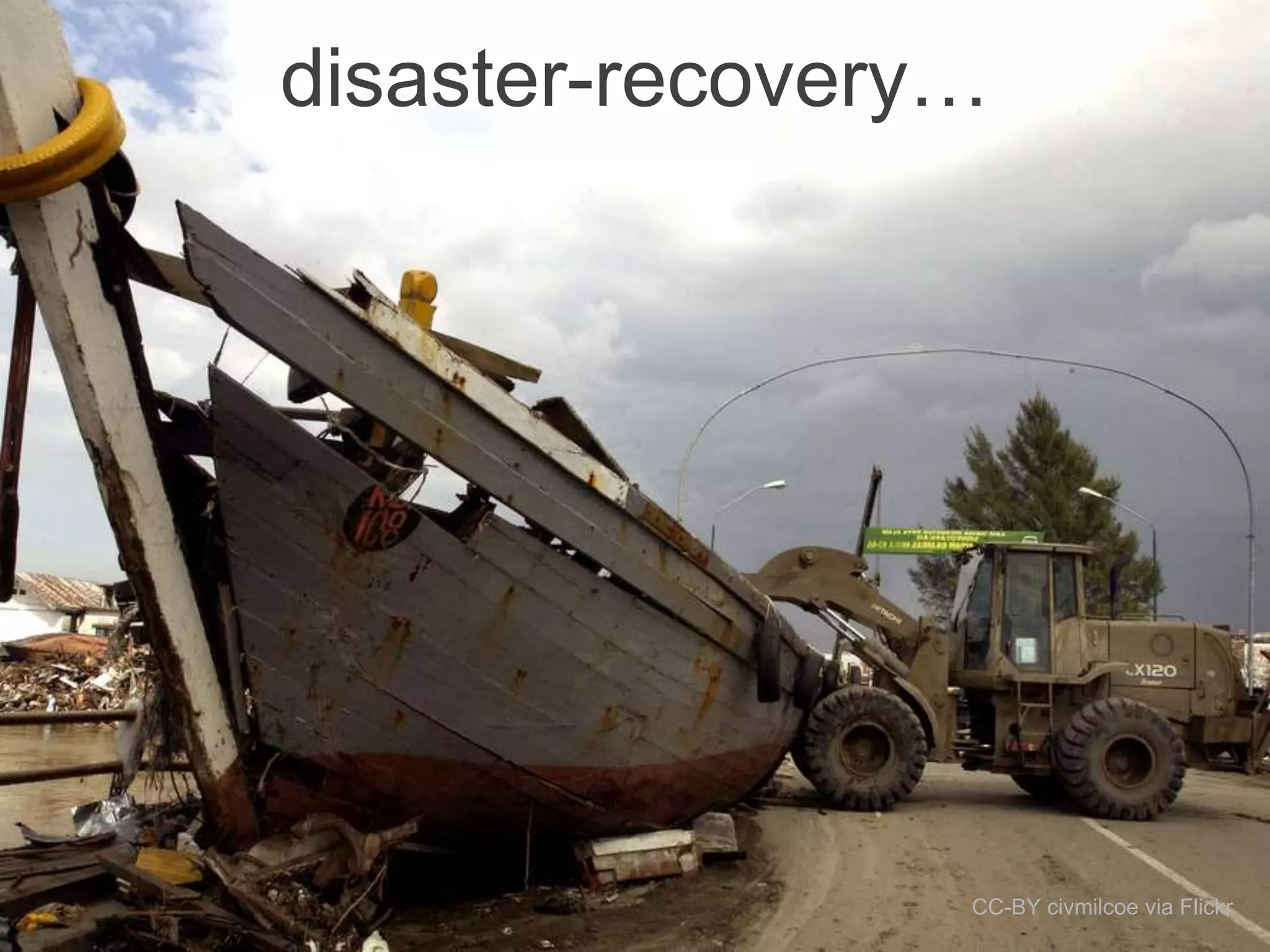
disaster-recovery…
CC-BY civmilcoe via Flickr
disaster-relief…
CC-BY dvids via Flickr
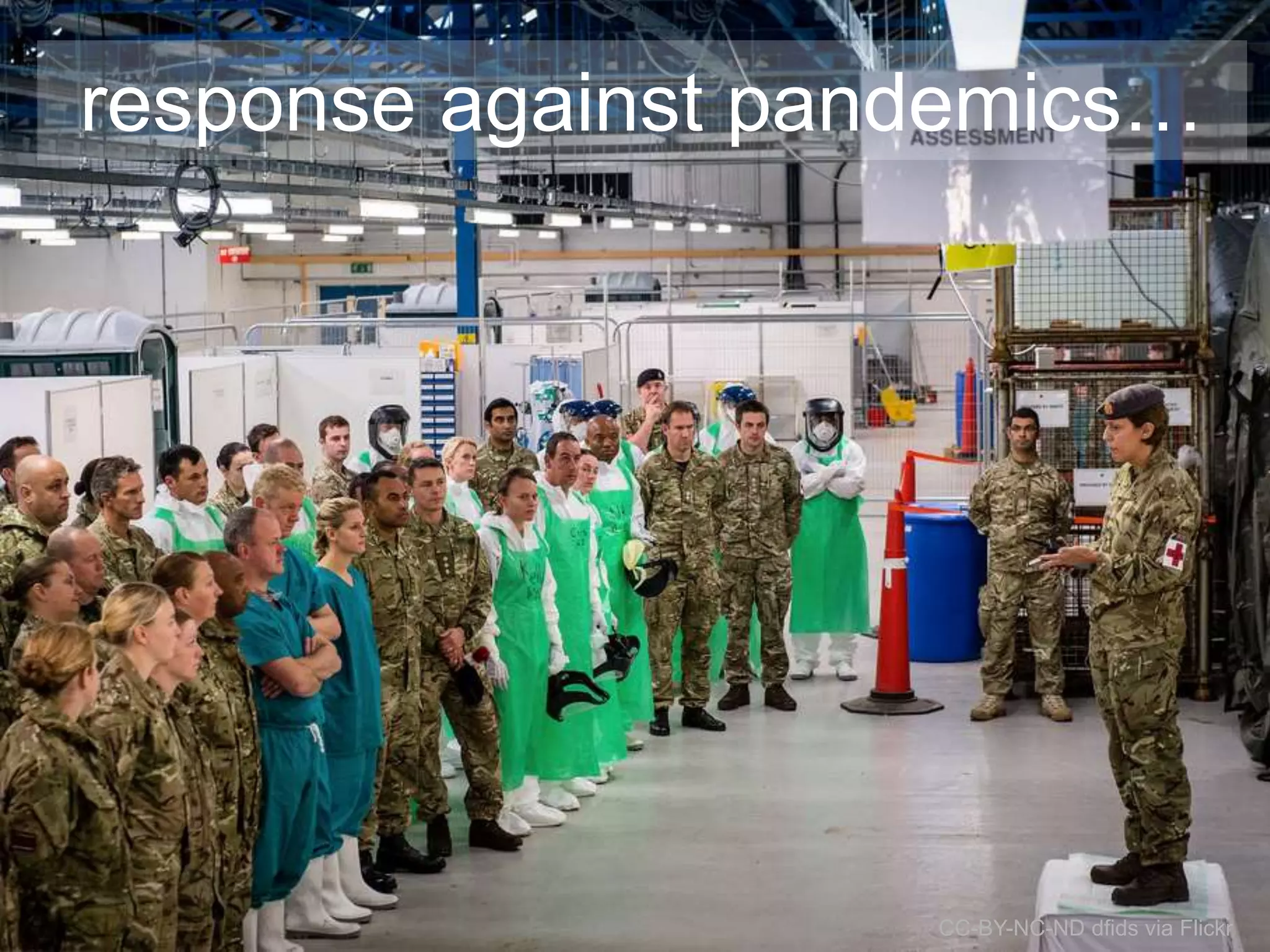
response against pandemics…
CC-BY-NC-ND dfids via Flickr
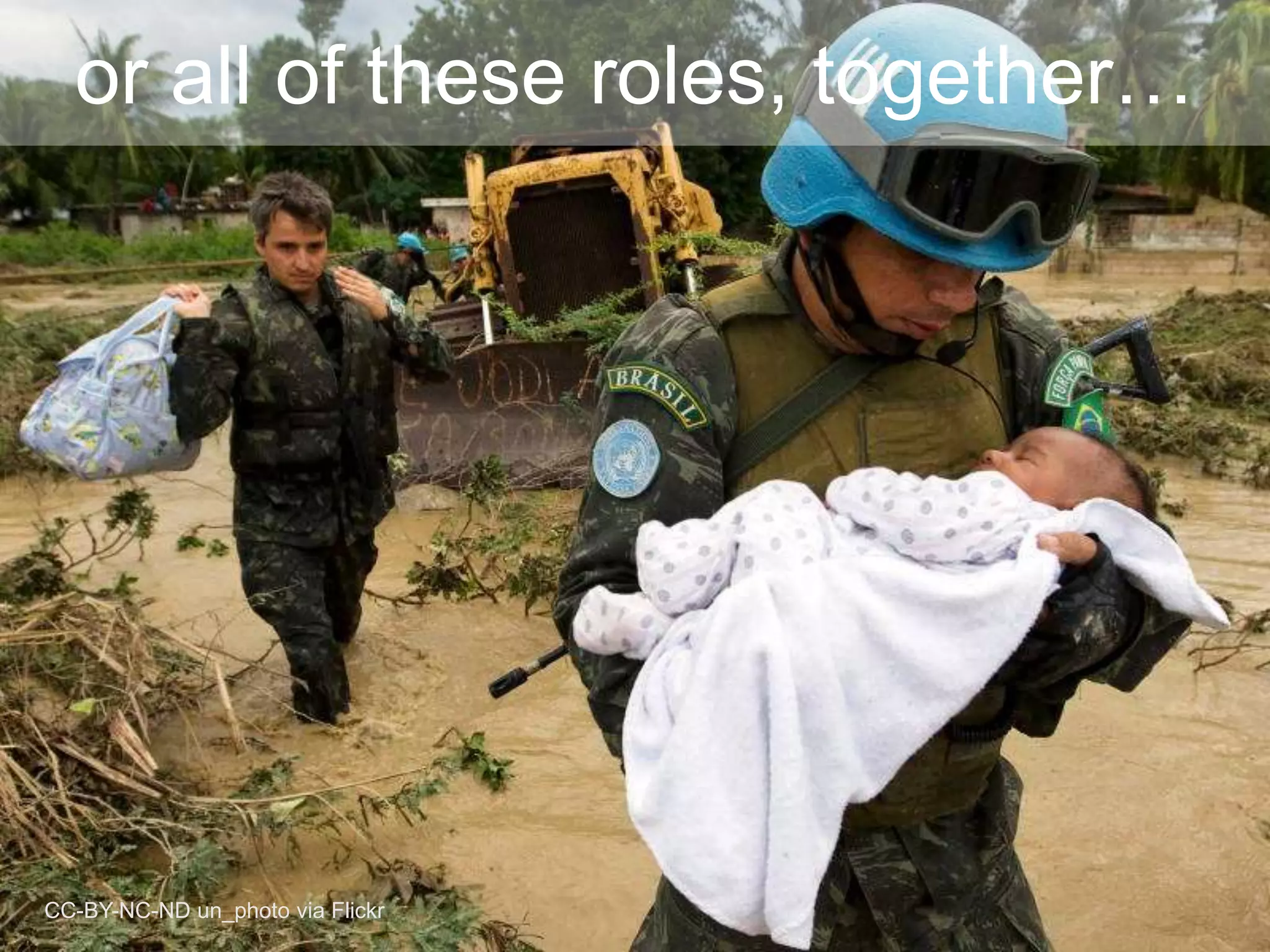
or all of these roles, together…
CC-BY-NC-ND un_photo via Flickr
…and all of those interactions
with others, including…
other armed-forces, civil authorities,
health-workers, border-agencies,
environment-agencies, NGOs
and many more…
And we also have our own
internal forces
towards fragmentation…
Complexity and uncertainty…
CC-BY jurvetson via Flickr
no ‘The Life and Opinions of Tristram Shandy, Gentleman’
St James Theatre, ‘Tristram Shandy’
mismatches between theory…
Brickmania via Google Image Search
CC-BY-NC VAGuardPAO via Flickr
…and real-world practice
an inability to understand…
…that information about a thing
is not the same as the thing itself?
silo-thinking…
CC-BY-SA kickize via Flickr
(the other silo-thinking…)
CC-BY-SA jurvetson via Flickr
unchecked assumptions…
CC-BY morten812 via Flickr
(Maginot Line…)
back-to-front business-models…
profit
(monetary only)
value-flow
('how',
'with-what')
values
('why')
supplier
relations
value-
proposition
purchase
supplier
channels
product
value-
creation
sales
customer
channels
customer
relations
cost
value-
outlay
management
value-
governance
revenue
value-
return
supplier customer
owner
future future
present present
past past
investment dividend
management
value-
governance
none
('making money' is the only
acknowledged 'value')
(classic Taylorist top-down management-metaphors
won’t fit well to the needs of most modern contexts…)
misplaced ‘efficiency’…
(people and enterprises are not machines…)
CC-BY Todd Hudson via Flickr
misplaced attempts at ‘control’…
CC-BY-ND archeon via Flickr
(targets always create perverse-incentives…)
communication gaps…
NOW!
before
certain uncertain
PLAN
POSIWID
muddled chaos…
‘inexplicable’ political impacts
(garbled
simplification)
(garbled
simplification)
(imaginary world
of sanitised info)
fingerspitzengefühl
(realities)
auftragstaktik
(guidance)
and bureaucracy…
CC-BY striatic via Flickr
more bureaucracy…
CC-BY Christian Schnettelker via Flickr www.manoftaste.de
and cluelessness…
CC-BY duncanh1 via Flickr
Which we could summarise as:
- trying to control
that which is not controllable
- inability to keep track
of what is sort-of controllable
- persistent failure
to understand the difference…
Linked to all of this,
another cause of problems is
poor sensemaking discipline
across the overall context.
For example…
Technology-adoption lifecycle
(Everett Rogers et al, crossmapped to reversed SCAN frame)
“Crossing the Chasm”
(Geoffrey Moore, “Crossing the Chasm”, 1991)
‘The Big Scary Chasm’
(between Early Adopters
and Early Majority)
(invention) (towards end of useful life)
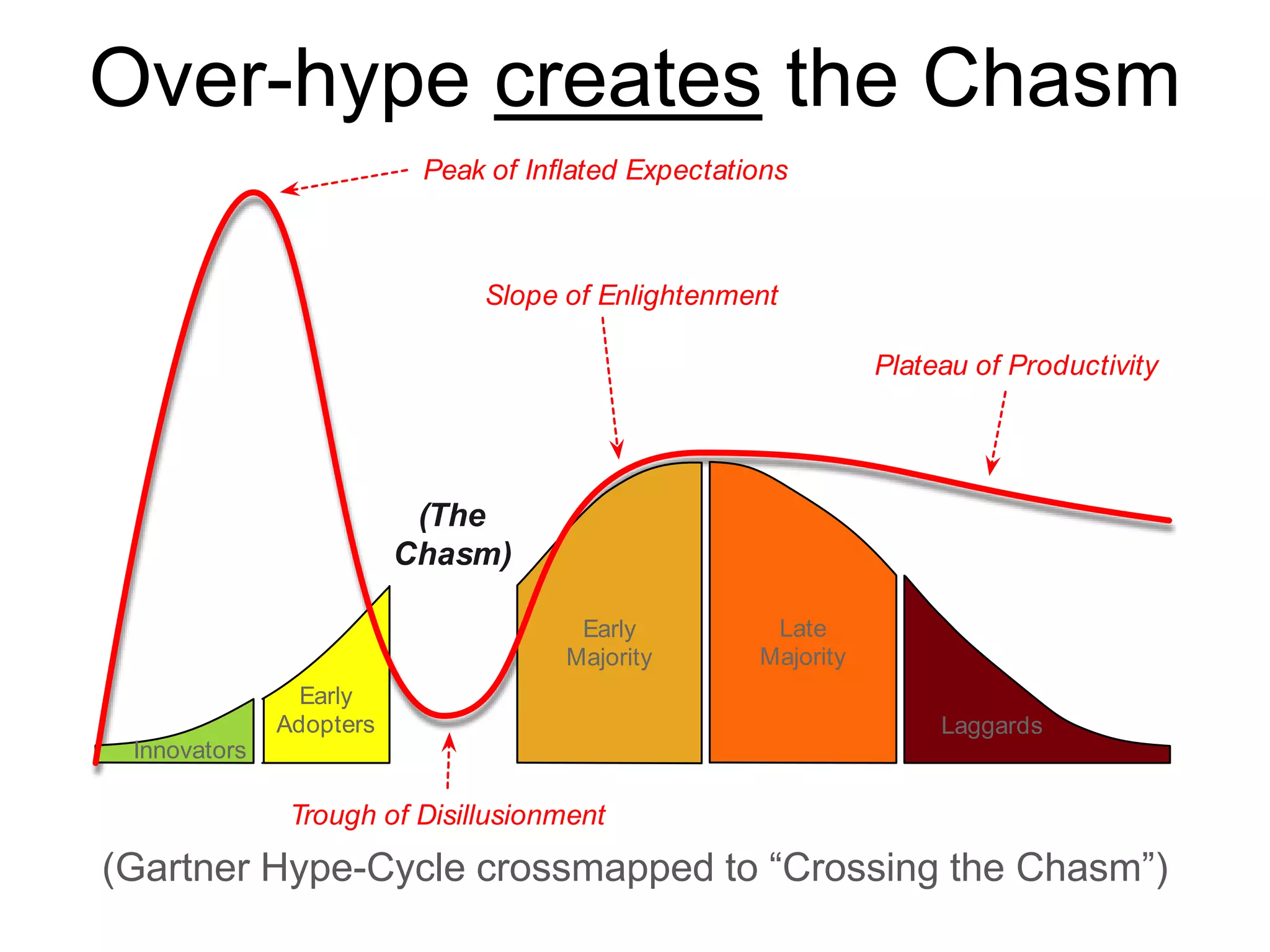
Over-hype creates the Chasm
(Gartner Hype-Cycle crossmapped to “Crossing the Chasm”)
Laggards
Late
Majority
Early
Majority
Early
Adopters
Innovators
Peak of Inflated Expectations
Trough of Disillusionment
Plateau of Productivity
Slope of Enlightenment
(The
Chasm)
Big-consultancies and big-vendors
rush to the rescue!
“We have a solution for you!
- a bridge across the Chasm!”
“(It’s proprietary, of course.)”
Laggards
Late
Majority
Early
Majority
Early
Adopters
Innovators
Big-consultancy
bridge
Peak of Inflated Expectations
Trough of Disillusionment
Plateau of Productivity
Slope of Enlightenment
(The
Chasm)
Bridging across the Chasm
(‘solving’ a problem caused by their own over-hype?)
“Our clients demand a future
that is fully proven.”
(direct paraphrase from quote by big-consultancy principal)
Delusions of certainty:
The vendors’ ‘solution’…
(…of which at times almost none is really true…)
“we are the
innovators”
“uncertainty
does not exist”
“fully proven
future”
“ahead of the
competition”
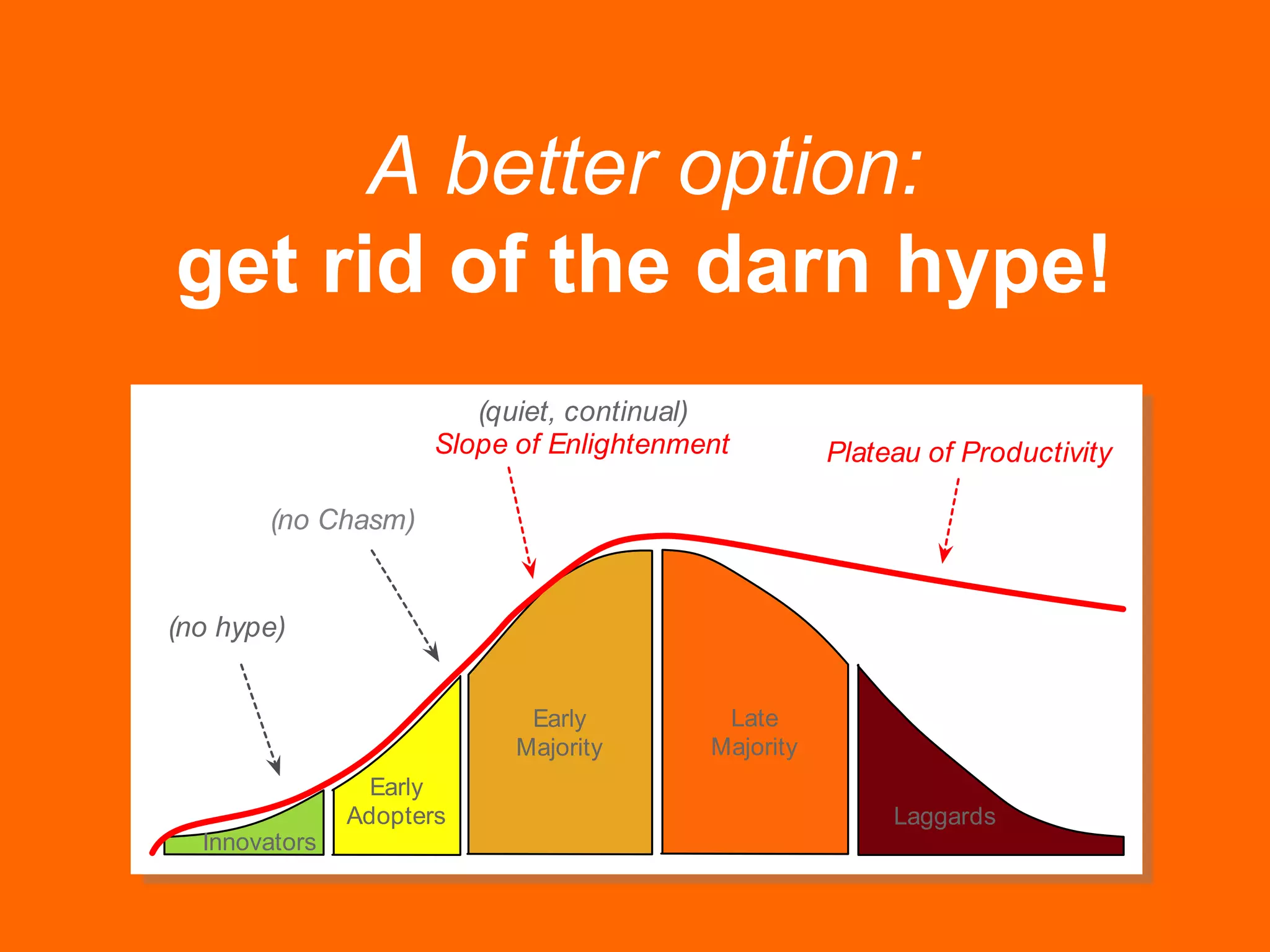
A better option:
get rid of the darn hype!
Laggards
Late
Majority
Early
Majority
Early
Adopters
Innovators
Plateau of Productivity
(quiet, continual)
Slope of Enlightenment
(no Chasm)
(no hype)
What can we do about this,
in practice?
Answer: it all depends on
CC-BY grotuk via Flickr
(as seen in this kind of discipline…)
CC-BY-ND oldschoolrocker via Flickr
(or this kind of discipline…)
CC-BY eschipul via Flickr
CC-BY-SA hernanpc via Flickr
(or this discipline, if you prefer…)
Behind each discipline,
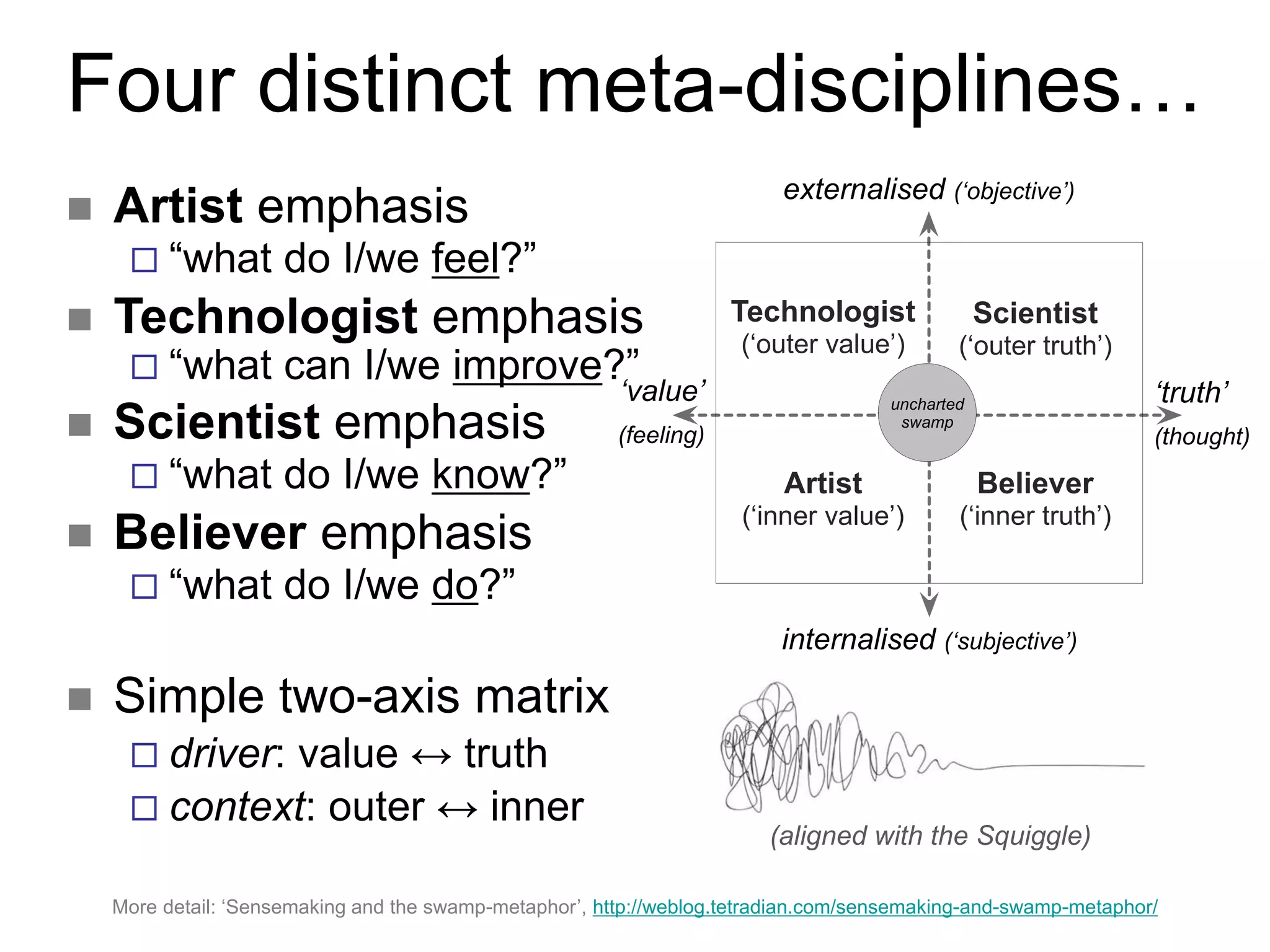
what we most need here are
four distinct meta-disciplines…
‘truth’
(thought)
‘value’
(feeling)
internalised (‘subjective’)
externalised (‘objective’)
Four distinct meta-disciplines…
More detail: ‘Sensemaking and the swamp-metaphor’, http://weblog.tetradian.com/sensemaking-and-swamp-metaphor/
Technologist
(‘outer value’)
Scientist
(‘outer truth’)
Artist
(‘inner value’)
Believer
(‘inner truth’)
uncharted
swamp
Four distinct meta-disciplines…
• sense (Artist)
• make-sense (Technologist)
• decide (Scientist)
• act (Believer)
recursively, fractally, indefinitely…
weave through, around, between each other
Four distinct meta-disciplines…
 Artist emphasis
 “what do I/we feel?”
 Technologist emphasis
 “what can I/we improve?”
 Scientist emphasis
 “what do I/we know?”
 Believer emphasis
 “what do I/we do?”
 Simple two-axis matrix
 driver: value ↔ truth
 context: outer ↔ inner
More detail: ‘Sensemaking and the swamp-metaphor’, http://weblog.tetradian.com/sensemaking-and-swamp-metaphor/
‘truth’
(thought)
‘value’
(feeling)
internalised (‘subjective’)
externalised (‘objective’)
Artist
(‘inner value’)
Scientist
(‘outer truth’)
Believer
(‘inner truth’)
Technologist
(‘outer value’)
uncharted
swamp
(aligned with the Squiggle)
‘truth’
(thought)
‘value’
(feeling)
internalised (‘subjective’)
externalised (‘objective’)
Artist
(‘inner value’)
Scientist
(‘outer truth’)
Believer
(‘inner truth’)
Technologist
(‘outer value’)
uncharted
swamp
…with distinct modes and roles
 Artist mode
 new ideas, experiences
 Technologist mode
 tools for practical use
 Scientist mode
 clarity, consistency
 Believer mode
 meaning, certainty, action
 Don’t play ‘mix and match’!
 modes are different and distinct
More detail: ‘Sensemaking – modes and disciplines’, http://weblog.tetradian.com/sensemaking-modes-and-disciplines/
 Modes support each other
 idea, hypothesis, theory, law
These meta-disciplines
represent abstract-modes,
not individual people.
To emphasise this,
we’ll use old-fashioned images here
to denote the respective modes.
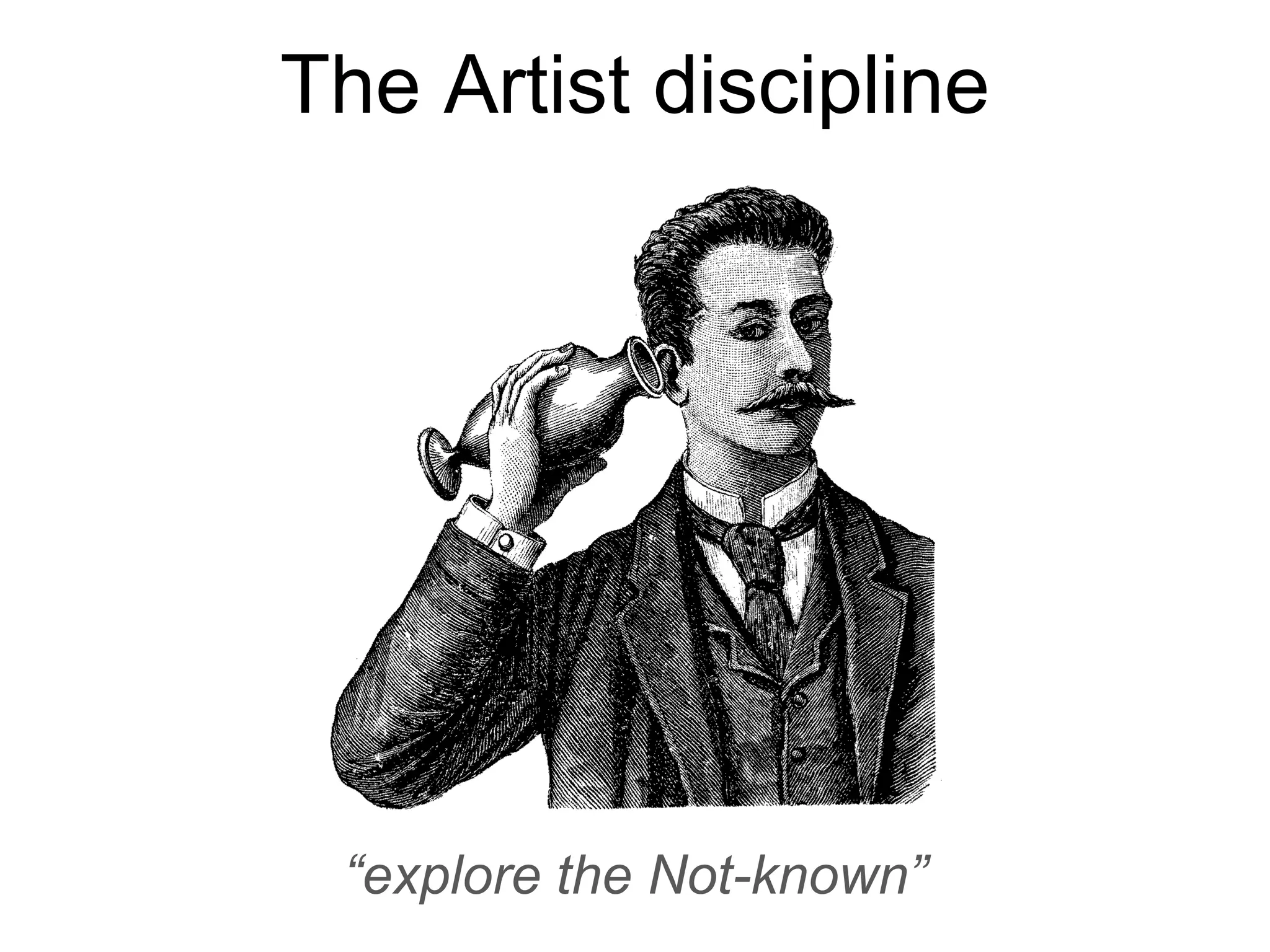
The Artist discipline
“explore the Not-known”
Role is ... to notice, to pay attention, to elicit
new ideas, new information, new experiences
Manages ... that which is inherently unique,
one-off, with no apparent connection to
anything else
Responds via ... a sense of inner value,
whatever feels right in the moment
Action-loop via …
‘do or not-do’ → sense → reflect/review
The Artist discipline
More detail: ‘Sensemaking – modes and disciplines’, http://weblog.tetradian.com/sensemaking-modes-and-disciplines/
Rules of the Artist discipline
‘Anything goes’ – there is no right or wrong
The feeling or response is its own truth:
it is what it is
The response exists only in the moment – if we
try to hold onto it, it will disappear
The response must be ‘real-ised’ in some form
of expression, usually in the moment
The response is personal – it does not
necessarily ‘mean’ anything, it just is
More detail: ‘Sensemaking – modes and disciplines’, http://weblog.tetradian.com/sensemaking-modes-and-disciplines/
“This means...”, “This proves...”
[blurring Artist with Scientist or Believer]
“This has no purpose”, “This feeling is wrong”
[blurring Artist with Technologist or Believer]
“I should not feel this...”, “I ought to feel...”
[blurring Artist with Believer, or overdose of ego]
“The feeling I had here last time was…”
[blurring Artist with Scientist]
Signs of dubious Artist discipline
More detail: ‘Sensemaking – modes and disciplines’, http://weblog.tetradian.com/sensemaking-modes-and-disciplines/
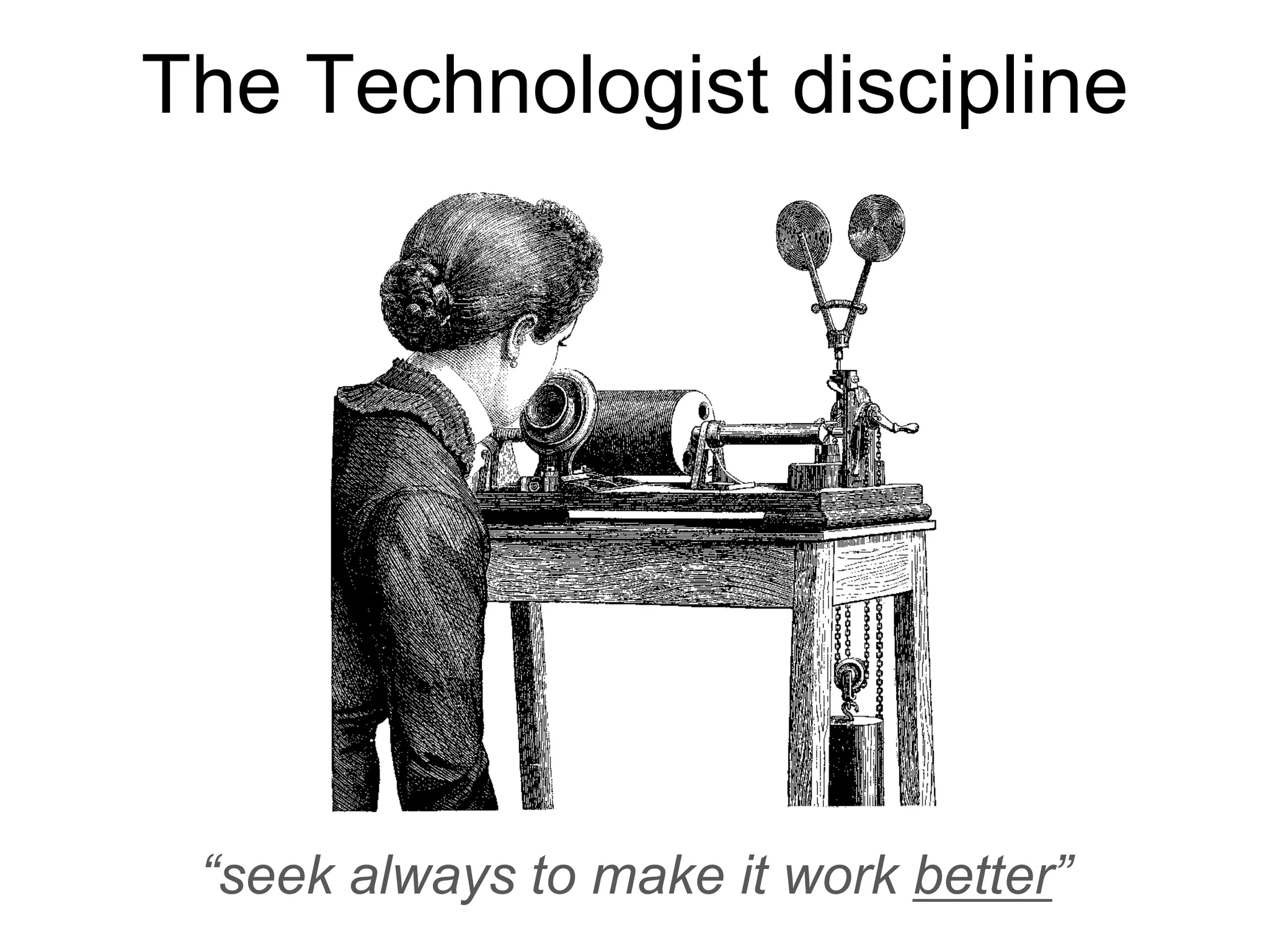
The Technologist discipline
“seek always to make it work better”
Role is ... to use, and to question use
and usefulness
Manages ... that which is inherently ambiguous
– uncertain, requiring adaptation, with cause-
and-effect often identifiable only in retrospect
Responds via ... a sense of outer value,
experimenting to find what feels appropriate
Action-loop via …
experiment → sense → evaluate
The Technologist discipline
More detail: ‘Sensemaking – modes and disciplines’, http://weblog.tetradian.com/sensemaking-modes-and-disciplines/
There is no ‘truth’ – only usefulness or not-
usefulness
Beliefs, feelings, objects, facts, everything is a
tool to a purpose
‘As above, so below’ – everything contains
everything else; reality is fractal, recursive
Emphasis on effectiveness, and on value
Ethics and integrity take priority over ‘truth’ –
rule of personal responsibility for actions
Rules of Technologist discipline
More detail: ‘Sensemaking – modes and disciplines’, http://weblog.tetradian.com/sensemaking-modes-and-disciplines/
“The way to do it is...”
[blurring Technologist with Believer or Scientist]
“It’ll be the same as last time...”
[blurring Technologist with Scientist]
“The end justifies the means...”
[allowing Believer ‘truth’ to override value-assessment]
“Get the job out the door, any old way will do”
[weak handling of values trade-offs, also failure to bridge
to Scientist and Artist to aid in improving quality]
Dubious Technologist discipline
More detail: ‘Sensemaking – modes and disciplines’, http://weblog.tetradian.com/sensemaking-modes-and-disciplines/
The Scientist discipline
“ensure consistency and certainty”
Role is ... to verify the truth of things in relation
to others
Manages ... that which is inherently certain or
‘knowable’ – everything interlinked through
complicated chains of cause-and-effect
Responds via ... a sense of outer truth,
measuring, monitoring, assessing factors that
make up chains of relationship
Action-loop via ...
enquire → sense → analyse/assess
The Scientist discipline
More detail: ‘Sensemaking – modes and disciplines’, http://weblog.tetradian.com/sensemaking-modes-and-disciplines/
Rules of Scientist discipline
Only facts are real – opinion is permitted only
where vetted and verified by peer-review
Everything must be anchored in facts,
in turn anchored in shared standards
Proof depends on repeatability by others
Things are true only if verified in formal logic
All parameters must be defined and declared
Experiments should change only one parameter
at a time
More detail: ‘Sensemaking – modes and disciplines’, http://weblog.tetradian.com/sensemaking-modes-and-disciplines/
Emotional attachment to any supposed ‘fact’
[blurring Scientist with other modes, usually the Believer]
“Must be...”, “It’s obvious...”, “Of course...”
[failure to bridge to Artist or Technologist
to cross-check for ‘logic-holes’]
“The exception proves the rule...”
[blurring Scientist formal-logic with Technologist heuristics]
“The only possible truth...”
[blurring Scientist analysis with Believer ‘The Truth’]
Dubious Scientist discipline
More detail: ‘Sensemaking – modes and disciplines’, http://weblog.tetradian.com/sensemaking-modes-and-disciplines/
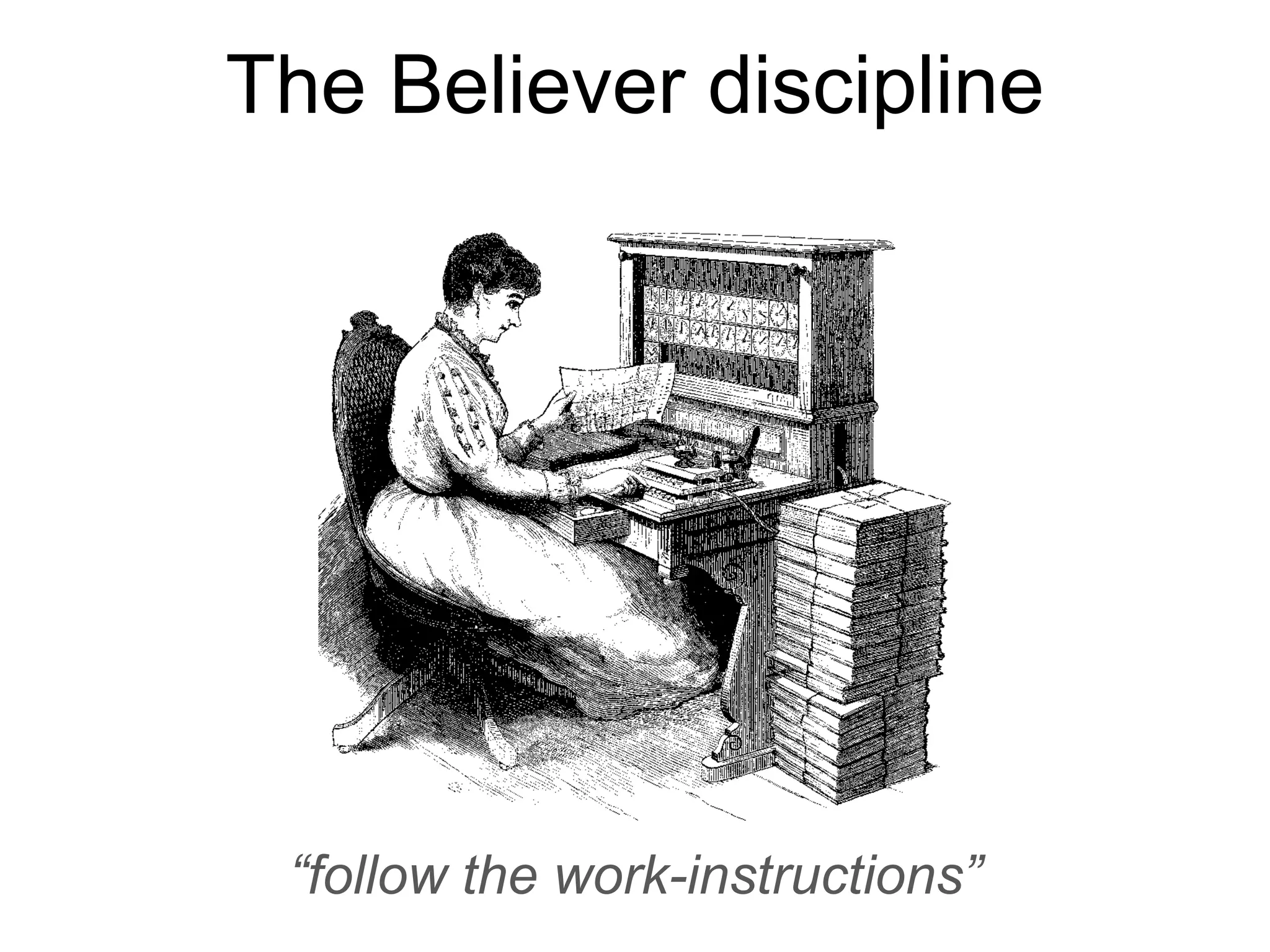
The Believer discipline
“follow the work-instructions”
Role is ... to focus, and to act, usually via and
in line with predetermined belief
Manages ... that which is inherently known –
delving ever deeper into the meaning of a
known ‘universal truth’
Responds via ... a sense of inner truth, acting
on a clear certainty of right and wrong
Action-loop via ...
sense → categorise → act/reflect
Believer discipline
More detail: ‘Sensemaking – modes and disciplines’, http://weblog.tetradian.com/sensemaking-modes-and-disciplines/
There is only one Truth
There are definite boundaries between true
and not-true, between right and wrong
Consistent focus on the one Truth will provide
all the answers needed
Belief is the force that holds everything
together – don’t doubt!
Rules of Believer discipline
More detail: ‘Sensemaking – modes and disciplines’, http://weblog.tetradian.com/sensemaking-modes-and-disciplines/
Dubious Believer discipline
“Is this the right way to [do this, be this]...?”
[getting lost in self-doubt]
“This is true for me, therefore true for all”
[blurring Believer (subjective) with Scientist (objective)]
“People of different beliefs are lesser worth”
[overdose of ego, also blurring Believer with Technologist
– using ‘truth’ for value-judgements]
“I am the Great One who causes change...”
[blurring Believer self-certainty with Technologist action]
More detail: ‘Sensemaking – modes and disciplines’, http://weblog.tetradian.com/sensemaking-modes-and-disciplines/
Move between disciplines,
continuously, with awareness
A discipline of integration
“the discipline of linking the disciplines together”
Know the role and function of each discipline
Each moment, know which discipline you’re in
– Artist, Technologist, Scientist, Believer
Use the discipline correctly,
following its own rules and decision-sequence
Bridge cleanly between the disciplines
Watch continually for warning-signs
of dubious discipline
A discipline of integration
More detail: ‘Sensemaking – modes and disciplines’, http://weblog.tetradian.com/sensemaking-modes-and-disciplines/
Disciplines link to each other…
…a distinct if implicit sequence within the
change-process – a discipline of disciplines
What happens if we don’t watch
the discipline?
A call to action!
We must stand firm against
the Seven Sins
of Dubious Discipline:
#1: The Hype Hubris
#2: The Golden-Age Game
#3: The Newage Nuisance
#4: The Meaning Mistake
#5: The Possession Problem
#6: The Reality Risk
#7: Lost in the Learning Labyrinth
More detail: ‘Seven sins of dubious discipline’, http://weblog.tetradian.com/seven-sins-of-dubious-discipline/
#1: The Hype Hubris
• “a triumph of marketing
over technical expertise“
• style becomes more
important than substance
• those who do the real work
are misused, derided,
plagiarised, then ignored
• relentless pursuit of
glamour – Cloud! Big-Data!
IoT! the Golden Age!
More detail: ‘Seven sins – 1: The Hype Hubris’, http://weblog.tetradian.com/seven-sins-1-the-hype-hubris/
#2: The Golden-Age Game
• “a bizarre blend of super-
science and super-belief”
• minimal evidence anywhere in
real-world cultural analogues
• psych drivers: nostalgia,
narcissism, hiraeth
• focus on the future or past to
evade realities of the present?
More detail: ‘Seven sins – 2: Golden-Age Game’, http://weblog.tetradian.com/seven-sins-2-the-golden-age-game/
#3: The Newage Nuisance
• “newage – it rhymes with ‘sewage’,
discarded remnant of what was once nutritious”
• dilettante ‘disneyfication’ of real issues
• psych: enthusiasm overrides sense, self-honesty
• arbitrary jumps between distinct forms of ‘truth’ in
art, science, technology and belief-systems
More detail: ‘Seven sins – 3: The Newage Nuisance’, http://weblog.tetradian.com/seven-sins-3-the-newage-nuisance/
#4: The Meaning Mistake
• “half-baked, overcooked
or just plain inedible”
• half-baked –
characteristic of newage
• overcooked –
characteristic of careless
practice or poor science
• inedible –
all too many examples in
these fields…
More detail: ‘Seven sins – 4: The Meaning Mistake’, http://weblog.tetradian.com/seven-sins-4-the-meaning-mistake/
#5: The Possession Problem
• “neither places nor
ideas are commodities
to be possessed”
• no separate domains –
it’s a continuum
• psych: a childish ‘mine!’
• deconstruction and
‘privileged’ worldviews
• what worldviews are
‘privileged’ in EA?
More detail: ‘Seven sins – 5: The Possession Problem’, http://weblog.tetradian.com/seven-sins-5-the-possession-problem/
• “not ‘real or imaginary’, but ‘real
and imaginary’ – both at the
same time”
• psych implications – reality as
anarchy, risks of panic
• Not-known is imaginary and
real – both the ‘good’ and ‘bad’
• real dangers – “like playing with
matches in a firework factory”
#6: The Reality Risk
More detail: ‘Seven sins – 6: The Reality Risk’, http://weblog.tetradian.com/seven-sins-6-the-reality-risk/
#7: Lost in the Learning Labyrinth
• “going round the bend”
• all skills-development
follows a predictable
pattern – but it’s not
linear
• there’s only one path, yet
many ways to get lost
• characteristic learning-
mistakes that can
lead to other ‘Sins of
Dubious Discipline’More detail: ‘Seven sins – 7: Lost in the Learning Labyrinth’, http://weblog.tetradian.com/seven-sins-7-lost-in-the-learning-labyrinth/
1: Survival
6: Mind
4: Caring
5: Communication
3: Control
2: Self
7: Meditation
8: Mastery
three New Age mistakes:
- ‘path of spirit’
- ‘beginner’s luck’
- ‘path of heart’
‘moment of despair’
(break out to failure)
opposite
directions,
but all going
inwards within
the labyrinth
The labyrinthine path to skill
More detail: ‘Seven sins – 7: Lost in the Learning Labyrinth’, http://weblog.tetradian.com/seven-sins-7-lost-in-the-learning-labyrinth/
What should we do about these?
• “respect the mystery,
yet keep it real”
• need to balance our
passion with care
and quiet discipline
• learn from the past to
apply in the present
• use all of the senses
– and a bit of
common-sense!
Get out of that armchair!
• Talk is pleasant, but we don’t learn anything new
• Dilettante flitting through domains gives shallow
appreciation, but not much depth
• Crucial details may
only be visible
in the field
Using the disciplines-set
within the change-process
Making the Squiggle our friend…
…also shows us which of the disciplines
to apply, where, when, and why
Squiggle is also recursive, fractal
We need toolsets that help us
make the Squiggle our friend
(which mostly they don’t…)
Most current ‘EA’-toolsets cover…
uncertain certain
…only the ‘easy bit’ of the EA space…
Typical scope of
‘Enterprise-Architecture’ tools
We can find various tools…
uncertain certain
…that sort-of cover the whole Squiggle…
…but they don’t link up together!
Disconnected tools / toolsets are a key cause
of fragmentation in EA, by dotting the joins
To help us make more sense of
the Squiggle, here’s a question:
Why is it that
so-called hard-skills
are (relatively) easy
yet so-called soft-skills
are so darned hard?
Soft-skills and the Squiggle…
Soft-skills are essential in managing human uncertainty, both intrapersonal
and interpersonal – such as we always have in new development
Soft-skills
are essential here
Hard-skills
are essential here
Balance needed here
between soft-skills and hard-skills
uncertain certain
We especially need soft-skills
to work with the human element
If we don’t have those soft-skills…
CC-BY-ND chatirygirl via Flickr
…we may rediscover that
‘stakeholder’ has an older,
more-worrying meaning…
We also need to tackle
the human-element early
– if we leave it too late,
we’ll also get into a fight…
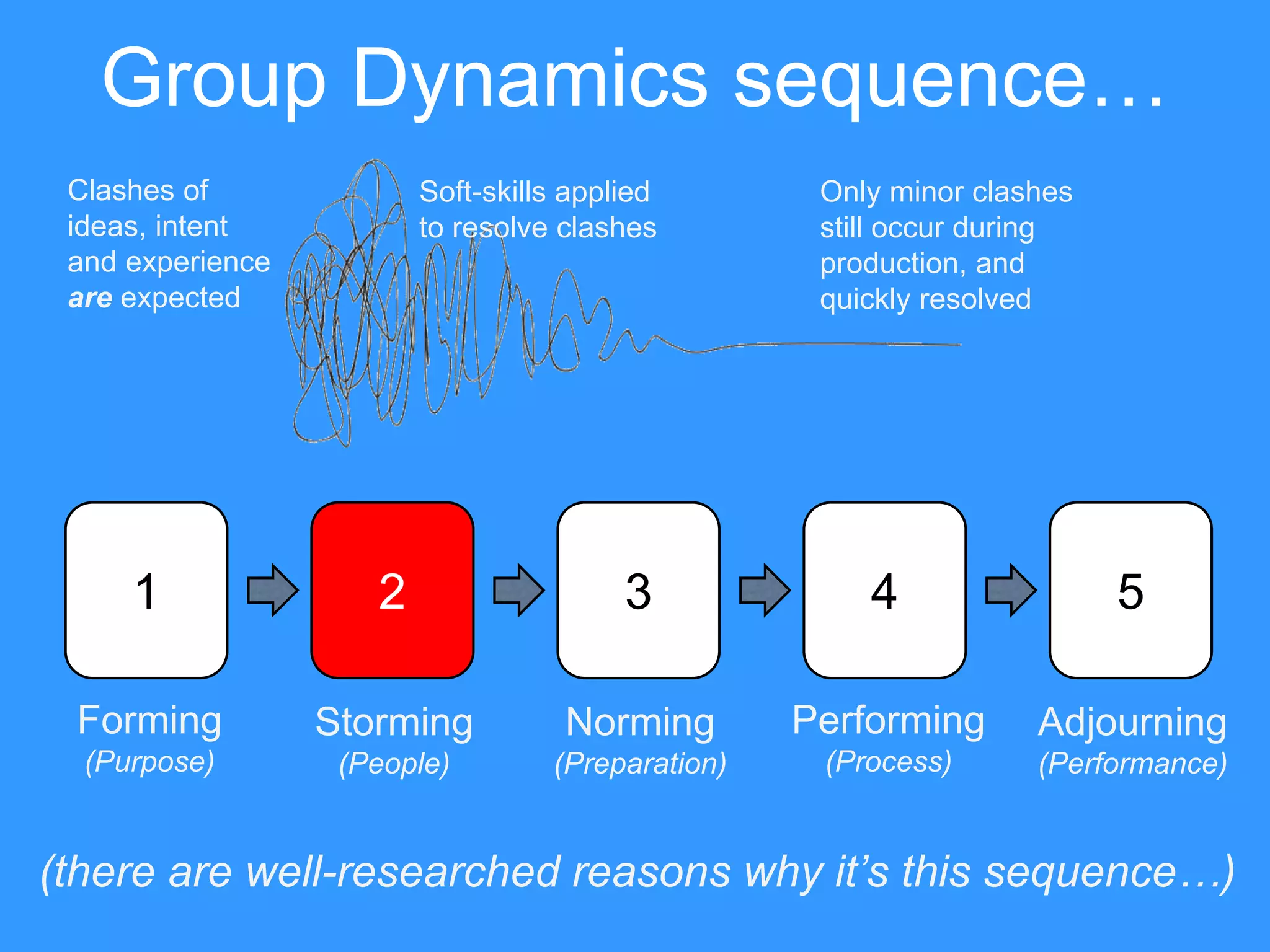
Group Dynamics sequence…
Forming
(Purpose)
1 2 3 4 5
Performing
(Process)
Storming
(People)
Norming
(Preparation)
Adjourning
(Performance)
(there are well-researched reasons why it’s this sequence…)
Clashes of
ideas, intent
and experience
are expected
Soft-skills applied
to resolve clashes
Only minor clashes
still occur during
production, and
quickly resolved
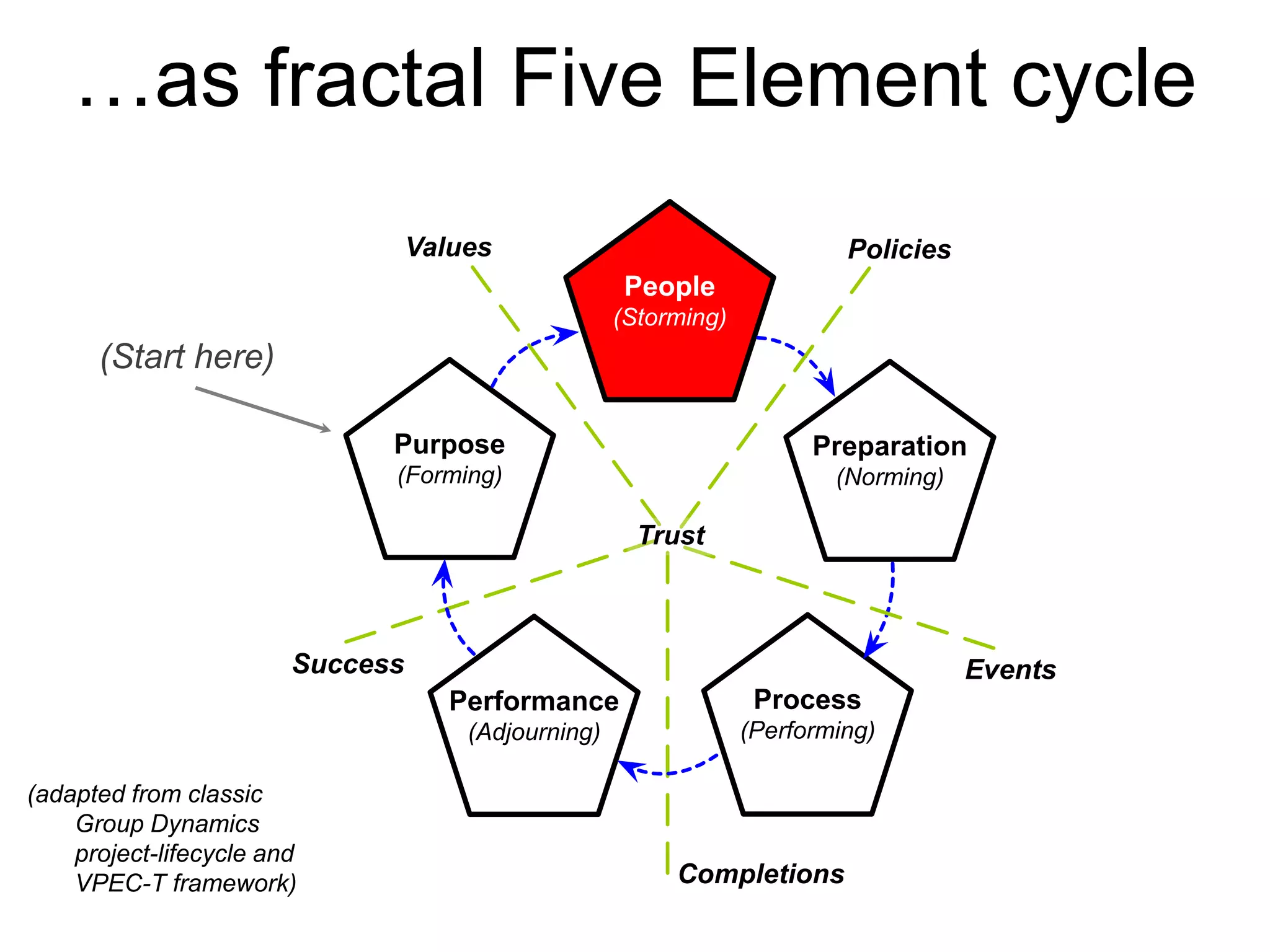
…as fractal Five Element cycle
(adapted from classic
Group Dynamics
project-lifecycle and
VPEC-T framework)
(Start here)
Purpose
(Forming)
People
(Storming)
Preparation
(Norming)
Process
(Performing)
Performance
(Adjourning)
Events
PoliciesValues
Completions
Success
Trust
What happens when we
try to skip the People-stuff,
and go straight to the plan?
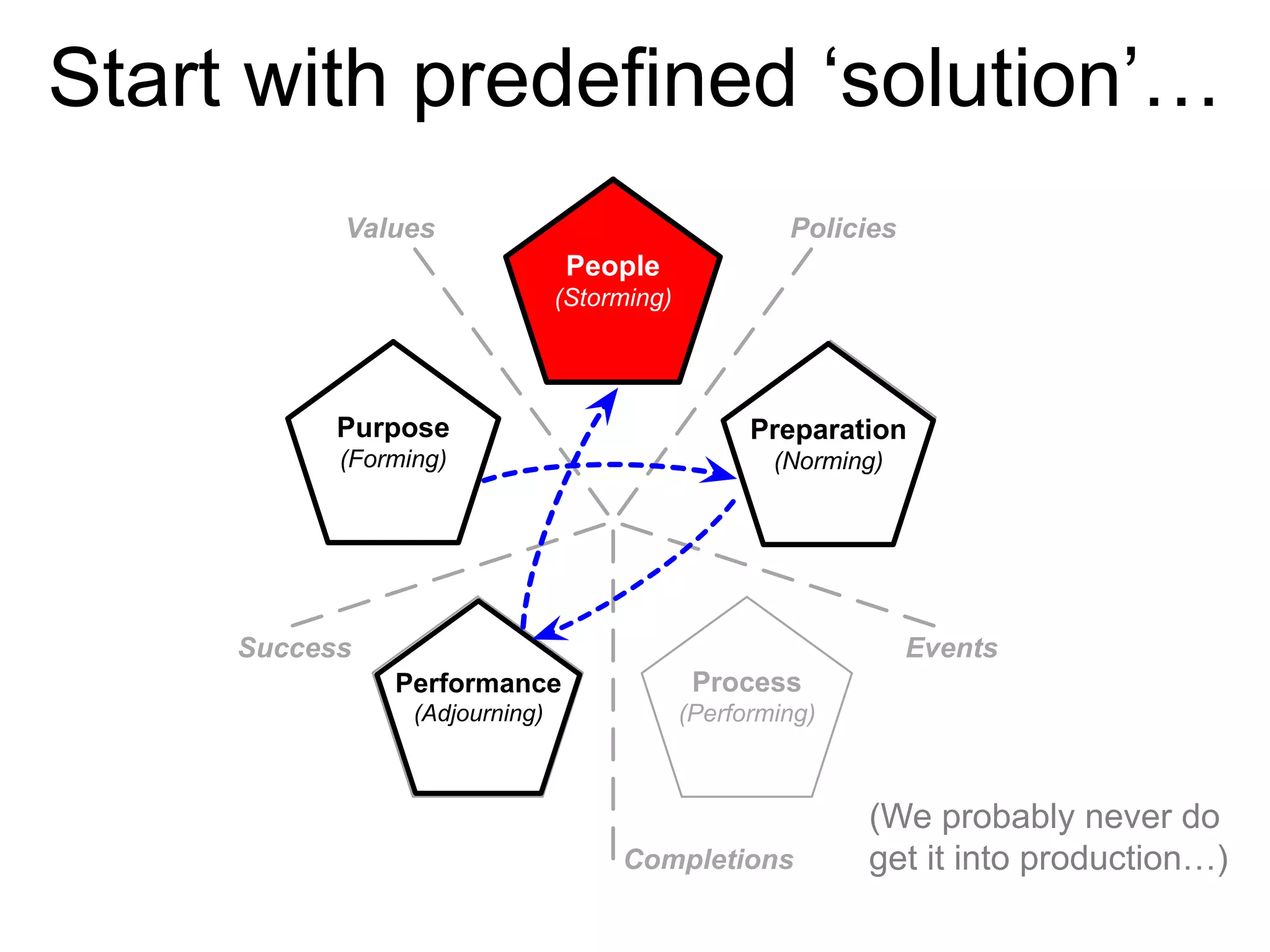
A common mistake:
Start with predefined ‘solution’…
Performance
(Adjourning)
Purpose
(Forming)
People
(Storming)
Preparation
(Norming)
Process
(Performing)
PoliciesValues
Events
Completions
Success
Purpose
(Forming)
Preparation
(Norming)
Performance
(Adjourning)
People
(Storming)
(We probably never do
get it into production…)
Start with predefined ‘solution’…
Forming
(Purpose)
1 3 5 2
Storming
(People)
Norming
(Preparation)
Adjourning
(Performance)
Clashes of
ideas, intent
and experience
are not
expected
Planning
collapses into
analysis-
paralysis…
…followed by
recriminations
and blame
about delay
FIGHT!
What happens when we
try to skip both People and Plan,
and go straight to Process action?
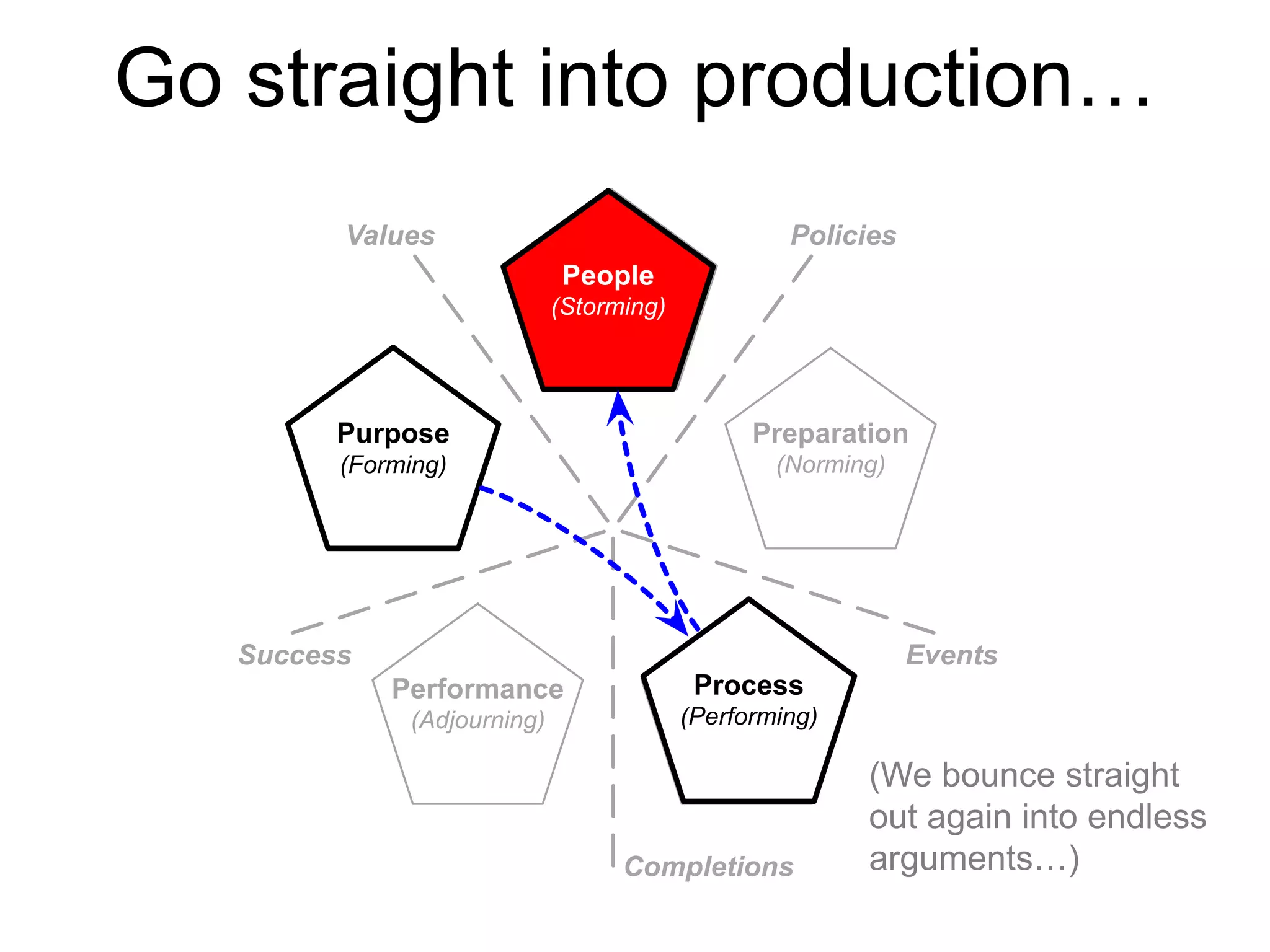
Another common mistake:
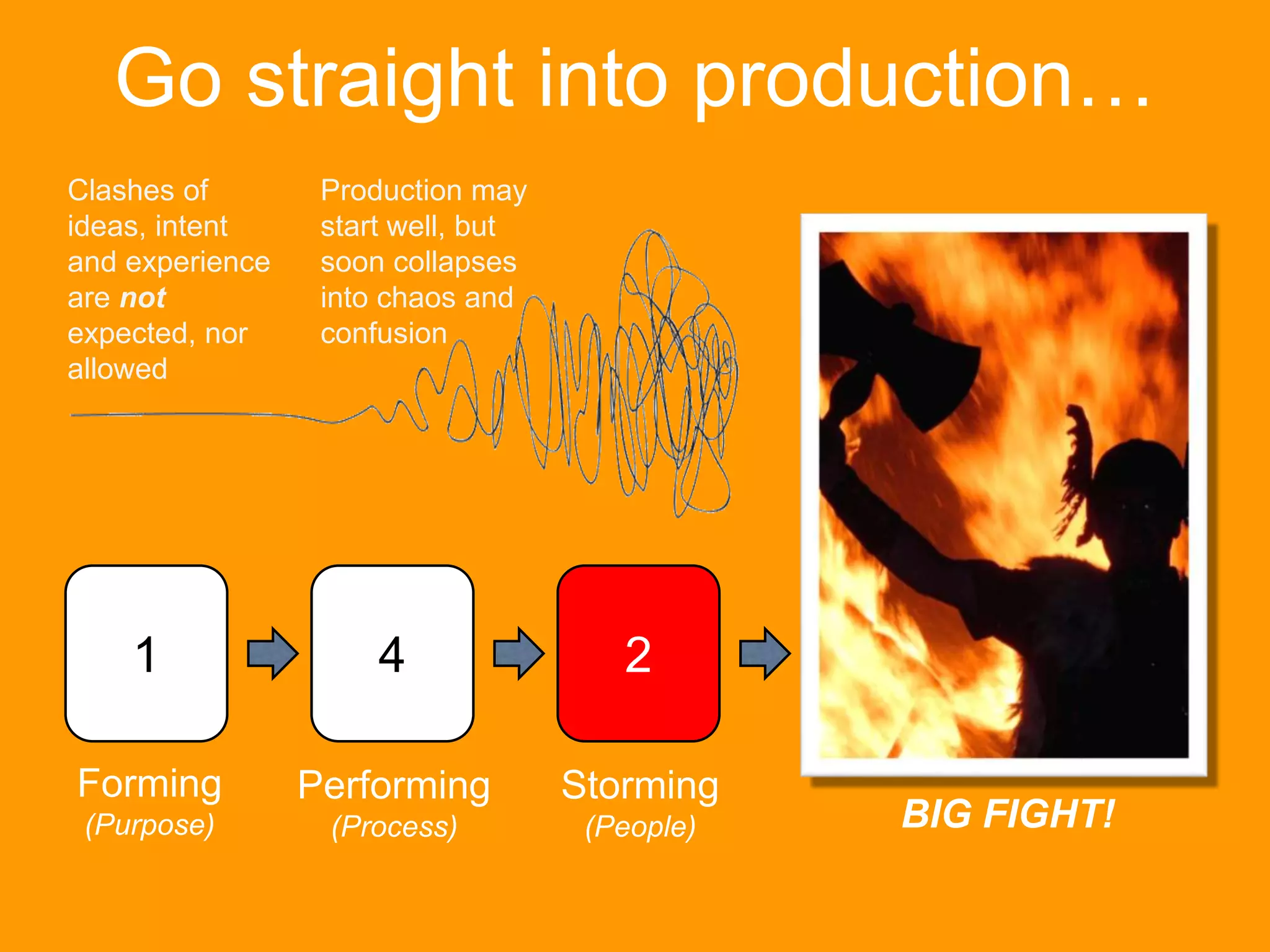
Go straight into production…
Performance
(Adjourning)
Purpose
(Forming)
People
(Storming)
Preparation
(Norming)
Process
(Performing)
PoliciesValues
Events
Completions
Success
Purpose
(Forming)
Process
(Performing)
People
(Storming)
(We bounce straight
out again into endless
arguments…)
Go straight into production…
Forming
(Purpose)
1 4 2
Performing
(Process)
Storming
(People)
Clashes of
ideas, intent
and experience
are not
expected, nor
allowed
Production may
start well, but
soon collapses
into chaos and
confusion
BIG FIGHT!
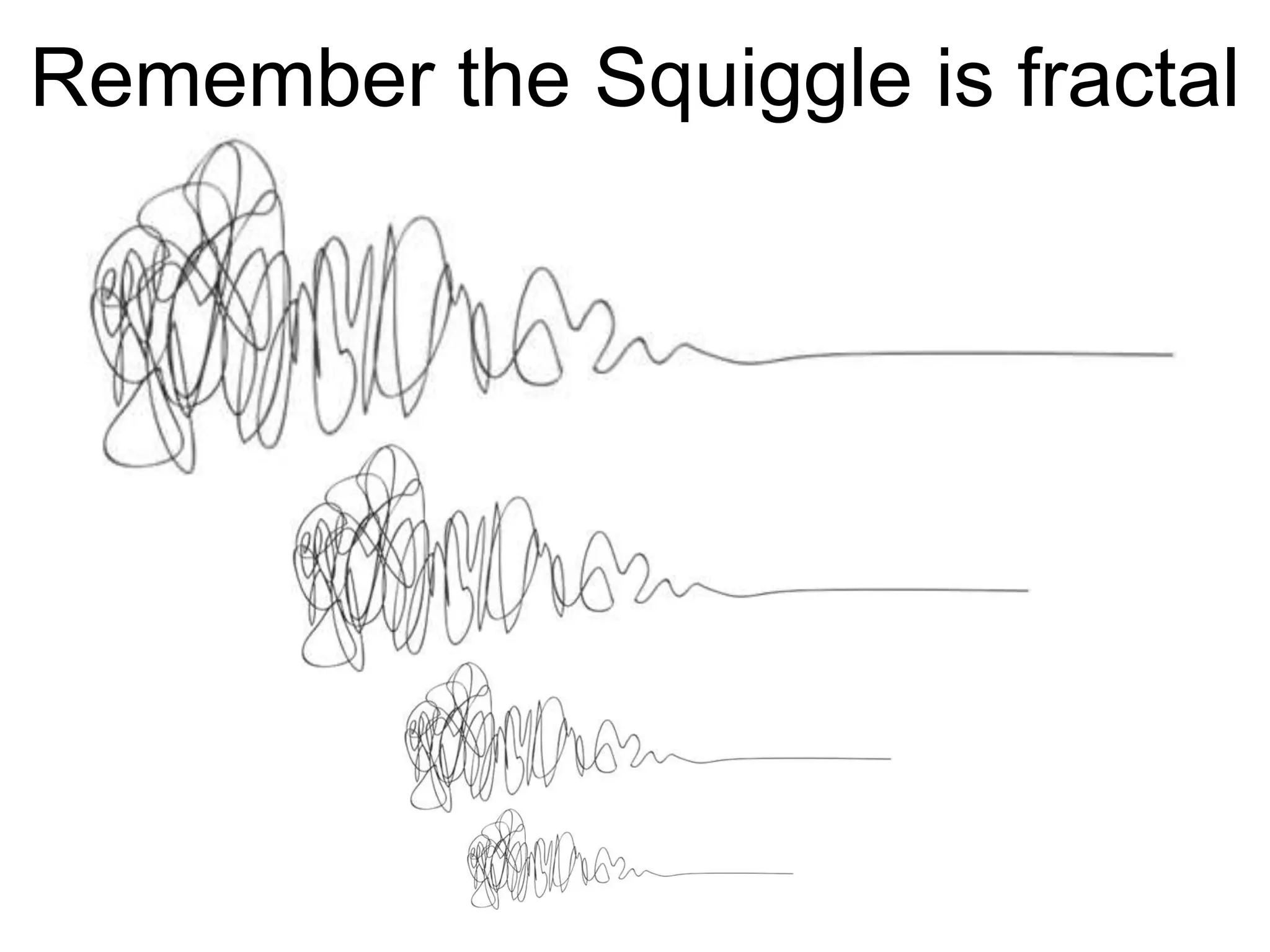
Remember the Squiggle is fractal
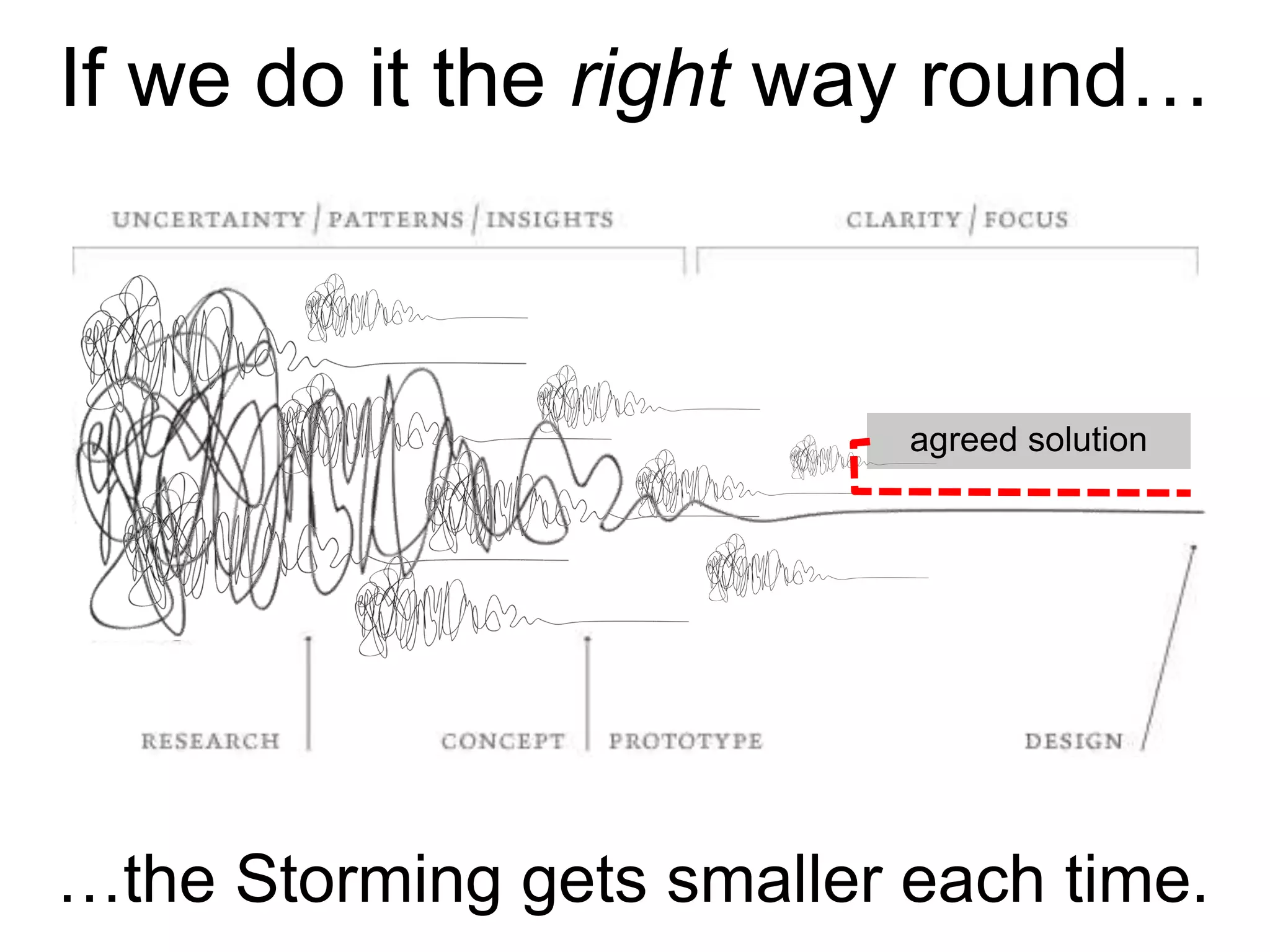
If we do it the right way round…
…the Storming gets smaller each time.
agreed solution
If we do it the wrong way round…
…the Storming gets worse and worse…
imposed ‘solution’
There’s a reason
we do it that way round,
in that Five Element sequence…
…don’t try to skip over
that Storming stage!
We also need tools that provide
an emphasis on ‘meta-’
– on context before content
“I never met a ‘meta-’
that I didn’t like”
…all of it fractal and recursive…
Tools for metadisciplines…
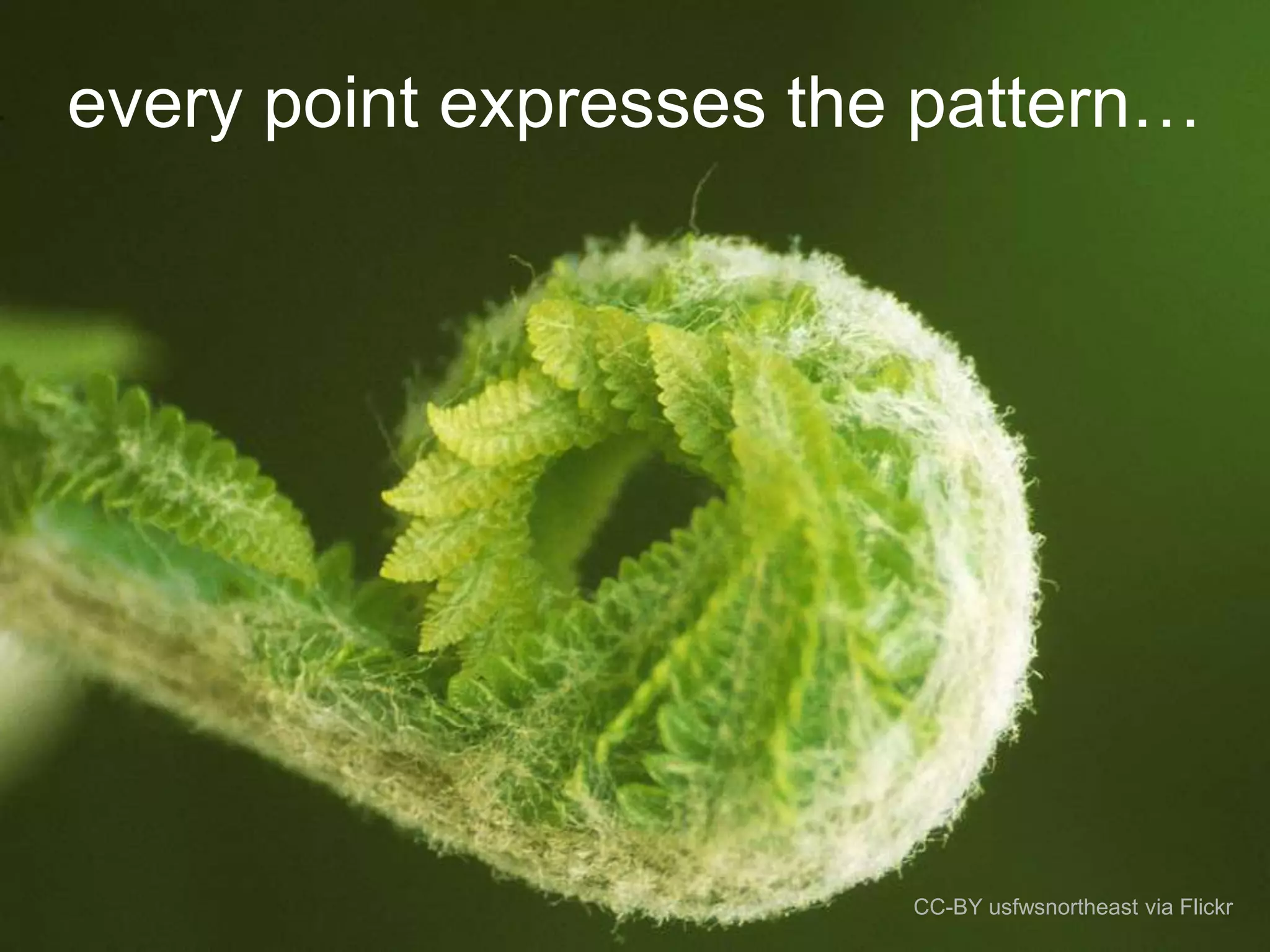
every point expresses the pattern…
CC-BY usfwsnortheast via Flickr
Some examples…
(okay, some of this is a bit of a sales-pitch,
but they’re all non-proprietary)
Whole-enterprise dimensions
Purpose
(clarity / 'Business')
Relations
(connection / 'People')
Stuff
(content / 'Technology')
Information
(context / 'Knowledge')
Integration
(rotate between
the views)
More detail: ‘Assets and services, http://weblog.tetradian.com/assets-and-services/
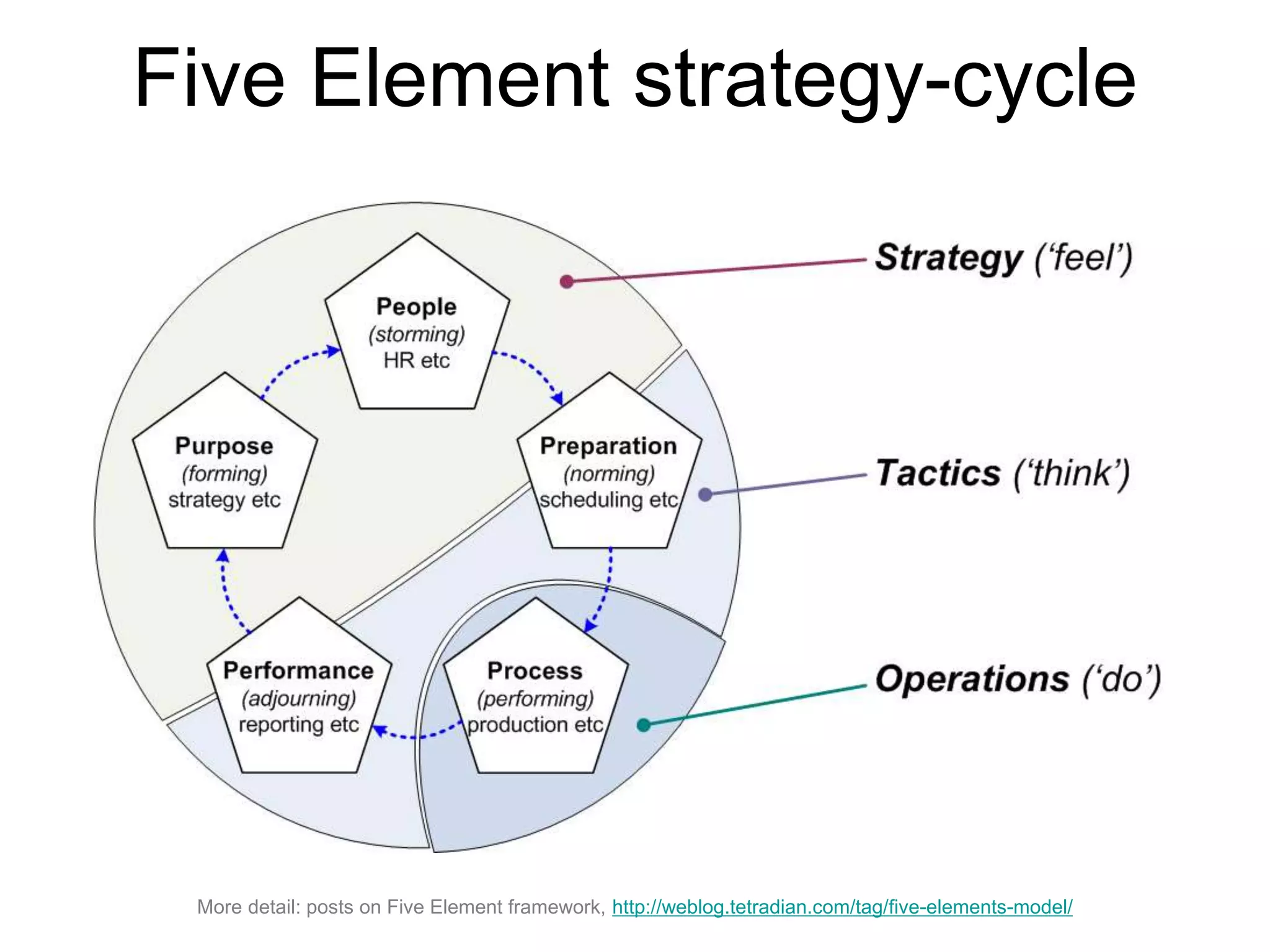
Five Element strategy-cycle
More detail: posts on Five Element framework, http://weblog.tetradian.com/tag/five-elements-model/
SCORE to assess strategy
outcomes within actionexternal worldinternal world
efficientreliable
elegant appropriate
integrated
strengths
(what we
already have)
responses
(expected from
the real-world)
challenges
(what we’d need
to work on)
options
(in the real-world)
core
question
services
support
capabilities-needed
opportunities / risks
rewards
restraints
constraints
effectiveness
(things work better,
together, on purpose)
More detail: ‘Using SCORE to reframe the business-model’, http://weblog.tetradian.com/using-score-to-reframe-the-business-model/
More detail: posts on SCAN framework, http://weblog.tetradian.com/tag/scan/
SCAN (and its feedback-loops)
NOW!
certain uncertain
‘Simple’
(ENACT)
‘Not-known’
(EXPLORE)
edge of
panic
fears
options
‘Complicated’
(EVALUATE)
‘Ambiguous’
(EXPERIMENT)
edge of
uncertainty
questions
answers
news
principles
edge of
innovationrealities
rules edge of
action
before
Backbone and edge
domain
CRM
product
catalogue
sales
process
backbone
person-
definition
business
standards
standard ops
procedures
edge
CRM
experiment
sales/
purchase
portal
Agile
product-dev
domain
ERP
facilities
mgmt
procurement
process
Agile-type
governance of
dependencies
Waterfall-type
governance of
dependencies
≈ “Town-Planners” ≈ “Settlers” ≈ “Pioneers”
(spectrum of ‘governance of governance’)
More detail: ‘Architecting the enterprise backbone’, http://weblog.tetradian.com/architecting-the-enterprise-backbone/
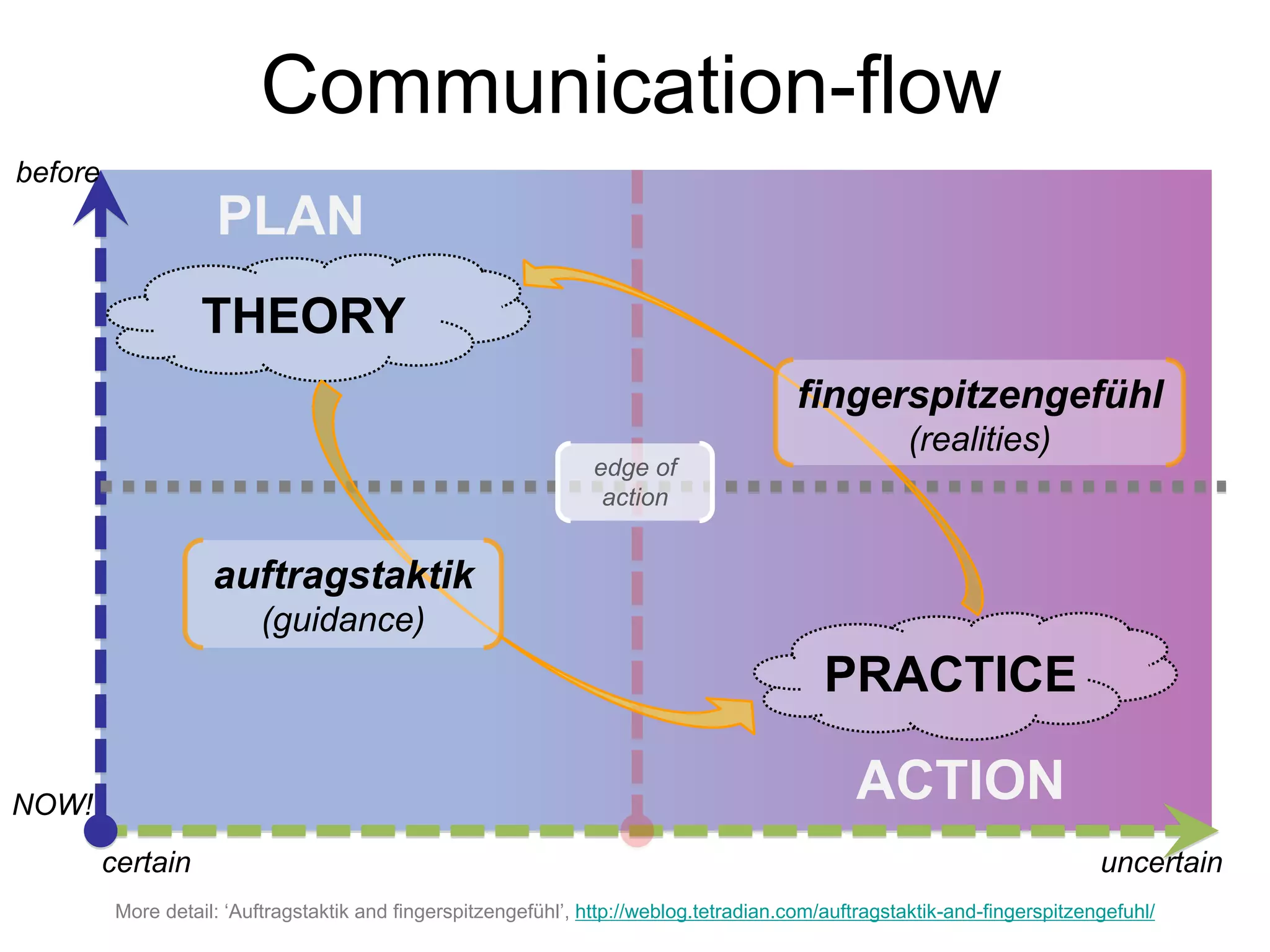
Communication-flow
NOW!
certain uncertain
PRACTICE
THEORY
fingerspitzengefühl
(realities)
auftragstaktik
(guidance)
edge of
action
before
PLAN
ACTION
More detail: ‘Auftragstaktik and fingerspitzengefühl’, http://weblog.tetradian.com/auftragstaktik-and-fingerspitzengefuhl/
Enterprise Canvas elements
investor
(money etc)
customer
(value)
citizen
(values)
supplier
relations
value-
proposition
supplier
channels
value-
creation
customer
channels
customer
relations
value-
outlay
value-
governance
value-
return
supplier customer
investor beneficiary
coordinationdirectionvalidation
before before
during during
after after
investment dividend
guidanceguidance
mgmt-info
More detail: posts on Enterprise Canvas framework, http://weblog.tetradian.com/tag/enterprise-canvas/
John Boyd’s ‘OODA’
More detail: Wikipedia on ‘OODA loop’, https://en.wikipedia.org/wiki/OODA_loop
VPEC-T framework
(developed by Nigel Green and
Carl Bate, as per their book
‘Lost In Translation’ [Evolved
Technologist Press, 2007])
Values
Events
Content
Trust
Policies
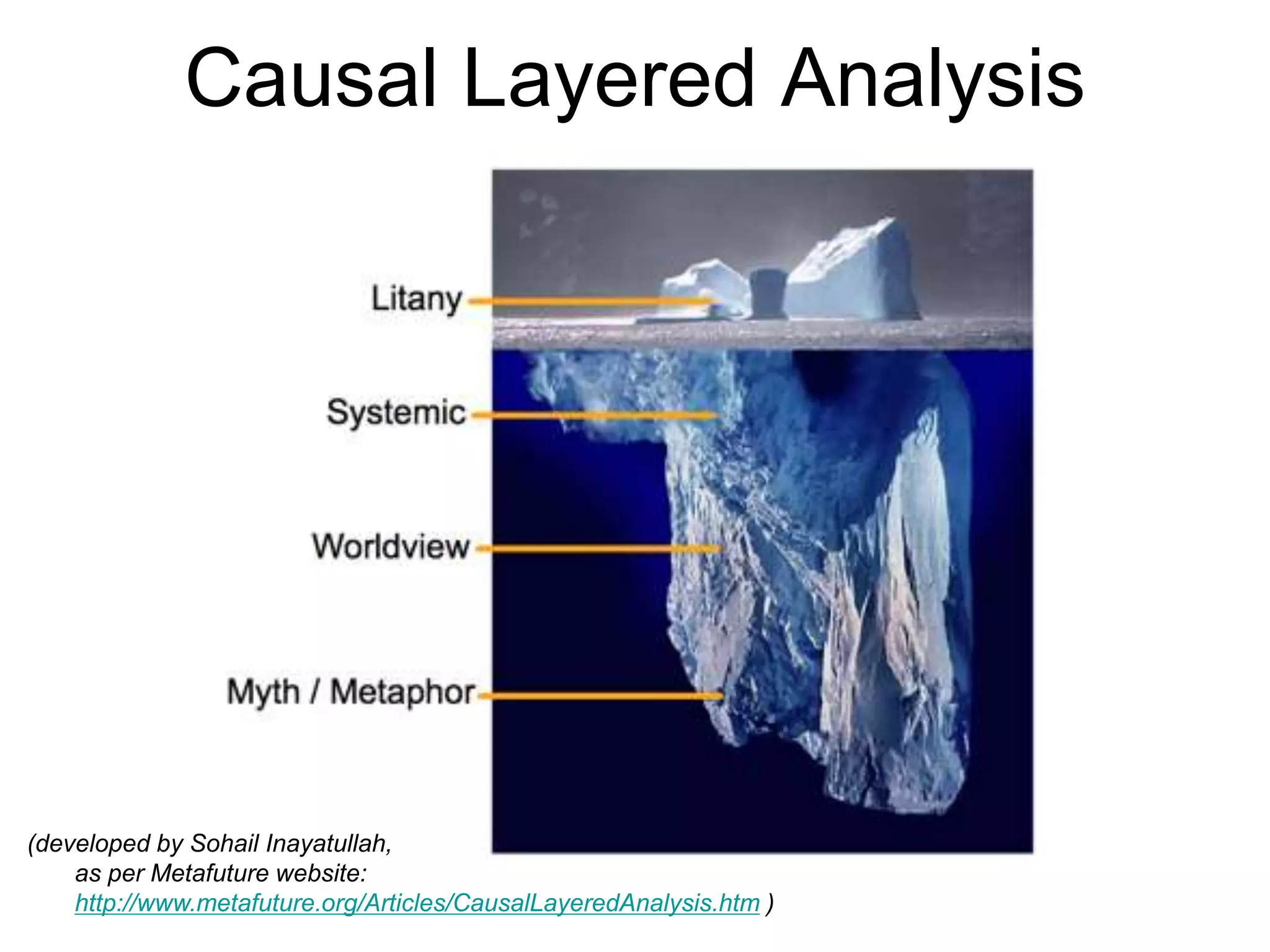
Causal Layered Analysis
(developed by Sohail Inayatullah,
as per Metafuture website:
http://www.metafuture.org/Articles/CausalLayeredAnalysis.htm )
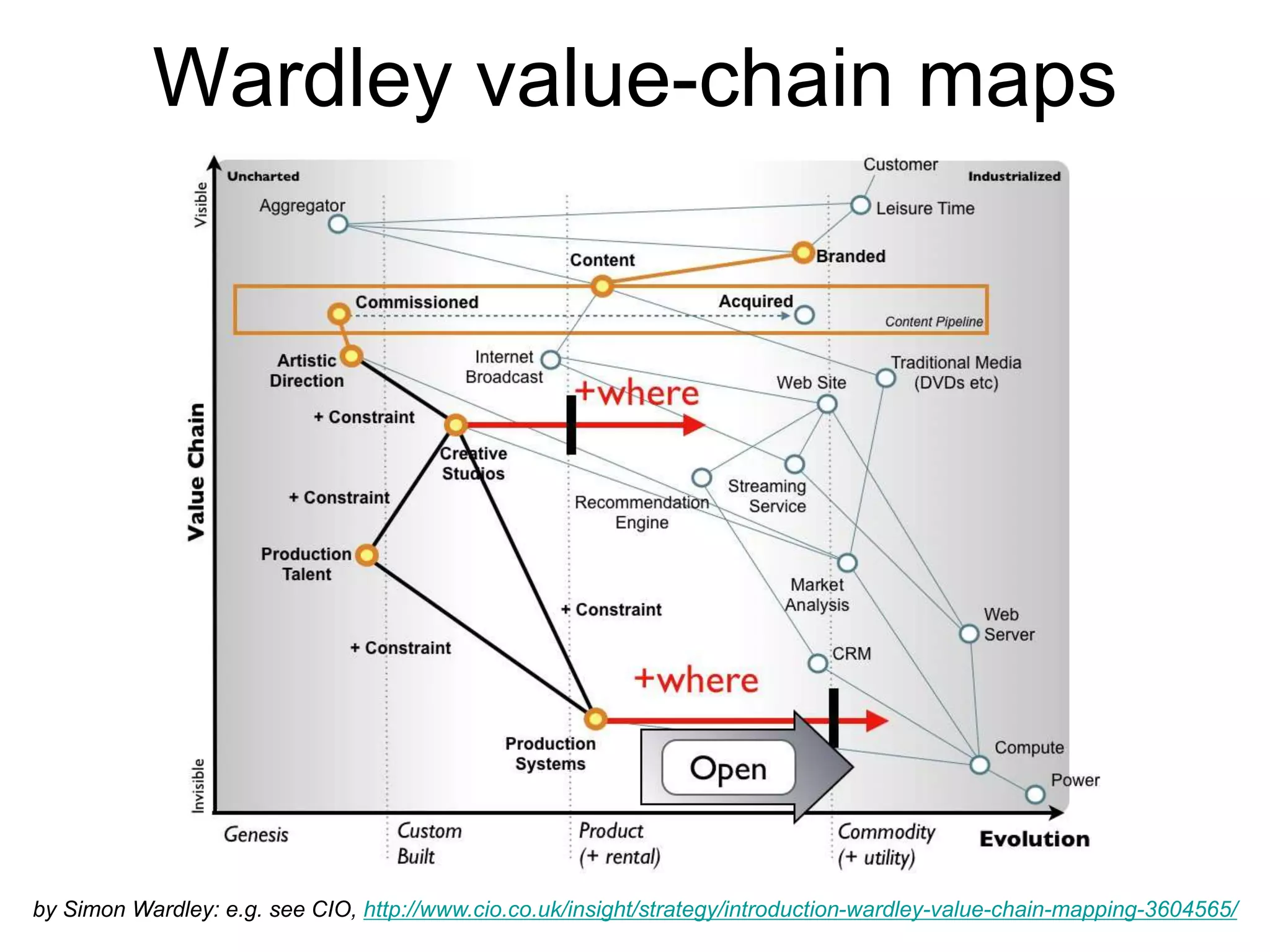
Wardley value-chain maps
by Simon Wardley: e.g. see CIO, http://www.cio.co.uk/insight/strategy/introduction-wardley-value-chain-mapping-3604565/
- tools and methods
that explore architectures
in a fractal, recursive, ‘meta-’ way
…and many, many others,
from many different sources
(yet also grounded in and work well with
the ‘messiness’ of real-world practice…)
To wrap up this tale…
Things work better overall
when everything
works together
on purpose.
The key to all architecture:
- whilst countering those forces
that are still so busy dotting the joins…
To do that,
keep joining the dots!
Or, to summarise
more in black-and-white…
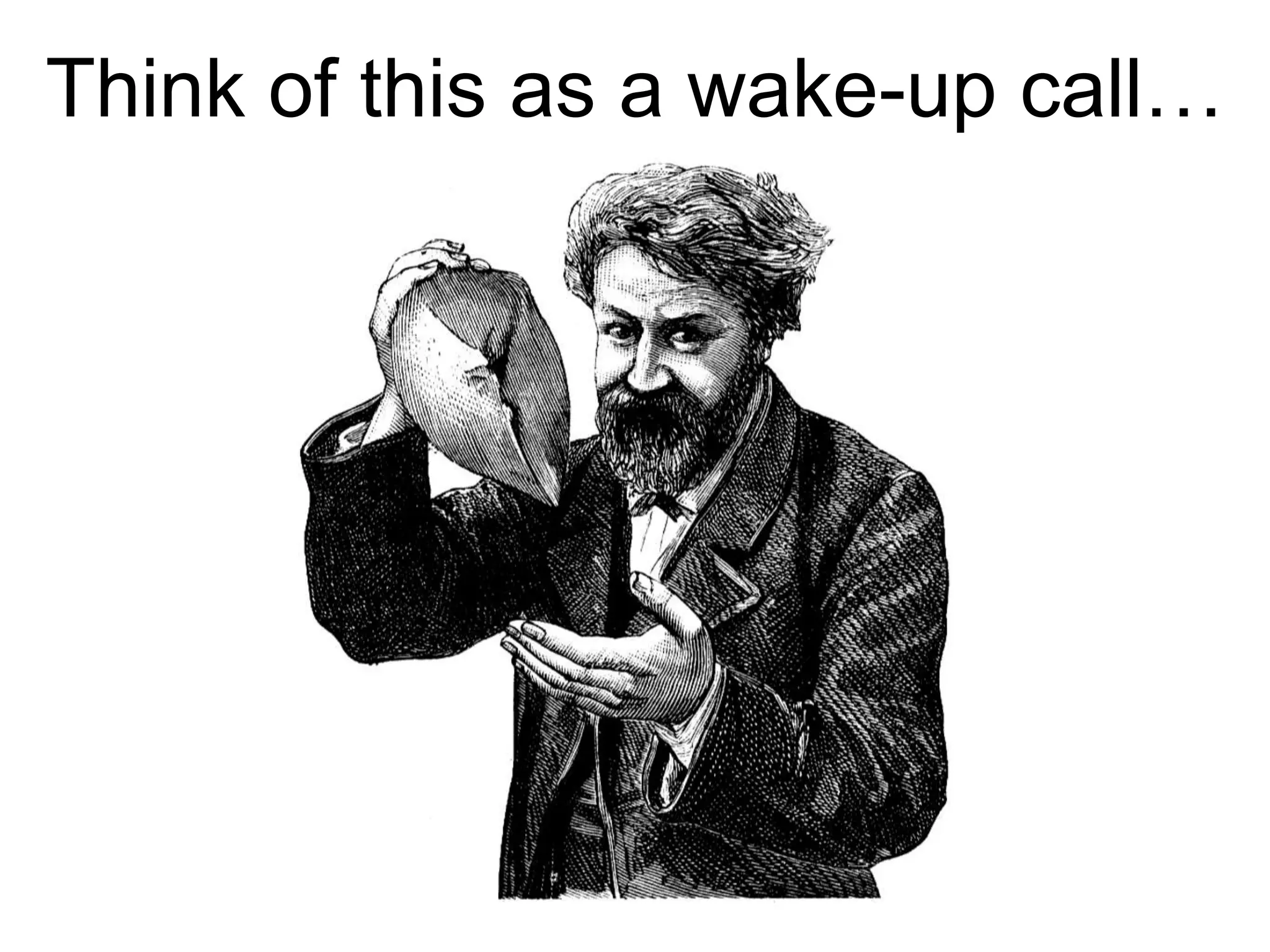
Think of this as a wake-up call…
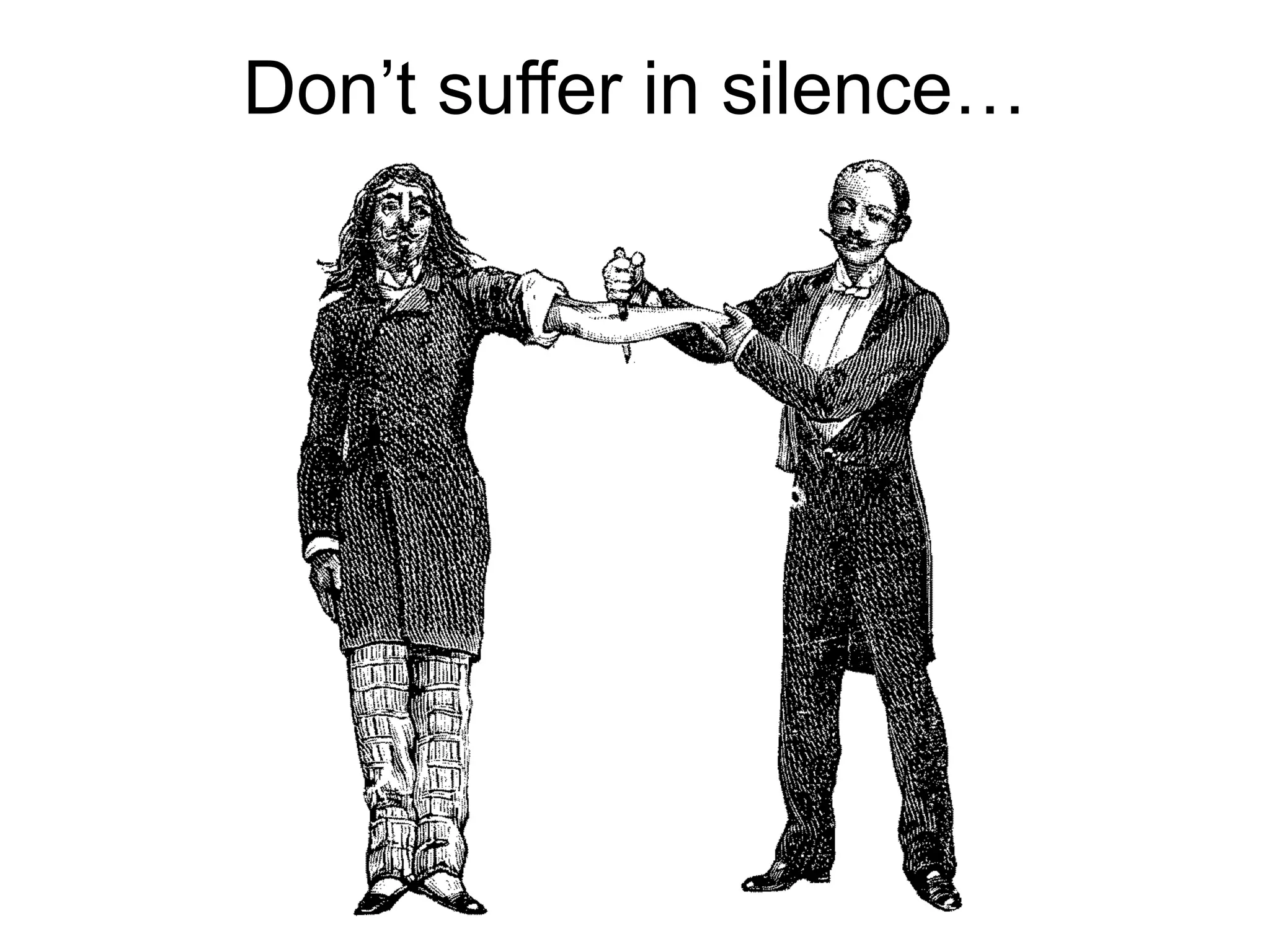
Don’t suffer in silence…
even in the cause of our art…
Don’t hide in the backroom!
(and yes, just doing so can bring real joy!)
…get out to meet with people!
No more blundering in the dark…
listen out for what’s going on…
…it’s easy to miss those that matter most…
don’t ignore the warning-signs…
…can at times seem overwhelming in size…
Even though our architectures…
…can seem even harder
and to get right people involved…
yet whilst we’re a bit unusual…
…at once both engineers and artists…
…part of our job is to see things differently!
we have an important job to do…
…good innovations come from many places!
…and help others do so too…
Be disciplined about the disciplines…
Artist
Technologist Scientist
Believer
…and vigilant against the Seven Sins…
…perhaps especially in ourselves!
As we develop our models…
don’t drown people in documents!
…settle for snapshots and summaries…
…instead, wherever practicable…
give the right guidance…
make it engaging…
thought-provoking…
new direction where needed…
…to greater heights…
inspiring everyone…
…wherever needed, in real-world conditions.
…and ensure it’s all readable…
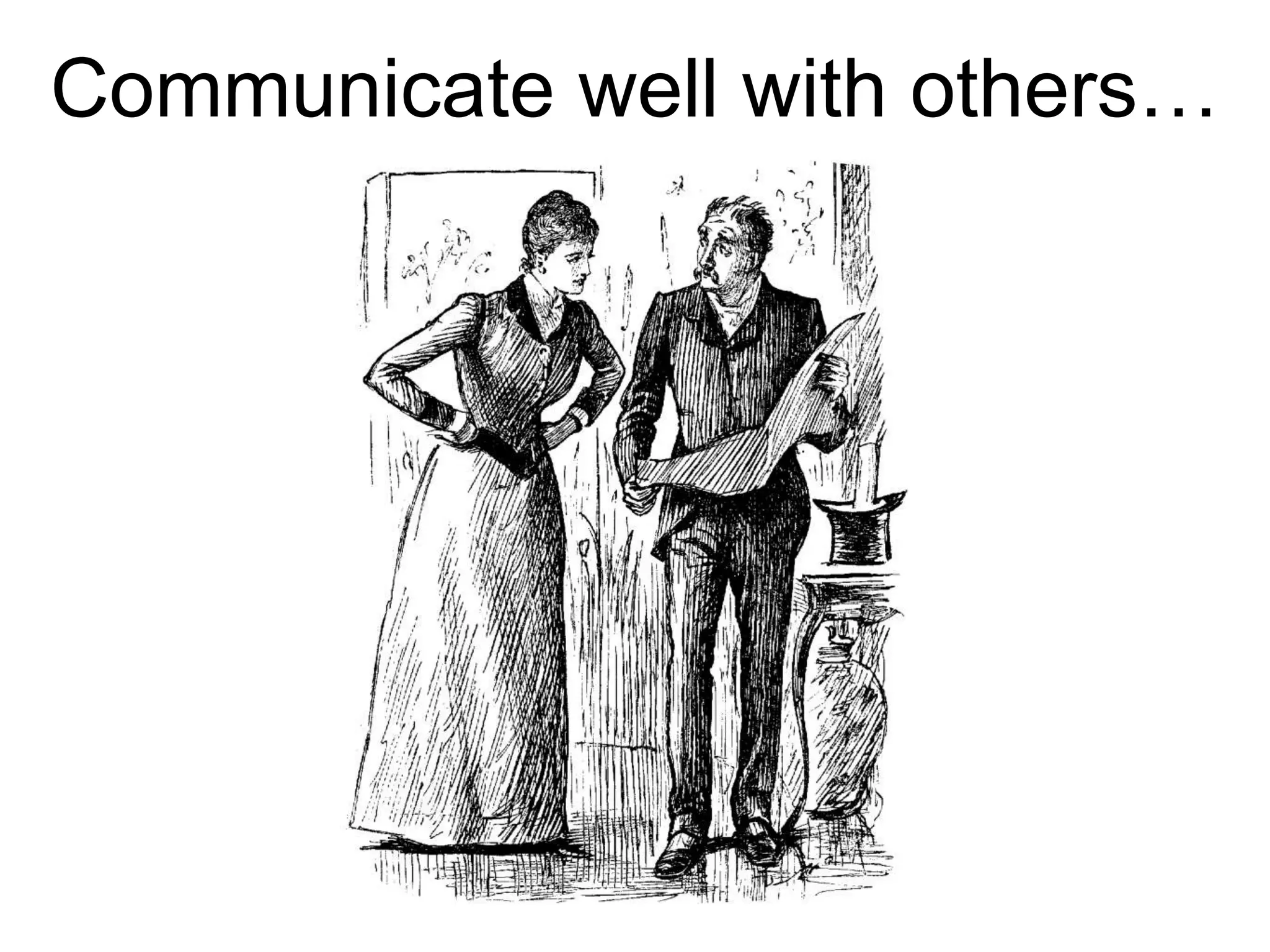
Communicate well with others…
inspire people, from lethargy…
to exuberant action!
…don’t avoid the Storming stage!
And remember the soft-skills…
…there could be consequences!
…between silos and worlds
Bridge across the chasms…
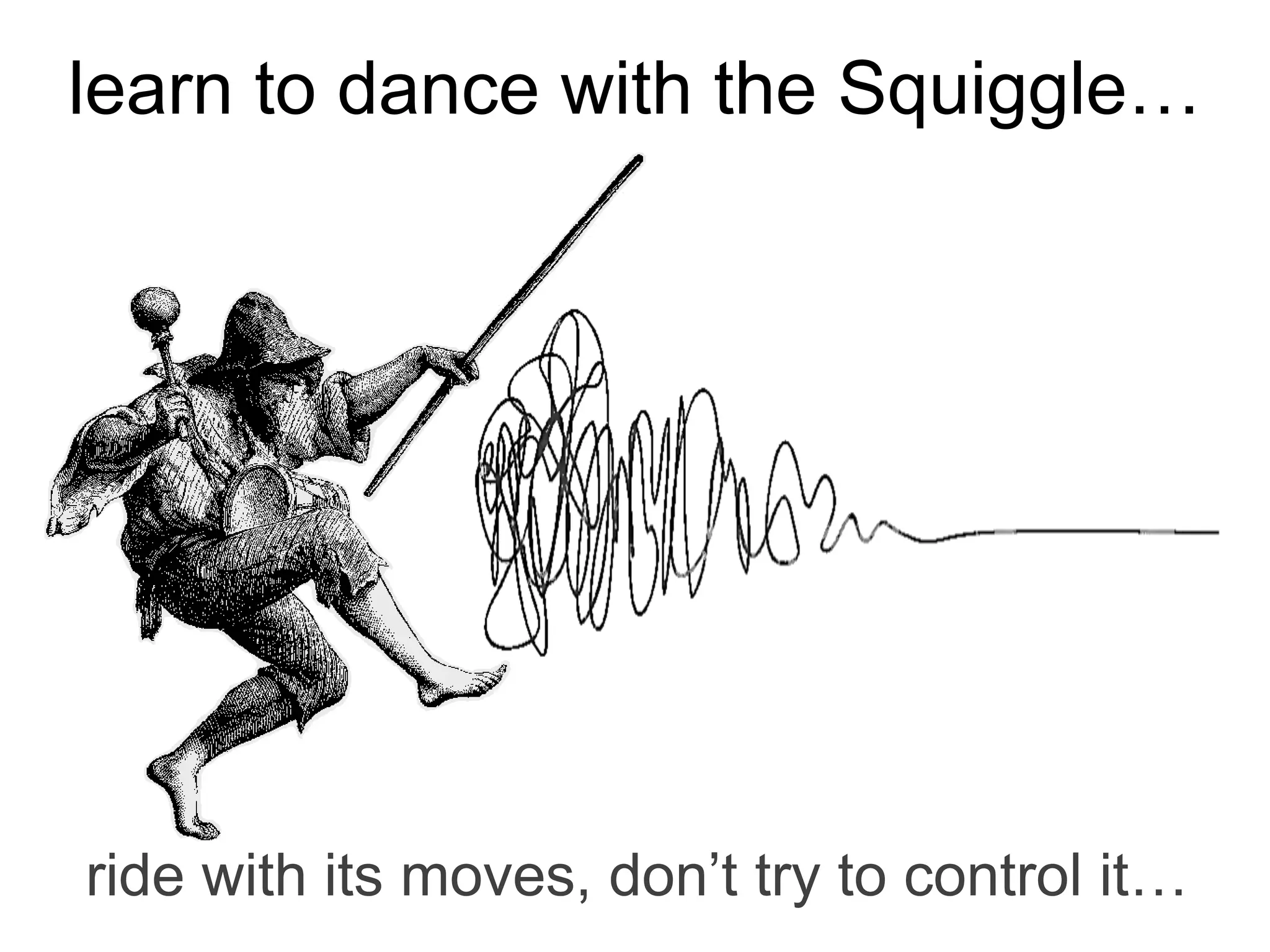
ride with its moves, don’t try to control it…
learn to dance with the Squiggle…
…that help to shape the world we need…
use the right tools for the job…
…and remember to celebrate!
That’s how we create
an integrated EA.
Integrated Enterprise Architecture conference, London, 2016
“What’s the story?”
Thank you!
Contact: Tom Graves
Company: Tetradian Consulting
Email: info@tetradian.com
Twitter: @tetradian ( http://twitter.com/tetradian )
Weblog: http://weblog.tetradian.com
Slidedecks: http://www.slideshare.net/tetradian
Publications: http://tetradianbooks.com
Books: • The enterprise as story: the role of narrative in enterprise-
architecture (2012)
• Mapping the enterprise: modelling the enterprise as services
with the Enterprise Canvas (2010)
• Everyday enterprise-architecture: sensemaking, strategy,
structures and solutions (2010)
• Doing enterprise-architecture: process and practice in the
real enterprise (2009)
Further information:

Disintegrated enterprise-architecture?

  • 1.
    Disintegrated-EA? how to fightagainst fragmentation of the architecture Tom Graves, Tetradian Consulting Integrated EA Conference, London, March 2016 the futures of business
  • 2.
    Hi. I’m Tom Graves. (that’sthe introductions done.)
  • 3.
    “Things work better becausethey work together, on purpose.” The key to all architecture:
  • 4.
  • 5.
    What a greatidea! CC-BY cornelii via Flickr
  • 6.
    Bridge tall silosat a single bound! CC-BY St_A_Sh via Flickr
  • 7.
  • 8.
  • 9.
    Functional replica ofthe Antikythera device created in Lego All the pieces fit together…
  • 10.
    …everything runs likeclockwork! CC-BY mikemccaffrey via Flickr
  • 11.
    Miracles worked everyday! CC-BY yashna13 via Flickr
  • 12.
    A wondrous performance! CC-BYusfwsmtnprairie via Flickr
  • 13.
    After all that,you’d take a bow… CC-BY-ND rosengrant via Flickr
  • 14.
  • 15.
    …even senior managementtake notice! CC-BY rquinett via Flickr
  • 16.
    That’s how it’ssupposed to go, isn’t it?
  • 17.
    So how’s itreally going, so far? CC-BY milos milosevic via Flickr
  • 18.
    (Don’t all cryat once…)CC-BY-SA skippyjon via Flickr
  • 19.
    If we can’tfix this… …our prospects may not look too good.(image source not known)
  • 20.
    Right now, it’s abit like a video-game…
  • 21.
    It looks easyenough at the start, but… image from ‘Lara Croft Go’, Square Enix Montreal
  • 22.
    soon we’re sidesteppingsawblades… image from ‘Lara Croft Go’, Square Enix Montreal
  • 23.
    having to thinkand act ahead… image from ‘Lara Croft Go’, Square Enix Montreal
  • 24.
    searching for solutions… imagefrom ‘Lara Croft Go’, Square Enix Montreal
  • 25.
    dodging disasters everyday… image from ‘Lara Croft Go’, Square Enix Montreal image from ‘Lara Croft Go’, Square Enix Montreal
  • 26.
    and fending-off furiousfauna… image from ‘Lara Croft Go’, Square Enix Montreal
  • 27.
    In short: it ain’tas easy as it looks…
  • 28.
    So often itseems as soon as we’ve designed developed delivered the perfect architecture along comes something else to knock it all down once more!
  • 29.
    We work withthe Squiggle… uncertain certain …as a model and metaphor of change
  • 30.
    We’re busy joiningthe dots… uncertain certain …but meanwhile, someone else…
  • 31.
    …is busy dottingall the joins… uncertain certain …breaking up the architecture again!
  • 32.
    Why is itthat an integrated EA so often seems like an impossible dream?
  • 33.
    More to thepoint, what can we do about it?
  • 34.
    We need tounderstand the pressures towards fragmentation
  • 35.
    On one side, everywherethere’s uncertainty inherent in what we do, with different aims, goals and drivers…
  • 36.
  • 37.
  • 38.
  • 39.
  • 40.
  • 41.
  • 42.
    or all ofthese roles, together… CC-BY-NC-ND un_photo via Flickr
  • 43.
    …and all ofthose interactions with others, including… other armed-forces, civil authorities, health-workers, border-agencies, environment-agencies, NGOs and many more…
  • 44.
    And we alsohave our own internal forces towards fragmentation…
  • 45.
  • 46.
    no ‘The Lifeand Opinions of Tristram Shandy, Gentleman’ St James Theatre, ‘Tristram Shandy’
  • 47.
  • 48.
    CC-BY-NC VAGuardPAO viaFlickr …and real-world practice
  • 49.
    an inability tounderstand… …that information about a thing is not the same as the thing itself?
  • 50.
  • 51.
  • 52.
    unchecked assumptions… CC-BY morten812via Flickr (Maginot Line…)
  • 53.
    back-to-front business-models… profit (monetary only) value-flow ('how', 'with-what') values ('why') supplier relations value- proposition purchase supplier channels product value- creation sales customer channels customer relations cost value- outlay management value- governance revenue value- return suppliercustomer owner future future present present past past investment dividend management value- governance none ('making money' is the only acknowledged 'value') (classic Taylorist top-down management-metaphors won’t fit well to the needs of most modern contexts…)
  • 54.
    misplaced ‘efficiency’… (people andenterprises are not machines…) CC-BY Todd Hudson via Flickr
  • 55.
    misplaced attempts at‘control’… CC-BY-ND archeon via Flickr (targets always create perverse-incentives…)
  • 56.
    communication gaps… NOW! before certain uncertain PLAN POSIWID muddledchaos… ‘inexplicable’ political impacts (garbled simplification) (garbled simplification) (imaginary world of sanitised info) fingerspitzengefühl (realities) auftragstaktik (guidance)
  • 57.
  • 58.
    more bureaucracy… CC-BY ChristianSchnettelker via Flickr www.manoftaste.de
  • 59.
  • 60.
    Which we couldsummarise as: - trying to control that which is not controllable - inability to keep track of what is sort-of controllable - persistent failure to understand the difference…
  • 61.
    Linked to allof this, another cause of problems is poor sensemaking discipline across the overall context. For example…
  • 62.
    Technology-adoption lifecycle (Everett Rogerset al, crossmapped to reversed SCAN frame)
  • 63.
    “Crossing the Chasm” (GeoffreyMoore, “Crossing the Chasm”, 1991) ‘The Big Scary Chasm’ (between Early Adopters and Early Majority) (invention) (towards end of useful life)
  • 64.
    Over-hype creates theChasm (Gartner Hype-Cycle crossmapped to “Crossing the Chasm”) Laggards Late Majority Early Majority Early Adopters Innovators Peak of Inflated Expectations Trough of Disillusionment Plateau of Productivity Slope of Enlightenment (The Chasm)
  • 65.
    Big-consultancies and big-vendors rushto the rescue! “We have a solution for you! - a bridge across the Chasm!” “(It’s proprietary, of course.)”
  • 66.
    Laggards Late Majority Early Majority Early Adopters Innovators Big-consultancy bridge Peak of InflatedExpectations Trough of Disillusionment Plateau of Productivity Slope of Enlightenment (The Chasm) Bridging across the Chasm (‘solving’ a problem caused by their own over-hype?)
  • 67.
    “Our clients demanda future that is fully proven.” (direct paraphrase from quote by big-consultancy principal) Delusions of certainty:
  • 68.
    The vendors’ ‘solution’… (…ofwhich at times almost none is really true…) “we are the innovators” “uncertainty does not exist” “fully proven future” “ahead of the competition”
  • 69.
    A better option: getrid of the darn hype! Laggards Late Majority Early Majority Early Adopters Innovators Plateau of Productivity (quiet, continual) Slope of Enlightenment (no Chasm) (no hype)
  • 70.
    What can wedo about this, in practice?
  • 71.
    Answer: it alldepends on CC-BY grotuk via Flickr
  • 72.
    (as seen inthis kind of discipline…) CC-BY-ND oldschoolrocker via Flickr
  • 73.
    (or this kindof discipline…) CC-BY eschipul via Flickr
  • 74.
    CC-BY-SA hernanpc viaFlickr (or this discipline, if you prefer…)
  • 75.
    Behind each discipline, whatwe most need here are four distinct meta-disciplines…
  • 76.
    ‘truth’ (thought) ‘value’ (feeling) internalised (‘subjective’) externalised (‘objective’) Fourdistinct meta-disciplines… More detail: ‘Sensemaking and the swamp-metaphor’, http://weblog.tetradian.com/sensemaking-and-swamp-metaphor/ Technologist (‘outer value’) Scientist (‘outer truth’) Artist (‘inner value’) Believer (‘inner truth’) uncharted swamp
  • 77.
    Four distinct meta-disciplines… •sense (Artist) • make-sense (Technologist) • decide (Scientist) • act (Believer) recursively, fractally, indefinitely… weave through, around, between each other
  • 78.
    Four distinct meta-disciplines… Artist emphasis  “what do I/we feel?”  Technologist emphasis  “what can I/we improve?”  Scientist emphasis  “what do I/we know?”  Believer emphasis  “what do I/we do?”  Simple two-axis matrix  driver: value ↔ truth  context: outer ↔ inner More detail: ‘Sensemaking and the swamp-metaphor’, http://weblog.tetradian.com/sensemaking-and-swamp-metaphor/ ‘truth’ (thought) ‘value’ (feeling) internalised (‘subjective’) externalised (‘objective’) Artist (‘inner value’) Scientist (‘outer truth’) Believer (‘inner truth’) Technologist (‘outer value’) uncharted swamp (aligned with the Squiggle)
  • 79.
    ‘truth’ (thought) ‘value’ (feeling) internalised (‘subjective’) externalised (‘objective’) Artist (‘innervalue’) Scientist (‘outer truth’) Believer (‘inner truth’) Technologist (‘outer value’) uncharted swamp …with distinct modes and roles  Artist mode  new ideas, experiences  Technologist mode  tools for practical use  Scientist mode  clarity, consistency  Believer mode  meaning, certainty, action  Don’t play ‘mix and match’!  modes are different and distinct More detail: ‘Sensemaking – modes and disciplines’, http://weblog.tetradian.com/sensemaking-modes-and-disciplines/  Modes support each other  idea, hypothesis, theory, law
  • 80.
    These meta-disciplines represent abstract-modes, notindividual people. To emphasise this, we’ll use old-fashioned images here to denote the respective modes.
  • 81.
  • 82.
    Role is ...to notice, to pay attention, to elicit new ideas, new information, new experiences Manages ... that which is inherently unique, one-off, with no apparent connection to anything else Responds via ... a sense of inner value, whatever feels right in the moment Action-loop via … ‘do or not-do’ → sense → reflect/review The Artist discipline More detail: ‘Sensemaking – modes and disciplines’, http://weblog.tetradian.com/sensemaking-modes-and-disciplines/
  • 83.
    Rules of theArtist discipline ‘Anything goes’ – there is no right or wrong The feeling or response is its own truth: it is what it is The response exists only in the moment – if we try to hold onto it, it will disappear The response must be ‘real-ised’ in some form of expression, usually in the moment The response is personal – it does not necessarily ‘mean’ anything, it just is More detail: ‘Sensemaking – modes and disciplines’, http://weblog.tetradian.com/sensemaking-modes-and-disciplines/
  • 84.
    “This means...”, “Thisproves...” [blurring Artist with Scientist or Believer] “This has no purpose”, “This feeling is wrong” [blurring Artist with Technologist or Believer] “I should not feel this...”, “I ought to feel...” [blurring Artist with Believer, or overdose of ego] “The feeling I had here last time was…” [blurring Artist with Scientist] Signs of dubious Artist discipline More detail: ‘Sensemaking – modes and disciplines’, http://weblog.tetradian.com/sensemaking-modes-and-disciplines/
  • 85.
    The Technologist discipline “seekalways to make it work better”
  • 86.
    Role is ...to use, and to question use and usefulness Manages ... that which is inherently ambiguous – uncertain, requiring adaptation, with cause- and-effect often identifiable only in retrospect Responds via ... a sense of outer value, experimenting to find what feels appropriate Action-loop via … experiment → sense → evaluate The Technologist discipline More detail: ‘Sensemaking – modes and disciplines’, http://weblog.tetradian.com/sensemaking-modes-and-disciplines/
  • 87.
    There is no‘truth’ – only usefulness or not- usefulness Beliefs, feelings, objects, facts, everything is a tool to a purpose ‘As above, so below’ – everything contains everything else; reality is fractal, recursive Emphasis on effectiveness, and on value Ethics and integrity take priority over ‘truth’ – rule of personal responsibility for actions Rules of Technologist discipline More detail: ‘Sensemaking – modes and disciplines’, http://weblog.tetradian.com/sensemaking-modes-and-disciplines/
  • 88.
    “The way todo it is...” [blurring Technologist with Believer or Scientist] “It’ll be the same as last time...” [blurring Technologist with Scientist] “The end justifies the means...” [allowing Believer ‘truth’ to override value-assessment] “Get the job out the door, any old way will do” [weak handling of values trade-offs, also failure to bridge to Scientist and Artist to aid in improving quality] Dubious Technologist discipline More detail: ‘Sensemaking – modes and disciplines’, http://weblog.tetradian.com/sensemaking-modes-and-disciplines/
  • 89.
    The Scientist discipline “ensureconsistency and certainty”
  • 90.
    Role is ...to verify the truth of things in relation to others Manages ... that which is inherently certain or ‘knowable’ – everything interlinked through complicated chains of cause-and-effect Responds via ... a sense of outer truth, measuring, monitoring, assessing factors that make up chains of relationship Action-loop via ... enquire → sense → analyse/assess The Scientist discipline More detail: ‘Sensemaking – modes and disciplines’, http://weblog.tetradian.com/sensemaking-modes-and-disciplines/
  • 91.
    Rules of Scientistdiscipline Only facts are real – opinion is permitted only where vetted and verified by peer-review Everything must be anchored in facts, in turn anchored in shared standards Proof depends on repeatability by others Things are true only if verified in formal logic All parameters must be defined and declared Experiments should change only one parameter at a time More detail: ‘Sensemaking – modes and disciplines’, http://weblog.tetradian.com/sensemaking-modes-and-disciplines/
  • 92.
    Emotional attachment toany supposed ‘fact’ [blurring Scientist with other modes, usually the Believer] “Must be...”, “It’s obvious...”, “Of course...” [failure to bridge to Artist or Technologist to cross-check for ‘logic-holes’] “The exception proves the rule...” [blurring Scientist formal-logic with Technologist heuristics] “The only possible truth...” [blurring Scientist analysis with Believer ‘The Truth’] Dubious Scientist discipline More detail: ‘Sensemaking – modes and disciplines’, http://weblog.tetradian.com/sensemaking-modes-and-disciplines/
  • 93.
    The Believer discipline “followthe work-instructions”
  • 94.
    Role is ...to focus, and to act, usually via and in line with predetermined belief Manages ... that which is inherently known – delving ever deeper into the meaning of a known ‘universal truth’ Responds via ... a sense of inner truth, acting on a clear certainty of right and wrong Action-loop via ... sense → categorise → act/reflect Believer discipline More detail: ‘Sensemaking – modes and disciplines’, http://weblog.tetradian.com/sensemaking-modes-and-disciplines/
  • 95.
    There is onlyone Truth There are definite boundaries between true and not-true, between right and wrong Consistent focus on the one Truth will provide all the answers needed Belief is the force that holds everything together – don’t doubt! Rules of Believer discipline More detail: ‘Sensemaking – modes and disciplines’, http://weblog.tetradian.com/sensemaking-modes-and-disciplines/
  • 96.
    Dubious Believer discipline “Isthis the right way to [do this, be this]...?” [getting lost in self-doubt] “This is true for me, therefore true for all” [blurring Believer (subjective) with Scientist (objective)] “People of different beliefs are lesser worth” [overdose of ego, also blurring Believer with Technologist – using ‘truth’ for value-judgements] “I am the Great One who causes change...” [blurring Believer self-certainty with Technologist action] More detail: ‘Sensemaking – modes and disciplines’, http://weblog.tetradian.com/sensemaking-modes-and-disciplines/
  • 97.
  • 98.
    A discipline ofintegration “the discipline of linking the disciplines together”
  • 99.
    Know the roleand function of each discipline Each moment, know which discipline you’re in – Artist, Technologist, Scientist, Believer Use the discipline correctly, following its own rules and decision-sequence Bridge cleanly between the disciplines Watch continually for warning-signs of dubious discipline A discipline of integration More detail: ‘Sensemaking – modes and disciplines’, http://weblog.tetradian.com/sensemaking-modes-and-disciplines/
  • 100.
    Disciplines link toeach other… …a distinct if implicit sequence within the change-process – a discipline of disciplines
  • 101.
    What happens ifwe don’t watch the discipline?
  • 102.
    A call toaction! We must stand firm against the Seven Sins of Dubious Discipline: #1: The Hype Hubris #2: The Golden-Age Game #3: The Newage Nuisance #4: The Meaning Mistake #5: The Possession Problem #6: The Reality Risk #7: Lost in the Learning Labyrinth More detail: ‘Seven sins of dubious discipline’, http://weblog.tetradian.com/seven-sins-of-dubious-discipline/
  • 103.
    #1: The HypeHubris • “a triumph of marketing over technical expertise“ • style becomes more important than substance • those who do the real work are misused, derided, plagiarised, then ignored • relentless pursuit of glamour – Cloud! Big-Data! IoT! the Golden Age! More detail: ‘Seven sins – 1: The Hype Hubris’, http://weblog.tetradian.com/seven-sins-1-the-hype-hubris/
  • 104.
    #2: The Golden-AgeGame • “a bizarre blend of super- science and super-belief” • minimal evidence anywhere in real-world cultural analogues • psych drivers: nostalgia, narcissism, hiraeth • focus on the future or past to evade realities of the present? More detail: ‘Seven sins – 2: Golden-Age Game’, http://weblog.tetradian.com/seven-sins-2-the-golden-age-game/
  • 105.
    #3: The NewageNuisance • “newage – it rhymes with ‘sewage’, discarded remnant of what was once nutritious” • dilettante ‘disneyfication’ of real issues • psych: enthusiasm overrides sense, self-honesty • arbitrary jumps between distinct forms of ‘truth’ in art, science, technology and belief-systems More detail: ‘Seven sins – 3: The Newage Nuisance’, http://weblog.tetradian.com/seven-sins-3-the-newage-nuisance/
  • 106.
    #4: The MeaningMistake • “half-baked, overcooked or just plain inedible” • half-baked – characteristic of newage • overcooked – characteristic of careless practice or poor science • inedible – all too many examples in these fields… More detail: ‘Seven sins – 4: The Meaning Mistake’, http://weblog.tetradian.com/seven-sins-4-the-meaning-mistake/
  • 107.
    #5: The PossessionProblem • “neither places nor ideas are commodities to be possessed” • no separate domains – it’s a continuum • psych: a childish ‘mine!’ • deconstruction and ‘privileged’ worldviews • what worldviews are ‘privileged’ in EA? More detail: ‘Seven sins – 5: The Possession Problem’, http://weblog.tetradian.com/seven-sins-5-the-possession-problem/
  • 108.
    • “not ‘realor imaginary’, but ‘real and imaginary’ – both at the same time” • psych implications – reality as anarchy, risks of panic • Not-known is imaginary and real – both the ‘good’ and ‘bad’ • real dangers – “like playing with matches in a firework factory” #6: The Reality Risk More detail: ‘Seven sins – 6: The Reality Risk’, http://weblog.tetradian.com/seven-sins-6-the-reality-risk/
  • 109.
    #7: Lost inthe Learning Labyrinth • “going round the bend” • all skills-development follows a predictable pattern – but it’s not linear • there’s only one path, yet many ways to get lost • characteristic learning- mistakes that can lead to other ‘Sins of Dubious Discipline’More detail: ‘Seven sins – 7: Lost in the Learning Labyrinth’, http://weblog.tetradian.com/seven-sins-7-lost-in-the-learning-labyrinth/
  • 110.
    1: Survival 6: Mind 4:Caring 5: Communication 3: Control 2: Self 7: Meditation 8: Mastery three New Age mistakes: - ‘path of spirit’ - ‘beginner’s luck’ - ‘path of heart’ ‘moment of despair’ (break out to failure) opposite directions, but all going inwards within the labyrinth The labyrinthine path to skill More detail: ‘Seven sins – 7: Lost in the Learning Labyrinth’, http://weblog.tetradian.com/seven-sins-7-lost-in-the-learning-labyrinth/
  • 111.
    What should wedo about these? • “respect the mystery, yet keep it real” • need to balance our passion with care and quiet discipline • learn from the past to apply in the present • use all of the senses – and a bit of common-sense!
  • 112.
    Get out ofthat armchair! • Talk is pleasant, but we don’t learn anything new • Dilettante flitting through domains gives shallow appreciation, but not much depth • Crucial details may only be visible in the field
  • 113.
  • 114.
    Making the Squiggleour friend… …also shows us which of the disciplines to apply, where, when, and why
  • 115.
    Squiggle is alsorecursive, fractal
  • 116.
    We need toolsetsthat help us make the Squiggle our friend (which mostly they don’t…)
  • 117.
    Most current ‘EA’-toolsetscover… uncertain certain …only the ‘easy bit’ of the EA space… Typical scope of ‘Enterprise-Architecture’ tools
  • 118.
    We can findvarious tools… uncertain certain …that sort-of cover the whole Squiggle…
  • 119.
    …but they don’tlink up together! Disconnected tools / toolsets are a key cause of fragmentation in EA, by dotting the joins
  • 120.
    To help usmake more sense of the Squiggle, here’s a question:
  • 121.
    Why is itthat so-called hard-skills are (relatively) easy yet so-called soft-skills are so darned hard?
  • 122.
    Soft-skills and theSquiggle… Soft-skills are essential in managing human uncertainty, both intrapersonal and interpersonal – such as we always have in new development Soft-skills are essential here Hard-skills are essential here Balance needed here between soft-skills and hard-skills uncertain certain
  • 123.
    We especially needsoft-skills to work with the human element
  • 124.
    If we don’thave those soft-skills… CC-BY-ND chatirygirl via Flickr …we may rediscover that ‘stakeholder’ has an older, more-worrying meaning…
  • 125.
    We also needto tackle the human-element early – if we leave it too late, we’ll also get into a fight…
  • 126.
    Group Dynamics sequence… Forming (Purpose) 12 3 4 5 Performing (Process) Storming (People) Norming (Preparation) Adjourning (Performance) (there are well-researched reasons why it’s this sequence…) Clashes of ideas, intent and experience are expected Soft-skills applied to resolve clashes Only minor clashes still occur during production, and quickly resolved
  • 127.
    …as fractal FiveElement cycle (adapted from classic Group Dynamics project-lifecycle and VPEC-T framework) (Start here) Purpose (Forming) People (Storming) Preparation (Norming) Process (Performing) Performance (Adjourning) Events PoliciesValues Completions Success Trust
  • 128.
    What happens whenwe try to skip the People-stuff, and go straight to the plan? A common mistake:
  • 129.
    Start with predefined‘solution’… Performance (Adjourning) Purpose (Forming) People (Storming) Preparation (Norming) Process (Performing) PoliciesValues Events Completions Success Purpose (Forming) Preparation (Norming) Performance (Adjourning) People (Storming) (We probably never do get it into production…)
  • 130.
    Start with predefined‘solution’… Forming (Purpose) 1 3 5 2 Storming (People) Norming (Preparation) Adjourning (Performance) Clashes of ideas, intent and experience are not expected Planning collapses into analysis- paralysis… …followed by recriminations and blame about delay FIGHT!
  • 131.
    What happens whenwe try to skip both People and Plan, and go straight to Process action? Another common mistake:
  • 132.
    Go straight intoproduction… Performance (Adjourning) Purpose (Forming) People (Storming) Preparation (Norming) Process (Performing) PoliciesValues Events Completions Success Purpose (Forming) Process (Performing) People (Storming) (We bounce straight out again into endless arguments…)
  • 133.
    Go straight intoproduction… Forming (Purpose) 1 4 2 Performing (Process) Storming (People) Clashes of ideas, intent and experience are not expected, nor allowed Production may start well, but soon collapses into chaos and confusion BIG FIGHT!
  • 134.
  • 135.
    If we doit the right way round… …the Storming gets smaller each time. agreed solution
  • 136.
    If we doit the wrong way round… …the Storming gets worse and worse… imposed ‘solution’
  • 137.
    There’s a reason wedo it that way round, in that Five Element sequence… …don’t try to skip over that Storming stage!
  • 138.
    We also needtools that provide an emphasis on ‘meta-’ – on context before content
  • 139.
    “I never meta ‘meta-’ that I didn’t like” …all of it fractal and recursive… Tools for metadisciplines…
  • 140.
    every point expressesthe pattern… CC-BY usfwsnortheast via Flickr
  • 141.
    Some examples… (okay, someof this is a bit of a sales-pitch, but they’re all non-proprietary)
  • 142.
    Whole-enterprise dimensions Purpose (clarity /'Business') Relations (connection / 'People') Stuff (content / 'Technology') Information (context / 'Knowledge') Integration (rotate between the views) More detail: ‘Assets and services, http://weblog.tetradian.com/assets-and-services/
  • 143.
    Five Element strategy-cycle Moredetail: posts on Five Element framework, http://weblog.tetradian.com/tag/five-elements-model/
  • 144.
    SCORE to assessstrategy outcomes within actionexternal worldinternal world efficientreliable elegant appropriate integrated strengths (what we already have) responses (expected from the real-world) challenges (what we’d need to work on) options (in the real-world) core question services support capabilities-needed opportunities / risks rewards restraints constraints effectiveness (things work better, together, on purpose) More detail: ‘Using SCORE to reframe the business-model’, http://weblog.tetradian.com/using-score-to-reframe-the-business-model/
  • 145.
    More detail: postson SCAN framework, http://weblog.tetradian.com/tag/scan/ SCAN (and its feedback-loops) NOW! certain uncertain ‘Simple’ (ENACT) ‘Not-known’ (EXPLORE) edge of panic fears options ‘Complicated’ (EVALUATE) ‘Ambiguous’ (EXPERIMENT) edge of uncertainty questions answers news principles edge of innovationrealities rules edge of action before
  • 146.
    Backbone and edge domain CRM product catalogue sales process backbone person- definition business standards standardops procedures edge CRM experiment sales/ purchase portal Agile product-dev domain ERP facilities mgmt procurement process Agile-type governance of dependencies Waterfall-type governance of dependencies ≈ “Town-Planners” ≈ “Settlers” ≈ “Pioneers” (spectrum of ‘governance of governance’) More detail: ‘Architecting the enterprise backbone’, http://weblog.tetradian.com/architecting-the-enterprise-backbone/
  • 147.
    Communication-flow NOW! certain uncertain PRACTICE THEORY fingerspitzengefühl (realities) auftragstaktik (guidance) edge of action before PLAN ACTION Moredetail: ‘Auftragstaktik and fingerspitzengefühl’, http://weblog.tetradian.com/auftragstaktik-and-fingerspitzengefuhl/
  • 148.
    Enterprise Canvas elements investor (moneyetc) customer (value) citizen (values) supplier relations value- proposition supplier channels value- creation customer channels customer relations value- outlay value- governance value- return supplier customer investor beneficiary coordinationdirectionvalidation before before during during after after investment dividend guidanceguidance mgmt-info More detail: posts on Enterprise Canvas framework, http://weblog.tetradian.com/tag/enterprise-canvas/
  • 149.
    John Boyd’s ‘OODA’ Moredetail: Wikipedia on ‘OODA loop’, https://en.wikipedia.org/wiki/OODA_loop
  • 150.
    VPEC-T framework (developed byNigel Green and Carl Bate, as per their book ‘Lost In Translation’ [Evolved Technologist Press, 2007]) Values Events Content Trust Policies
  • 151.
    Causal Layered Analysis (developedby Sohail Inayatullah, as per Metafuture website: http://www.metafuture.org/Articles/CausalLayeredAnalysis.htm )
  • 152.
    Wardley value-chain maps bySimon Wardley: e.g. see CIO, http://www.cio.co.uk/insight/strategy/introduction-wardley-value-chain-mapping-3604565/
  • 153.
    - tools andmethods that explore architectures in a fractal, recursive, ‘meta-’ way …and many, many others, from many different sources (yet also grounded in and work well with the ‘messiness’ of real-world practice…)
  • 154.
    To wrap upthis tale…
  • 155.
    Things work betteroverall when everything works together on purpose. The key to all architecture:
  • 156.
    - whilst counteringthose forces that are still so busy dotting the joins… To do that, keep joining the dots!
  • 157.
    Or, to summarise morein black-and-white…
  • 158.
    Think of thisas a wake-up call…
  • 159.
  • 160.
    even in thecause of our art…
  • 161.
    Don’t hide inthe backroom!
  • 162.
    (and yes, justdoing so can bring real joy!) …get out to meet with people!
  • 163.
    No more blunderingin the dark…
  • 164.
    listen out forwhat’s going on…
  • 165.
    …it’s easy tomiss those that matter most… don’t ignore the warning-signs…
  • 166.
    …can at timesseem overwhelming in size… Even though our architectures…
  • 167.
    …can seem evenharder and to get right people involved…
  • 168.
    yet whilst we’rea bit unusual… …at once both engineers and artists…
  • 169.
    …part of ourjob is to see things differently! we have an important job to do…
  • 170.
    …good innovations comefrom many places! …and help others do so too…
  • 171.
    Be disciplined aboutthe disciplines… Artist Technologist Scientist Believer
  • 172.
    …and vigilant againstthe Seven Sins… …perhaps especially in ourselves!
  • 173.
    As we developour models…
  • 174.
    don’t drown peoplein documents!
  • 175.
    …settle for snapshotsand summaries… …instead, wherever practicable…
  • 176.
    give the rightguidance…
  • 177.
  • 178.
  • 179.
  • 180.
  • 181.
    …wherever needed, inreal-world conditions. …and ensure it’s all readable…
  • 182.
  • 183.
  • 184.
  • 185.
    …don’t avoid theStorming stage! And remember the soft-skills…
  • 186.
    …there could beconsequences!
  • 187.
    …between silos andworlds Bridge across the chasms…
  • 188.
    ride with itsmoves, don’t try to control it… learn to dance with the Squiggle…
  • 189.
    …that help toshape the world we need… use the right tools for the job…
  • 190.
  • 191.
    That’s how wecreate an integrated EA. Integrated Enterprise Architecture conference, London, 2016
  • 192.
  • 193.
    Contact: Tom Graves Company:Tetradian Consulting Email: info@tetradian.com Twitter: @tetradian ( http://twitter.com/tetradian ) Weblog: http://weblog.tetradian.com Slidedecks: http://www.slideshare.net/tetradian Publications: http://tetradianbooks.com Books: • The enterprise as story: the role of narrative in enterprise- architecture (2012) • Mapping the enterprise: modelling the enterprise as services with the Enterprise Canvas (2010) • Everyday enterprise-architecture: sensemaking, strategy, structures and solutions (2010) • Doing enterprise-architecture: process and practice in the real enterprise (2009) Further information: