GD/SEMINAR ONENERGY RESOURCES
&
IT’S CONSERVATION

Presented BySHASHI SARASWAT
PGDSHE (137235)
CONTENTS
What is Energy
 Classification of Energy Resources
 Energy Consumption in Total World
 Brief Explanation of Each
 Participation & Use of Diff. Type Of Energy
 What is Energy Conservation?
 Energy Conservation in Different Areas.
 Conclusion



Energy is the ability or the capacity to do work. It is
the source of power for mechanisms and organisms
without it nothing will work.
 Common sources of energy are fossil fuels like
coal, oil and natural gas. They are all nonrenewable sources and are naturally made from
decaying plants and animals that existed million
years ago.
ENERGY RESOURCES


1.
2.

The substances from which we produce energy are
known as energy sources. We need energy for our
day to day life.
Renewable source of energy
Non-renewable source of energy
WORLD ENERGY CONSUMPTION



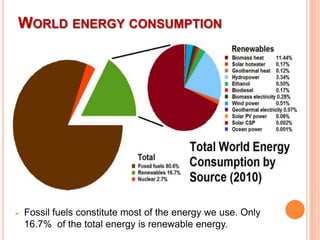
Fossil fuels constitute most of the energy we use. Only
16.7% of the total energy is renewable energy.
NON-RENEWABLE ENERGY RESOURCES





1.
2.

3.
4.

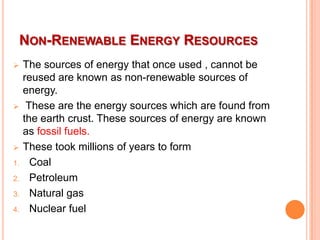
The sources of energy that once used , cannot be
reused are known as non-renewable sources of
energy.
These are the energy sources which are found from
the earth crust. These sources of energy are known
as fossil fuels.
These took millions of years to form
Coal
Petroleum
Natural gas
Nuclear fuel
COAL
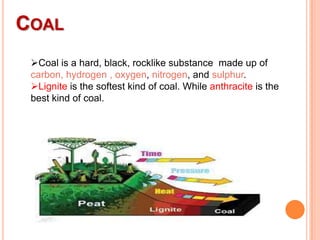
Coal is a hard, black, rocklike substance made up of
carbon, hydrogen , oxygen, nitrogen, and sulphur.
Lignite is the softest kind of coal. While anthracite is the
best kind of coal.
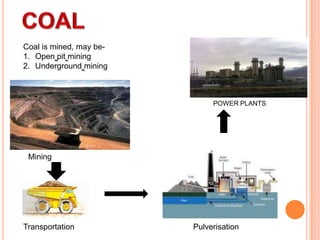
Coal is mined, may be1. Open pit mining
2. Underground mining

POWER PLANTS

Mining

Transportation

Pulverisation
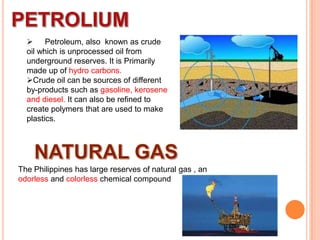
 Petroleum, also known as crude
oil which is unprocessed oil from
underground reserves. It is Primarily
made up of hydro carbons.
Crude oil can be sources of different
by-products such as gasoline, kerosene
and diesel. It can also be refined to
create polymers that are used to make
plastics.

The Philippines has large reserves of natural gas , an
odorless and colorless chemical compound
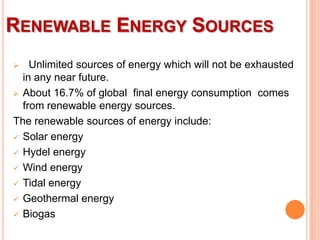
RENEWABLE ENERGY SOURCES
Unlimited sources of energy which will not be exhausted
in any near future.
 About 16.7% of global final energy consumption comes
from renewable energy sources.
The renewable sources of energy include:
 Solar energy
 Hydel energy
 Wind energy
 Tidal energy
 Geothermal energy
 Biogas

SOLAR POWER


1.
2.

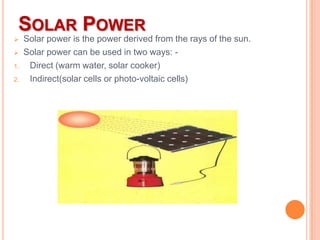
Solar power is the power derived from the rays of the sun.
Solar power can be used in two ways: Direct (warm water, solar cooker)
Indirect(solar cells or photo-voltaic cells)
HYDEL POWER
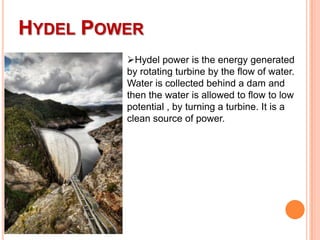
Hydel power is the energy generated
by rotating turbine by the flow of water.
Water is collected behind a dam and
then the water is allowed to flow to low
potential , by turning a turbine. It is a
clean source of power.
WIND ENERGY




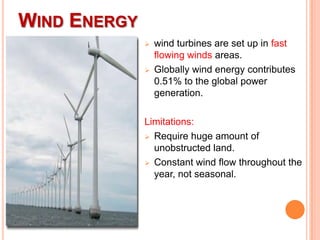
wind turbines are set up in fast
flowing winds areas.
Globally wind energy contributes
0.51% to the global power
generation.

Limitations:
 Require huge amount of
unobstructed land.
 Constant wind flow throughout the
year, not seasonal.
GEOTHERMAL ENERGY


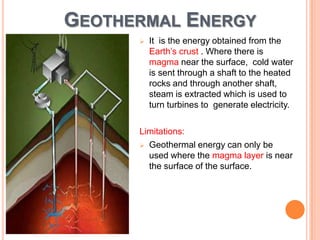
It is the energy obtained from the
Earth’s crust . Where there is
magma near the surface, cold water
is sent through a shaft to the heated
rocks and through another shaft,
steam is extracted which is used to
turn turbines to generate electricity.

Limitations:
 Geothermal energy can only be
used where the magma layer is near
the surface of the surface.
BIO GAS




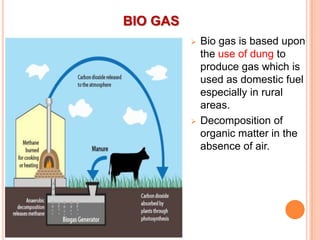
Bio gas is based upon
the use of dung to
produce gas which is
used as domestic fuel
especially in rural
areas.
Decomposition of
organic matter in the
absence of air.
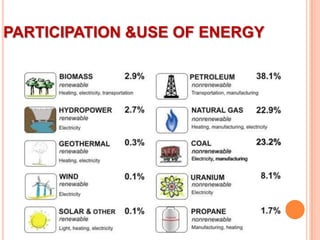
PARTICIPATION &USE OF ENERGY
ENERGY CONSERVATION
“Energy conservation means to reduce the quantity
of energy that is used for different purposes.”


Optimum Utilisation



Proper Management



This practice may result in

I.

Increase of financial capital,

II.

Environmental value,

III.

National and personal security

IV.

Human comfort.



It can be implemented in following fields-

a)

Residential sector

b)

Commercial sector

c)

Industrial sector

d)

Transportation sector
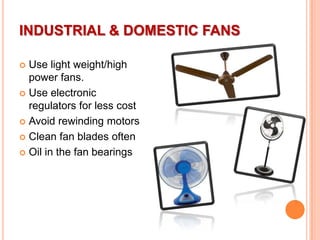
INDUSTRIAL & DOMESTIC FANS
Use light weight/high
power fans.
 Use electronic
regulators for less cost
 Avoid rewinding motors
 Clean fan blades often
 Oil in the fan bearings

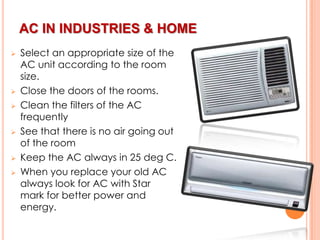
AC IN INDUSTRIES & HOME











Select an appropriate size of the
AC unit according to the room
size.
Close the doors of the rooms.
Clean the filters of the AC
frequently
See that there is no air going out
of the room
Keep the AC always in 25 deg C.
When you replace your old AC
always look for AC with Star
mark for better power and
energy.
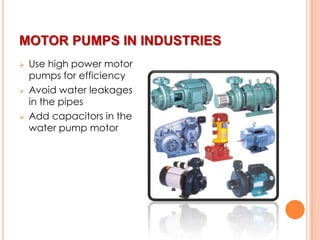
MOTOR PUMPS IN INDUSTRIES






Use high power motor
pumps for efficiency
Avoid water leakages
in the pipes
Add capacitors in the
water pump motor
COMPUTERS IN OFFICES







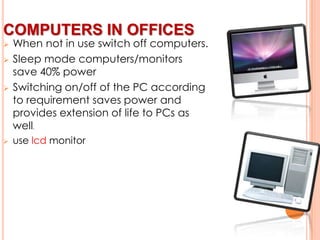
When not in use switch off computers.
Sleep mode computers/monitors
save 40% power
Switching on/off of the PC according
to requirement saves power and
provides extension of life to PCs as
well.
use lcd monitor
WATER HEATERS IN INDUSTRIES & HOME








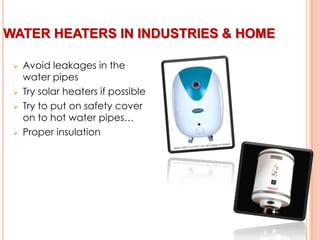
Avoid leakages in the
water pipes
Try solar heaters if possible
Try to put on safety cover
on to hot water pipes…
Proper insulation
REFRIGRATORS











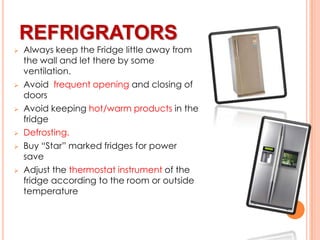
Always keep the Fridge little away from
the wall and let there by some
ventilation.
Avoid frequent opening and closing of
doors
Avoid keeping hot/warm products in the
fridge
Defrosting.
Buy “Star” marked fridges for power
save
Adjust the thermostat instrument of the
fridge according to the room or outside
temperature
GRINDER AT HOME





Use high power motors in the grinders
See that your grinders have nylon belts
Use the grinder to the full power and
energy
Clean the grinder often and apply oil
in relevant parts.

Try and plan for more clothes
at a time.
Switch off the Iron when not
in use
CONCLUSION





Optimum utilization of resources
The renewable sources of energy should be modified to give
the maximum output.
Improvement of engines design.The engines should be made
more efficient.

And last but not the least……


“Save electricity and fuel for the future.”
Energy resources

Energy resources

  • 1.
    GD/SEMINAR ONENERGY RESOURCES & IT’SCONSERVATION Presented BySHASHI SARASWAT PGDSHE (137235)
  • 2.
    CONTENTS What is Energy Classification of Energy Resources  Energy Consumption in Total World  Brief Explanation of Each  Participation & Use of Diff. Type Of Energy  What is Energy Conservation?  Energy Conservation in Different Areas.  Conclusion 
  • 3.
     Energy is theability or the capacity to do work. It is the source of power for mechanisms and organisms without it nothing will work.  Common sources of energy are fossil fuels like coal, oil and natural gas. They are all nonrenewable sources and are naturally made from decaying plants and animals that existed million years ago.
  • 4.
    ENERGY RESOURCES  1. 2. The substancesfrom which we produce energy are known as energy sources. We need energy for our day to day life. Renewable source of energy Non-renewable source of energy
  • 5.
    WORLD ENERGY CONSUMPTION  Fossilfuels constitute most of the energy we use. Only 16.7% of the total energy is renewable energy.
  • 6.
    NON-RENEWABLE ENERGY RESOURCES    1. 2. 3. 4. Thesources of energy that once used , cannot be reused are known as non-renewable sources of energy. These are the energy sources which are found from the earth crust. These sources of energy are known as fossil fuels. These took millions of years to form Coal Petroleum Natural gas Nuclear fuel
  • 7.
    COAL Coal is ahard, black, rocklike substance made up of carbon, hydrogen , oxygen, nitrogen, and sulphur. Lignite is the softest kind of coal. While anthracite is the best kind of coal.
  • 8.
    Coal is mined,may be1. Open pit mining 2. Underground mining POWER PLANTS Mining Transportation Pulverisation
  • 9.
     Petroleum, alsoknown as crude oil which is unprocessed oil from underground reserves. It is Primarily made up of hydro carbons. Crude oil can be sources of different by-products such as gasoline, kerosene and diesel. It can also be refined to create polymers that are used to make plastics. The Philippines has large reserves of natural gas , an odorless and colorless chemical compound
  • 10.
    RENEWABLE ENERGY SOURCES Unlimitedsources of energy which will not be exhausted in any near future.  About 16.7% of global final energy consumption comes from renewable energy sources. The renewable sources of energy include:  Solar energy  Hydel energy  Wind energy  Tidal energy  Geothermal energy  Biogas 
  • 11.
    SOLAR POWER   1. 2. Solar poweris the power derived from the rays of the sun. Solar power can be used in two ways: Direct (warm water, solar cooker) Indirect(solar cells or photo-voltaic cells)
  • 12.
    HYDEL POWER Hydel poweris the energy generated by rotating turbine by the flow of water. Water is collected behind a dam and then the water is allowed to flow to low potential , by turning a turbine. It is a clean source of power.
  • 13.
    WIND ENERGY   wind turbinesare set up in fast flowing winds areas. Globally wind energy contributes 0.51% to the global power generation. Limitations:  Require huge amount of unobstructed land.  Constant wind flow throughout the year, not seasonal.
  • 14.
    GEOTHERMAL ENERGY  It isthe energy obtained from the Earth’s crust . Where there is magma near the surface, cold water is sent through a shaft to the heated rocks and through another shaft, steam is extracted which is used to turn turbines to generate electricity. Limitations:  Geothermal energy can only be used where the magma layer is near the surface of the surface.
  • 15.
    BIO GAS   Bio gasis based upon the use of dung to produce gas which is used as domestic fuel especially in rural areas. Decomposition of organic matter in the absence of air.
  • 16.
  • 17.
    ENERGY CONSERVATION “Energy conservationmeans to reduce the quantity of energy that is used for different purposes.”  Optimum Utilisation  Proper Management  This practice may result in I. Increase of financial capital, II. Environmental value, III. National and personal security IV. Human comfort.  It can be implemented in following fields- a) Residential sector b) Commercial sector c) Industrial sector d) Transportation sector
  • 18.
    INDUSTRIAL & DOMESTICFANS Use light weight/high power fans.  Use electronic regulators for less cost  Avoid rewinding motors  Clean fan blades often  Oil in the fan bearings 
  • 19.
    AC IN INDUSTRIES& HOME       Select an appropriate size of the AC unit according to the room size. Close the doors of the rooms. Clean the filters of the AC frequently See that there is no air going out of the room Keep the AC always in 25 deg C. When you replace your old AC always look for AC with Star mark for better power and energy.
  • 20.
    MOTOR PUMPS ININDUSTRIES    Use high power motor pumps for efficiency Avoid water leakages in the pipes Add capacitors in the water pump motor
  • 21.
    COMPUTERS IN OFFICES     Whennot in use switch off computers. Sleep mode computers/monitors save 40% power Switching on/off of the PC according to requirement saves power and provides extension of life to PCs as well. use lcd monitor
  • 22.
    WATER HEATERS ININDUSTRIES & HOME     Avoid leakages in the water pipes Try solar heaters if possible Try to put on safety cover on to hot water pipes… Proper insulation
  • 23.
    REFRIGRATORS       Always keep theFridge little away from the wall and let there by some ventilation. Avoid frequent opening and closing of doors Avoid keeping hot/warm products in the fridge Defrosting. Buy “Star” marked fridges for power save Adjust the thermostat instrument of the fridge according to the room or outside temperature
  • 24.
    GRINDER AT HOME     Usehigh power motors in the grinders See that your grinders have nylon belts Use the grinder to the full power and energy Clean the grinder often and apply oil in relevant parts. Try and plan for more clothes at a time. Switch off the Iron when not in use
  • 25.
    CONCLUSION    Optimum utilization ofresources The renewable sources of energy should be modified to give the maximum output. Improvement of engines design.The engines should be made more efficient. And last but not the least……  “Save electricity and fuel for the future.”