By-Swapnil Pekam
School Of Earth Science ,Applied
Geology,Solapur University
• Energy is one of the most important component of economic
infrastructure.
• It is the basic input required to sustain economic growth.
There is direct relation between the level of economic
development and per capita energy consumption.
• Simply speaking more developed a country, higher is the per
capita consumption of energy and the other way around.
India’s per capita consumption of energy is only one eighth of
global average. This indicates that our country has low rate of
per capita consumption of energy as compared to developed
countries
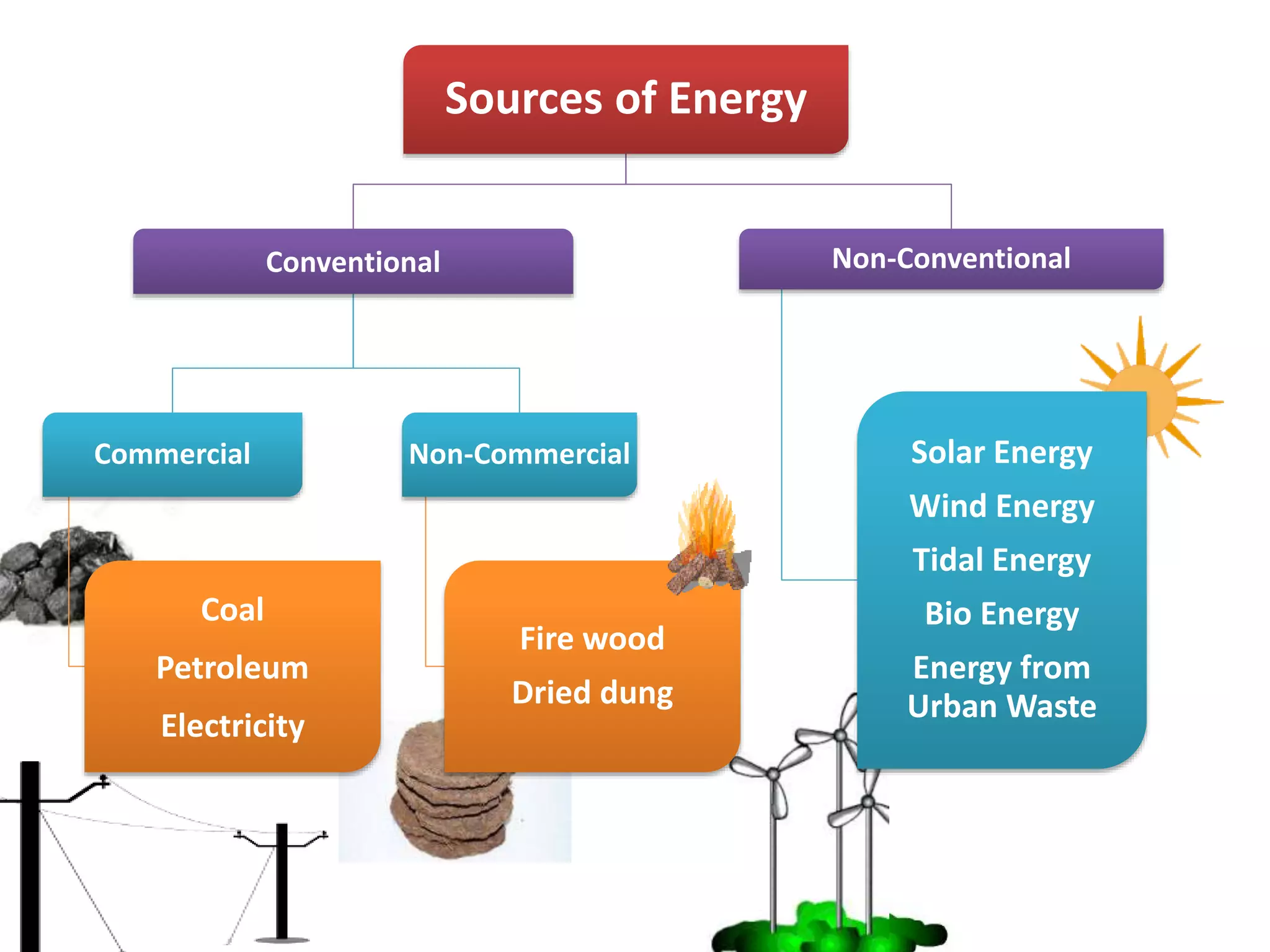
Sources of Energy
Conventional
Commercial
Coal
Petroleum
Electricity
Non-Commercial
Fire wood
Dried dung
Non-Conventional
Solar Energy
Wind Energy
Tidal Energy
Bio Energy
Energy from
Urban Waste
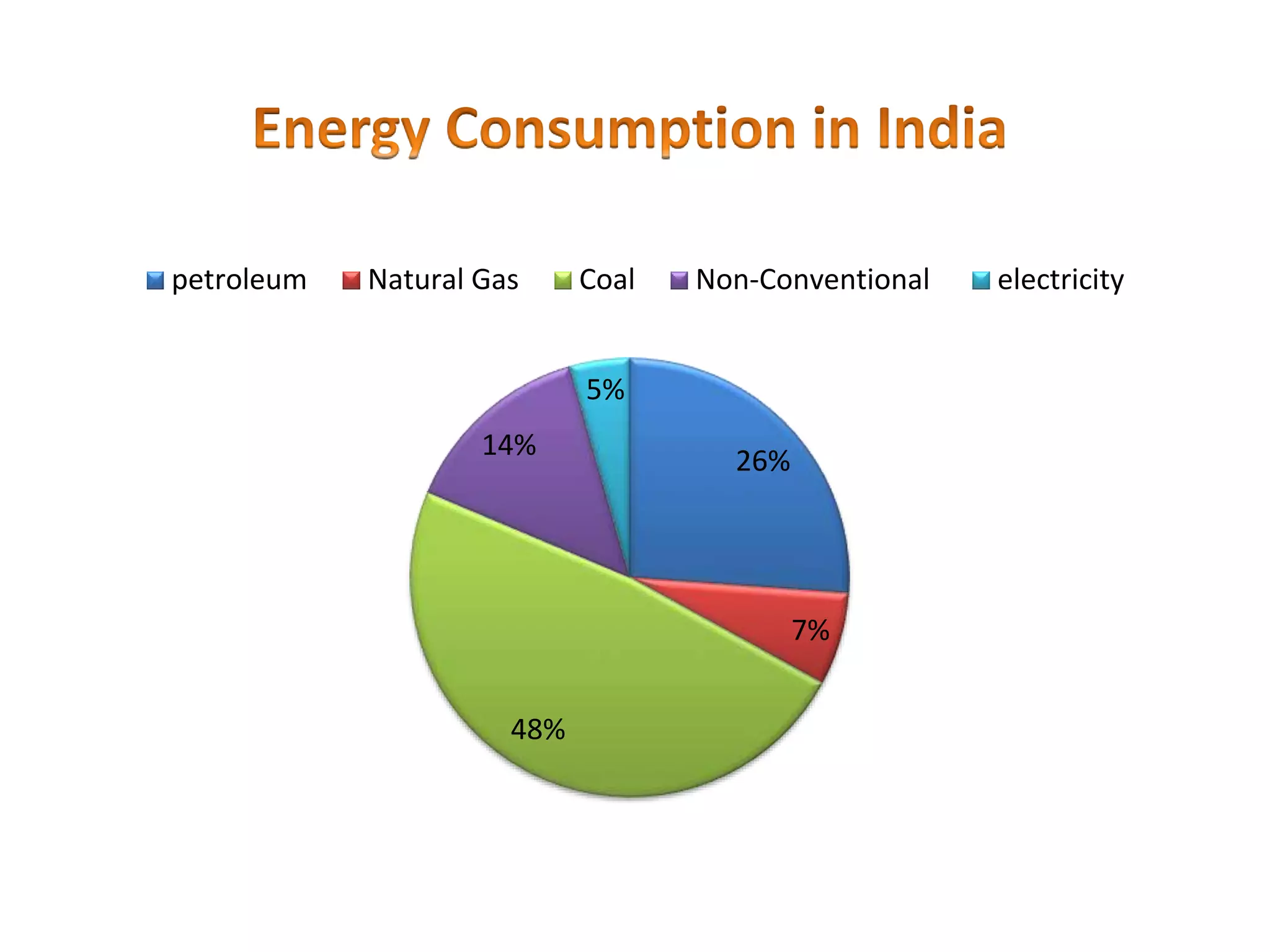
26%
7%
48%
5%
14%
petroleum Natural Gas Coal electricity Non-Conventional
• These sources of energy are also called non
renewable sources. These sources of energy
are in limited quantity except hydro-electric
power.
• These are further classified as commercial
energy and non-commercial
• These are coal, petroleum and electricity. These are
called commercial energy because they have a price
and consumer has to pay the price to purchase them.
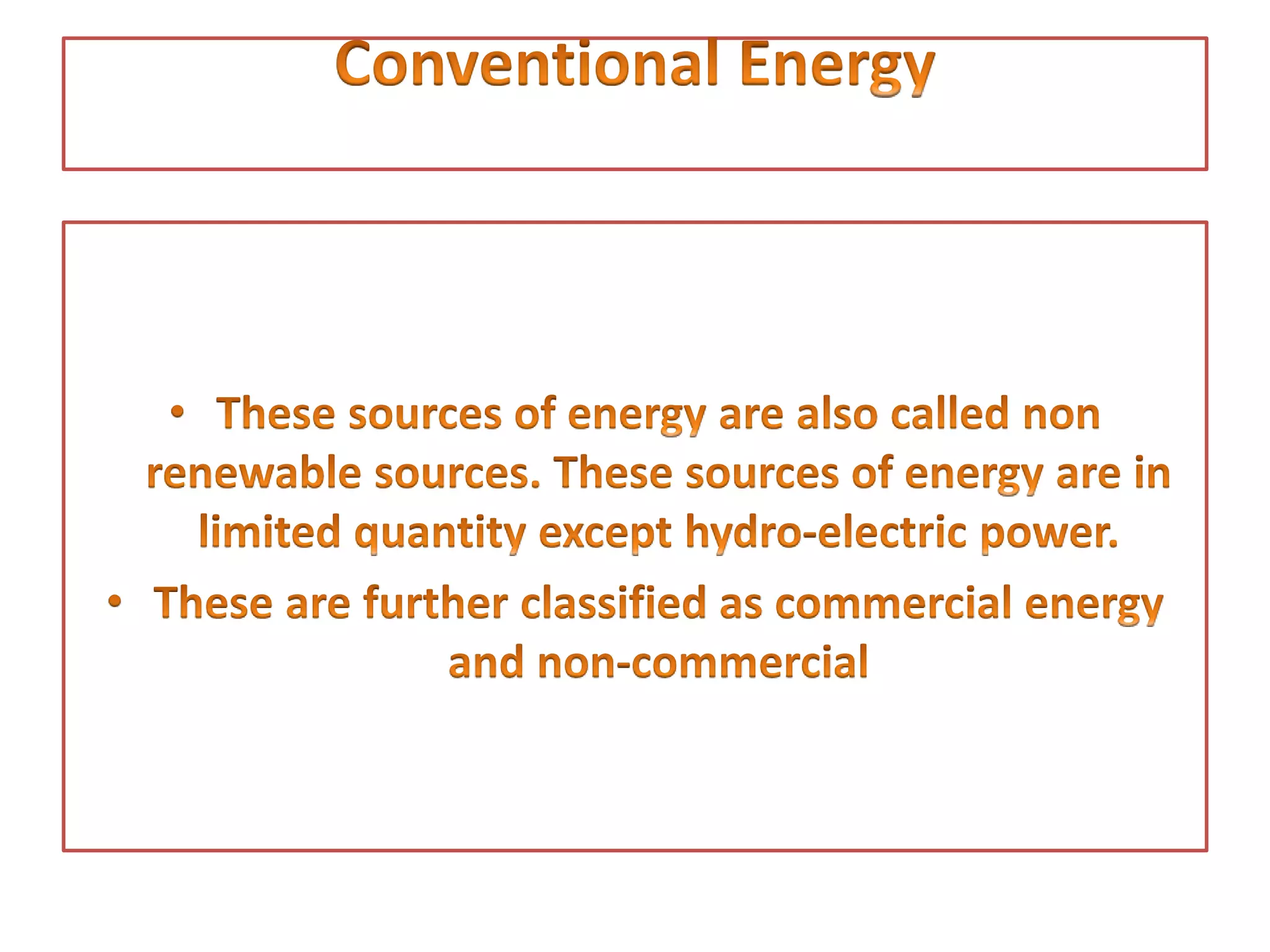
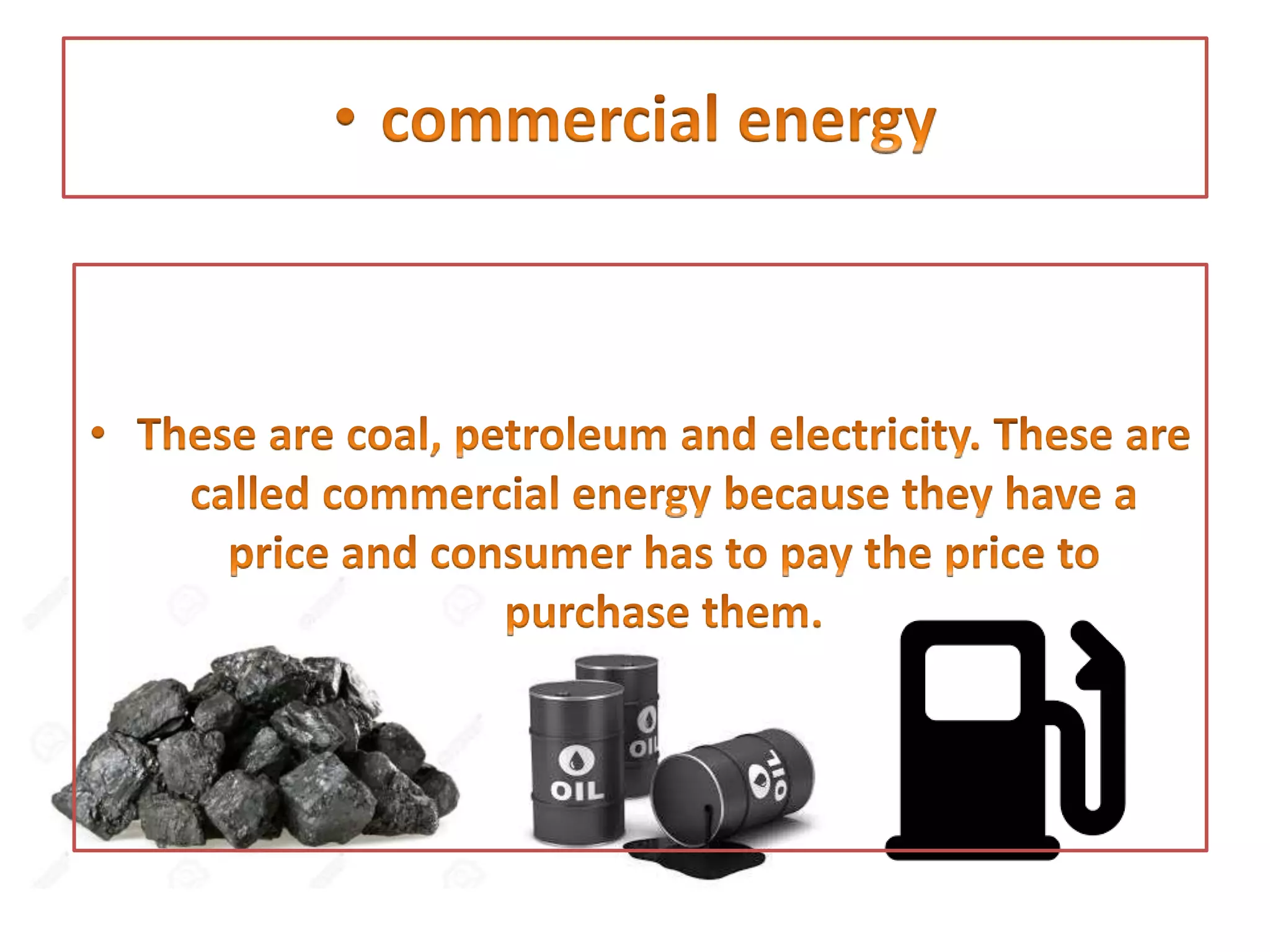
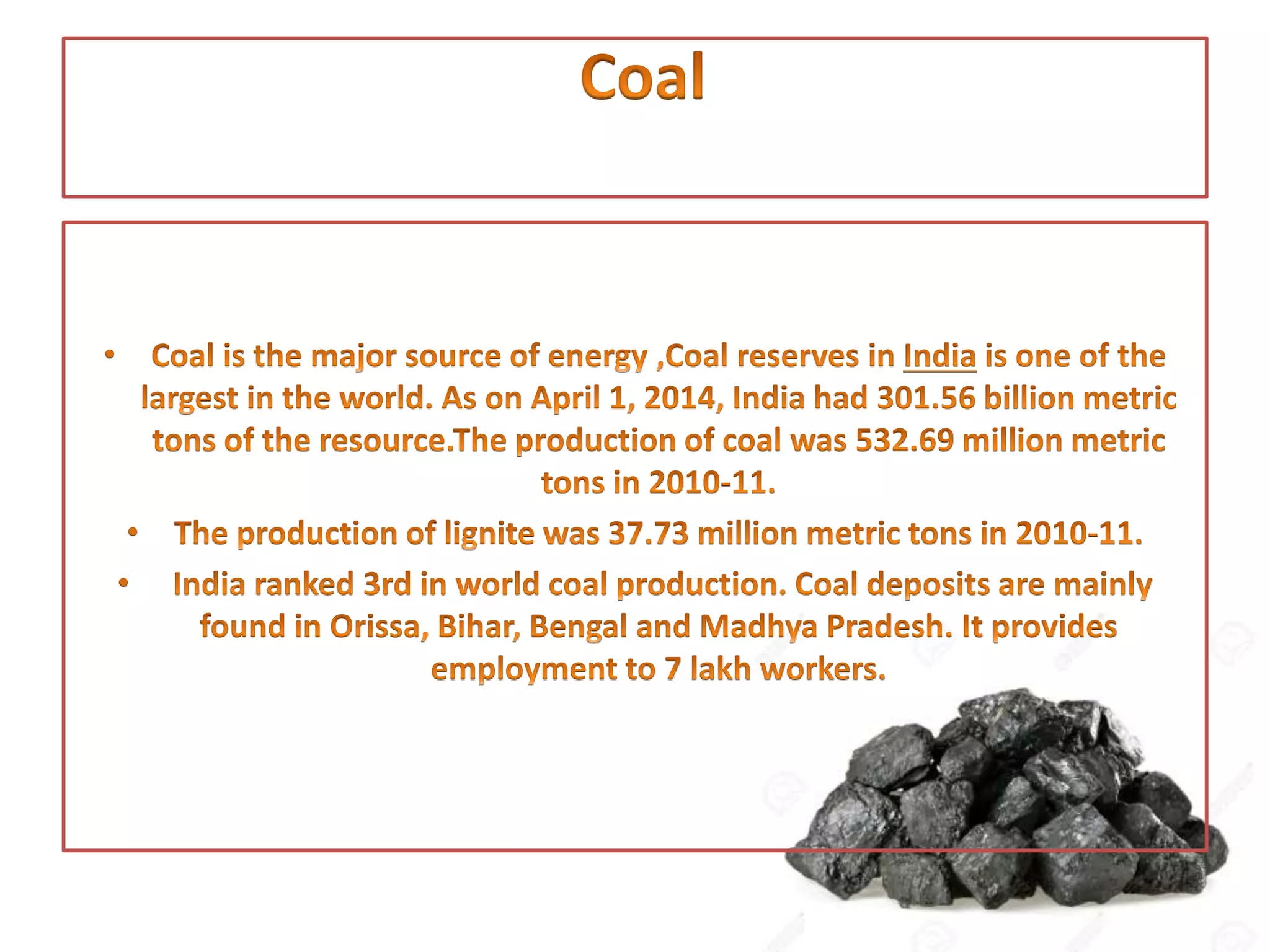
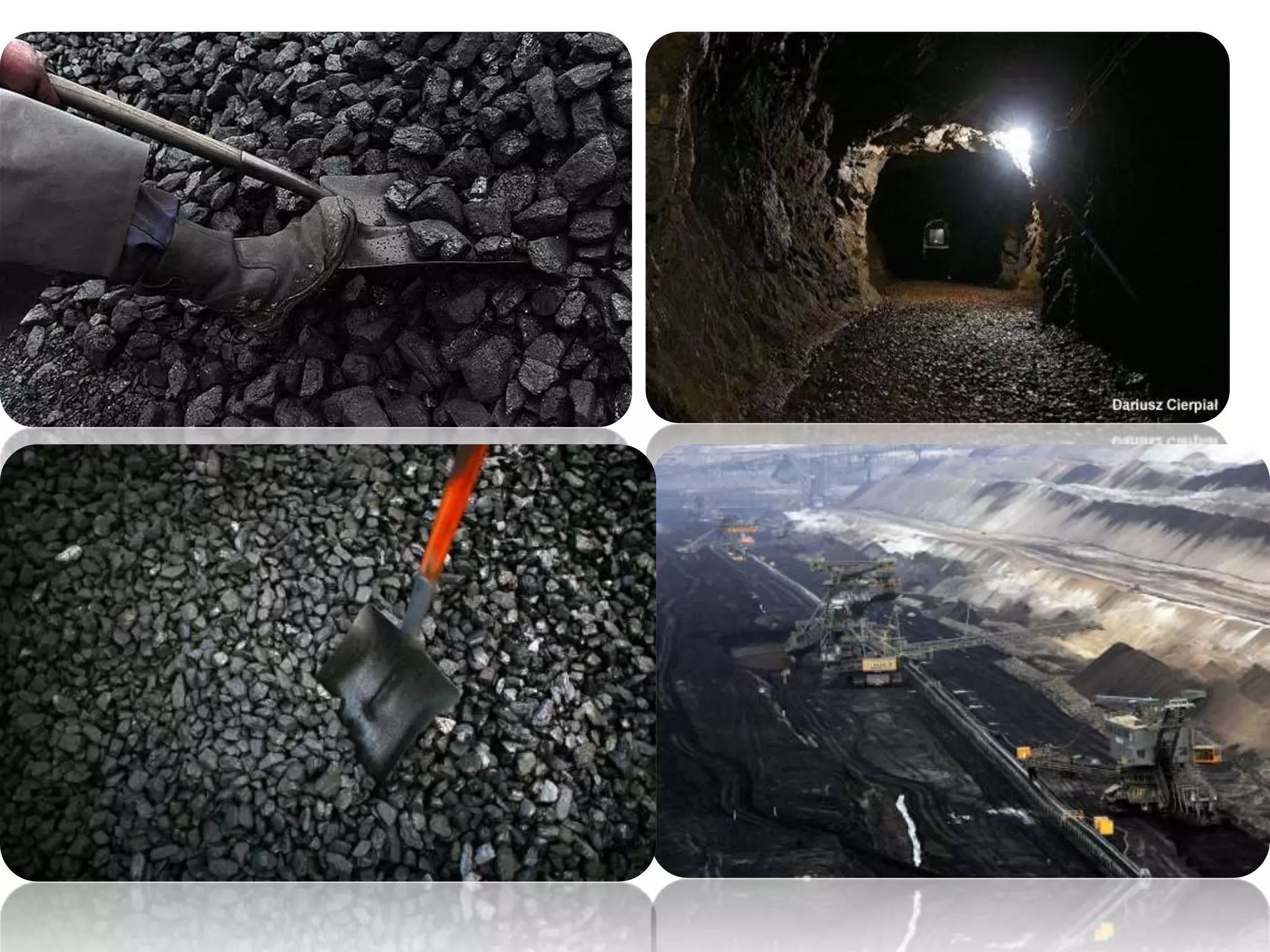
• Coal is the major source of energy ,Coal reserves in India is one of the
largest in the world. As on April 1, 2014, India had 301.56 billion metric
tons of the resource. The production of coal was 532.69 million metric
tons in 2010-11.
• The production of lignite was 37.73 million metric tons in 2010-11.
• India ranked 3rd in world coal production. Coal deposits are mainly
found in Orissa, Bihar, Bengal and Madhya Pradesh. It provides
employment to 7 lakh workers.
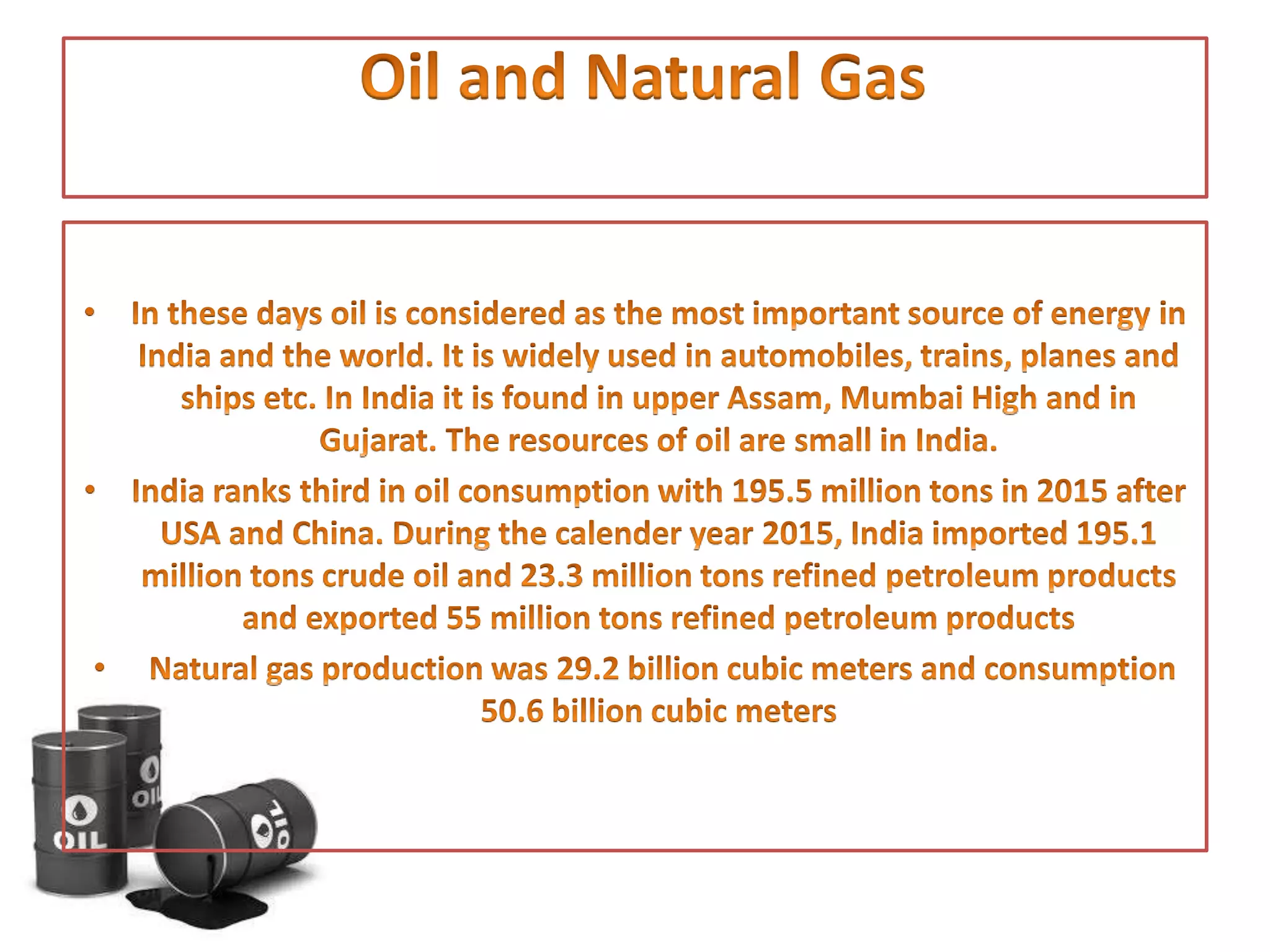
• In these days oil is considered as the most important source of
energy in India and the world. It is widely used in automobiles,
trains, planes and ships etc. In India it is found in upper Assam,
Mumbai High and in Gujarat. The resources of oil are small in
India.
• India ranks third in oil consumption with 195.5 million tons in
2015 after USA and China. During the calender year 2015, India
imported 195.1 million tons crude oil and 23.3 million tons
refined petroleum products and exported 55 million tons
refined petroleum products
• Natural gas production was 29.2 billion cubic meters and
consumption 50.6 billion cubic meters
• Electricity is the common and popular source of energy. It
is used in commercial and domestic purposes. It is used for
lighting, cooking, air conditioning and working of electrical
appliances like T.V., fridge and washing machine.
• The utility electricity sector in India had an installed
capacity of 305.55 GW as of 31 August 2016.Renewable
power plants constituted 28% of total installed capacity.
• The gross electricity generated by utilities is
1,106 TWh and 166 TWh by captive power plants during
the 2014–15 fiscal.
• India became the world's third largest producer of
electricity in the year 2013 with 4.8% global share in
electricity generation surpassing Japan and Russia
• These sources include fuel wood and dried dung. These are
commonly used in rural India. According to an estimate, the total
availability of fuel wood in India was only 50 million tonnes a year.
It is less than 50% of the total requirements. In coming years,
there would be shortage of fire wood.
• Agricultural wastes like straw are used as fuel for cooking
purposes. According to one estimate agricultural waste used for
fuel might be 65 million tonnes. Animal dung when dried is also
used for cooking purposes. Total animal dung production is 324
million tonnes out of which 73 million tonnes are used as fuel for
cooking purposes. The straw and dung can be used as valuable
organic manure for increasing fertility of soil and in turn
productivity.
• 1) Available in dilute form in nature
2) Cost of harnessing energy is very high
3) Availability is uncertain
4) Difficulty in transporting such resources
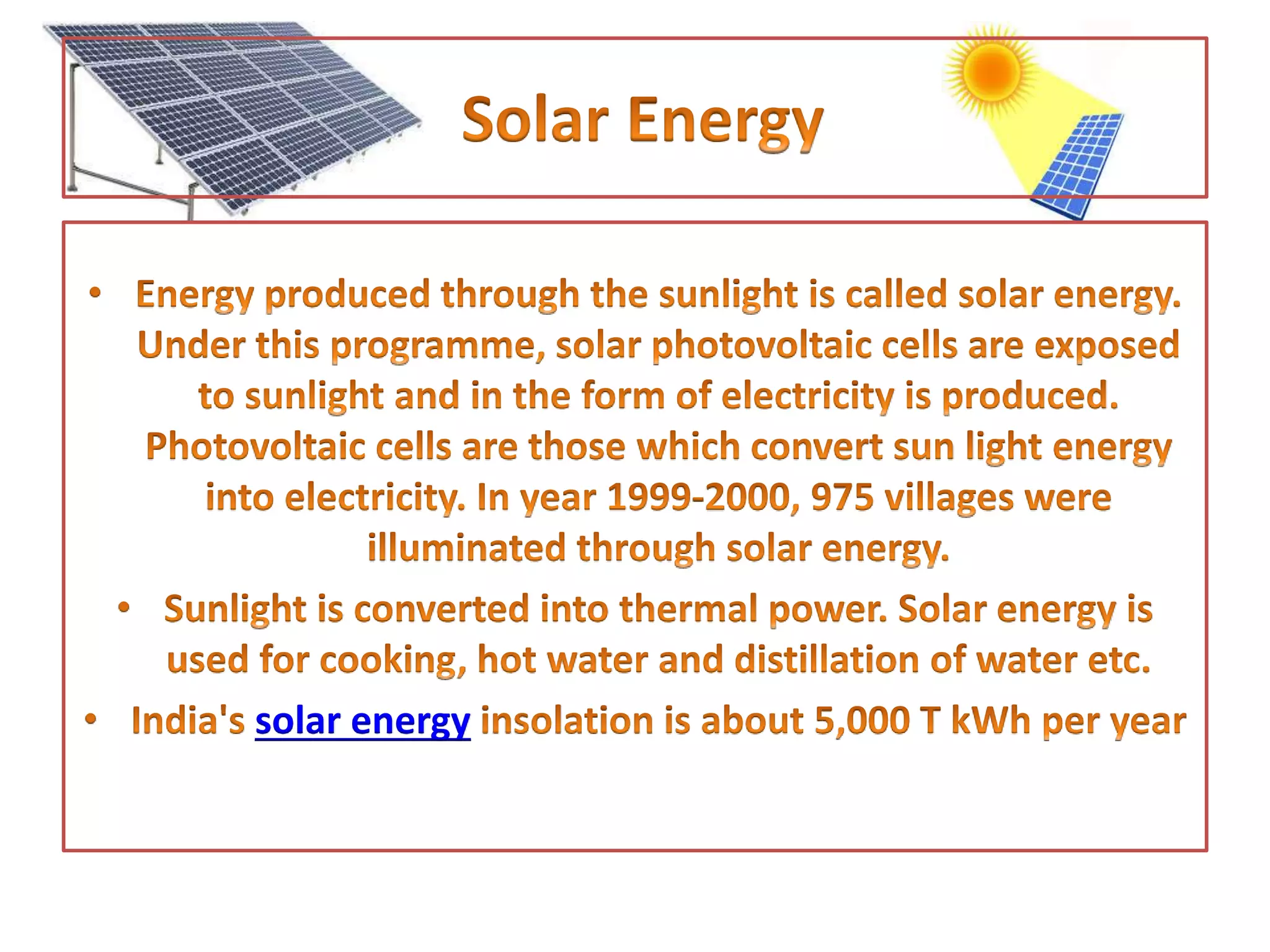
• Energy produced through the sunlight is called solar energy. Under
this programme, solar photovoltaic cells are exposed to sunlight
and in the form of electricity is produced. Photovoltaic cells are
those which convert sun light energy into electricity. In year 1999-
2000, 975 villages were illuminated through solar energy.
• Sunlight is converted into thermal power. Solar energy is used for
cooking, hot water and distillation of water etc.
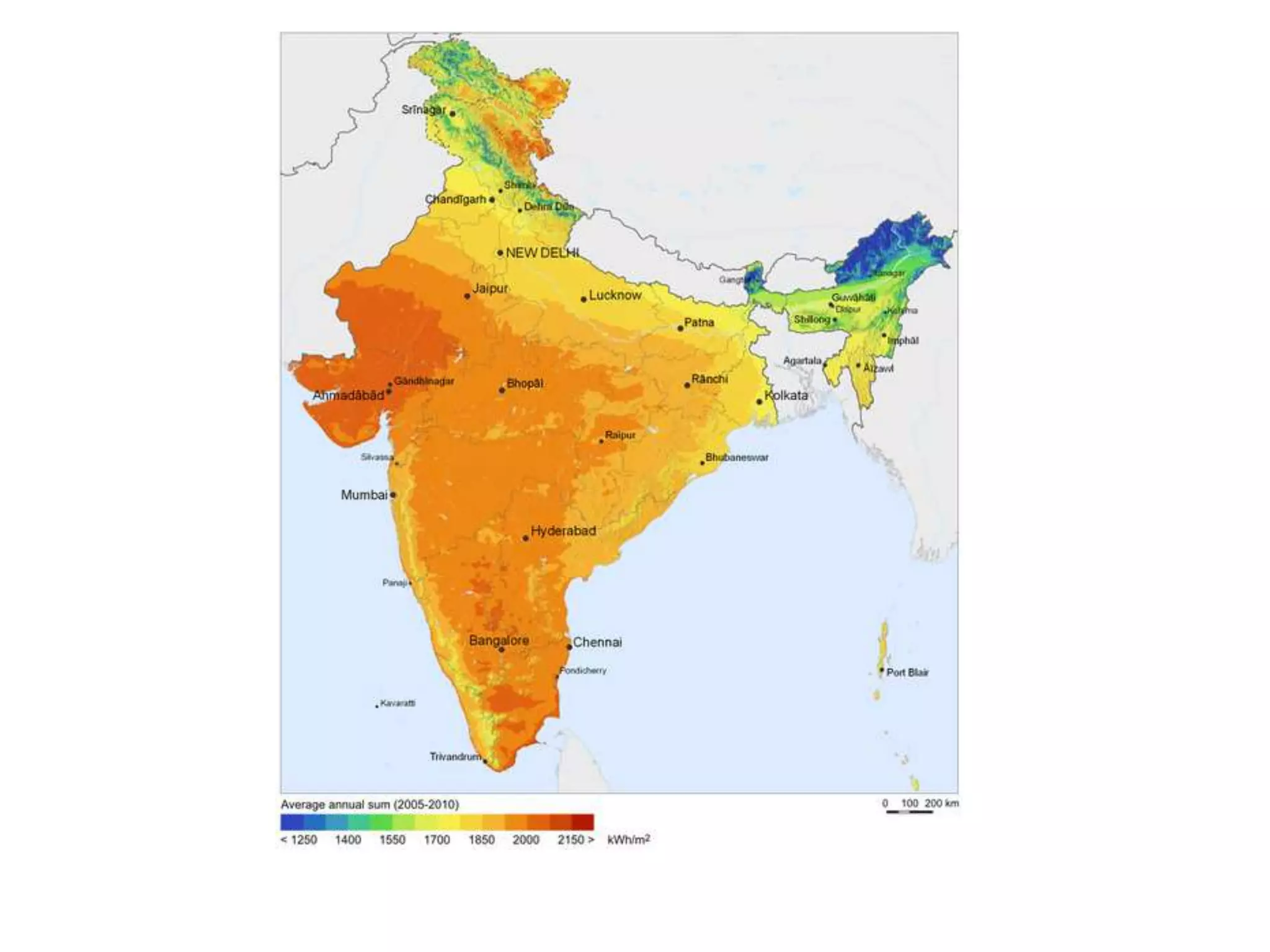
• India's solar energy insolation is about 5,000 T kWh per year
• This type of energy can be produced by harnessing
wind power. It is used for operating water pumps
for irrigation purposes. Approximately 2756 wind
pumps were set up for this purpose. In seven states,
wind power operated power houses were installed
and their installed capacity was 1000 MW. India has
second position in wind power energy generation.
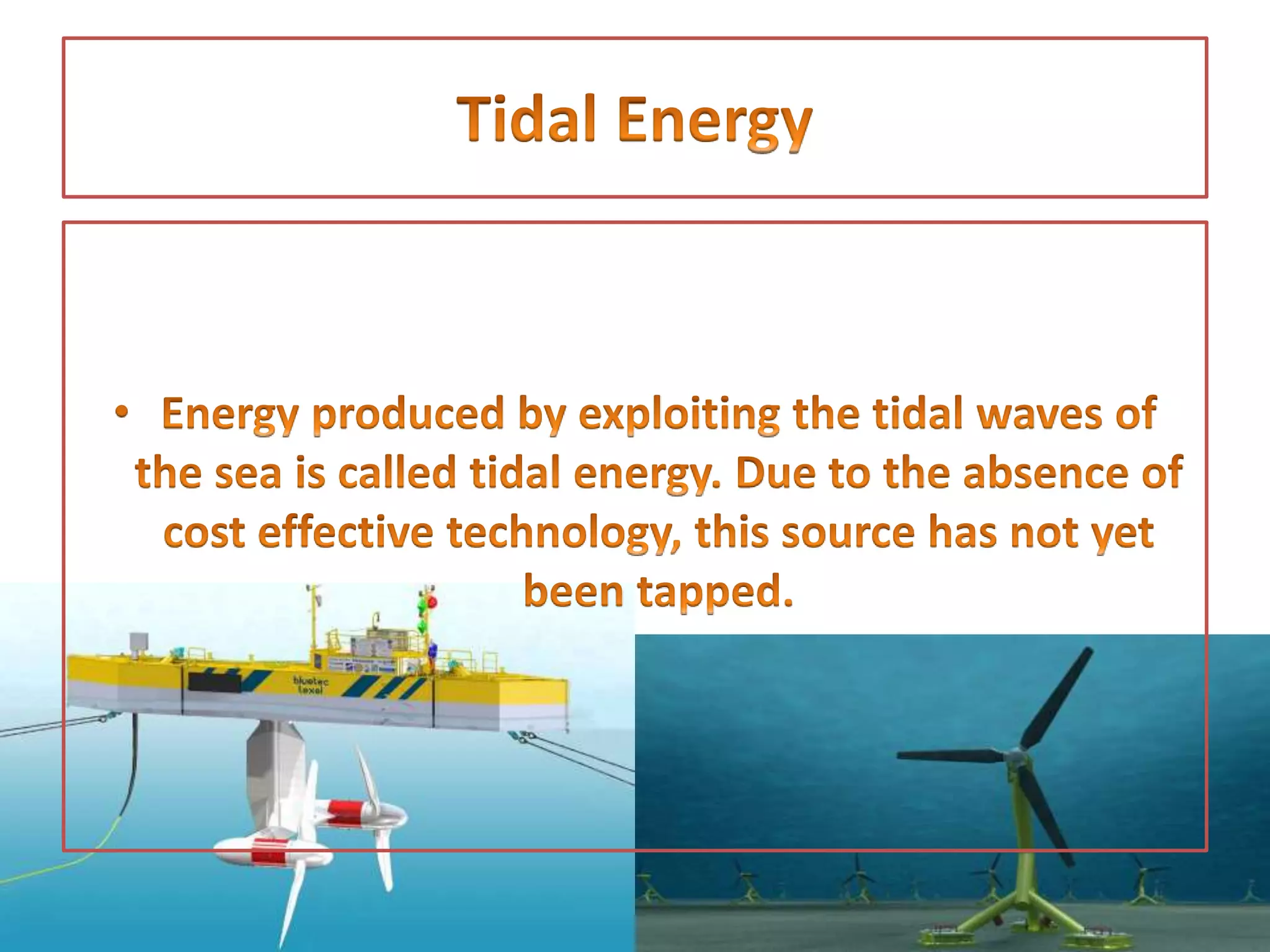
• Energy produced by
exploiting the tidal
waves of the sea is
called tidal energy. Due
to the absence of cost
effective technology,
this source has not yet
been tapped.
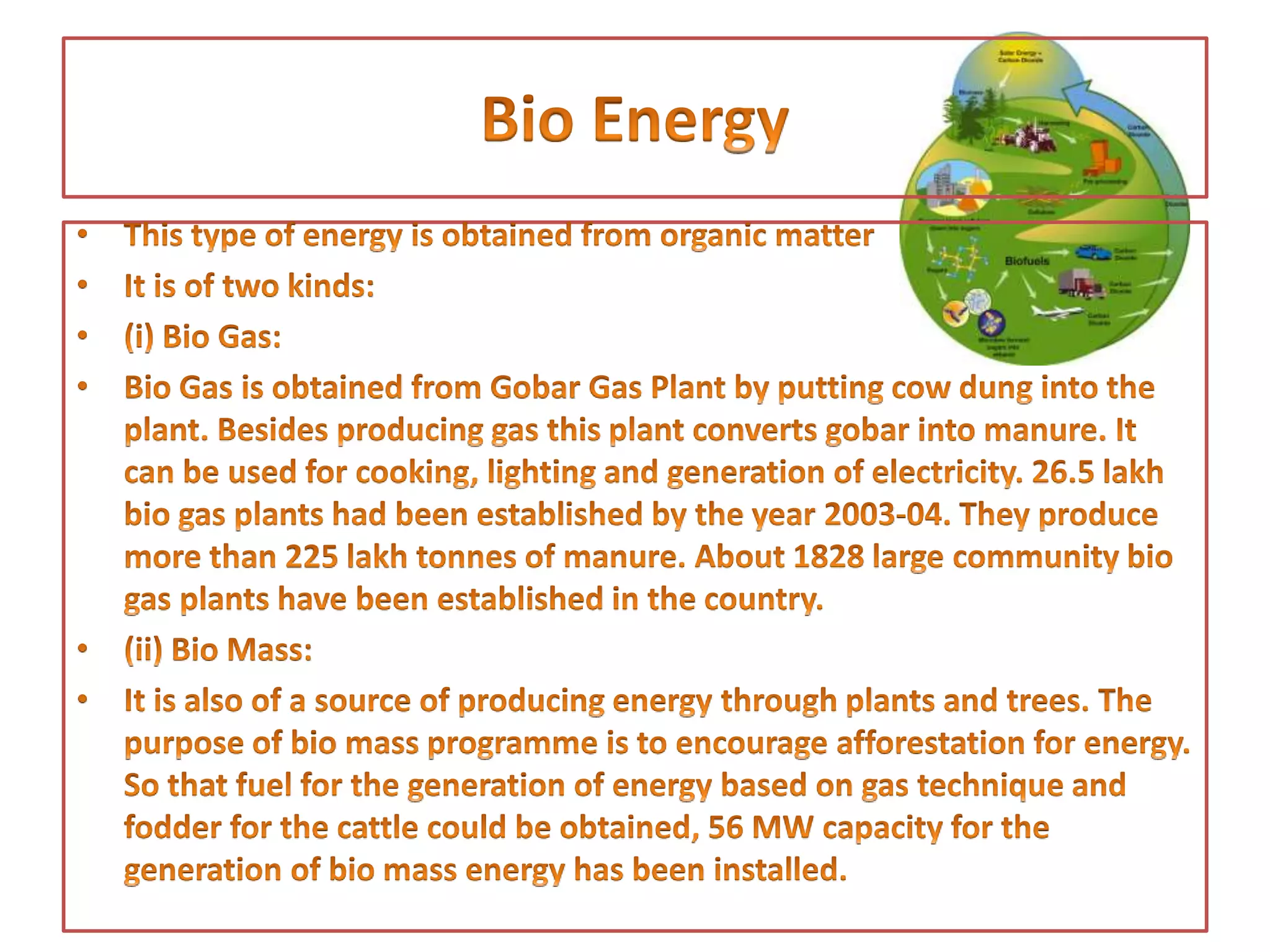
• This type of energy is obtained from organic matter
• It is of two kinds:
• Bio Gas is obtained from Gobar Gas Plant by putting cow dung into the plant.
Besides producing gas this plant converts gobar into manure. It can be used for
cooking, lighting and generation of electricity. 26.5 lakh bio gas plants had
been established by the year 2003-04. They produce more than 225 lakh
tonnes of manure. About 1828 large community bio gas plants have been
established in the country.
• It is also of a source of producing energy through plants and trees. The
purpose of bio mass programme is to encourage afforestation for energy. So
that fuel for the generation of energy based on gas technique and fodder for
the cattle could be obtained, 56 MW capacity for the generation of bio mass
energy has been installed.
• Urban waste poses a big
problem for its disposal.
Now it can be used for
generation of power. In
Timarpur (Delhi) a
power Ration of 3.75
capacity has been set
up to generate energy
from the garbage.
• The non-conventional sources of energy have many advantages. They are
discussed below:
• 1. Cheaper and Renewable: Most of the Non-conventional Power resources
are cheaper and renewable as compared to the conventional sources.
• 2. Scarcity of Fossil Fuels: The overall limitation and scarcity of fossil fuels has
given rise to the urgent need for exploiting alternative energy sources.
• 3. Rural Energy Needs: Locally available non-conventional and renewable
power resources can meet localized rural energy needs with minimum
transportional cost.
• 4. Inexhaustible and Environment friendly: Power from Non-conventional and
Renewable is a must in order to reduce carbon dioxide (CO2) emissions of the
coal-based power plants. It is inexhaustible in nature and environment
friendly.
Conventional energy and non conventional sources of energy in india

Conventional energy and non conventional sources of energy in india

  • 1.
    By-Swapnil Pekam School OfEarth Science ,Applied Geology,Solapur University
  • 2.
    • Energy isone of the most important component of economic infrastructure. • It is the basic input required to sustain economic growth. There is direct relation between the level of economic development and per capita energy consumption. • Simply speaking more developed a country, higher is the per capita consumption of energy and the other way around. India’s per capita consumption of energy is only one eighth of global average. This indicates that our country has low rate of per capita consumption of energy as compared to developed countries
  • 3.
    Sources of Energy Conventional Commercial Coal Petroleum Electricity Non-Commercial Firewood Dried dung Non-Conventional Solar Energy Wind Energy Tidal Energy Bio Energy Energy from Urban Waste
  • 4.
    26% 7% 48% 5% 14% petroleum Natural GasCoal electricity Non-Conventional
  • 5.
    • These sourcesof energy are also called non renewable sources. These sources of energy are in limited quantity except hydro-electric power. • These are further classified as commercial energy and non-commercial
  • 6.
    • These arecoal, petroleum and electricity. These are called commercial energy because they have a price and consumer has to pay the price to purchase them.
  • 7.
    • Coal isthe major source of energy ,Coal reserves in India is one of the largest in the world. As on April 1, 2014, India had 301.56 billion metric tons of the resource. The production of coal was 532.69 million metric tons in 2010-11. • The production of lignite was 37.73 million metric tons in 2010-11. • India ranked 3rd in world coal production. Coal deposits are mainly found in Orissa, Bihar, Bengal and Madhya Pradesh. It provides employment to 7 lakh workers.
  • 9.
    • In thesedays oil is considered as the most important source of energy in India and the world. It is widely used in automobiles, trains, planes and ships etc. In India it is found in upper Assam, Mumbai High and in Gujarat. The resources of oil are small in India. • India ranks third in oil consumption with 195.5 million tons in 2015 after USA and China. During the calender year 2015, India imported 195.1 million tons crude oil and 23.3 million tons refined petroleum products and exported 55 million tons refined petroleum products • Natural gas production was 29.2 billion cubic meters and consumption 50.6 billion cubic meters
  • 11.
    • Electricity isthe common and popular source of energy. It is used in commercial and domestic purposes. It is used for lighting, cooking, air conditioning and working of electrical appliances like T.V., fridge and washing machine. • The utility electricity sector in India had an installed capacity of 305.55 GW as of 31 August 2016.Renewable power plants constituted 28% of total installed capacity. • The gross electricity generated by utilities is 1,106 TWh and 166 TWh by captive power plants during the 2014–15 fiscal. • India became the world's third largest producer of electricity in the year 2013 with 4.8% global share in electricity generation surpassing Japan and Russia
  • 12.
    • These sourcesinclude fuel wood and dried dung. These are commonly used in rural India. According to an estimate, the total availability of fuel wood in India was only 50 million tonnes a year. It is less than 50% of the total requirements. In coming years, there would be shortage of fire wood. • Agricultural wastes like straw are used as fuel for cooking purposes. According to one estimate agricultural waste used for fuel might be 65 million tonnes. Animal dung when dried is also used for cooking purposes. Total animal dung production is 324 million tonnes out of which 73 million tonnes are used as fuel for cooking purposes. The straw and dung can be used as valuable organic manure for increasing fertility of soil and in turn productivity.
  • 13.
    • 1) Availablein dilute form in nature 2) Cost of harnessing energy is very high 3) Availability is uncertain 4) Difficulty in transporting such resources
  • 14.
    • Energy producedthrough the sunlight is called solar energy. Under this programme, solar photovoltaic cells are exposed to sunlight and in the form of electricity is produced. Photovoltaic cells are those which convert sun light energy into electricity. In year 1999- 2000, 975 villages were illuminated through solar energy. • Sunlight is converted into thermal power. Solar energy is used for cooking, hot water and distillation of water etc. • India's solar energy insolation is about 5,000 T kWh per year
  • 16.
    • This typeof energy can be produced by harnessing wind power. It is used for operating water pumps for irrigation purposes. Approximately 2756 wind pumps were set up for this purpose. In seven states, wind power operated power houses were installed and their installed capacity was 1000 MW. India has second position in wind power energy generation.
  • 18.
    • Energy producedby exploiting the tidal waves of the sea is called tidal energy. Due to the absence of cost effective technology, this source has not yet been tapped.
  • 19.
    • This typeof energy is obtained from organic matter • It is of two kinds: • Bio Gas is obtained from Gobar Gas Plant by putting cow dung into the plant. Besides producing gas this plant converts gobar into manure. It can be used for cooking, lighting and generation of electricity. 26.5 lakh bio gas plants had been established by the year 2003-04. They produce more than 225 lakh tonnes of manure. About 1828 large community bio gas plants have been established in the country. • It is also of a source of producing energy through plants and trees. The purpose of bio mass programme is to encourage afforestation for energy. So that fuel for the generation of energy based on gas technique and fodder for the cattle could be obtained, 56 MW capacity for the generation of bio mass energy has been installed.
  • 20.
    • Urban wasteposes a big problem for its disposal. Now it can be used for generation of power. In Timarpur (Delhi) a power Ration of 3.75 capacity has been set up to generate energy from the garbage.
  • 21.
    • The non-conventionalsources of energy have many advantages. They are discussed below: • 1. Cheaper and Renewable: Most of the Non-conventional Power resources are cheaper and renewable as compared to the conventional sources. • 2. Scarcity of Fossil Fuels: The overall limitation and scarcity of fossil fuels has given rise to the urgent need for exploiting alternative energy sources. • 3. Rural Energy Needs: Locally available non-conventional and renewable power resources can meet localized rural energy needs with minimum transportional cost. • 4. Inexhaustible and Environment friendly: Power from Non-conventional and Renewable is a must in order to reduce carbon dioxide (CO2) emissions of the coal-based power plants. It is inexhaustible in nature and environment friendly.