ENERGY MANAGEMENT
SYSTEM
Guided By:- Presented By:-
Dr. Ramaprasad Panda Soumya Ranjan Das
EEE- A2, Roll No.- 07
Group No.:- 09
Silicon Institute of Technology
1
Content
 Introduction
 What is energy management?
 Why energy management is important?
 Steps for energy management
 How EMS helps?
 Benefits
 Certification Procedure
 Advantages of EMS
 References
2
Introduction
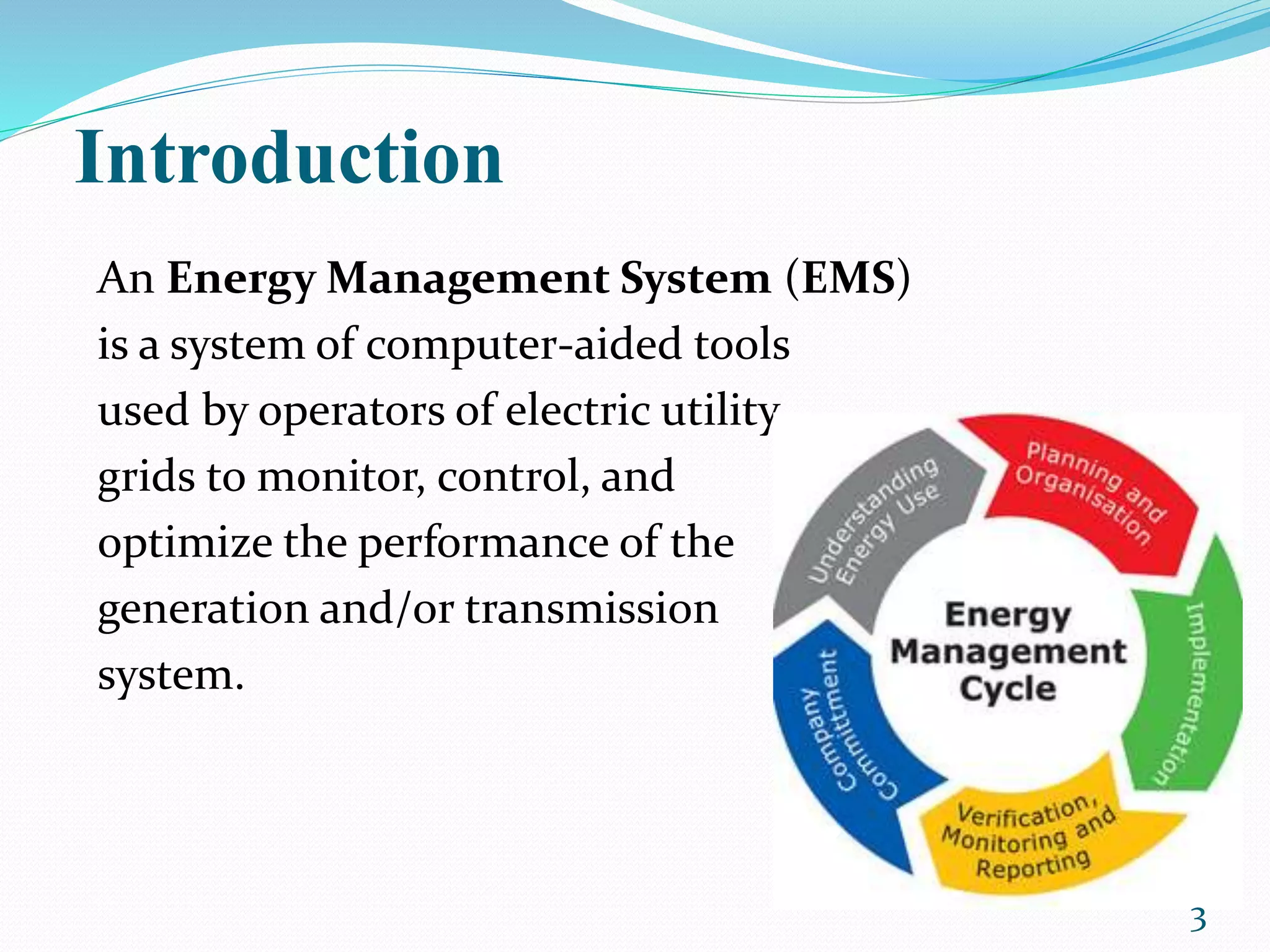
An Energy Management System (EMS)
is a system of computer-aided tools
used by operators of electric utility
grids to monitor, control, and
optimize the performance of the
generation and/or transmission
system.
3
What is energy management?
 "Energy Management" is a term that has a number of
meanings, but we're mainly concerned with the one
that relates to saving energy in businesses, public-
sector/government organizations, and homes.
 It commonly used by individual commercial entities to
monitor, measure, and control their electrical building
loads.
 It can also provide metering, sub metering, and
monitoring functions.
4
5
Why energy management is
important?
 Energy management is the key to saving energy in your
organization.
 Much of the importance of energy saving stems from the
global need to save energy - this global need affects
energy prices, emissions targets, and legislation, all of
which lead to several compelling reasons why you should
save energy at your organization specifically.
6
The global need to save energy:-
 Reduce our dependence on the fossil fuels that are
becoming increasingly limited in supply.
 Reduce the damage that we're doing to our planet.
Controlling and reducing energy consumption at
your organization:-
 Reduce costs – this is becoming increasingly important
as energy costs rise.
 Reduce carbon emissions and the environmental damage
that they cause - as well as the cost-related implications
7
of carbon taxes and the like, your organization may be
keen to reduce its carbon footprint to promote a green,
sustainable image
 Reduce risk – the more energy you consume, the
greater the risk that energy price increases or supply
shortages could seriously affect your profitability, or
even make it impossible for your
business/organization to continue. With energy
management you can reduce this risk by reducing your
demand for energy and by controlling it so as to make
it more predictable.
8
Steps for Energy Management:-
 Metering your energy consumption and collecting the
data.
 Finding opportunities to save energy, and estimating how
much energy each opportunity could save.
 Taking action to target the opportunities to save energy
(i.e. tackling the routine waste and replacing or upgrading
the inefficient equipment).
 Tracking your progress by analyzing your meter data to
see how well your energy-saving efforts have worked
9
How EMS Helps?
 Gives information about Section wise or Department
wise Electrical data and energy consumption for
taking corrective actions.
 Gives a clear picture about energy costs involved into
Production.
 Helps to optimize and Monitor Electrical Parameters
to achieve cost reduction.
 Helps future Planning based on consumption patterns.
10
Certification Procedure:-
 Application for certification from client
 Offer from IRQS India
 Offer acceptance from client and order confirmation by
IRQS India
 Pre audit (optional)
 Certification audit - (Stage 1 + Stage 2)
 Issue of certificate on successful completion of
certification audit
 Surveillance audits at defined period
 Recertification audit after 3 years
11
12
Advantages of EMS:-
 No human errors in data collection.
 Easy to configure & maintain.
 Helps to identify inefficient electrical equipments.
 Maximum Power Demand Analysis.
 Facility of viewing Real time electrical data & energy
reports over Internet / Intranet.
 Graphical display of energy consumption.
 Alerts through SMS.
13
Conclusion:-
 Previously the SCADA systems were providing the
utilities the information and control capabilities to sustain
and help managing the grid.
 But now with the help of EMS and smart grid the
monitoring of all the data has been easier.
 As all these systems need the data for their functioning so,
the data should be thoroughly checked to prevent any
errors.
14
References
[1] C Abbey and G Joos. Energy management strategies
for optimization of energy storage in wind power
hybrid system. In PESC record IEEE annual power
electronics specialists conference, 2005.
[2] A Hajizadeh and MA Golkar. Intelligent power
management strategy of hybrid distributed generation
system. International journal of Electrical Power and
Energy System, 29(10), 2007.
[3] ABB EMS (last accessed 08/04/2012), Available:
http://www.bd.abb.com/cawp/seitp202/2ba694bdd4f0
82dec12576cc00584c40.aspx
15
THANK YOU
16

Energy management system

  • 1.
    ENERGY MANAGEMENT SYSTEM Guided By:-Presented By:- Dr. Ramaprasad Panda Soumya Ranjan Das EEE- A2, Roll No.- 07 Group No.:- 09 Silicon Institute of Technology 1
  • 2.
    Content  Introduction  Whatis energy management?  Why energy management is important?  Steps for energy management  How EMS helps?  Benefits  Certification Procedure  Advantages of EMS  References 2
  • 3.
    Introduction An Energy ManagementSystem (EMS) is a system of computer-aided tools used by operators of electric utility grids to monitor, control, and optimize the performance of the generation and/or transmission system. 3
  • 4.
    What is energymanagement?  "Energy Management" is a term that has a number of meanings, but we're mainly concerned with the one that relates to saving energy in businesses, public- sector/government organizations, and homes.  It commonly used by individual commercial entities to monitor, measure, and control their electrical building loads.  It can also provide metering, sub metering, and monitoring functions. 4
  • 5.
  • 6.
    Why energy managementis important?  Energy management is the key to saving energy in your organization.  Much of the importance of energy saving stems from the global need to save energy - this global need affects energy prices, emissions targets, and legislation, all of which lead to several compelling reasons why you should save energy at your organization specifically. 6
  • 7.
    The global needto save energy:-  Reduce our dependence on the fossil fuels that are becoming increasingly limited in supply.  Reduce the damage that we're doing to our planet. Controlling and reducing energy consumption at your organization:-  Reduce costs – this is becoming increasingly important as energy costs rise.  Reduce carbon emissions and the environmental damage that they cause - as well as the cost-related implications 7
  • 8.
    of carbon taxesand the like, your organization may be keen to reduce its carbon footprint to promote a green, sustainable image  Reduce risk – the more energy you consume, the greater the risk that energy price increases or supply shortages could seriously affect your profitability, or even make it impossible for your business/organization to continue. With energy management you can reduce this risk by reducing your demand for energy and by controlling it so as to make it more predictable. 8
  • 9.
    Steps for EnergyManagement:-  Metering your energy consumption and collecting the data.  Finding opportunities to save energy, and estimating how much energy each opportunity could save.  Taking action to target the opportunities to save energy (i.e. tackling the routine waste and replacing or upgrading the inefficient equipment).  Tracking your progress by analyzing your meter data to see how well your energy-saving efforts have worked 9
  • 10.
    How EMS Helps? Gives information about Section wise or Department wise Electrical data and energy consumption for taking corrective actions.  Gives a clear picture about energy costs involved into Production.  Helps to optimize and Monitor Electrical Parameters to achieve cost reduction.  Helps future Planning based on consumption patterns. 10
  • 11.
    Certification Procedure:-  Applicationfor certification from client  Offer from IRQS India  Offer acceptance from client and order confirmation by IRQS India  Pre audit (optional)  Certification audit - (Stage 1 + Stage 2)  Issue of certificate on successful completion of certification audit  Surveillance audits at defined period  Recertification audit after 3 years 11
  • 12.
  • 13.
    Advantages of EMS:- No human errors in data collection.  Easy to configure & maintain.  Helps to identify inefficient electrical equipments.  Maximum Power Demand Analysis.  Facility of viewing Real time electrical data & energy reports over Internet / Intranet.  Graphical display of energy consumption.  Alerts through SMS. 13
  • 14.
    Conclusion:-  Previously theSCADA systems were providing the utilities the information and control capabilities to sustain and help managing the grid.  But now with the help of EMS and smart grid the monitoring of all the data has been easier.  As all these systems need the data for their functioning so, the data should be thoroughly checked to prevent any errors. 14
  • 15.
    References [1] C Abbeyand G Joos. Energy management strategies for optimization of energy storage in wind power hybrid system. In PESC record IEEE annual power electronics specialists conference, 2005. [2] A Hajizadeh and MA Golkar. Intelligent power management strategy of hybrid distributed generation system. International journal of Electrical Power and Energy System, 29(10), 2007. [3] ABB EMS (last accessed 08/04/2012), Available: http://www.bd.abb.com/cawp/seitp202/2ba694bdd4f0 82dec12576cc00584c40.aspx 15
  • 16.

Editor's Notes