Workers Participation in
    Management
Meaning
 Workers’ participation in management means giving scope for workers to
  influence the managerial decision-making process at different levels by
  various forms in the organisation.


 The principal forms of workers’ participation are information sharing,
  joint consultation, suggestion schemes, etc.
 Redistribution of power between management and workers in the direction
  of industrial democracy
Worker’s participation
arrangements resulting into the creation of various participative
  forums to associate workers with management

                               v/s
                Participative management
Manager’s specific style in which he interacts with his people,
 leadership pattern
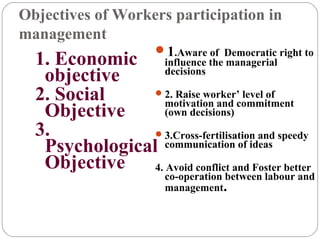
Objectives of Workers participation in
management
                       1.Aware of Democratic right to
  1. Economic influence the managerial
   objective       decisions

  2. Social      2. Raise worker’ level of
                   motivation and commitment
   Objective       (own decisions)
  3.             3.Cross-fertilisation and speedy
   Psychological communication of ideas
   Objective    4. Avoid conflict and Foster better
                         co-operation between labour and
                         management.
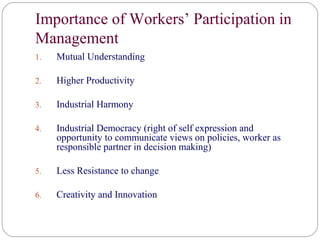
Importance of Workers’ Participation in
Management
1.   Mutual Understanding

2.   Higher Productivity

3.   Industrial Harmony

4.   Industrial Democracy (right of self expression and
     opportunity to communicate views on policies, worker as
     responsible partner in decision making)

5.   Less Resistance to change

6.   Creativity and Innovation
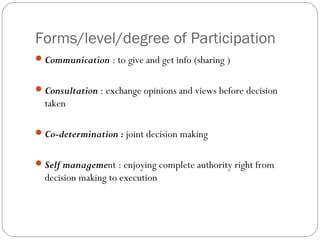
Forms/level/degree of Participation
 Communication : to give and get info (sharing )


 Consultation : exchange opinions and views before decision
  taken

 Co-determination : joint decision making


 Self management : enjoying complete authority right from
  decision making to execution
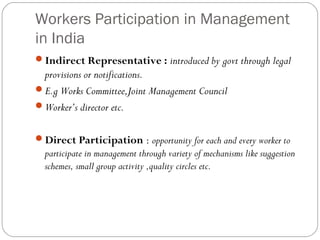
Workers Participation in Management
in India
Indirect Representative : introduced by govt through legal
 provisions or notifications.
E.g Works Committee,Joint Management Council
Worker’s director etc.


Direct Participation : opportunity for each and every worker to
  participate in management through variety of mechanisms like suggestion
  schemes, small group activity ,quality circles etc.
Works Committee (1947)
 The industrial disputes act, 1947 provides for the setting up of
  works committee consisting of representatives of management
  and workers

 Establishment employing 100 or more workmen or any day on
  preceding 12 months.

 It meets frequently for discussion on common problems of the
  workers and the management.

 After discussion, joint decisions are taken

 problems of day to day working
List of items WC can deal with
Conditions of work such as ventilation, lighting, temperature
  and sanitation

Amenities such as drinking water, canteen, dining ,crèches,
  rest rooms, medical and health rooms services

Safety and accident prevention, occupational diseases and
  protective equipment.

 Adjustment of festivals and national holidays.
Administration of welfare funds.
Educational and recreational such as libraries, reading rooms,
  cinema-shows, sports, games, community welfare and
  celebrations, games,

Implementation and review of decisions arrived at meeting
  of works committees
Items excluded
Wages and allowances
Bonus
Profit sharing
Work load fixation
Retrenchment or layoff
Housing services
Retirement benefits, PF , gratuity etc.
Reasons for failure of WC
Exclusion of imp items
Lack of competence of representatives
Inter union rivalry
Recommendations are just advisory in nature
No machinery to enforce the decision
Joint Management Council(1958)
Consists of equal number of representatives of management
 and employees ,not exceeding 12 in all.
Employees Representatives nominated by recognized trade
 union
AN UNDERTAKING MUST MEET THE FOLLOWING
  REQUIREMENTS FOR SETTING UP JMC’s

It must have 500 or more employees.
It should have a fair record of industrial relations.
It should have a strong and well organised trade
 union.
Willingness of employers, workers and trade
 unions
.
FEATURES OR FUNCTIONS of JMC
1. Consultative Functions -council consulted by
  management on :
Administration of standing orders
New methods of production
Retrenchment
Closure, reduction in or cessation of operation
2.Information –receiving and suggestion making
  functions:
General economic situation.
The state of market, production and sales programmes.
Organisation and general running of the undertaking.
The annual balance sheet and profit and loss account
  statement and connected documents with explanations.
Methods of manufacture and work
long term plan for expansion etc.
3.Administrative functions :
 Welfare measures
 Supervision of safety measures
 Operation of vocational training and apprenticeship schemes
 Preparation of schedules of working hours , breaks , holidays
 Payment of rewards for valuable suggestions
Reasons for unsatisfactory working or
partial success
Trade union fear of loosing power
Weak representatives
Employers who already have WC and TU find it superflous
Workers’ Directors(1970)
Workers’ representative on the board of directors of public
 sector enterprise and nationalized bank
Worker director is elected by the most representative TU
Reasons for failure
Wd’s were ill equipped to understand the intricacies of
 board level matters
Secrets might be leaked out
Union opposition
Worker Participation scheme(1975)
SHOP COUNCILS
For each dept or shop floor, establishment having more than
 500 workmen
Each council consists of equal number of representatives of
 employers and workers.
Functions :
Assistance to management in achieving monthly/yearly
  production targets
Improvement of production-elimination of wastage and
  optimum utilization of resources
Study of absenteeism in shops/dept and steps to reduce that
Assistance in maintaining general discipline
Physical conditions of working etc.
Welfare and health measures
Two way communication
JOINT COUNCILS
Operate for industrial unit as a whole, more than 500
 workmen
The chief executive of the unit is the chairman of the JC
Meets at least once in quarter
Decision on the basis of consensus
Functions:
 Optimum production
 Matters not solved in shop council or having bearing on another
  shop/dept
 Development of skills of workmen
 Awarding of rewards for valuable suggestions
 General health, safety and welfare measures for the unit or the
  plant
Direct participation
Two way communication: more imp in knowledge
 workers
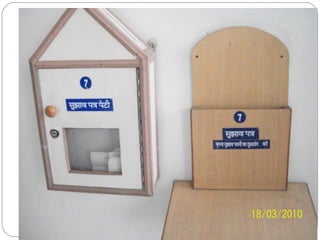
Suggestion schemes
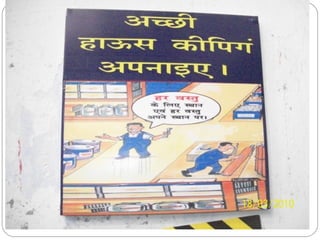
5S concept : Japan for TQM-house keeping
 practices
 Shitseke: discipline- maintain and review standards
 Seiton : orderliness –set in order
 Seiketsu: standardization of work practices
 Seiri: clearing (sorting) – keep only essential items rest discarded
 Seiso: sweeping/washing,cleanliness of workplace
PDCA concept- to improve organizational effectiveness


Plan-set target
Do-work to meet target
Check : target achieved or not
Act –to remove difficulties or modify( to improve
  organizational effectiveness)
 Quality of work life (QWL): joint programmes of cooperation
  or ‘working together’ on the shop floor to improve quality of
  work life

  -refers to favourableness or unfavourableness of a job environment
   for employees in the organization

 E.G Adequate and fair compensation
 Safe and healthy working conditions
 Opportunity to use and develop human capacities
 Opportunity for career growth
 Social integration in work force etc.

Workers%20 participation%20in%20management%202

  • 1.
  • 2.
    Meaning  Workers’ participationin management means giving scope for workers to influence the managerial decision-making process at different levels by various forms in the organisation.  The principal forms of workers’ participation are information sharing, joint consultation, suggestion schemes, etc.  Redistribution of power between management and workers in the direction of industrial democracy
  • 3.
    Worker’s participation arrangements resultinginto the creation of various participative forums to associate workers with management v/s Participative management Manager’s specific style in which he interacts with his people, leadership pattern
  • 4.
    Objectives of Workersparticipation in management 1.Aware of Democratic right to 1. Economic influence the managerial objective decisions 2. Social  2. Raise worker’ level of motivation and commitment Objective (own decisions) 3.  3.Cross-fertilisation and speedy Psychological communication of ideas Objective 4. Avoid conflict and Foster better co-operation between labour and management.
  • 5.
    Importance of Workers’Participation in Management 1. Mutual Understanding 2. Higher Productivity 3. Industrial Harmony 4. Industrial Democracy (right of self expression and opportunity to communicate views on policies, worker as responsible partner in decision making) 5. Less Resistance to change 6. Creativity and Innovation
  • 6.
    Forms/level/degree of Participation Communication : to give and get info (sharing )  Consultation : exchange opinions and views before decision taken  Co-determination : joint decision making  Self management : enjoying complete authority right from decision making to execution
  • 7.
    Workers Participation inManagement in India Indirect Representative : introduced by govt through legal provisions or notifications. E.g Works Committee,Joint Management Council Worker’s director etc. Direct Participation : opportunity for each and every worker to participate in management through variety of mechanisms like suggestion schemes, small group activity ,quality circles etc.
  • 9.
    Works Committee (1947) The industrial disputes act, 1947 provides for the setting up of works committee consisting of representatives of management and workers  Establishment employing 100 or more workmen or any day on preceding 12 months.  It meets frequently for discussion on common problems of the workers and the management.  After discussion, joint decisions are taken  problems of day to day working
  • 10.
    List of itemsWC can deal with Conditions of work such as ventilation, lighting, temperature and sanitation Amenities such as drinking water, canteen, dining ,crèches, rest rooms, medical and health rooms services Safety and accident prevention, occupational diseases and protective equipment.  Adjustment of festivals and national holidays. Administration of welfare funds.
  • 11.
    Educational and recreationalsuch as libraries, reading rooms, cinema-shows, sports, games, community welfare and celebrations, games, Implementation and review of decisions arrived at meeting of works committees
  • 12.
    Items excluded Wages andallowances Bonus Profit sharing Work load fixation Retrenchment or layoff Housing services Retirement benefits, PF , gratuity etc.
  • 13.
    Reasons for failureof WC Exclusion of imp items Lack of competence of representatives Inter union rivalry Recommendations are just advisory in nature No machinery to enforce the decision
  • 14.
    Joint Management Council(1958) Consistsof equal number of representatives of management and employees ,not exceeding 12 in all. Employees Representatives nominated by recognized trade union
  • 15.
    AN UNDERTAKING MUSTMEET THE FOLLOWING REQUIREMENTS FOR SETTING UP JMC’s It must have 500 or more employees. It should have a fair record of industrial relations. It should have a strong and well organised trade union. Willingness of employers, workers and trade unions .
  • 16.
    FEATURES OR FUNCTIONSof JMC 1. Consultative Functions -council consulted by management on : Administration of standing orders New methods of production Retrenchment Closure, reduction in or cessation of operation
  • 17.
    2.Information –receiving andsuggestion making functions: General economic situation. The state of market, production and sales programmes. Organisation and general running of the undertaking. The annual balance sheet and profit and loss account statement and connected documents with explanations. Methods of manufacture and work long term plan for expansion etc.
  • 18.
    3.Administrative functions : Welfare measures  Supervision of safety measures  Operation of vocational training and apprenticeship schemes  Preparation of schedules of working hours , breaks , holidays  Payment of rewards for valuable suggestions
  • 19.
    Reasons for unsatisfactoryworking or partial success Trade union fear of loosing power Weak representatives Employers who already have WC and TU find it superflous
  • 20.
    Workers’ Directors(1970) Workers’ representativeon the board of directors of public sector enterprise and nationalized bank Worker director is elected by the most representative TU
  • 21.
    Reasons for failure Wd’swere ill equipped to understand the intricacies of board level matters Secrets might be leaked out Union opposition
  • 22.
    Worker Participation scheme(1975) SHOPCOUNCILS For each dept or shop floor, establishment having more than 500 workmen Each council consists of equal number of representatives of employers and workers.
  • 23.
    Functions : Assistance tomanagement in achieving monthly/yearly production targets Improvement of production-elimination of wastage and optimum utilization of resources Study of absenteeism in shops/dept and steps to reduce that Assistance in maintaining general discipline Physical conditions of working etc. Welfare and health measures Two way communication
  • 24.
    JOINT COUNCILS Operate forindustrial unit as a whole, more than 500 workmen The chief executive of the unit is the chairman of the JC Meets at least once in quarter Decision on the basis of consensus
  • 25.
    Functions:  Optimum production Matters not solved in shop council or having bearing on another shop/dept  Development of skills of workmen  Awarding of rewards for valuable suggestions  General health, safety and welfare measures for the unit or the plant
  • 26.
    Direct participation Two waycommunication: more imp in knowledge workers Suggestion schemes 5S concept : Japan for TQM-house keeping practices  Shitseke: discipline- maintain and review standards  Seiton : orderliness –set in order  Seiketsu: standardization of work practices  Seiri: clearing (sorting) – keep only essential items rest discarded  Seiso: sweeping/washing,cleanliness of workplace
  • 31.
    PDCA concept- toimprove organizational effectiveness Plan-set target Do-work to meet target Check : target achieved or not Act –to remove difficulties or modify( to improve organizational effectiveness)
  • 32.
     Quality ofwork life (QWL): joint programmes of cooperation or ‘working together’ on the shop floor to improve quality of work life -refers to favourableness or unfavourableness of a job environment for employees in the organization  E.G Adequate and fair compensation  Safe and healthy working conditions  Opportunity to use and develop human capacities  Opportunity for career growth  Social integration in work force etc.