Energy
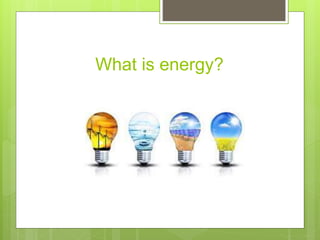
What is energy?
Energy:
Energy is the ability to do work, to
make things happen, and to cause
changes.
 Energy cannot be made or
destroyed; it can only be changed
into different forms.
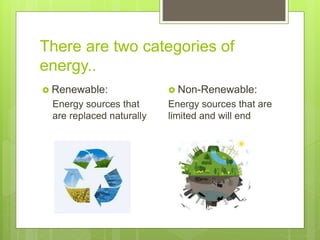
There are two categories of
energy..
 Renewable:
Energy sources that
are replaced naturally
 Non-Renewable:
Energy sources that are
limited and will end
What are some examples?
There are 2 types of
non-renewable energy…
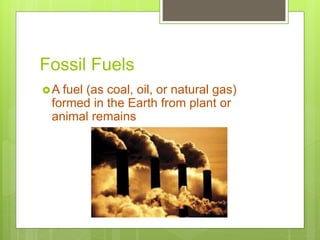
Fossil Fuels
A fuel (as coal, oil, or natural gas)
formed in the Earth from plant or
animal remains
Fossil Fuels
 Advantages:
 It is an easy and a
regular way of
producing energy.
 It is not so expensive
to build power plants.
 Disadvantages:
 They will run out one
day.
 It pollutes a lot; it
emits greenhouse
gases, acid rain and
it pollutes rivers and
lakes.
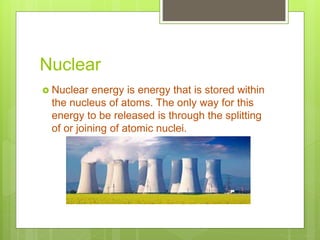
Nuclear
 Nuclear energy is energy that is stored within
the nucleus of atoms. The only way for this
energy to be released is through the splitting
of or joining of atomic nuclei.
Nuclear Energy
 Advantages:
 It produces a great
amount of energy
 It doesn’t produce
acid rain or
greenhouse gases
 Disadvantages:
 It can cause serious
damage and
accidents
 It’s very difficult and
dangerous to keep
radioactive waste
 It’s expensive
There are 8 types of
renewable energy…
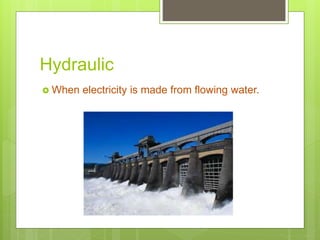
Hydraulic
 When electricity is made from flowing water.
Hydraulic
 Advantages:
 It’s free
 It’s easy to keep
 It’s clean
 The reservoirs
regulate the flow of
the rivers
 Disadvantages:
 It’s expensive
 The water supply is
irregular
 The reservoirs change
the environment
 Heat waves can cause
a smaller amount of
this energy
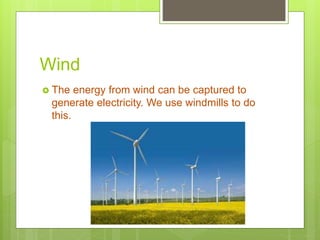
Wind
 The energy from wind can be captured to
generate electricity. We use windmills to do
this.
Wind
 Advantages:
 It’s free and clean
 It won’t run out
 There are little safety
risks with wind turbines
 It’s a quick way of
producing mechanical
energy
 Disadvantages:
 The power of
generators are very
expensive
 It’s production is not
regular
 It’s very noisy and
does not look nice in
nature
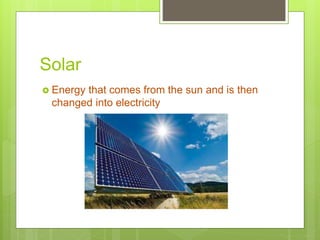
Solar
 Energy that comes from the sun and is then
changed into electricity
Solar
 Advantages:
 it’s free
 It’s clean
 The sun will always
be there during our
lifetime so it won’t
run out
 Disadvantages:
 A great amount of
land is needed
 It’s expensive
 It’s production is not
always happening
 Bad impact on the
environment
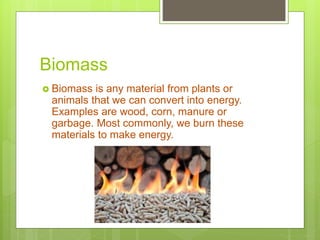
Biomass
 Biomass is any material from plants or
animals that we can convert into energy.
Examples are wood, corn, manure or
garbage. Most commonly, we burn these
materials to make energy.
Biomass
 Advantages:
 It reduces waste
 It creates little
rubbish
 Disadvantages:
 It pollutes since it
produces CO2
 It’s limited
 It takes a long time
to be created
 Many trees are cut
down
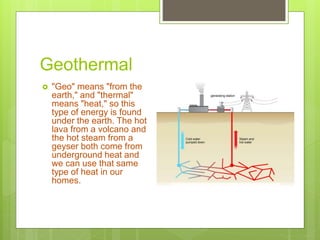
Geothermal
 "Geo" means "from the
earth," and "thermal"
means "heat," so this
type of energy is found
under the earth. The hot
lava from a volcano and
the hot steam from a
geyser both come from
underground heat and
we can use that same
type of heat in our
homes.
Geothermal
 Advantages:
 It’s clean, it doesn’t
produce big amounts
of waste
 It’s quite regular
 It’s endless
 Disadvantages:
 We need advanced
and very expensive
technology
 It’s expensive
 It deteriorates the
landscape and the
ecosystem
 It cannot be
transported
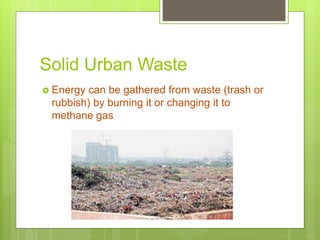
Solid Urban Waste
 Energy can be gathered from waste (trash or
rubbish) by burning it or changing it to
methane gas
Solid Urban Waste
 Advantages:
 It reduces waste
 Disadvantages:
 It pollutes
 It generates
poisonous/toxic
products and
releases heavy
metals
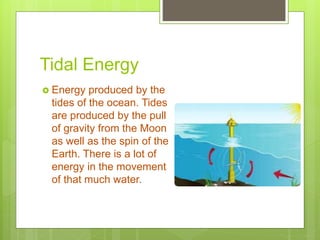
Tidal Energy
 Energy produced by the
tides of the ocean. Tides
are produced by the pull
of gravity from the Moon
as well as the spin of the
Earth. There is a lot of
energy in the movement
of that much water.
Tidal Energy
 Advantages:
 Tides are free and
will not run out
 It doesn’t pollute
 It’s noiseless – it is a
quiet type of energy
 Disadvantages:
 It had a negative
impact on the
landscape, flora and
fauna
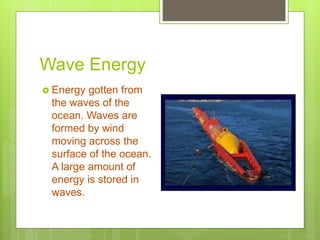
Wave Energy
 Energy gotten from
the waves of the
ocean. Waves are
formed by wind
moving across the
surface of the ocean.
A large amount of
energy is stored in
waves.
Wave Energy
 Advantages:
 It’s clean and free.
 Wave power does
not produce
greenhouse gases.
 Disadvantages:
 The facilities and
equipment are very
expensive.
 Electricity production
depends on the wave
speed, height and
length.
How can we
save energy?
Energy Conservation
 By using less energy
 Turning off water when we don’t need it
 Unplugging electronics
 Not leaving the lights on
 Shorter showers
Energy Efficiency
 We talk about energy efficiency when we try
to reduce the amount of energy required to
provide the same products and services.
 Using a washing machine that saves energy
Recycling
 This involves the use of waste or old materials
to make new ones. The energy needed to
recycle many materials is less than the
energy required to make it from scratch.
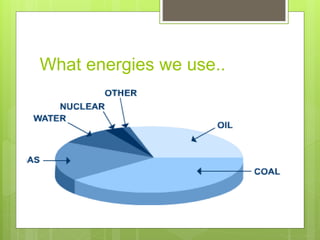
What energies we use..

Energy

  • 1.
  • 2.
  • 3.
    Energy: Energy is theability to do work, to make things happen, and to cause changes.  Energy cannot be made or destroyed; it can only be changed into different forms.
  • 4.
    There are twocategories of energy..  Renewable: Energy sources that are replaced naturally  Non-Renewable: Energy sources that are limited and will end
  • 5.
    What are someexamples?
  • 6.
    There are 2types of non-renewable energy…
  • 7.
    Fossil Fuels A fuel(as coal, oil, or natural gas) formed in the Earth from plant or animal remains
  • 8.
    Fossil Fuels  Advantages: It is an easy and a regular way of producing energy.  It is not so expensive to build power plants.  Disadvantages:  They will run out one day.  It pollutes a lot; it emits greenhouse gases, acid rain and it pollutes rivers and lakes.
  • 9.
    Nuclear  Nuclear energyis energy that is stored within the nucleus of atoms. The only way for this energy to be released is through the splitting of or joining of atomic nuclei.
  • 10.
    Nuclear Energy  Advantages: It produces a great amount of energy  It doesn’t produce acid rain or greenhouse gases  Disadvantages:  It can cause serious damage and accidents  It’s very difficult and dangerous to keep radioactive waste  It’s expensive
  • 11.
    There are 8types of renewable energy…
  • 12.
    Hydraulic  When electricityis made from flowing water.
  • 13.
    Hydraulic  Advantages:  It’sfree  It’s easy to keep  It’s clean  The reservoirs regulate the flow of the rivers  Disadvantages:  It’s expensive  The water supply is irregular  The reservoirs change the environment  Heat waves can cause a smaller amount of this energy
  • 14.
    Wind  The energyfrom wind can be captured to generate electricity. We use windmills to do this.
  • 15.
    Wind  Advantages:  It’sfree and clean  It won’t run out  There are little safety risks with wind turbines  It’s a quick way of producing mechanical energy  Disadvantages:  The power of generators are very expensive  It’s production is not regular  It’s very noisy and does not look nice in nature
  • 16.
    Solar  Energy thatcomes from the sun and is then changed into electricity
  • 17.
    Solar  Advantages:  it’sfree  It’s clean  The sun will always be there during our lifetime so it won’t run out  Disadvantages:  A great amount of land is needed  It’s expensive  It’s production is not always happening  Bad impact on the environment
  • 18.
    Biomass  Biomass isany material from plants or animals that we can convert into energy. Examples are wood, corn, manure or garbage. Most commonly, we burn these materials to make energy.
  • 19.
    Biomass  Advantages:  Itreduces waste  It creates little rubbish  Disadvantages:  It pollutes since it produces CO2  It’s limited  It takes a long time to be created  Many trees are cut down
  • 20.
    Geothermal  "Geo" means"from the earth," and "thermal" means "heat," so this type of energy is found under the earth. The hot lava from a volcano and the hot steam from a geyser both come from underground heat and we can use that same type of heat in our homes.
  • 21.
    Geothermal  Advantages:  It’sclean, it doesn’t produce big amounts of waste  It’s quite regular  It’s endless  Disadvantages:  We need advanced and very expensive technology  It’s expensive  It deteriorates the landscape and the ecosystem  It cannot be transported
  • 22.
    Solid Urban Waste Energy can be gathered from waste (trash or rubbish) by burning it or changing it to methane gas
  • 23.
    Solid Urban Waste Advantages:  It reduces waste  Disadvantages:  It pollutes  It generates poisonous/toxic products and releases heavy metals
  • 24.
    Tidal Energy  Energyproduced by the tides of the ocean. Tides are produced by the pull of gravity from the Moon as well as the spin of the Earth. There is a lot of energy in the movement of that much water.
  • 25.
    Tidal Energy  Advantages: Tides are free and will not run out  It doesn’t pollute  It’s noiseless – it is a quiet type of energy  Disadvantages:  It had a negative impact on the landscape, flora and fauna
  • 26.
    Wave Energy  Energygotten from the waves of the ocean. Waves are formed by wind moving across the surface of the ocean. A large amount of energy is stored in waves.
  • 27.
    Wave Energy  Advantages: It’s clean and free.  Wave power does not produce greenhouse gases.  Disadvantages:  The facilities and equipment are very expensive.  Electricity production depends on the wave speed, height and length.
  • 28.
  • 29.
    Energy Conservation  Byusing less energy  Turning off water when we don’t need it  Unplugging electronics  Not leaving the lights on  Shorter showers
  • 30.
    Energy Efficiency  Wetalk about energy efficiency when we try to reduce the amount of energy required to provide the same products and services.  Using a washing machine that saves energy
  • 31.
    Recycling  This involvesthe use of waste or old materials to make new ones. The energy needed to recycle many materials is less than the energy required to make it from scratch.
  • 32.