TECHNICAL
DRAWING
Drawing
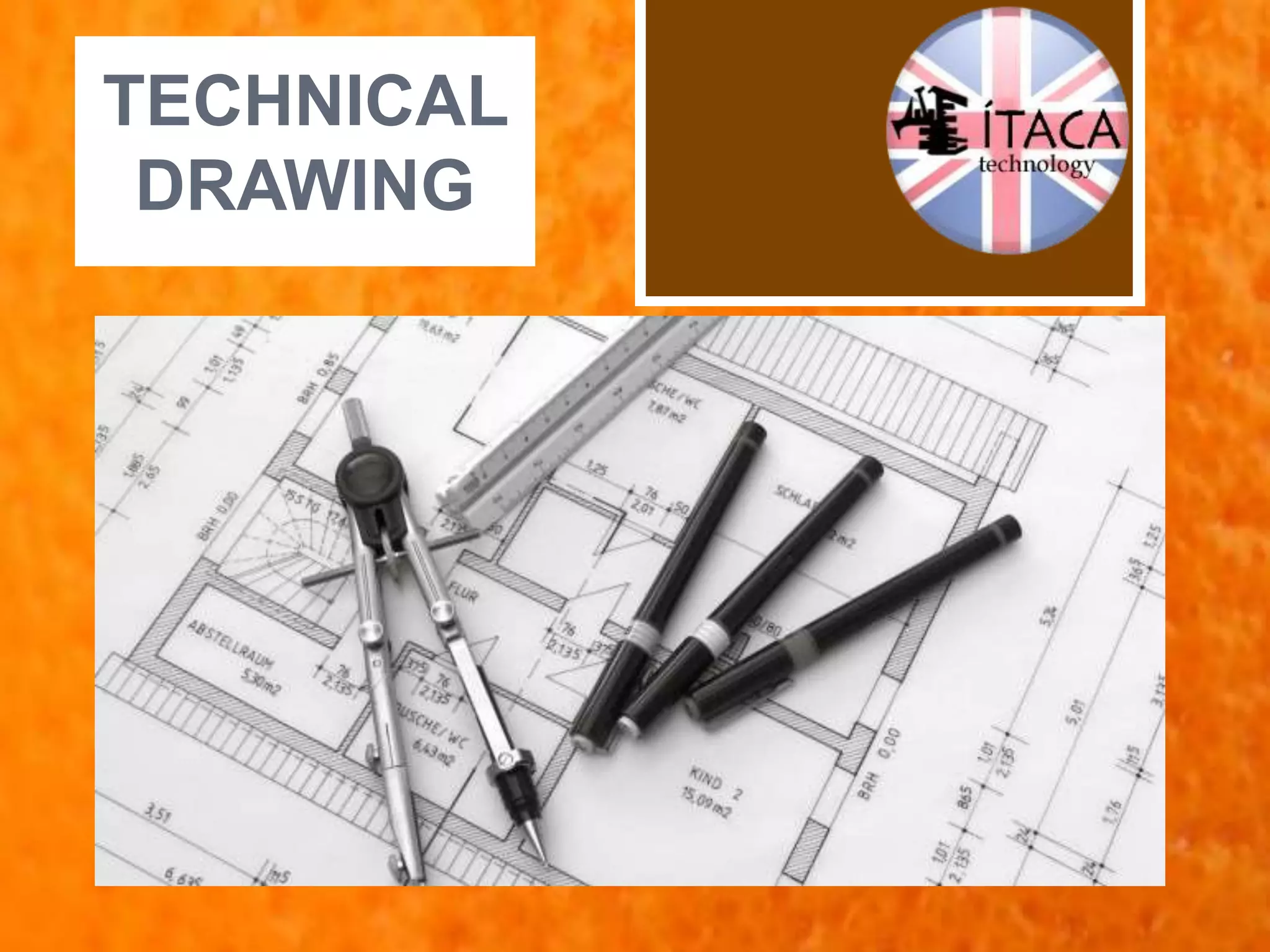
 Technical drawing is the method of
communication that is specific to the field of
technology
 It is used to represent the objects that we design
and built.
Ingredients of technology
Drawing
 Now, let´s learn the basic drawing instruments
Ingredients of technology
 Pencils are made of wood and a graphite
core, called lead.
PENCIL
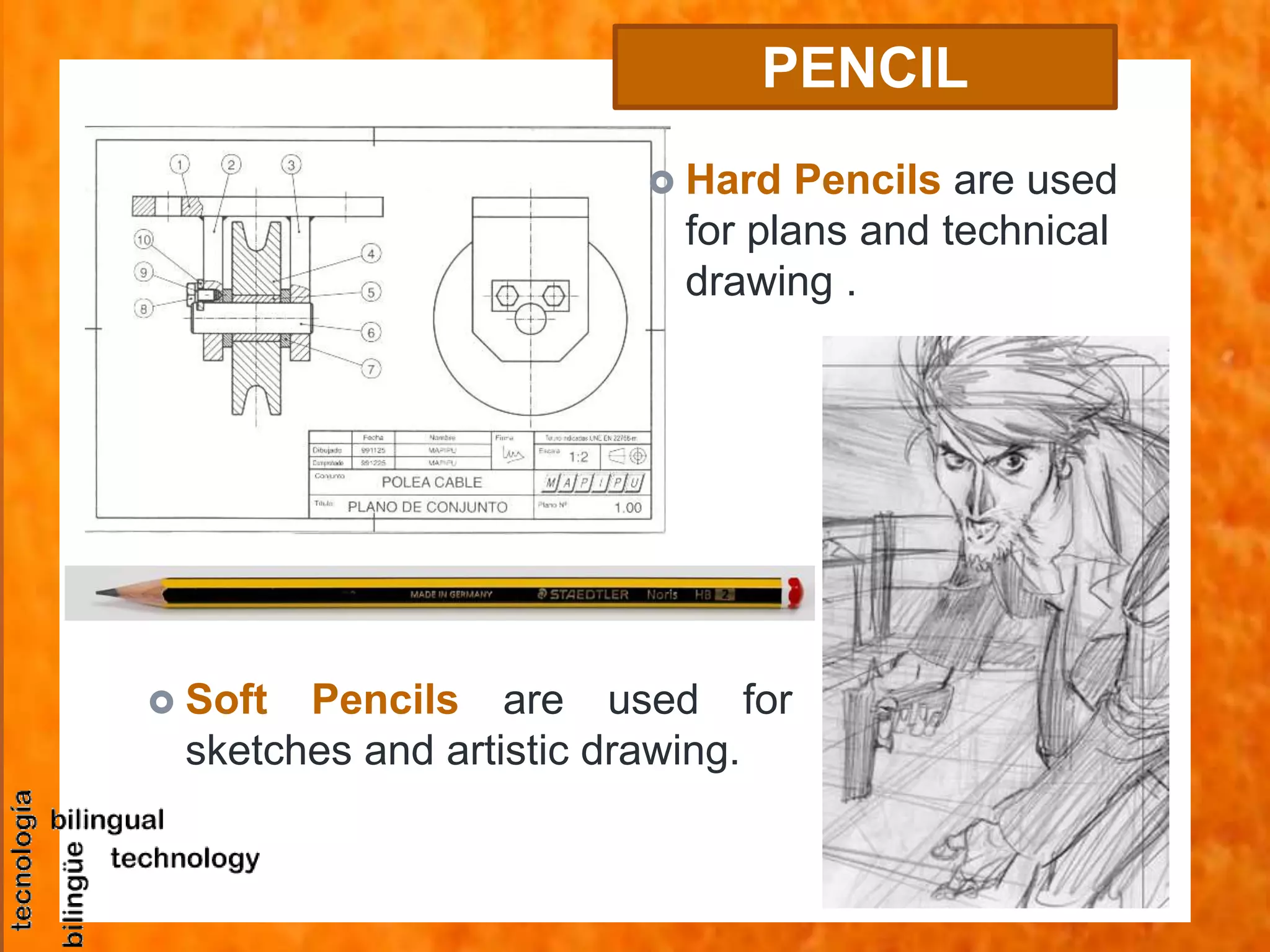
 Pencil leads are classified by hardness as
follows:
Soft
• Numbers:
0 or1
• Letters:
8B to 3B
Medium
• Numbers:
2 or 3
• Letters:
2B, B, HB
and F
Hard
• Numbers:
4 or 5
• Letters: H
to 5H
Very hard
• Numbers:
6 to 9
• Letters:
6H to 10H
PENCIL
 When we write, the graphite latch on to the paper.
 If the pencil is a hard one the
amount of graphite is a bit one,
and the mark in the paper is light.
 On the other hand if it´s a soft
one the amount of graphite is
bigger, and the mark is dark.
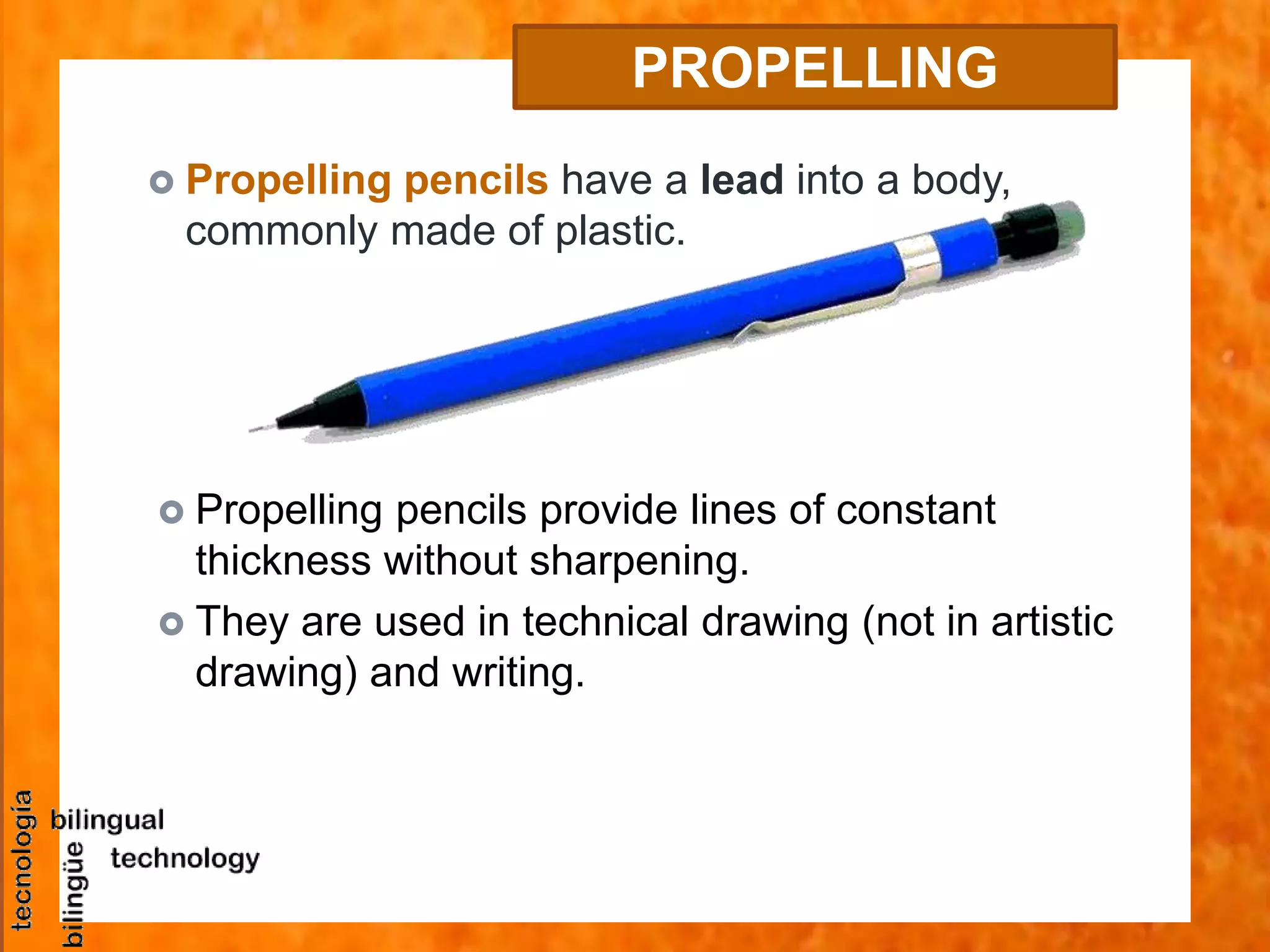
 Soft Pencils are used for
sketches and artistic drawing.
PENCIL
 Hard Pencils are used
for plans and technical
drawing .
 Propelling pencils have a lead into a body,
commonly made of plastic.
PROPELLING
PENCIL
 Propelling pencils provide lines of constant
thickness without sharpening.
 They are used in technical drawing (not in artistic
drawing) and writing.
 The lead of the propelling pencils can have:
 Different hardness
 Different diameters, to fit into a lead into the
reservoir tube.
PROPELLING
PENCIL
Diameter
Hardness
 White vinyl rubbers are
recommendes.
RUBBER
 Rubbers are used to correct errors made when
writing with pencil.
 When you erase:
 Follow the direction the line was draw in.
 Use smooth movements so the paper doesn´t
wrinkle
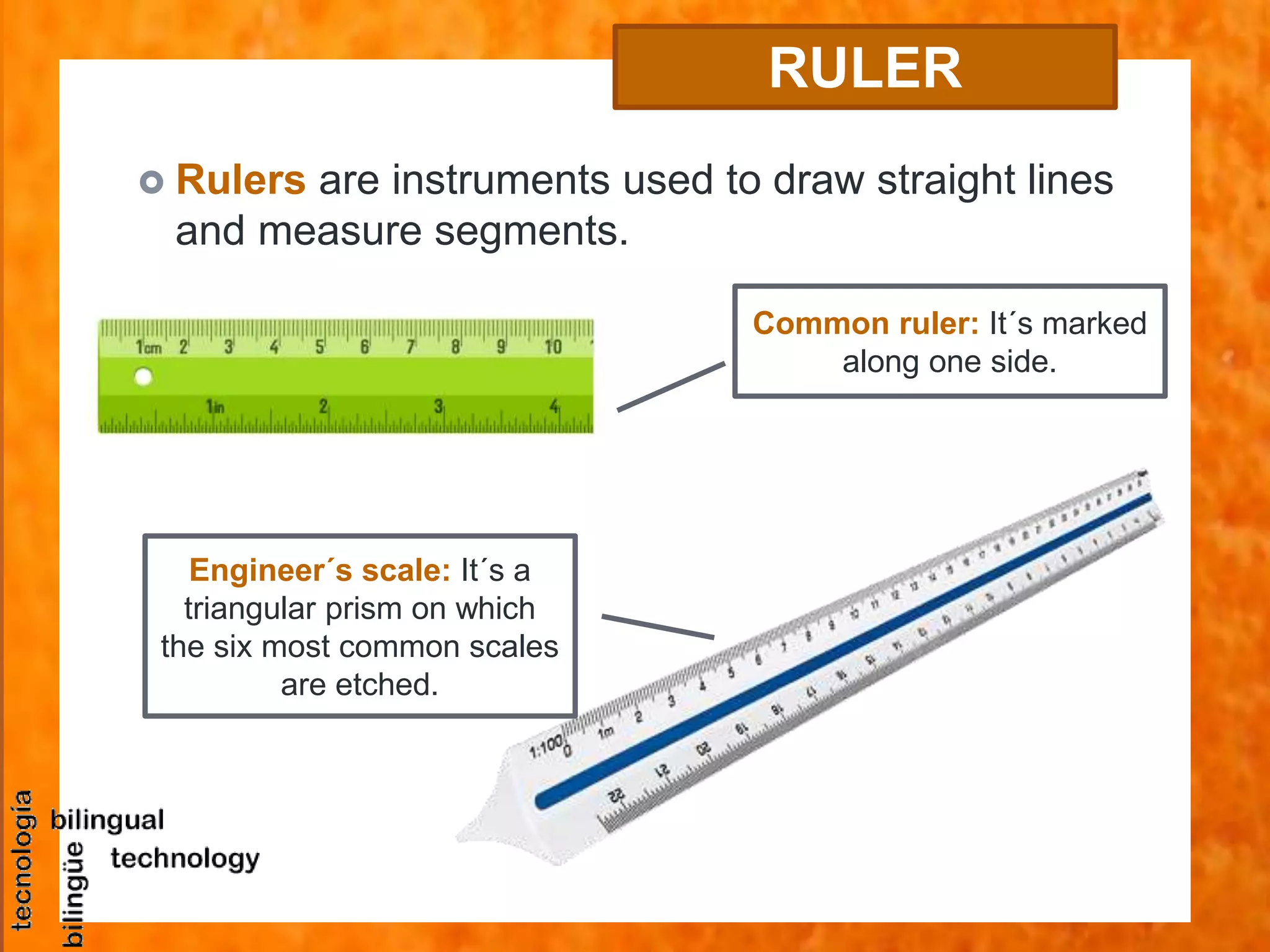
RULER
 Rulers are instruments used to draw straight lines
and measure segments.
Common ruler: It´s marked
along one side.
Engineer´s scale: It´s a
triangular prism on which
the six most common scales
are etched.
 The set of squares are two right triangles used to
draw paralel and perpendicular lines.
SET OF SQUARES
 They let us to draw
differents angles combining
the measures of the angles
of the set .
For example:
90º+45º = 135º 30º+45º = 75º
60º+45º = 105º 90º+60º = 150º
leg
leg
Parallels and perpendiculars
 Parallels in vertical: Parallels in horizontal:
How to use drawing tools
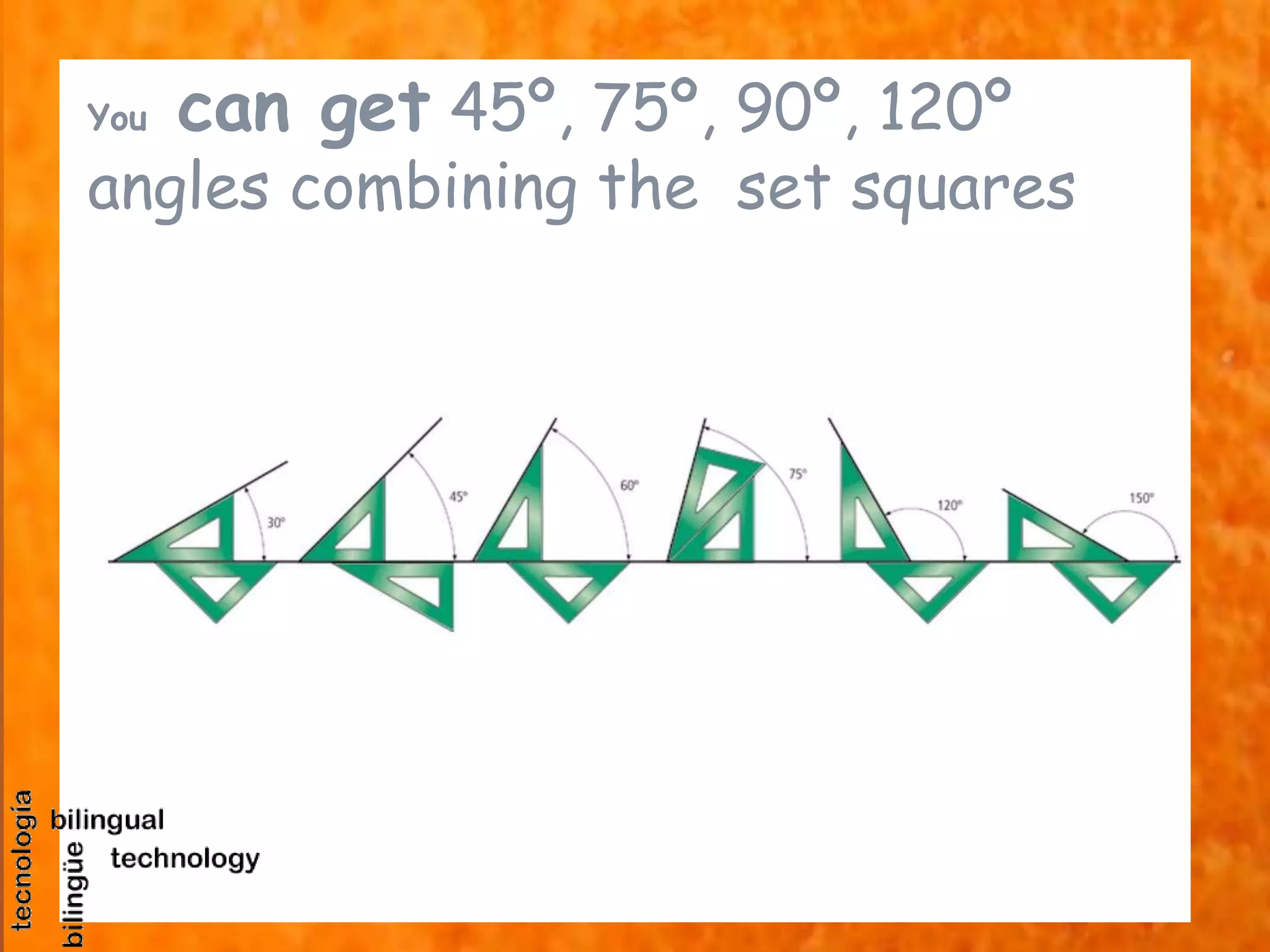
 Drawing angles: we can get 15º, 30º, 45º, 60º, 75º, 90º,
120º, 135º…angles by combining the 30º, 45º, 60º and the
90º angles from the set squares
You can get 45º, 75º, 90º, 120º
angles combining the set squares
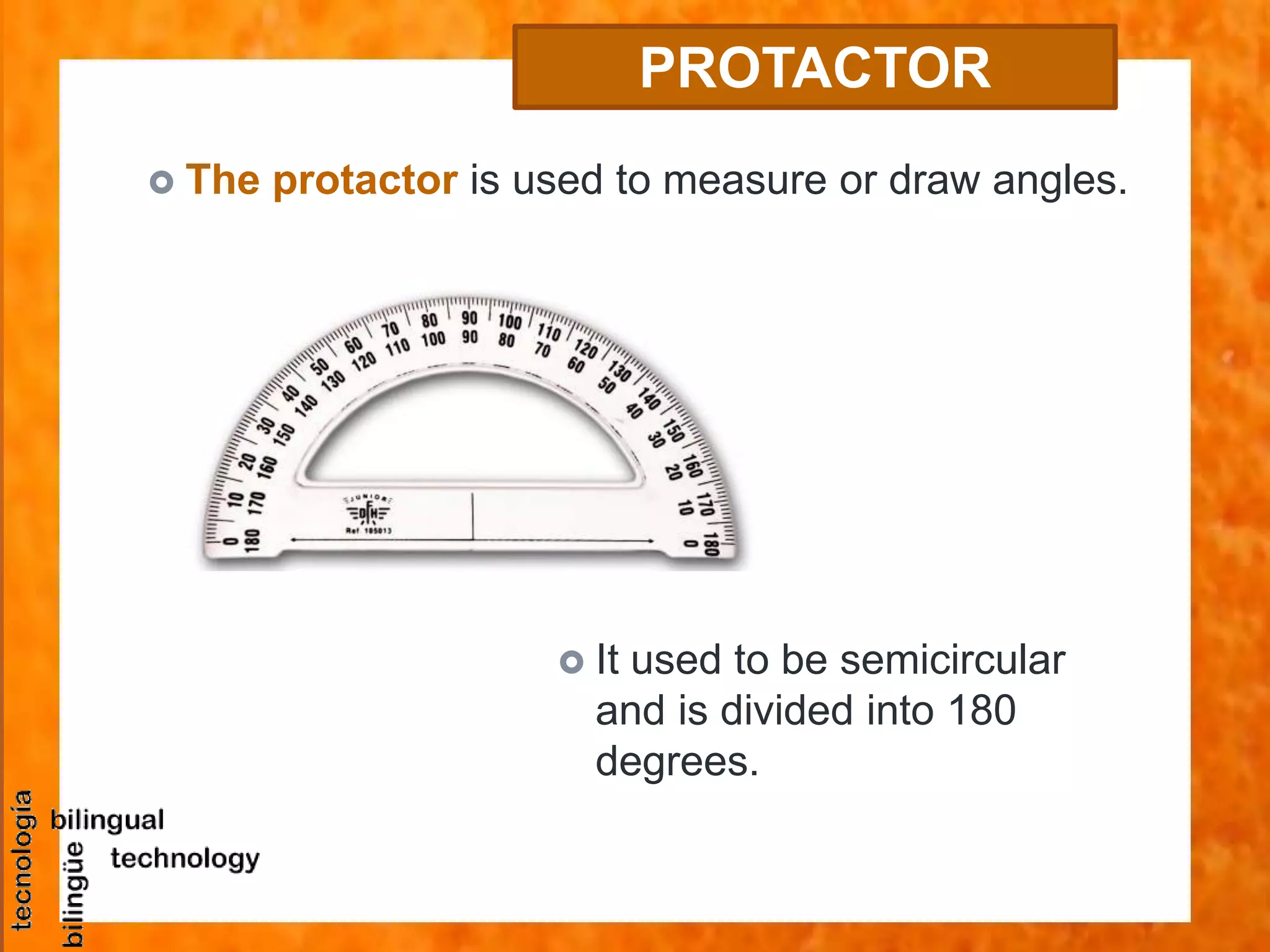
 The protactor is used to measure or draw angles.
PROTACTOR
 It used to be semicircular
and is divided into 180
degrees.
 The stencils are used when standard symbols are
to be drawn repeatedly. They have standard
symbols cut in it.
TEMPLATES
 The compass is an instrument used to draw
circunferences or circular arcs, as well as to
measure segments.
COMPASS
 It can be adjusted to hold a
technical pen.
 Or with an
extension piece to
draw bigger
circunferences
 The paper is the basis for all technical drawings.
PAPER
 Paper can be clasified by:
 Size
 Weight
 Finish
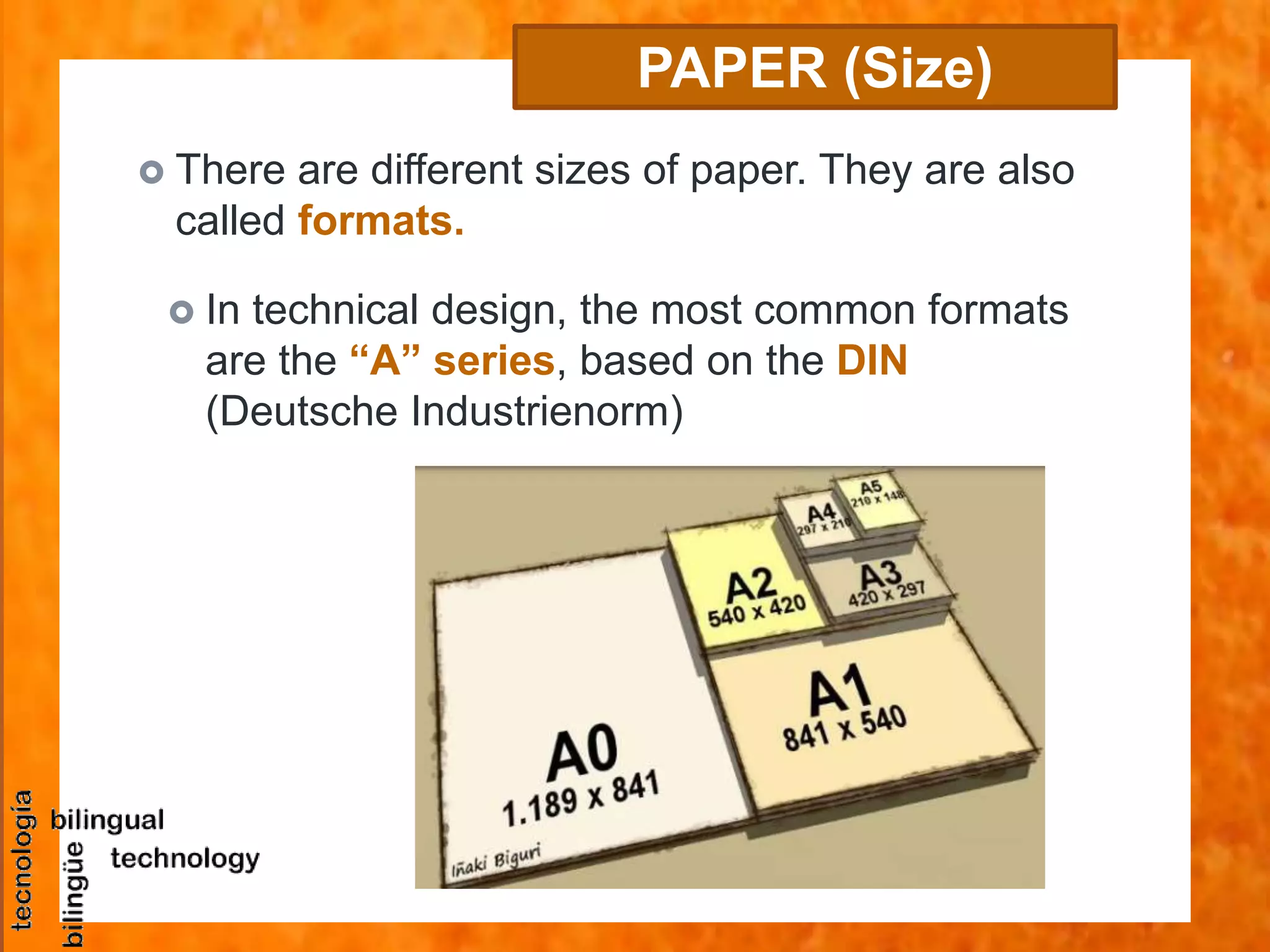
 There are different sizes of paper. They are also
called formats.
PAPER (Size)
 In technical design, the most common formats
are the “A” series, based on the DIN
(Deutsche Industrienorm)
 A0 is a rectangle with an area of 1 m2.
PAPER (Size)
 Each format is
calculated by
dividing the
previous format
in half.
 The format we usually use is the A4
(297x210 mm)
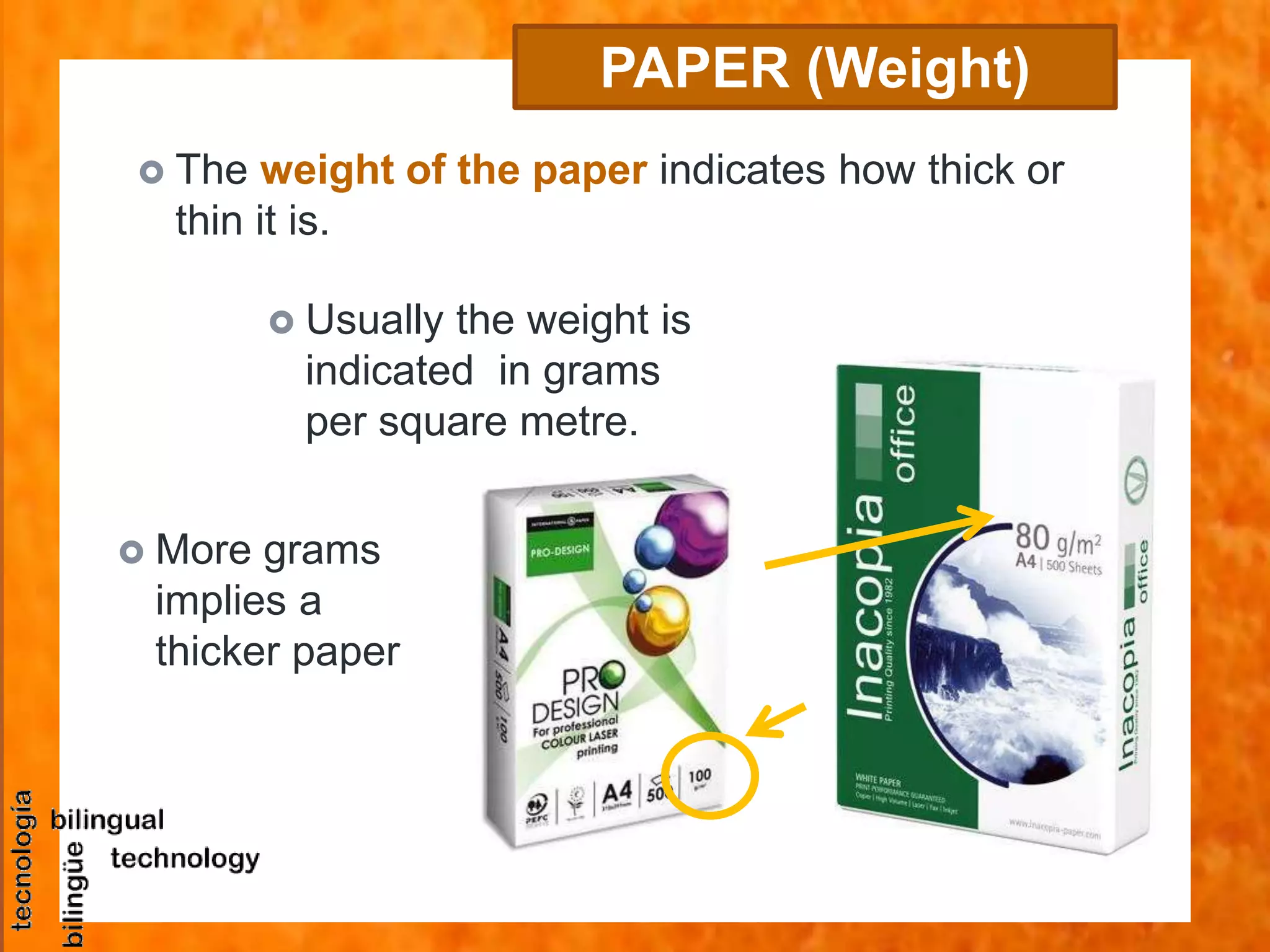
 The weight of the paper indicates how thick or
thin it is.
PAPER (Weight)
 Usually the weight is
indicated in grams
per square metre.
 More grams
implies a
thicker paper
 The finish of the paper shows the appearance of
the surface of the paper.
PAPER (Finish)
 It can be white or
coloured
 It can be brilliant or
dull
 It can be rough or
smooth
 It can be opaque or
translucent

Technicaldrawing

  • 1.
  • 2.
    Drawing  Technical drawingis the method of communication that is specific to the field of technology  It is used to represent the objects that we design and built. Ingredients of technology
  • 3.
    Drawing  Now, let´slearn the basic drawing instruments Ingredients of technology
  • 4.
     Pencils aremade of wood and a graphite core, called lead. PENCIL  Pencil leads are classified by hardness as follows: Soft • Numbers: 0 or1 • Letters: 8B to 3B Medium • Numbers: 2 or 3 • Letters: 2B, B, HB and F Hard • Numbers: 4 or 5 • Letters: H to 5H Very hard • Numbers: 6 to 9 • Letters: 6H to 10H
  • 5.
    PENCIL  When wewrite, the graphite latch on to the paper.  If the pencil is a hard one the amount of graphite is a bit one, and the mark in the paper is light.  On the other hand if it´s a soft one the amount of graphite is bigger, and the mark is dark.
  • 6.
     Soft Pencilsare used for sketches and artistic drawing. PENCIL  Hard Pencils are used for plans and technical drawing .
  • 7.
     Propelling pencilshave a lead into a body, commonly made of plastic. PROPELLING PENCIL  Propelling pencils provide lines of constant thickness without sharpening.  They are used in technical drawing (not in artistic drawing) and writing.
  • 8.
     The leadof the propelling pencils can have:  Different hardness  Different diameters, to fit into a lead into the reservoir tube. PROPELLING PENCIL Diameter Hardness
  • 9.
     White vinylrubbers are recommendes. RUBBER  Rubbers are used to correct errors made when writing with pencil.  When you erase:  Follow the direction the line was draw in.  Use smooth movements so the paper doesn´t wrinkle
  • 10.
    RULER  Rulers areinstruments used to draw straight lines and measure segments. Common ruler: It´s marked along one side. Engineer´s scale: It´s a triangular prism on which the six most common scales are etched.
  • 11.
     The setof squares are two right triangles used to draw paralel and perpendicular lines. SET OF SQUARES  They let us to draw differents angles combining the measures of the angles of the set . For example: 90º+45º = 135º 30º+45º = 75º 60º+45º = 105º 90º+60º = 150º leg leg
  • 12.
    Parallels and perpendiculars Parallels in vertical: Parallels in horizontal:
  • 13.
    How to usedrawing tools  Drawing angles: we can get 15º, 30º, 45º, 60º, 75º, 90º, 120º, 135º…angles by combining the 30º, 45º, 60º and the 90º angles from the set squares
  • 14.
    You can get45º, 75º, 90º, 120º angles combining the set squares
  • 15.
     The protactoris used to measure or draw angles. PROTACTOR  It used to be semicircular and is divided into 180 degrees.
  • 16.
     The stencilsare used when standard symbols are to be drawn repeatedly. They have standard symbols cut in it. TEMPLATES
  • 17.
     The compassis an instrument used to draw circunferences or circular arcs, as well as to measure segments. COMPASS  It can be adjusted to hold a technical pen.  Or with an extension piece to draw bigger circunferences
  • 18.
     The paperis the basis for all technical drawings. PAPER  Paper can be clasified by:  Size  Weight  Finish
  • 19.
     There aredifferent sizes of paper. They are also called formats. PAPER (Size)  In technical design, the most common formats are the “A” series, based on the DIN (Deutsche Industrienorm)
  • 20.
     A0 isa rectangle with an area of 1 m2. PAPER (Size)  Each format is calculated by dividing the previous format in half.  The format we usually use is the A4 (297x210 mm)
  • 21.
     The weightof the paper indicates how thick or thin it is. PAPER (Weight)  Usually the weight is indicated in grams per square metre.  More grams implies a thicker paper
  • 22.
     The finishof the paper shows the appearance of the surface of the paper. PAPER (Finish)  It can be white or coloured  It can be brilliant or dull  It can be rough or smooth  It can be opaque or translucent