Endocrine System and Medical Terms Related Sirinthip Thanomphon July 14,2010
Glycosuria Is the excretion of glucose into the urine.  Also called  glucosuria . Less than 0.1% of glucose normally filtered by the glomeruli appears in the urine, and less than 130 mg should appear in the urine over a 24-hour period.
The Possible Causes of Glycosuria   Diabetes mellitus.  Pregnancy. High sugar diet.  Following a gastrectomy. Hyperthyroidism. Liver disease. Raised intracranial pressure.  Liver disease.
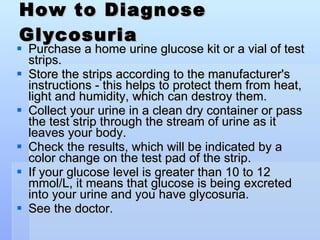
How to Diagnose Glycosuria Purchase a home urine glucose kit or a vial of test strips.  Store the strips according to the manufacturer's instructions - this helps to protect them from heat, light and humidity, which can destroy them. Collect your urine in a clean dry container or pass the test strip through the stream of urine as it leaves your body. Check the results, which will be indicated by a color change on the test pad of the strip. If your glucose level is greater than 10 to 12 mmol/L, it means that glucose is being excreted into your urine and you have glycosuria.  See the doctor.
 
Polyuria Polyuria is the passage of large volumes of urine, at least 2.5 liters over 24 hours in an adult.  Frequent urination is sometimes included by definition. But is in any case a usual complication. Increased production and passage of urine may also be termed “ diuresis”.
Causes of Polyuria Uncontrolled diabetes mellitus. Primary polydipsia.  Central diabetes insipidus. Nephrogenic diabetes insipidus.  Anxiety. certain water pills called diuretics. Early stage of kidney failure. Etc.
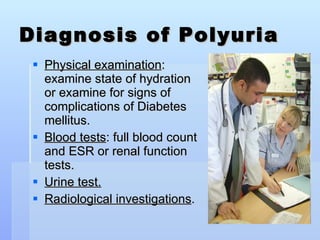
Diagnosis of Polyuria Physical examination : examine state of hydration or examine for signs of complications of Diabetes mellitus. Blood tests : full blood count and ESR or renal function tests. Urine test. Radiological investigations .
Summary of Endocrine System
Function Secreting hormones directly to bloodstream. Regulating many body activities such as metabolic rate, water and mineral balance, immune system reactions, and sexual functioning. It is instrumental in maintaining homeostasis.
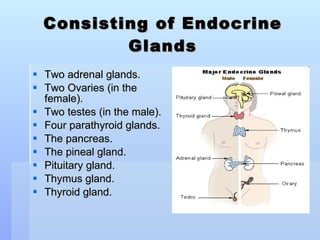
Consisting of Endocrine Glands Two adrenal glands. Two Ovaries (in the female). Two testes (in the male). Four parathyroid glands. The pancreas. The pineal gland. Pituitary gland. Thymus gland. Thyroid gland.
Endocrine Glands and Their Hormones
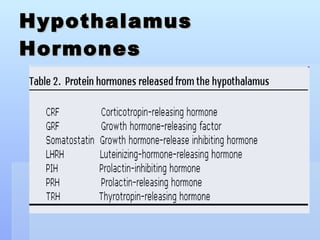
Hypothalamus Hormones
References Fremgen, Bonnie F., and Suzanne S. Frucht.  Medical Terminology: a Living Language . Upper Saddle River, N.J.: Pearson Prentice Hall, 2009. Print. http://en.wikipedia.org/wiki/glycosuria http://en.wikipedia.org/wiki/Polyuria http://www.wrongdiagnosis.com
Reference for Pictures www.nlm.nih.gov  http://medical-dictionary.com www.rush.edu www.ghi.com  www.secrets-about-vitamins.com  www.ucd.ie  www.doctorsecrets.com www.nsbri.org

Endocrine system presentation#11

  • 1.
    Endocrine System andMedical Terms Related Sirinthip Thanomphon July 14,2010
  • 2.
    Glycosuria Is theexcretion of glucose into the urine. Also called glucosuria . Less than 0.1% of glucose normally filtered by the glomeruli appears in the urine, and less than 130 mg should appear in the urine over a 24-hour period.
  • 3.
    The Possible Causesof Glycosuria Diabetes mellitus. Pregnancy. High sugar diet. Following a gastrectomy. Hyperthyroidism. Liver disease. Raised intracranial pressure. Liver disease.
  • 4.
    How to DiagnoseGlycosuria Purchase a home urine glucose kit or a vial of test strips. Store the strips according to the manufacturer's instructions - this helps to protect them from heat, light and humidity, which can destroy them. Collect your urine in a clean dry container or pass the test strip through the stream of urine as it leaves your body. Check the results, which will be indicated by a color change on the test pad of the strip. If your glucose level is greater than 10 to 12 mmol/L, it means that glucose is being excreted into your urine and you have glycosuria. See the doctor.
  • 5.
  • 6.
    Polyuria Polyuria isthe passage of large volumes of urine, at least 2.5 liters over 24 hours in an adult. Frequent urination is sometimes included by definition. But is in any case a usual complication. Increased production and passage of urine may also be termed “ diuresis”.
  • 7.
    Causes of PolyuriaUncontrolled diabetes mellitus. Primary polydipsia. Central diabetes insipidus. Nephrogenic diabetes insipidus. Anxiety. certain water pills called diuretics. Early stage of kidney failure. Etc.
  • 8.
    Diagnosis of PolyuriaPhysical examination : examine state of hydration or examine for signs of complications of Diabetes mellitus. Blood tests : full blood count and ESR or renal function tests. Urine test. Radiological investigations .
  • 9.
  • 10.
    Function Secreting hormonesdirectly to bloodstream. Regulating many body activities such as metabolic rate, water and mineral balance, immune system reactions, and sexual functioning. It is instrumental in maintaining homeostasis.
  • 11.
    Consisting of EndocrineGlands Two adrenal glands. Two Ovaries (in the female). Two testes (in the male). Four parathyroid glands. The pancreas. The pineal gland. Pituitary gland. Thymus gland. Thyroid gland.
  • 12.
    Endocrine Glands andTheir Hormones
  • 13.
  • 14.
    References Fremgen, BonnieF., and Suzanne S. Frucht. Medical Terminology: a Living Language . Upper Saddle River, N.J.: Pearson Prentice Hall, 2009. Print. http://en.wikipedia.org/wiki/glycosuria http://en.wikipedia.org/wiki/Polyuria http://www.wrongdiagnosis.com
  • 15.
    Reference for Pictureswww.nlm.nih.gov http://medical-dictionary.com www.rush.edu www.ghi.com www.secrets-about-vitamins.com www.ucd.ie www.doctorsecrets.com www.nsbri.org