Case 
• 59 YO F presents to the ER with a 3 day H/O mental status 
change. She has been having trouble finding the right words and 
had been using incorrect words in sentences. These symptoms 
were accompanied by mild anorexia and a frontal headache. Pt 
has no significant PMH. She emigrated from Germany 30 years 
ago and now operated a daycare out of her home for pre-school 
aged children in the New England area. She had no recent sick 
contacts. 
• Pt was afebrile and her vitals were WNL. She was alert and 
oriented but had mild dysnomia on questioning. There were no 
meningeal signs on exam but she did seem to be mildly 
dehydrated. CT Head was negative and her labs were WNL. 
• CSF: WBC: 75 L75% RBC 5 Protein: 100 mg/dL 
• MRI: Left Temporal Lobe Enhancement 
• PCR of CSF: HSV Type 1
Encephalitis 
Melissa Davis, MSIV
Meningitis vs Encephalitis 
• Encephalitis: Inflammation of the white and gray matter of the 
brain. 
• It is almost always associated with inflammation of the meninges 
(meningoencephalitis) and may involve the spinal cord 
(encephalomyelitis) 
• Encephalitis will affect normal brain function 
• Altered Mental Status 
• Motor or Sensory Deficits 
• Behavior or Personality Changes 
• Speech or Movement disorders. 
• Meningitis: Inflammation of the meninges 
• Cerebral Function Intact- No focal deficits or AMS 
• Can be lethargic 
Seizures can be present in both
Workup 
Figure 87-1 Approach to the 
patient with possible central 
nervous system infection. ADEM, 
acute disseminated 
encephalomyelitis; CSF, 
cerebrospinal fluid; EBV, Epstein- 
Barr virus; HIV, human 
immunodeficiency virus; HSV, 
herpes simplex virus; LCMV, 
lymphocytic choriomeningitis virus; 
VZV, varicella-zoster virus; WNV, 
West Nile virus.
Viral CSF 
• WBC: Increased (<250/mm3) 
• PMN predominate  Lymphocytes later 
• Protein: elevated (<150 mg/dL) 
• Glucose: Normal (>50% of Blood Value) 
• Can be Low in HSV, Mumps, and some enteroviruses) 
• RBC: Absent 
• If present may suggest necrotizing encephalitides or HSV-1
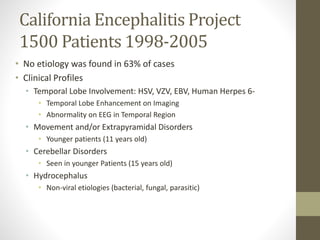
California Encephalitis Project 
1500 Patients 1998-2005 
• No etiology was found in 63% of cases 
• Clinical Profiles 
• Temporal Lobe Involvement: HSV, VZV, EBV, Human Herpes 6- 
• Temporal Lobe Enhancement on Imaging 
• Abnormality on EEG in Temporal Region 
• Movement and/or Extrapyramidal Disorders 
• Younger patients (11 years old) 
• Cerebellar Disorders 
• Seen in younger Patients (15 years old) 
• Hydrocephalus 
• Non-viral etiologies (bacterial, fungal, parasitic)
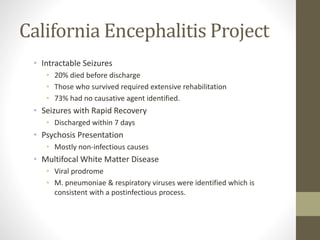
California Encephalitis Project 
• Intractable Seizures 
• 20% died before discharge 
• Those who survived required extensive rehabilitation 
• 73% had no causative agent identified. 
• Seizures with Rapid Recovery 
• Discharged within 7 days 
• Psychosis Presentation 
• Mostly non-infectious causes 
• Multifocal White Matter Disease 
• Viral prodrome 
• M. pneumoniae & respiratory viruses were identified which is 
consistent with a postinfectious process.
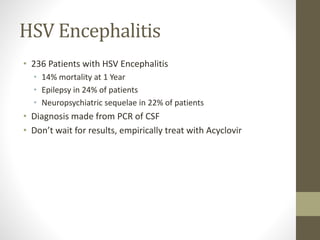
HSV Encephalitis 
• 236 Patients with HSV Encephalitis 
• 14% mortality at 1 Year 
• Epilepsy in 24% of patients 
• Neuropsychiatric sequelae in 22% of patients 
• Diagnosis made from PCR of CSF 
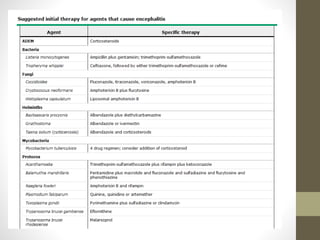
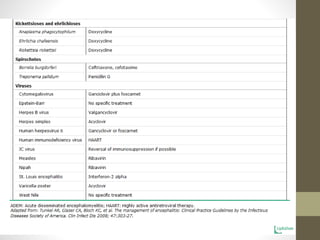
• Don’t wait for results, empirically treat with Acyclovir
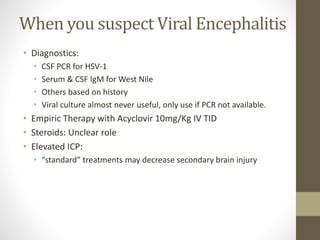
When you suspect Viral Encephalitis 
• Diagnostics: 
• CSF PCR for HSV-1 
• Serum & CSF IgM for West Nile 
• Others based on history 
• Viral culture almost never useful, only use if PCR not available. 
• Empiric Therapy with Acyclovir 10mg/Kg IV TID 
• Steroids: Unclear role 
• Elevated ICP: 
• “standard” treatments may decrease secondary brain injury
References 
• Nilsson, K., & Piccini, J. (2006). The olsner medical handbook. (2nd 
ed. ed.). Philadelphia, PA: Saunders Elsevier. DOI: 
www.mdconsult.com 
• Dalmau, MD, PhD, J., & Rosenfeld, MD, PhD, M. (2011). 
Paraneoplastic and autoimmune encephalitis.UpToDate, Retrieved 
from www.uptodate.com 
• Johnson, MD, R. P., & Gluckman, MD, S. J. (2012). Viral encephalitis 
in adults. UpToDate, Retrieved from www.uptodate.com 
• Reddy, P., Bleck, T., Bleck, F., & Bleck, F. (2009).Mandell, douglas, and 
bennett's principles and practice of infectious diseases. (7th ed. ed., 
Vol. 1). Philadelphia: Churchill Livingstone. 
• Khan, O., & Ramsay, A. (2006). Herpes encephalitis presenting as 
mild aphasia: case report. BioMed Central Family Practice, 7(22), 
Retrieved from http://www.ncbi.nlm.nih.gov 
• Glaser CA, Honarmand S, Anderson LJ, et al. Beyond viruses: clinical 
profiles and etiologies associated with encephalitis. Clin Infect Dis 
2006; 43:1565.

Encephalitis

  • 1.
    Case • 59YO F presents to the ER with a 3 day H/O mental status change. She has been having trouble finding the right words and had been using incorrect words in sentences. These symptoms were accompanied by mild anorexia and a frontal headache. Pt has no significant PMH. She emigrated from Germany 30 years ago and now operated a daycare out of her home for pre-school aged children in the New England area. She had no recent sick contacts. • Pt was afebrile and her vitals were WNL. She was alert and oriented but had mild dysnomia on questioning. There were no meningeal signs on exam but she did seem to be mildly dehydrated. CT Head was negative and her labs were WNL. • CSF: WBC: 75 L75% RBC 5 Protein: 100 mg/dL • MRI: Left Temporal Lobe Enhancement • PCR of CSF: HSV Type 1
  • 2.
  • 3.
    Meningitis vs Encephalitis • Encephalitis: Inflammation of the white and gray matter of the brain. • It is almost always associated with inflammation of the meninges (meningoencephalitis) and may involve the spinal cord (encephalomyelitis) • Encephalitis will affect normal brain function • Altered Mental Status • Motor or Sensory Deficits • Behavior or Personality Changes • Speech or Movement disorders. • Meningitis: Inflammation of the meninges • Cerebral Function Intact- No focal deficits or AMS • Can be lethargic Seizures can be present in both
  • 4.
    Workup Figure 87-1Approach to the patient with possible central nervous system infection. ADEM, acute disseminated encephalomyelitis; CSF, cerebrospinal fluid; EBV, Epstein- Barr virus; HIV, human immunodeficiency virus; HSV, herpes simplex virus; LCMV, lymphocytic choriomeningitis virus; VZV, varicella-zoster virus; WNV, West Nile virus.
  • 5.
    Viral CSF •WBC: Increased (<250/mm3) • PMN predominate  Lymphocytes later • Protein: elevated (<150 mg/dL) • Glucose: Normal (>50% of Blood Value) • Can be Low in HSV, Mumps, and some enteroviruses) • RBC: Absent • If present may suggest necrotizing encephalitides or HSV-1
  • 6.
    California Encephalitis Project 1500 Patients 1998-2005 • No etiology was found in 63% of cases • Clinical Profiles • Temporal Lobe Involvement: HSV, VZV, EBV, Human Herpes 6- • Temporal Lobe Enhancement on Imaging • Abnormality on EEG in Temporal Region • Movement and/or Extrapyramidal Disorders • Younger patients (11 years old) • Cerebellar Disorders • Seen in younger Patients (15 years old) • Hydrocephalus • Non-viral etiologies (bacterial, fungal, parasitic)
  • 7.
    California Encephalitis Project • Intractable Seizures • 20% died before discharge • Those who survived required extensive rehabilitation • 73% had no causative agent identified. • Seizures with Rapid Recovery • Discharged within 7 days • Psychosis Presentation • Mostly non-infectious causes • Multifocal White Matter Disease • Viral prodrome • M. pneumoniae & respiratory viruses were identified which is consistent with a postinfectious process.
  • 10.
    HSV Encephalitis •236 Patients with HSV Encephalitis • 14% mortality at 1 Year • Epilepsy in 24% of patients • Neuropsychiatric sequelae in 22% of patients • Diagnosis made from PCR of CSF • Don’t wait for results, empirically treat with Acyclovir
  • 11.
    When you suspectViral Encephalitis • Diagnostics: • CSF PCR for HSV-1 • Serum & CSF IgM for West Nile • Others based on history • Viral culture almost never useful, only use if PCR not available. • Empiric Therapy with Acyclovir 10mg/Kg IV TID • Steroids: Unclear role • Elevated ICP: • “standard” treatments may decrease secondary brain injury
  • 12.
    References • Nilsson,K., & Piccini, J. (2006). The olsner medical handbook. (2nd ed. ed.). Philadelphia, PA: Saunders Elsevier. DOI: www.mdconsult.com • Dalmau, MD, PhD, J., & Rosenfeld, MD, PhD, M. (2011). Paraneoplastic and autoimmune encephalitis.UpToDate, Retrieved from www.uptodate.com • Johnson, MD, R. P., & Gluckman, MD, S. J. (2012). Viral encephalitis in adults. UpToDate, Retrieved from www.uptodate.com • Reddy, P., Bleck, T., Bleck, F., & Bleck, F. (2009).Mandell, douglas, and bennett's principles and practice of infectious diseases. (7th ed. ed., Vol. 1). Philadelphia: Churchill Livingstone. • Khan, O., & Ramsay, A. (2006). Herpes encephalitis presenting as mild aphasia: case report. BioMed Central Family Practice, 7(22), Retrieved from http://www.ncbi.nlm.nih.gov • Glaser CA, Honarmand S, Anderson LJ, et al. Beyond viruses: clinical profiles and etiologies associated with encephalitis. Clin Infect Dis 2006; 43:1565.

Editor's Notes

  • #7 No PCR for Influenza, Parainfluenza, Measles, Mumps PCR for HSV-1 , HSV-2, Enteroviruses, VZV, CMV,
  • #12 No PCR for Influenza, Parainfluenza, Measles, Mumps PCR for HSV-1 , HSV-2, Enteroviruses, VZV, CMV,