RENAL ENCEPALOPATHY &
HEPATIC ENCEPHALOPATHY
PRESENTED BY:DR.SWARUPA BANSODE
UREMIC ENCEPHALOPATHY
‘ Organic brain disorder usually occurs in patients who are untreated or inadequately treated
for their kidney disease ‘
 manifestations- fluctuating from hour to hour or day to day and vary from mild to severe
depending on the rate of decline in renal function.
Worse symptoms usually occur with acute deterioration when the gfr level falls and remains
below 15 ml/min .
Uremic toxins, in particular guanidino compounds(interfere with both glutamatergic and
gaba-ergic neurotransmission, finally leading to an enhanced excitability), that accumulate
due to renal dysfunction.
CLINICAL SYMPTOMS
• Emotional alterations, especially depression, and slight attention and memory
deficits to severe alterations of consciousness and cognition including (mostly
agitated) confusion, psychosis, seizures, and coma.
• Slight neuropsychiatric symptoms are present in about 30% of patients on
dialysis therapy.
• Action tremor, asterixis, and myoclonus, as well as hyperreflexia, are
characteristic features of uremic encephalopathy.
• Both asterixis and myoclonus may be provoked by several drugs such as
opioids, antiepileptic drugs, phenothiazines, or metoclopramide in patients with
impaired renal function due to increased plasma levels.
• EARLY OR MILD ENCEPHALOPATHY –
fatigue anorexia,nausea, insomnia, restlessness, decrease in
attention span, cognitive and memory impairments, inability to
manage ideas and apathy.
• MODERATE/SEVERE ENCEPHALOPATHY-
severe cognitive dysfunction , disorientation, slurred speech,
disturbed sleep pattern, deterioration in level of consciousness,
delirium, bizarre behavior, multifocal myoclonus, asterixis,
convulsions, psychosis with visual hallucinations, delusions,
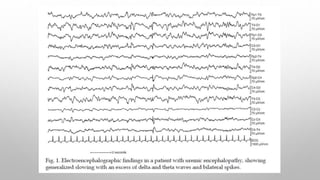
• EEG
-abnormalities in eeg usually appear within the first two days after acute
encephalopathy.
* generalized slow background (theta/delta) and prolonged bursts of bilateral,
synchronous slow and sharp waves (triphasic waves) (particularly in pre-coma state) .
*foci of spikes, spike-slow wave complexes and bilateral or multifocal spike discharges
are associated with myoclonic jerks ; however, epileptic discharges (spikes and spike-
slow wave complexes) have been reported in 14% of patients in absence of manifest
seizures .
• METABOLIC AND ELECTROLYTES
-metabolic or lactic acidosis, hyponatremia,hyperkalemia, hypocalcemia,
hyperphosphatemia, hypomagnesemia and water intoxication or dehydration
Causes of uremic encephalopathy are multiple and
include:
(1) accumulation of uremic toxins which result in:
(a) impairment of brain synaptic function,
(b) disturbance of neurotransmitter amino acids balance,
(c) impairment of sodium/potassium atpase pump activity,
(d) bbb injury,
(2) secondary hyperparathyroidism
(3) metabolic and electrolytes derangements and disturbed brain
metabolism,
(4) thiamin deficiency, and
DIAGNOSIS OF UREMIC
ENCEPHALOPATHY
• Is made in the presence of the characteristic symptoms in a patient with severe renal
dysfunction after exclusion of other possible causes. The diagnosis is proven if
symptoms disappear with successful renal replacement therapy.
• EEG, CSF, and brain imaging produce unspecific results.
• The EEG shows a generalized slowing with excess theta and delta activity. Sometimes
bilateral spike-wave complexes are found.
• EEG correlates with clinical findings: with progression of encephalopathy eeg becomes
slower, but normalizes with successful therapy.
• CSF is often abnormal, and shows increased protein levels (<1 g/l) and a slight
pleocytosis (<25 cells/ml).
• Brain imaging is completely unspecific, showing just a decrease in brain volume.
TREATMENT OF UREMIC ENCEPHALOPATHY
uremic encephalopathy is an indication for continuous renal
replacement therapy with hemodialysis or peritoneal dialysis.
 adequacy or optimization of dialysis is important when treating
uremic encephalopathy which means:
increasing the frequency of hemodialysis for at least 3 times per
week and duration of dialysis to be 3.5 hours per session or daily
continuous ambulatory or automated peritoneal dialysis.
hemodialysis is more beneficial than peritoneal dialysis. despite
the marked improvement and reversibility of symptoms after
dialysis, however,EEG may not immediately improve.
Symptoms usually regress within days or weeks after the initiation of
dialysis, but mild symptoms may persist. Successful renal
transplantation results in resolution of symptoms within days
 in ESKD, EEG changes generally improve after several months but do
not completely normalize
Correction of EPO deficiency anemia ; correction of iron deficiency
anemia using parenteral and oral iron supplements ;
Improvement of cognitive function can be achieved by increasing a
patient’s hemoglobin level to about 11–12 mg/dl or treatment of
obstructive sleep apnea by using continuous positive airway pressure
ventilation similar to obstructive sleep apnea in obese patients
 correction of thiamin deficiency with intravenous followed by oral thiamin supplements
;
 correction of metabolic derangements, reducing salt intake, avoiding diet containing a
lot of potassium and reducing the amount of protein and phosphate in diet.
 In adults, 60-180 meq of potassium, 10-30 meq of magnesium, and 10-40 mmol/l of
phosphate per day appear necessary to achieve optimum metabolic balance;
 optimize control of hypertension
treatment of hyperparathyroidism with the reduction of serum phosphate levels using
phosphate binders, the use of calcimimetics and even parathyroidectomy as
alternative when medical treatment fails
WERNICKE ENCEPHALOPATHY
• Another possible cause of encephalopathy in hemodialysis patients is thiamine
deficiency due to poor intake caused by decreased appetite and increased loss
of this water-soluble vitamin in the dialysis procedure.
• Brain imaging is mandatory in order to exclude intracranial bleeding.
• The determination of thiamine levels, however, can be omitted, since
substitution of thiamine can be done without any significant side effects,
although there are some reports of allergic reactions.
Mild cognitive impairment/dementia in chronic renal
disease
• patients with chronic renal disease develop cognitive dysfunction from mild
impairment to frank dementia .
• frequency of dementia in patients of old age undergoing dialysis therapy has
been estimated as about 4%, with predominance of multi-infarct dementia.
• Multi-infarct dementia is about 7 times more frequent in dialysis patients than in
the general elderly population.
• Neuropsychological studies showed alterations especially of attention,
concentration, and memory, even in some patients who appeared normal in a
clinical examination.
• The pathophysiology is multifactorial: uremic toxins, hypertension,
Dialysis dementia
• Also known as progressive myoclonic dialysis encephalopathy, dialysis
encephalopathy or haemodialysis encephalopathy .
• prevalence -0.6-1.0%.
• time of onset of symptoms had been found to vary from early as in the first month to
several years [upto 9 yr { mean of 3.5 yr}] after dialysis .
• the early and commonest (occurring in 95%) manifestations of dialysis dementia are
speech problems (mixed dysarthria and dysphasia with dysgraphia), apathy and
depression.
• Severe forms have rapid and persistent deterioration of speech, myoclonus (in up to
80%), ataxia and apraxia. In late stages, there are seizures, psychosis
(hallucinations and paranoid delusions) (in up to 60%) and frank dementia in 95% of
cases. In very late stages, patients become immobile and mute.
In untreated cases, death usually occurs within 6-9 months. EEG picture is
similar to that seen in uremic encephalopathy.
Treatment of dialysis dementia
• Dialysis dementia is treated by using desferrioxamine. It is a chelating
agent which binds aluminum with
Greater affinity than that of the plasma proteins [desferrioxaminealuminium
complex].
• This results in improvement of up to 70% of cases, however the clinical
improvement is slow and therapy may need to be given once weekly for
over a year
CNS symptoms associated with dialysis
therapy
• Dialysis dysequilibrium syndrome
• Especially observed after the initiation of renal replacement therapy.
• Rapid normalization of electrolytes, urea, and creatinine result in water influx into brain cells
because the intracellular osmolyte levels cannot be normalized as fast as the intravascular
levels. As a consequence, cerebral edema evolves and presents with headache, nausea,
vomiting, confusion, and seizures.
Mechanisms for the occurrence of brain edema with DDS:
(1)Reverse urea effect and creation of significant blood-brain urea osmotic gradient,
(2) presence of organic osmolytes in the brain at the end of rapid dialysis and creation of
higher brain osmolarity
(3) Paradoxical acidemia.
The diagnosis of dialysis disequilibrium syndrome can be made only by exclusion
of other possible causes of brain dysfunction.
Mild form of DDS is manifested by headaches, restlessness, fatigue, nausea,
vomiting, blurred vision and muscle cramps. These manifestations usually subside
within hours.
Severe form of dds is rare and manifested by cardiac arrhythmias, tremors,
seizures, myoclonus, increased Intracranial pressure, disturbed consciousness,
confusion, delirium and even coma.
Neuroimaging studies in patients with DDS demonstrate diffuse brain edema.
Death may occur due to advanced cerebral edema
Treatment of DDS
(1) slow, gentle initial hemodialysis by decreasing the dialysis time (2 hours) at
frequent intervals (every 1 to 2 days), decreasing the blood flow rate (200
ml/minute) and by using a less efficient (small) dialyzer or a combination of these
techniques,
(2) the use of a high dialysate sodium concentration to minimize osmotic
disequilibrium. It has been found that sodium concentrations of 2 meq/l yields an
osmotic force equivalent to approximately 11 mg/dl of blood urea nitrogen (BUN),
and
(3) administration of osmotically active substances during dialysis as by using a
high-glucose-concentration dialysate (200-717 mg/dl) or by using intravenous
mannitol (IV infusion of 1 g/kg/dialysis) can reduce osmolarity fluctuation
CENTRAL PONTINE MYELINOSIS/ OSMOTIC
MYELINOSIS
It may occur in some patients with uremic syndrome due to aggressive and rapid
correction of hyponatremia .
• manifestations - spastic quadriparesis, pseudobulbar palsy, and impaired
consciousness, coma, locked in syndrome or death.
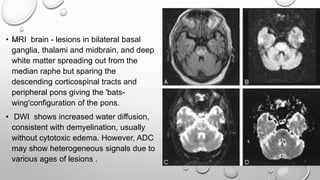
• MRI brain - lesions in bilateral basal
ganglia, thalami and midbrain, and deep
white matter spreading out from the
median raphe but sparing the
descending corticospinal tracts and
peripheral pons giving the 'bats-
wing'configuration of the pons.
• DWI shows increased water diffusion,
consistent with demyelination, usually
without cytotoxic edema. However, ADC
may show heterogeneous signals due to
various ages of lesions .
Treatment :
• Once happens, there is no cure or specific treatment.
• Prevention is important
by correction of hyponatremia at a rate
not exceeding 10 mmol/L/24 hour or 0.5 meq/L/hour; or 18
meq/L/48hours
Seizures
• Recurrent seizures are common in patients with CKD particularly with
ESKD.
• Seizures are the most typical manifestations of uremic encephalopathy
withCKD.
A. The pathogenic mechanisms of seizures with uremic syndrome
(1)Accumulation of uremic toxins and excitotoxicity,
(2) Secondary hyperparathyroidism,
(3) metabolic and electrolytes derangements,
(4)Hypertensive encephalopathy, and
Treatment of seizures with uremia
Seizures usually disappear after improvement of uremic encephalopathy and correction of the metabolic
derangements.
Selection of appropriate antiepileptic drugs is an important issue because of the following:
(1) the reduction of GFR and tubular secretion causes poor elimination of drugs which are mainly
excreted by the kidney.( Increased serum concentrations of these drugs resulting in toxicity.)
(2) drugs which are water soluble and have low protein binding and those with lower distribution volume
are easily removed by hemodialysis. ( Results in decreased their therapeutic serum concentrations which
precipitates seizures).
(3) albuminuria and hypoalbuminemia in the presence of low plasma protein concentrations, ( serum
concentration of drugs which have high protein binding will be increased resulting in drugs' toxicity.)
(4) AEDS with carbonic anhydrase properties have nephrolithiasis as an adverse effect and should be
avoided in patients with urinary system stones
• AEDS which are mainly excreted by the kidney are better avoided in long-term
treatment of seizures with CKD. –
Gabapentin (GBP), levetiracetam (LEV), lamotrigine (LTG), oxcarbazepine (OXC),
phenobarbital (PB), pregabalin (PGB), primidone (PRM), topiramate (TPM) and
zonisamide (ZNS).
• They are not strictly contraindicated for use in patients with ckd but dose adjustment
is required to avoid drug toxicity .
• most recommended AEDS in renal impairment and haemodialysis are those that are
mainly eliminated by the liver, such as benzodiazepine (BZD), carbamazepine (CBZ),
ethosuximide (ESM), phenytoin (PHT), tiagabine (TGB) and valproate (VPA ) .
• PHT, CBZ & VPA are highly protein bound with only a small proportion of the total drug
persisting in the free active state. So are preferred for treatment of seizures with ESKD
however, in patients with albuminuria and hypoalbuminemia, adjusting of the dose is
required for drugs to avoid marked increase in the free drug level and drug toxicity.
There will be a need for supplemental dose due to excess elimination of the drug in presence
of hypoalbuminemia, reduced protein binding and excess elimination of the drug by dialysis.
• AEDS which are highly water soluble and have low protein binding properties and those with
lower distribution volume are not recommended in patients with ESKD , those on
hemodialysis and in acute management of renal failure as they are easily removed by
dialysis.
These drugs include GBP, LEV and TPM . if used, supplementary doses may be required
after dialysis sessions to avoid seizures' occurrence due to low serum concentration of the
drug
RESTLESS LEG SYNDROME
• Restless leg syndrome (RLS) is quite frequent in patients with renal
failure, especially in women.
• It is characterized by a need to move the legs, is worsened by periods of
inactivity, and can be relieved by walking or stretching. Thus, patients
suffer especially during the night.
• The symptoms of uremic RLS are more severe in patients on dialysis
compared to those of idiopathic RLS. These movements typically consist
of extension and dorsiflexion of the toes, and in more severe cases,
flexion of the knee and thighs occur
• result from a decrease in dopaminergic modulation of intracortical
excitability.
• Iron deficiency plays a major role in the development of RLS
since iron is a co-factor for the enzyme tyrosine hydroxylase, the
rate-limiting step in the biosynthesis of dopamine.
• Accordingly, treatment includes the application of dopamine
receptor agonists, levodopa combined with dopa decarboxylase
inhibitors, and the adjustment of any iron deficit.
• These treatments are often combined with the application of
benzodiazepines, opioids, or gabapentin. RLS often persists after
the initiation of dialysis therapy, but resolves after kidney
transplantation
Treatment of RLS with uremia
Kidney transplantation may result in disappearance of symptoms of uremic RLS
within a few weeks .
Treatment of anemia with epo and intravenous and oral iron supplements may
reduces the severity of symptoms RLS in some patients .
Dopaminergic drugs may help in improving symptoms of uremic RLS.
L-DOPA standard plus decarboxylase inhibitor in a dose of 100-200 mg at bedtime
was reported to be effective against mild and moderate sleep disturbances in RLS.
Other dopaminergic drugs as pramipexole, ropinirole, and rotigotine have also
been found to be beneficial. However, the development of augmentationof
symptoms especially under L-DOPA therapy may be a major problem in some
patients.
 Alternative medications include benzodiazepines, opioids, gabapentin, pregabalin,
carbamazepine, and clonidine .
HEPATIC
ENCEPHALOPATHY
HEPATIC ENCEPHALOPATHY
• As patients with chronic liver disease enter the terminal phases of their illness, hepatic
encephalopathy becomes an increasingly important cause of morbidity and mortality..
• Minimal HE—the mildest form of he, which interferes with the patients’ daily living
ability but usually does not result in seeking medical care—is far more common,
affecting about half of all patients with cirrhosis.
• Minimal HE can be diagnosed using neuropsychological tests, EEG or critical flicker
frequency , but is commonly overlooked.
HE be classified according to four factors:
1. The underlying etiology as described previously – type A, B or
C;
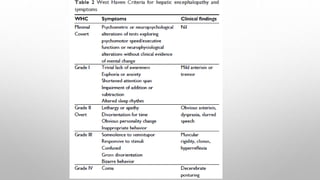
2. Severity – using grading system such as west haven criteria;
3. Time course – episodic, recurrent (>1 episode in 6 months) or
persistent (symptoms always present and can have episodes of
acute exacerbations); and
4. Nonprecipitated or precipitated by factors such as infections,
medications or electrolyte disorders
The initial categorization (presence of hepatocellular disease and
portacaval shunting):
• Type A HE - patients with acute liver disease or fulminating hepatic
failure, a disorder occurring in patients with previously normal livers who
exhibit neurological signs within 8 weeks of developing liver disease
• Type B HE -consists of a small number of patients who are free of
hepatocellular disease but have portacaval shunting of blood.
• Type C HE - the largest number of patients have hepatocellular disease
with shunts
• As liver disease progresses, patients appear to become more susceptible to the effects of precipitants.
This phenomenon has been referred to as toxin hypersensitivity.
An episode of he may be precipitated by
1. Increased ammonia production
Gastrointestinal hemmorhage ,excess dietary protein,blood transfusion, electrolyte imbalances, eg,
hypokalemia constipation
2.Portosystemic shunts
Spontaneous ,iatrogenic, eg, TIPS
3.Others:
Drugs- opioids, benzodiazepines
Infections-spontaneous bacterial peritonitis
Malignancy-hepatoma
PATHOPHYSIOLOGY- HE
• Suspected factors include
hyperammonemia, altered amino acids and neurotransmitters—especially
those related to the γ-aminobutyric acid (gaba)–benzodiazepine complex—
mercaptans, short-chain fatty acids, and manganese deposition in the brain.
ROLE OF AMMONIA
• Elevated blood ammonia levels correlate to a degree with the severity of the encephalopathy. Metabolic
products formed from ammonia— most notably glutamine and its transamination product, α-
ketoglutaramic acid—also are present in excess in cerebrospinal fluid (CSF) in patients with liver
disease.
• The liver is the most important organ for the detoxification of ammonia.
• Under the most extreme conditions, muscle becomes the most important organ for ammonia
detoxification so nutritional therapy for patients should be designed to prevent development of a
catabolic state and muscle wasting.
• An increase in ammonia detoxification in the brain is associated with an increase of glutamine
concentrations within astrocytes and cell swellingastrocyte swelling may be induced also by
inflammatory cytokines, hyponatremia, or benzodiazepines.
CEREBRAL BLOOD FLOW AND GLUCOSE
METABOLISM
• Whole-brain measurements of cerebral blood flow (CBF) and metabolism are normal in
patients with grade 0 to 1 HE.
• Reductions occur in more severely affected patients.
• Pet scan show clearly that minimal forms of he are caused by the selective impairment of
specific neural systems rather than global cerebral dysfunction. Reductions occur in the
cingulate gyrus, an important element in the attentional system of the brain, and in frontal and
parietal association cortices.
LABORATORY EVALUATIONS
• The diagnosis of HE is based on the signs and symptoms of cerebral dysfunction in a setting of
hepatic failure.
• Serum bilirubin and hepatic enzymes, are abnormal, serum albumin and clotting factors, often are
low.
• Measurements of the arterial ammonia level may be helpful in diagnosing he, but an ammonia
level within the normal range does not exclude he. When obtaining blood samples for an ammonia
determination, care must be taken to be certain that the sample is of arterial origin (venous
ammonia levels may be artificially high, especially after theoutpouring of ammonia by muscle
made ischemic by applying a tourniquet). The sample should be placed on ice and carried by
hand to the laboratory for immediate analysis.
• Delays can result in ammonia production in the specimen, producing a spuriously elevated result.
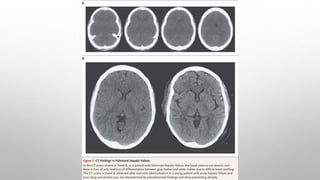
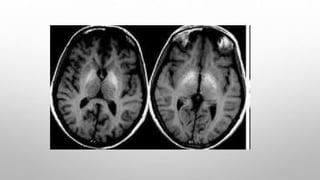
NEUROIMAGING –
• To exclude structural lesions.
Such as subdural hematomas or other evidence of cerebral trauma, or complications of alcohol abuse or thiamine
deficiency, or both, such as midline cerebellar atrophy, third ventricle dilatation, mamillary body atrophy, or high-
signal-strength lesions in the periventricular area on T2 FLAIR images.
• MRI T1 -abnormally high signals arising in the pallidum, T1 signal abnormality in the limbic and extrapyramidal
systems, and generally throughout the white matter. A generalized shortening of the T2 signal also occurs. ( An
increase in the cerebral manganese content).
• The abnormalities become more prominent with time and regress after successful liver transplantation.
• The unexpected finding of high T1signals in the pallidum should suggest the possibility of liver disease.
THE TESTS THAT ARE EMPLOYED FOR DIAGNOSIS OF HE:
1. Neuropsychological tests which includes psychometric test batteries ought to examine
the fields of cognition:
visual perception, concentration, visual orientation, attention & memory.
Example: number connection test; digit symbol test; circle dotting.
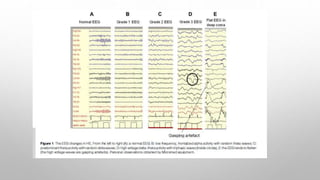
2. Neurophysiological tests –
i) simple electroencephalogram
ii) evoked potentials: auditory; visual & somatosensory
iii) P30015
3. Computerized psychometric test: critical flicker frequency
4. Magnetic resonance spectroscopy
TREATMENT
(1)Provision of supportive care,
(2) identification and treatment of precipitating factors,
(3) Search for and treatment of concomitant causes of encephalopathy,
(4) commencement of empirical HE treatment
REDUCING THE NITROGENOUS LOAD ARISING FROM THE
GI TRACT:
- Brief withdrawal of protein from diet and the administration of cleansing enemas,
followed by the use of lactulose. Antibiotics such as rifaximin, metronidazole, or neomycin may
be used as an alternative or add-on to lactulose.
- After the acute phase of he, patients should receive the maximum amount of protein
That is tolerated.
- Prolonged periods of protein restriction should be avoided. Protein is required for the
regeneration of
Hepatocytes and prevention of a catabolic state and muscle wasting.
• Lactulose : dose: 20 to 30 g, 3 or 4 times a day, or an amount sufficient to produce 2 or 3
stools per day. Lactulose also can be given as an enema
• Oral rifaximin –dose :550 mg, twice daily
• Branched-chain amino acids enriched formulations
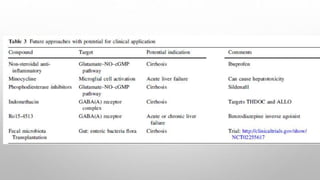
• Other therapies
1.Ammonia scavengers( Gpb(glycerol phenylbutyrate), op(ornithine
phenylacetate.)-Lowers ammonia by providing an alternative pathway to urea
for waste nitrogen excretion in the form of phenylacetylglutamine, which is
excreted in urine
2.LOLA(l-ornithine-l-aspartate;)-stimulates enzyme activity leading to increased
urea excretion
3.HAS(human albumin solution) -possible modulation of factors that induce
circulatory dysfunction causing oxidative stress
SUMMARY:
 Nearly every patient with ESKD has one or more neurologic condition or disorders.
The current treatment modalities of neurologic complications of uremic syndrome include
optimization of dialysis therapy, kidney transplantation, correction of metabolic derangement
and anemia, vitamins and nutritional supplementation, dietary restrictions and symptomatic
treatment.
HE is a significant contributor to morbidity in patients with Cirrhosis associated with end-
stage liver disease
Avoiding the precipitants of HE and combination Treatment with lactulose and rifaximin
remain the mainstay Of treatment
THANK YOU…!!!

Encepalopathy

  • 1.
    RENAL ENCEPALOPATHY & HEPATICENCEPHALOPATHY PRESENTED BY:DR.SWARUPA BANSODE
  • 2.
    UREMIC ENCEPHALOPATHY ‘ Organicbrain disorder usually occurs in patients who are untreated or inadequately treated for their kidney disease ‘  manifestations- fluctuating from hour to hour or day to day and vary from mild to severe depending on the rate of decline in renal function. Worse symptoms usually occur with acute deterioration when the gfr level falls and remains below 15 ml/min . Uremic toxins, in particular guanidino compounds(interfere with both glutamatergic and gaba-ergic neurotransmission, finally leading to an enhanced excitability), that accumulate due to renal dysfunction.
  • 3.
    CLINICAL SYMPTOMS • Emotionalalterations, especially depression, and slight attention and memory deficits to severe alterations of consciousness and cognition including (mostly agitated) confusion, psychosis, seizures, and coma. • Slight neuropsychiatric symptoms are present in about 30% of patients on dialysis therapy. • Action tremor, asterixis, and myoclonus, as well as hyperreflexia, are characteristic features of uremic encephalopathy. • Both asterixis and myoclonus may be provoked by several drugs such as opioids, antiepileptic drugs, phenothiazines, or metoclopramide in patients with impaired renal function due to increased plasma levels.
  • 4.
    • EARLY ORMILD ENCEPHALOPATHY – fatigue anorexia,nausea, insomnia, restlessness, decrease in attention span, cognitive and memory impairments, inability to manage ideas and apathy. • MODERATE/SEVERE ENCEPHALOPATHY- severe cognitive dysfunction , disorientation, slurred speech, disturbed sleep pattern, deterioration in level of consciousness, delirium, bizarre behavior, multifocal myoclonus, asterixis, convulsions, psychosis with visual hallucinations, delusions,
  • 5.
    • EEG -abnormalities ineeg usually appear within the first two days after acute encephalopathy. * generalized slow background (theta/delta) and prolonged bursts of bilateral, synchronous slow and sharp waves (triphasic waves) (particularly in pre-coma state) . *foci of spikes, spike-slow wave complexes and bilateral or multifocal spike discharges are associated with myoclonic jerks ; however, epileptic discharges (spikes and spike- slow wave complexes) have been reported in 14% of patients in absence of manifest seizures . • METABOLIC AND ELECTROLYTES -metabolic or lactic acidosis, hyponatremia,hyperkalemia, hypocalcemia, hyperphosphatemia, hypomagnesemia and water intoxication or dehydration
  • 7.
    Causes of uremicencephalopathy are multiple and include: (1) accumulation of uremic toxins which result in: (a) impairment of brain synaptic function, (b) disturbance of neurotransmitter amino acids balance, (c) impairment of sodium/potassium atpase pump activity, (d) bbb injury, (2) secondary hyperparathyroidism (3) metabolic and electrolytes derangements and disturbed brain metabolism, (4) thiamin deficiency, and
  • 8.
    DIAGNOSIS OF UREMIC ENCEPHALOPATHY •Is made in the presence of the characteristic symptoms in a patient with severe renal dysfunction after exclusion of other possible causes. The diagnosis is proven if symptoms disappear with successful renal replacement therapy. • EEG, CSF, and brain imaging produce unspecific results. • The EEG shows a generalized slowing with excess theta and delta activity. Sometimes bilateral spike-wave complexes are found. • EEG correlates with clinical findings: with progression of encephalopathy eeg becomes slower, but normalizes with successful therapy. • CSF is often abnormal, and shows increased protein levels (<1 g/l) and a slight pleocytosis (<25 cells/ml). • Brain imaging is completely unspecific, showing just a decrease in brain volume.
  • 9.
    TREATMENT OF UREMICENCEPHALOPATHY uremic encephalopathy is an indication for continuous renal replacement therapy with hemodialysis or peritoneal dialysis.  adequacy or optimization of dialysis is important when treating uremic encephalopathy which means: increasing the frequency of hemodialysis for at least 3 times per week and duration of dialysis to be 3.5 hours per session or daily continuous ambulatory or automated peritoneal dialysis. hemodialysis is more beneficial than peritoneal dialysis. despite the marked improvement and reversibility of symptoms after dialysis, however,EEG may not immediately improve.
  • 10.
    Symptoms usually regresswithin days or weeks after the initiation of dialysis, but mild symptoms may persist. Successful renal transplantation results in resolution of symptoms within days  in ESKD, EEG changes generally improve after several months but do not completely normalize Correction of EPO deficiency anemia ; correction of iron deficiency anemia using parenteral and oral iron supplements ; Improvement of cognitive function can be achieved by increasing a patient’s hemoglobin level to about 11–12 mg/dl or treatment of obstructive sleep apnea by using continuous positive airway pressure ventilation similar to obstructive sleep apnea in obese patients
  • 11.
     correction ofthiamin deficiency with intravenous followed by oral thiamin supplements ;  correction of metabolic derangements, reducing salt intake, avoiding diet containing a lot of potassium and reducing the amount of protein and phosphate in diet.  In adults, 60-180 meq of potassium, 10-30 meq of magnesium, and 10-40 mmol/l of phosphate per day appear necessary to achieve optimum metabolic balance;  optimize control of hypertension treatment of hyperparathyroidism with the reduction of serum phosphate levels using phosphate binders, the use of calcimimetics and even parathyroidectomy as alternative when medical treatment fails
  • 12.
    WERNICKE ENCEPHALOPATHY • Anotherpossible cause of encephalopathy in hemodialysis patients is thiamine deficiency due to poor intake caused by decreased appetite and increased loss of this water-soluble vitamin in the dialysis procedure. • Brain imaging is mandatory in order to exclude intracranial bleeding. • The determination of thiamine levels, however, can be omitted, since substitution of thiamine can be done without any significant side effects, although there are some reports of allergic reactions.
  • 13.
    Mild cognitive impairment/dementiain chronic renal disease • patients with chronic renal disease develop cognitive dysfunction from mild impairment to frank dementia . • frequency of dementia in patients of old age undergoing dialysis therapy has been estimated as about 4%, with predominance of multi-infarct dementia. • Multi-infarct dementia is about 7 times more frequent in dialysis patients than in the general elderly population. • Neuropsychological studies showed alterations especially of attention, concentration, and memory, even in some patients who appeared normal in a clinical examination. • The pathophysiology is multifactorial: uremic toxins, hypertension,
  • 14.
    Dialysis dementia • Alsoknown as progressive myoclonic dialysis encephalopathy, dialysis encephalopathy or haemodialysis encephalopathy . • prevalence -0.6-1.0%. • time of onset of symptoms had been found to vary from early as in the first month to several years [upto 9 yr { mean of 3.5 yr}] after dialysis . • the early and commonest (occurring in 95%) manifestations of dialysis dementia are speech problems (mixed dysarthria and dysphasia with dysgraphia), apathy and depression. • Severe forms have rapid and persistent deterioration of speech, myoclonus (in up to 80%), ataxia and apraxia. In late stages, there are seizures, psychosis (hallucinations and paranoid delusions) (in up to 60%) and frank dementia in 95% of cases. In very late stages, patients become immobile and mute.
  • 15.
    In untreated cases,death usually occurs within 6-9 months. EEG picture is similar to that seen in uremic encephalopathy. Treatment of dialysis dementia • Dialysis dementia is treated by using desferrioxamine. It is a chelating agent which binds aluminum with Greater affinity than that of the plasma proteins [desferrioxaminealuminium complex]. • This results in improvement of up to 70% of cases, however the clinical improvement is slow and therapy may need to be given once weekly for over a year
  • 16.
    CNS symptoms associatedwith dialysis therapy • Dialysis dysequilibrium syndrome • Especially observed after the initiation of renal replacement therapy. • Rapid normalization of electrolytes, urea, and creatinine result in water influx into brain cells because the intracellular osmolyte levels cannot be normalized as fast as the intravascular levels. As a consequence, cerebral edema evolves and presents with headache, nausea, vomiting, confusion, and seizures. Mechanisms for the occurrence of brain edema with DDS: (1)Reverse urea effect and creation of significant blood-brain urea osmotic gradient, (2) presence of organic osmolytes in the brain at the end of rapid dialysis and creation of higher brain osmolarity (3) Paradoxical acidemia.
  • 17.
    The diagnosis ofdialysis disequilibrium syndrome can be made only by exclusion of other possible causes of brain dysfunction. Mild form of DDS is manifested by headaches, restlessness, fatigue, nausea, vomiting, blurred vision and muscle cramps. These manifestations usually subside within hours. Severe form of dds is rare and manifested by cardiac arrhythmias, tremors, seizures, myoclonus, increased Intracranial pressure, disturbed consciousness, confusion, delirium and even coma. Neuroimaging studies in patients with DDS demonstrate diffuse brain edema. Death may occur due to advanced cerebral edema
  • 18.
    Treatment of DDS (1)slow, gentle initial hemodialysis by decreasing the dialysis time (2 hours) at frequent intervals (every 1 to 2 days), decreasing the blood flow rate (200 ml/minute) and by using a less efficient (small) dialyzer or a combination of these techniques, (2) the use of a high dialysate sodium concentration to minimize osmotic disequilibrium. It has been found that sodium concentrations of 2 meq/l yields an osmotic force equivalent to approximately 11 mg/dl of blood urea nitrogen (BUN), and (3) administration of osmotically active substances during dialysis as by using a high-glucose-concentration dialysate (200-717 mg/dl) or by using intravenous mannitol (IV infusion of 1 g/kg/dialysis) can reduce osmolarity fluctuation
  • 19.
    CENTRAL PONTINE MYELINOSIS/OSMOTIC MYELINOSIS It may occur in some patients with uremic syndrome due to aggressive and rapid correction of hyponatremia . • manifestations - spastic quadriparesis, pseudobulbar palsy, and impaired consciousness, coma, locked in syndrome or death.
  • 20.
    • MRI brain- lesions in bilateral basal ganglia, thalami and midbrain, and deep white matter spreading out from the median raphe but sparing the descending corticospinal tracts and peripheral pons giving the 'bats- wing'configuration of the pons. • DWI shows increased water diffusion, consistent with demyelination, usually without cytotoxic edema. However, ADC may show heterogeneous signals due to various ages of lesions .
  • 21.
    Treatment : • Oncehappens, there is no cure or specific treatment. • Prevention is important by correction of hyponatremia at a rate not exceeding 10 mmol/L/24 hour or 0.5 meq/L/hour; or 18 meq/L/48hours
  • 22.
    Seizures • Recurrent seizuresare common in patients with CKD particularly with ESKD. • Seizures are the most typical manifestations of uremic encephalopathy withCKD. A. The pathogenic mechanisms of seizures with uremic syndrome (1)Accumulation of uremic toxins and excitotoxicity, (2) Secondary hyperparathyroidism, (3) metabolic and electrolytes derangements, (4)Hypertensive encephalopathy, and
  • 23.
    Treatment of seizureswith uremia Seizures usually disappear after improvement of uremic encephalopathy and correction of the metabolic derangements. Selection of appropriate antiepileptic drugs is an important issue because of the following: (1) the reduction of GFR and tubular secretion causes poor elimination of drugs which are mainly excreted by the kidney.( Increased serum concentrations of these drugs resulting in toxicity.) (2) drugs which are water soluble and have low protein binding and those with lower distribution volume are easily removed by hemodialysis. ( Results in decreased their therapeutic serum concentrations which precipitates seizures). (3) albuminuria and hypoalbuminemia in the presence of low plasma protein concentrations, ( serum concentration of drugs which have high protein binding will be increased resulting in drugs' toxicity.) (4) AEDS with carbonic anhydrase properties have nephrolithiasis as an adverse effect and should be avoided in patients with urinary system stones
  • 24.
    • AEDS whichare mainly excreted by the kidney are better avoided in long-term treatment of seizures with CKD. – Gabapentin (GBP), levetiracetam (LEV), lamotrigine (LTG), oxcarbazepine (OXC), phenobarbital (PB), pregabalin (PGB), primidone (PRM), topiramate (TPM) and zonisamide (ZNS). • They are not strictly contraindicated for use in patients with ckd but dose adjustment is required to avoid drug toxicity . • most recommended AEDS in renal impairment and haemodialysis are those that are mainly eliminated by the liver, such as benzodiazepine (BZD), carbamazepine (CBZ), ethosuximide (ESM), phenytoin (PHT), tiagabine (TGB) and valproate (VPA ) .
  • 25.
    • PHT, CBZ& VPA are highly protein bound with only a small proportion of the total drug persisting in the free active state. So are preferred for treatment of seizures with ESKD however, in patients with albuminuria and hypoalbuminemia, adjusting of the dose is required for drugs to avoid marked increase in the free drug level and drug toxicity. There will be a need for supplemental dose due to excess elimination of the drug in presence of hypoalbuminemia, reduced protein binding and excess elimination of the drug by dialysis. • AEDS which are highly water soluble and have low protein binding properties and those with lower distribution volume are not recommended in patients with ESKD , those on hemodialysis and in acute management of renal failure as they are easily removed by dialysis. These drugs include GBP, LEV and TPM . if used, supplementary doses may be required after dialysis sessions to avoid seizures' occurrence due to low serum concentration of the drug
  • 26.
    RESTLESS LEG SYNDROME •Restless leg syndrome (RLS) is quite frequent in patients with renal failure, especially in women. • It is characterized by a need to move the legs, is worsened by periods of inactivity, and can be relieved by walking or stretching. Thus, patients suffer especially during the night. • The symptoms of uremic RLS are more severe in patients on dialysis compared to those of idiopathic RLS. These movements typically consist of extension and dorsiflexion of the toes, and in more severe cases, flexion of the knee and thighs occur
  • 27.
    • result froma decrease in dopaminergic modulation of intracortical excitability. • Iron deficiency plays a major role in the development of RLS since iron is a co-factor for the enzyme tyrosine hydroxylase, the rate-limiting step in the biosynthesis of dopamine. • Accordingly, treatment includes the application of dopamine receptor agonists, levodopa combined with dopa decarboxylase inhibitors, and the adjustment of any iron deficit. • These treatments are often combined with the application of benzodiazepines, opioids, or gabapentin. RLS often persists after the initiation of dialysis therapy, but resolves after kidney transplantation
  • 28.
    Treatment of RLSwith uremia Kidney transplantation may result in disappearance of symptoms of uremic RLS within a few weeks . Treatment of anemia with epo and intravenous and oral iron supplements may reduces the severity of symptoms RLS in some patients . Dopaminergic drugs may help in improving symptoms of uremic RLS. L-DOPA standard plus decarboxylase inhibitor in a dose of 100-200 mg at bedtime was reported to be effective against mild and moderate sleep disturbances in RLS. Other dopaminergic drugs as pramipexole, ropinirole, and rotigotine have also been found to be beneficial. However, the development of augmentationof symptoms especially under L-DOPA therapy may be a major problem in some patients.  Alternative medications include benzodiazepines, opioids, gabapentin, pregabalin, carbamazepine, and clonidine .
  • 29.
  • 30.
    HEPATIC ENCEPHALOPATHY • Aspatients with chronic liver disease enter the terminal phases of their illness, hepatic encephalopathy becomes an increasingly important cause of morbidity and mortality.. • Minimal HE—the mildest form of he, which interferes with the patients’ daily living ability but usually does not result in seeking medical care—is far more common, affecting about half of all patients with cirrhosis. • Minimal HE can be diagnosed using neuropsychological tests, EEG or critical flicker frequency , but is commonly overlooked.
  • 31.
    HE be classifiedaccording to four factors: 1. The underlying etiology as described previously – type A, B or C; 2. Severity – using grading system such as west haven criteria; 3. Time course – episodic, recurrent (>1 episode in 6 months) or persistent (symptoms always present and can have episodes of acute exacerbations); and 4. Nonprecipitated or precipitated by factors such as infections, medications or electrolyte disorders
  • 32.
    The initial categorization(presence of hepatocellular disease and portacaval shunting): • Type A HE - patients with acute liver disease or fulminating hepatic failure, a disorder occurring in patients with previously normal livers who exhibit neurological signs within 8 weeks of developing liver disease • Type B HE -consists of a small number of patients who are free of hepatocellular disease but have portacaval shunting of blood. • Type C HE - the largest number of patients have hepatocellular disease with shunts
  • 34.
    • As liverdisease progresses, patients appear to become more susceptible to the effects of precipitants. This phenomenon has been referred to as toxin hypersensitivity. An episode of he may be precipitated by 1. Increased ammonia production Gastrointestinal hemmorhage ,excess dietary protein,blood transfusion, electrolyte imbalances, eg, hypokalemia constipation 2.Portosystemic shunts Spontaneous ,iatrogenic, eg, TIPS 3.Others: Drugs- opioids, benzodiazepines Infections-spontaneous bacterial peritonitis Malignancy-hepatoma
  • 35.
    PATHOPHYSIOLOGY- HE • Suspectedfactors include hyperammonemia, altered amino acids and neurotransmitters—especially those related to the γ-aminobutyric acid (gaba)–benzodiazepine complex— mercaptans, short-chain fatty acids, and manganese deposition in the brain.
  • 36.
    ROLE OF AMMONIA •Elevated blood ammonia levels correlate to a degree with the severity of the encephalopathy. Metabolic products formed from ammonia— most notably glutamine and its transamination product, α- ketoglutaramic acid—also are present in excess in cerebrospinal fluid (CSF) in patients with liver disease. • The liver is the most important organ for the detoxification of ammonia. • Under the most extreme conditions, muscle becomes the most important organ for ammonia detoxification so nutritional therapy for patients should be designed to prevent development of a catabolic state and muscle wasting. • An increase in ammonia detoxification in the brain is associated with an increase of glutamine concentrations within astrocytes and cell swellingastrocyte swelling may be induced also by inflammatory cytokines, hyponatremia, or benzodiazepines.
  • 37.
    CEREBRAL BLOOD FLOWAND GLUCOSE METABOLISM • Whole-brain measurements of cerebral blood flow (CBF) and metabolism are normal in patients with grade 0 to 1 HE. • Reductions occur in more severely affected patients. • Pet scan show clearly that minimal forms of he are caused by the selective impairment of specific neural systems rather than global cerebral dysfunction. Reductions occur in the cingulate gyrus, an important element in the attentional system of the brain, and in frontal and parietal association cortices.
  • 38.
    LABORATORY EVALUATIONS • Thediagnosis of HE is based on the signs and symptoms of cerebral dysfunction in a setting of hepatic failure. • Serum bilirubin and hepatic enzymes, are abnormal, serum albumin and clotting factors, often are low. • Measurements of the arterial ammonia level may be helpful in diagnosing he, but an ammonia level within the normal range does not exclude he. When obtaining blood samples for an ammonia determination, care must be taken to be certain that the sample is of arterial origin (venous ammonia levels may be artificially high, especially after theoutpouring of ammonia by muscle made ischemic by applying a tourniquet). The sample should be placed on ice and carried by hand to the laboratory for immediate analysis. • Delays can result in ammonia production in the specimen, producing a spuriously elevated result.
  • 39.
    NEUROIMAGING – • Toexclude structural lesions. Such as subdural hematomas or other evidence of cerebral trauma, or complications of alcohol abuse or thiamine deficiency, or both, such as midline cerebellar atrophy, third ventricle dilatation, mamillary body atrophy, or high- signal-strength lesions in the periventricular area on T2 FLAIR images. • MRI T1 -abnormally high signals arising in the pallidum, T1 signal abnormality in the limbic and extrapyramidal systems, and generally throughout the white matter. A generalized shortening of the T2 signal also occurs. ( An increase in the cerebral manganese content). • The abnormalities become more prominent with time and regress after successful liver transplantation. • The unexpected finding of high T1signals in the pallidum should suggest the possibility of liver disease.
  • 42.
    THE TESTS THATARE EMPLOYED FOR DIAGNOSIS OF HE: 1. Neuropsychological tests which includes psychometric test batteries ought to examine the fields of cognition: visual perception, concentration, visual orientation, attention & memory. Example: number connection test; digit symbol test; circle dotting. 2. Neurophysiological tests – i) simple electroencephalogram ii) evoked potentials: auditory; visual & somatosensory iii) P30015 3. Computerized psychometric test: critical flicker frequency 4. Magnetic resonance spectroscopy
  • 44.
    TREATMENT (1)Provision of supportivecare, (2) identification and treatment of precipitating factors, (3) Search for and treatment of concomitant causes of encephalopathy, (4) commencement of empirical HE treatment
  • 45.
    REDUCING THE NITROGENOUSLOAD ARISING FROM THE GI TRACT: - Brief withdrawal of protein from diet and the administration of cleansing enemas, followed by the use of lactulose. Antibiotics such as rifaximin, metronidazole, or neomycin may be used as an alternative or add-on to lactulose. - After the acute phase of he, patients should receive the maximum amount of protein That is tolerated. - Prolonged periods of protein restriction should be avoided. Protein is required for the regeneration of Hepatocytes and prevention of a catabolic state and muscle wasting. • Lactulose : dose: 20 to 30 g, 3 or 4 times a day, or an amount sufficient to produce 2 or 3 stools per day. Lactulose also can be given as an enema • Oral rifaximin –dose :550 mg, twice daily • Branched-chain amino acids enriched formulations
  • 46.
    • Other therapies 1.Ammoniascavengers( Gpb(glycerol phenylbutyrate), op(ornithine phenylacetate.)-Lowers ammonia by providing an alternative pathway to urea for waste nitrogen excretion in the form of phenylacetylglutamine, which is excreted in urine 2.LOLA(l-ornithine-l-aspartate;)-stimulates enzyme activity leading to increased urea excretion 3.HAS(human albumin solution) -possible modulation of factors that induce circulatory dysfunction causing oxidative stress
  • 48.
    SUMMARY:  Nearly everypatient with ESKD has one or more neurologic condition or disorders. The current treatment modalities of neurologic complications of uremic syndrome include optimization of dialysis therapy, kidney transplantation, correction of metabolic derangement and anemia, vitamins and nutritional supplementation, dietary restrictions and symptomatic treatment. HE is a significant contributor to morbidity in patients with Cirrhosis associated with end- stage liver disease Avoiding the precipitants of HE and combination Treatment with lactulose and rifaximin remain the mainstay Of treatment
  • 49.