Tulsa Community College

Emergency Response Training
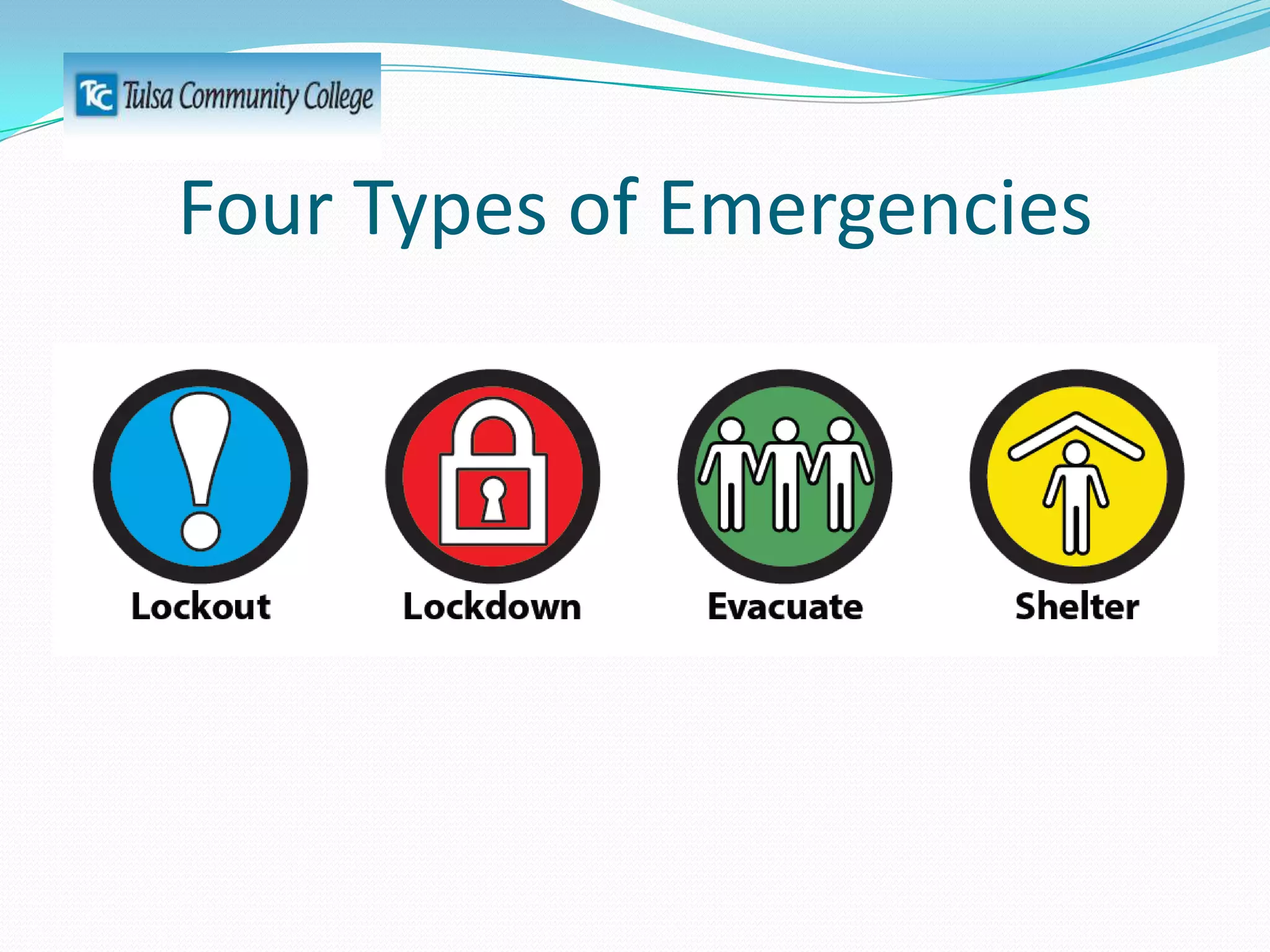
Four Types of Emergencies
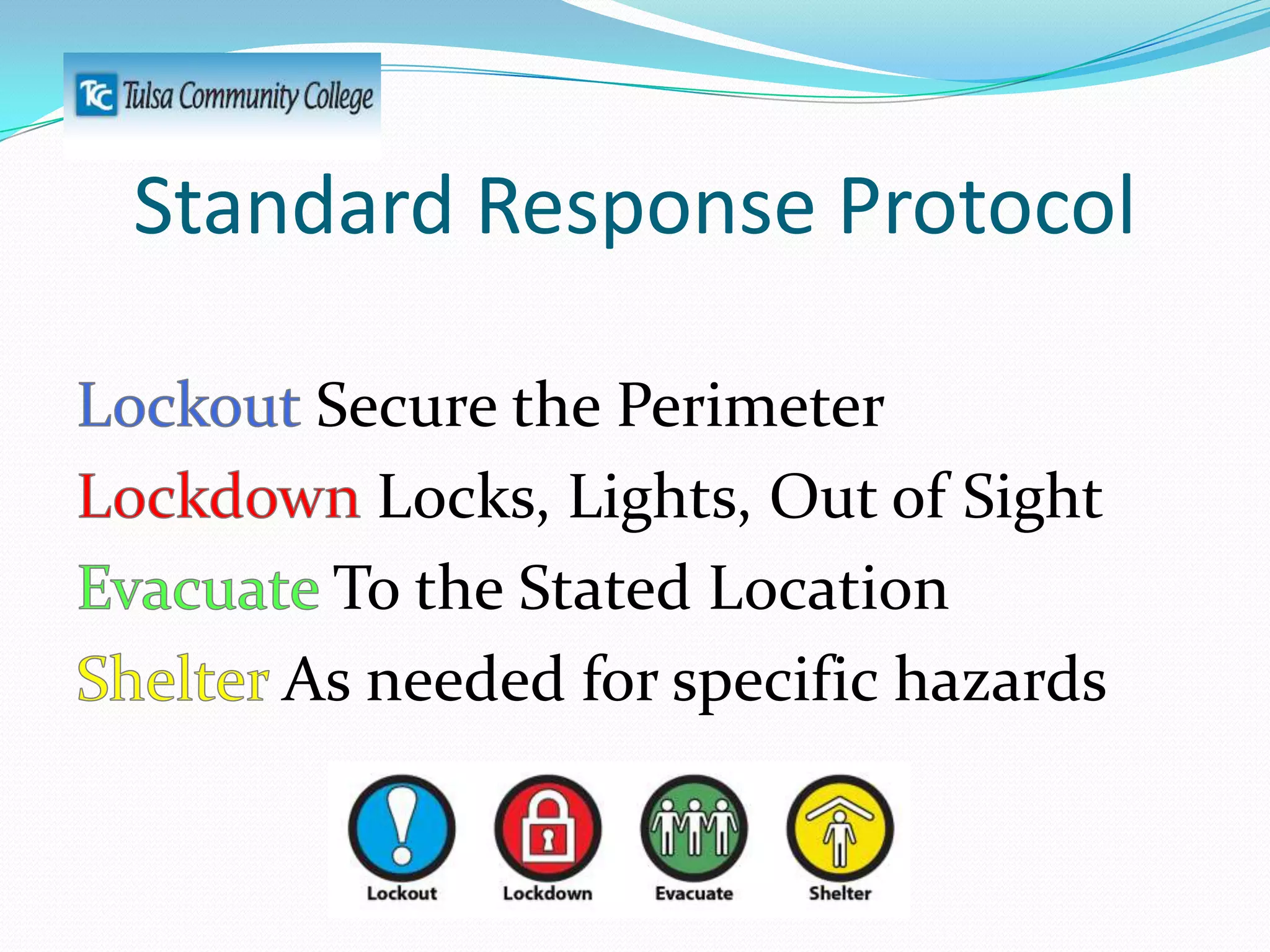
Standard Response Protocol
Secure the Perimeter
Locks, Lights, Out of Sight
To the Stated Location
As needed for specific hazards
Lockout
 Recovers all students from outside the building,

secures the building perimeter and locks all outside
doors.
 Implemented when there is a threat or hazard outside
of the building.
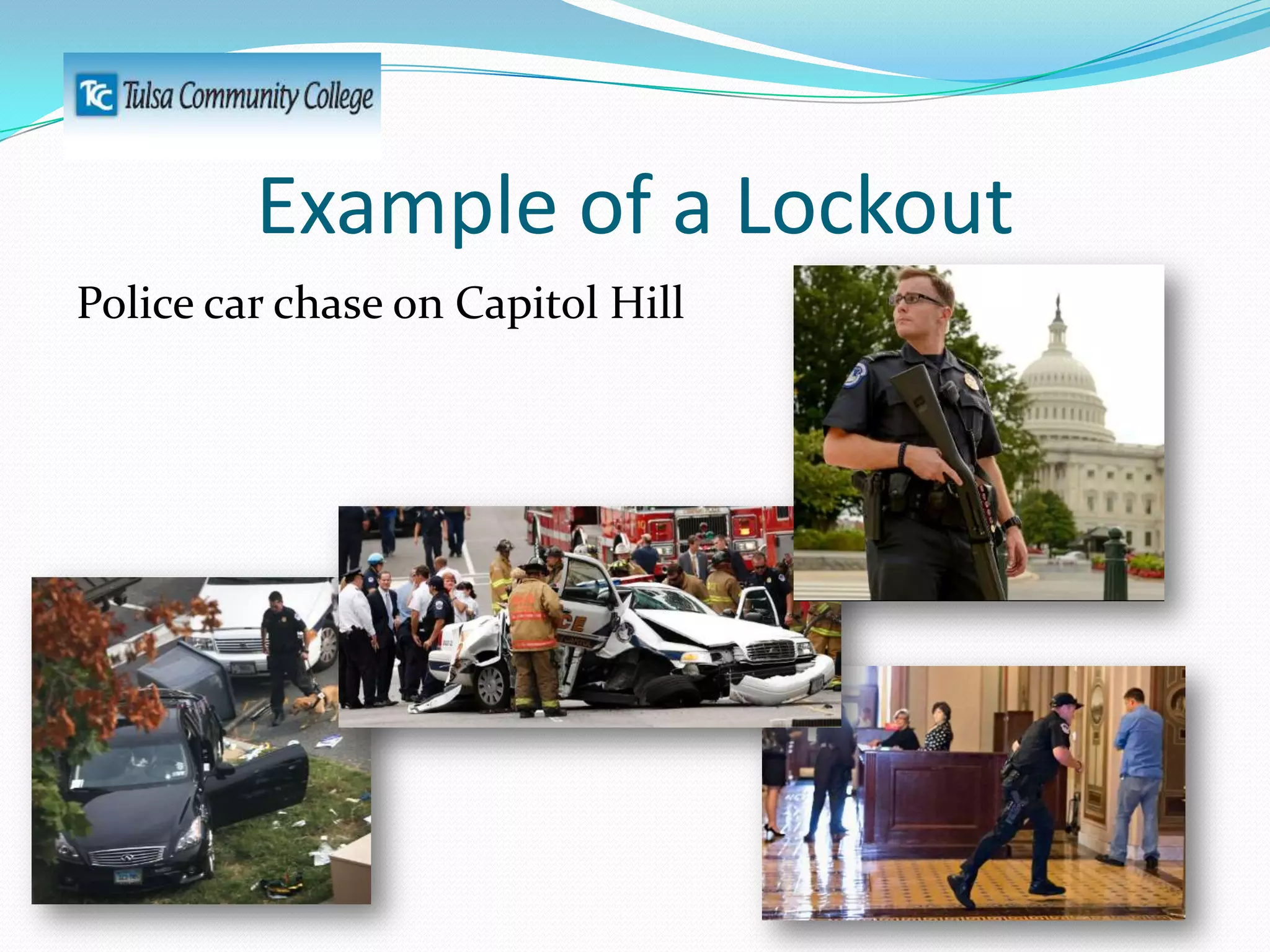
Incidents Requiring a Lockout
 Criminal Activity
 Robbery
 High speed chase
 Suspicious person
 Dangerous animal near school
 Civil unrest, such as riots or demonstrations
 Custody issue
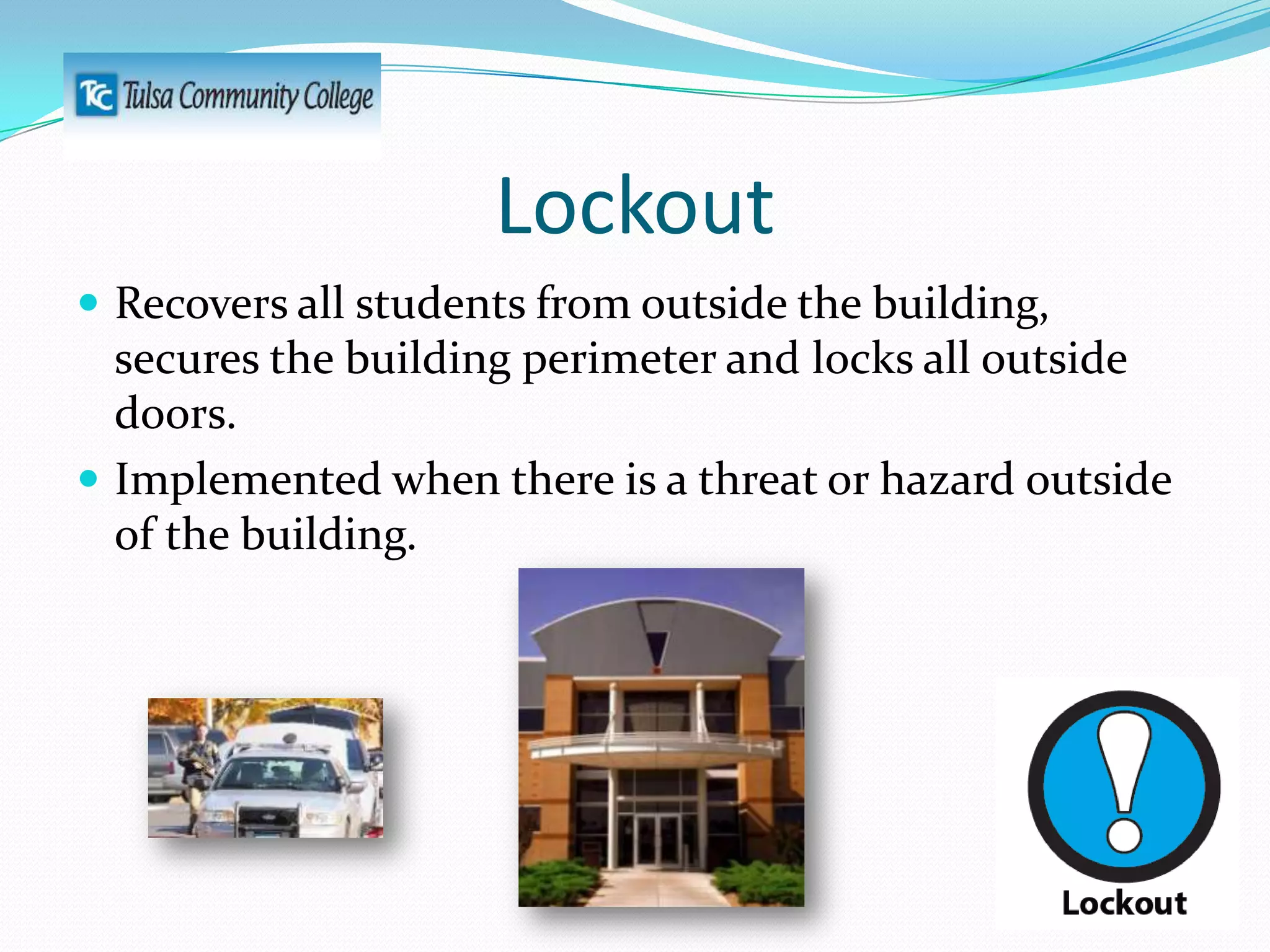
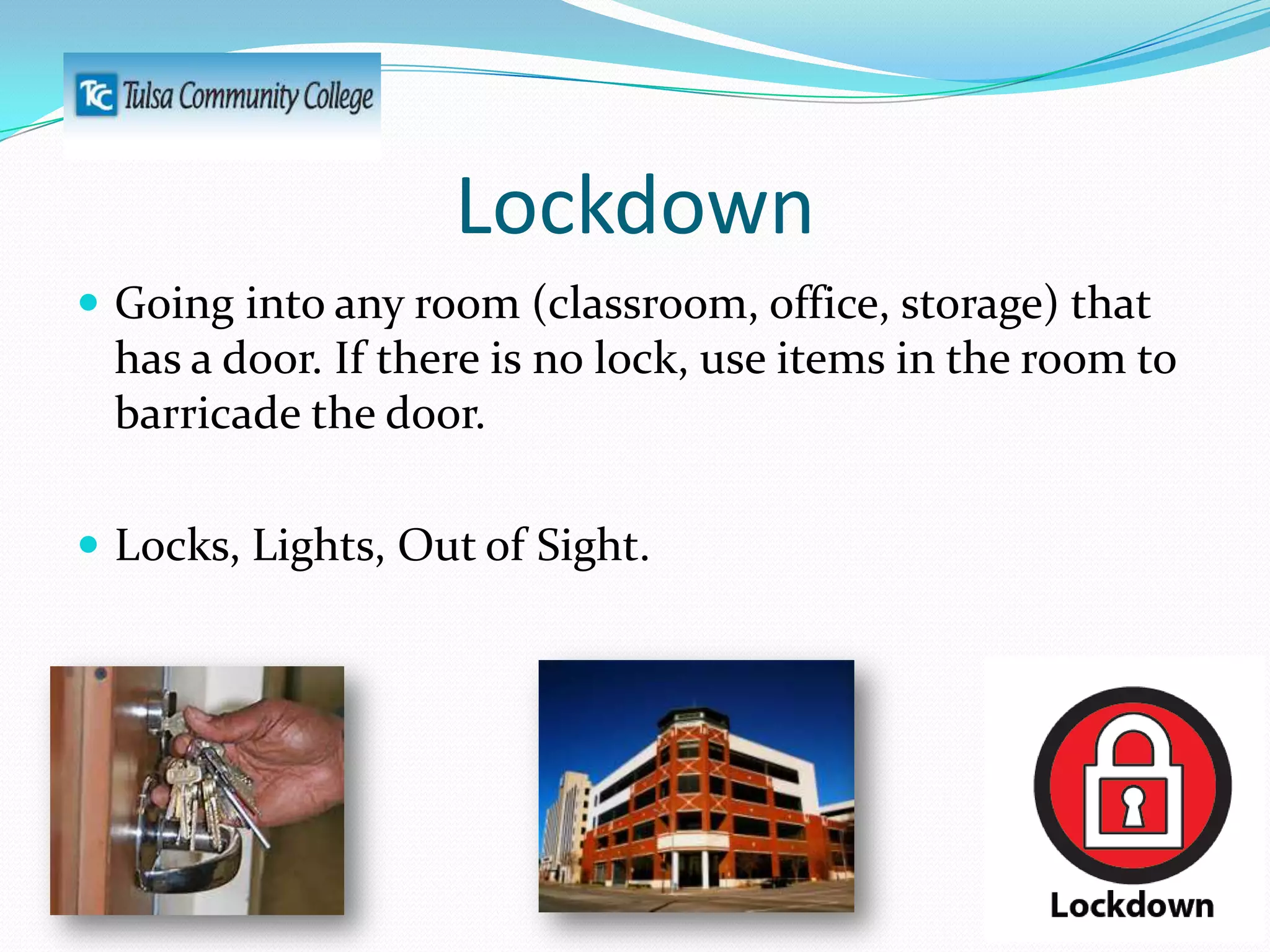
Example of a Lockout
Police car chase on Capitol Hill
Lockdown
 Going into any room (classroom, office, storage) that

has a door. If there is no lock, use items in the room to
barricade the door.
 Locks, Lights, Out of Sight.
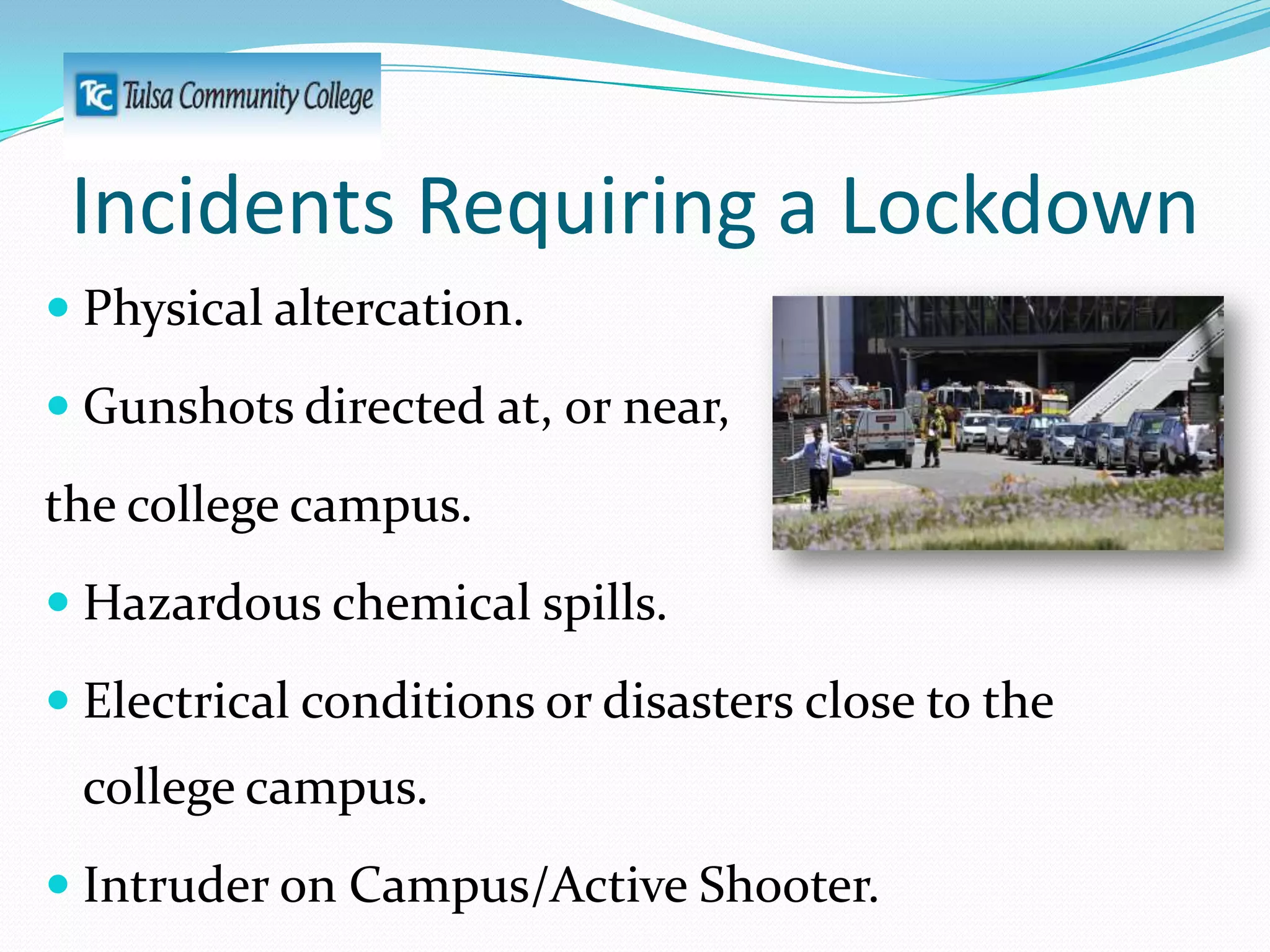
Incidents Requiring a Lockdown
 Physical altercation.
 Gunshots directed at, or near,

the college campus.
 Hazardous chemical spills.
 Electrical conditions or disasters close to the

college campus.
 Intruder on Campus/Active Shooter.
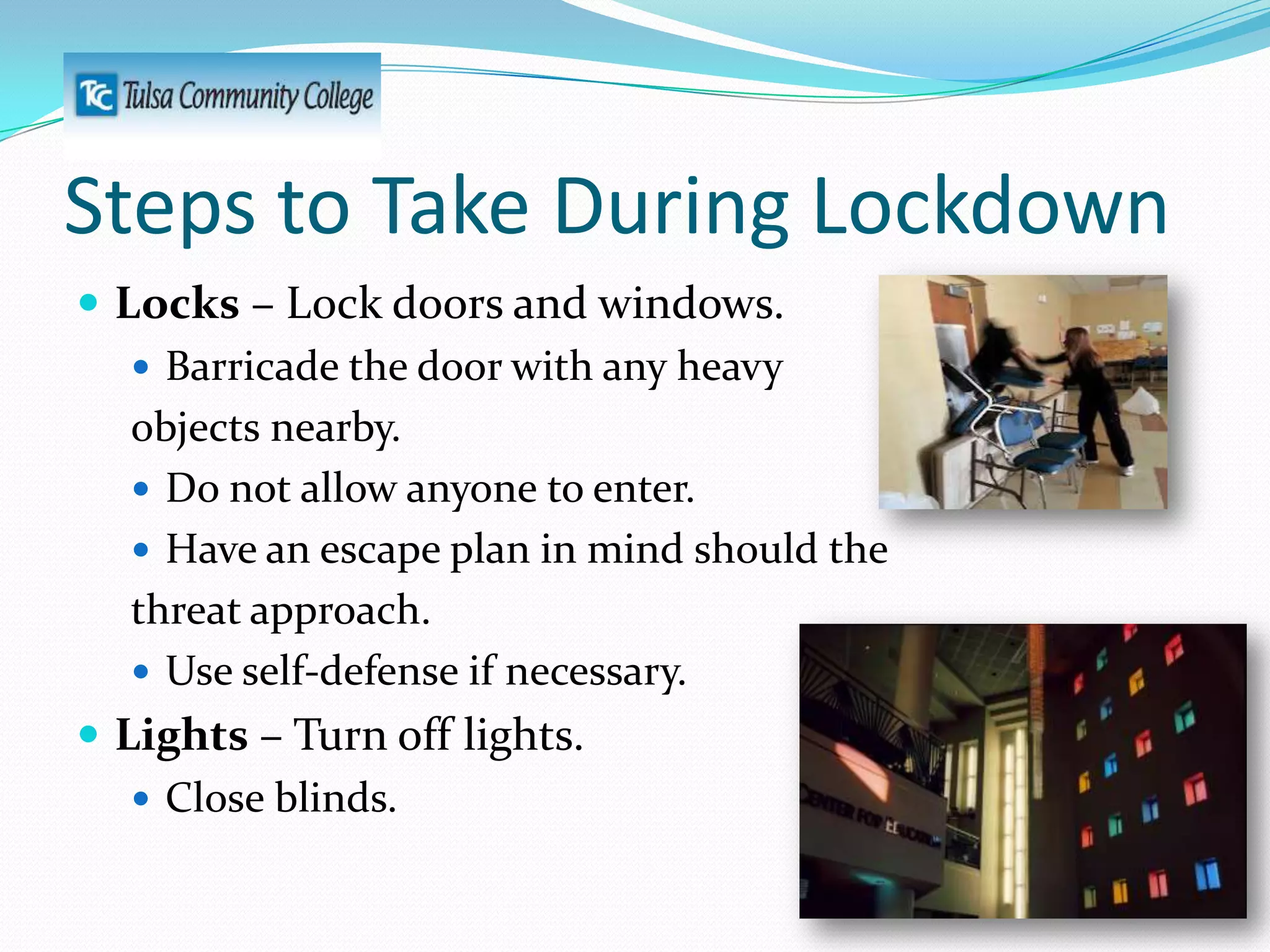
Example of a Lockdown
Santa Monica College lockdown after gunman entered
the library.
Steps to Take During Lockdown
 Locks – Lock doors and windows.
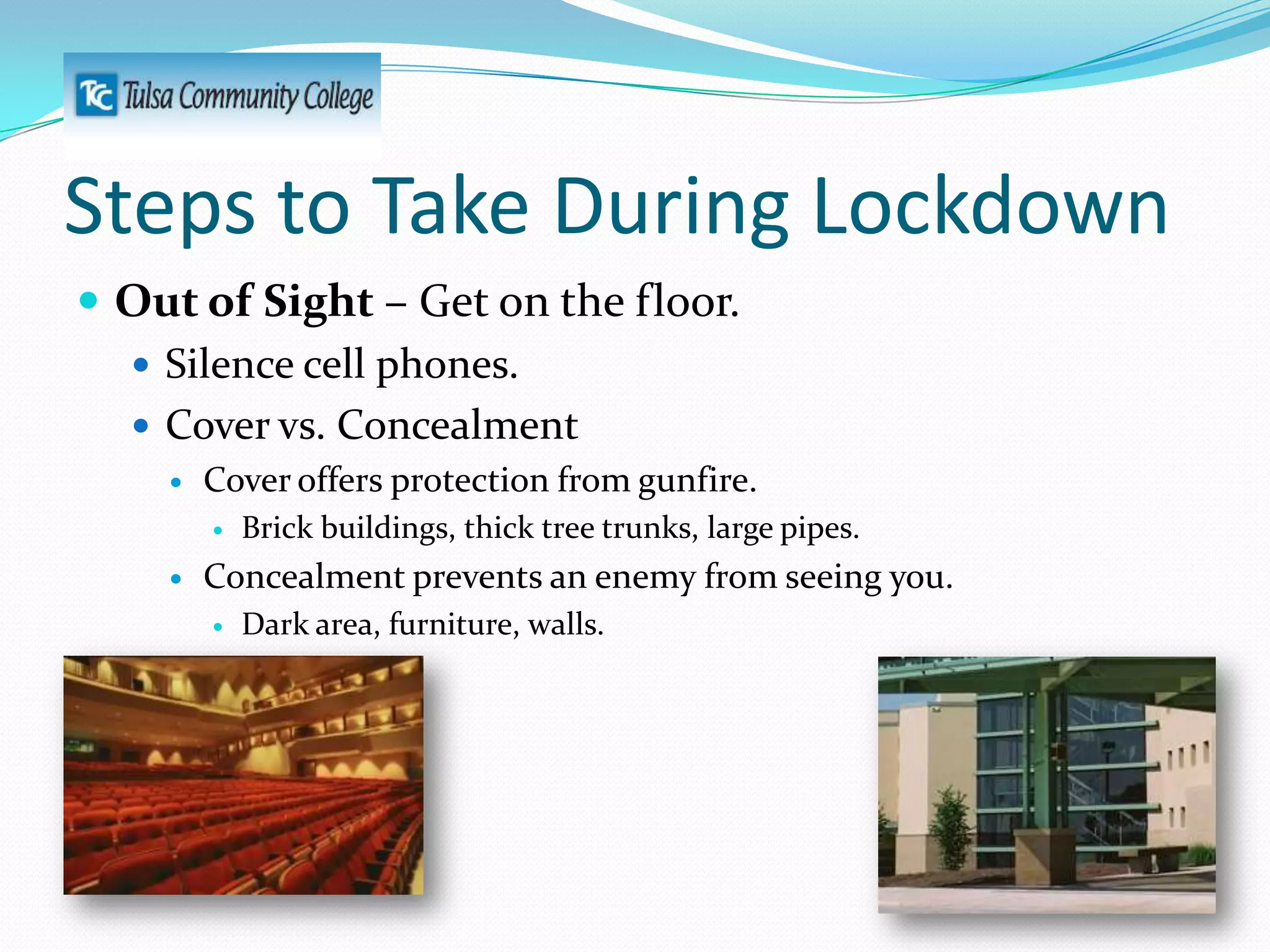
 Barricade the door with any heavy
objects nearby.
 Do not allow anyone to enter.
 Have an escape plan in mind should the
threat approach.
 Use self-defense if necessary.
 Lights – Turn off lights.
 Close blinds.
Steps to Take During Lockdown
 Out of Sight – Get on the floor.
 Silence cell phones.
 Cover vs. Concealment


Cover offers protection from gunfire.




Brick buildings, thick tree trunks, large pipes.

Concealment prevents an enemy from seeing you.


Dark area, furniture, walls.
Evacuate
 Utilized to move occupants and staff from one location

to another.
 When being evacuated:
 Leave belongings behind.

 Form a single file line.
 Keep hands visible.
 Listen to commands given.
 Communicate important information.
 Search for alternate evacuation routes.
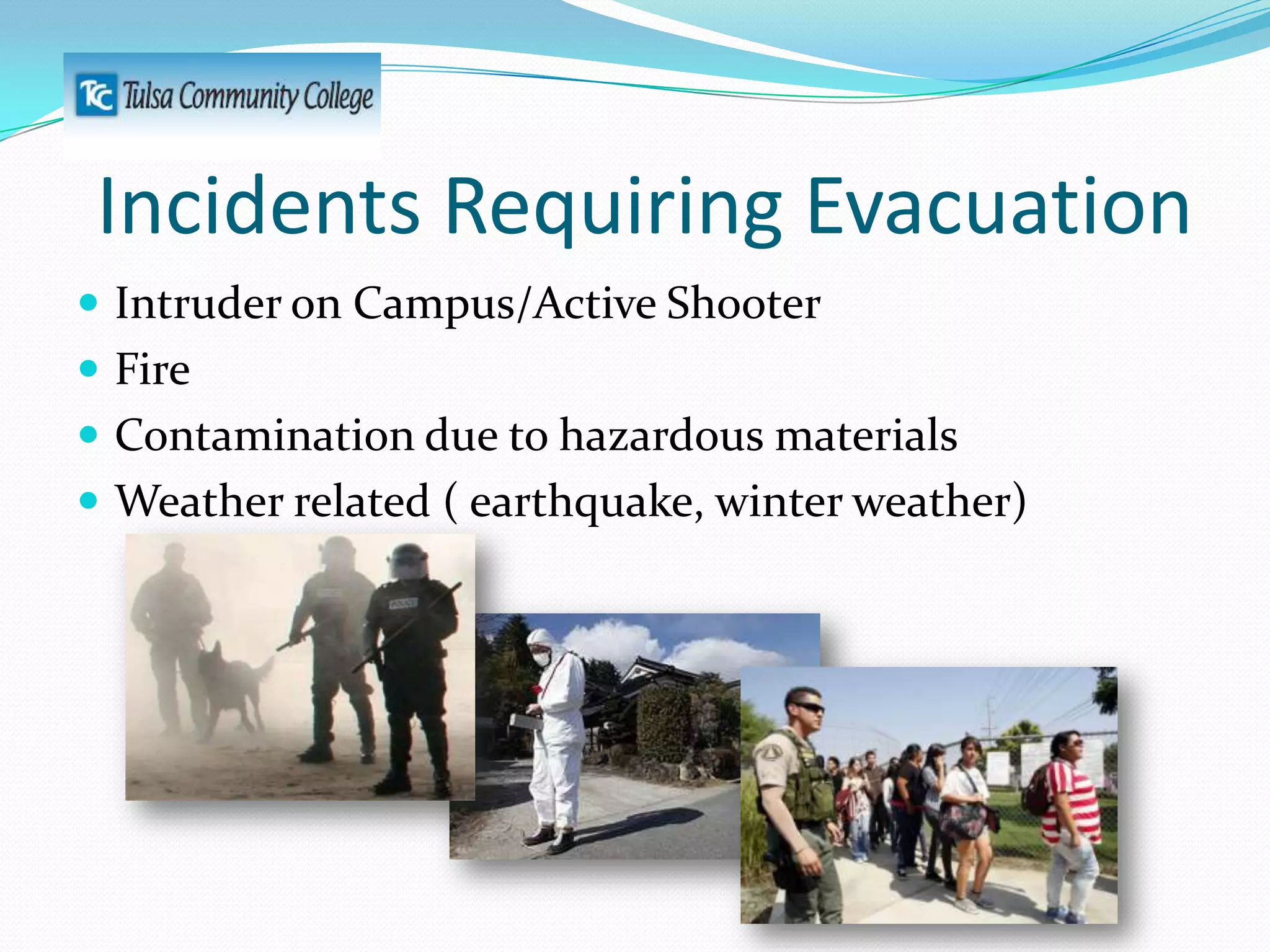
Incidents Requiring Evacuation
 Intruder on Campus/Active Shooter
 Fire
 Contamination due to hazardous materials
 Weather related ( earthquake, winter weather)
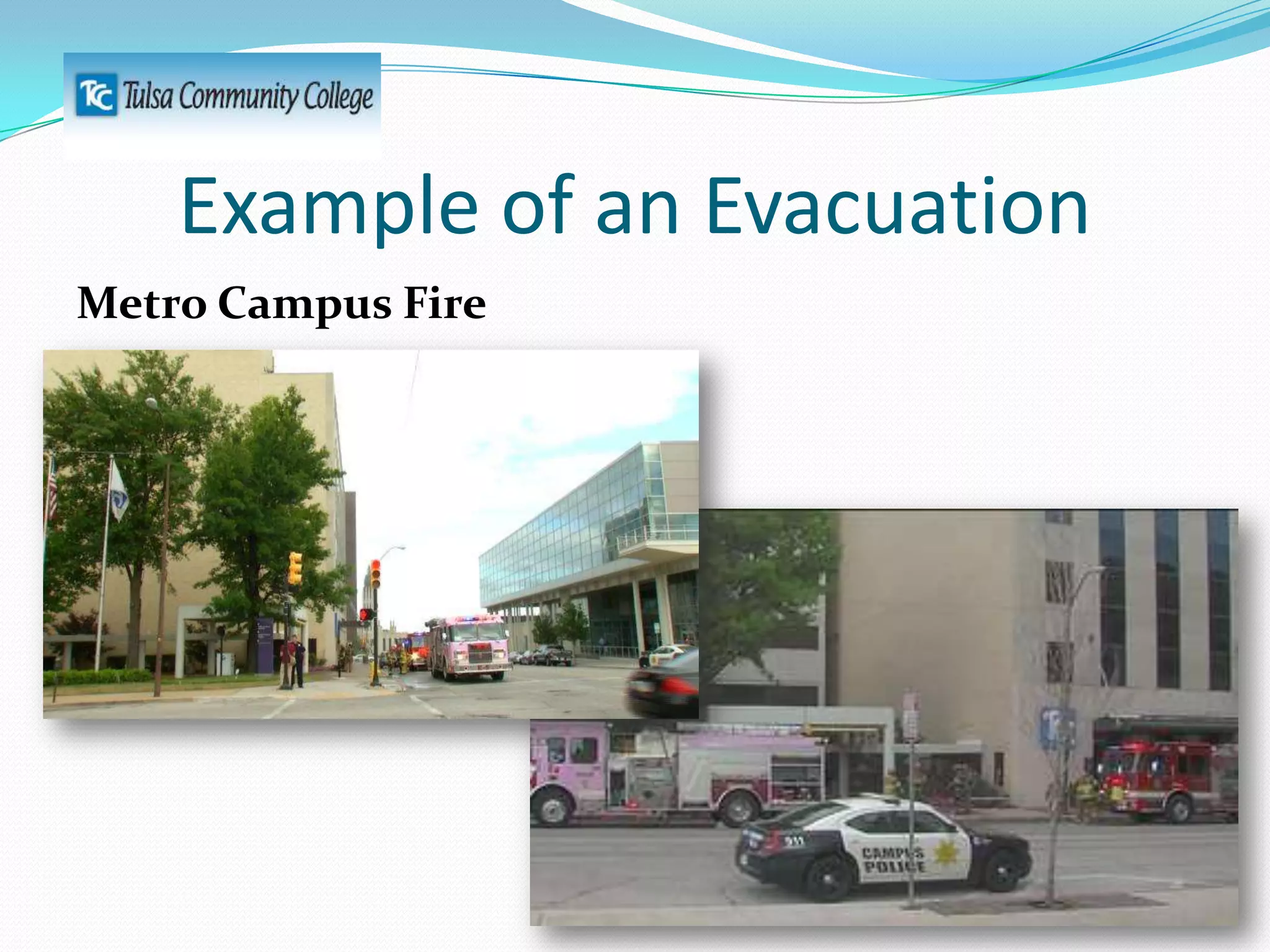
Example of an Evacuation
Metro Campus Fire
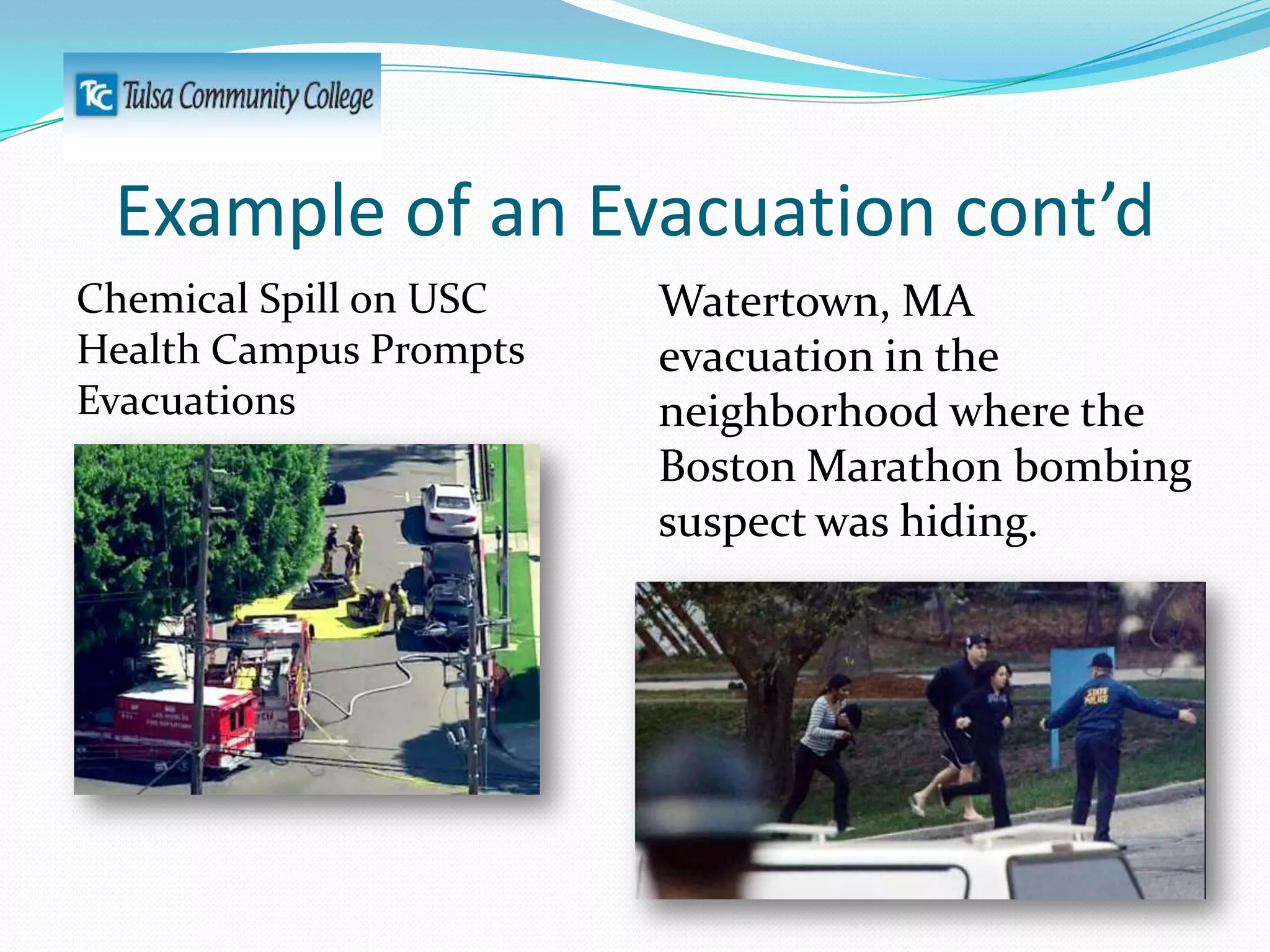
Example of an Evacuation cont’d
Chemical Spill on USC
Health Campus Prompts
Evacuations

Watertown, MA
evacuation in the
neighborhood where the
Boston Marathon bombing
suspect was hiding.
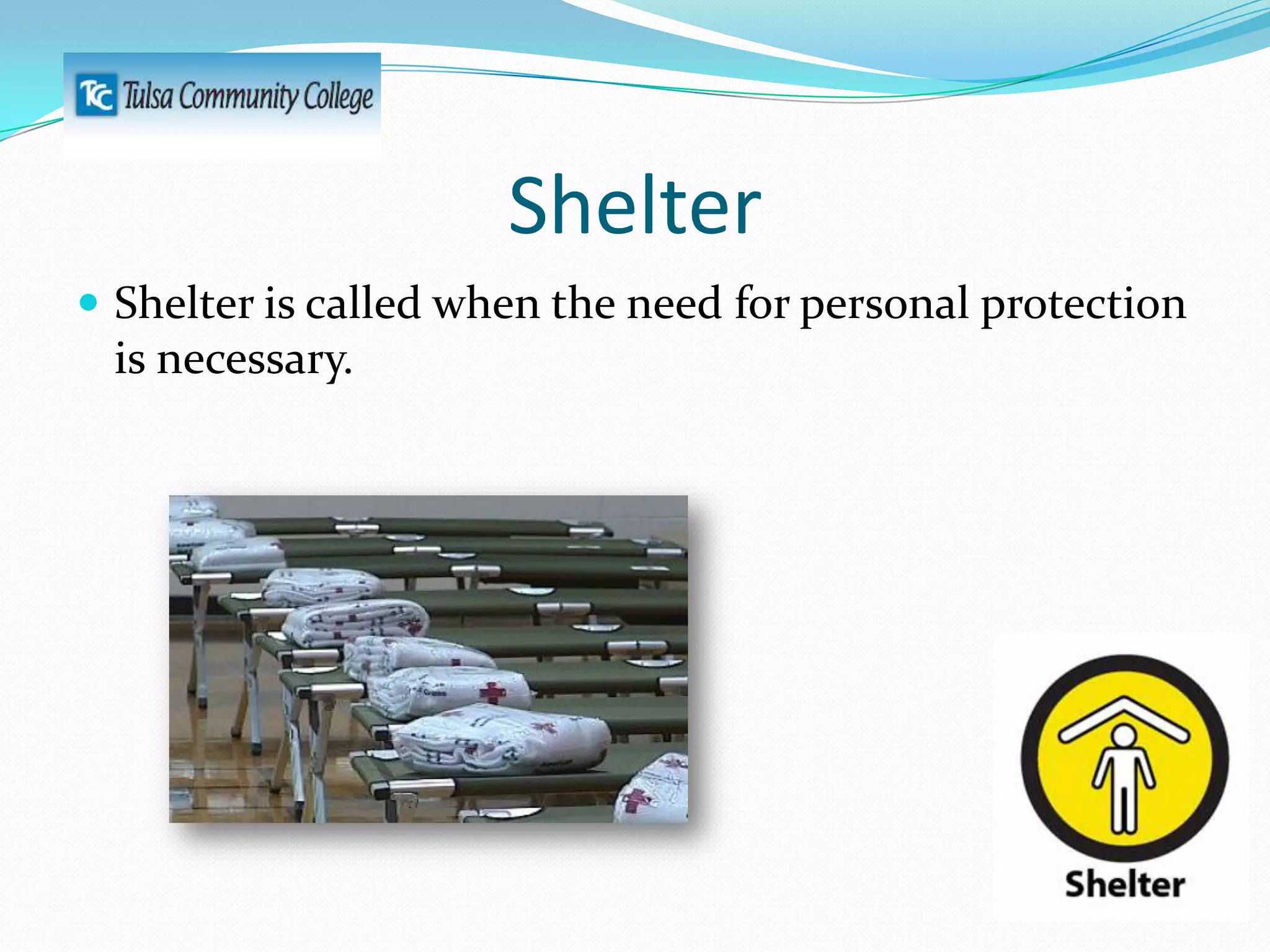
Shelter
 Shelter is called when the need for personal protection

is necessary.
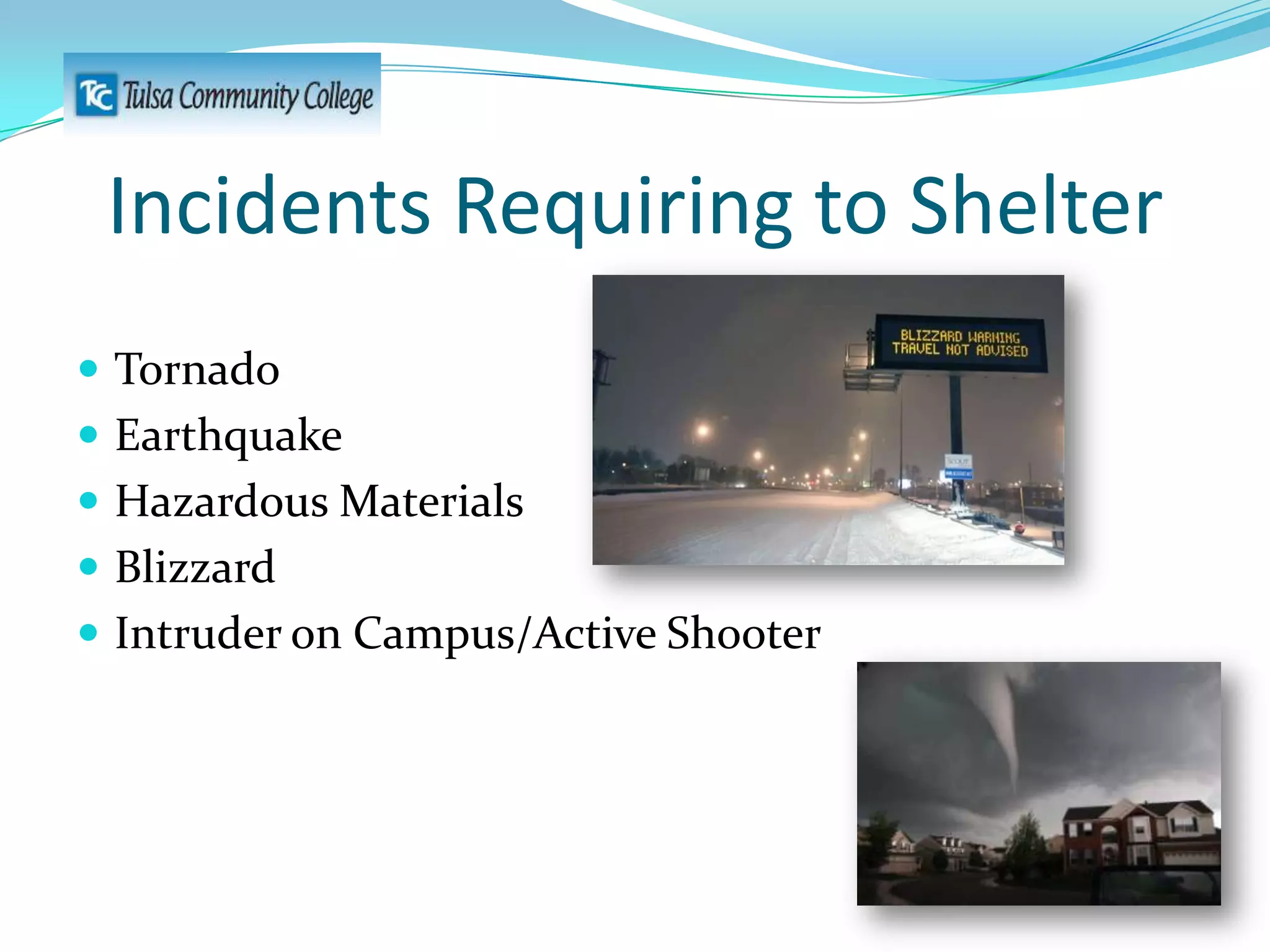
Incidents Requiring to Shelter
 Tornado
 Earthquake
 Hazardous Materials

 Blizzard
 Intruder on Campus/Active Shooter
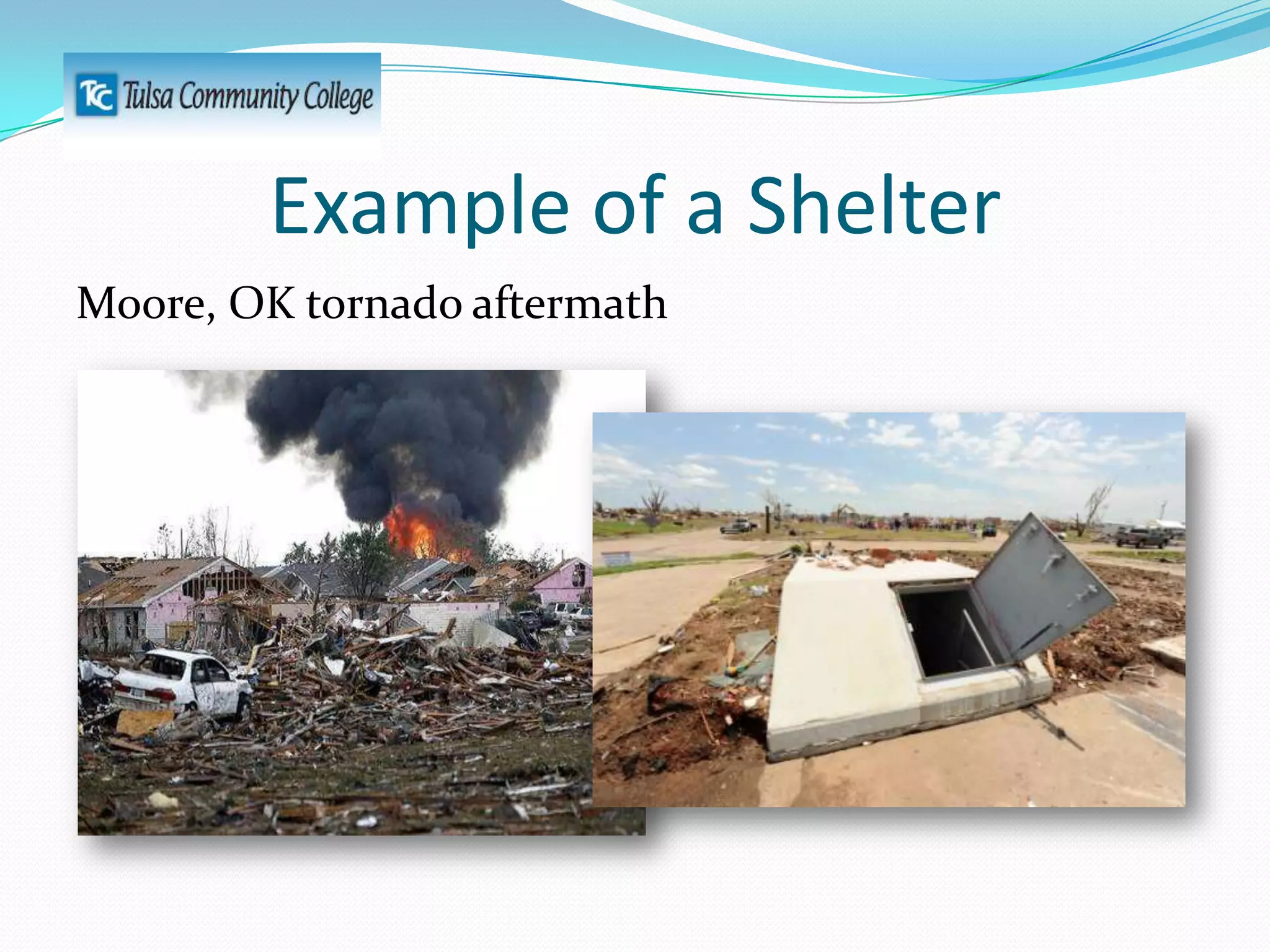
Example of a Shelter
Moore, OK tornado aftermath
Intruder on Campus/ Active Shooter
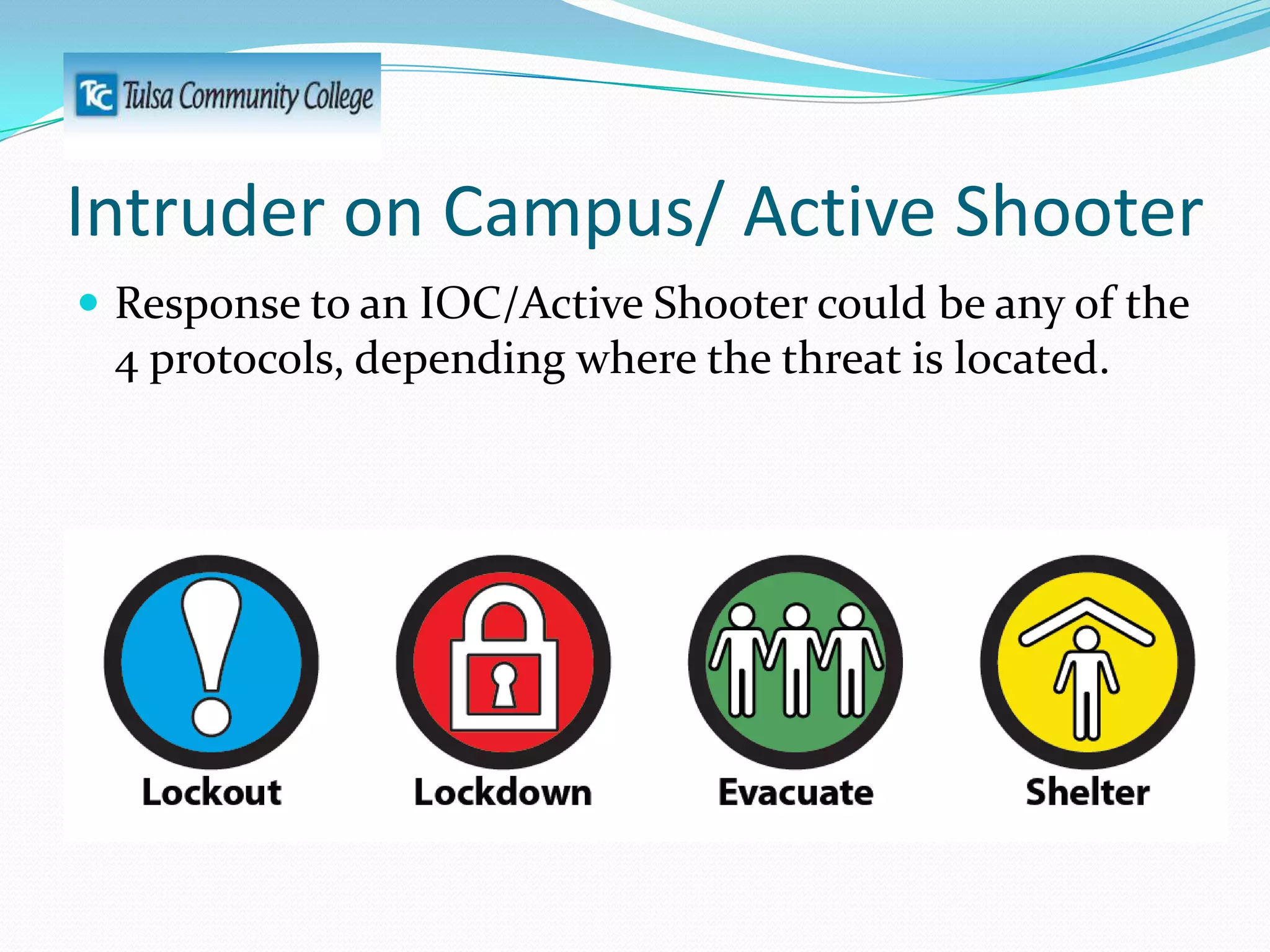
 Response to an IOC/Active Shooter could be any of the

4 protocols, depending where the threat is located.
Run, Hide, Fight
Emergency Preparedness
• Mentally prepare
yourself before an
emergency occurs.
• Take a deep breath and
evaluate the situation.
• Remain calm and

quiet.
• Be aware of your
surroundings.

• Be aware of exits or
possible “safe” places.
• Help others if possible.
• Role play your possible
actions during an
emergency.
• Play the “what if” game
in your work area and
other parts of the
campus.
Actual Message
 Attention!!!
 Attention!!!
 This is an Emergency _________ for the ______________.
 This is an Emergency _________for the ______________.
 Please only contact Campus Police to provide information

about the situation. Inquiries about the emergency only
hinder responders.
 Please let us know if you don’t have a phone in your
classroom.
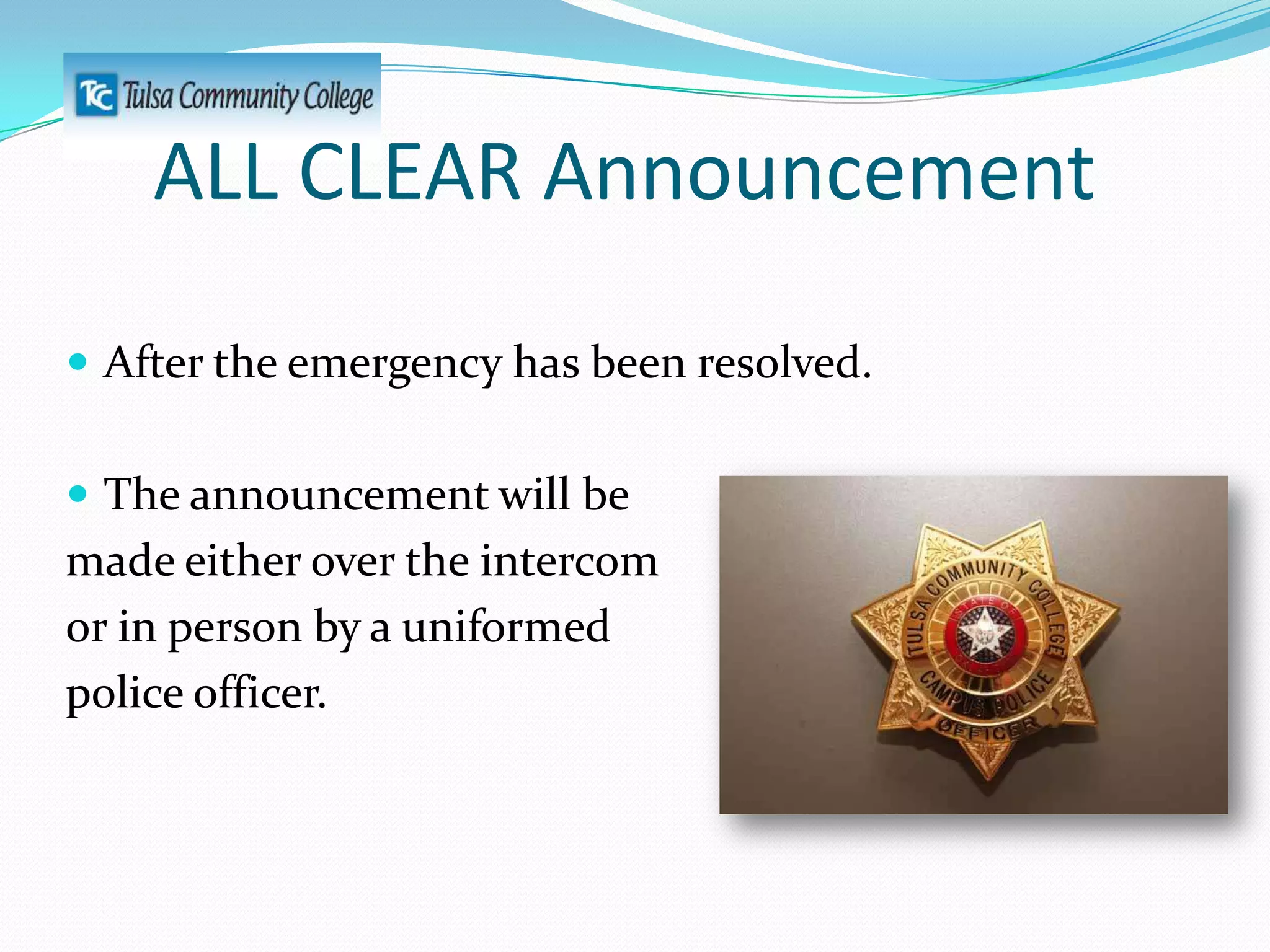
ALL CLEAR Announcement
 After the emergency has been resolved.
 The announcement will be

made either over the intercom
or in person by a uniformed
police officer.
Campus Police
 TCC Campus Police is a Police entity – we have the

same authority as a city police department.

Our best resource is YOU!!
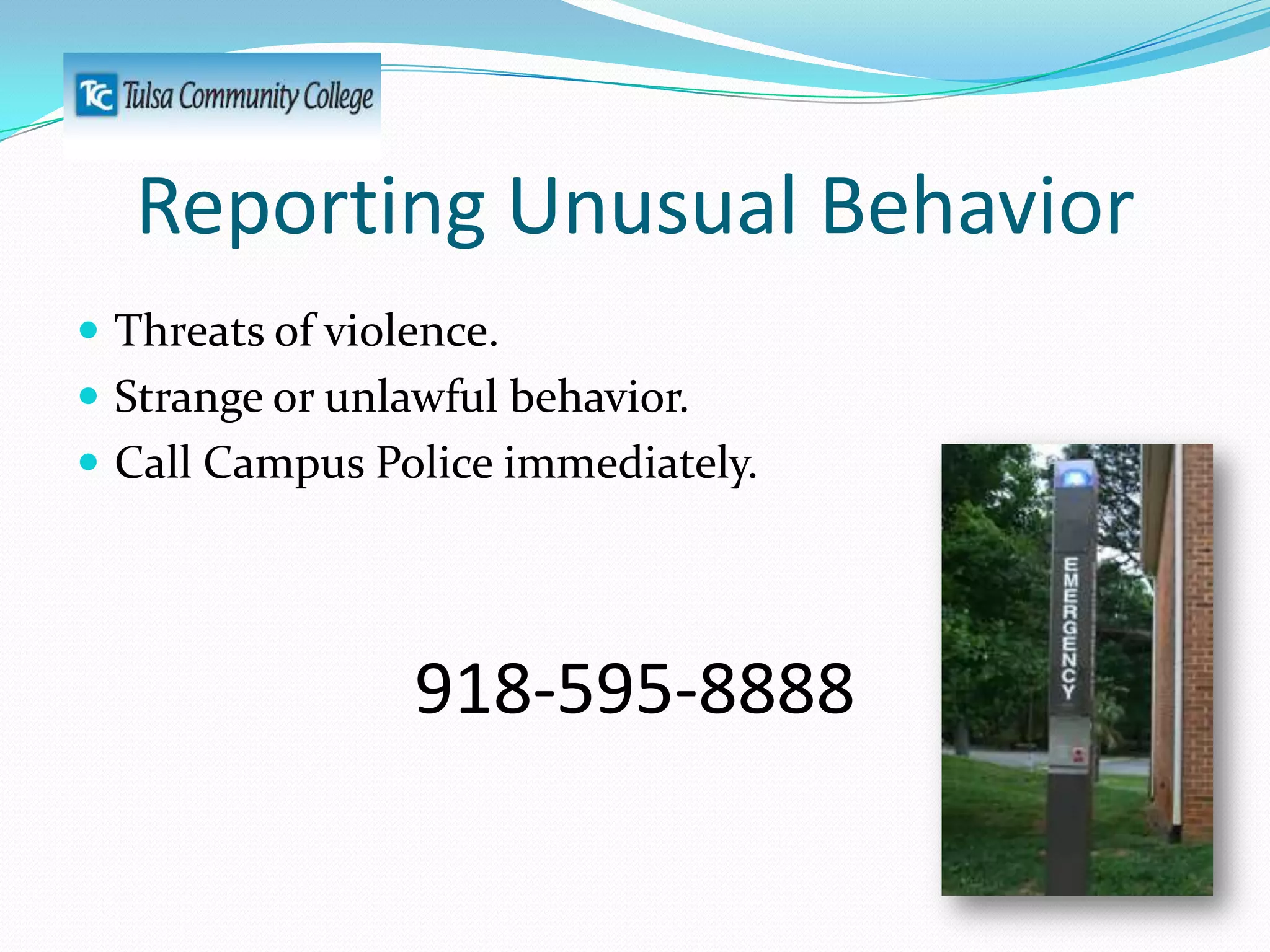
Reporting Unusual Behavior
 Threats of violence.
 Strange or unlawful behavior.
 Call Campus Police immediately.

918-595-8888
https://tcc.bbcportal.com/
There is no A. B. C.
Every situation will constitute a different response
depending on the threat. Thinking through numerous
possibilities now will better prepare you for a real event.
Remember
You don’t choose tragedy, but

you can choose your response.

Emergency Response Training

  • 1.
  • 2.
    Four Types ofEmergencies
  • 3.
    Standard Response Protocol Securethe Perimeter Locks, Lights, Out of Sight To the Stated Location As needed for specific hazards
  • 4.
    Lockout  Recovers allstudents from outside the building, secures the building perimeter and locks all outside doors.  Implemented when there is a threat or hazard outside of the building.
  • 5.
    Incidents Requiring aLockout  Criminal Activity  Robbery  High speed chase  Suspicious person  Dangerous animal near school  Civil unrest, such as riots or demonstrations  Custody issue
  • 6.
    Example of aLockout Police car chase on Capitol Hill
  • 7.
    Lockdown  Going intoany room (classroom, office, storage) that has a door. If there is no lock, use items in the room to barricade the door.  Locks, Lights, Out of Sight.
  • 8.
    Incidents Requiring aLockdown  Physical altercation.  Gunshots directed at, or near, the college campus.  Hazardous chemical spills.  Electrical conditions or disasters close to the college campus.  Intruder on Campus/Active Shooter.
  • 9.
    Example of aLockdown Santa Monica College lockdown after gunman entered the library.
  • 10.
    Steps to TakeDuring Lockdown  Locks – Lock doors and windows.  Barricade the door with any heavy objects nearby.  Do not allow anyone to enter.  Have an escape plan in mind should the threat approach.  Use self-defense if necessary.  Lights – Turn off lights.  Close blinds.
  • 11.
    Steps to TakeDuring Lockdown  Out of Sight – Get on the floor.  Silence cell phones.  Cover vs. Concealment  Cover offers protection from gunfire.   Brick buildings, thick tree trunks, large pipes. Concealment prevents an enemy from seeing you.  Dark area, furniture, walls.
  • 12.
    Evacuate  Utilized tomove occupants and staff from one location to another.  When being evacuated:  Leave belongings behind.  Form a single file line.  Keep hands visible.  Listen to commands given.  Communicate important information.  Search for alternate evacuation routes.
  • 13.
    Incidents Requiring Evacuation Intruder on Campus/Active Shooter  Fire  Contamination due to hazardous materials  Weather related ( earthquake, winter weather)
  • 14.
    Example of anEvacuation Metro Campus Fire
  • 15.
    Example of anEvacuation cont’d Chemical Spill on USC Health Campus Prompts Evacuations Watertown, MA evacuation in the neighborhood where the Boston Marathon bombing suspect was hiding.
  • 16.
    Shelter  Shelter iscalled when the need for personal protection is necessary.
  • 17.
    Incidents Requiring toShelter  Tornado  Earthquake  Hazardous Materials  Blizzard  Intruder on Campus/Active Shooter
  • 18.
    Example of aShelter Moore, OK tornado aftermath
  • 19.
    Intruder on Campus/Active Shooter  Response to an IOC/Active Shooter could be any of the 4 protocols, depending where the threat is located.
  • 20.
  • 21.
    Emergency Preparedness • Mentallyprepare yourself before an emergency occurs. • Take a deep breath and evaluate the situation. • Remain calm and quiet. • Be aware of your surroundings. • Be aware of exits or possible “safe” places. • Help others if possible. • Role play your possible actions during an emergency. • Play the “what if” game in your work area and other parts of the campus.
  • 22.
    Actual Message  Attention!!! Attention!!!  This is an Emergency _________ for the ______________.  This is an Emergency _________for the ______________.  Please only contact Campus Police to provide information about the situation. Inquiries about the emergency only hinder responders.  Please let us know if you don’t have a phone in your classroom.
  • 23.
    ALL CLEAR Announcement After the emergency has been resolved.  The announcement will be made either over the intercom or in person by a uniformed police officer.
  • 24.
    Campus Police  TCCCampus Police is a Police entity – we have the same authority as a city police department. Our best resource is YOU!!
  • 25.
    Reporting Unusual Behavior Threats of violence.  Strange or unlawful behavior.  Call Campus Police immediately. 918-595-8888
  • 26.
  • 27.
    There is noA. B. C. Every situation will constitute a different response depending on the threat. Thinking through numerous possibilities now will better prepare you for a real event.
  • 28.
    Remember You don’t choosetragedy, but you can choose your response.