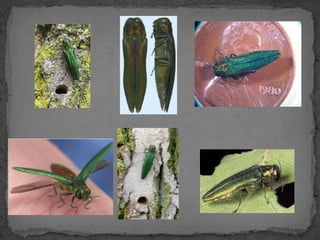

 Invasive wood-boring insect
 Native to Asia/China
 Responsible for death of estimated 250 Million US ash
    trees (so far)
   Current estimates-25 million (20%) dead or infested ash
    in IL.
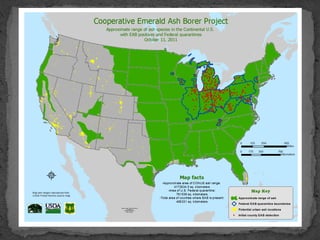
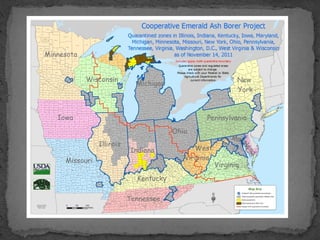
   Also found in 14 other states and 2 Canadian provinces
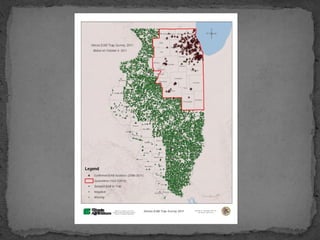
   In 2006 detected in Lily Lake/St. Charles, Wilmette,
    Evanston, and Winnetka
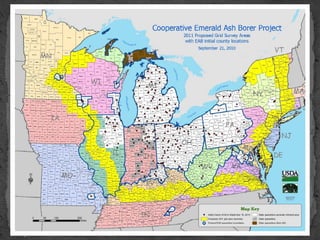
   Today, there are 193 confirmed communities in IL.
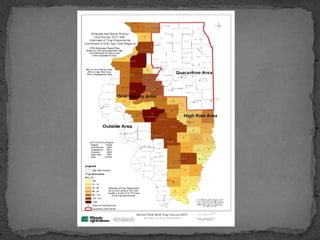
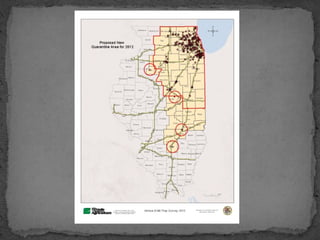
   As of 2011- 22 counties confirmed in IL, 39 within
    quarantine.
   Quarantine has consumed some states
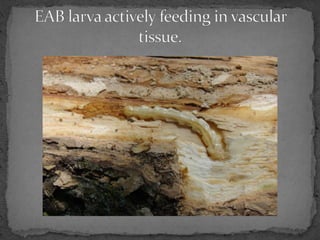
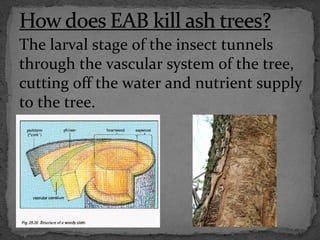
The larval stage of the insect tunnels
through the vascular system of the tree,
cutting off the water and nutrient supply
to the tree.
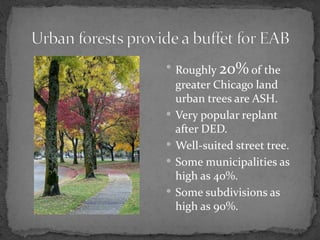
 Roughly    20% of the
    greater Chicago land
    urban trees are ASH.
   Very popular replant
    after DED.
   Well-suited street tree.
   Some municipalities as
    high as 40%.
   Some subdivisions as
    high as 90%.
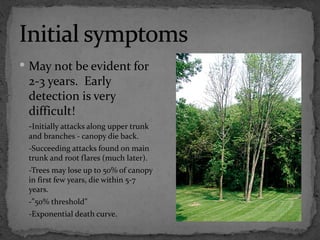
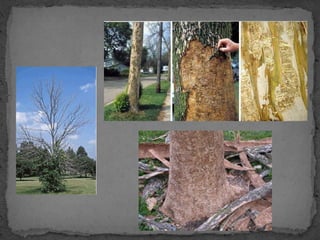
 May not be evident for
 2-3 years. Early
 detection is very
 difficult!
 -Initially attacks along upper trunk
 and branches - canopy die back.
 -Succeeding attacks found on main
 trunk and root flares (much later).
 -Trees may lose up to 50% of canopy
 in first few years, die within 5-7
 years.
 -”50% threshold”
 -Exponential death curve.
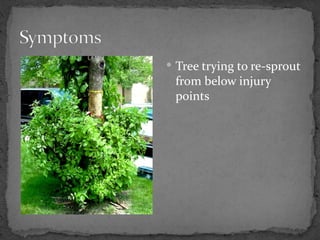
 Tree trying to re-sprout
 from below injury
 points
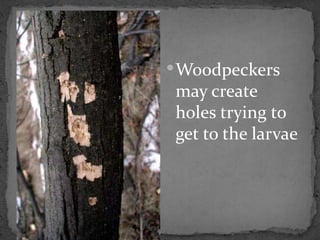
 Woodpeckers
 may create
 holes trying to
 get to the larvae
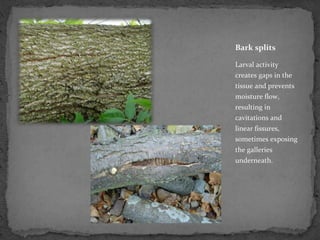
Bark splits

Larval activity
creates gaps in the
tissue and prevents
moisture flow,
resulting in
cavitations and
linear fissures,
sometimes exposing
the galleries
underneath.
And how we can use it to our advantage.
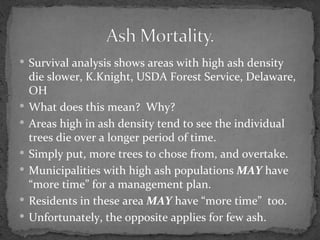
 Survival analysis shows areas with high ash density
    die slower, K.Knight, USDA Forest Service, Delaware,
    OH
   What does this mean? Why?
   Areas high in ash density tend to see the individual
    trees die over a longer period of time.
   Simply put, more trees to chose from, and overtake.
   Municipalities with high ash populations MAY have
    “more time” for a management plan.
   Residents in these area MAY have “more time” too.
   Unfortunately, the opposite applies for few ash.
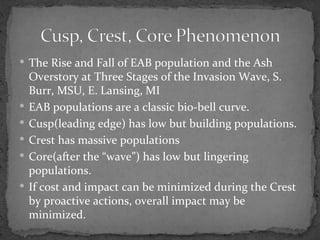
 The Rise and Fall of EAB population and the Ash
    Overstory at Three Stages of the Invasion Wave, S.
    Burr, MSU, E. Lansing, MI
   EAB populations are a classic bio-bell curve.
   Cusp(leading edge) has low but building populations.
   Crest has massive populations
   Core(after the “wave”) has low but lingering
    populations.
   If cost and impact can be minimized during the Crest
    by proactive actions, overall impact may be
    minimized.
 Direct and Indirect Ecological Impact of EAB in
    Forests of SE Michigan, D. Herms, OARDC, Ohio
    State University, Wooster, OH
   Ash regenerate quickly (in the Core), but once they
    become large enough to host EAB lifecycles, they are
    infested.
   This results in ash mortality before tree maturation.
   Trees are overtaken before they can produce seeds.
   Soil seed banks are empty in heavily infested areas.
   Ash regeneration has ceased.
 An Overview of EAB Host Resistance Research at
    Ohio State University since 2003, D. Herms, OARDC,
    Ohio State University, Wooster, OH
   EAB has a preference of our native ash.
   Black and Green most preferred.
   White seems to “resist” for 2-3 years.
   Blue for a bit longer than White.

 Can use this natural tolerance/resistance to our
    advantage by focusing treatments on these.
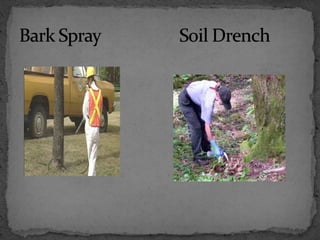
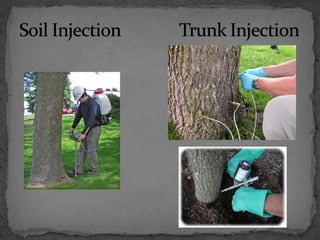
 Chemical (systemic insecticides)-limited
 -”over the counter” for homeowner
 - licensed applications
 Biological control (parasitic wasps)-limited
 -larval parasites
 -egg parasite
 Aggressive removals of infested trees; reduce ash population, host
  material, potential beetle pressure.
 Removal of confirmable trees and continued monitoring of ash
  population health.

 Most often a combination or an integrated approach.
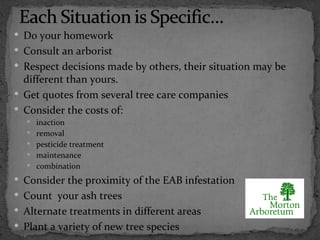
 Do your homework
 Consult an arborist
 Respect decisions made by others, their situation may be
  different than yours.
 Get quotes from several tree care companies
 Consider the costs of:
   inaction
   removal
   pesticide treatment
   maintenance
   combination

 Consider the proximity of the EAB infestation
 Count your ash trees
 Alternate treatments in different areas
 Plant a variety of new tree species
 Strategies are typically derived from economics, and
  proximity to confirmed infestations OR current
  infestation status.
 Homeowners additionally consider property value,
  impact on landscape appearance, heating and
  cooling, sentimental value, etc.
 Municipalities also consider total number of trees
  being managed, optimal diversity, staff, equipment,
  contracting, etc.
 Everyone MUST consider safety and liability.
 What are we certain of?
 -It’s always worse than we think…
 -Trees will come down…
 What’s uncertain?
 -EAB found in US in 2002, how long had it been here?
 -EAB found in IL in 2006, how long had it been here?
 -Where else is it that we don’t know?
 -In what capacity do treatments work best?
 -How long will a treatment regiment need to last?
 -What’s working the best?
 -ETC…
 Questions and concerns?

Emerald Ash Borer Program March 20, 2012, Scott Schirmer

  • 2.
     Invasive wood-boringinsect  Native to Asia/China  Responsible for death of estimated 250 Million US ash trees (so far)  Current estimates-25 million (20%) dead or infested ash in IL.  Also found in 14 other states and 2 Canadian provinces  In 2006 detected in Lily Lake/St. Charles, Wilmette, Evanston, and Winnetka  Today, there are 193 confirmed communities in IL.  As of 2011- 22 counties confirmed in IL, 39 within quarantine.  Quarantine has consumed some states
  • 6.
    The larval stageof the insect tunnels through the vascular system of the tree, cutting off the water and nutrient supply to the tree.
  • 13.
     Roughly 20% of the greater Chicago land urban trees are ASH.  Very popular replant after DED.  Well-suited street tree.  Some municipalities as high as 40%.  Some subdivisions as high as 90%.
  • 14.
     May notbe evident for 2-3 years. Early detection is very difficult! -Initially attacks along upper trunk and branches - canopy die back. -Succeeding attacks found on main trunk and root flares (much later). -Trees may lose up to 50% of canopy in first few years, die within 5-7 years. -”50% threshold” -Exponential death curve.
  • 15.
     Tree tryingto re-sprout from below injury points
  • 16.
     Woodpeckers maycreate holes trying to get to the larvae
  • 17.
    Bark splits Larval activity createsgaps in the tissue and prevents moisture flow, resulting in cavitations and linear fissures, sometimes exposing the galleries underneath.
  • 19.
    And how wecan use it to our advantage.
  • 20.
     Survival analysisshows areas with high ash density die slower, K.Knight, USDA Forest Service, Delaware, OH  What does this mean? Why?  Areas high in ash density tend to see the individual trees die over a longer period of time.  Simply put, more trees to chose from, and overtake.  Municipalities with high ash populations MAY have “more time” for a management plan.  Residents in these area MAY have “more time” too.  Unfortunately, the opposite applies for few ash.
  • 21.
     The Riseand Fall of EAB population and the Ash Overstory at Three Stages of the Invasion Wave, S. Burr, MSU, E. Lansing, MI  EAB populations are a classic bio-bell curve.  Cusp(leading edge) has low but building populations.  Crest has massive populations  Core(after the “wave”) has low but lingering populations.  If cost and impact can be minimized during the Crest by proactive actions, overall impact may be minimized.
  • 22.
     Direct andIndirect Ecological Impact of EAB in Forests of SE Michigan, D. Herms, OARDC, Ohio State University, Wooster, OH  Ash regenerate quickly (in the Core), but once they become large enough to host EAB lifecycles, they are infested.  This results in ash mortality before tree maturation.  Trees are overtaken before they can produce seeds.  Soil seed banks are empty in heavily infested areas.  Ash regeneration has ceased.
  • 23.
     An Overviewof EAB Host Resistance Research at Ohio State University since 2003, D. Herms, OARDC, Ohio State University, Wooster, OH  EAB has a preference of our native ash.  Black and Green most preferred.  White seems to “resist” for 2-3 years.  Blue for a bit longer than White.  Can use this natural tolerance/resistance to our advantage by focusing treatments on these.
  • 24.
     Chemical (systemicinsecticides)-limited  -”over the counter” for homeowner  - licensed applications  Biological control (parasitic wasps)-limited  -larval parasites  -egg parasite  Aggressive removals of infested trees; reduce ash population, host material, potential beetle pressure.  Removal of confirmable trees and continued monitoring of ash population health.  Most often a combination or an integrated approach.
  • 28.
     Do yourhomework  Consult an arborist  Respect decisions made by others, their situation may be different than yours.  Get quotes from several tree care companies  Consider the costs of:  inaction  removal  pesticide treatment  maintenance  combination  Consider the proximity of the EAB infestation  Count your ash trees  Alternate treatments in different areas  Plant a variety of new tree species
  • 29.
     Strategies aretypically derived from economics, and proximity to confirmed infestations OR current infestation status.  Homeowners additionally consider property value, impact on landscape appearance, heating and cooling, sentimental value, etc.  Municipalities also consider total number of trees being managed, optimal diversity, staff, equipment, contracting, etc.  Everyone MUST consider safety and liability.
  • 30.
     What arewe certain of?  -It’s always worse than we think…  -Trees will come down…  What’s uncertain?  -EAB found in US in 2002, how long had it been here?  -EAB found in IL in 2006, how long had it been here?  -Where else is it that we don’t know?  -In what capacity do treatments work best?  -How long will a treatment regiment need to last?  -What’s working the best?  -ETC…
  • 33.

Editor's Notes

  • #7 Explain the vital vascular system that keeps the tree alive.