Invasive Exotic Plants on the Appalachian Trail John Odell Resource Management Coordinator
What is an  invasive exotic  plant? Exotic  – a species that exists outside of its native range  (aka: non-native, alien, foreign, non-indigenous) Exotic species have been introduced for livestock forage, human consumption, soil retention, ornamental purposes, or by accident Invasive   – an aggressive species that causes ecosystem disturbance and exhibits the following traits: rapid growth and spread establishes over large areas and persists robust vegetative growth high reproductive rate lack of natural controls
Why are IE plants a problem? Invasive exotic plants out-complete native plants   for sunlight, water, and nutrients causing a decline in native biodiversity Species loss  Reduced habitat diversity (monocultures) Reduced food availability for herbivores    (less diverse, less palatable food sources) Altered ecological functions  Natural succession Soil chemistry Hydrology Fire regime Nutrient cycling / ecosystem efficiency Tree mortality from girdling or over-burdening Economic, cultural, and aesthetic impacts
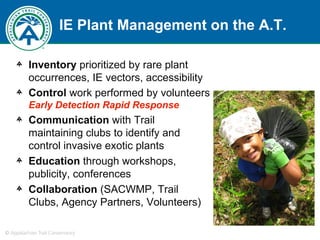
IE Plant Management on the A.T. Inventory  prioritized by rare plant occurrences, IE vectors, accessibility Control  work performed by volunteers  Early Detection Rapid Response Communication  with Trail maintaining clubs to identify and control invasive exotic plants Education  through workshops, publicity, conferences Collaboration  (SACWMP, Trail Clubs, Agency Partners, Volunteers)
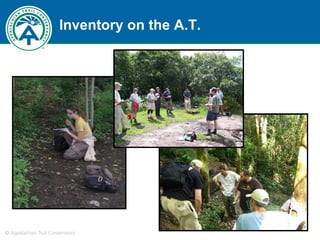
Inventory on the A.T.
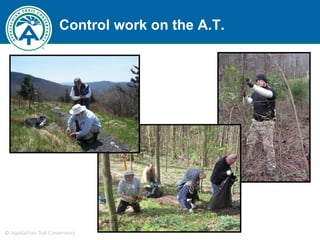
Control work on the A.T.
How can  you  make a difference? Learn  about invasive plants and how to identify them Clean  boots, equipment, tires, and pets to prevent seed dispersal Get involved  in volunteer monitoring and control efforts Remove invasives  from your own backyard (small or large, you can make a difference) Plant natives   in your yard and gardens! Know   the source  of fill dirt, gravel, and manure Spread the word !   Tell friends and family the importance of preserving native ecosystems
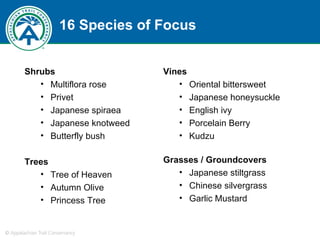
16 Species of Focus Shrubs Multiflora rose Privet Japanese spiraea Japanese knotweed Butterfly bush Trees Tree of Heaven Autumn Olive Princess Tree Vines Oriental bittersweet Japanese honeysuckle English ivy Porcelain Berry Kudzu Grasses / Groundcovers Japanese stiltgrass Chinese silvergrass Garlic Mustard
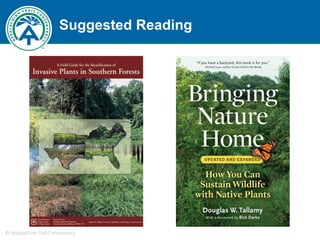
Suggested Reading
GET INVOLVED! John Odell Resource Management Coordinator (828) 254-3708 [email_address] www.appalachiantrail.org/invasive

John Odell - 2-27-12

  • 1.
    Invasive Exotic Plantson the Appalachian Trail John Odell Resource Management Coordinator
  • 2.
    What is an invasive exotic plant? Exotic – a species that exists outside of its native range (aka: non-native, alien, foreign, non-indigenous) Exotic species have been introduced for livestock forage, human consumption, soil retention, ornamental purposes, or by accident Invasive – an aggressive species that causes ecosystem disturbance and exhibits the following traits: rapid growth and spread establishes over large areas and persists robust vegetative growth high reproductive rate lack of natural controls
  • 3.
    Why are IEplants a problem? Invasive exotic plants out-complete native plants for sunlight, water, and nutrients causing a decline in native biodiversity Species loss Reduced habitat diversity (monocultures) Reduced food availability for herbivores (less diverse, less palatable food sources) Altered ecological functions Natural succession Soil chemistry Hydrology Fire regime Nutrient cycling / ecosystem efficiency Tree mortality from girdling or over-burdening Economic, cultural, and aesthetic impacts
  • 4.
    IE Plant Managementon the A.T. Inventory prioritized by rare plant occurrences, IE vectors, accessibility Control work performed by volunteers Early Detection Rapid Response Communication with Trail maintaining clubs to identify and control invasive exotic plants Education through workshops, publicity, conferences Collaboration (SACWMP, Trail Clubs, Agency Partners, Volunteers)
  • 5.
  • 6.
  • 7.
    How can you make a difference? Learn about invasive plants and how to identify them Clean boots, equipment, tires, and pets to prevent seed dispersal Get involved in volunteer monitoring and control efforts Remove invasives from your own backyard (small or large, you can make a difference) Plant natives in your yard and gardens! Know the source of fill dirt, gravel, and manure Spread the word ! Tell friends and family the importance of preserving native ecosystems
  • 8.
    16 Species ofFocus Shrubs Multiflora rose Privet Japanese spiraea Japanese knotweed Butterfly bush Trees Tree of Heaven Autumn Olive Princess Tree Vines Oriental bittersweet Japanese honeysuckle English ivy Porcelain Berry Kudzu Grasses / Groundcovers Japanese stiltgrass Chinese silvergrass Garlic Mustard
  • 9.
  • 10.
    GET INVOLVED! JohnOdell Resource Management Coordinator (828) 254-3708 [email_address] www.appalachiantrail.org/invasive