
Presented By:
Ganesh V. Vadulekar
Introduction
History
Definition
Characteristics
Features
Examples
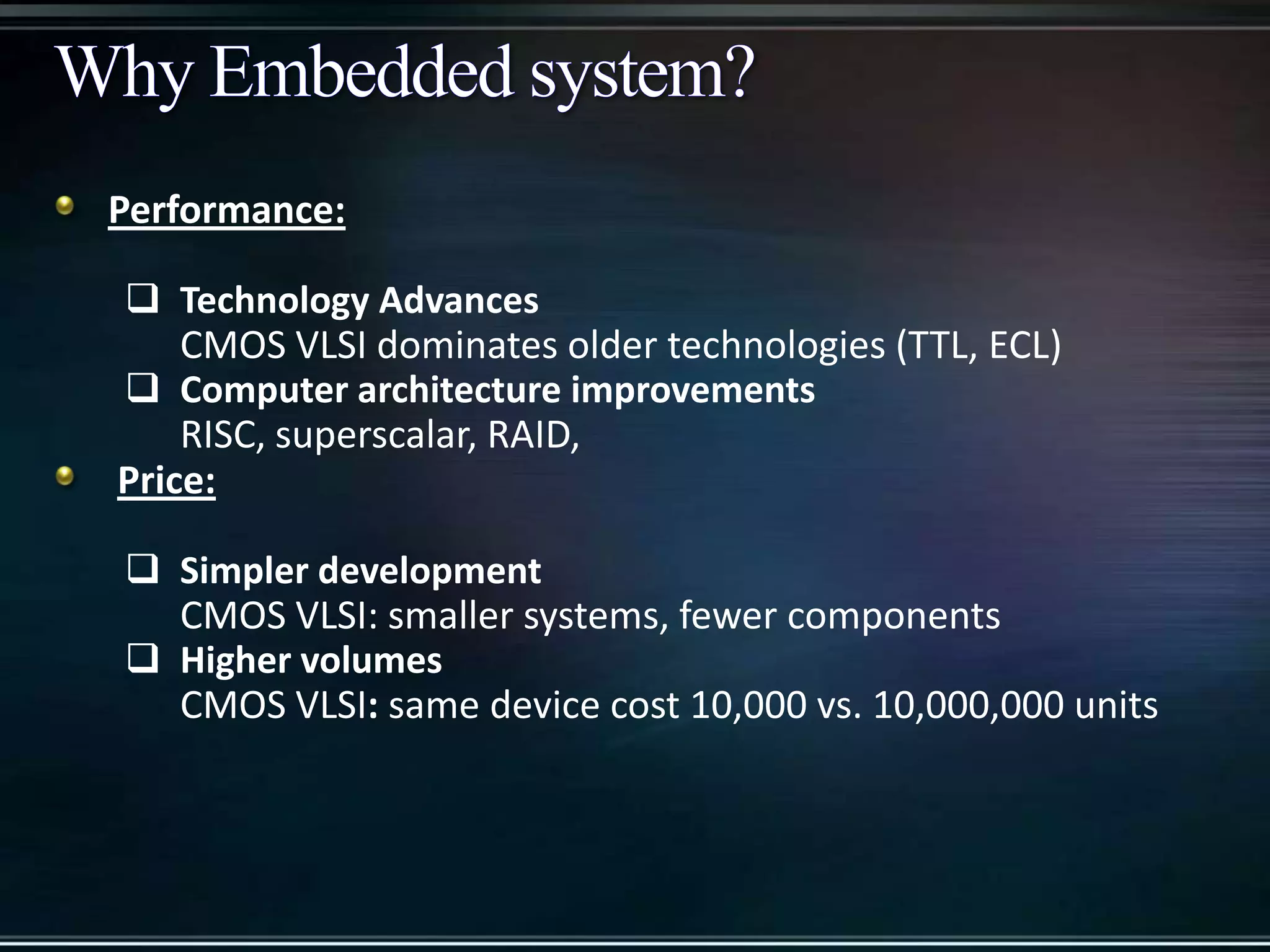
Why Embedded system?
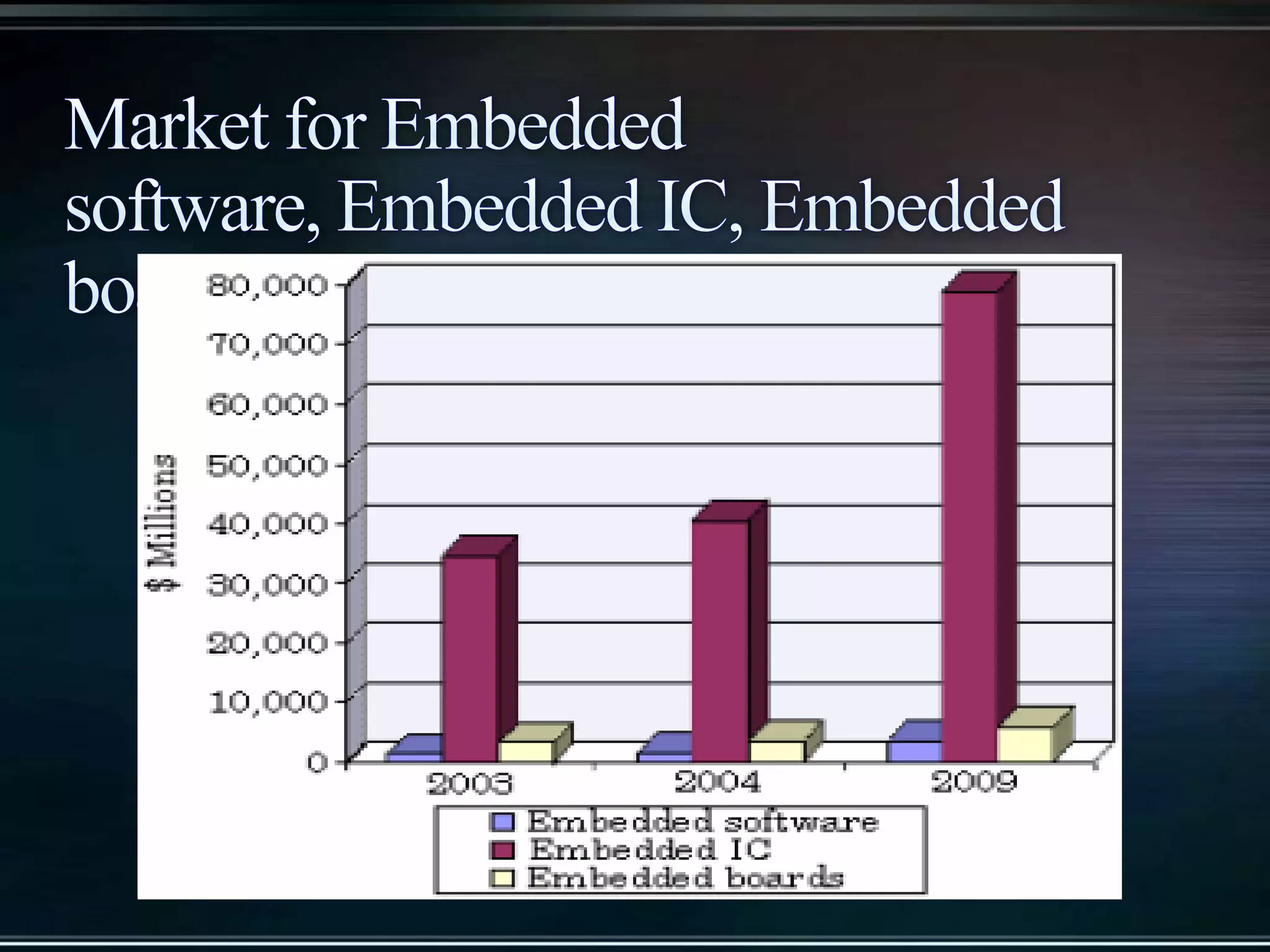
Market for Embedded software, Embedded IC, Embedded
boards
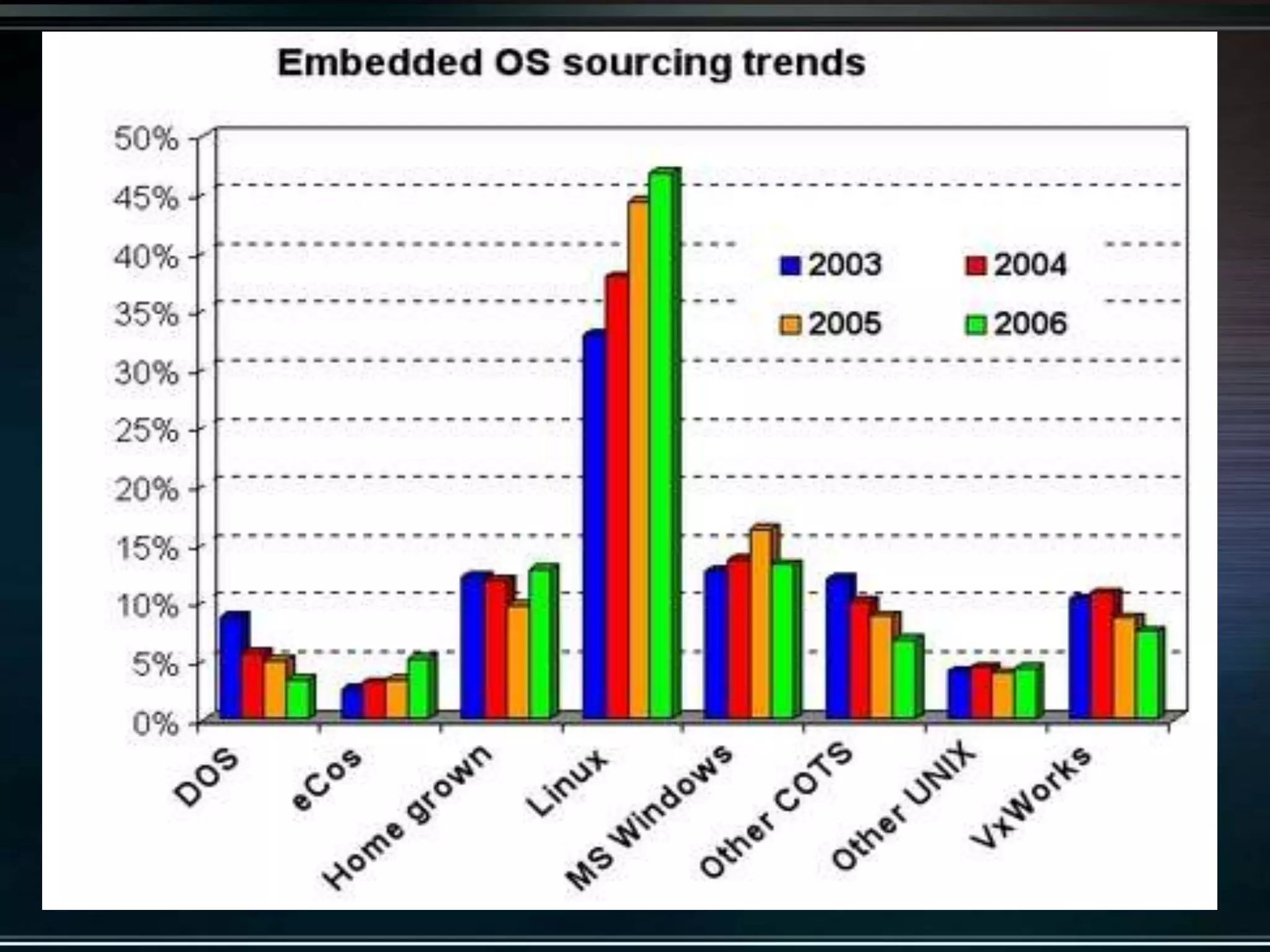
Embedded OS Sourcing Trend
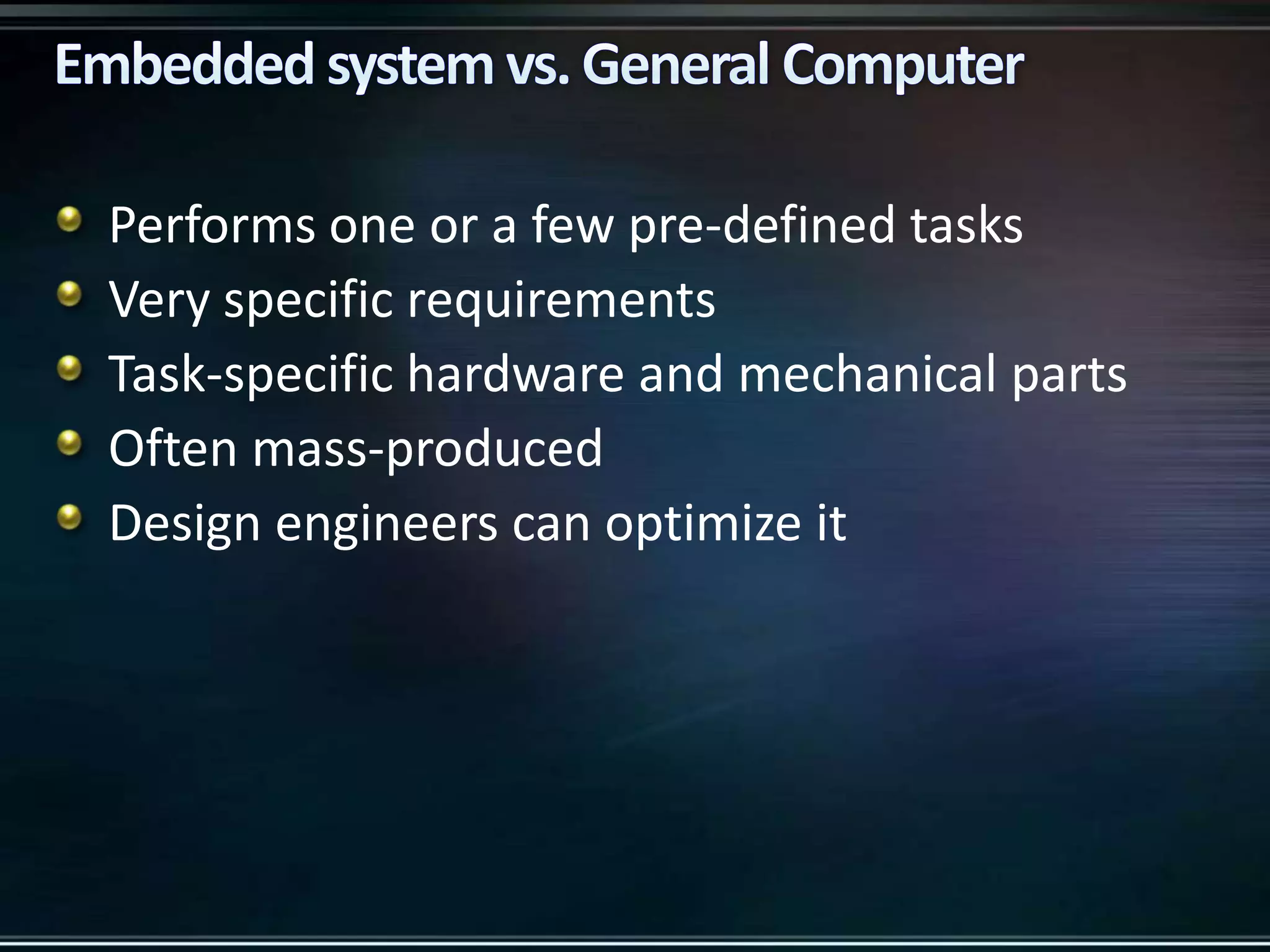
Embedded system vs. General Computer
Advantages
Summary
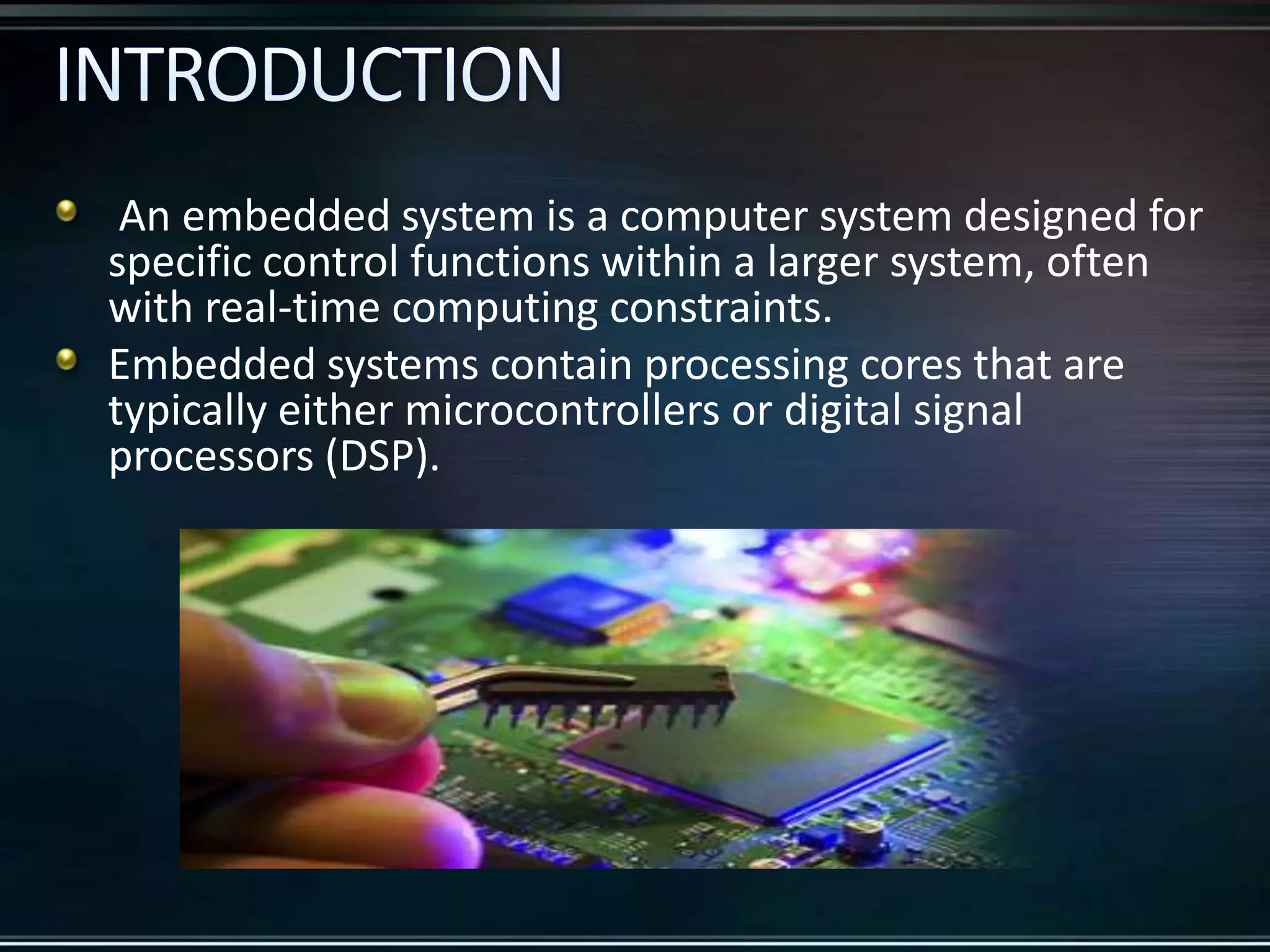
An embedded system is a computer system designed for
specific control functions within a larger system, often
with real-time computing constraints.
Embedded systems contain processing cores that are
typically either microcontrollers or digital signal
processors (DSP).
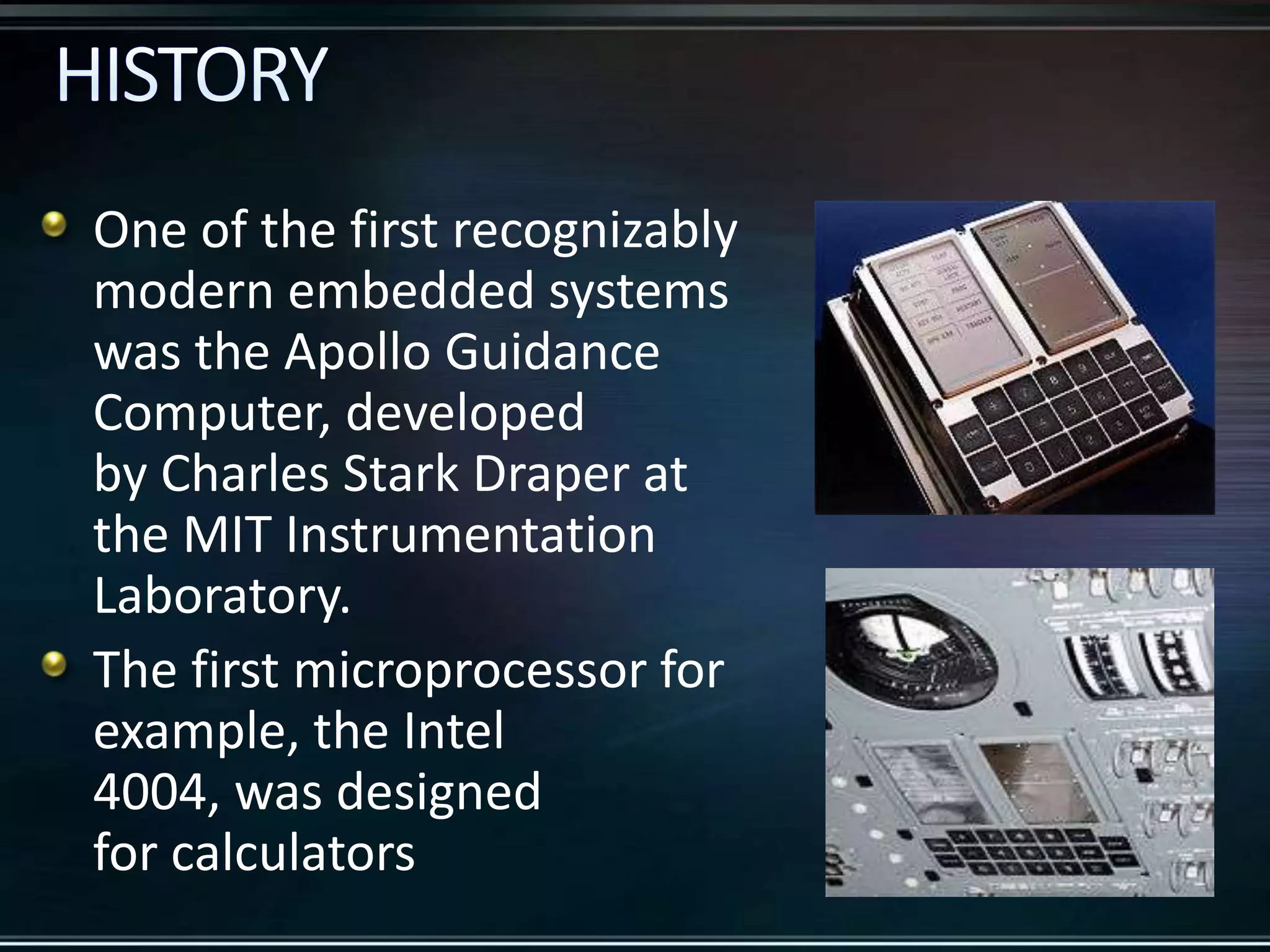
One of the first recognizably
modern embedded systems
was the Apollo Guidance
Computer, developed
by Charles Stark Draper at
the MIT Instrumentation
Laboratory.
The first microprocessor for
example, the Intel
4004, was designed
for calculators
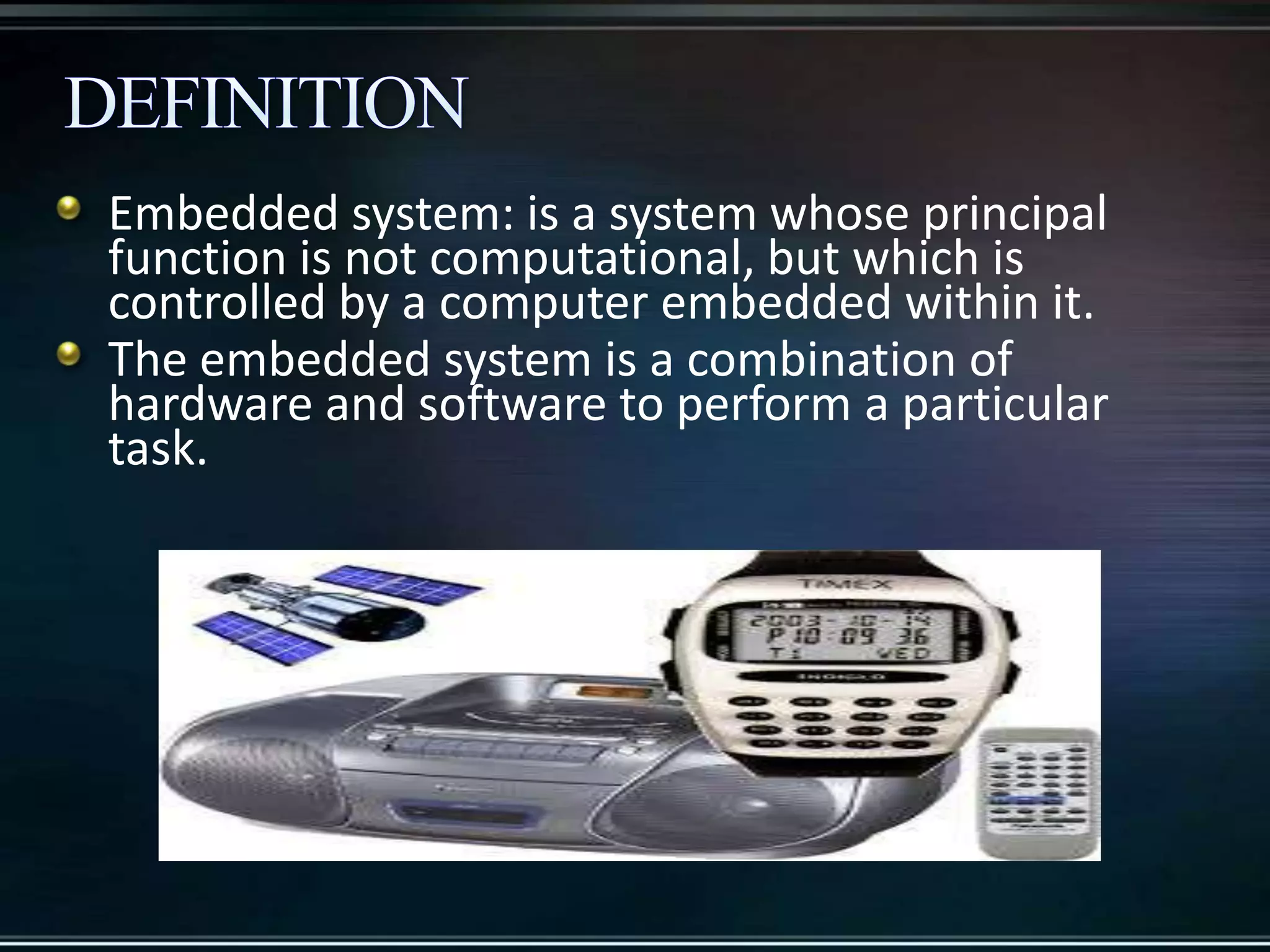
Embedded system: is a system whose principal
function is not computational, but which is
controlled by a computer embedded within it.
The embedded system is a combination of
hardware and software to perform a particular
task.
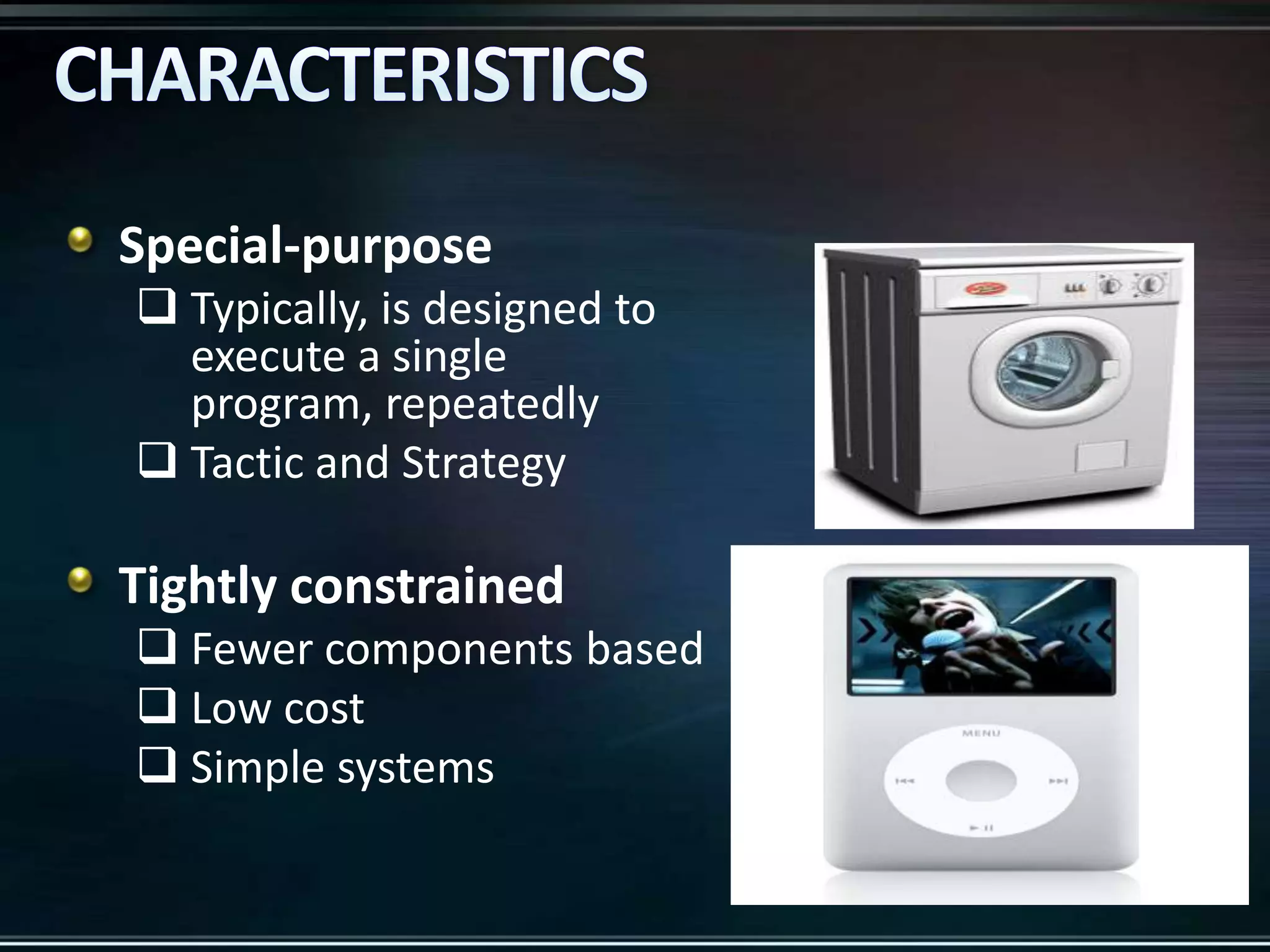
Special-purpose
 Typically, is designed to
execute a single
program, repeatedly
 Tactic and Strategy

Tightly constrained
 Fewer components based
 Low cost
 Simple systems
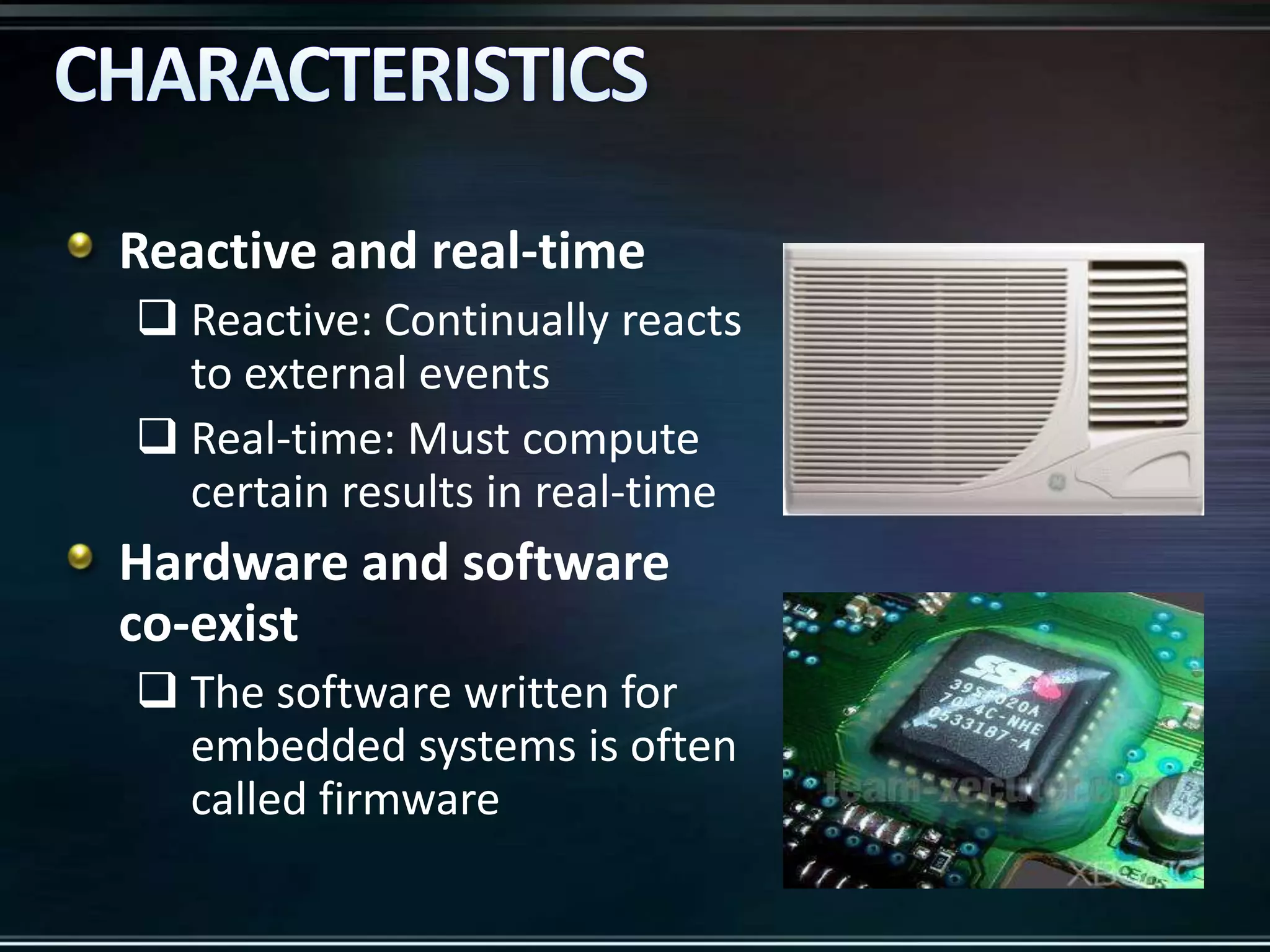
Reactive and real-time
 Reactive: Continually reacts
to external events
 Real-time: Must compute
certain results in real-time

Hardware and software
co-exist
 The software written for
embedded systems is often
called firmware
Small size & less weight.
More efficiency.
Embedded systems are programmed to perform
specific task only.
Embedded systems are playing important roles
in our lives every day.
MP3 music players
Data switches
Automotive controls
Air conditioner
ATM machine
Battery charger
Digital camera
DVD player
Video game console

Fax machine
Home security system
Mobile phone
Modem
Photocopier
Printer
Router
Scanner
TV
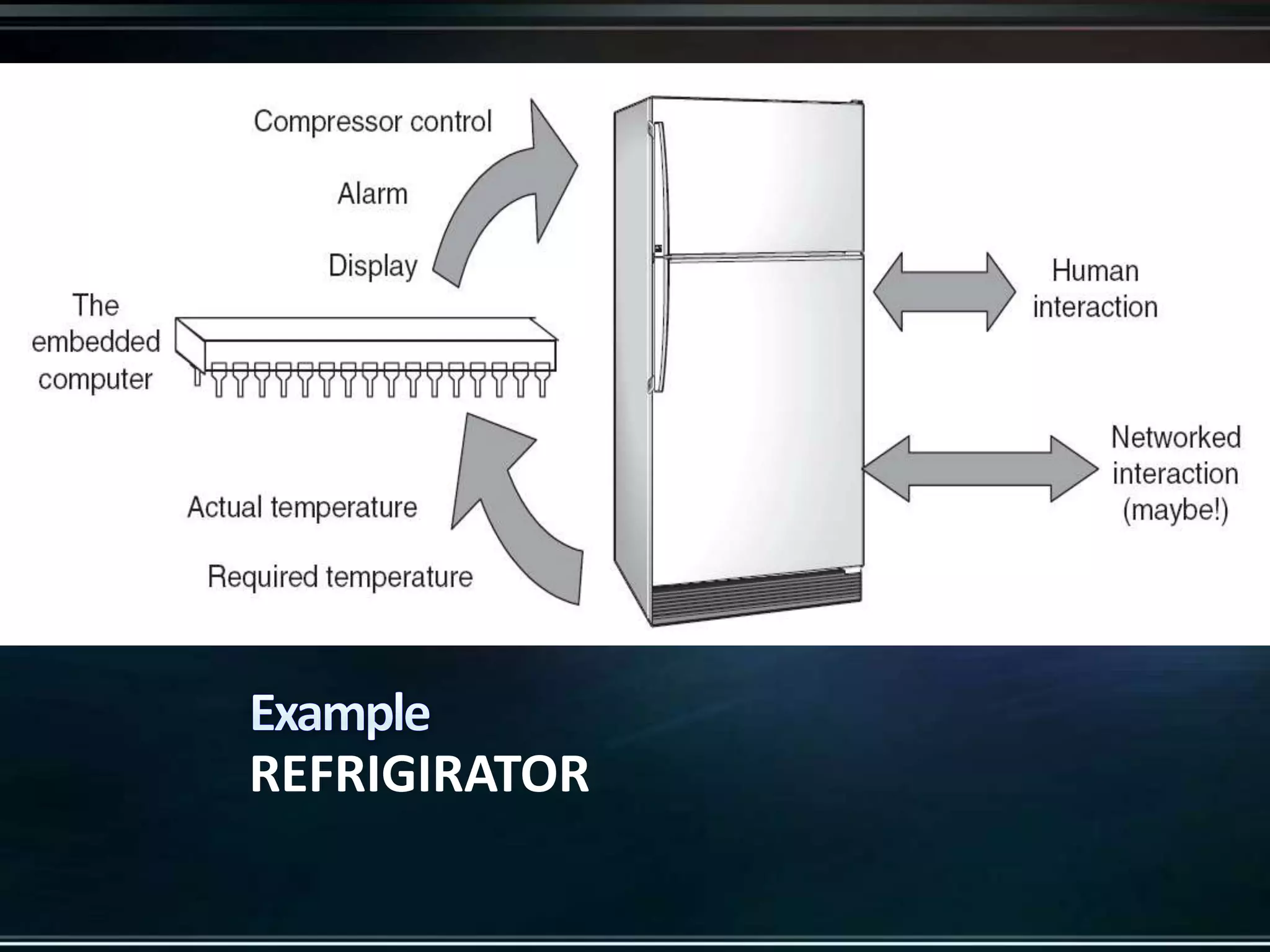
REFRIGIRATOR
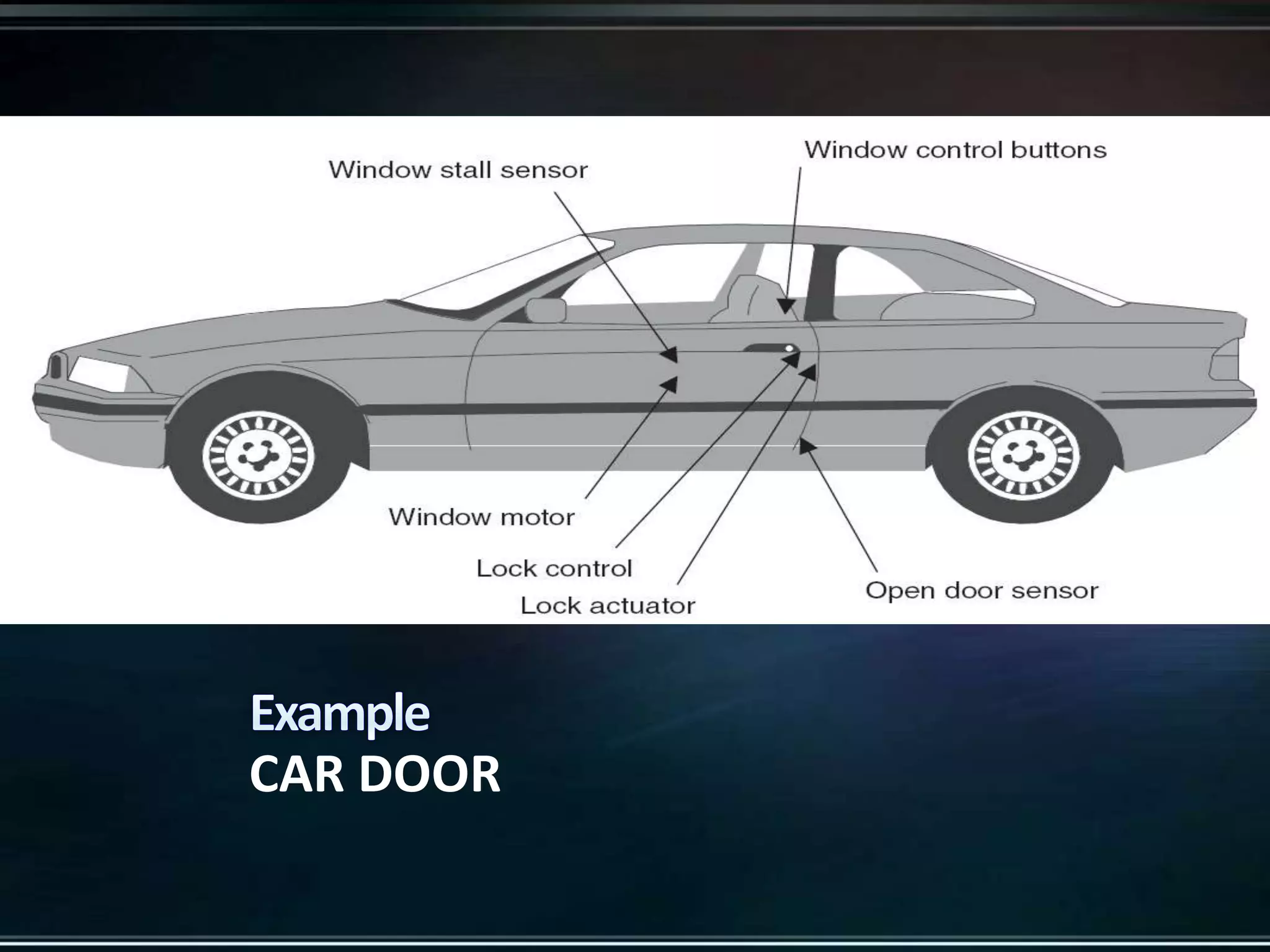
CAR DOOR
Performance:
 Technology Advances
CMOS VLSI dominates older technologies (TTL, ECL)
 Computer architecture improvements
RISC, superscalar, RAID,
Price:
 Simpler development
CMOS VLSI: smaller systems, fewer components
 Higher volumes
CMOS VLSI: same device cost 10,000 vs. 10,000,000 units
Performs one or a few pre-defined tasks
Very specific requirements
Task-specific hardware and mechanical parts
Often mass-produced
Design engineers can optimize it
High reliable.
Can be interface as user convenient.
Embedded systems are constrained for power
consumption since many embedded systems
work on a battery at low power.
A quiet revolution is in progress in the utility
industry.
Static metering devices, have been in use
for the better part of a century
Gradually being replaced with multirate, multifunction meters
Capable of more accurately accounting for
utility usage.
THANK YOU

Embedded system

  • 1.
  • 3.
    Introduction History Definition Characteristics Features Examples Why Embedded system? Marketfor Embedded software, Embedded IC, Embedded boards Embedded OS Sourcing Trend Embedded system vs. General Computer Advantages Summary
  • 4.
    An embedded systemis a computer system designed for specific control functions within a larger system, often with real-time computing constraints. Embedded systems contain processing cores that are typically either microcontrollers or digital signal processors (DSP).
  • 5.
    One of thefirst recognizably modern embedded systems was the Apollo Guidance Computer, developed by Charles Stark Draper at the MIT Instrumentation Laboratory. The first microprocessor for example, the Intel 4004, was designed for calculators
  • 6.
    Embedded system: isa system whose principal function is not computational, but which is controlled by a computer embedded within it. The embedded system is a combination of hardware and software to perform a particular task.
  • 7.
    Special-purpose  Typically, isdesigned to execute a single program, repeatedly  Tactic and Strategy Tightly constrained  Fewer components based  Low cost  Simple systems
  • 8.
    Reactive and real-time Reactive: Continually reacts to external events  Real-time: Must compute certain results in real-time Hardware and software co-exist  The software written for embedded systems is often called firmware
  • 9.
    Small size &less weight. More efficiency. Embedded systems are programmed to perform specific task only. Embedded systems are playing important roles in our lives every day.
  • 10.
    MP3 music players Dataswitches Automotive controls Air conditioner ATM machine Battery charger Digital camera DVD player Video game console Fax machine Home security system Mobile phone Modem Photocopier Printer Router Scanner TV
  • 11.
  • 12.
  • 13.
    Performance:  Technology Advances CMOSVLSI dominates older technologies (TTL, ECL)  Computer architecture improvements RISC, superscalar, RAID, Price:  Simpler development CMOS VLSI: smaller systems, fewer components  Higher volumes CMOS VLSI: same device cost 10,000 vs. 10,000,000 units
  • 16.
    Performs one ora few pre-defined tasks Very specific requirements Task-specific hardware and mechanical parts Often mass-produced Design engineers can optimize it
  • 17.
    High reliable. Can beinterface as user convenient. Embedded systems are constrained for power consumption since many embedded systems work on a battery at low power.
  • 18.
    A quiet revolutionis in progress in the utility industry. Static metering devices, have been in use for the better part of a century Gradually being replaced with multirate, multifunction meters Capable of more accurately accounting for utility usage.
  • 20.