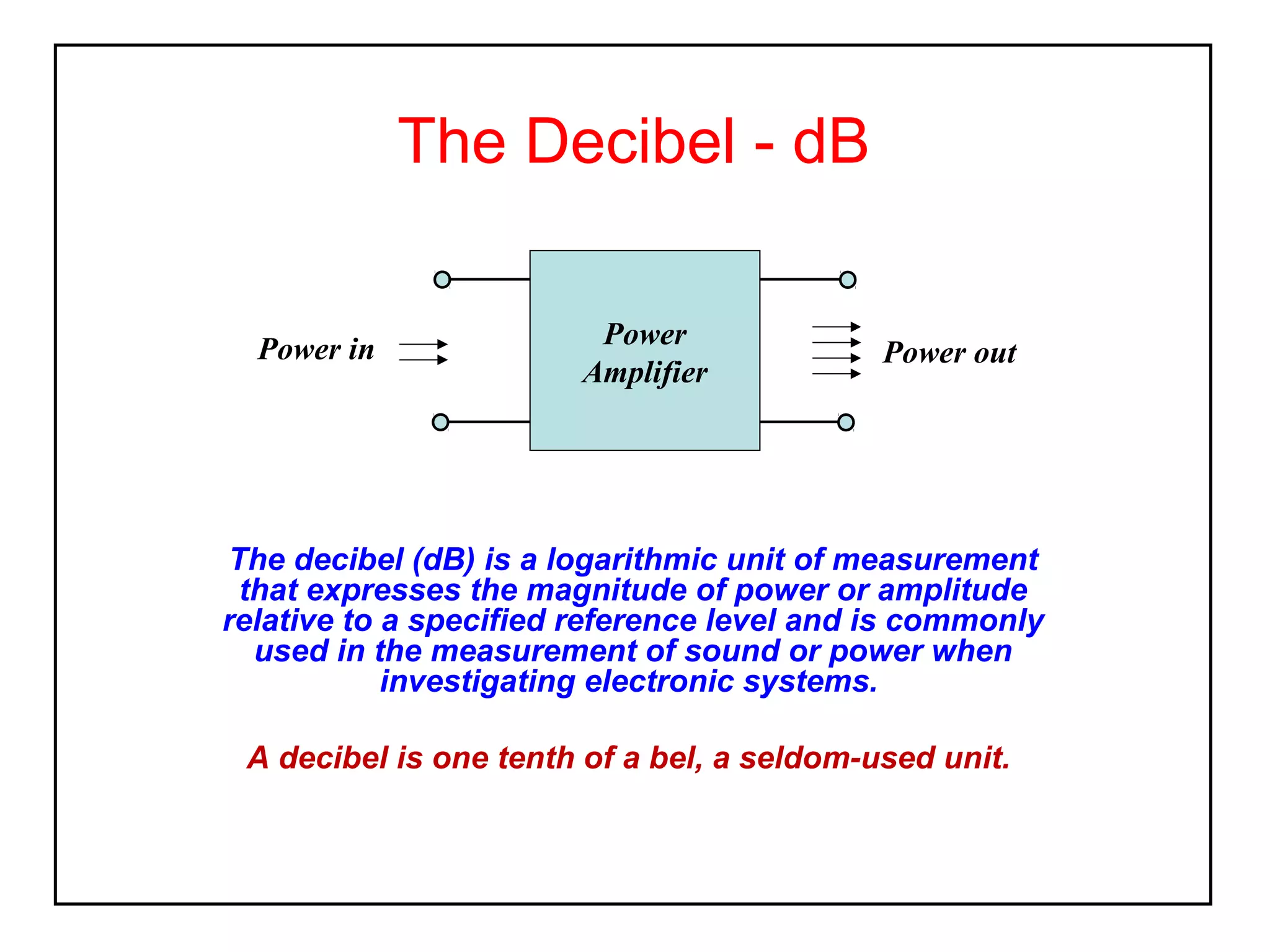
The Decibel - dB
Power in

Power
Amplifier

Power out

The decibel (dB) is a logarithmic unit of measurement
that expresses the magnitude of power or amplitude
relative to a specified reference level and is commonly
used in the measurement of sound or power when
investigating electronic systems.
A decibel is one tenth of a bel, a seldom-used unit.
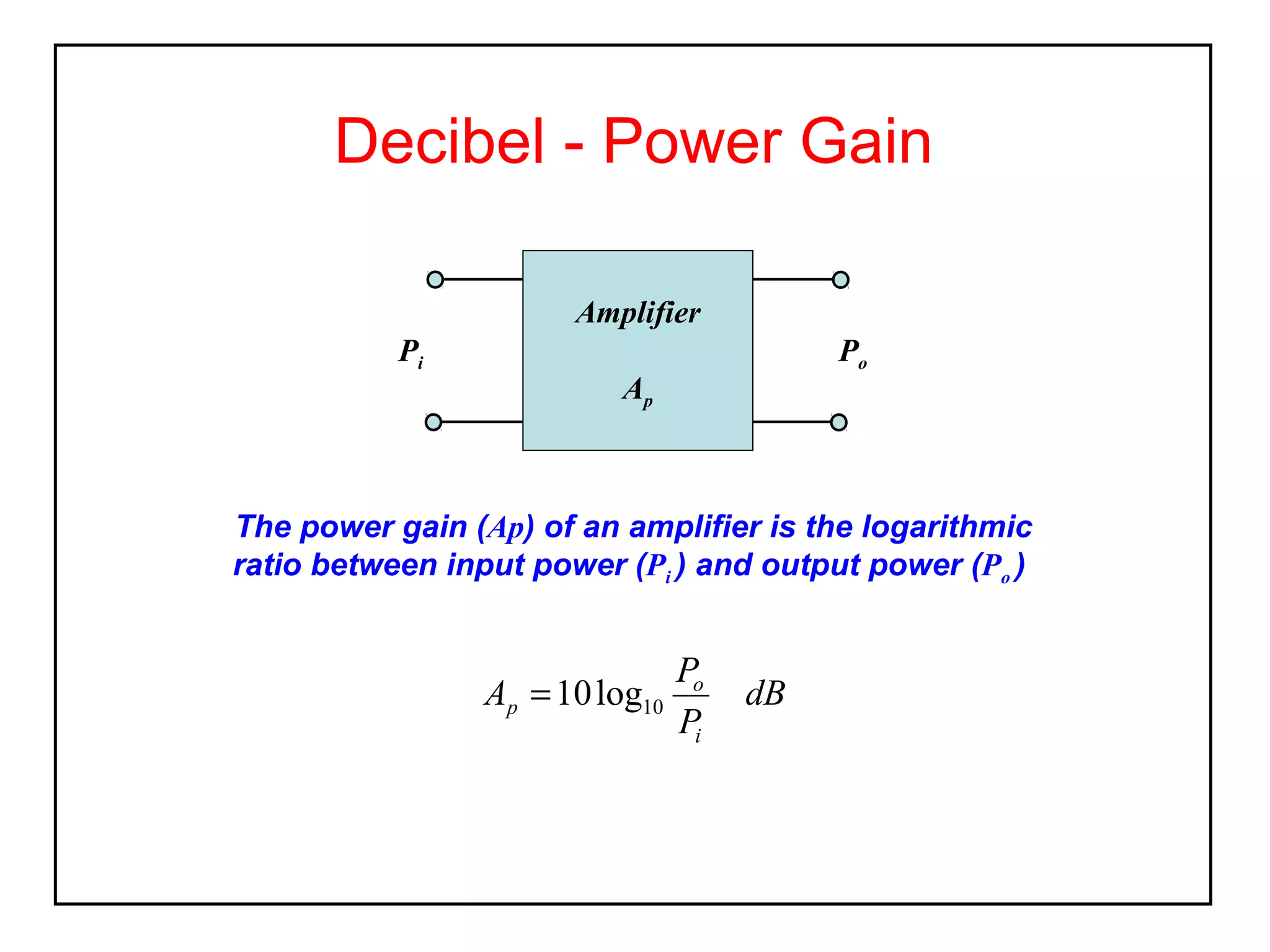
Decibel - Power Gain
Amplifier
Pi

Po

Ap

The power gain (Ap) of an amplifier is the logarithmic
ratio between input power (Pi ) and output power (Po )

Ap = 10 log10

Po
Pi

dB
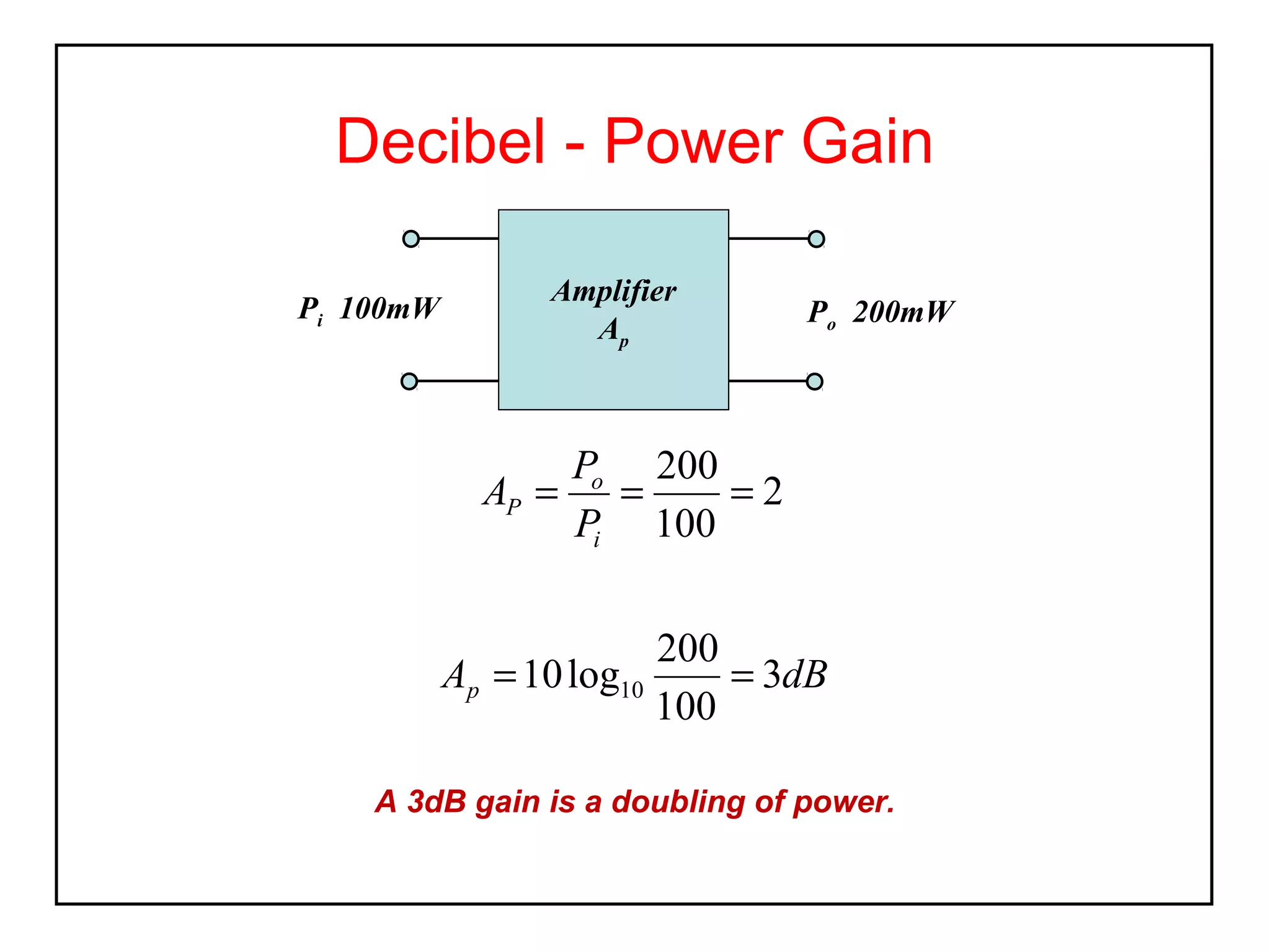
Decibel - Power Gain
Pi 100mW

Amplifier
Ap

Po 200mW

Po 200
AP =
=
=2
Pi 100
200
Ap = 10 log10
= 3dB
100
A 3dB gain is a doubling of power.
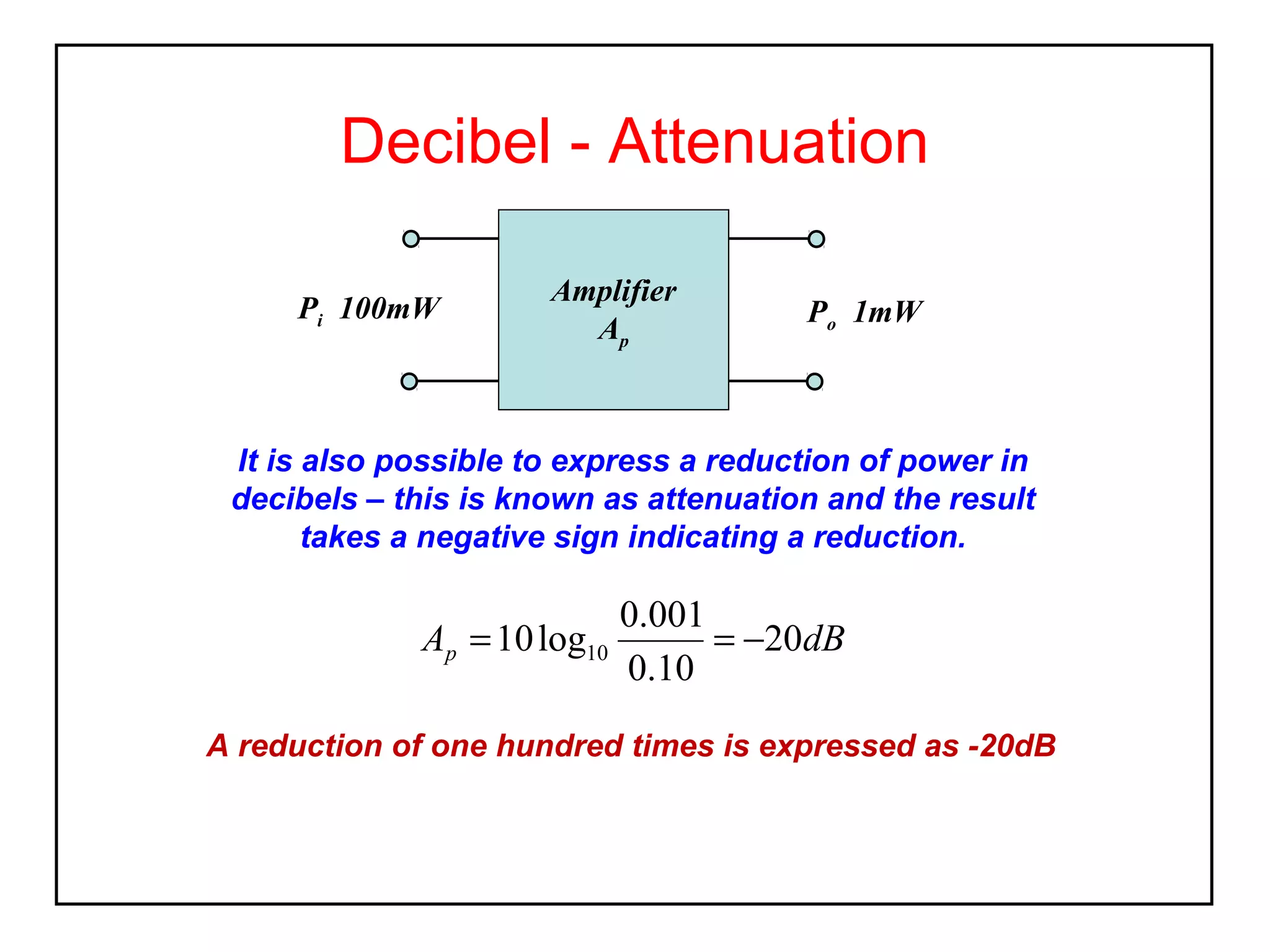
Decibel - Attenuation
Pi 100mW

Amplifier
Ap

Po 1mW

It is also possible to express a reduction of power in
decibels – this is known as attenuation and the result
takes a negative sign indicating a reduction.

0.001
Ap = 10 log10
= −20dB
0.10
A reduction of one hundred times is expressed as -20dB
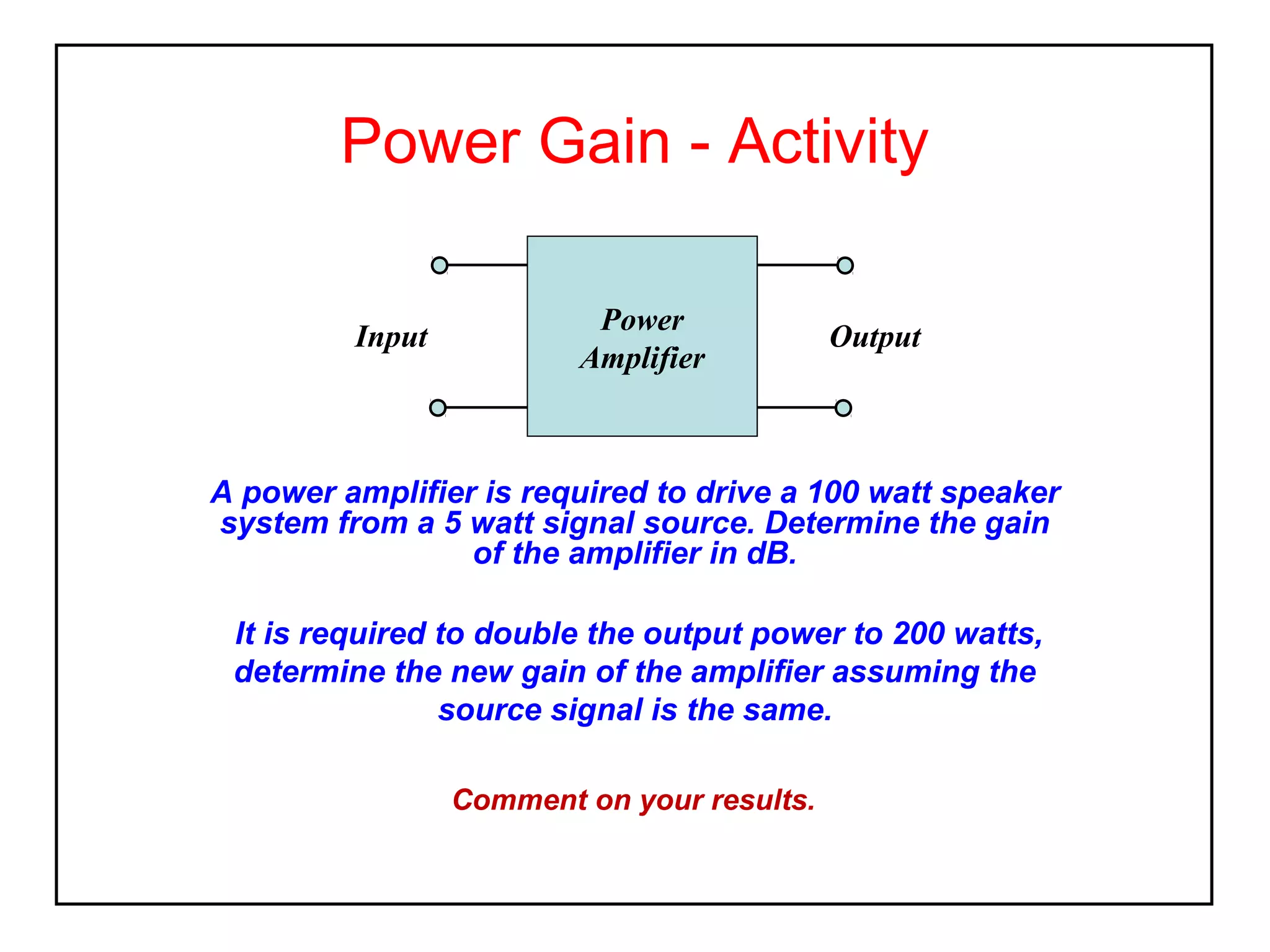
Power Gain - Activity
Input

Power
Amplifier

Output

A power amplifier is required to drive a 100 watt speaker
system from a 5 watt signal source. Determine the gain
of the amplifier in dB.
It is required to double the output power to 200 watts,
determine the new gain of the amplifier assuming the
source signal is the same.
Comment on your results.
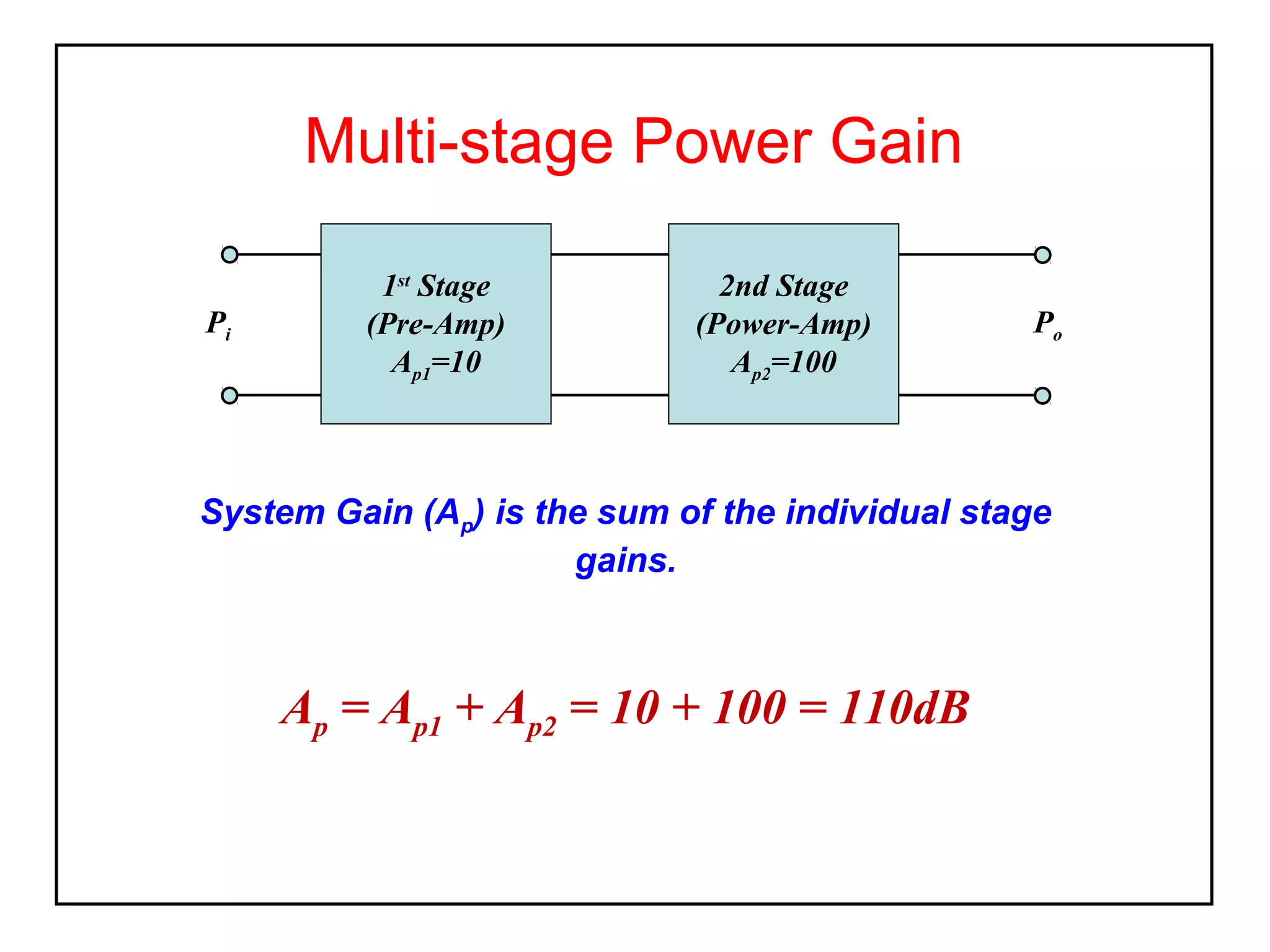
Multi-stage Power Gain
Pi

1st Stage
(Pre-Amp)
Ap1=10

2nd Stage
(Power-Amp)
Ap2=100

Po

System Gain (Ap) is the sum of the individual stage
gains.
Ap = Ap1 + Ap2 = 10 + 100 = 110dB
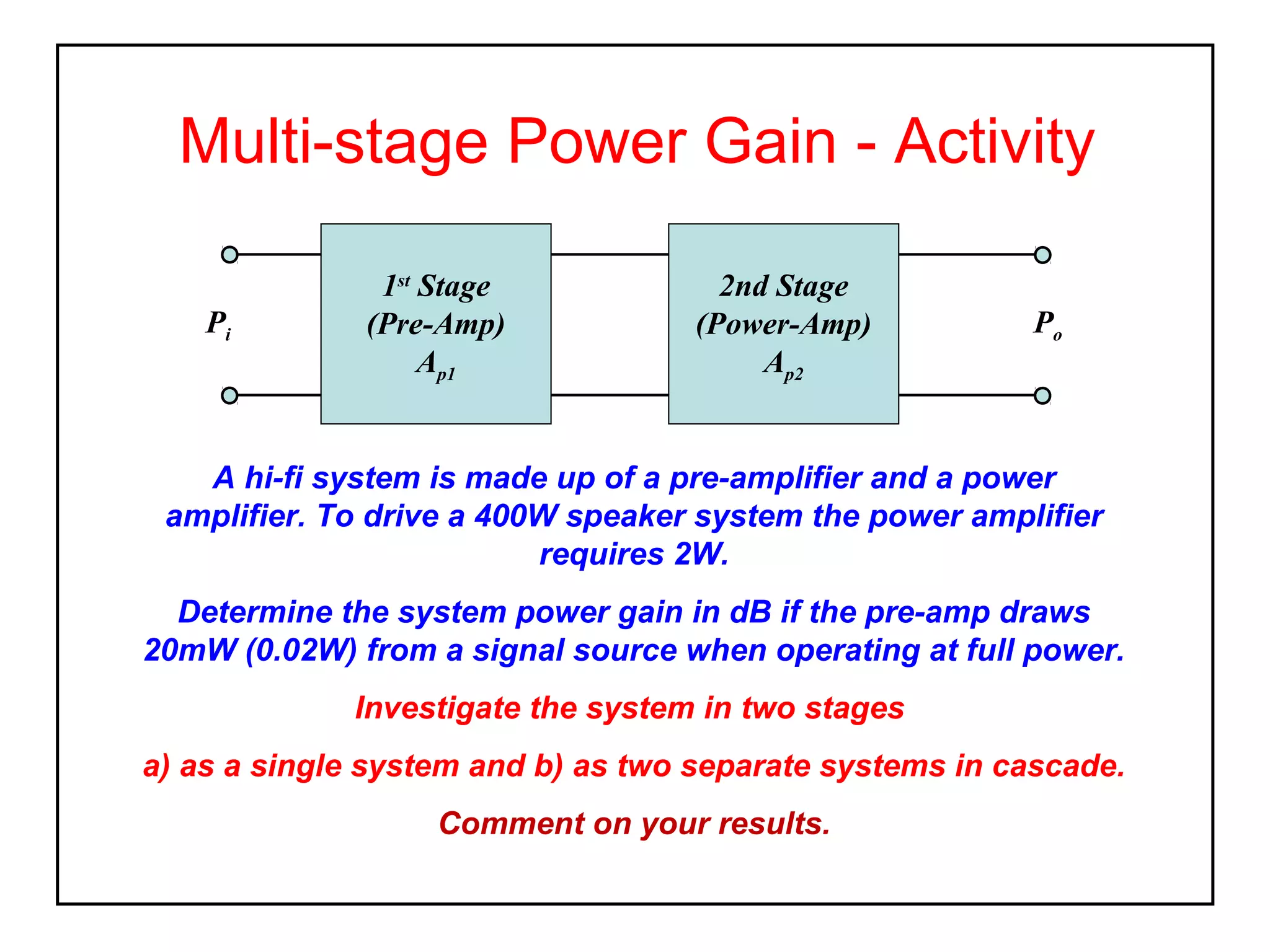
Multi-stage Power Gain - Activity
Pi

1st Stage
(Pre-Amp)
Ap1

2nd Stage
(Power-Amp)
Ap2

Po

A hi-fi system is made up of a pre-amplifier and a power
amplifier. To drive a 400W speaker system the power amplifier
requires 2W.
Determine the system power gain in dB if the pre-amp draws
20mW (0.02W) from a signal source when operating at full power.
Investigate the system in two stages
a) as a single system and b) as two separate systems in cascade.
Comment on your results.
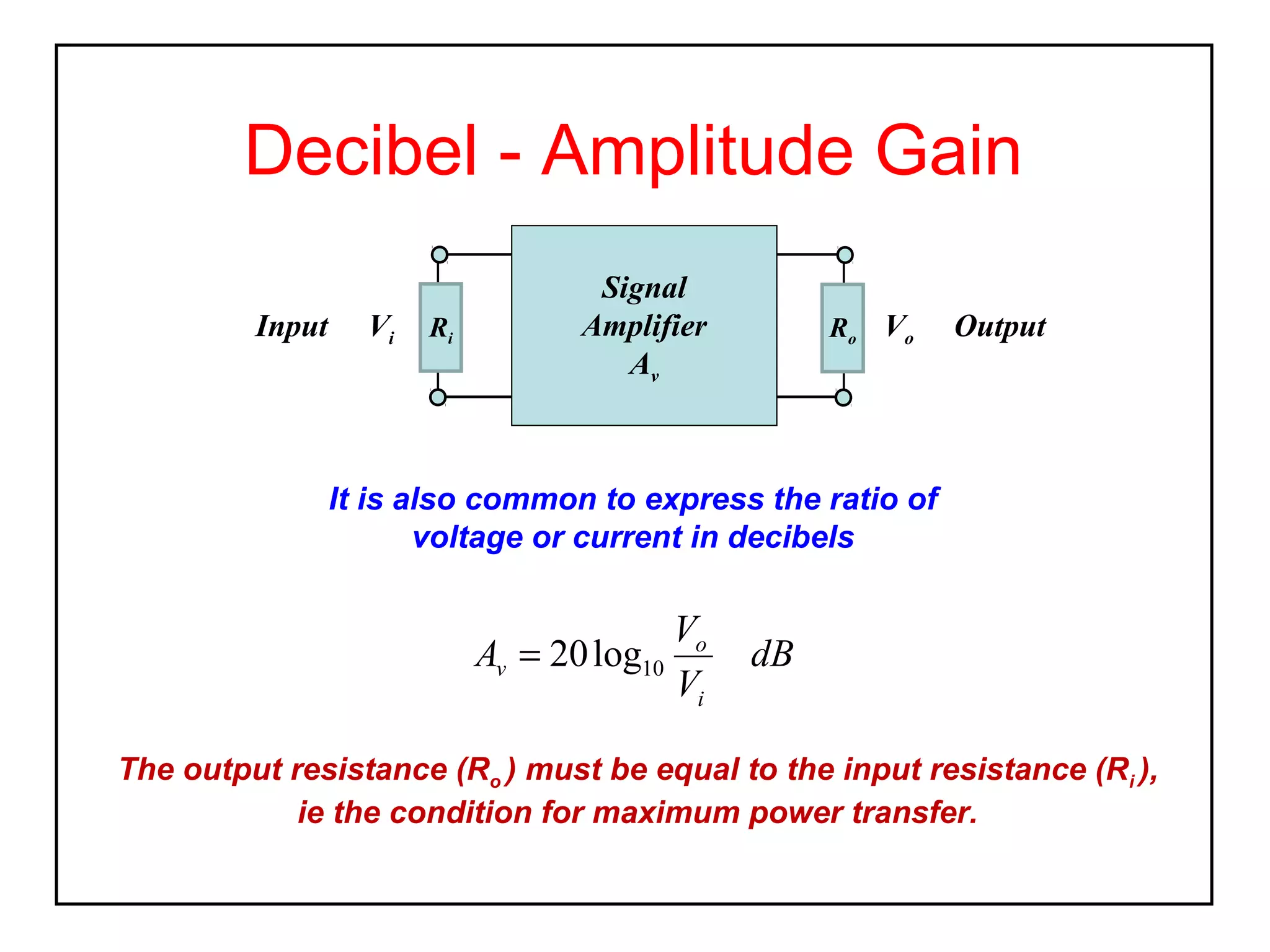
Decibel - Amplitude Gain
Input

Vi

Ri

Signal
Amplifier
Av

Ro Vo

Output

It is also common to express the ratio of
voltage or current in decibels

Vo
Av = 20 log10
Vi

dB

The output resistance (Ro ) must be equal to the input resistance (Ri ),
ie the condition for maximum power transfer.
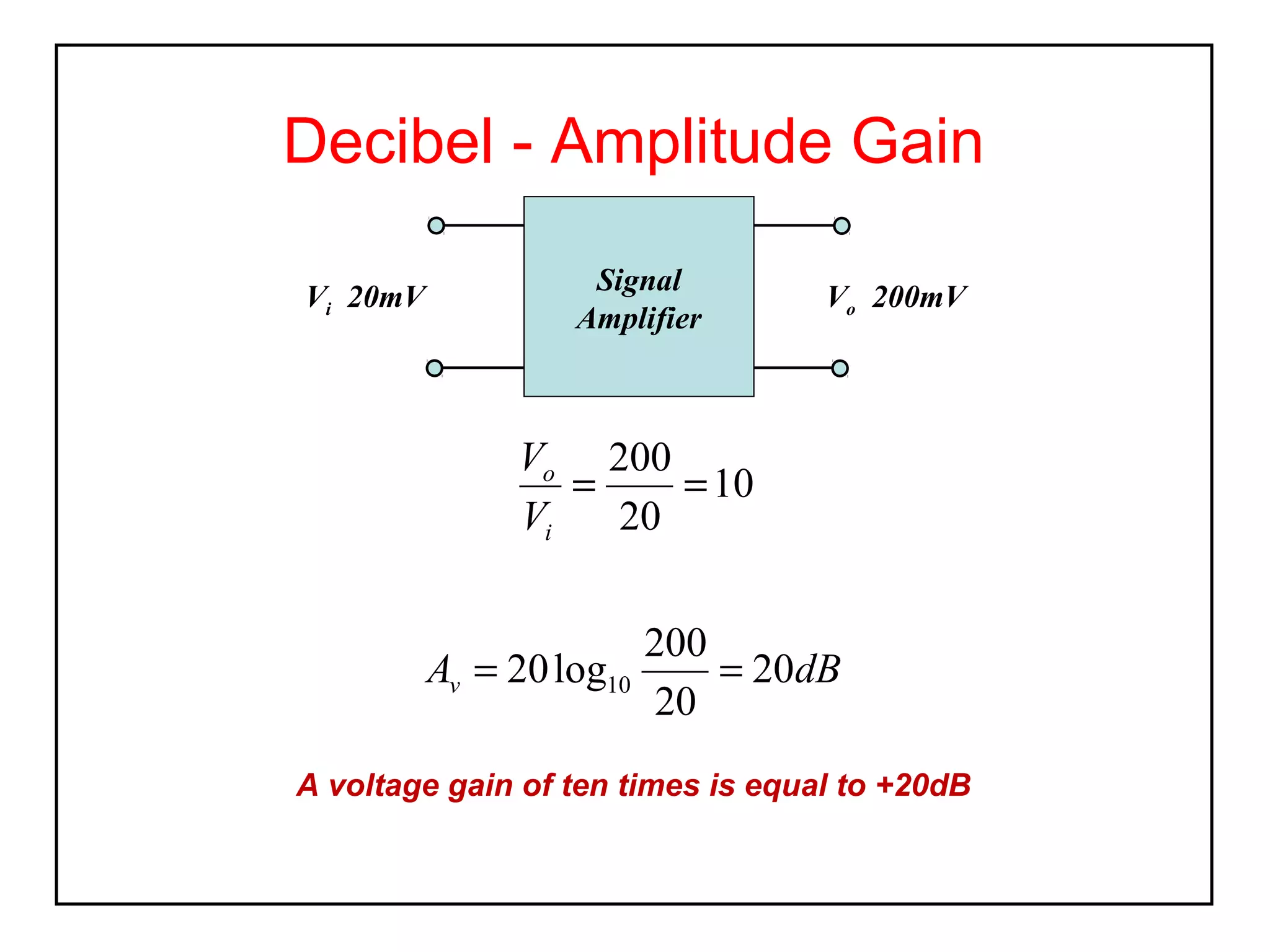
Decibel - Amplitude Gain
Vi 20mV

Signal
Amplifier

Vo 200mV

Vo 200
=
= 10
Vi
20
Av = 20 log10

200
= 20dB
20

A voltage gain of ten times is equal to +20dB
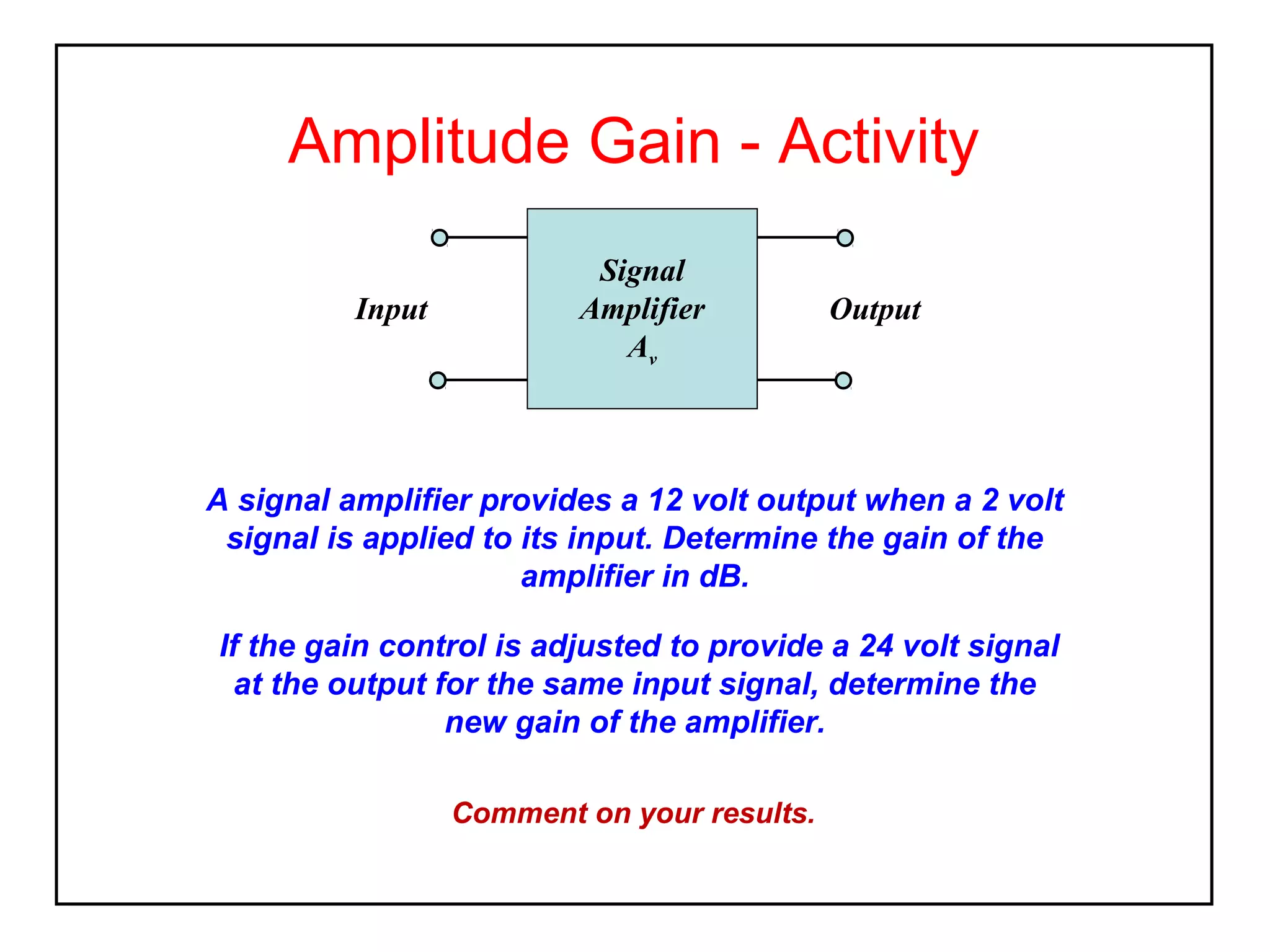
Amplitude Gain - Activity
Input

Signal
Amplifier
Av

Output

A signal amplifier provides a 12 volt output when a 2 volt
signal is applied to its input. Determine the gain of the
amplifier in dB.
If the gain control is adjusted to provide a 24 volt signal
at the output for the same input signal, determine the
new gain of the amplifier.
Comment on your results.
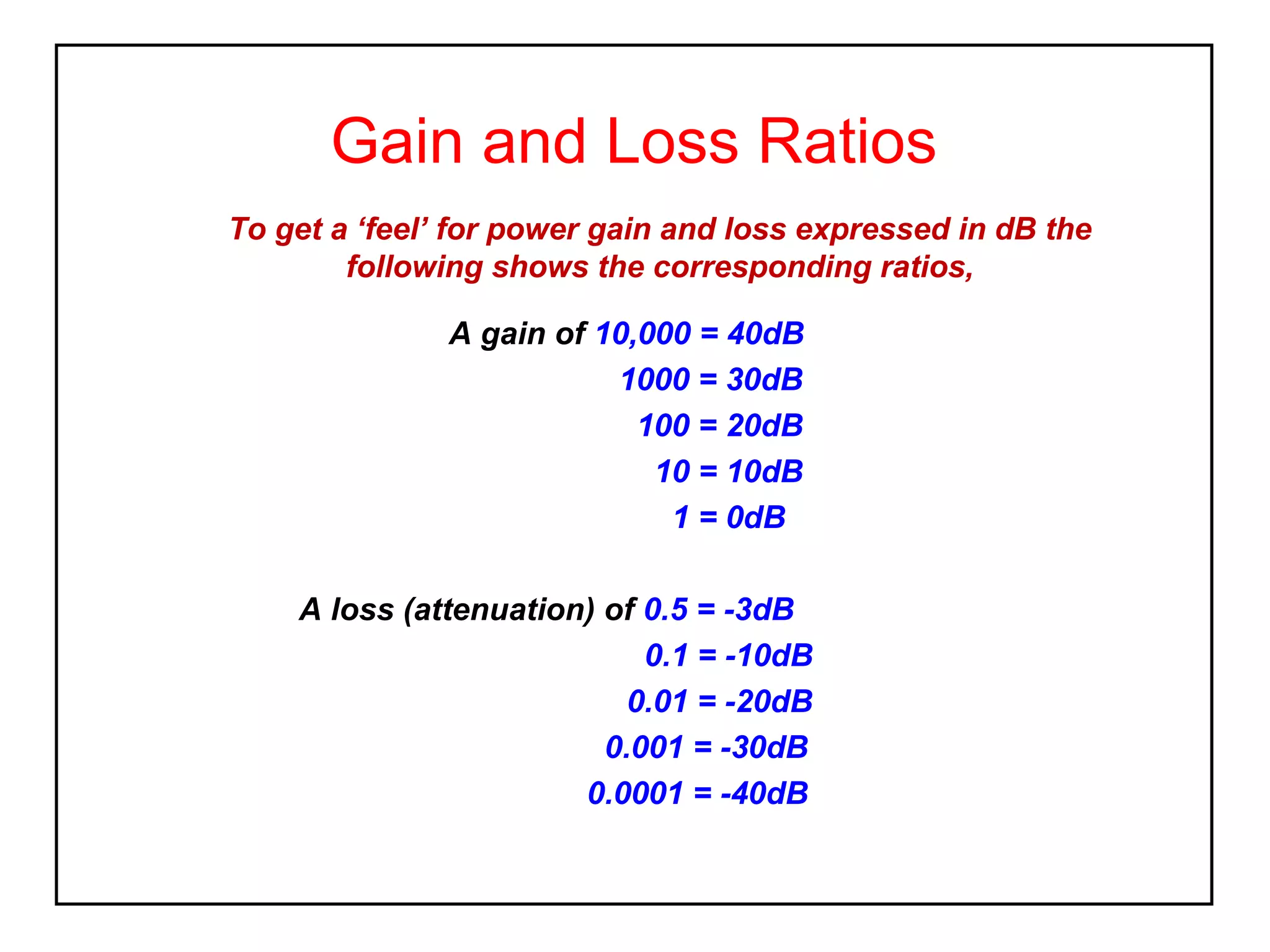
Gain and Loss Ratios
To get a ‘feel’ for power gain and loss expressed in dB the
following shows the corresponding ratios,

A gain of 10,000 = 40dB
1000 = 30dB
100 = 20dB
10 = 10dB
1 = 0dB
A loss (attenuation) of 0.5 = -3dB
0.1 = -10dB
0.01 = -20dB
0.001 = -30dB
0.0001 = -40dB
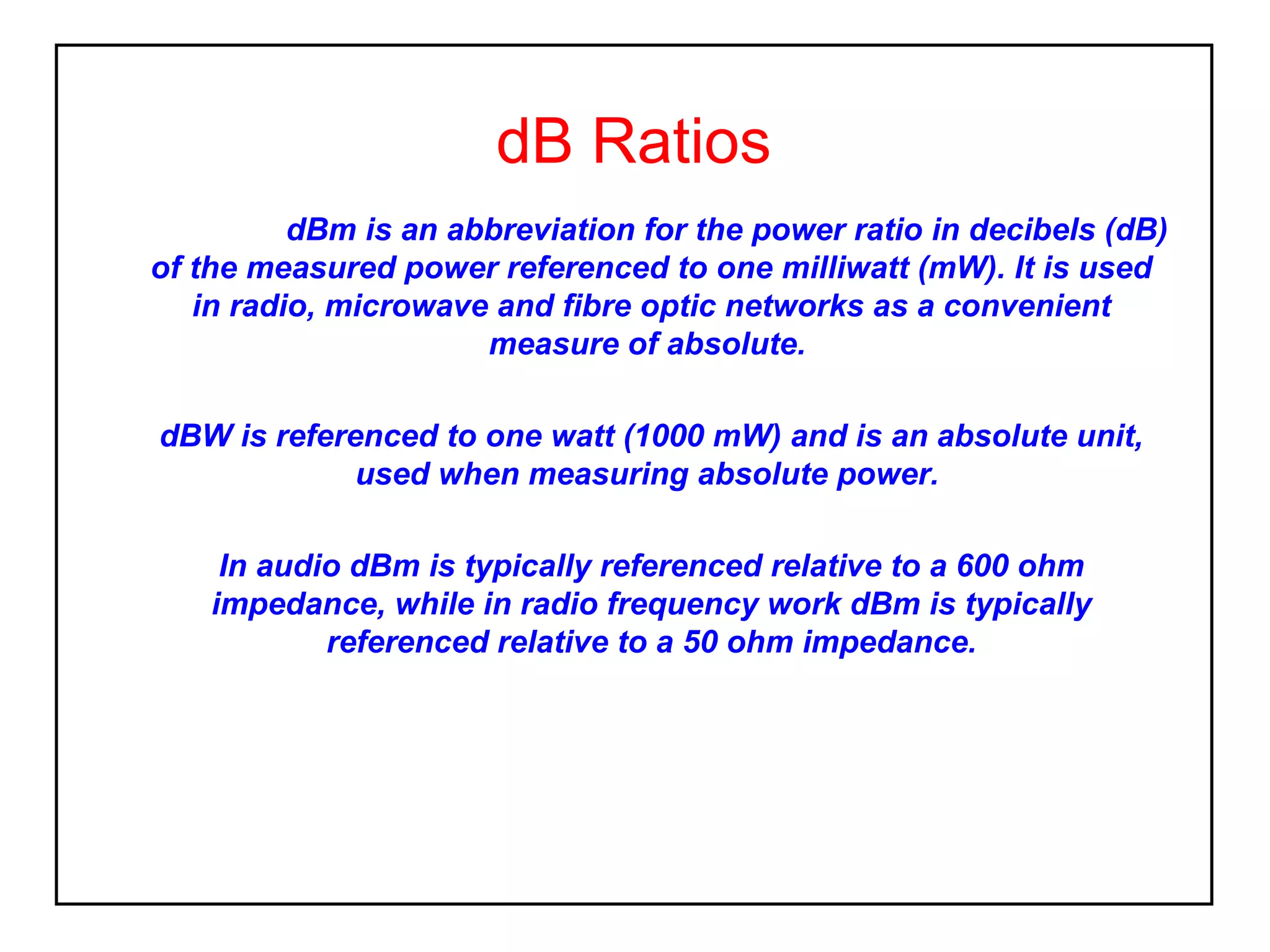
dB Ratios
dBm is an abbreviation for the power ratio in decibels (dB)
of the measured power referenced to one milliwatt (mW). It is used
in radio, microwave and fibre optic networks as a convenient
measure of absolute.
dBW is referenced to one watt (1000 mW) and is an absolute unit,
used when measuring absolute power.
In audio dBm is typically referenced relative to a 600 ohm
impedance, while in radio frequency work dBm is typically
referenced relative to a 50 ohm impedance.

Electronics decibel

  • 1.
    The Decibel -dB Power in Power Amplifier Power out The decibel (dB) is a logarithmic unit of measurement that expresses the magnitude of power or amplitude relative to a specified reference level and is commonly used in the measurement of sound or power when investigating electronic systems. A decibel is one tenth of a bel, a seldom-used unit.
  • 2.
    Decibel - PowerGain Amplifier Pi Po Ap The power gain (Ap) of an amplifier is the logarithmic ratio between input power (Pi ) and output power (Po ) Ap = 10 log10 Po Pi dB
  • 3.
    Decibel - PowerGain Pi 100mW Amplifier Ap Po 200mW Po 200 AP = = =2 Pi 100 200 Ap = 10 log10 = 3dB 100 A 3dB gain is a doubling of power.
  • 4.
    Decibel - Attenuation Pi100mW Amplifier Ap Po 1mW It is also possible to express a reduction of power in decibels – this is known as attenuation and the result takes a negative sign indicating a reduction. 0.001 Ap = 10 log10 = −20dB 0.10 A reduction of one hundred times is expressed as -20dB
  • 5.
    Power Gain -Activity Input Power Amplifier Output A power amplifier is required to drive a 100 watt speaker system from a 5 watt signal source. Determine the gain of the amplifier in dB. It is required to double the output power to 200 watts, determine the new gain of the amplifier assuming the source signal is the same. Comment on your results.
  • 6.
    Multi-stage Power Gain Pi 1stStage (Pre-Amp) Ap1=10 2nd Stage (Power-Amp) Ap2=100 Po System Gain (Ap) is the sum of the individual stage gains. Ap = Ap1 + Ap2 = 10 + 100 = 110dB
  • 7.
    Multi-stage Power Gain- Activity Pi 1st Stage (Pre-Amp) Ap1 2nd Stage (Power-Amp) Ap2 Po A hi-fi system is made up of a pre-amplifier and a power amplifier. To drive a 400W speaker system the power amplifier requires 2W. Determine the system power gain in dB if the pre-amp draws 20mW (0.02W) from a signal source when operating at full power. Investigate the system in two stages a) as a single system and b) as two separate systems in cascade. Comment on your results.
  • 8.
    Decibel - AmplitudeGain Input Vi Ri Signal Amplifier Av Ro Vo Output It is also common to express the ratio of voltage or current in decibels Vo Av = 20 log10 Vi dB The output resistance (Ro ) must be equal to the input resistance (Ri ), ie the condition for maximum power transfer.
  • 9.
    Decibel - AmplitudeGain Vi 20mV Signal Amplifier Vo 200mV Vo 200 = = 10 Vi 20 Av = 20 log10 200 = 20dB 20 A voltage gain of ten times is equal to +20dB
  • 10.
    Amplitude Gain -Activity Input Signal Amplifier Av Output A signal amplifier provides a 12 volt output when a 2 volt signal is applied to its input. Determine the gain of the amplifier in dB. If the gain control is adjusted to provide a 24 volt signal at the output for the same input signal, determine the new gain of the amplifier. Comment on your results.
  • 11.
    Gain and LossRatios To get a ‘feel’ for power gain and loss expressed in dB the following shows the corresponding ratios, A gain of 10,000 = 40dB 1000 = 30dB 100 = 20dB 10 = 10dB 1 = 0dB A loss (attenuation) of 0.5 = -3dB 0.1 = -10dB 0.01 = -20dB 0.001 = -30dB 0.0001 = -40dB
  • 12.
    dB Ratios dBm isan abbreviation for the power ratio in decibels (dB) of the measured power referenced to one milliwatt (mW). It is used in radio, microwave and fibre optic networks as a convenient measure of absolute. dBW is referenced to one watt (1000 mW) and is an absolute unit, used when measuring absolute power. In audio dBm is typically referenced relative to a 600 ohm impedance, while in radio frequency work dBm is typically referenced relative to a 50 ohm impedance.