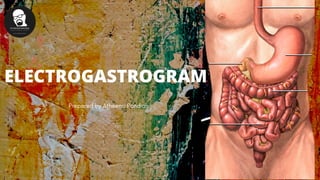

ELECTROGASTROGRAM
Prepared by Atheena Pandian
It is a graphic produced by
an electrogastrograph, which
records the electrical signals
that travel through
the stomach muscles and
control the muscles'
contractions.
ELECTROGASTROGRAM (EGG)
An electrogastrogram and a gastroenterogram
are similar in principle to
an electrocardiogram (ECG) in that sensors on
the skin detect electrical signals indicative of
muscular activity within. Where the
electrocardiogram detects muscular activity in
various regions of the heart, the
electrogastrogram detects the wave-like
contractions of the stomach (peristalsis).
DESCRIPTION OF EGG
Motility of gastrointestinal tract (GI
tract) results from coordinated
contractions of smooth muscle, which
in turn derive from two basic
patterns of electrical activity across
the membranes of smooth muscle
cells—slow waves and action
potentials.
PROCESS OF EGG
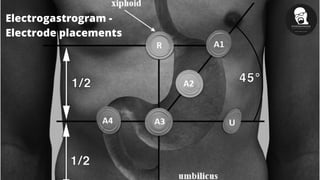
Electrogastrogram -
Electrode placements
Electrogastrogram -
Electrode placements
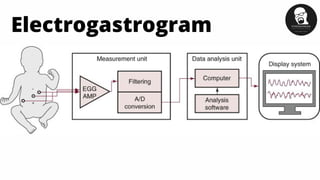
Electrogastrogram
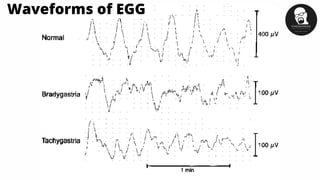
Waveforms of EGG
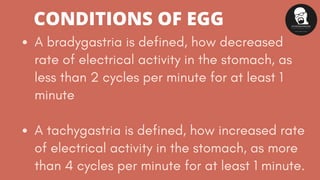
A bradygastria is defined, how decreased
rate of electrical activity in the stomach, as
less than 2 cycles per minute for at least 1
minute
A tachygastria is defined, how increased rate
of electrical activity in the stomach, as more
than 4 cycles per minute for at least 1 minute.
CONDITIONS OF EGG
stomach – about 3 waves in a minute
duodenum – about 12 waves in a
minute
jejunum – about 11 waves in a minute.
ileum – about 8 waves in a minute
rectum – about 17 waves in a minute
They set the maximum frequency at which
the muscle can contract
WAVES OF EGG
Electrical control activity
(ECA) and
Electrical response activity
(ERA)
The electrical activity of the GI
tract can be subdivided into
two categories:
1.
2.
CATAGORIES
RANGE OF EGG
Electrogastrography or gastroenterography used
when a patient is suspected of having a motility
disorder, which can be shown, as recurrent nausea
and vomiting, signs that the stomach is not
emptying food normally
The clinical use of electrogastrography has been
most widely evaluated in patients with
gastroparesis and functional dyspepsia.
CLINICAL APPLICATIONS
Good Luck

Electrogastrogram basics

  • 1.
  • 2.
    It is agraphic produced by an electrogastrograph, which records the electrical signals that travel through the stomach muscles and control the muscles' contractions. ELECTROGASTROGRAM (EGG)
  • 4.
    An electrogastrogram anda gastroenterogram are similar in principle to an electrocardiogram (ECG) in that sensors on the skin detect electrical signals indicative of muscular activity within. Where the electrocardiogram detects muscular activity in various regions of the heart, the electrogastrogram detects the wave-like contractions of the stomach (peristalsis). DESCRIPTION OF EGG
  • 5.
    Motility of gastrointestinal tract (GI tract) resultsfrom coordinated contractions of smooth muscle, which in turn derive from two basic patterns of electrical activity across the membranes of smooth muscle cells—slow waves and action potentials. PROCESS OF EGG
  • 6.
  • 7.
  • 8.
  • 9.
  • 10.
    A bradygastria is defined, howdecreased rate of electrical activity in the stomach, as less than 2 cycles per minute for at least 1 minute A tachygastria is defined, how increased rate of electrical activity in the stomach, as more than 4 cycles per minute for at least 1 minute. CONDITIONS OF EGG
  • 11.
    stomach – about 3waves in a minute duodenum – about 12 waves in a minute jejunum – about 11 waves in a minute. ileum – about 8 waves in a minute rectum – about 17 waves in a minute They set the maximum frequency at which the muscle can contract WAVES OF EGG
  • 12.
    Electrical control activity (ECA)and Electrical response activity (ERA) The electrical activity of the GI tract can be subdivided into two categories: 1. 2. CATAGORIES
  • 13.
  • 14.
    Electrogastrography or gastroenterographyused when a patient is suspected of having a motility disorder, which can be shown, as recurrent nausea and vomiting, signs that the stomach is not emptying food normally The clinical use of electrogastrography has been most widely evaluated in patients with gastroparesis and functional dyspepsia. CLINICAL APPLICATIONS
  • 15.