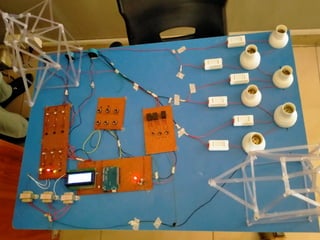
Under Ground Transmission Line
Faults
Ali Ahmad BSELF-20044
Muhammad Umar Naseem BSELF-20082
Project-2
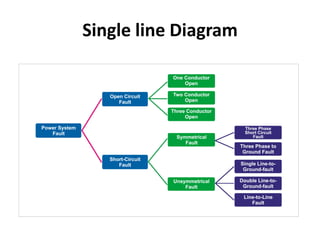
Single line Diagram
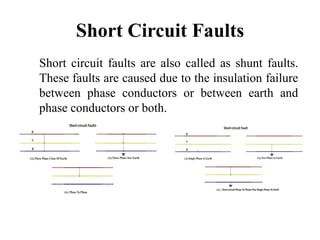
Short Circuit Faults
Short circuit faults are also called as shunt faults.
These faults are caused due to the insulation failure
between phase conductors or between earth and
phase conductors or both.
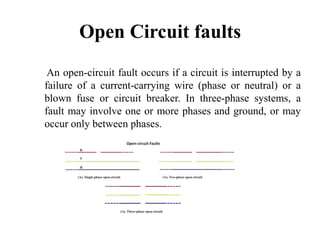
Open Circuit faults
An open-circuit fault occurs if a circuit is interrupted by a
failure of a current-carrying wire (phase or neutral) or a
blown fuse or circuit breaker. In three-phase systems, a
fault may involve one or more phases and ground, or may
occur only between phases.
Symmetrical Faults
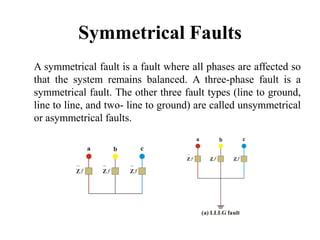
A symmetrical fault is a fault where all phases are affected so
that the system remains balanced. A three-phase fault is a
symmetrical fault. The other three fault types (line to ground,
line to line, and two- line to ground) are called unsymmetrical
or asymmetrical faults.
Unsymmetrical Fault
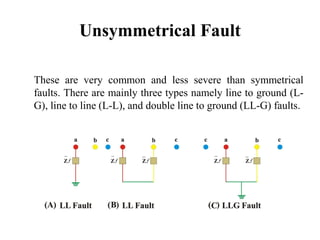
These are very common and less severe than symmetrical
faults. There are mainly three types namely line to ground (L-
G), line to line (L-L), and double line to ground (LL-G) faults.
Over Voltage
Overvoltage can be caused by poor regulation of a power
source from a utility company, oversized transformers, uneven
or varying circuit loading, wiring errors, and electrical
insulation or isolation failures
Under Voltage Fault
Under voltage may occur due to any electrical fault in the
system. Under voltage may occur due to an increase in the
load on the system. Under voltage may occur due to the loss of
an incoming transformer. Under voltage may also occur due to
failure of transformer earthling and overloading of the
transformer.
Over current fault
In an electric power system, a fault or fault current is any
abnormal electric current. For example, a short circuit is
a fault in which a live wire touches ...
Insulation Heating Fault
These heating problems include:
Air Infiltration
The Drafting Effect
Ice Damming
Moisture and Condensation
Circuit Diagram
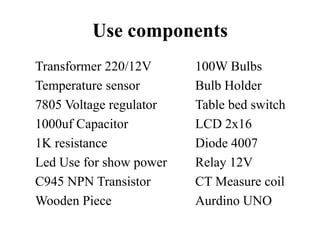
Use components
Transformer 220/12V 100W Bulbs
Temperature sensor Bulb Holder
7805 Voltage regulator Table bed switch
1000uf Capacitor LCD 2x16
1K resistance Diode 4007
Led Use for show power Relay 12V
C945 NPN Transistor CT Measure coil
Wooden Piece Aurdino UNO
Causes and effects
Causes
Broken conductor and malfunctioning of circuit breaker in
one or more phases
Effects
Abnormal operation of the system.
Danger to the personnel as well as animals.
Exceeding the voltages beyond normal values in certain
parts of the network, which further leads to insulation
failures and developing of short circuit faults.
Thank You

Electrical transmission line fault.pdf

  • 1.
    Under Ground TransmissionLine Faults Ali Ahmad BSELF-20044 Muhammad Umar Naseem BSELF-20082 Project-2
  • 2.
  • 3.
    Short Circuit Faults Shortcircuit faults are also called as shunt faults. These faults are caused due to the insulation failure between phase conductors or between earth and phase conductors or both.
  • 4.
    Open Circuit faults Anopen-circuit fault occurs if a circuit is interrupted by a failure of a current-carrying wire (phase or neutral) or a blown fuse or circuit breaker. In three-phase systems, a fault may involve one or more phases and ground, or may occur only between phases.
  • 5.
    Symmetrical Faults A symmetricalfault is a fault where all phases are affected so that the system remains balanced. A three-phase fault is a symmetrical fault. The other three fault types (line to ground, line to line, and two- line to ground) are called unsymmetrical or asymmetrical faults.
  • 6.
    Unsymmetrical Fault These arevery common and less severe than symmetrical faults. There are mainly three types namely line to ground (L- G), line to line (L-L), and double line to ground (LL-G) faults.
  • 7.
    Over Voltage Overvoltage canbe caused by poor regulation of a power source from a utility company, oversized transformers, uneven or varying circuit loading, wiring errors, and electrical insulation or isolation failures
  • 8.
    Under Voltage Fault Undervoltage may occur due to any electrical fault in the system. Under voltage may occur due to an increase in the load on the system. Under voltage may occur due to the loss of an incoming transformer. Under voltage may also occur due to failure of transformer earthling and overloading of the transformer.
  • 9.
    Over current fault Inan electric power system, a fault or fault current is any abnormal electric current. For example, a short circuit is a fault in which a live wire touches ...
  • 10.
    Insulation Heating Fault Theseheating problems include: Air Infiltration The Drafting Effect Ice Damming Moisture and Condensation
  • 11.
  • 12.
    Use components Transformer 220/12V100W Bulbs Temperature sensor Bulb Holder 7805 Voltage regulator Table bed switch 1000uf Capacitor LCD 2x16 1K resistance Diode 4007 Led Use for show power Relay 12V C945 NPN Transistor CT Measure coil Wooden Piece Aurdino UNO
  • 13.
    Causes and effects Causes Brokenconductor and malfunctioning of circuit breaker in one or more phases Effects Abnormal operation of the system. Danger to the personnel as well as animals. Exceeding the voltages beyond normal values in certain parts of the network, which further leads to insulation failures and developing of short circuit faults.
  • 15.