Flow of current
 A charge flows when there is a potential difference
 -- When the ends of an electric conductor are at
different electric potentials, charge flows from one
end to the other
 -- The flow of charge will continue until both ends
reach a common potential
 -- Ex: Difference in water level
Electric Current
 Electric Current: The flow of electric charge
-- Solid conductors the electrons can move
around freely carrying the charge
 Electric Current is measured in amperes (A)
amp = 1 coulomb of charge per second
1 coulomb = 6.24 billion electrons
Electric Current Cont……
 A current carrying wire does not have a net
electric charge
 While the current is flowing, negative electrons
swarm through the atomic network
 The number of electrons in the wire is equal to the
number of protons
 The number entering is the same as the number
leaving
 The net charge is zero
Static Electricity
 Objects can acquire a static electric charge through:
1) Friction (when an object whose electrons are
loosely held rubs against another object)
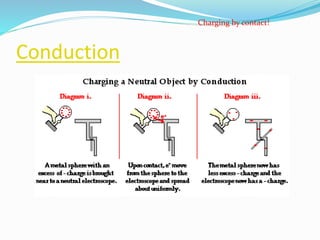
2) Conduction (when an object with an excess of
electrons touches a neutral object)
3) Induction (a neutral object acquires a charge from
a charged object close by without contact being
made)
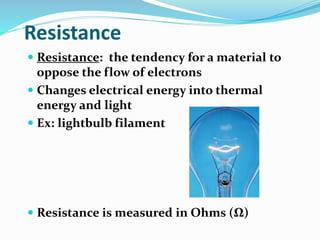
Resistance
 Resistance: the tendency for a material to
oppose the flow of electrons
 Changes electrical energy into thermal
energy and light
 Ex: lightbulb filament
 Resistance is measured in Ohms (Ω)
Conduction
Charging by contact!
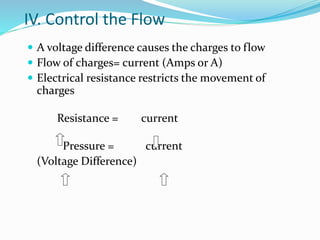
IV. Control the Flow
 A voltage difference causes the charges to flow
 Flow of charges= current (Amps or A)
 Electrical resistance restricts the movement of
charges
Resistance = current
Pressure = current
(Voltage Difference)
Voltage Sources
 Voltage Source: Something that provides a
potential difference
 Dry Cells, Wet Cells and Generators supply energy
that allows charges to move
-- Dry |Wet Cells: Chemical energy converted to
electrical energy
-- Generators: Mechanical energy to electrical
energy
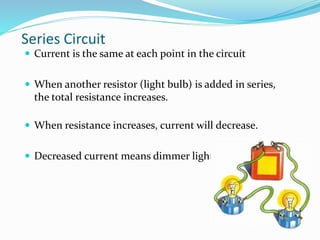
Series Circuit
 Current is the same at each point in the circuit
 When another resistor (light bulb) is added in series,
the total resistance increases.
 When resistance increases, current will decrease.
 Decreased current means dimmer light.
Electric Resistance
 The amount of charge that flows depends on the
voltage provided by the voltage source
 Electric Resistance: The resistance of a material
to flow of electric current through it: measured in
ohms
-- Depends on the resistance the conductor
provides
Electric Resistance
 Thick wires have less resistance than thin wires
 Electric resistance also depends on temperature
-- The greater the jostling about of atoms within
the conductor, the greater resistance the
conductor offers to the flow of charge
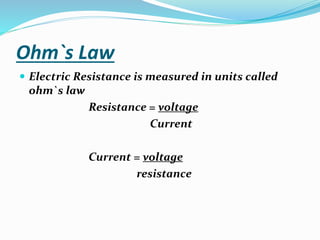
Ohm`s Law
 Electric Resistance is measured in units called
ohm`s law
Resistance = voltage
Current
Current = voltage
resistance
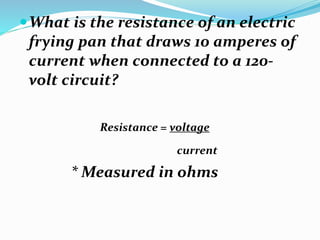
What is the resistance of an electric
frying pan that draws 10 amperes of
current when connected to a 120-
volt circuit?
Resistance = voltage
current
* Measured in ohms
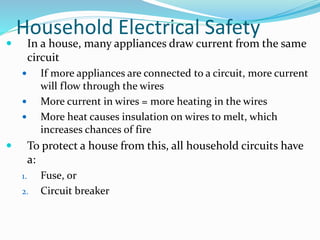
Household Electrical Safety
 In a house, many appliances draw current from the same
circuit
 If more appliances are connected to a circuit, more current
will flow through the wires
 More current in wires = more heating in the wires
 More heat causes insulation on wires to melt, which
increases chances of fire
 To protect a house from this, all household circuits have
a:
1. Fuse, or
2. Circuit breaker
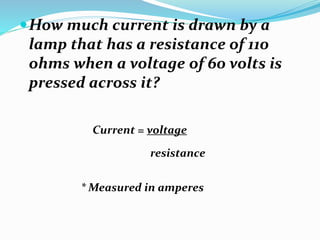
How much current is drawn by a
lamp that has a resistance of 110
ohms when a voltage of 60 volts is
pressed across it?
Current = voltage
resistance
* Measured in amperes
Made By : Sudhanshu
Class : Xth
Roll.No. : 17

Electric current

  • 2.
    Flow of current A charge flows when there is a potential difference  -- When the ends of an electric conductor are at different electric potentials, charge flows from one end to the other  -- The flow of charge will continue until both ends reach a common potential  -- Ex: Difference in water level
  • 3.
    Electric Current  ElectricCurrent: The flow of electric charge -- Solid conductors the electrons can move around freely carrying the charge  Electric Current is measured in amperes (A) amp = 1 coulomb of charge per second 1 coulomb = 6.24 billion electrons
  • 4.
    Electric Current Cont…… A current carrying wire does not have a net electric charge  While the current is flowing, negative electrons swarm through the atomic network  The number of electrons in the wire is equal to the number of protons  The number entering is the same as the number leaving  The net charge is zero
  • 5.
    Static Electricity  Objectscan acquire a static electric charge through: 1) Friction (when an object whose electrons are loosely held rubs against another object) 2) Conduction (when an object with an excess of electrons touches a neutral object) 3) Induction (a neutral object acquires a charge from a charged object close by without contact being made)
  • 6.
    Resistance  Resistance: thetendency for a material to oppose the flow of electrons  Changes electrical energy into thermal energy and light  Ex: lightbulb filament  Resistance is measured in Ohms (Ω)
  • 7.
  • 8.
    IV. Control theFlow  A voltage difference causes the charges to flow  Flow of charges= current (Amps or A)  Electrical resistance restricts the movement of charges Resistance = current Pressure = current (Voltage Difference)
  • 9.
    Voltage Sources  VoltageSource: Something that provides a potential difference  Dry Cells, Wet Cells and Generators supply energy that allows charges to move -- Dry |Wet Cells: Chemical energy converted to electrical energy -- Generators: Mechanical energy to electrical energy
  • 10.
    Series Circuit  Currentis the same at each point in the circuit  When another resistor (light bulb) is added in series, the total resistance increases.  When resistance increases, current will decrease.  Decreased current means dimmer light.
  • 11.
    Electric Resistance  Theamount of charge that flows depends on the voltage provided by the voltage source  Electric Resistance: The resistance of a material to flow of electric current through it: measured in ohms -- Depends on the resistance the conductor provides
  • 12.
    Electric Resistance  Thickwires have less resistance than thin wires  Electric resistance also depends on temperature -- The greater the jostling about of atoms within the conductor, the greater resistance the conductor offers to the flow of charge
  • 13.
    Ohm`s Law  ElectricResistance is measured in units called ohm`s law Resistance = voltage Current Current = voltage resistance
  • 14.
    What is theresistance of an electric frying pan that draws 10 amperes of current when connected to a 120- volt circuit? Resistance = voltage current * Measured in ohms
  • 15.
    Household Electrical Safety In a house, many appliances draw current from the same circuit  If more appliances are connected to a circuit, more current will flow through the wires  More current in wires = more heating in the wires  More heat causes insulation on wires to melt, which increases chances of fire  To protect a house from this, all household circuits have a: 1. Fuse, or 2. Circuit breaker
  • 16.
    How much currentis drawn by a lamp that has a resistance of 110 ohms when a voltage of 60 volts is pressed across it? Current = voltage resistance * Measured in amperes
  • 17.
    Made By :Sudhanshu Class : Xth Roll.No. : 17