Effective Communication
in the Workplace
“Basic Communication Skills”- 2
Rajaa A. Mahmoud
2019
Learning Objectives:
After completing this training,
you’ll be able to:
Learn how to listen more effectively to
others
Hearing Vs. Listening
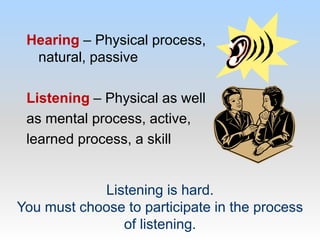
Hearing – Physical process,
natural, passive
Listening – Physical as well
as mental process, active,
learned process, a skill
Listening is hard.
You must choose to participate in the process
of listening.
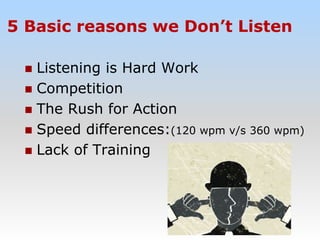
5 Basic reasons we Don’t Listen
 Listening is Hard Work
 Competition
 The Rush for Action
 Speed differences:(120 wpm v/s 360 wpm)
 Lack of Training
Improving Listening Skills
 Don’t be Pre-occupied
 Be Open Minded & Non Defensive
 Minimize Interruptions
 Effective Listening is: Hearing,
interpreting when necessary,
understanding the message and
relating to it.
 Ask Questions
1.Face the speaker and maintain eye
contact.
2. Be attentive, yet relaxed.
3. Keep an open mind to the speaker’s
message – try to feel what the speaker is
feeling.
4. Listen to the words and try to picture what
the speaker is saying.
Nine Steps to Effective Listening
5. Do not interrupt and do not impose your
"solutions.“
6. Wait for the speaker to pause to ask
clarifying questions - ask questions only to
ensure understanding of something that
has been said (avoiding questions that
disrupt the speaker's train of thought).
Nine Steps to Effective Listening
7. Give the speaker regular feedback, e.g.,
summarize, reflect feelings, or simply say
"uh huh.“
8. Pay attention to nonverbal cues -- to
feelings, tone of voice, inflection, facial
expressions, gestures, posture.
9. Be aware of potential barriers that impact
your ability to listen effectively.
Nine Steps to Effective Listening
• Turn your body & tilt your face toward the
speaker.
• Look at the speaker to pick up nonverbal
signals or cues.
• Your eyes will also send signals to the speaker.
• Use other parts of your body besides your ears
to receive the message.
Looking and Acting Like a Good
Listener
“Non-Verbal Communication”
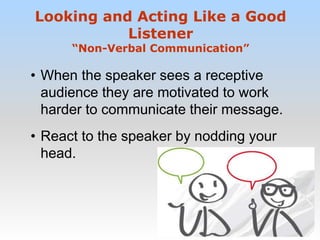
• When the speaker sees a receptive
audience they are motivated to work
harder to communicate their message.
• React to the speaker by nodding your
head.
Looking and Acting Like a Good
Listener
“Non-Verbal Communication”
• Listen and acknowledge what you hear the
speaker saying, even if you don't agree
with it. At this point do not express your
point of view.
• Acknowledging the speakers thoughts and
feelings does not mean that you approve of
or agree with the speaker’s opinions or
actions.
Acknowledgement
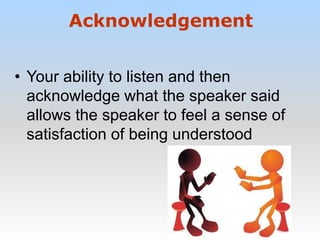
• Your ability to listen and then
acknowledge what the speaker said
allows the speaker to feel a sense of
satisfaction of being understood
Acknowledgement
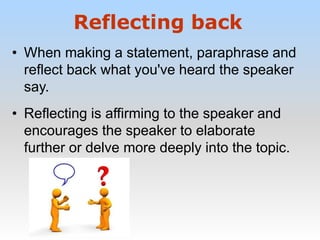
• When making a statement, paraphrase and
reflect back what you've heard the speaker
say.
• Reflecting is affirming to the speaker and
encourages the speaker to elaborate
further or delve more deeply into the topic.
Reflecting back
• Meaningful exchanges between you and the
speaker are built on feedback.
• In order to accurately feedback a person's
thoughts and feelings, you have to be
consciously, actively engaged in the process
of listening.
• Try to experience what the speaker is
describing, feel the speaker’s feelings through
the lens of your own experience.
Reflecting back

Effective Communication in the Workplace- 2.pdf

  • 1.
    Effective Communication in theWorkplace “Basic Communication Skills”- 2 Rajaa A. Mahmoud 2019
  • 2.
    Learning Objectives: After completingthis training, you’ll be able to: Learn how to listen more effectively to others
  • 3.
  • 4.
    Hearing – Physicalprocess, natural, passive Listening – Physical as well as mental process, active, learned process, a skill Listening is hard. You must choose to participate in the process of listening.
  • 5.
    5 Basic reasonswe Don’t Listen  Listening is Hard Work  Competition  The Rush for Action  Speed differences:(120 wpm v/s 360 wpm)  Lack of Training
  • 6.
    Improving Listening Skills Don’t be Pre-occupied  Be Open Minded & Non Defensive  Minimize Interruptions  Effective Listening is: Hearing, interpreting when necessary, understanding the message and relating to it.  Ask Questions
  • 7.
    1.Face the speakerand maintain eye contact. 2. Be attentive, yet relaxed. 3. Keep an open mind to the speaker’s message – try to feel what the speaker is feeling. 4. Listen to the words and try to picture what the speaker is saying. Nine Steps to Effective Listening
  • 8.
    5. Do notinterrupt and do not impose your "solutions.“ 6. Wait for the speaker to pause to ask clarifying questions - ask questions only to ensure understanding of something that has been said (avoiding questions that disrupt the speaker's train of thought). Nine Steps to Effective Listening
  • 9.
    7. Give thespeaker regular feedback, e.g., summarize, reflect feelings, or simply say "uh huh.“ 8. Pay attention to nonverbal cues -- to feelings, tone of voice, inflection, facial expressions, gestures, posture. 9. Be aware of potential barriers that impact your ability to listen effectively. Nine Steps to Effective Listening
  • 10.
    • Turn yourbody & tilt your face toward the speaker. • Look at the speaker to pick up nonverbal signals or cues. • Your eyes will also send signals to the speaker. • Use other parts of your body besides your ears to receive the message. Looking and Acting Like a Good Listener “Non-Verbal Communication”
  • 11.
    • When thespeaker sees a receptive audience they are motivated to work harder to communicate their message. • React to the speaker by nodding your head. Looking and Acting Like a Good Listener “Non-Verbal Communication”
  • 12.
    • Listen andacknowledge what you hear the speaker saying, even if you don't agree with it. At this point do not express your point of view. • Acknowledging the speakers thoughts and feelings does not mean that you approve of or agree with the speaker’s opinions or actions. Acknowledgement
  • 13.
    • Your abilityto listen and then acknowledge what the speaker said allows the speaker to feel a sense of satisfaction of being understood Acknowledgement
  • 14.
    • When makinga statement, paraphrase and reflect back what you've heard the speaker say. • Reflecting is affirming to the speaker and encourages the speaker to elaborate further or delve more deeply into the topic. Reflecting back
  • 15.
    • Meaningful exchangesbetween you and the speaker are built on feedback. • In order to accurately feedback a person's thoughts and feelings, you have to be consciously, actively engaged in the process of listening. • Try to experience what the speaker is describing, feel the speaker’s feelings through the lens of your own experience. Reflecting back