the desire to improve your oral expression is the first step to clearly
communicating what's on your mind. Good communication skills can
help you avoid being misunderstood or overlooked. A person who speaks
well exudes confidence and is more likely to attain his professional or
personal goals.


HOW TO IMPROVE ORAL
EXPRESSION
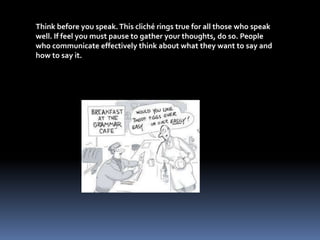
Think before you speak. This cliché rings true for all those who speak
well. If feel you must pause to gather your thoughts, do so. People
who communicate effectively think about what they want to say and
how to say it.
Use only words you can define and pronounce correctly. Confident and
effective speakers express themselves clearly because they remain
within their vocabulary range. Pay attention to pronunciation guides
in the dictionary to correctly pronounce tricky words.
Expand your vocabulary by exploring a dictionary. Once you have
mastered a list of words, consistently learn new ones and utilize
them when the timing is right. When you're reading, underline or
list words you don't know and look them up later.
Add lilt to your voice. Lilt is the rising and falling of the voice when
speaking. The content of your vocally expressed thoughts will be greatly
enhanced if communicated in a varying, rhythmic pattern. If you speak with
a monotone, listeners often will tune you out.

How to improve oral expression

  • 1.
    the desire toimprove your oral expression is the first step to clearly communicating what's on your mind. Good communication skills can help you avoid being misunderstood or overlooked. A person who speaks well exudes confidence and is more likely to attain his professional or personal goals. HOW TO IMPROVE ORAL EXPRESSION
  • 2.
    Think before youspeak. This cliché rings true for all those who speak well. If feel you must pause to gather your thoughts, do so. People who communicate effectively think about what they want to say and how to say it.
  • 3.
    Use only wordsyou can define and pronounce correctly. Confident and effective speakers express themselves clearly because they remain within their vocabulary range. Pay attention to pronunciation guides in the dictionary to correctly pronounce tricky words.
  • 4.
    Expand your vocabularyby exploring a dictionary. Once you have mastered a list of words, consistently learn new ones and utilize them when the timing is right. When you're reading, underline or list words you don't know and look them up later.
  • 5.
    Add lilt toyour voice. Lilt is the rising and falling of the voice when speaking. The content of your vocally expressed thoughts will be greatly enhanced if communicated in a varying, rhythmic pattern. If you speak with a monotone, listeners often will tune you out.