Effective Communication
Purpose
Process
Essentials
Types – Verbal and Non Verbal
Listening
Benefits of Listening
Listening Tips
Barriers to Listening
Effective Communication – Tips
Effective Communication - Purpose
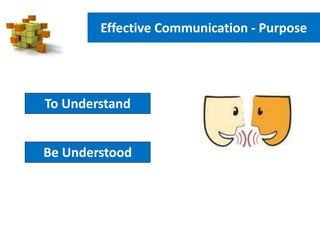
To Understand
Be Understood
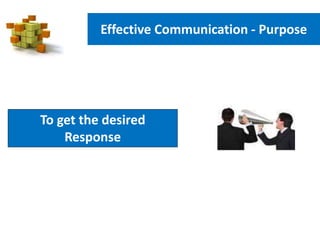
To get the desired
Response
Effective Communication - Purpose
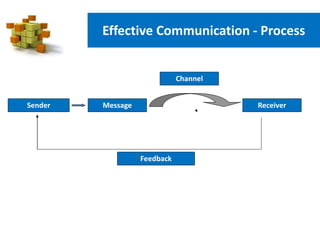
Effective Communication - Process
Sender
Channel
Receiver
Message
Feedback
Effective Communication - Essentials
Know Your Subject
Objective – Focus on the Purpose
Pre Dialogue Preparation
Be organized/ Time Management
Audience Analysis
Delivery
Post Dialogue Analysis via feedback
Encoding
Understand what you truly need and want to say
Anticipate the other person's reaction to your message
Choose words and, if appropriate, use body language that
helps the other person really hear what you're saying
Review your style
Avoid jargon or slang
Check your grammar and punctuation
Check also for tone, attitude, and other subtleties. If you think
the message may be misunderstood, it probably will. Take the
time to clarify it!
Use pictures, charts, and diagrams wherever possible
Consider the Cultural Context
Message
Information being transmitted
Verbal Data
Non Verbal Data
Choosing the right Channel
The sensitivity and emotional content of the subject
How easy it is to communicate detail
The receiver's preferences
Time constraints
Upward/ Downward/ Lateral/ Informal(Grapewine)
Decoding
Look at the person
Pay attention to his or her body language
Avoid distractions
Nod and smile to acknowledge points
Occasionally think back about what the person has
said
Allow the person to speak, without thinking about
what you'll say next
Don't interrupt
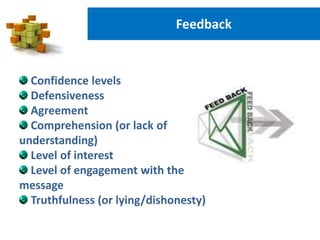
Feedback
Confidence levels
Defensiveness
Agreement
Comprehension (or lack of
understanding)
Level of interest
Level of engagement with the
message
Truthfulness (or lying/dishonesty)
Types
Verbal – Speaking and Writing
Non Verbal – Facial Expressions, Gestures,
Body Language, Vocal Qualities, Spatial
Relationships, Attitude towards time
Verbal Communication - Types
Coaching Sessions
Daily Team Huddles
R& R Meetings
Brain Storming sessions
Stake holder Meetings
Customer Meeting
Feedback Sessions
Interviews
Appraisals
Review Meetings
One on One Meetings
Covering Letter
Resume
Email
Telephonic Conversation
Listening
Most Business people spend up to 80% of their
working hours either :
Listening
Acting on what they hear
Listening
Listening - Benefits
Learn
Win Friends
Solve Problems
Resolve Disagreements
Better work and more cooperation
Make better decisions
Help you perform better
Prevent potential trouble
Time to think
Convey: I love you…, I respect you…, I accept you…,
You are important
Nature has intended
us to listen twice as
much as we talk
Listening - Tips
Maintain eye contact
Judge content, not delivery
Delay Evaluation
Listen for ideas
Be Flexible
Be in a receptive posture…lean forward
Resist Distractions
Exercise your mind
Keep your mind Open
Capitalize on thought speed
Paraphrase/ Use feedback
Use Verbal and Non Verbal cues to encourage speaker
Barriers to Effective Listening
Environment Related
Subject Related
Speaker Related
Listener Related
Physiological Barriers
Barriers to Effective Listening
Environment Related
Noise
Poor Acoustics
Interruption
Physical Discomfort/ Uncomfortable sitting arrangement
Message Overload
Barriers to Effective Listening
Subject Related
Complex
Unfamiliar
Barriers to Effective Listening
Speaker Related
Delivery
Accent
Tone
Using Jargons
Barriers to Effective Listening
Listener Related
Pre-conceived ideas/ Deep seated Beliefs/ Prejudices
Fatigue
Anxious to speak about his or her own ideas
Is afraid of the speaker
Thinks that he knows more than the speaker/
Egocentrism/ Must defend his or her position
Is thinking about something else/ Preoccupation
Barriers to Effective Listening
Physiological
Hearing Impairment
Speaking –Thinking rate
“ Never say never and never say always
and you will always have an out”
Effective Communication - Tips
Positive emotions encourage effective communication and
negative emotions destroy it
Effective Communication - Tips
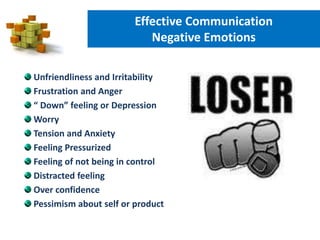
Unfriendliness and Irritability
Frustration and Anger
“ Down” feeling or Depression
Worry
Tension and Anxiety
Feeling Pressurized
Feeling of not being in control
Distracted feeling
Over confidence
Pessimism about self or product
Effective Communication
Negative Emotions
Friendliness and liking people
Enthusiasm about product
High energy level
Enjoy what you do
Confidence, Optimism
Feeling of Being in control
Relaxed, alertness and concentration
Feeling of wanting to provide service
Inner desire to persist, succeed and excel
Openness and non – defensive attitude towards feedback, criticism
and new information
Effective Communication
Positive Emotions

How to be an effective communicator.pptx

  • 1.
  • 2.
    Effective Communication Purpose Process Essentials Types –Verbal and Non Verbal Listening Benefits of Listening Listening Tips Barriers to Listening Effective Communication – Tips
  • 3.
    Effective Communication -Purpose To Understand Be Understood
  • 4.
    To get thedesired Response Effective Communication - Purpose
  • 5.
  • 6.
    Effective Communication -Process Sender Channel Receiver Message Feedback
  • 7.
    Effective Communication -Essentials Know Your Subject Objective – Focus on the Purpose Pre Dialogue Preparation Be organized/ Time Management Audience Analysis Delivery Post Dialogue Analysis via feedback
  • 8.
    Encoding Understand what youtruly need and want to say Anticipate the other person's reaction to your message Choose words and, if appropriate, use body language that helps the other person really hear what you're saying Review your style Avoid jargon or slang Check your grammar and punctuation Check also for tone, attitude, and other subtleties. If you think the message may be misunderstood, it probably will. Take the time to clarify it! Use pictures, charts, and diagrams wherever possible Consider the Cultural Context
  • 9.
  • 10.
    Choosing the rightChannel The sensitivity and emotional content of the subject How easy it is to communicate detail The receiver's preferences Time constraints Upward/ Downward/ Lateral/ Informal(Grapewine)
  • 11.
    Decoding Look at theperson Pay attention to his or her body language Avoid distractions Nod and smile to acknowledge points Occasionally think back about what the person has said Allow the person to speak, without thinking about what you'll say next Don't interrupt
  • 12.
    Feedback Confidence levels Defensiveness Agreement Comprehension (orlack of understanding) Level of interest Level of engagement with the message Truthfulness (or lying/dishonesty)
  • 13.
    Types Verbal – Speakingand Writing Non Verbal – Facial Expressions, Gestures, Body Language, Vocal Qualities, Spatial Relationships, Attitude towards time
  • 14.
    Verbal Communication -Types Coaching Sessions Daily Team Huddles R& R Meetings Brain Storming sessions Stake holder Meetings Customer Meeting Feedback Sessions Interviews Appraisals Review Meetings One on One Meetings Covering Letter Resume Email Telephonic Conversation
  • 15.
  • 16.
    Most Business peoplespend up to 80% of their working hours either : Listening Acting on what they hear Listening
  • 17.
    Listening - Benefits Learn WinFriends Solve Problems Resolve Disagreements Better work and more cooperation Make better decisions Help you perform better Prevent potential trouble Time to think Convey: I love you…, I respect you…, I accept you…, You are important Nature has intended us to listen twice as much as we talk
  • 18.
    Listening - Tips Maintaineye contact Judge content, not delivery Delay Evaluation Listen for ideas Be Flexible Be in a receptive posture…lean forward Resist Distractions Exercise your mind Keep your mind Open Capitalize on thought speed Paraphrase/ Use feedback Use Verbal and Non Verbal cues to encourage speaker
  • 19.
    Barriers to EffectiveListening Environment Related Subject Related Speaker Related Listener Related Physiological Barriers
  • 20.
    Barriers to EffectiveListening Environment Related Noise Poor Acoustics Interruption Physical Discomfort/ Uncomfortable sitting arrangement Message Overload
  • 21.
    Barriers to EffectiveListening Subject Related Complex Unfamiliar
  • 22.
    Barriers to EffectiveListening Speaker Related Delivery Accent Tone Using Jargons
  • 23.
    Barriers to EffectiveListening Listener Related Pre-conceived ideas/ Deep seated Beliefs/ Prejudices Fatigue Anxious to speak about his or her own ideas Is afraid of the speaker Thinks that he knows more than the speaker/ Egocentrism/ Must defend his or her position Is thinking about something else/ Preoccupation
  • 24.
    Barriers to EffectiveListening Physiological Hearing Impairment Speaking –Thinking rate
  • 25.
    “ Never saynever and never say always and you will always have an out” Effective Communication - Tips
  • 26.
    Positive emotions encourageeffective communication and negative emotions destroy it Effective Communication - Tips
  • 27.
    Unfriendliness and Irritability Frustrationand Anger “ Down” feeling or Depression Worry Tension and Anxiety Feeling Pressurized Feeling of not being in control Distracted feeling Over confidence Pessimism about self or product Effective Communication Negative Emotions
  • 28.
    Friendliness and likingpeople Enthusiasm about product High energy level Enjoy what you do Confidence, Optimism Feeling of Being in control Relaxed, alertness and concentration Feeling of wanting to provide service Inner desire to persist, succeed and excel Openness and non – defensive attitude towards feedback, criticism and new information Effective Communication Positive Emotions