Teacher Eddie
This lesson
discusses the
material
requirements and
ideal conditions
needed for a
successful brooding.
 Enumerate the material requirements and
ideal conditions needed.
 For a successful brooding.
 Observe proper ventilation inside the
brooder.
Requirements- things
needed
Humidity- the condition
of air moisture in the
brooder
Ventilation- the
circulation of air inside
and outside the brooder
Requirements- things
needed
Humidity- the condition
of air moisture in the
brooder
Ventilation- the
circulation of air inside
and outside the brooder
1. Electricity
2. Charcoal rice
hull or wood
3. Kerosene
Lamps
1. Electricity
2. Charcoal rice
hull or wood
3. Kerosene
Lamps
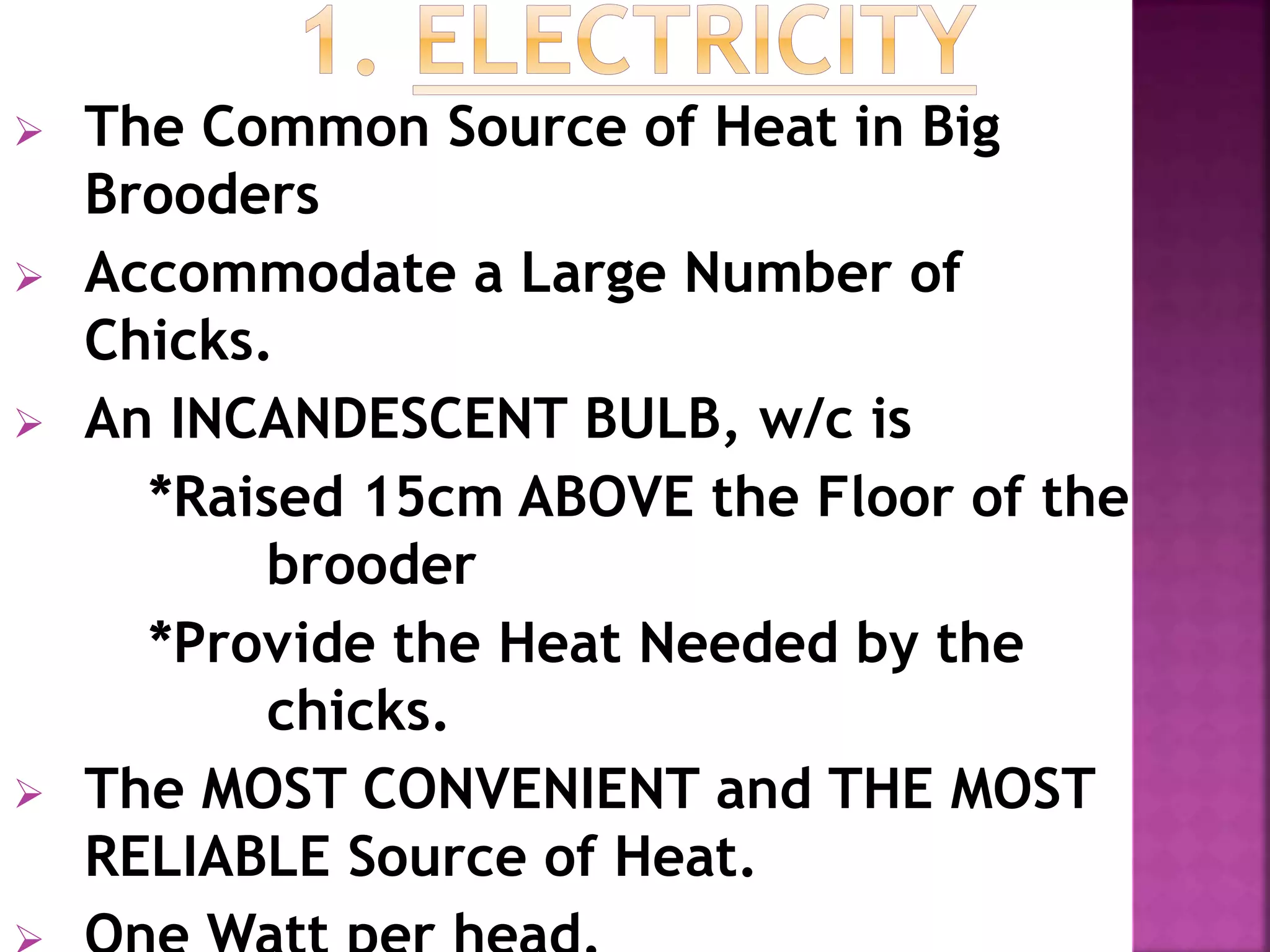
 The Common Source of Heat in Big
Brooders
 Accommodate a Large Number of
Chicks.
 An INCANDESCENT BULB, w/c is
*Raised 15cm ABOVE the Floor of the
brooder
*Provide the Heat Needed by the
chicks.
 The MOST CONVENIENT and THE MOST
RELIABLE Source of Heat.
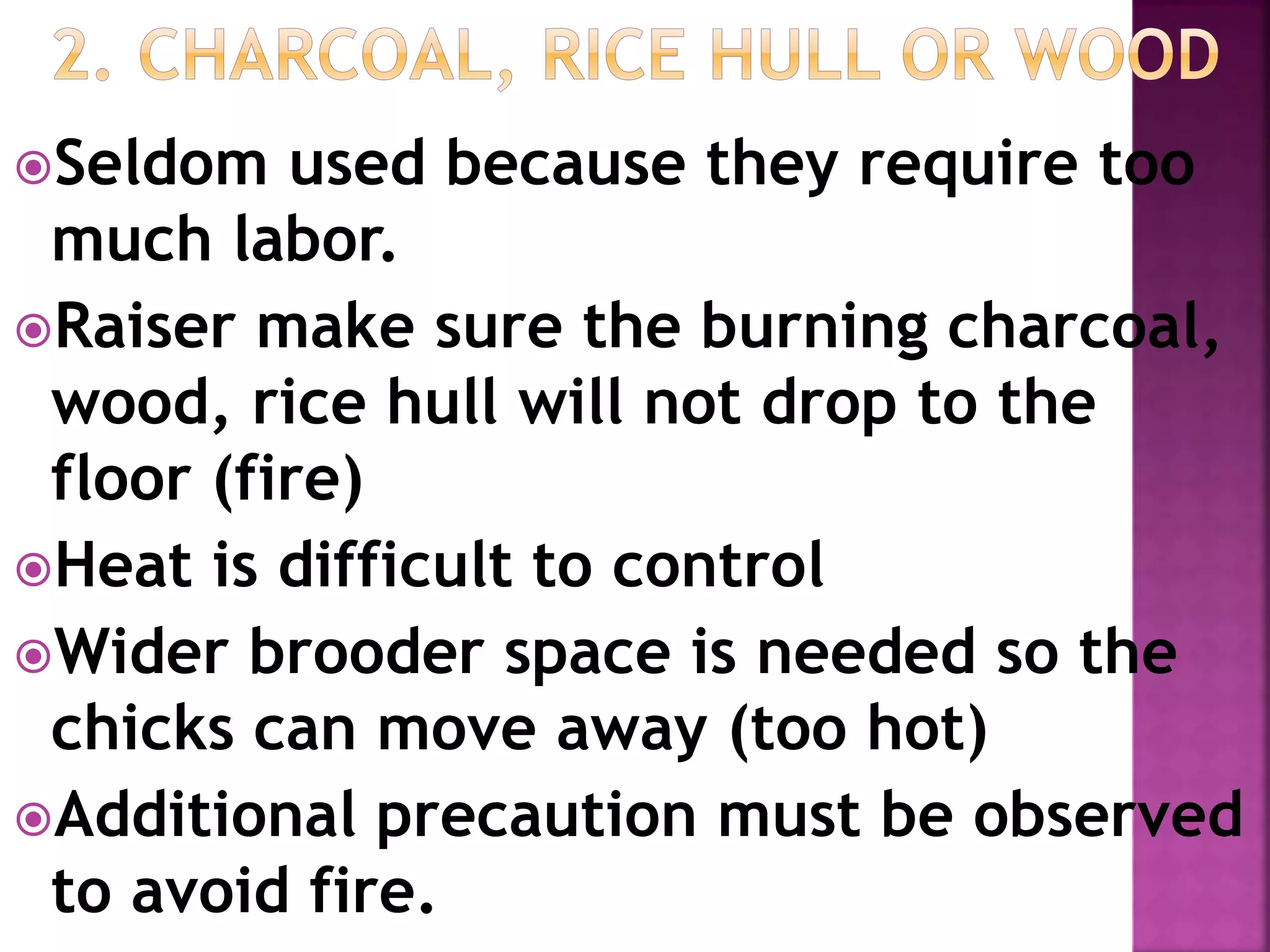
Seldom used because they require too
much labor.
Raiser make sure the burning charcoal,
wood, rice hull will not drop to the
floor (fire)
Heat is difficult to control
Wider brooder space is needed so the
chicks can move away (too hot)
Additional precaution must be observed
to avoid fire.
In place where electricity is not
available.
For a limited number of chicks.
Temperature is regulated by raising
or lowering the wick.
Be sure-Provide adequate
ventilation.
More carbon dioxide-produced.
1. LITTER-FLOOR
BROODING
2. ELEVATED WIRE
OR SLAT
BROODING
It Uses the FLOOR as Place for Brooding
The LITTER or Material Used
a.Rice Hull b.Wood Shavings c.Sawdust
Chicks come in contact w/ their Feeds
Causes: Trigger the Spread of Diseases
Prevention: The LITTER should be
CHANGED Regularly
a. ELEVATED PENS w/ (choices of) WIRE
Mesh/WOODEN/BAMBOO SLATS
b. More ECONOMICAL/CONVENIENT to
use than Litter-floor types.
c. REDUCES problems w/ diseases and
parasites.
d. PROMOTES Better Growth
e. EASIER Collection of Manure.
1. Quality Chicks
2. Proper Temperature
3. Proper Ventilation
4. Adequate Space Allowance
5. Proper Sanitation
6. Adequate Lighting Facilities
7. Ample Protection from the
Predators
1. TEMPERATURE
2. HUMIDITY
3. VENTILATION
4. SPACE
REQUIREMENT
Range from 90-95 F
Reduced Weekly Until
the Chicks FINALLY
able to live w/o heat
and
Transferred to the
GROWING PEN.
o
Refers to the condition of air moisture
in the brooder.
Too Much Manure/Spilled Water in the
Brooder can make the Pen Damp
a. Attracts Germs causes diseases
(e.g. coccidiosis)
Prevented by keeping the brooder room
dry.
a. Replace Dirtied Water
b. Change the Litter as often as
necessary.
Becomes a problem when the
BROODER HOUSE is CLOSED.
Resulted to LACK OF OXYGEN
Accumulate CARBON DIOXIDE
Weaken the Birds.
Cause them to Die.
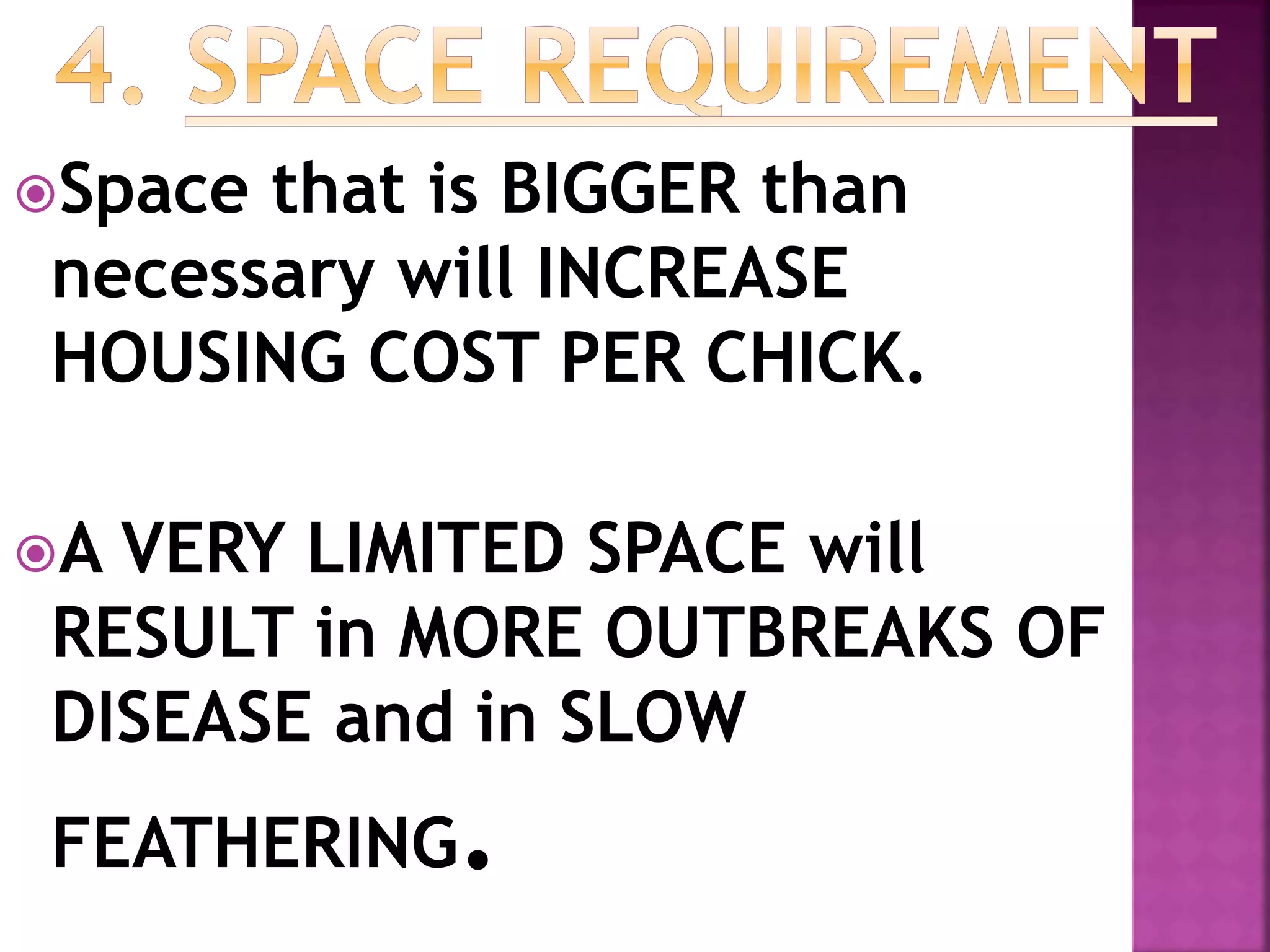
Space that is BIGGER than
necessary will INCREASE
HOUSING COST PER CHICK.
A VERY LIMITED SPACE will
RESULT in MORE OUTBREAKS OF
DISEASE and in SLOW
FEATHERING.
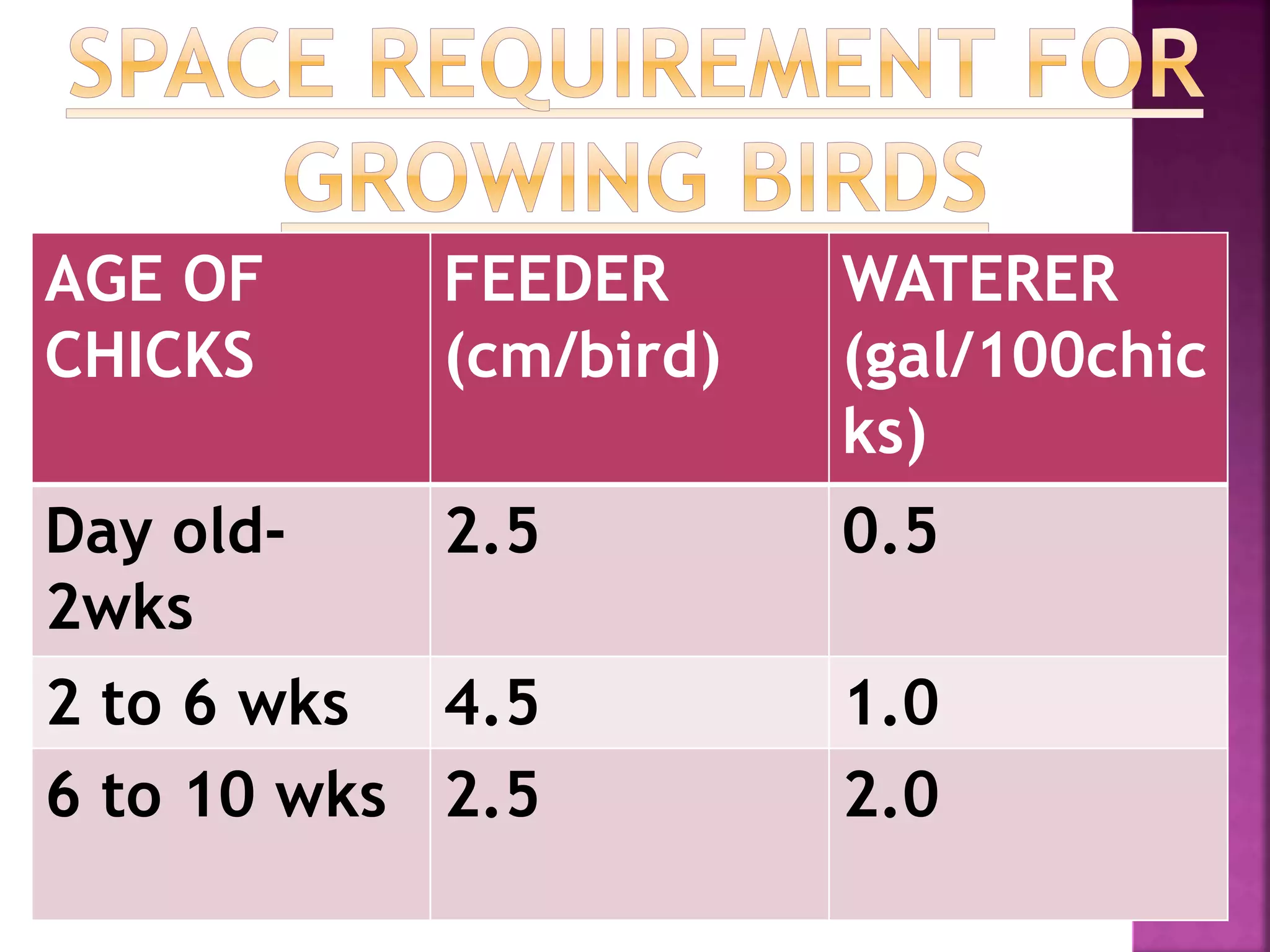
AGE OF
CHICKS
FEEDER
(cm/bird)
WATERER
(gal/100chic
ks)
Day old-
2wks
2.5 0.5
2 to 6 wks 4.5 1.0
6 to 10 wks 2.5 2.0

Conditions for successful brooding

  • 1.
  • 2.
    This lesson discusses the material requirementsand ideal conditions needed for a successful brooding.
  • 3.
     Enumerate thematerial requirements and ideal conditions needed.  For a successful brooding.  Observe proper ventilation inside the brooder.
  • 4.
    Requirements- things needed Humidity- thecondition of air moisture in the brooder Ventilation- the circulation of air inside and outside the brooder
  • 5.
    Requirements- things needed Humidity- thecondition of air moisture in the brooder Ventilation- the circulation of air inside and outside the brooder
  • 6.
    1. Electricity 2. Charcoalrice hull or wood 3. Kerosene Lamps
  • 7.
    1. Electricity 2. Charcoalrice hull or wood 3. Kerosene Lamps
  • 8.
     The CommonSource of Heat in Big Brooders  Accommodate a Large Number of Chicks.  An INCANDESCENT BULB, w/c is *Raised 15cm ABOVE the Floor of the brooder *Provide the Heat Needed by the chicks.  The MOST CONVENIENT and THE MOST RELIABLE Source of Heat.
  • 9.
    Seldom used becausethey require too much labor. Raiser make sure the burning charcoal, wood, rice hull will not drop to the floor (fire) Heat is difficult to control Wider brooder space is needed so the chicks can move away (too hot) Additional precaution must be observed to avoid fire.
  • 10.
    In place whereelectricity is not available. For a limited number of chicks. Temperature is regulated by raising or lowering the wick. Be sure-Provide adequate ventilation. More carbon dioxide-produced.
  • 12.
  • 13.
    It Uses theFLOOR as Place for Brooding The LITTER or Material Used a.Rice Hull b.Wood Shavings c.Sawdust Chicks come in contact w/ their Feeds Causes: Trigger the Spread of Diseases Prevention: The LITTER should be CHANGED Regularly
  • 14.
    a. ELEVATED PENSw/ (choices of) WIRE Mesh/WOODEN/BAMBOO SLATS b. More ECONOMICAL/CONVENIENT to use than Litter-floor types. c. REDUCES problems w/ diseases and parasites. d. PROMOTES Better Growth e. EASIER Collection of Manure.
  • 16.
    1. Quality Chicks 2.Proper Temperature 3. Proper Ventilation 4. Adequate Space Allowance 5. Proper Sanitation 6. Adequate Lighting Facilities 7. Ample Protection from the Predators
  • 18.
    1. TEMPERATURE 2. HUMIDITY 3.VENTILATION 4. SPACE REQUIREMENT
  • 19.
    Range from 90-95F Reduced Weekly Until the Chicks FINALLY able to live w/o heat and Transferred to the GROWING PEN. o
  • 20.
    Refers to thecondition of air moisture in the brooder. Too Much Manure/Spilled Water in the Brooder can make the Pen Damp a. Attracts Germs causes diseases (e.g. coccidiosis) Prevented by keeping the brooder room dry. a. Replace Dirtied Water b. Change the Litter as often as necessary.
  • 21.
    Becomes a problemwhen the BROODER HOUSE is CLOSED. Resulted to LACK OF OXYGEN Accumulate CARBON DIOXIDE Weaken the Birds. Cause them to Die.
  • 22.
    Space that isBIGGER than necessary will INCREASE HOUSING COST PER CHICK. A VERY LIMITED SPACE will RESULT in MORE OUTBREAKS OF DISEASE and in SLOW FEATHERING.
  • 23.