Assessment types and tasks
What are assessment types and
tasks?
Assessment means judging learners’
performance by collecting information
about it. We assess learners for different
reasons, using different kinds of tests to
do so. Assessment tasks are the methods
we use for assessing learners. We can
assess learners formally and informally.
Formal assessment is
when we assess
learners through tests
or exams and give
their work a mark or a
grade.
Informal assessment
is when we observe
learners to see how
well they are doing
something and then
give them comments
on their perfomance.
Self-assessment
When learners decide
for themselves how
good they think their
progress or language
use is.
Peer assessment
When learners give
feedback on each
other’s language,
work, learning
strategies,
performance.
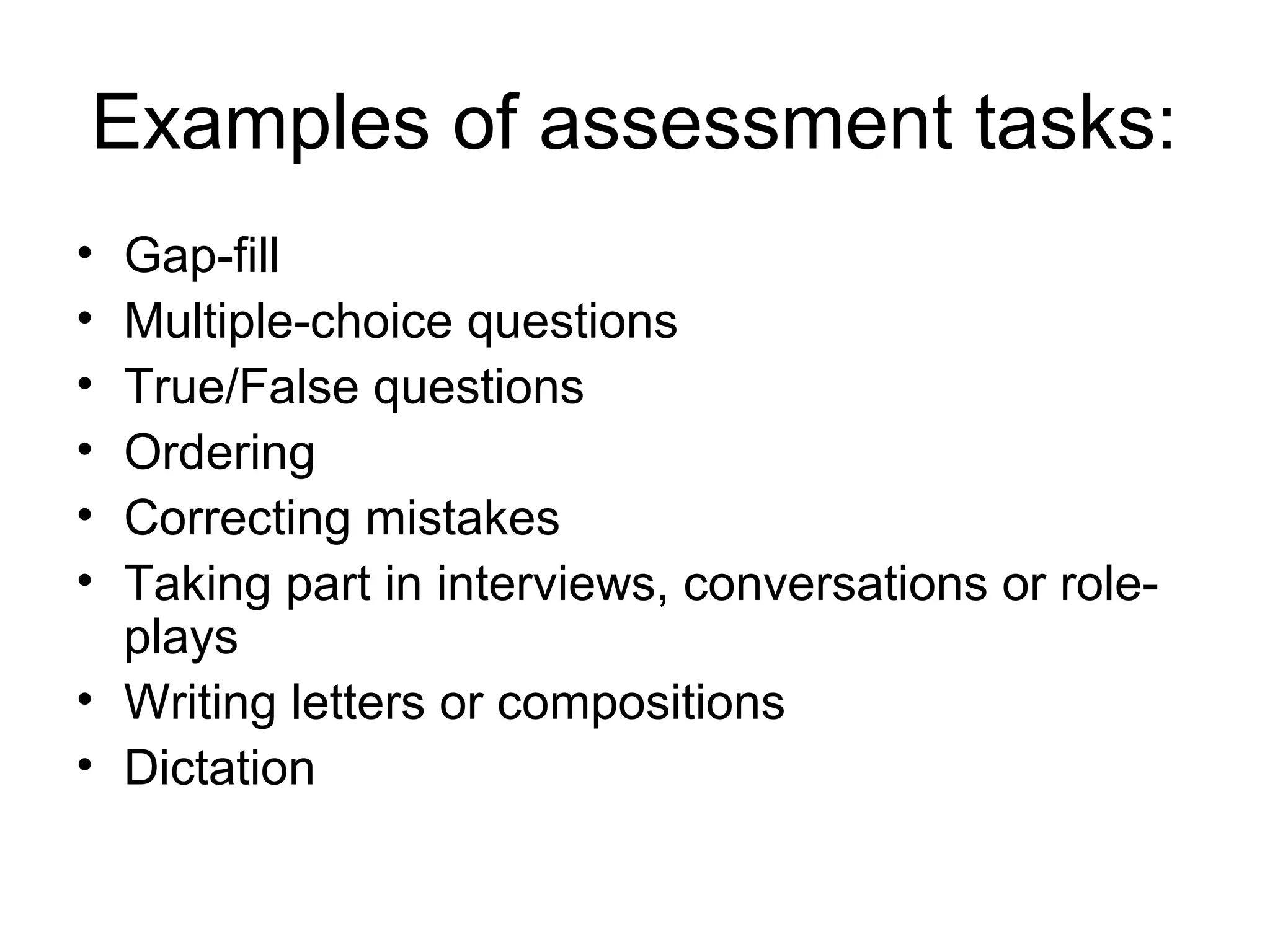
Examples of assessment tasks:
• Gap-fill
• Multiple-choice questions
• True/False questions
• Ordering
• Correcting mistakes
• Taking part in interviews, conversations or role-
plays
• Writing letters or compositions
• Dictation
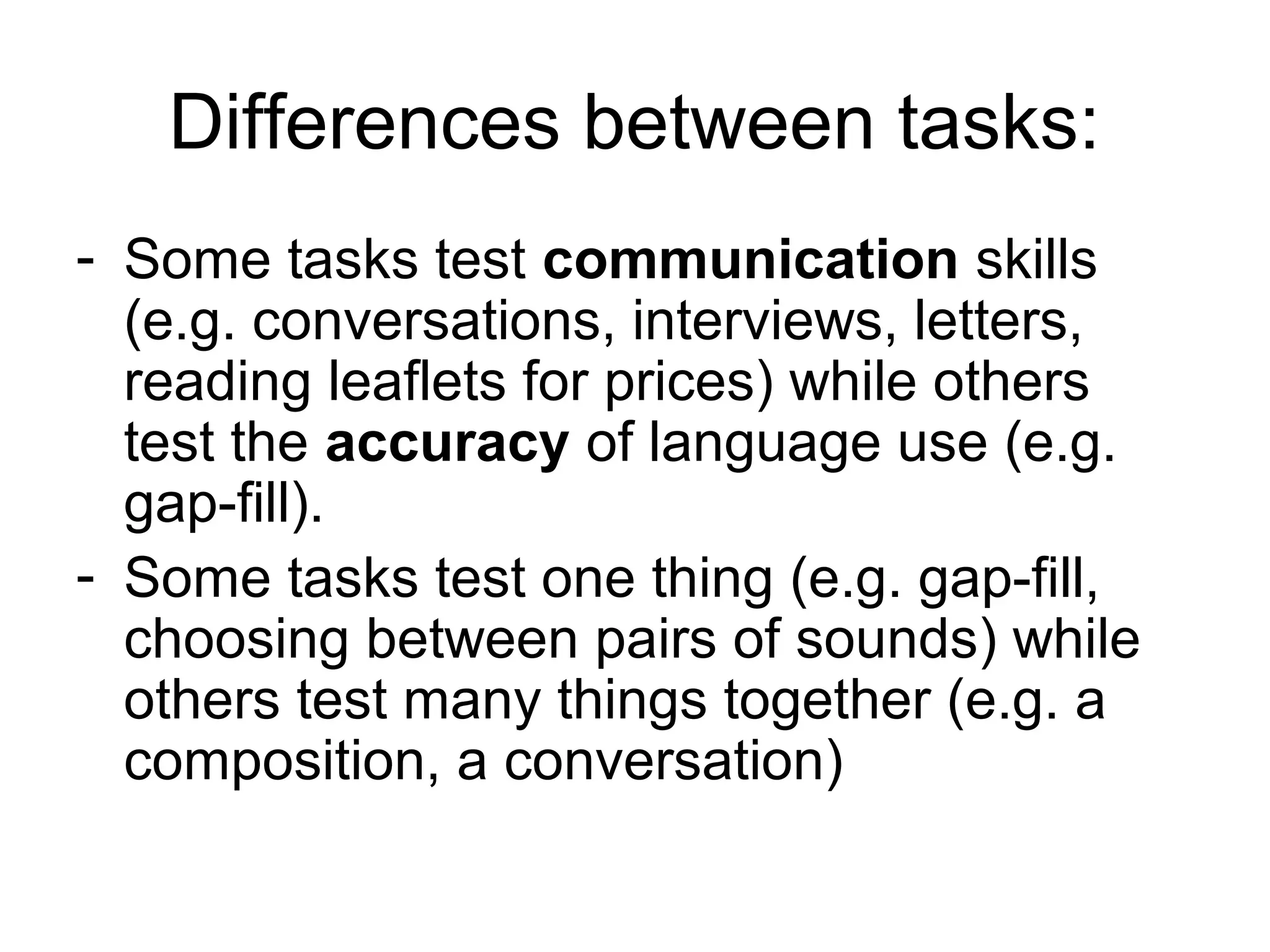
Differences between tasks:
- Some tasks test communication skills
(e.g. conversations, interviews, letters,
reading leaflets for prices) while others
test the accuracy of language use (e.g.
gap-fill).
- Some tasks test one thing (e.g. gap-fill,
choosing between pairs of sounds) while
others test many things together (e.g. a
composition, a conversation)
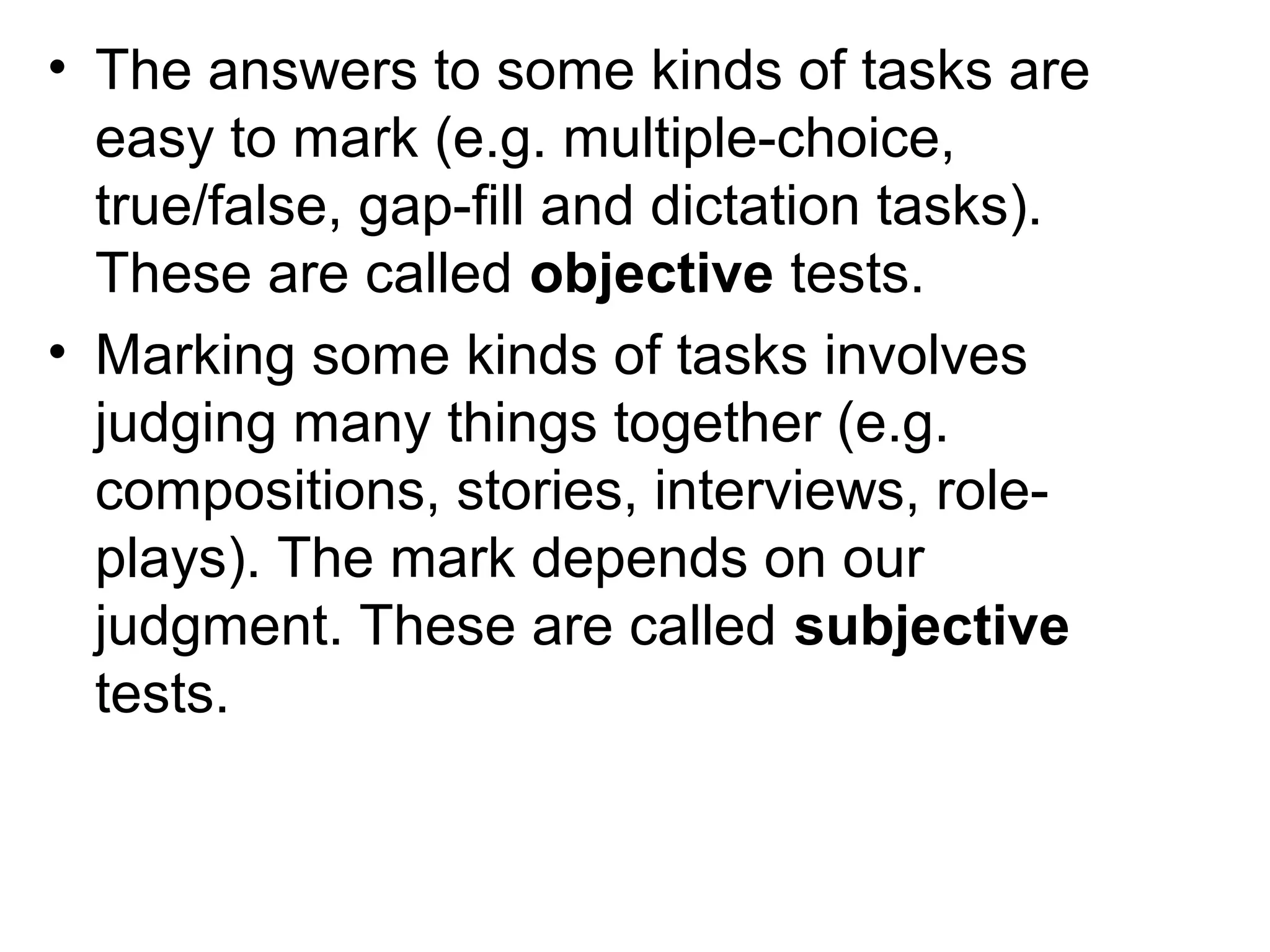
• The answers to some kinds of tasks are
easy to mark (e.g. multiple-choice,
true/false, gap-fill and dictation tasks).
These are called objective tests.
• Marking some kinds of tasks involves
judging many things together (e.g.
compositions, stories, interviews, role-
plays). The mark depends on our
judgment. These are called subjective
tests.
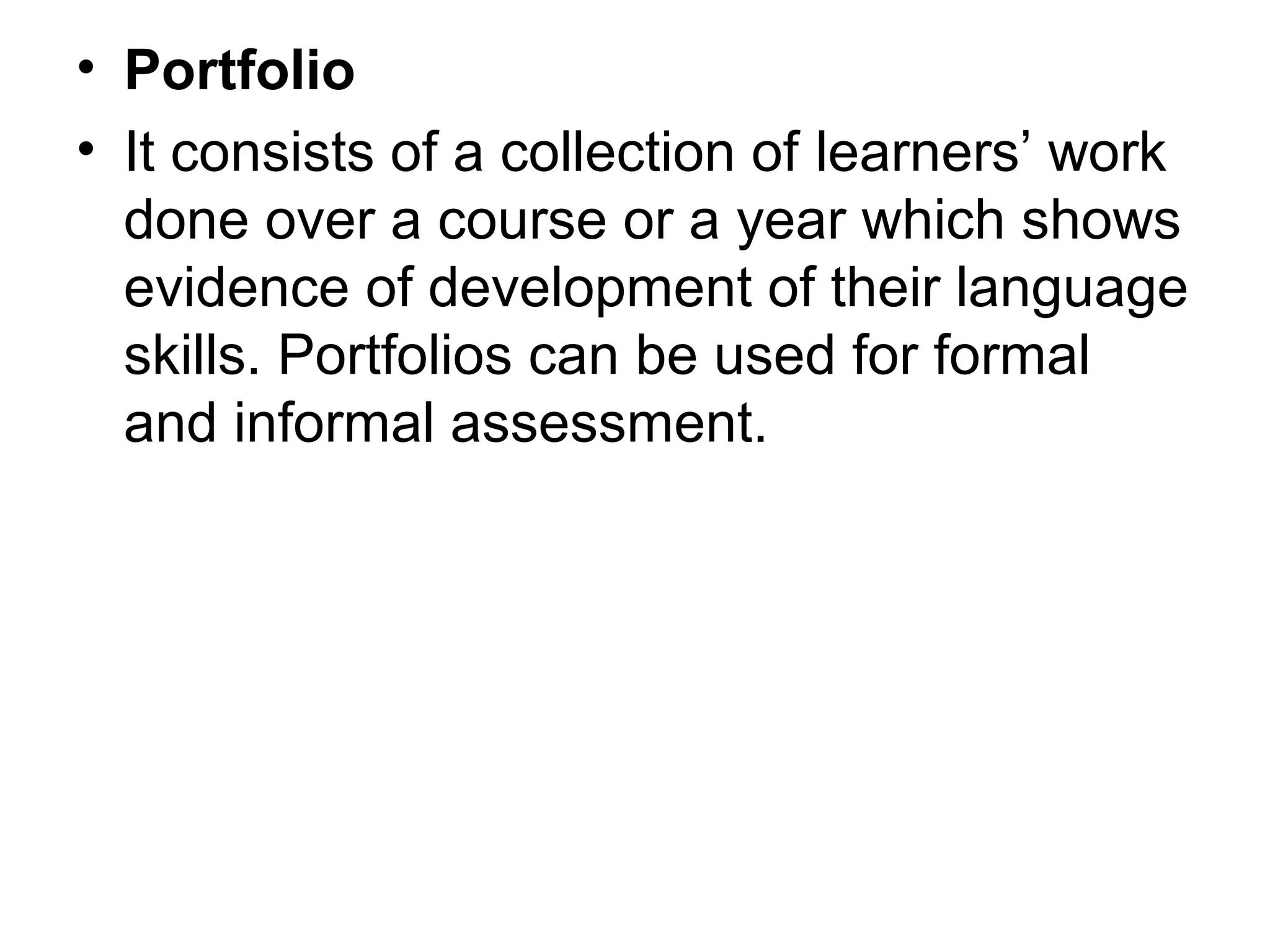
• Portfolio
• It consists of a collection of learners’ work
done over a course or a year which shows
evidence of development of their language
skills. Portfolios can be used for formal
and informal assessment.
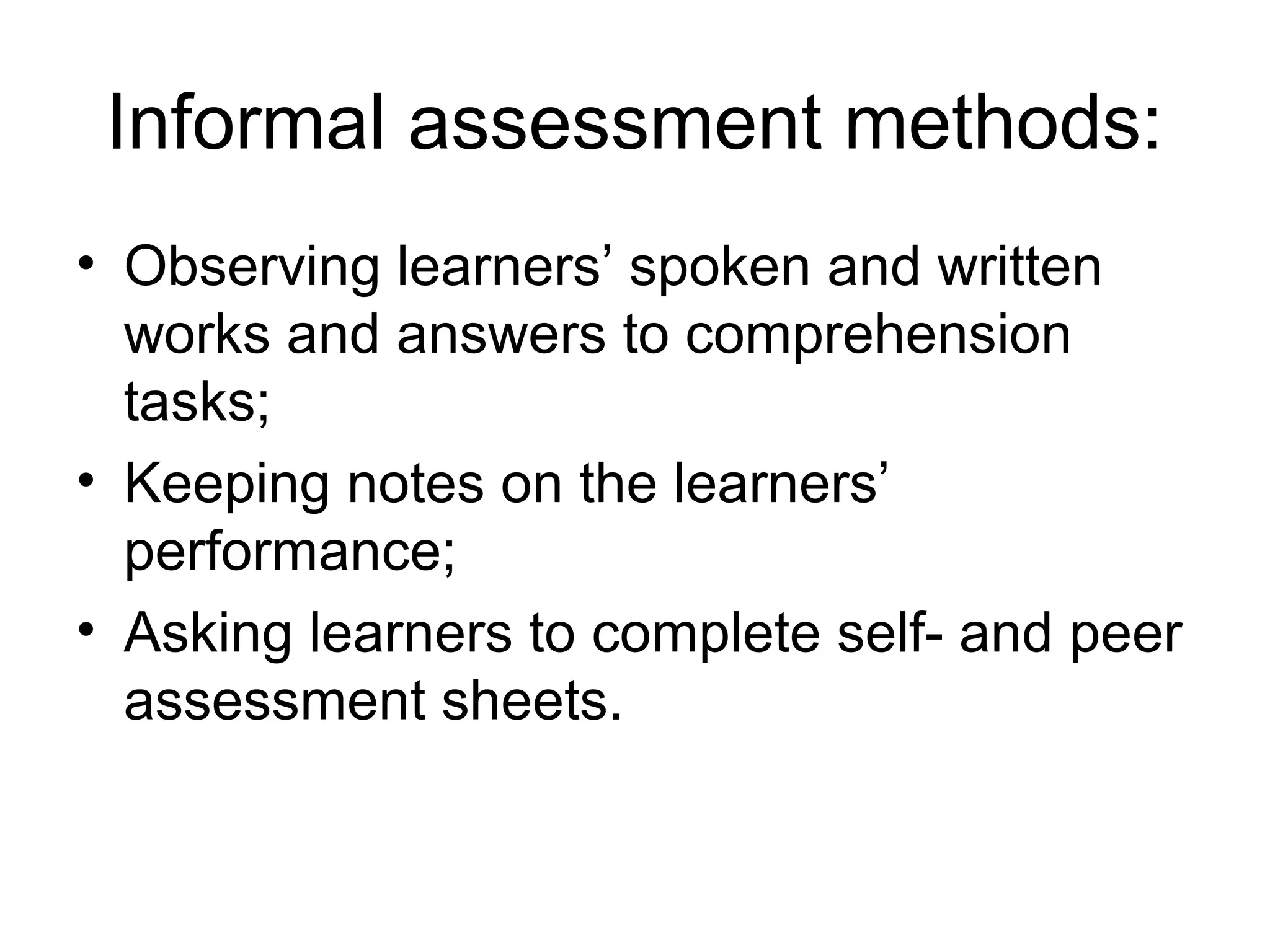
Informal assessment methods:
• Observing learners’ spoken and written
works and answers to comprehension
tasks;
• Keeping notes on the learners’
performance;
• Asking learners to complete self- and peer
assessment sheets.
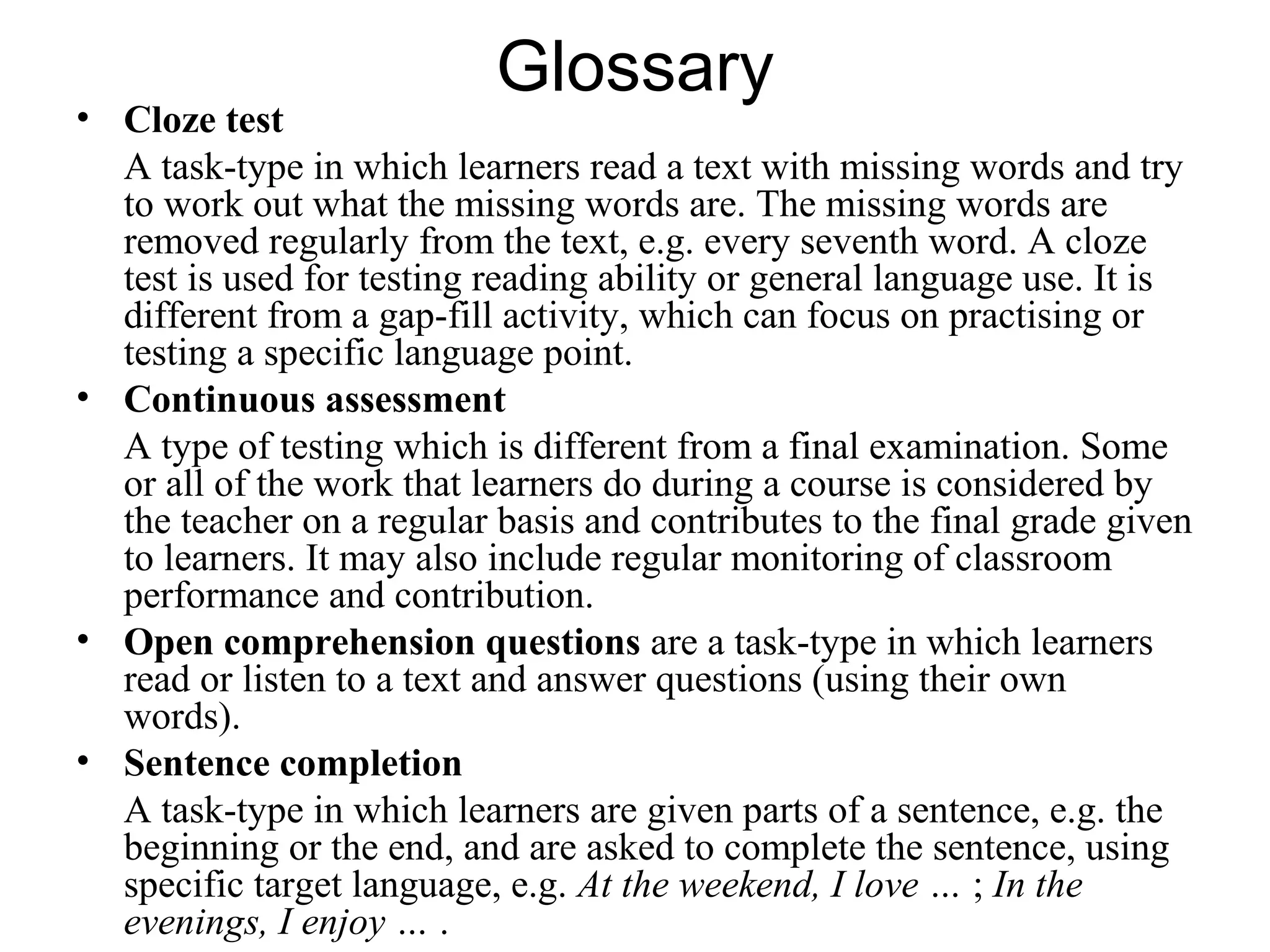
Glossary
• Cloze test
A task-type in which learners read a text with missing words and try
to work out what the missing words are. The missing words are
removed regularly from the text, e.g. every seventh word. A cloze
test is used for testing reading ability or general language use. It is
different from a gap-fill activity, which can focus on practising or
testing a specific language point.
• Continuous assessment
A type of testing which is different from a final examination. Some
or all of the work that learners do during a course is considered by
the teacher on a regular basis and contributes to the final grade given
to learners. It may also include regular monitoring of classroom
performance and contribution.
• Open comprehension questions are a task-type in which learners
read or listen to a text and answer questions (using their own
words).
• Sentence completion
A task-type in which learners are given parts of a sentence, e.g. the
beginning or the end, and are asked to complete the sentence, using
specific target language, e.g. At the weekend, I love … ; In the
evenings, I enjoy … .

Assessment types and tasks

  • 1.
  • 2.
    What are assessmenttypes and tasks? Assessment means judging learners’ performance by collecting information about it. We assess learners for different reasons, using different kinds of tests to do so. Assessment tasks are the methods we use for assessing learners. We can assess learners formally and informally.
  • 3.
    Formal assessment is whenwe assess learners through tests or exams and give their work a mark or a grade. Informal assessment is when we observe learners to see how well they are doing something and then give them comments on their perfomance.
  • 4.
    Self-assessment When learners decide forthemselves how good they think their progress or language use is. Peer assessment When learners give feedback on each other’s language, work, learning strategies, performance.
  • 5.
    Examples of assessmenttasks: • Gap-fill • Multiple-choice questions • True/False questions • Ordering • Correcting mistakes • Taking part in interviews, conversations or role- plays • Writing letters or compositions • Dictation
  • 6.
    Differences between tasks: -Some tasks test communication skills (e.g. conversations, interviews, letters, reading leaflets for prices) while others test the accuracy of language use (e.g. gap-fill). - Some tasks test one thing (e.g. gap-fill, choosing between pairs of sounds) while others test many things together (e.g. a composition, a conversation)
  • 7.
    • The answersto some kinds of tasks are easy to mark (e.g. multiple-choice, true/false, gap-fill and dictation tasks). These are called objective tests. • Marking some kinds of tasks involves judging many things together (e.g. compositions, stories, interviews, role- plays). The mark depends on our judgment. These are called subjective tests.
  • 8.
    • Portfolio • Itconsists of a collection of learners’ work done over a course or a year which shows evidence of development of their language skills. Portfolios can be used for formal and informal assessment.
  • 9.
    Informal assessment methods: •Observing learners’ spoken and written works and answers to comprehension tasks; • Keeping notes on the learners’ performance; • Asking learners to complete self- and peer assessment sheets.
  • 10.
    Glossary • Cloze test Atask-type in which learners read a text with missing words and try to work out what the missing words are. The missing words are removed regularly from the text, e.g. every seventh word. A cloze test is used for testing reading ability or general language use. It is different from a gap-fill activity, which can focus on practising or testing a specific language point. • Continuous assessment A type of testing which is different from a final examination. Some or all of the work that learners do during a course is considered by the teacher on a regular basis and contributes to the final grade given to learners. It may also include regular monitoring of classroom performance and contribution. • Open comprehension questions are a task-type in which learners read or listen to a text and answer questions (using their own words). • Sentence completion A task-type in which learners are given parts of a sentence, e.g. the beginning or the end, and are asked to complete the sentence, using specific target language, e.g. At the weekend, I love … ; In the evenings, I enjoy … .