Web 2.0 and HE Stephen Bostock November 2009 As used with VC Committee 23 Nov 2009
A plan The Web and HE Web2.0 and HE The ubiquitous web A  disjuncture  between HE and students Four implications
The first phase The World Wide Web is 20 years old The 1990s - global multimedia publishing;  web authors and web readers Fits the traditional University culture of knowledge generators/owners and consumers (students, the public) E.g. Keele University web site or  keele.org.uk
Implications for HE Improved access to course information: flexibility, personalization Digital alternatives to textbooks & libraries Access to global resources: real-world and academic But Computer and network access (~solved) IT skills for students and staff (in part) Information literacy skills (not solved)
The 2000s - ‘Web2.0’  ‘The social web’ Software that supports group interaction, collaboration, feedback Encourages the generation, sharing, and consumption of content Remixing and integration (mash-up) It aggregates and learns from user actions; the logic of the crowd Users contribute to service design
Examples of Web2.0 Blogging : free public diaries, journals e.g.  Blogger, Wordpress, twitter Shared authoring,  wikis , e.g.  wikipedia, PBwiki Chat : text/voice/video to one or few; e.g.  MSN, SMS txt Media sharing : free online stores, shareable files;  Flickr, Youtube, Screenr, Napster, Googledocs, Prezi, iTunesU Syndication , newsfeeds,  RSS, podcasts Social  bookmarking  e.g.  delicious.com Social networking  e.g.  Facebook, Friendsreunited Ratemyprofessor Trading , reviewing:  Amazon, eBay, Travelrepublic  Virtual worlds  e.g.  Secondlife, worldofwarcraft Position-aware:  iPhones, GoogleEarth
Youtube… The Machine is Us/ ing  Us  (Final Version) Dr. M Wesch, Digital Ethnographer,  Kansas State Univ. 11 million viewings (v.1), rated 4.5/5
The ubiquitous Web Mobile web, m-learning Internet phones, handhelds, netbooks, iPods… the default is global but position-responsive Network access Mobile broadband, wifi, 3G phones and netbooks Our ‘digital natives’, born after the Web digitally-social, digitally-learning Networked in class - use or abuse?
HE and a Web2.0 World (D.Melville 2009) Using the Social Web affects the behaviour of young people, ‘whose metier and medium it is’: communities of interest, participation, peer support, sharing, but also quick answers, information in bites HE has a ‘wholly different set of norms’: hierarchical, introvert, guarded, careful, precise, measured ‘Students are managing the disjuncture’ for now
Disjuncture  - the gap A Vision of Students Today Dr Wesch’s students at  Kansas State U.   1997 3.5 million views, rated 4.5/5
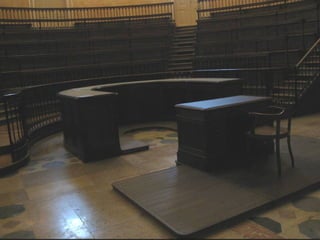
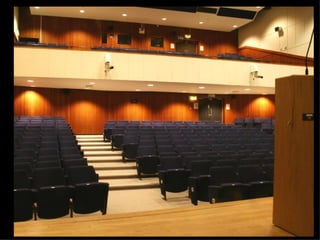
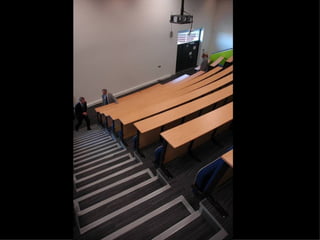
Implications: learning spaces 21 st C.  students in 19 th C.  classrooms? We need spaces to be more Social Technology-integrated


Some new learning spaces
 
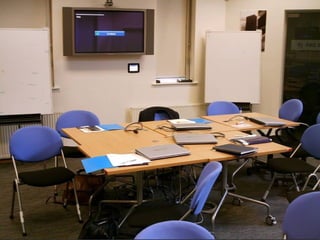
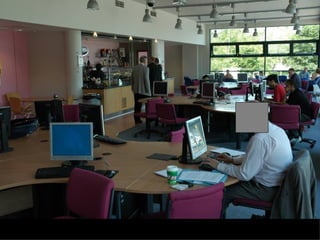
(picture of an innovative teaching space with small tables of 3 computers)
(picture of students in groups of 4 around tables in a flat teaching space holding 50)
(Picture of 100+ students in a flat teaching spaces arranged in threes around small tables.)
Implications: online VLE/  KLE  is web-based but   closed, formal, controlled, official, assessable; for study Web2.0  services are global, open, not assessed, commercial, sharing content;  for life Some overlap/hybrid area: eg Facebook for support; KLE for discussions and portfolios Q. Should we run a social network server?  Q. Do we need a guidance document?
Implications: what we teach Web2.0 is in tune with higher order learning outcomes: discussion not transmission Employability skills/ graduate attributes for the 21 st  C Information skills, IT skills Able to communicate, participate, network, share, digitally
Implications: how we teach ‘The critical question seems to us to be the selection and practice of the pedagogy appropriate to the learning outcomes being pursued and also …  the communal, participative and creative spirit of the Web2.0 age’  (Melville 2009 p38)
The direction for teaching and learning Group work, peer-review, group assessed, negotiated Blended with online communication and authoring (not just accessing resources) And, I would argue Inquiry-based, project-based, work-related, world-related, generating artefacts Encouraging autonomy, ownership, self-efficacy, reflection, personal development
Final thought: Network learning We want our students to become lifelong learners: Able and eager to learn in a ubiquitous  digital network of  information and people
Reference and sources David Melville 2009  Higher Education in a Web 2.0 World , JISC Web sources are at http://delicious.com/stephen_bostock/web2.0

Web2 public

  • 1.
    Web 2.0 andHE Stephen Bostock November 2009 As used with VC Committee 23 Nov 2009
  • 2.
    A plan TheWeb and HE Web2.0 and HE The ubiquitous web A disjuncture between HE and students Four implications
  • 3.
    The first phaseThe World Wide Web is 20 years old The 1990s - global multimedia publishing; web authors and web readers Fits the traditional University culture of knowledge generators/owners and consumers (students, the public) E.g. Keele University web site or keele.org.uk
  • 4.
    Implications for HEImproved access to course information: flexibility, personalization Digital alternatives to textbooks & libraries Access to global resources: real-world and academic But Computer and network access (~solved) IT skills for students and staff (in part) Information literacy skills (not solved)
  • 5.
    The 2000s -‘Web2.0’ ‘The social web’ Software that supports group interaction, collaboration, feedback Encourages the generation, sharing, and consumption of content Remixing and integration (mash-up) It aggregates and learns from user actions; the logic of the crowd Users contribute to service design
  • 6.
    Examples of Web2.0Blogging : free public diaries, journals e.g. Blogger, Wordpress, twitter Shared authoring, wikis , e.g. wikipedia, PBwiki Chat : text/voice/video to one or few; e.g. MSN, SMS txt Media sharing : free online stores, shareable files; Flickr, Youtube, Screenr, Napster, Googledocs, Prezi, iTunesU Syndication , newsfeeds, RSS, podcasts Social bookmarking e.g. delicious.com Social networking e.g. Facebook, Friendsreunited Ratemyprofessor Trading , reviewing: Amazon, eBay, Travelrepublic Virtual worlds e.g. Secondlife, worldofwarcraft Position-aware: iPhones, GoogleEarth
  • 7.
    Youtube… The Machineis Us/ ing Us (Final Version) Dr. M Wesch, Digital Ethnographer, Kansas State Univ. 11 million viewings (v.1), rated 4.5/5
  • 8.
    The ubiquitous WebMobile web, m-learning Internet phones, handhelds, netbooks, iPods… the default is global but position-responsive Network access Mobile broadband, wifi, 3G phones and netbooks Our ‘digital natives’, born after the Web digitally-social, digitally-learning Networked in class - use or abuse?
  • 9.
    HE and aWeb2.0 World (D.Melville 2009) Using the Social Web affects the behaviour of young people, ‘whose metier and medium it is’: communities of interest, participation, peer support, sharing, but also quick answers, information in bites HE has a ‘wholly different set of norms’: hierarchical, introvert, guarded, careful, precise, measured ‘Students are managing the disjuncture’ for now
  • 10.
    Disjuncture -the gap A Vision of Students Today Dr Wesch’s students at Kansas State U. 1997 3.5 million views, rated 4.5/5
  • 11.
    Implications: learning spaces21 st C. students in 19 th C. classrooms? We need spaces to be more Social Technology-integrated
  • 12.
  • 13.
  • 14.
  • 15.
  • 16.
  • 17.
    (picture of aninnovative teaching space with small tables of 3 computers)
  • 18.
    (picture of studentsin groups of 4 around tables in a flat teaching space holding 50)
  • 19.
    (Picture of 100+students in a flat teaching spaces arranged in threes around small tables.)
  • 20.
    Implications: online VLE/ KLE is web-based but closed, formal, controlled, official, assessable; for study Web2.0 services are global, open, not assessed, commercial, sharing content; for life Some overlap/hybrid area: eg Facebook for support; KLE for discussions and portfolios Q. Should we run a social network server? Q. Do we need a guidance document?
  • 21.
    Implications: what weteach Web2.0 is in tune with higher order learning outcomes: discussion not transmission Employability skills/ graduate attributes for the 21 st C Information skills, IT skills Able to communicate, participate, network, share, digitally
  • 22.
    Implications: how weteach ‘The critical question seems to us to be the selection and practice of the pedagogy appropriate to the learning outcomes being pursued and also … the communal, participative and creative spirit of the Web2.0 age’ (Melville 2009 p38)
  • 23.
    The direction forteaching and learning Group work, peer-review, group assessed, negotiated Blended with online communication and authoring (not just accessing resources) And, I would argue Inquiry-based, project-based, work-related, world-related, generating artefacts Encouraging autonomy, ownership, self-efficacy, reflection, personal development
  • 24.
    Final thought: Networklearning We want our students to become lifelong learners: Able and eager to learn in a ubiquitous digital network of information and people
  • 25.
    Reference and sourcesDavid Melville 2009 Higher Education in a Web 2.0 World , JISC Web sources are at http://delicious.com/stephen_bostock/web2.0

Editor's Notes

  • #4 The internet is 40 years old the general purpose global network of networks The World Wide Web is 20 years old the general purpose information exchange Initially web publishing – global multimedia publishing with no marginal distribution cost