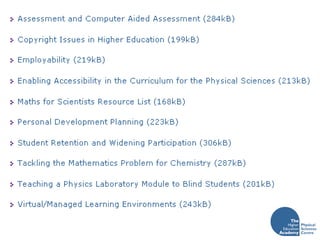
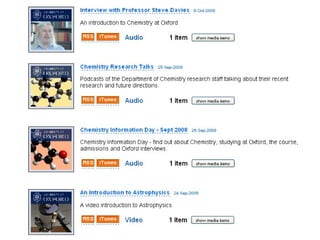
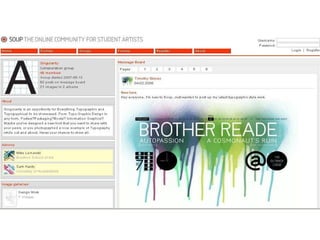
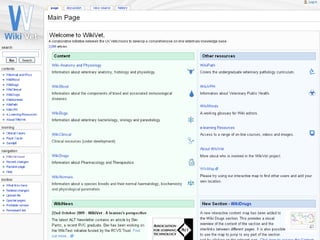
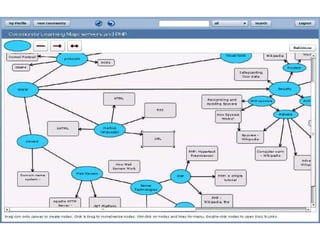
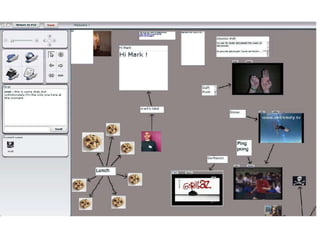
What is web 2.0 Vision – Collaborative environment for the creation and dissemination of information Bad implementation as ‘Web 1’ Ward Cunningham 1994 – first social software Web 2.0 is all about  user generated content collaboration via social software Platform
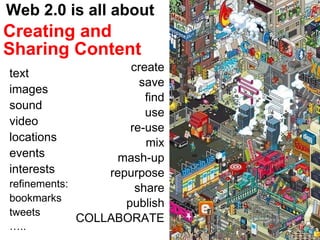
Creating and Sharing Content create save find use re-use mix mash-up repurpose share publish COLLABORATE Web 2.0 is all about text images sound video locations events interests refinements: bookmarks tweets … ..
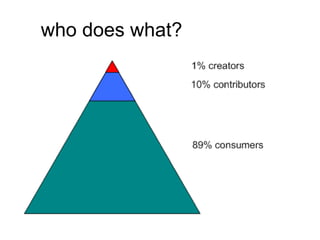
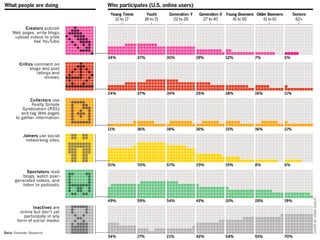
who does what?
 
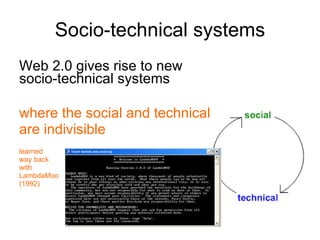
Socio-technical systems Web 2.0 gives rise to new  socio-technical systems   where the social and technical  are indivisible learned way back with  LambdaMoo (1992)
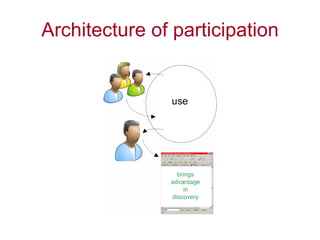
Architecture of participation
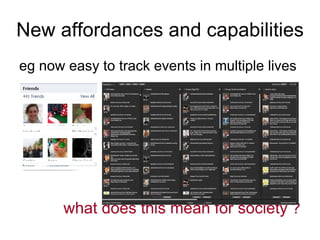
eg now easy to track events in multiple lives what does this mean for society   ?   New affordances and capabilities
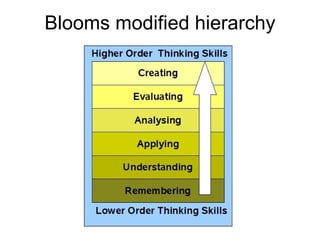
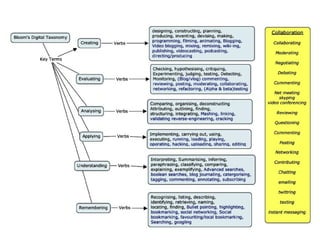
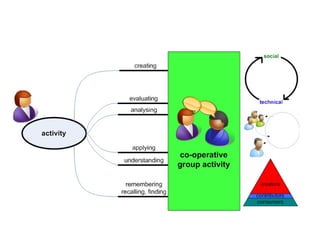
Blooms modified hierarchy
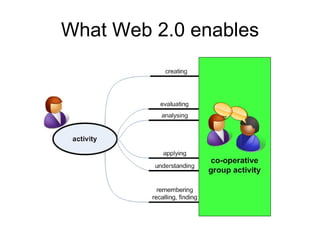
What Web 2.0 enables
 
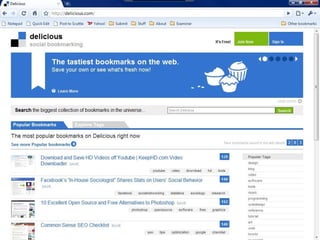
Delicious, digg,
 
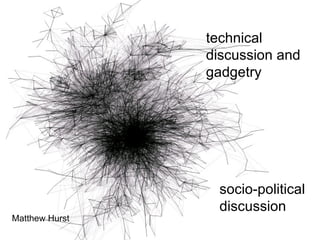
technical discussion and gadgetry  socio-political discussion Matthew Hurst
 
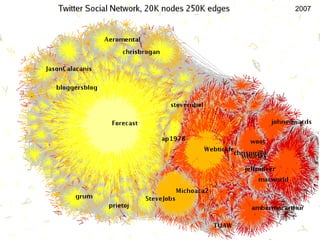
2007
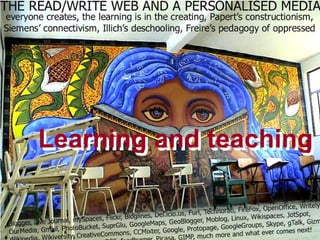
Learning and teaching Learning and teaching
We know People work with each other They learn from each other They are capable of determining what they want to learn
What are the values that we  want to promulgate?  How do we want to affect society? Do we want autonomous,  independent,  self-actualised life-long learners  who decide what they want to learn  and how they learn it If so, how do we ‘grow’ them
Learner empowerment want learners  who are enthusiastic about learning who will take responsibility for their learning, now and life-long who will play a positive role in society
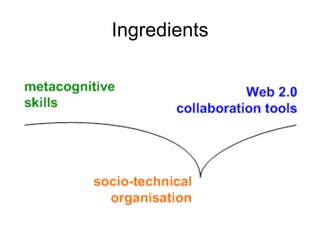
Ingredients
PLEs? it’s a movement learners taking control  of  their own* learning * group and individual learning
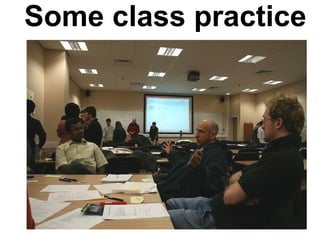
Some class practice
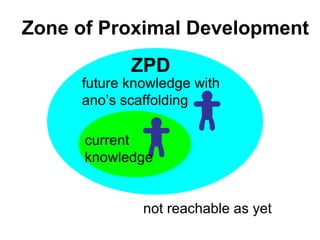
A couple of approaches I like Social Constructivisim  (Vygotsky) learning in social settings learning in groups and teams Zone of Proximal Development /  scaffolding Constructionism  (Papert) learn by constructing artefacts to for public display accommodation and assimilation
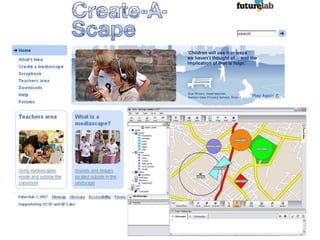
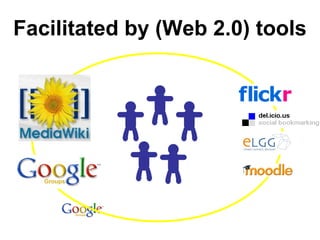
Facilitated by (Web 2.0) tools
Facilitated by a PLE
current knowledge future knowledge with  ano’s scaffolding not reachable as yet Zone of Proximal Development ZPD
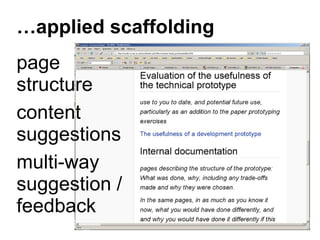
… applied   scaffolding page structure content  suggestions multi-way suggestion / feedback
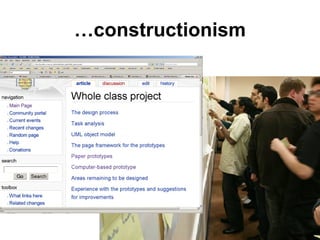
… constructionism
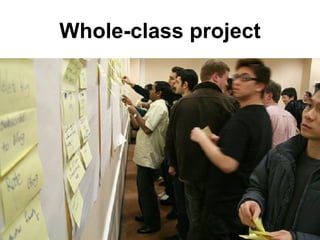
Whole-class project
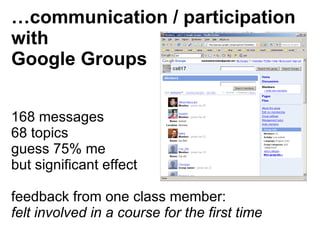
… communication / participation  with Google Groups 168 messages 68 topics guess 75% me but significant effect feedback from one class member:  felt involved in a course for the first time
EBL/PBL/participatory courses Create independent learners? Learners are generally institutionalised Produce team-workers? Definitely (but with self-improving groups) Benefit from Web 2.0 tools / PLE? Yes, leveraging social constructivist and constructionist approaches Create new socio-technical organisation? Yes, temporarily


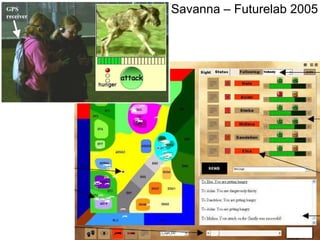
Savanna – Futurelab 2005
 
 
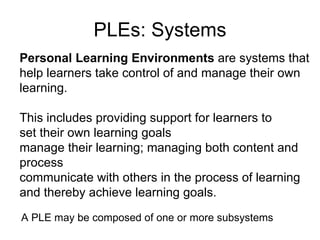
PLEs: Systems Personal Learning Environments  are systems that help learners take control of and manage their own learning.  This includes providing support for learners to set their own learning goals  manage their learning; managing both content and process  communicate with others in the process of learning  and thereby achieve learning goals. A PLE may be composed of one or more subsystems
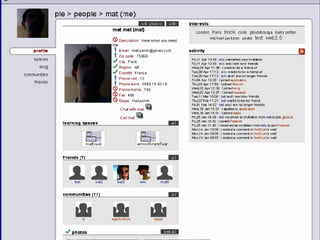
The Manchester PLE
 
 
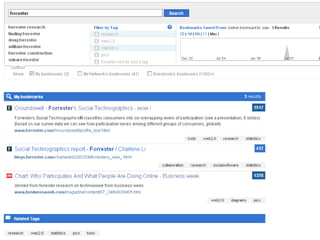
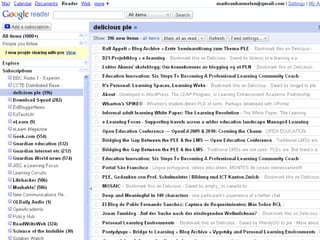
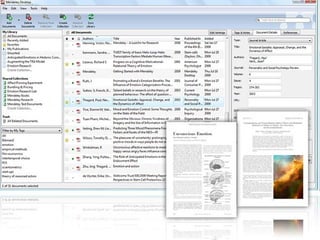
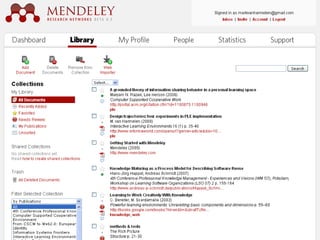
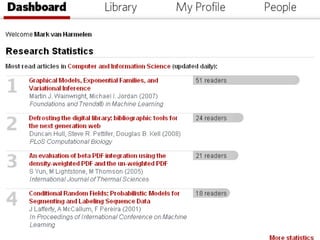
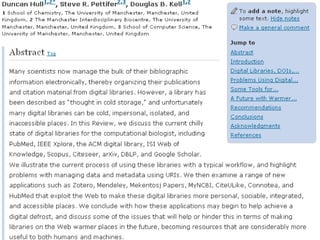
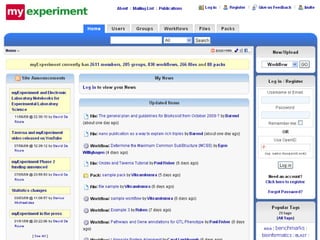
some aspects of web 2.0 support for research)
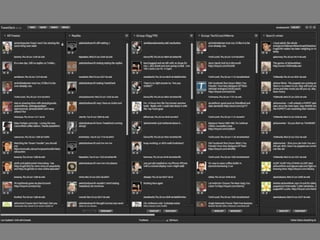
Only cover two areas Finding, filtering and selecting information resources Communication between researchers


conclusion
 
The L&T question “ Is Web 2.0 the point at which we finally begin to challenge academic mindsets around both pedagogy and learning technology?”  We need  vast  improvements in learning skills and learning culture in order to fully leverage the potential of Web 2.0 But we can still,  here and now , move in promising, rewarding and fruitful directions for learning and teaching
The research question “ Is Web 2.0 the point at which can use it in our research activities?”  That depends on the nature of our cultural research niches, where, how and what we do, how we communicate But we can,  here and now , move in promising, rewarding and fruitful directions to augment existing research practice
Image thanks For various un-credited CC images Apologies for no specific credits  appearing here

Hea.Keynote

  • 1.
  • 2.
    What is web2.0 Vision – Collaborative environment for the creation and dissemination of information Bad implementation as ‘Web 1’ Ward Cunningham 1994 – first social software Web 2.0 is all about user generated content collaboration via social software Platform
  • 3.
    Creating and SharingContent create save find use re-use mix mash-up repurpose share publish COLLABORATE Web 2.0 is all about text images sound video locations events interests refinements: bookmarks tweets … ..
  • 4.
  • 5.
  • 6.
    Socio-technical systems Web2.0 gives rise to new socio-technical systems where the social and technical are indivisible learned way back with LambdaMoo (1992)
  • 7.
  • 8.
    eg now easyto track events in multiple lives what does this mean for society ? New affordances and capabilities
  • 9.
  • 10.
    What Web 2.0enables
  • 11.
  • 12.
  • 13.
  • 14.
    technical discussion andgadgetry socio-political discussion Matthew Hurst
  • 15.
  • 16.
  • 17.
    Learning and teachingLearning and teaching
  • 18.
    We know Peoplework with each other They learn from each other They are capable of determining what they want to learn
  • 19.
    What are thevalues that we want to promulgate? How do we want to affect society? Do we want autonomous, independent, self-actualised life-long learners who decide what they want to learn and how they learn it If so, how do we ‘grow’ them
  • 20.
    Learner empowerment wantlearners who are enthusiastic about learning who will take responsibility for their learning, now and life-long who will play a positive role in society
  • 21.
  • 22.
    PLEs? it’s amovement learners taking control of their own* learning * group and individual learning
  • 23.
  • 24.
    A couple ofapproaches I like Social Constructivisim (Vygotsky) learning in social settings learning in groups and teams Zone of Proximal Development / scaffolding Constructionism (Papert) learn by constructing artefacts to for public display accommodation and assimilation
  • 25.
  • 26.
  • 27.
    current knowledge futureknowledge with ano’s scaffolding not reachable as yet Zone of Proximal Development ZPD
  • 28.
    … applied scaffolding page structure content suggestions multi-way suggestion / feedback
  • 29.
  • 30.
  • 31.
    … communication /participation with Google Groups 168 messages 68 topics guess 75% me but significant effect feedback from one class member: felt involved in a course for the first time
  • 32.
    EBL/PBL/participatory courses Createindependent learners? Learners are generally institutionalised Produce team-workers? Definitely (but with self-improving groups) Benefit from Web 2.0 tools / PLE? Yes, leveraging social constructivist and constructionist approaches Create new socio-technical organisation? Yes, temporarily
  • 33.
  • 34.
  • 35.
  • 36.
  • 37.
  • 38.
  • 39.
  • 40.
  • 41.
    PLEs: Systems PersonalLearning Environments are systems that help learners take control of and manage their own learning. This includes providing support for learners to set their own learning goals manage their learning; managing both content and process communicate with others in the process of learning and thereby achieve learning goals. A PLE may be composed of one or more subsystems
  • 42.
  • 43.
  • 44.
  • 45.
    some aspects ofweb 2.0 support for research)
  • 46.
    Only cover twoareas Finding, filtering and selecting information resources Communication between researchers
  • 47.
  • 48.
  • 49.
  • 50.
  • 51.
  • 52.
  • 53.
  • 54.
  • 55.
  • 56.
  • 57.
  • 58.
    The L&T question“ Is Web 2.0 the point at which we finally begin to challenge academic mindsets around both pedagogy and learning technology?” We need vast improvements in learning skills and learning culture in order to fully leverage the potential of Web 2.0 But we can still, here and now , move in promising, rewarding and fruitful directions for learning and teaching
  • 59.
    The research question“ Is Web 2.0 the point at which can use it in our research activities?” That depends on the nature of our cultural research niches, where, how and what we do, how we communicate But we can, here and now , move in promising, rewarding and fruitful directions to augment existing research practice
  • 60.
    Image thanks Forvarious un-credited CC images Apologies for no specific credits appearing here