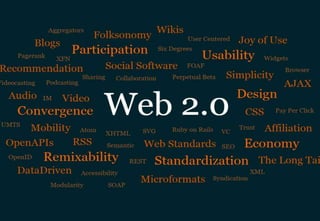
Web 2.0 for teaching and learning 
Dr. Dimitrios Vlachopoulos 
University of Roehampton, London 
European University Cyprus 
Laureate International Universities
Index 
1. Introduction 
2. The concept of web 2.0 technologies 
3. Educational opportunities and challenges for web 2.0 
4. Education 2.0
Introduction 
• Growing excitement within the educational 
community about web 2.0 technologies 
• ‘Web 2.0’ is an umbrella/inclusive term 
• Social software 
• ‘Interactive’ rather than ‘broadcast’ forms of 
exchange
Introduction 
• Wikipedia≠ Online Encyclopedia 
• 3 c’s 
Creation, collaboration and communication 
• Relation between education and web and vice 
versa
The concept of Web 2.0 
• 2.0 traditional activity has now 
adopted a particular set of new tools 
• Web 2.0 movement 
• Microcontent 
• Openess
Web 2.0 services 
• Socializing through games and virtual worlds 
• Media design, sharing and publication 
• Reflect through blog, social networks & wikis 
• Explore through syndication, recommenders, 
folksonomies
Important concepts (for education) 
associated to web 2.0 
• Collaboration 
• Publication 
• Literacies 
• Inquiry
Opportunities & Challenges 
• New ways of learning 
• New types of learners 
• New spaces for learning 
• Access to knowledge for 
the masses 
• “Disconnection” of 
learners 
• ”Distraction from studies” 
• Distance students from 
the offline realities
Can we talk about Education 2.0? 
• The “web 2.0 debate” 
• Re-imagining educational practice 
• TEACHER 
• STUDENT 
• INSTITUTION 
• EVALUATION 
• CURRICILUM 
• Re-imagining web 2.0
Conclusions 
• Web 2.0 is an evolving phenomenon 
• How can we design web 2.0 to work in education? 
• Collaboration between tech-people and 
pedagogists
Questions?
2ndseminar

2ndseminar

  • 1.
    Web 2.0 forteaching and learning Dr. Dimitrios Vlachopoulos University of Roehampton, London European University Cyprus Laureate International Universities
  • 2.
    Index 1. Introduction 2. The concept of web 2.0 technologies 3. Educational opportunities and challenges for web 2.0 4. Education 2.0
  • 3.
    Introduction • Growingexcitement within the educational community about web 2.0 technologies • ‘Web 2.0’ is an umbrella/inclusive term • Social software • ‘Interactive’ rather than ‘broadcast’ forms of exchange
  • 4.
    Introduction • Wikipedia≠Online Encyclopedia • 3 c’s Creation, collaboration and communication • Relation between education and web and vice versa
  • 5.
    The concept ofWeb 2.0 • 2.0 traditional activity has now adopted a particular set of new tools • Web 2.0 movement • Microcontent • Openess
  • 6.
    Web 2.0 services • Socializing through games and virtual worlds • Media design, sharing and publication • Reflect through blog, social networks & wikis • Explore through syndication, recommenders, folksonomies
  • 7.
    Important concepts (foreducation) associated to web 2.0 • Collaboration • Publication • Literacies • Inquiry
  • 8.
    Opportunities & Challenges • New ways of learning • New types of learners • New spaces for learning • Access to knowledge for the masses • “Disconnection” of learners • ”Distraction from studies” • Distance students from the offline realities
  • 9.
    Can we talkabout Education 2.0? • The “web 2.0 debate” • Re-imagining educational practice • TEACHER • STUDENT • INSTITUTION • EVALUATION • CURRICILUM • Re-imagining web 2.0
  • 10.
    Conclusions • Web2.0 is an evolving phenomenon • How can we design web 2.0 to work in education? • Collaboration between tech-people and pedagogists
  • 11.