Presence Pedagogy: Building Communities of Practice in Virtual Worlds Stephen Bronack Robert Sanders Amy Cheney Nita Matzen John Tashner
Presentation Overview Session text chat questions will be addressed by Amy Cheney and John Tashner Additional Questions/Discussions will be taken at end of presentation
Presentation Overview Who We Are Successful Pedagogical Approaches to Teaching and Learning in 3D Environments Capitalizing on Social Aspects (Social Constructivism) Presence Pedagogy (P2) Model Questions/Discussion
Why Should We Care About Virtual Worlds? By 2011, over 80% of active Internet users will have a virtual presence (Gartner, 2007) More than 200 virtual worlds are active or in development for children 18 and under (Virtual Worlds Management, 2009) This is 50 more than in August of 2008
Why a 3D Virtual Environment for Education? Population served Social constructivist philosophy Wanted to build a community of learners throughout North Carolina Hoped to facilitate meaningful interactions in the learning environment Did not think that traditional web-based tools (i.e. WebCT) offered these types of opportunities
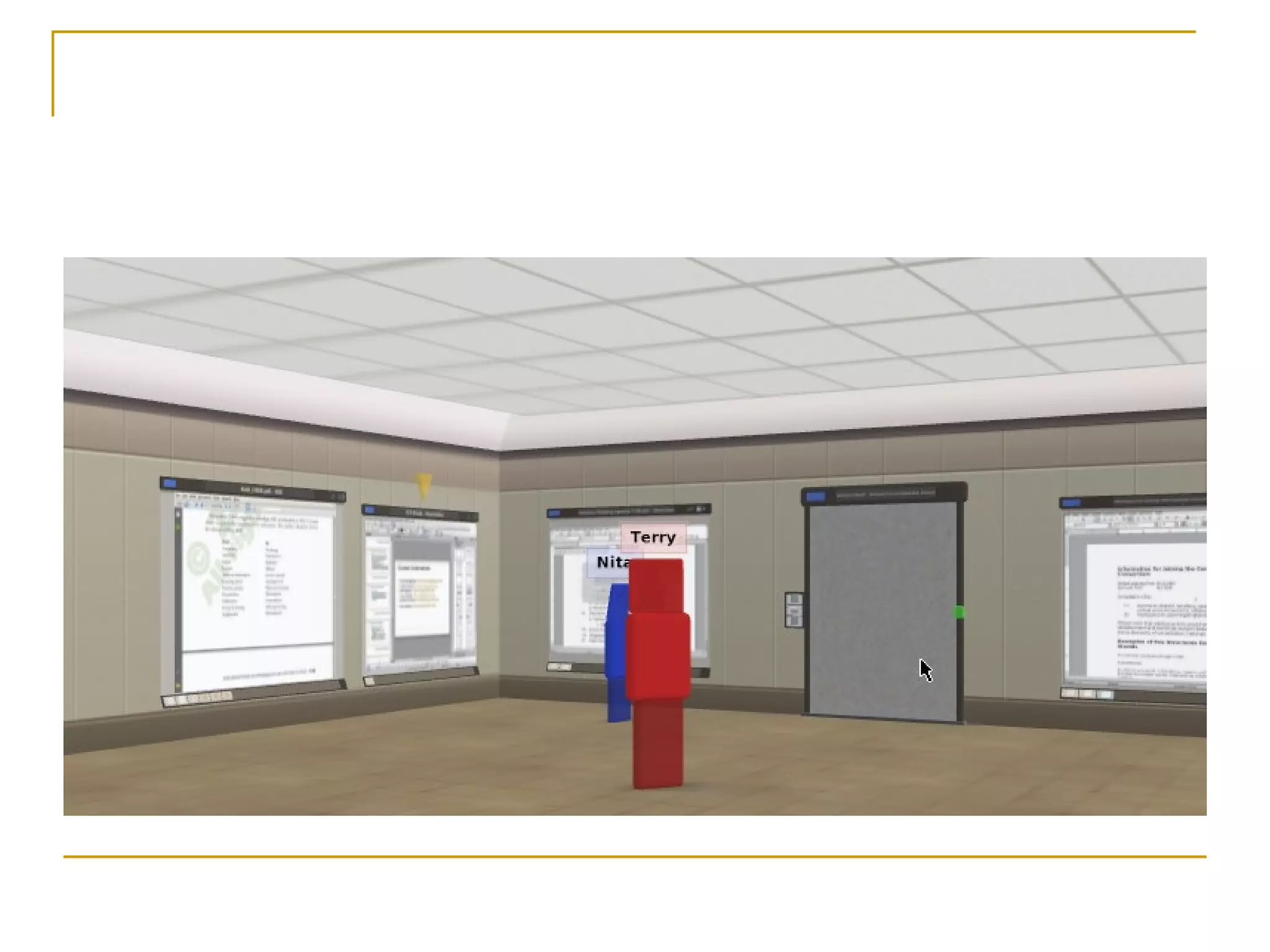
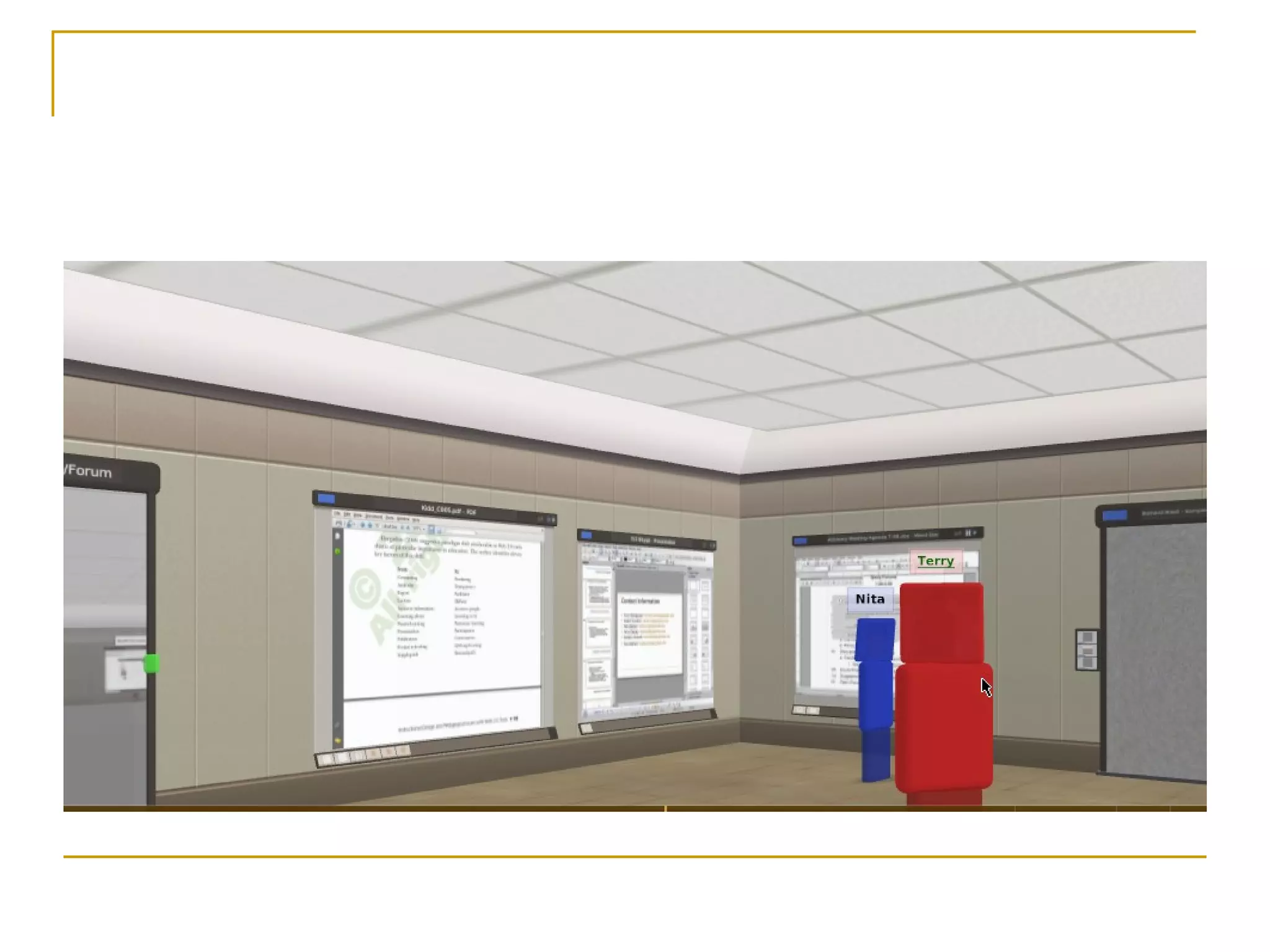
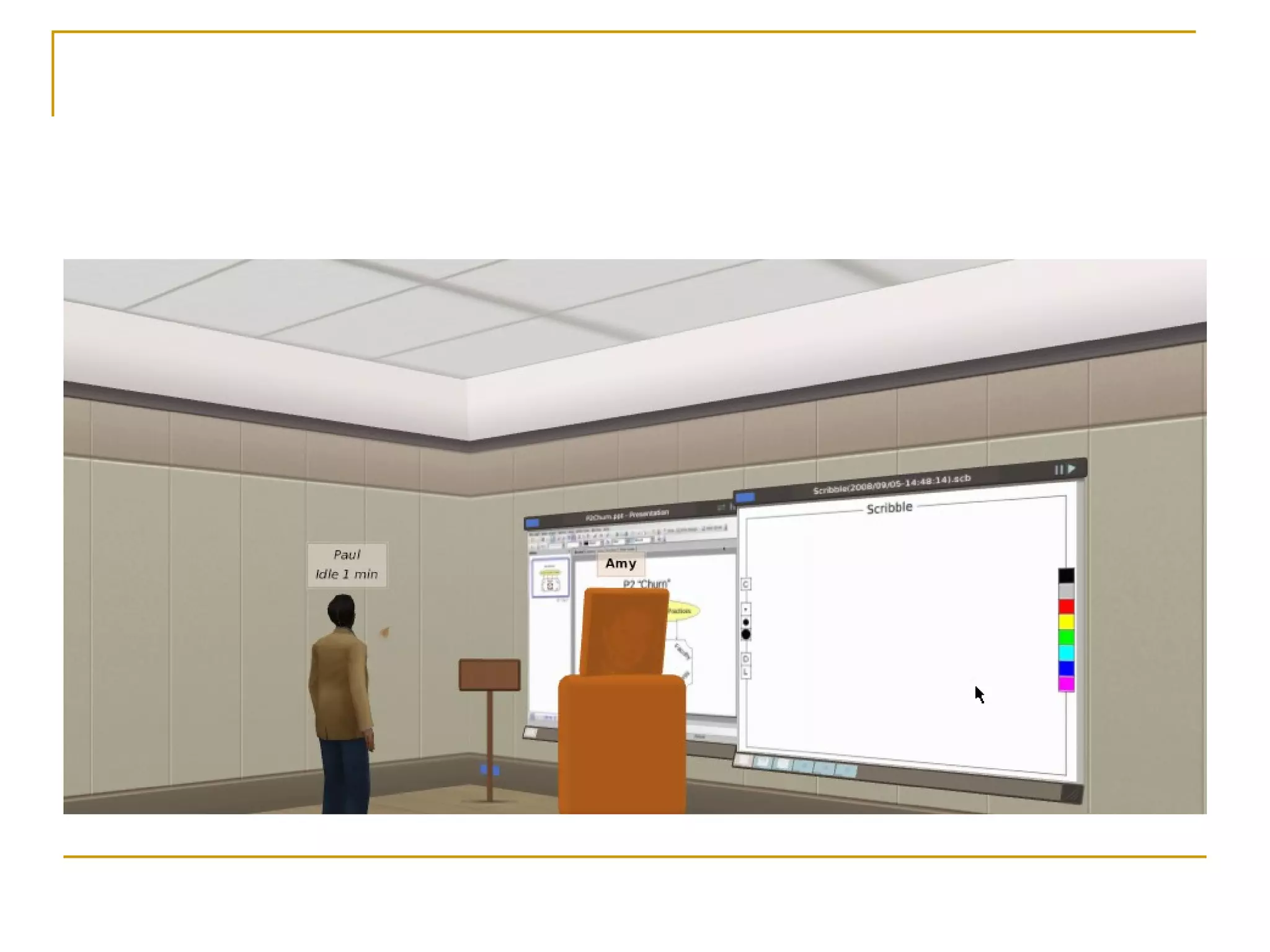
3D Environment Characterized by significant components of space, movement, physical presence and co-presence Conversational and presentation tools with small and large group shared workspaces Metaphors and artifacts that assist collaboration and learning online in new and different ways
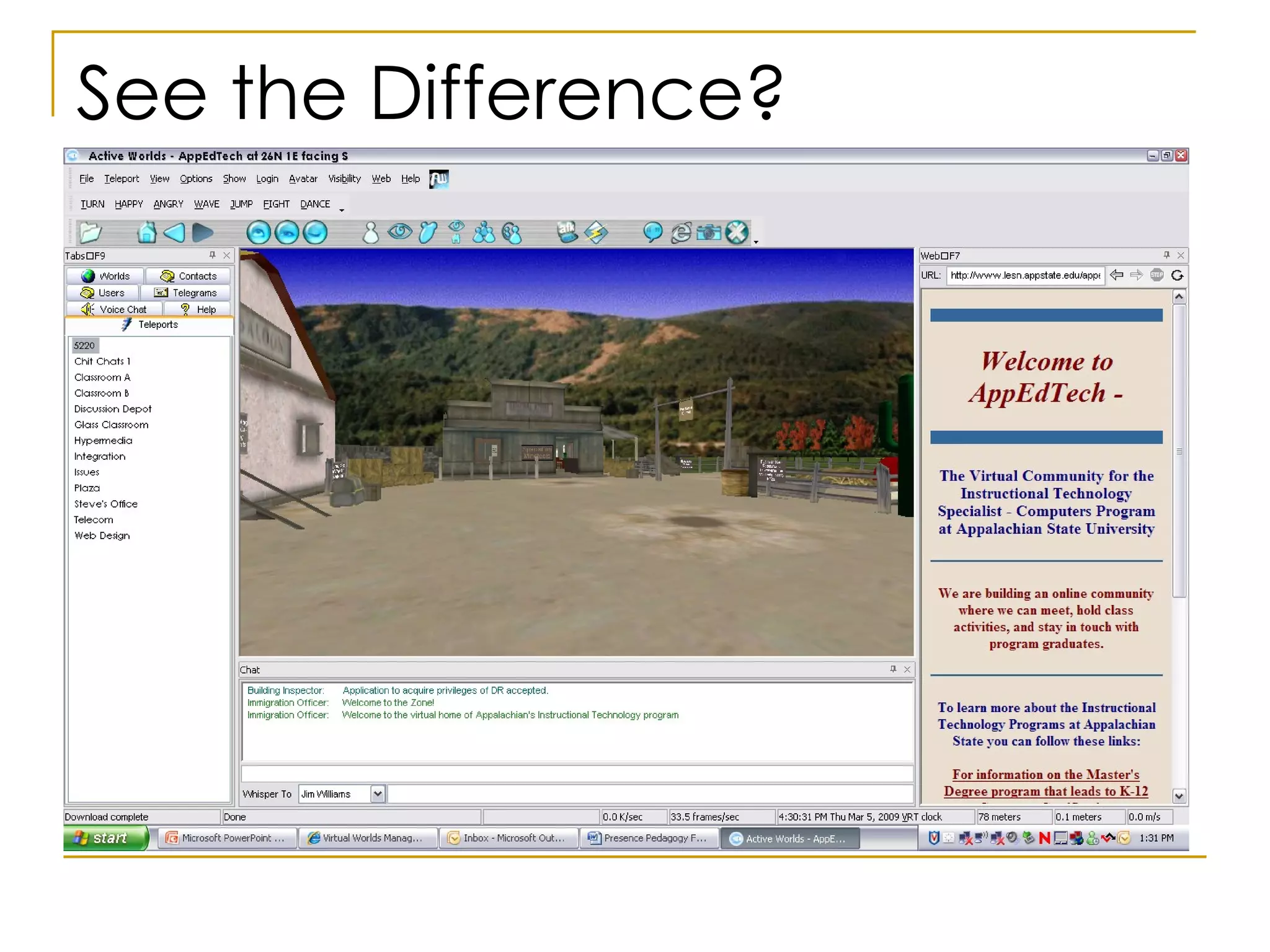
AET Zone at Appalachian State First server purchased more than eight years ago (ActiveWorlds –  www.activeworlds.com )  Core environment for Instructional Technology Master’s program Now serving students in Library Science, School Administration, Higher Education, Educational Leadership and Research Courses
What Has Happened? More than 2400 citizens of the Zone, including students, alumni, guests and speakers from around the nation and world Rich with content and interactive elements Collaborative learning environment has developed
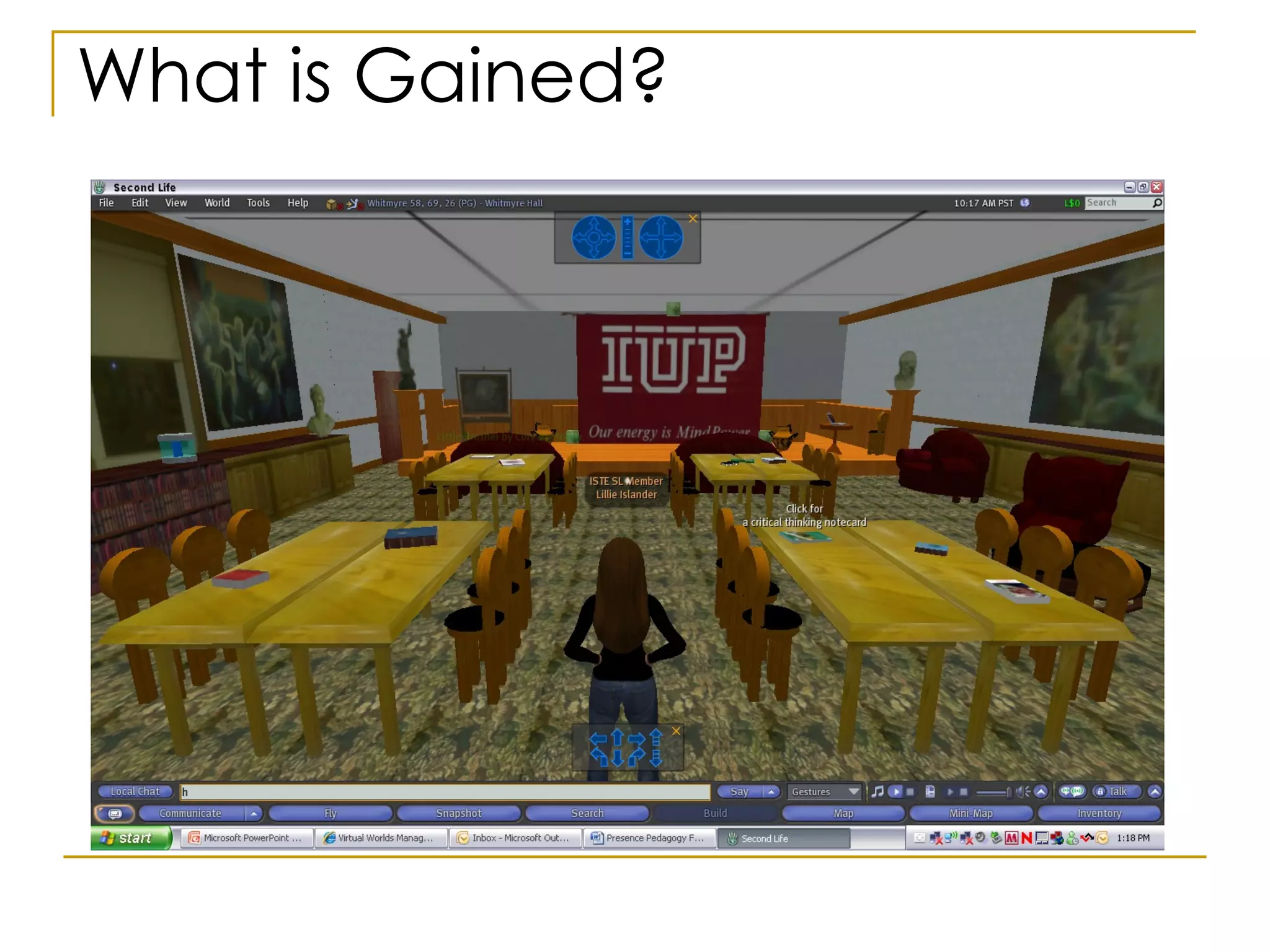
What is Gained?
Social Constructivism and Virtual Worlds (RCOE Conceptual Framework) Learning occurs through participation in a Community of Practice; Knowledge is socially constructed and learning is social in nature in a Community of Practice; Learners proceed through stages of development from Novice to Expert under the guidance of more experienced and knowledgeable mentors and among likeminded peers in the Community of Practice;
Social Constructivism An identifiable knowledge base that is both general in nature and also specific to specialties emerges from focused activity within the Community of Practice; All professional educators develop a set of Dispositions reflecting attitudes, beliefs, and values common to the Community of Practice.
See the Difference?
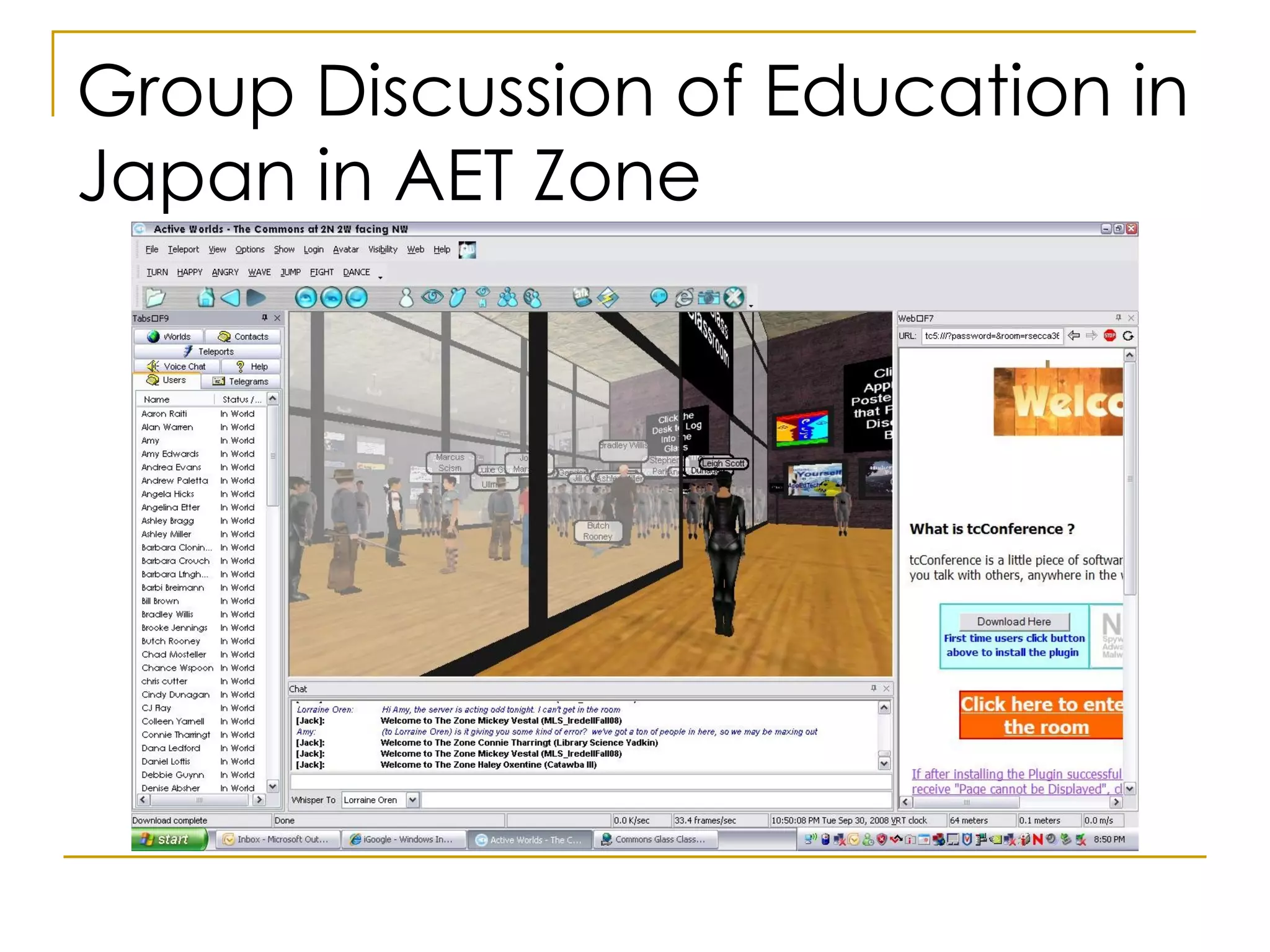
Group Discussion of Education in Japan in AET Zone
Presence and Co-Presence Studies by Rovai (2002) and Tu (2002):  Sense of presence and co-presence do seem to be critical factors in creating and maintaining online communities.  Tashner et al (2007): Combining communication and collaboration tools with a sense of presence and co-presence provides opportunities for developing authentic learning environments
Creation of Community Liu et al (2007), Significant relationships between sense of community and perceived learning engagement, perceived learning, and student satisfaction with online learning experiences
Conversations and Collaborations From web pages to web places Utilizing telecommunications tools for connections and linkages Connections are focused on conversations and collaborations Imbedded Web 2.0 tools enable many of these interactions
Necessary Conditions Presence and co-presence Facilitated by avatars Instructor presence a requirement Modeling Encouraging conversation and interaction Structuring of courses to require both small and large group student interactions around common goals
 
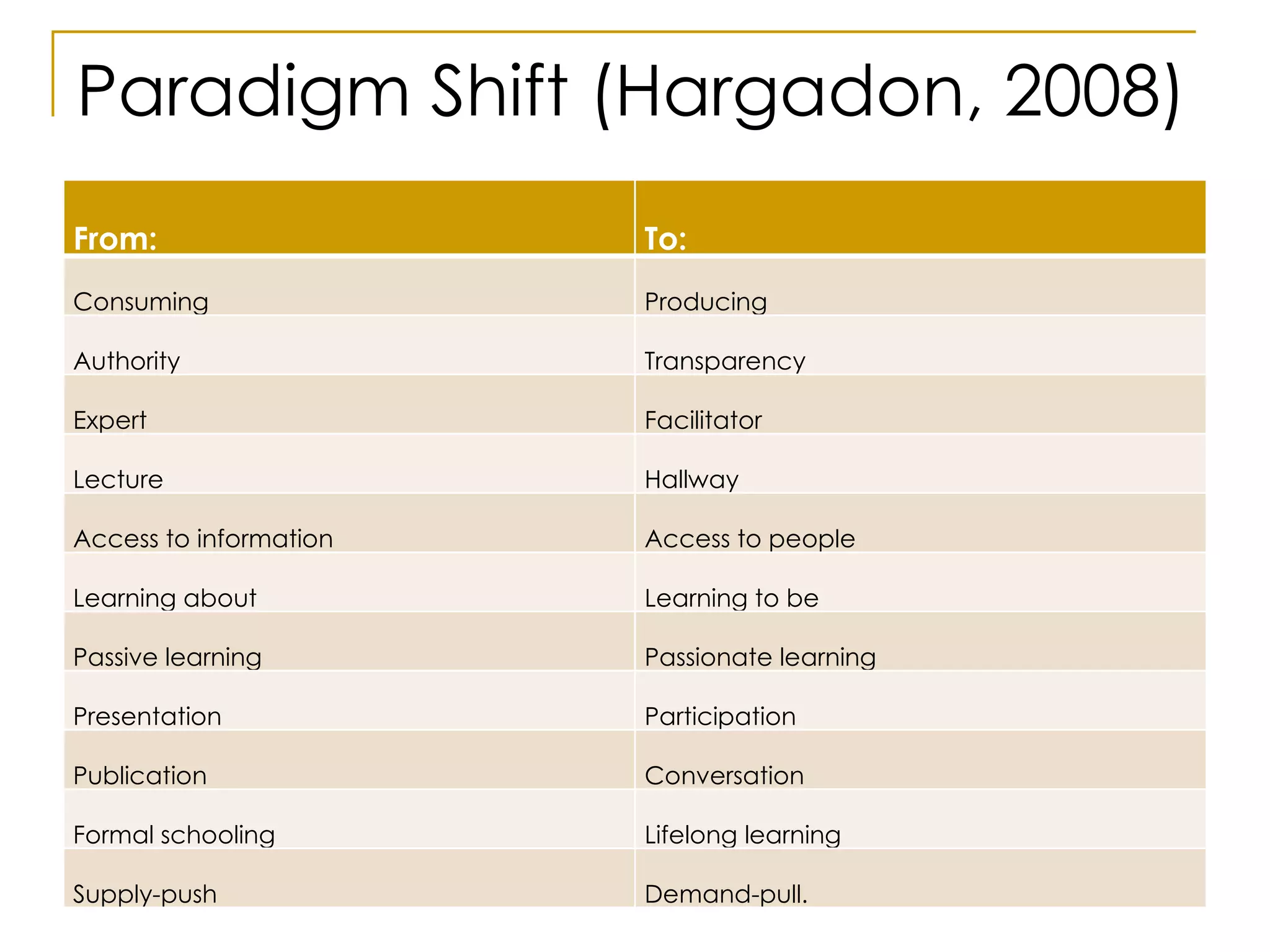
Paradigm Shift (Hargadon, 2008) From: To: Consuming Producing Authority Transparency Expert Facilitator Lecture Hallway Access to information Access to people Learning about Learning to be Passive learning Passionate learning Presentation Participation Publication Conversation Formal schooling Lifelong learning Supply-push Demand-pull.
 
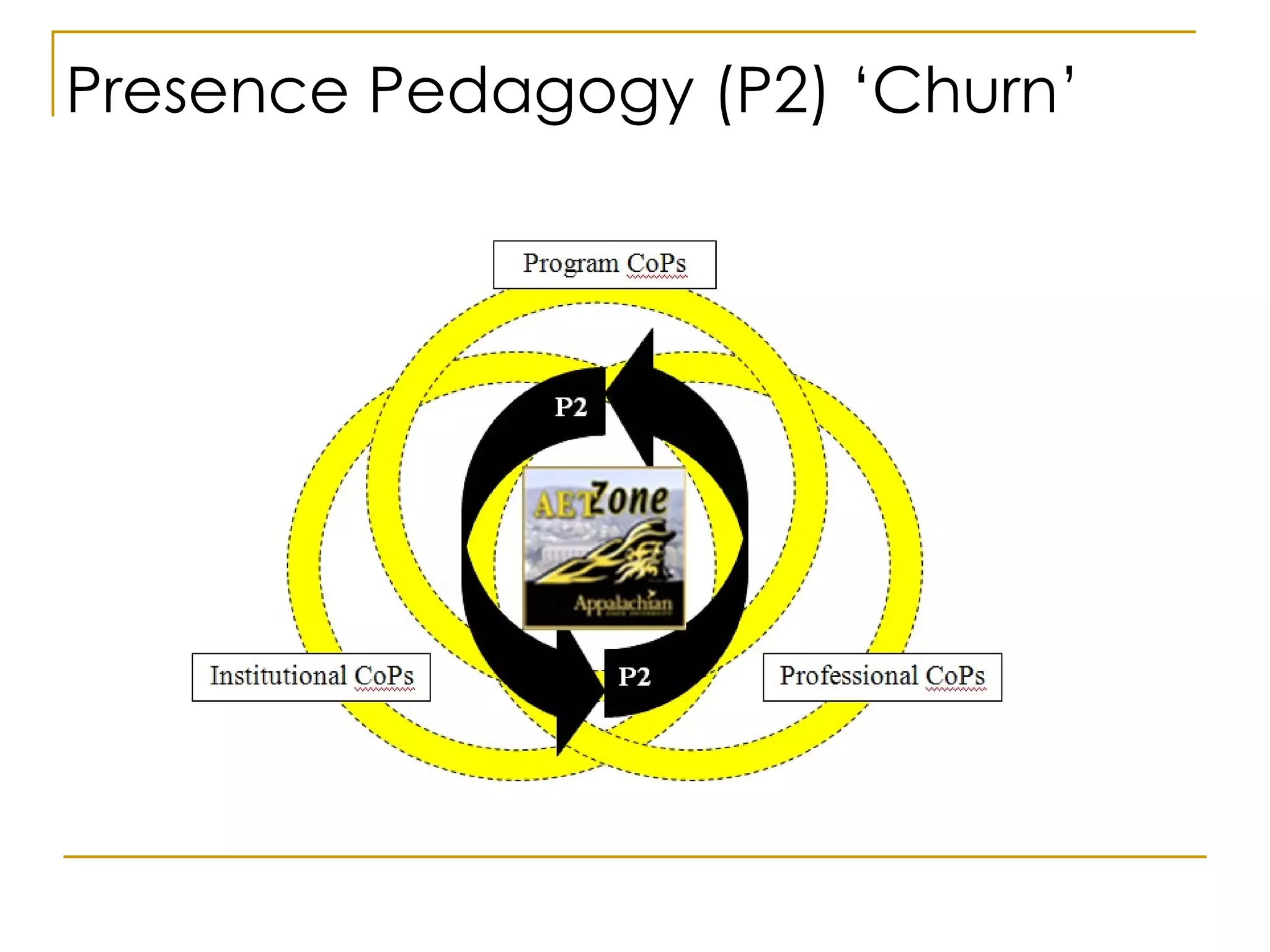
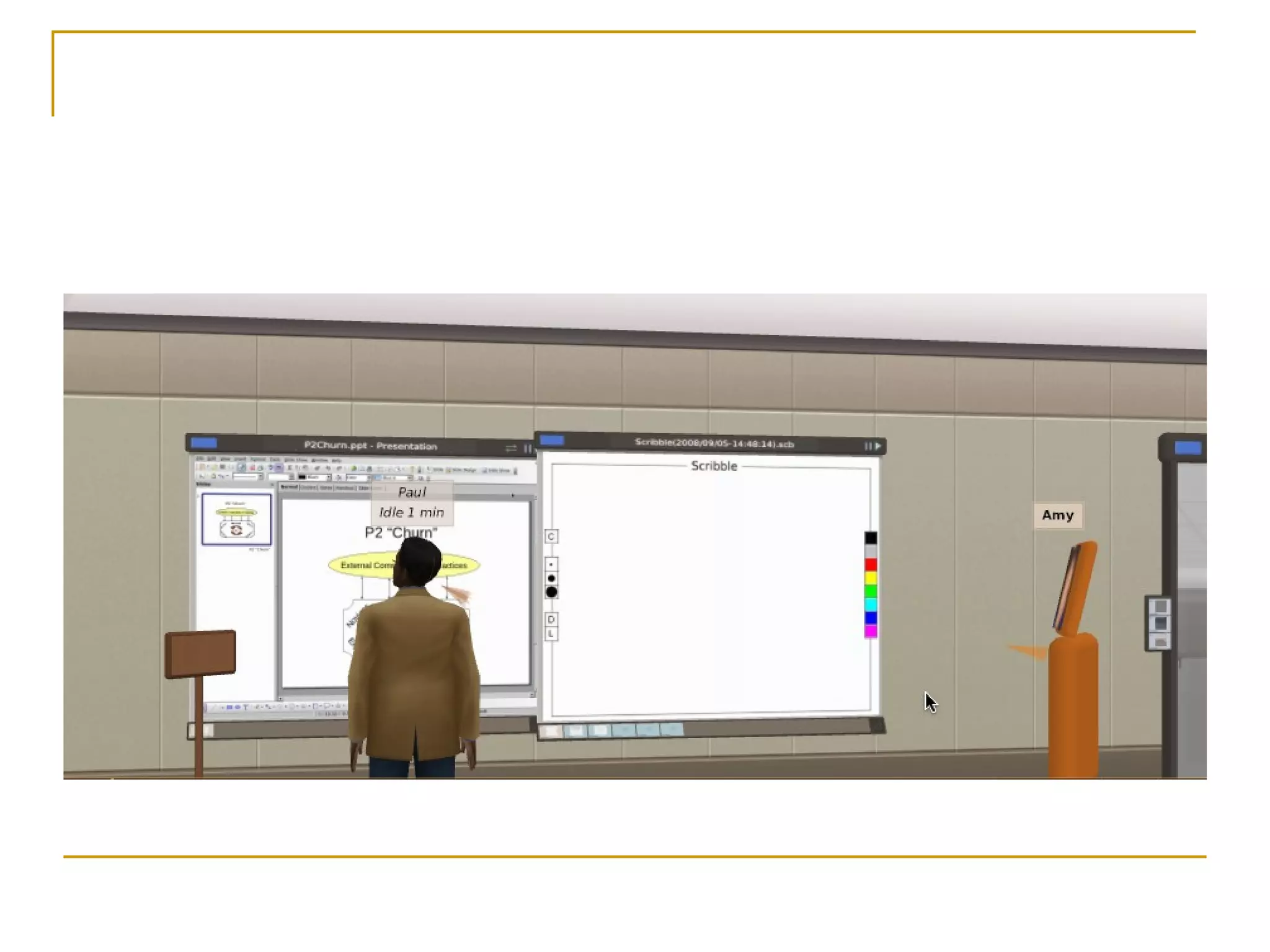
Presence Pedagogy (P2) ‘Churn’
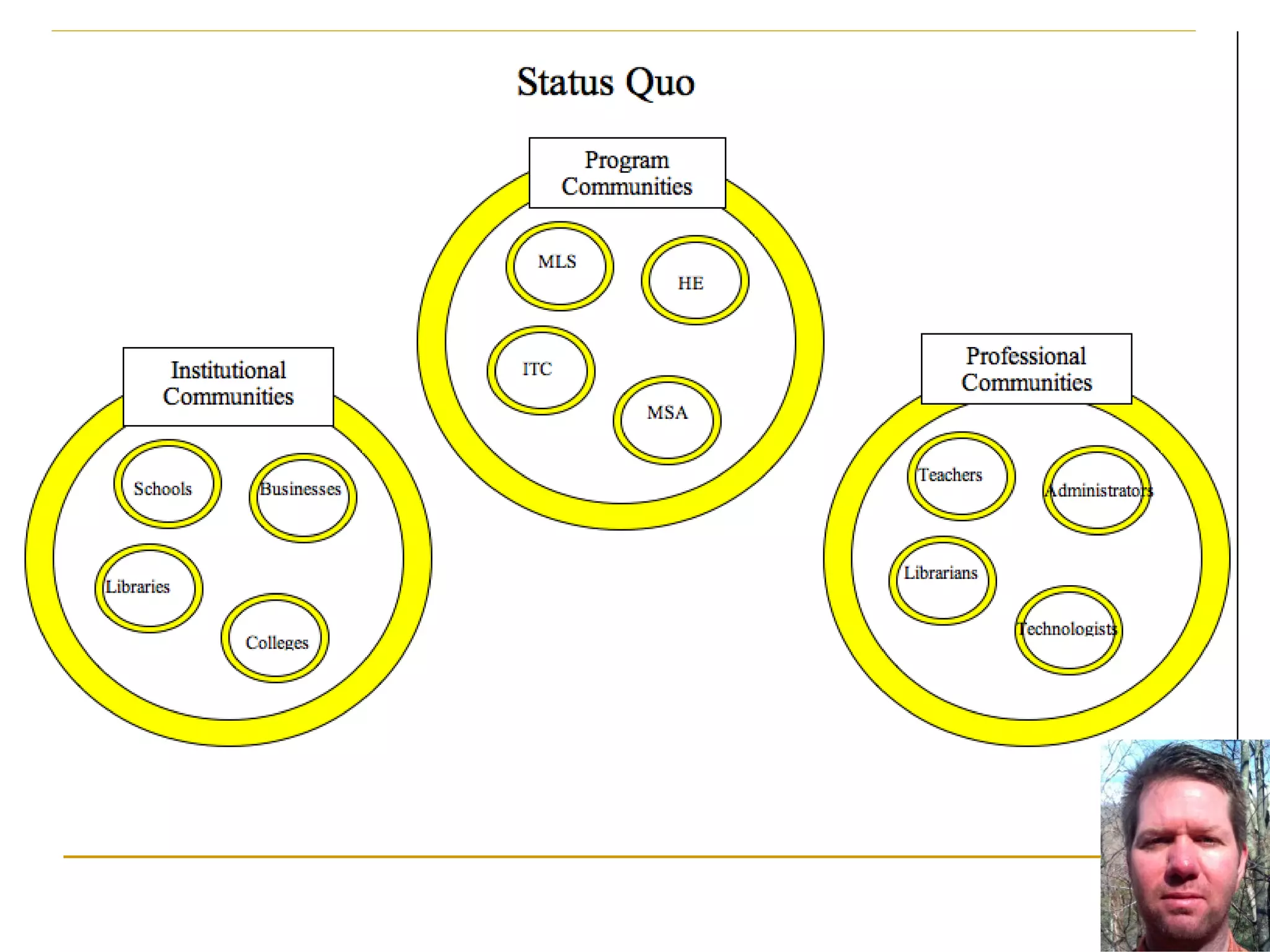
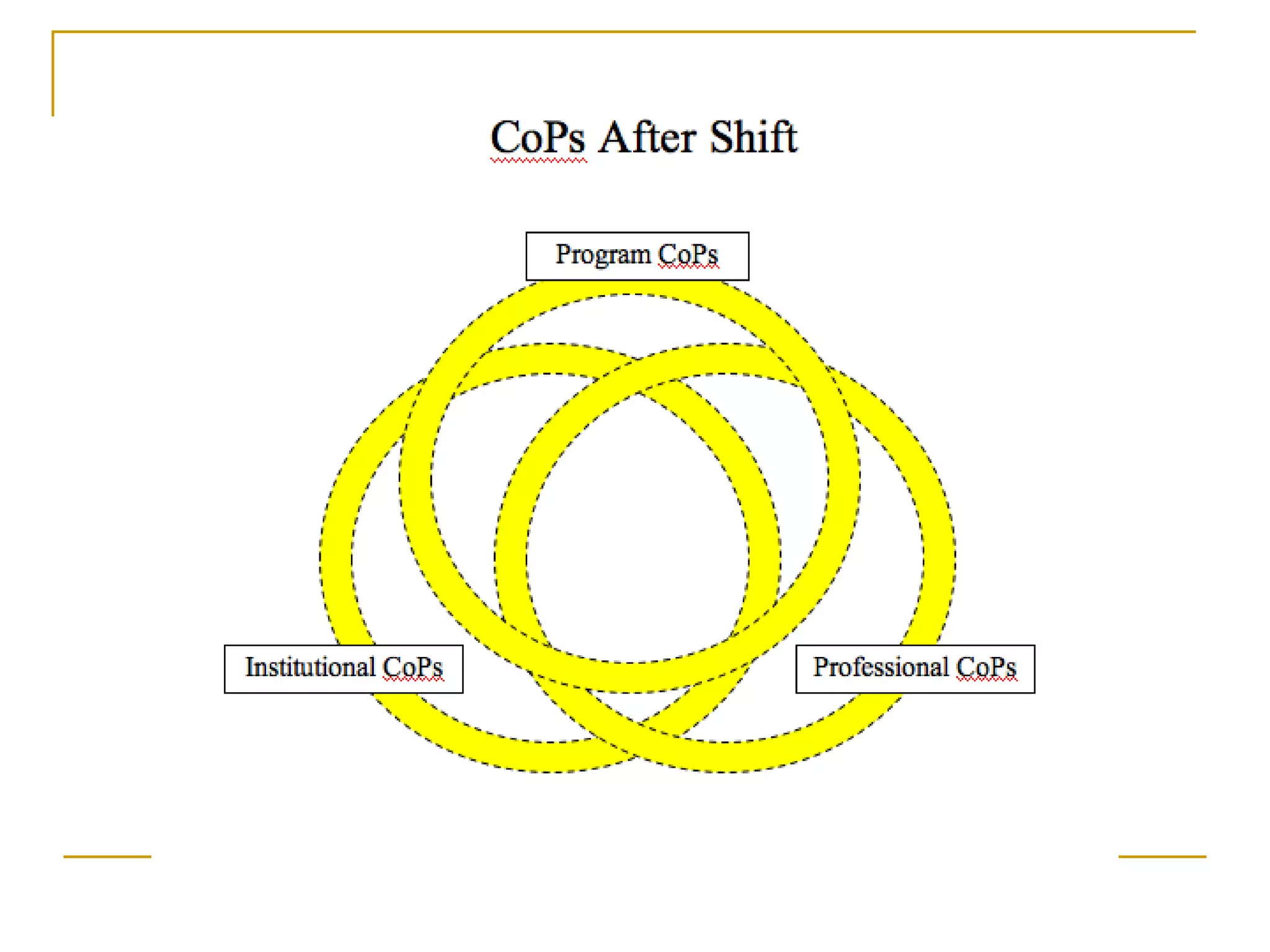
Presence Pedagogy (P2) Merger of Communities  Forms new Community of Practice: AETZone AETZone = Transformative Space through which members move from CoP to CoP Response to Paradigm Shift P2 creates the churn of Transformative Learning in this new space Characterized by ten catalytic behaviors
Presence Pedagogy (P2) The ways in which educators and learners interact in online environments: ask questions and correct misperceptions; stimulate background knowledge and expertise; share tools and resources;  facilitate interactions and encourage community;
Presence Pedagogy provide and delineate context and goals to act upon;  encourage exploration and discovery;  facilitate distributed cognition;  encourage reflective practice;  capitalize on the sense of presence and co-presence;  utilize technologies to achieve and disseminate results. (Bronack, et al, 2008)
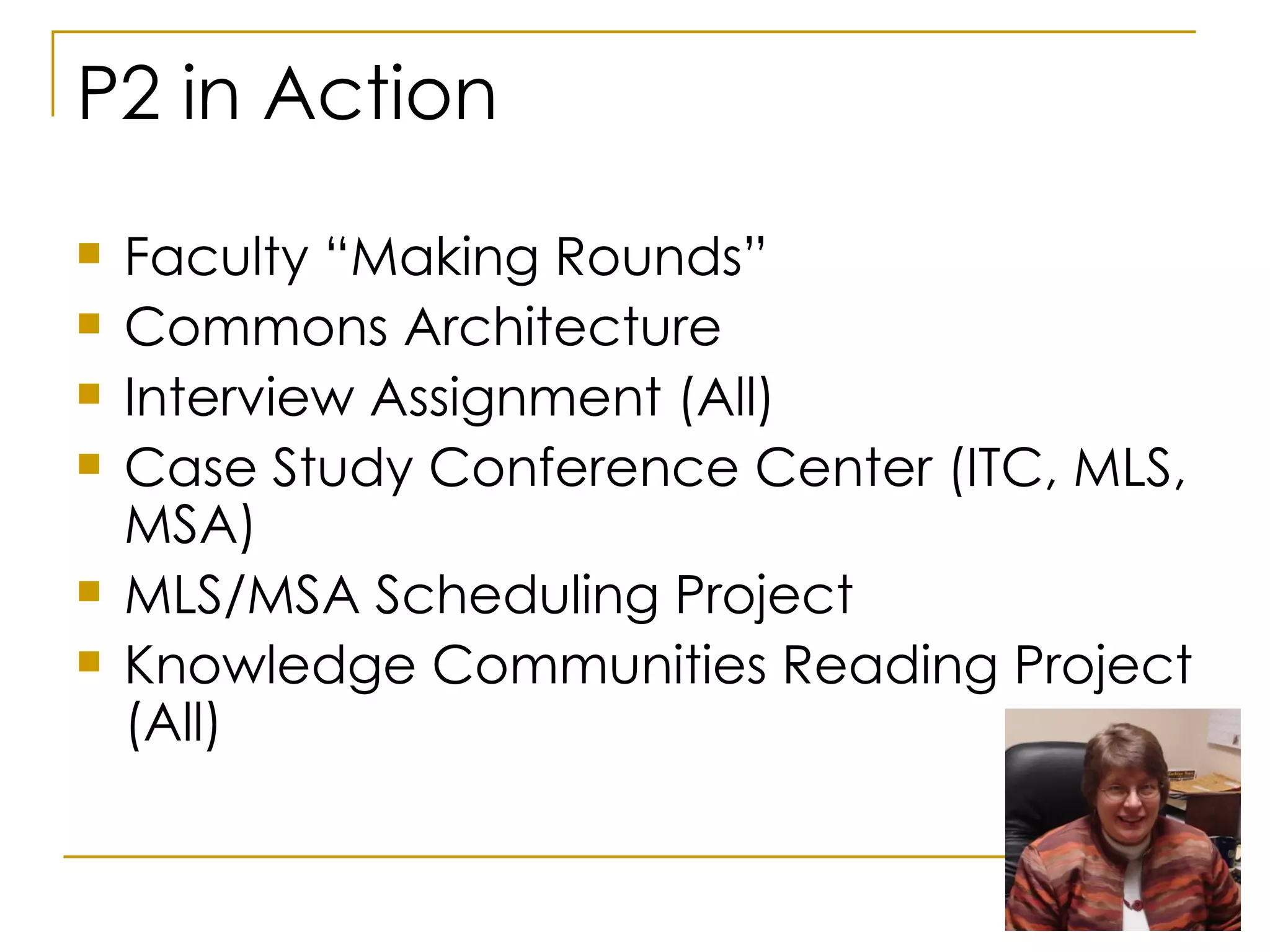
P2 in Action Faculty “Making Rounds” Commons Architecture Interview Assignment (All) Case Study Conference Center (ITC, MLS, MSA) MLS/MSA Scheduling Project Knowledge Communities Reading Project (All)
Resources Gartner Research (2007).  Gartner Says 80 Percent of Active Internet Users Will Have A "Second Life" in the Virtual World by the End of 2011.  Retrieved February 15, 2009, from  http://www.gartner.com/it/page.jsp?id=503861 . Hargadon, S. (2008).  Web 2.0 is the future of education.  Retrieved May 3, 2008, from  http://www.stevehargadon.com/2008/03/web-20-is-future-of-education.html .  Reich College of Education – Appalachian State University, Boone, N.C.  (2005).  Conceptual Framework.  Retrieved November 6, 2008, from  http://ced.appstate.edu/about/conceptualframework.aspx . Rovai, Alfred P. (2002). Building sense of community at a distance.  International Review of   Research in Open and Distance Learning ,  3 (1). Retrieved January 16, 2007, from  http://www.irrodl.org/content/v3.1/rovai.html .
Resources Tashner, J., Riedl, R., Bronack, S., Cheney, A., Gilman, R., Sanders, R., & Angel, R. (2007, January).  Learning communities in 3D immersive worlds: Evolving online instruction.  Hawaii International Conference on Education, Honolulu, HI. Published in the Book of Proceedings.  Tu, Chih-Hsiung. (2002). The measurement of social presence in an online learning environment.  International Journal on E-Learning 1 (2), 34-45. Retrieved January 20, 2003, from  www.aace.org/dl/files/IJEL/IJEL1234.pdf . Virtual Worlds Management (2009).  200+ Youth Worlds Live or Developing . Retrieved February 15, 2009, from  http://www.virtualworldsmanagement.com/2009/youth-01-26-2009.html .
Contact Information Steve Bronack:  [email_address]   Robert Sanders:  [email_address] Amy Cheney:  [email_address] Nita Matzen:  [email_address] John Tashner [email_address]


CIDER

  • 1.
    Presence Pedagogy: BuildingCommunities of Practice in Virtual Worlds Stephen Bronack Robert Sanders Amy Cheney Nita Matzen John Tashner
  • 2.
    Presentation Overview Sessiontext chat questions will be addressed by Amy Cheney and John Tashner Additional Questions/Discussions will be taken at end of presentation
  • 3.
    Presentation Overview WhoWe Are Successful Pedagogical Approaches to Teaching and Learning in 3D Environments Capitalizing on Social Aspects (Social Constructivism) Presence Pedagogy (P2) Model Questions/Discussion
  • 4.
    Why Should WeCare About Virtual Worlds? By 2011, over 80% of active Internet users will have a virtual presence (Gartner, 2007) More than 200 virtual worlds are active or in development for children 18 and under (Virtual Worlds Management, 2009) This is 50 more than in August of 2008
  • 5.
    Why a 3DVirtual Environment for Education? Population served Social constructivist philosophy Wanted to build a community of learners throughout North Carolina Hoped to facilitate meaningful interactions in the learning environment Did not think that traditional web-based tools (i.e. WebCT) offered these types of opportunities
  • 6.
    3D Environment Characterizedby significant components of space, movement, physical presence and co-presence Conversational and presentation tools with small and large group shared workspaces Metaphors and artifacts that assist collaboration and learning online in new and different ways
  • 7.
    AET Zone atAppalachian State First server purchased more than eight years ago (ActiveWorlds – www.activeworlds.com ) Core environment for Instructional Technology Master’s program Now serving students in Library Science, School Administration, Higher Education, Educational Leadership and Research Courses
  • 8.
    What Has Happened?More than 2400 citizens of the Zone, including students, alumni, guests and speakers from around the nation and world Rich with content and interactive elements Collaborative learning environment has developed
  • 9.
  • 10.
    Social Constructivism andVirtual Worlds (RCOE Conceptual Framework) Learning occurs through participation in a Community of Practice; Knowledge is socially constructed and learning is social in nature in a Community of Practice; Learners proceed through stages of development from Novice to Expert under the guidance of more experienced and knowledgeable mentors and among likeminded peers in the Community of Practice;
  • 11.
    Social Constructivism Anidentifiable knowledge base that is both general in nature and also specific to specialties emerges from focused activity within the Community of Practice; All professional educators develop a set of Dispositions reflecting attitudes, beliefs, and values common to the Community of Practice.
  • 12.
  • 13.
    Group Discussion ofEducation in Japan in AET Zone
  • 14.
    Presence and Co-PresenceStudies by Rovai (2002) and Tu (2002): Sense of presence and co-presence do seem to be critical factors in creating and maintaining online communities. Tashner et al (2007): Combining communication and collaboration tools with a sense of presence and co-presence provides opportunities for developing authentic learning environments
  • 15.
    Creation of CommunityLiu et al (2007), Significant relationships between sense of community and perceived learning engagement, perceived learning, and student satisfaction with online learning experiences
  • 16.
    Conversations and CollaborationsFrom web pages to web places Utilizing telecommunications tools for connections and linkages Connections are focused on conversations and collaborations Imbedded Web 2.0 tools enable many of these interactions
  • 17.
    Necessary Conditions Presenceand co-presence Facilitated by avatars Instructor presence a requirement Modeling Encouraging conversation and interaction Structuring of courses to require both small and large group student interactions around common goals
  • 18.
  • 19.
    Paradigm Shift (Hargadon,2008) From: To: Consuming Producing Authority Transparency Expert Facilitator Lecture Hallway Access to information Access to people Learning about Learning to be Passive learning Passionate learning Presentation Participation Publication Conversation Formal schooling Lifelong learning Supply-push Demand-pull.
  • 20.
  • 21.
  • 22.
    Presence Pedagogy (P2)Merger of Communities Forms new Community of Practice: AETZone AETZone = Transformative Space through which members move from CoP to CoP Response to Paradigm Shift P2 creates the churn of Transformative Learning in this new space Characterized by ten catalytic behaviors
  • 23.
    Presence Pedagogy (P2)The ways in which educators and learners interact in online environments: ask questions and correct misperceptions; stimulate background knowledge and expertise; share tools and resources; facilitate interactions and encourage community;
  • 24.
    Presence Pedagogy provideand delineate context and goals to act upon; encourage exploration and discovery; facilitate distributed cognition; encourage reflective practice; capitalize on the sense of presence and co-presence; utilize technologies to achieve and disseminate results. (Bronack, et al, 2008)
  • 25.
    P2 in ActionFaculty “Making Rounds” Commons Architecture Interview Assignment (All) Case Study Conference Center (ITC, MLS, MSA) MLS/MSA Scheduling Project Knowledge Communities Reading Project (All)
  • 26.
    Resources Gartner Research(2007). Gartner Says 80 Percent of Active Internet Users Will Have A "Second Life" in the Virtual World by the End of 2011. Retrieved February 15, 2009, from http://www.gartner.com/it/page.jsp?id=503861 . Hargadon, S. (2008). Web 2.0 is the future of education. Retrieved May 3, 2008, from http://www.stevehargadon.com/2008/03/web-20-is-future-of-education.html . Reich College of Education – Appalachian State University, Boone, N.C. (2005). Conceptual Framework. Retrieved November 6, 2008, from http://ced.appstate.edu/about/conceptualframework.aspx . Rovai, Alfred P. (2002). Building sense of community at a distance. International Review of Research in Open and Distance Learning , 3 (1). Retrieved January 16, 2007, from http://www.irrodl.org/content/v3.1/rovai.html .
  • 27.
    Resources Tashner, J.,Riedl, R., Bronack, S., Cheney, A., Gilman, R., Sanders, R., & Angel, R. (2007, January). Learning communities in 3D immersive worlds: Evolving online instruction. Hawaii International Conference on Education, Honolulu, HI. Published in the Book of Proceedings. Tu, Chih-Hsiung. (2002). The measurement of social presence in an online learning environment. International Journal on E-Learning 1 (2), 34-45. Retrieved January 20, 2003, from www.aace.org/dl/files/IJEL/IJEL1234.pdf . Virtual Worlds Management (2009). 200+ Youth Worlds Live or Developing . Retrieved February 15, 2009, from http://www.virtualworldsmanagement.com/2009/youth-01-26-2009.html .
  • 28.
    Contact Information SteveBronack: [email_address] Robert Sanders: [email_address] Amy Cheney: [email_address] Nita Matzen: [email_address] John Tashner [email_address]
  • 29.
  • 30.
  • 31.
  • 32.