Plant Cells, Edible Plant Cells!
     Julia Voris, Meredith Gallina, Laurel Szymanski,
                     Alexandra Long
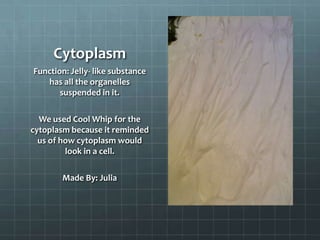
Cytoplasm
Function: Jelly- like substance
   has all the organelles
       suspended in it.

  We used Cool Whip for the
cytoplasm because it reminded
  us of how cytoplasm would
         look in a cell.

       Made By: Julia
Cell Walls
Function: To keep it protected
 from injury and to help keep
    the shape of the cell.

  We used gram crackers to
  model the cell wall because
the crackers keep the shape on
    the inside from spilling.


     Made By: Alexandra
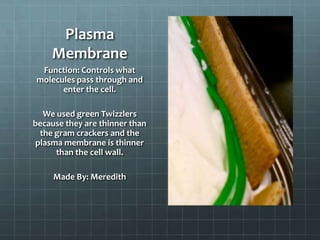
Plasma
    Membrane
 Function: Controls what
molecules pass through and
      enter the cell.

  We used green Twizzlers
because they are thinner than
 the gram crackers and the
plasma membrane is thinner
     than the cell wall.

     Made By: Meredith
Vacuole
 Function: Stores water and
 nutrients the cell needs to
          survive.

  We chose a marsh mellow
   covered in chocolate to
represent the vacuole of a cell
  because a marsh mellow is
 spongy like a vacuole would
              be.
      Made By: Laurel
Nucleus
Function: Directs most of the
     activity in the cell.

  We used a cookie covered in
chocolate because we describe
    people as being “smart
 cookies” and a nucleus has to
   know what it’s doing like
     someone smart does.

        Made By: Julia
Nucleolus
 Function: It constructs the
 ribosomes the cell needs.

We used a Hershey’s Drop to
  represent the nucleolus
 because the drop is smaller
  than the nucleus and it’s
   chocolate just like the
represented nucleus is. They
 are both made of the same
         substance.
      Made By: Laurel
Cytoskeleton
Function: It is fibers that hold
      the cell together.

We used pretzels to represent
the cytoskeleton because they
look a little like a skeleton and
   they are thin just like we
imagine a cytoskeleton would
                look.

      Made By: Meredith
Golgi Apparatus
Function: Groups and packages
 lipids and proteins in vesicles.

We chose to use peach rings as
 the golgi apparatus because
they look layered and packed
           together.

     Made By: Alexandra
Rough ER
Function: It combines proteins
   and also is a membrane
            factory.

We used sugar-coated gummy
  worm to represent the ER
 because they are rough like
  the rough ER would most
          likely be.

       Made By: Julia
Smooth ER
  Function: This organelle
combines liquids for the cell
     when it needs it.

   We used gummy worms
because they are smooth like
the smooth ER. They aren’t as
    rigid as the rough ER.

      Made By: Laurel
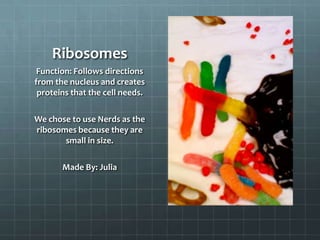
Ribosomes
 Function: Follows directions
from the nucleus and creates
 proteins that the cell needs.

We chose to use Nerds as the
ribosomes because they are
       small in size.

       Made By: Julia
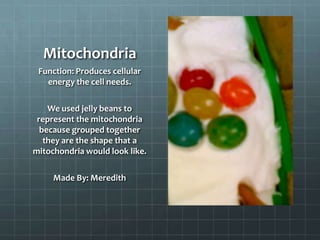
Mitochondria
 Function: Produces cellular
   energy the cell needs.

    We used jelly beans to
 represent the mitochondria
  because grouped together
   they are the shape that a
mitochondria would look like.

     Made By: Meredith
Chloroplast
     Function: Using
photosynthesis it produces
  energy the cell needs.

   We used a gumball to
 represent the chloroplast
because they are thought to
   be green and round.

   Made By: Alexandra
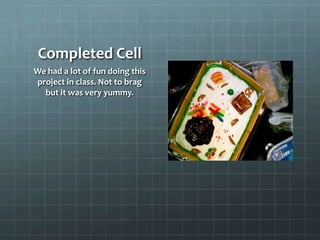
Completed Cell
We had a lot of fun doing this
project in class. Not to brag
  but it was very yummy.

Edible Cell Powerpoint

  • 1.
    Plant Cells, EdiblePlant Cells! Julia Voris, Meredith Gallina, Laurel Szymanski, Alexandra Long
  • 2.
    Cytoplasm Function: Jelly- likesubstance has all the organelles suspended in it. We used Cool Whip for the cytoplasm because it reminded us of how cytoplasm would look in a cell. Made By: Julia
  • 3.
    Cell Walls Function: Tokeep it protected from injury and to help keep the shape of the cell. We used gram crackers to model the cell wall because the crackers keep the shape on the inside from spilling. Made By: Alexandra
  • 4.
    Plasma Membrane Function: Controls what molecules pass through and enter the cell. We used green Twizzlers because they are thinner than the gram crackers and the plasma membrane is thinner than the cell wall. Made By: Meredith
  • 5.
    Vacuole Function: Storeswater and nutrients the cell needs to survive. We chose a marsh mellow covered in chocolate to represent the vacuole of a cell because a marsh mellow is spongy like a vacuole would be. Made By: Laurel
  • 6.
    Nucleus Function: Directs mostof the activity in the cell. We used a cookie covered in chocolate because we describe people as being “smart cookies” and a nucleus has to know what it’s doing like someone smart does. Made By: Julia
  • 7.
    Nucleolus Function: Itconstructs the ribosomes the cell needs. We used a Hershey’s Drop to represent the nucleolus because the drop is smaller than the nucleus and it’s chocolate just like the represented nucleus is. They are both made of the same substance. Made By: Laurel
  • 8.
    Cytoskeleton Function: It isfibers that hold the cell together. We used pretzels to represent the cytoskeleton because they look a little like a skeleton and they are thin just like we imagine a cytoskeleton would look. Made By: Meredith
  • 9.
    Golgi Apparatus Function: Groupsand packages lipids and proteins in vesicles. We chose to use peach rings as the golgi apparatus because they look layered and packed together. Made By: Alexandra
  • 10.
    Rough ER Function: Itcombines proteins and also is a membrane factory. We used sugar-coated gummy worm to represent the ER because they are rough like the rough ER would most likely be. Made By: Julia
  • 11.
    Smooth ER Function: This organelle combines liquids for the cell when it needs it. We used gummy worms because they are smooth like the smooth ER. They aren’t as rigid as the rough ER. Made By: Laurel
  • 12.
    Ribosomes Function: Followsdirections from the nucleus and creates proteins that the cell needs. We chose to use Nerds as the ribosomes because they are small in size. Made By: Julia
  • 13.
    Mitochondria Function: Producescellular energy the cell needs. We used jelly beans to represent the mitochondria because grouped together they are the shape that a mitochondria would look like. Made By: Meredith
  • 14.
    Chloroplast Function: Using photosynthesis it produces energy the cell needs. We used a gumball to represent the chloroplast because they are thought to be green and round. Made By: Alexandra
  • 15.
    Completed Cell We hada lot of fun doing this project in class. Not to brag but it was very yummy.