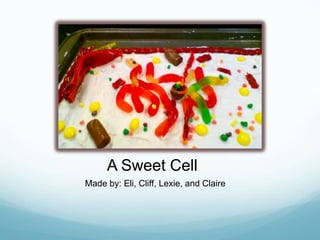
A Sweet Cell
Made by: Eli, Cliff, Lexie, and Claire
Nuclear Membrane
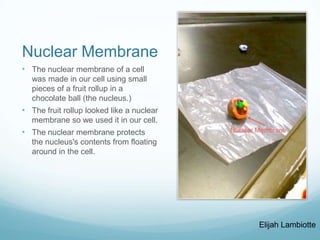
• The nuclear membrane of a cell
  was made in our cell using small
  pieces of a fruit rollup in a
  chocolate ball (the nucleus.)
• The fruit rollup looked like a nuclear
  membrane so we used it in our cell.
• The nuclear membrane protects
  the nucleus's contents from floating
  around in the cell.


                                           Elijah Lambiotte
Cytoplasm
• We used icing for the cell’s
  cytoplasm
• Icing allowed for our other parts to
  stick to the cell much like how the
  cytoplasm keeps all the parts of an
  actual cell in place.
• Cytoplasm maintains the cell’s
  internal pressure and holds all of
  the parts in order.


                                         Elijah Lambiotte
Lysosomes
• In order to make a duplicate of
  lysosomes we used yellow skittles.
• We thought that the skittles looked
  somewhat alike to vacuoles in an
  actual cell
• Lysosomes break down waste
  products and random debris in a
  cell.


                                        Elijah Lambiotte
Golgi Body
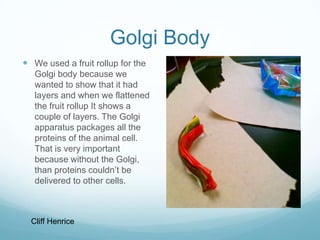
 We used a fruit rollup for the
   Golgi body because we
   wanted to show that it had
   layers and when we flattened
   the fruit rollup It shows a
   couple of layers. The Golgi
   apparatus packages all the
   proteins of the animal cell.
   That is very important
   because without the Golgi,
   than proteins couldn’t be
   delivered to other cells.


  Cliff Henrice
Rough E.R
 For the Rough E.R, we used
  Gummy worms with nerds on
  it. The nerds represented all
  the ribosomes on the rough
  E.R Its function is to support
  the shape of the cell for
  storage of calcium and other
  materials


 Cliff Henrice
Smooth E.R
 For the smooth E.R we used
  Gummy worms with out any
  nerds on it because it doesn’t
  have ribosomes on it. The
  smooth E.R is in charge of
  the synthesis of lipids and
  proteins from the membrane


 Cliff Henrice
Ribosomes
 For the ribosomes in our cell,
   we used nerds because they
   were very small just like
   ribosomes really are.
   Ribosomes are responsible
   for assembling all the poteins
   in the cell which might come
   from the smooth E.R


  Cliff Henrice
Vacuoles
• We used small pieces of twizzlers
  to replicate the vacuoles in an
  animal cell.
• We chose this because we thought
  it looked similar to actual vacuoles
• The function of vacuoles is to
  isolate and throw out harmful
  materials from the cell and contain
  waste products.


                                         Elijah Lambiotte
Cell Membrane


We used Twizzlers to represent the Cell Membrane because it is
skinny and long. We could put them together to outline the cell. It
is a thin semi permeable membrane that allows certain materials
 to enter the cell while keeping others out. It has two layers, so it
  is a bilayer. The proteins in the cells decide what can move in
                          and out of the cell.

                                                    Lexie Smathers
Nucleus


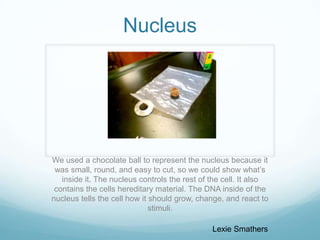
We used a chocolate ball to represent the nucleus because it
 was small, round, and easy to cut, so we could show what’s
   inside it. The nucleus controls the rest of the cell. It also
 contains the cells hereditary material. The DNA inside of the
nucleus tells the cell how it should grow, change, and react to
                              stimuli.

                                               Lexie Smathers
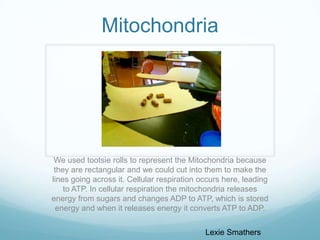
Mitochondria


 We used tootsie rolls to represent the Mitochondria because
 they are rectangular and we could cut into them to make the
lines going across it. Cellular respiration occurs here, leading
    to ATP. In cellular respiration the mitochondria releases
energy from sugars and changes ADP to ATP, which is stored
  energy and when it releases energy it converts ATP to ADP.


                                             Lexie Smathers
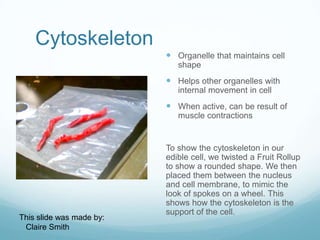
Cytoskeleton
                           Organelle that maintains cell
                             shape
                           Helps other organelles with
                             internal movement in cell
                           When active, can be result of
                             muscle contractions


                          To show the cytoskeleton in our
                          edible cell, we twisted a Fruit Rollup
                          to show a rounded shape. We then
                          placed them between the nucleus
                          and cell membrane, to mimic the
                          look of spokes on a wheel. This
                          shows how the cytoskeleton is the
                          support of the cell.
This slide was made by:
 Claire Smith
Nucleolus
On the inside of the Nucleus
 Contains chromosomes
 Makes ribosomes
 Disassembles at beginning of
   mitosis, which is the process
   cells go through to reproduce


We decided to use a Fruit Rollup
to represent the nucleolus
because it was easily molded to
the inside of the Nucleus.


                                         This slide was made by:
                                          Claire Smith
Chromatin
                           Made up of DNA and
                            proteins
                           Found in nucleolus, which is
                            located in the nucleus
                           Functions:
                             Package DNA
                             Strengthen DNA for mitosis
                             Prevent DNA damage

                            We used Nerds to represent the
                            chromatin mostly because they
                            are both small in size.

This slide was made by:
 Claire Smith

Our edible cell candi

  • 1.
    A Sweet Cell Madeby: Eli, Cliff, Lexie, and Claire
  • 2.
    Nuclear Membrane • Thenuclear membrane of a cell was made in our cell using small pieces of a fruit rollup in a chocolate ball (the nucleus.) • The fruit rollup looked like a nuclear membrane so we used it in our cell. • The nuclear membrane protects the nucleus's contents from floating around in the cell. Elijah Lambiotte
  • 3.
    Cytoplasm • We usedicing for the cell’s cytoplasm • Icing allowed for our other parts to stick to the cell much like how the cytoplasm keeps all the parts of an actual cell in place. • Cytoplasm maintains the cell’s internal pressure and holds all of the parts in order. Elijah Lambiotte
  • 4.
    Lysosomes • In orderto make a duplicate of lysosomes we used yellow skittles. • We thought that the skittles looked somewhat alike to vacuoles in an actual cell • Lysosomes break down waste products and random debris in a cell. Elijah Lambiotte
  • 5.
    Golgi Body  Weused a fruit rollup for the Golgi body because we wanted to show that it had layers and when we flattened the fruit rollup It shows a couple of layers. The Golgi apparatus packages all the proteins of the animal cell. That is very important because without the Golgi, than proteins couldn’t be delivered to other cells. Cliff Henrice
  • 6.
    Rough E.R  Forthe Rough E.R, we used Gummy worms with nerds on it. The nerds represented all the ribosomes on the rough E.R Its function is to support the shape of the cell for storage of calcium and other materials Cliff Henrice
  • 7.
    Smooth E.R  Forthe smooth E.R we used Gummy worms with out any nerds on it because it doesn’t have ribosomes on it. The smooth E.R is in charge of the synthesis of lipids and proteins from the membrane Cliff Henrice
  • 8.
    Ribosomes  For theribosomes in our cell, we used nerds because they were very small just like ribosomes really are. Ribosomes are responsible for assembling all the poteins in the cell which might come from the smooth E.R Cliff Henrice
  • 9.
    Vacuoles • We usedsmall pieces of twizzlers to replicate the vacuoles in an animal cell. • We chose this because we thought it looked similar to actual vacuoles • The function of vacuoles is to isolate and throw out harmful materials from the cell and contain waste products. Elijah Lambiotte
  • 10.
    Cell Membrane We usedTwizzlers to represent the Cell Membrane because it is skinny and long. We could put them together to outline the cell. It is a thin semi permeable membrane that allows certain materials to enter the cell while keeping others out. It has two layers, so it is a bilayer. The proteins in the cells decide what can move in and out of the cell. Lexie Smathers
  • 11.
    Nucleus We used achocolate ball to represent the nucleus because it was small, round, and easy to cut, so we could show what’s inside it. The nucleus controls the rest of the cell. It also contains the cells hereditary material. The DNA inside of the nucleus tells the cell how it should grow, change, and react to stimuli. Lexie Smathers
  • 12.
    Mitochondria We usedtootsie rolls to represent the Mitochondria because they are rectangular and we could cut into them to make the lines going across it. Cellular respiration occurs here, leading to ATP. In cellular respiration the mitochondria releases energy from sugars and changes ADP to ATP, which is stored energy and when it releases energy it converts ATP to ADP. Lexie Smathers
  • 13.
    Cytoskeleton  Organelle that maintains cell shape  Helps other organelles with internal movement in cell  When active, can be result of muscle contractions To show the cytoskeleton in our edible cell, we twisted a Fruit Rollup to show a rounded shape. We then placed them between the nucleus and cell membrane, to mimic the look of spokes on a wheel. This shows how the cytoskeleton is the support of the cell. This slide was made by: Claire Smith
  • 14.
    Nucleolus On the insideof the Nucleus  Contains chromosomes  Makes ribosomes  Disassembles at beginning of mitosis, which is the process cells go through to reproduce We decided to use a Fruit Rollup to represent the nucleolus because it was easily molded to the inside of the Nucleus. This slide was made by: Claire Smith
  • 15.
    Chromatin  Made up of DNA and proteins  Found in nucleolus, which is located in the nucleus  Functions:  Package DNA  Strengthen DNA for mitosis  Prevent DNA damage We used Nerds to represent the chromatin mostly because they are both small in size. This slide was made by: Claire Smith