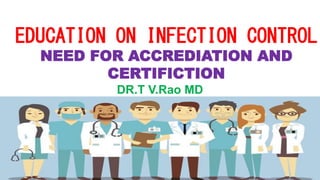








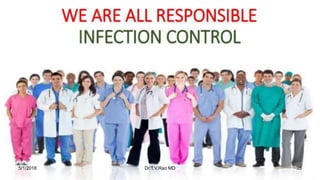





EDUCATION ON INFECTION CONTROL
NEED FOR ACCREDIATION AND
CERTIFICTION
DR.T V.Rao MD
5/1/2018 Dr.T.V.Rao MD 1
INFECTION
CONTROL
EDUCATION
1/20/2019 Dr.T.V.Rao MD @Education in infection
control-
2
ARE WE FORGETTING THE GREAT TEACHING ON
INFECTION CONTROL
1/20/2019 Dr.T.V.Rao MD @Education in infection
control-
3
WHO INFORMS
• Very few studies from developing countries
assessed HCAI impact and no report provided
national estimates. Increased length of stay
associated with HCAI varies between 6 and 23
days in non-critically ill patients. In developing
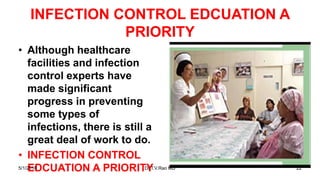
countries, crude excess mortality in adult
critically ill adults affected by ventilator-
associated pneumonia is reported to be as
high as 27.5%.5/1/2018 Dr.T.V.Rao MD 4
India at a Glance
WHAT IS MORE RISKY
OUR LIVING OR HOSPITALS
• Population:
1,314,097,616
• Per capita income:
$5,760
• Life expectancy at
birth women/men:
69/68 yrs
• Infant mortality rate:
42/1,000 live births
5/1/2018Dr.T.V.Rao MD 5
5/1/2018 Dr.T.V.Rao MD 6
5/1/2018 Dr.T.V.Rao MD 7
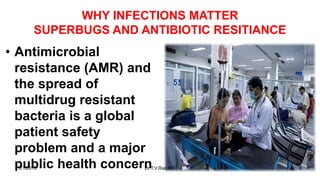
WHY INFECTIONS MATTER
SUPERBUGS AND ANTIBIOTIC RESITIANCE
• Antimicrobial
resistance (AMR) and
the spread of
multidrug resistant
bacteria is a global
patient safety
problem and a major
public health concern5/1/2018 Dr.T.V.Rao MD 8
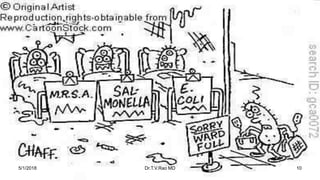
5/1/2018 Dr.T.V.Rao MD 9
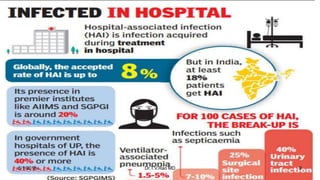
5/1/2018 Dr.T.V.Rao MD 10
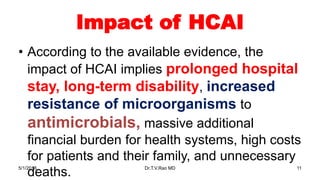
Impact of HCAI
• According to the available evidence, the
impact of HCAI implies prolonged hospital
stay, long-term disability, increased
resistance of microorganisms to
antimicrobials, massive additional
financial burden for health systems, high costs
for patients and their family, and unnecessary
deaths.5/1/2018 Dr.T.V.Rao MD 11
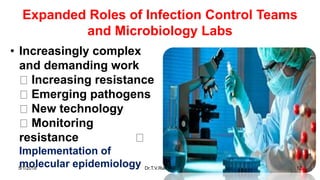
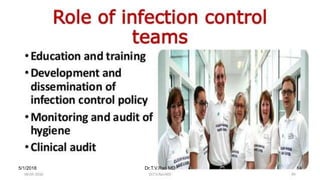
Expanded Roles of Infection Control Teams
and Microbiology Labs
• Increasingly complex
and demanding work
Increasing resistance
Emerging pathogens
New technology
Monitoring
resistance
Implementation of
molecular epidemiology5/1/2018 Dr.T.V.Rao MD 12
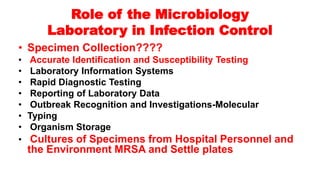
Role of the Microbiology
Laboratory in Infection Control
• Specimen Collection????
• Accurate Identification and Susceptibility Testing
• Laboratory Information Systems
• Rapid Diagnostic Testing
• Reporting of Laboratory Data
• Outbreak Recognition and Investigations-Molecular
• Typing
• Organism Storage
• Cultures of Specimens from Hospital Personnel and
the Environment MRSA and Settle plates
5/1/2018 Dr.T.V.Rao MD 14
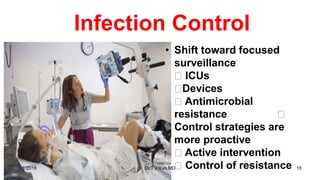
Infection Control
• Shift toward focused
surveillance
ICUs
Devices
Antimicrobial
resistance
Control strategies are
more proactive
Active intervention
Control of resistance5/1/2018 Dr.T.V.Rao MD 15
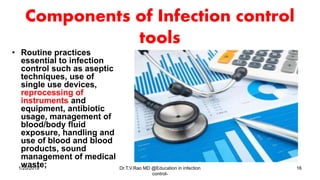
Components of Infection control
tools
• Routine practices
essential to infection
control such as aseptic
techniques, use of
single use devices,
reprocessing of
instruments and
equipment, antibiotic
usage, management of
blood/body fluid
exposure, handling and
use of blood and blood
products, sound
management of medical
waste;1/20/2019 Dr.T.V.Rao MD @Education in infection
control-
16
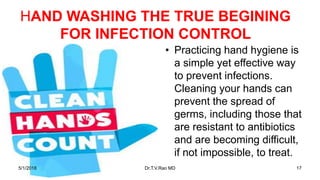
HAND WASHING THE TRUE BEGINING
FOR INFECTION CONTROL
• Practicing hand hygiene is
a simple yet effective way
to prevent infections.
Cleaning your hands can
prevent the spread of
germs, including those that
are resistant to antibiotics
and are becoming difficult,
if not impossible, to treat.
5/1/2018 Dr.T.V.Rao MD 17
5/1/2018 Dr.T.V.Rao MD 18
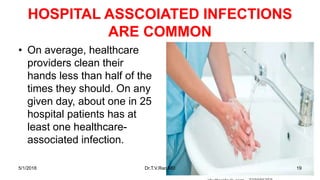
HOSPITAL ASSCOIATED INFECTIONS
ARE COMMON
• On average, healthcare
providers clean their
hands less than half of the
times they should. On any
given day, about one in 25
hospital patients has at
least one healthcare-
associated infection.
5/1/2018 Dr.T.V.Rao MD 19
Standard Precautions for All Patient Care
• Standard Precautions are used for all
patient care. They’re based on a risk
assessment and make use of common
sense practices and personal protective
equipment use that protect healthcare
providers from infection and prevent the
spread of infection from patient to patient.
5/1/2018 Dr.T.V.Rao MD 20
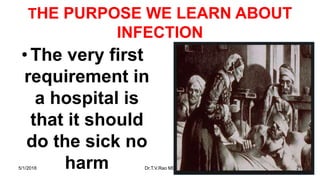
THE PURPOSE WE LEARN ABOUT
INFECTION
•The very first
requirement in
a hospital is
that it should
do the sick no
harm5/1/2018 Dr.T.V.Rao MD 21
INFECTION CONTROL EDCUATION A
PRIORITY
• Although healthcare
facilities and infection
control experts have
made significant
progress in preventing
some types of
infections, there is still a
great deal of work to do.
• INFECTION CONTROL
EDCUATION A PRIORITY5/1/2018 Dr.T.V.Rao MD 22
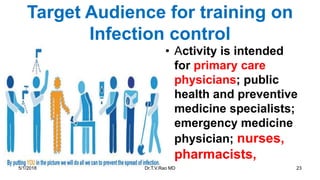
Target Audience for training on
Infection control
• Activity is intended
for primary care
physicians; public
health and preventive
medicine specialists;
emergency medicine
physician; nurses,
pharmacists,
5/1/2018 Dr.T.V.Rao MD 23
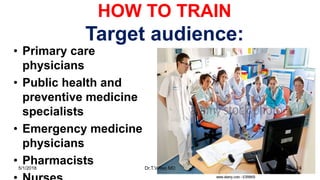
HOW TO TRAIN
Target audience:
• Primary care
physicians
• Public health and
preventive medicine
specialists
• Emergency medicine
physicians
• Pharmacists5/1/2018 Dr.T.V.Rao MD 24
5/1/2018 Dr.T.V.Rao MD 25
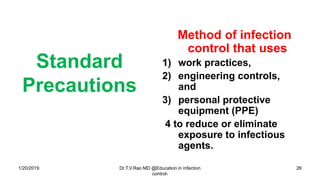
Standard
Precautions
Method of infection
control that uses
1) work practices,
2) engineering controls,
and
3) personal protective
equipment (PPE)
4 to reduce or eliminate
exposure to infectious
agents.
1/20/2019 Dr.T.V.Rao MD @Education in infection
control-
26
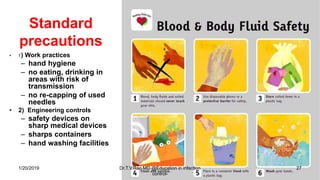
Standard
precautions
• 1) Work practices
– hand hygiene
– no eating, drinking in
areas with risk of
transmission
– no re-capping of used
needles
• 2) Engineering controls
– safety devices on
sharp medical devices
– sharps containers
– hand washing facilities
1/20/2019 Dr.T.V.Rao MD @Education in infection
control-
27
1/20/2019 Dr.T.V.Rao MD @Education in infection
control-
28
We made a
Progress but not
adequate
• Although healthcare
facilities and infection
control experts have
made significant
progress in preventing
some types of infections,
there is still a great deal
of work to do
1/20/2019 Dr.T.V.Rao MD @Education in infection
control-
29
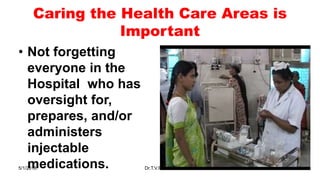
Caring the Health Care Areas is
Important
• Not forgetting
everyone in the
Hospital who has
oversight for,
prepares, and/or
administers
injectable
medications.5/1/2018 Dr.T.V.Rao MD 30
Critical concerns with Dressing rooms
5/1/2018 Dr.T.V.Rao MD 31
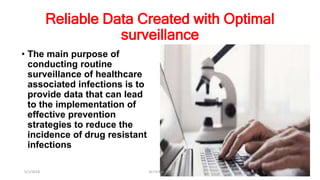
Reliable Data Created with Optimal
surveillance
• The main purpose of
conducting routine
surveillance of healthcare
associated infections is to
provide data that can lead
to the implementation of
effective prevention
strategies to reduce the
incidence of drug resistant
infections
5/1/2018 Dr.T.V.Rao MD 32
5/1/2018 Dr.T.V.Rao MD 33
NEED FOR NATIONAL
ACCREDAITON ON INFECTIOUS
DISEASES
5/1/2018 Dr.T.V.Rao MD 34
The Scenario in Developing countries
• Very few studies from developing countries
assessed HCAI impact and no report provided
national estimates. Increased length of stay
associated with HCAI varies between 6 and 23
days in non-critically ill patients. In developing
countries, crude excess mortality in adult critically ill
adults affected by ventilator-associated
pneumonia is reported to be as high as 27.5%.
5/1/2018 Dr.T.V.Rao MD 35
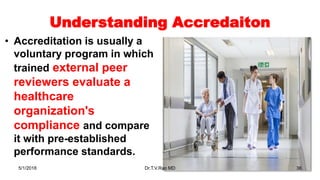
Understanding Accredaiton
• Accreditation is usually a
voluntary program in which
trained external peer
reviewers evaluate a
healthcare
organization's
compliance and compare
it with pre-established
performance standards.
5/1/2018 Dr.T.V.Rao MD 36
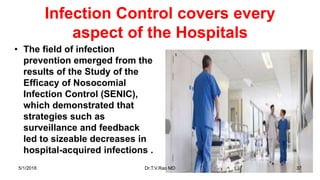
Infection Control covers every
aspect of the Hospitals
• The field of infection
prevention emerged from the
results of the Study of the
Efficacy of Nosocomial
Infection Control (SENIC),
which demonstrated that
strategies such as
surveillance and feedback
led to sizeable decreases in
hospital-acquired infections .
5/1/2018 Dr.T.V.Rao MD 37
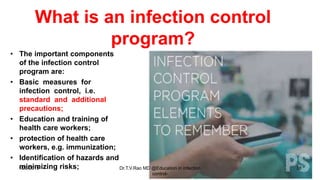
What is an infection control
program?
• The important components
of the infection control
program are:
• Basic measures for
infection control, i.e.
standard and additional
precautions;
• Education and training of
health care workers;
• protection of health care
workers, e.g. immunization;
• Identification of hazards and
minimizing risks;1/20/2019 Dr.T.V.Rao MD @Education in infection
control-
38
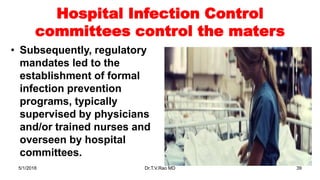
Hospital Infection Control
committees control the maters
• Subsequently, regulatory
mandates led to the
establishment of formal
infection prevention
programs, typically
supervised by physicians
and/or trained nurses and
overseen by hospital
committees.
5/1/2018 Dr.T.V.Rao MD 39
Laboratory Accrediation
Why Get Accredited?
• Since 1994, JCI is the
world’s largest health
care accreditor. Each
organization seeks the
universally recognized
Gold Seal of Approval®
as part of a continuous
performance-
improvement journey.
5/1/2018 Dr.T.V.Rao MD 40
JCI standards
• JCI standards
support a complete,
accurate, and
objective assessment
of laboratory
processes and
management
practices that provide
essential services for5/1/2018 Dr.T.V.Rao MD 41
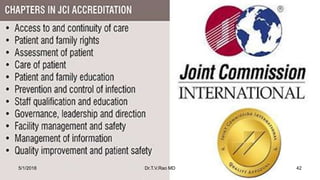
5/1/2018 Dr.T.V.Rao MD 42
INDIAN HOSPITAL ACCREDITED WITH
NABH AND NABL
• Accreditation helps
laboratories
demonstrate their
efficiency, accuracy,
and cost-effectiveness
while keeping the main
focus on quality and
patient safety.
5/1/2018 Dr.T.V.Rao MD 43
NEED FOR NATIONAL
ACCREDATION
• Establishing and expanding
government led networks to
strengthen infection
prevention and control and
healthcare associated
infection surveillance are
essential to effectively
tackle antimicrobial
resistance
• Soumya Swaminathan and colleagues
5/1/2018 Dr.T.V.Rao MD 44
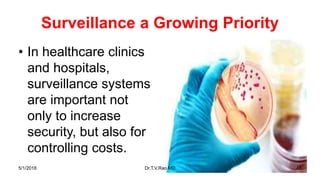
Surveillance a Growing Priority
• In healthcare clinics
and hospitals,
surveillance systems
are important not
only to increase
security, but also for
controlling costs.
5/1/2018 Dr.T.V.Rao MD 45
ACTIVE SURVEILLANCE
• Active surveillance shall be done at least for high risk
areas.
• High risk areas under various setting include:
• • Intensive care units (Neonatal ICU, Pediatric ICU,
ICUs – Cardio Thoracic Vascular Surgery, Respiratory
infections (H1N1) units). • Operation Theatres
• • Dialysis Unit
• • Burns Unit
• • Transfusion services unit
• • Food handlers
• • Drinking water5/1/2018 Dr.T.V.Rao MD 46
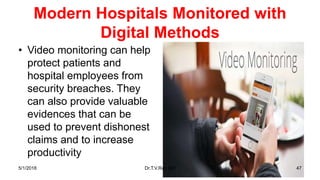
Modern Hospitals Monitored with
Digital Methods
• Video monitoring can help
protect patients and
hospital employees from
security breaches. They
can also provide valuable
evidences that can be
used to prevent dishonest
claims and to increase
productivity
5/1/2018 Dr.T.V.Rao MD 47
NABH
• NABH is currently operating in India with 201 large
hospitals already accredited and nearly 700 hospitals in
various phases of accreditation
• With patient safety and quality healthcare becoming key
concerns across India, NABH (National Accreditation
Board for Hospitals & Healthcare Providers) and Becton
Dickinson India (a medical technology company) are
launching NABH-Safe-I Infection Control Accreditation
Program for hospitals in Karnataka.
5/1/2018 Dr.T.V.Rao MD 48
THE ESSENTIALS FOR
ACCREDAITON STANDARDS
• The Accreditation standards outline the key routine
practices and additional precautions necessary for an
effective IPC program, including:
• Point-of-care risk assessment
• Hand hygiene
• Aseptic techniques
• Personal protective equipment
• Cleaning and disinfection of the physical environment
• Handling waste and linen5/1/2018 Dr.T.V.Rao MD 49
Promoting a collaborative approach to protecting
the safety of clients and staff,
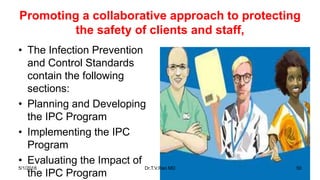
• The Infection Prevention
and Control Standards
contain the following
sections:
• Planning and Developing
the IPC Program
• Implementing the IPC
Program
• Evaluating the Impact of
the IPC Program
5/1/2018 Dr.T.V.Rao MD 50
INFECTION CONTROL A GRWOING
CHALLENGE TO EVERY HOSPITAL
• Strengthening broader institutional capacity for
infection prevention and control is also a
priority. Each network facility has completed a
self assessment using a standardised World
Health Organization tool to collect information
on the core components of infection prevention
and control, such as administrative and staff
support and laboratory and monitoring capacity
5/1/2018 Dr.T.V.Rao MD 51
ANTIMICROBIAL DRUG RESSITANCE IS
CONCERN TO ALL LIVING
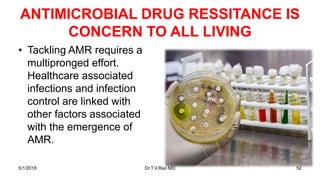
• Tackling AMR requires a
multipronged effort.
Healthcare associated
infections and infection
control are linked with
other factors associated
with the emergence of
AMR.
5/1/2018 Dr.T.V.Rao MD 52
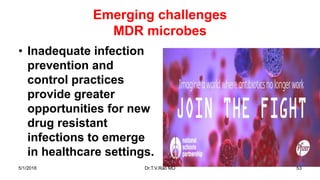
Emerging challenges
MDR microbes
• Inadequate infection
prevention and
control practices
provide greater
opportunities for new
drug resistant
infections to emerge
in healthcare settings.
5/1/2018 Dr.T.V.Rao MD 53
Creation of Superbugs
• High incidence of such
infections results in an
increased demand for
broad spectrum and
reserve antibiotics,
which also contributes
to increased drug
resistance
5/1/2018 Dr.T.V.Rao MD 54
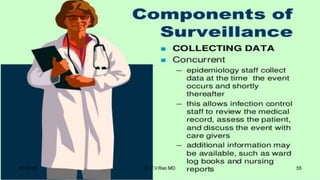
5/1/2018 Dr.T.V.Rao MD 55
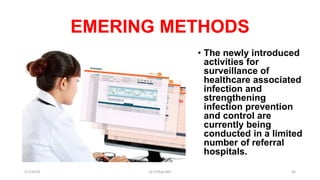
EMERING METHODS
• The newly introduced
activities for
surveillance of
healthcare associated
infection and
strengthening
infection prevention
and control are
currently being
conducted in a limited
number of referral
hospitals.
5/1/2018 Dr.T.V.Rao MD 56
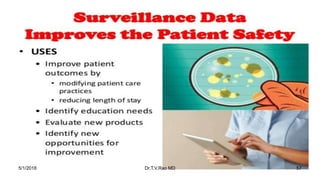
5/1/2018 Dr.T.V.Rao MD 57
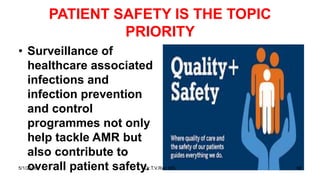
PATIENT SAFETY IS THE TOPIC
PRIORITY
• Surveillance of
healthcare associated
infections and
infection prevention
and control
programmes not only
help tackle AMR but
also contribute to
overall patient safety.5/1/2018 Dr.T.V.Rao MD 58
INDIA PROGRESSING FOR WITH
CURRENT CHALLENGES
• Incorporating the initiatives started by the
Indian Council of Medical Research and the
National Centre for Disease Control within
broader clinical care and patient safety
initiatives— including accreditation and
certification programmes implemented by the
National Accreditation Board of Hospitals
and the National Health Mission in
5/1/2018 Dr.T.V.Rao MD 59
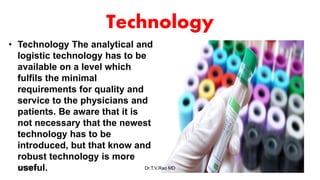
Technology
• Technology The analytical and
logistic technology has to be
available on a level which
fulfils the minimal
requirements for quality and
service to the physicians and
patients. Be aware that it is
not necessary that the newest
technology has to be
introduced, but that know and
robust technology is more
useful.5/1/2018 Dr.T.V.Rao MD 60
WORKING WITH REALTIES
A TURE SUCCES STORY
• Very essential is the delivering just in time of
spare parts and consumables. The extent of the
local distribution system of a company is more
important than the costs of the investment of
the equipment. The newest technology without
the support of the local providers and without
the easy access to reagents, disposables and
spare part is a negative approach
5/1/2018 Dr.T.V.Rao MD 61
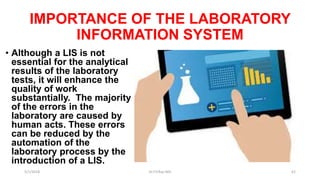
IMPORTANCE OF THE LABORATORY
INFORMATION SYSTEM
• Although a LIS is not
essential for the analytical
results of the laboratory
tests, it will enhance the
quality of work
substantially. The majority
of the errors in the
laboratory are caused by
human acts. These errors
can be reduced by the
automation of the
laboratory process by the
introduction of a LIS.
5/1/2018 Dr.T.V.Rao MD 62
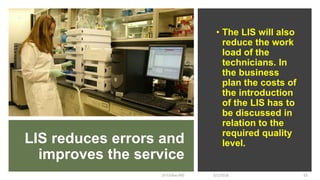
LIS reduces errors and
improves the service
• The LIS will also
reduce the work
load of the
technicians. In
the business
plan the costs of
the introduction
of the LIS has to
be discussed in
relation to the
required quality
level.
5/1/2018Dr.T.V.Rao MD 63
HAND HYGINE SAVES MANY LIVES THAN MANY OTHER
METHODS
5/1/2018 Dr.T.V.Rao MD 64
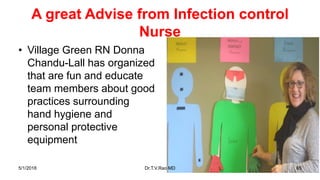
A great Advise from Infection control
Nurse
• Village Green RN Donna
Chandu-Lall has organized
that are fun and educate
team members about good
practices surrounding
hand hygiene and
personal protective
equipment
5/1/2018 Dr.T.V.Rao MD 65
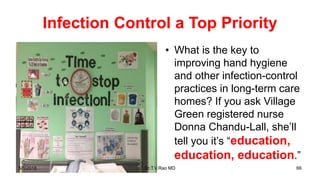
Infection Control a Top Priority
• What is the key to
improving hand hygiene
and other infection-control
practices in long-term care
homes? If you ask Village
Green registered nurse
Donna Chandu-Lall, she’ll
tell you it’s “education,
education, education.”
5/1/2018 Dr.T.V.Rao MD 66
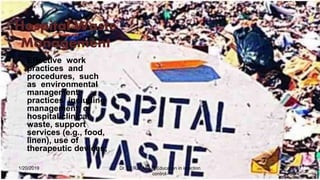
Hospital Waste
Management
• Effective work
practices and
procedures, such
as environmental
management
practices including
management of
hospital/clinical
waste, support
services (e.g., food,
linen), use of
therapeutic devices;
1/20/2019 Dr.T.V.Rao MD @Education in infection
control-
67
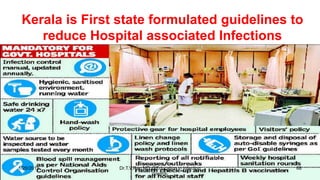
Kerala is First state formulated guidelines to
reduce Hospital associated Infections
1/20/2019 Dr.T.V.Rao MD @Education in infection
control-
68
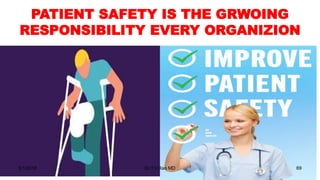
PATIENT SAFETY IS THE GRWOING
RESPONSIBILITY EVERY ORGANIZION
5/1/2018 Dr.T.V.Rao MD 69
1/20/2019 Dr.T.V.Rao MD @Education in infection
control-
70
1/20/2019 Dr.T.V.Rao MD @Education in infection
control-
71

Edcuation on infection control

  • 1.
    EDUCATION ON INFECTIONCONTROL NEED FOR ACCREDIATION AND CERTIFICTION DR.T V.Rao MD 5/1/2018 Dr.T.V.Rao MD 1
  • 2.
    INFECTION CONTROL EDUCATION 1/20/2019 Dr.T.V.Rao MD@Education in infection control- 2
  • 3.
    ARE WE FORGETTINGTHE GREAT TEACHING ON INFECTION CONTROL 1/20/2019 Dr.T.V.Rao MD @Education in infection control- 3
  • 4.
    WHO INFORMS • Veryfew studies from developing countries assessed HCAI impact and no report provided national estimates. Increased length of stay associated with HCAI varies between 6 and 23 days in non-critically ill patients. In developing countries, crude excess mortality in adult critically ill adults affected by ventilator- associated pneumonia is reported to be as high as 27.5%.5/1/2018 Dr.T.V.Rao MD 4
  • 5.
    India at aGlance WHAT IS MORE RISKY OUR LIVING OR HOSPITALS • Population: 1,314,097,616 • Per capita income: $5,760 • Life expectancy at birth women/men: 69/68 yrs • Infant mortality rate: 42/1,000 live births 5/1/2018Dr.T.V.Rao MD 5
  • 6.
  • 7.
  • 8.
    WHY INFECTIONS MATTER SUPERBUGSAND ANTIBIOTIC RESITIANCE • Antimicrobial resistance (AMR) and the spread of multidrug resistant bacteria is a global patient safety problem and a major public health concern5/1/2018 Dr.T.V.Rao MD 8
  • 9.
  • 10.
  • 11.
    Impact of HCAI •According to the available evidence, the impact of HCAI implies prolonged hospital stay, long-term disability, increased resistance of microorganisms to antimicrobials, massive additional financial burden for health systems, high costs for patients and their family, and unnecessary deaths.5/1/2018 Dr.T.V.Rao MD 11
  • 12.
    Expanded Roles ofInfection Control Teams and Microbiology Labs • Increasingly complex and demanding work Increasing resistance Emerging pathogens New technology Monitoring resistance Implementation of molecular epidemiology5/1/2018 Dr.T.V.Rao MD 12
  • 13.
    Role of theMicrobiology Laboratory in Infection Control • Specimen Collection???? • Accurate Identification and Susceptibility Testing • Laboratory Information Systems • Rapid Diagnostic Testing • Reporting of Laboratory Data • Outbreak Recognition and Investigations-Molecular • Typing • Organism Storage • Cultures of Specimens from Hospital Personnel and the Environment MRSA and Settle plates
  • 14.
  • 15.
    Infection Control • Shifttoward focused surveillance ICUs Devices Antimicrobial resistance Control strategies are more proactive Active intervention Control of resistance5/1/2018 Dr.T.V.Rao MD 15
  • 16.
    Components of Infectioncontrol tools • Routine practices essential to infection control such as aseptic techniques, use of single use devices, reprocessing of instruments and equipment, antibiotic usage, management of blood/body fluid exposure, handling and use of blood and blood products, sound management of medical waste;1/20/2019 Dr.T.V.Rao MD @Education in infection control- 16
  • 17.
    HAND WASHING THETRUE BEGINING FOR INFECTION CONTROL • Practicing hand hygiene is a simple yet effective way to prevent infections. Cleaning your hands can prevent the spread of germs, including those that are resistant to antibiotics and are becoming difficult, if not impossible, to treat. 5/1/2018 Dr.T.V.Rao MD 17
  • 18.
  • 19.
    HOSPITAL ASSCOIATED INFECTIONS ARECOMMON • On average, healthcare providers clean their hands less than half of the times they should. On any given day, about one in 25 hospital patients has at least one healthcare- associated infection. 5/1/2018 Dr.T.V.Rao MD 19
  • 20.
    Standard Precautions forAll Patient Care • Standard Precautions are used for all patient care. They’re based on a risk assessment and make use of common sense practices and personal protective equipment use that protect healthcare providers from infection and prevent the spread of infection from patient to patient. 5/1/2018 Dr.T.V.Rao MD 20
  • 21.
    THE PURPOSE WELEARN ABOUT INFECTION •The very first requirement in a hospital is that it should do the sick no harm5/1/2018 Dr.T.V.Rao MD 21
  • 22.
    INFECTION CONTROL EDCUATIONA PRIORITY • Although healthcare facilities and infection control experts have made significant progress in preventing some types of infections, there is still a great deal of work to do. • INFECTION CONTROL EDCUATION A PRIORITY5/1/2018 Dr.T.V.Rao MD 22
  • 23.
    Target Audience fortraining on Infection control • Activity is intended for primary care physicians; public health and preventive medicine specialists; emergency medicine physician; nurses, pharmacists, 5/1/2018 Dr.T.V.Rao MD 23
  • 24.
    HOW TO TRAIN Targetaudience: • Primary care physicians • Public health and preventive medicine specialists • Emergency medicine physicians • Pharmacists5/1/2018 Dr.T.V.Rao MD 24
  • 25.
  • 26.
    Standard Precautions Method of infection controlthat uses 1) work practices, 2) engineering controls, and 3) personal protective equipment (PPE) 4 to reduce or eliminate exposure to infectious agents. 1/20/2019 Dr.T.V.Rao MD @Education in infection control- 26
  • 27.
    Standard precautions • 1) Workpractices – hand hygiene – no eating, drinking in areas with risk of transmission – no re-capping of used needles • 2) Engineering controls – safety devices on sharp medical devices – sharps containers – hand washing facilities 1/20/2019 Dr.T.V.Rao MD @Education in infection control- 27
  • 28.
    1/20/2019 Dr.T.V.Rao MD@Education in infection control- 28
  • 29.
    We made a Progressbut not adequate • Although healthcare facilities and infection control experts have made significant progress in preventing some types of infections, there is still a great deal of work to do 1/20/2019 Dr.T.V.Rao MD @Education in infection control- 29
  • 30.
    Caring the HealthCare Areas is Important • Not forgetting everyone in the Hospital who has oversight for, prepares, and/or administers injectable medications.5/1/2018 Dr.T.V.Rao MD 30
  • 31.
    Critical concerns withDressing rooms 5/1/2018 Dr.T.V.Rao MD 31
  • 32.
    Reliable Data Createdwith Optimal surveillance • The main purpose of conducting routine surveillance of healthcare associated infections is to provide data that can lead to the implementation of effective prevention strategies to reduce the incidence of drug resistant infections 5/1/2018 Dr.T.V.Rao MD 32
  • 33.
  • 34.
    NEED FOR NATIONAL ACCREDAITONON INFECTIOUS DISEASES 5/1/2018 Dr.T.V.Rao MD 34
  • 35.
    The Scenario inDeveloping countries • Very few studies from developing countries assessed HCAI impact and no report provided national estimates. Increased length of stay associated with HCAI varies between 6 and 23 days in non-critically ill patients. In developing countries, crude excess mortality in adult critically ill adults affected by ventilator-associated pneumonia is reported to be as high as 27.5%. 5/1/2018 Dr.T.V.Rao MD 35
  • 36.
    Understanding Accredaiton • Accreditationis usually a voluntary program in which trained external peer reviewers evaluate a healthcare organization's compliance and compare it with pre-established performance standards. 5/1/2018 Dr.T.V.Rao MD 36
  • 37.
    Infection Control coversevery aspect of the Hospitals • The field of infection prevention emerged from the results of the Study of the Efficacy of Nosocomial Infection Control (SENIC), which demonstrated that strategies such as surveillance and feedback led to sizeable decreases in hospital-acquired infections . 5/1/2018 Dr.T.V.Rao MD 37
  • 38.
    What is aninfection control program? • The important components of the infection control program are: • Basic measures for infection control, i.e. standard and additional precautions; • Education and training of health care workers; • protection of health care workers, e.g. immunization; • Identification of hazards and minimizing risks;1/20/2019 Dr.T.V.Rao MD @Education in infection control- 38
  • 39.
    Hospital Infection Control committeescontrol the maters • Subsequently, regulatory mandates led to the establishment of formal infection prevention programs, typically supervised by physicians and/or trained nurses and overseen by hospital committees. 5/1/2018 Dr.T.V.Rao MD 39
  • 40.
    Laboratory Accrediation Why GetAccredited? • Since 1994, JCI is the world’s largest health care accreditor. Each organization seeks the universally recognized Gold Seal of Approval® as part of a continuous performance- improvement journey. 5/1/2018 Dr.T.V.Rao MD 40
  • 41.
    JCI standards • JCIstandards support a complete, accurate, and objective assessment of laboratory processes and management practices that provide essential services for5/1/2018 Dr.T.V.Rao MD 41
  • 42.
  • 43.
    INDIAN HOSPITAL ACCREDITEDWITH NABH AND NABL • Accreditation helps laboratories demonstrate their efficiency, accuracy, and cost-effectiveness while keeping the main focus on quality and patient safety. 5/1/2018 Dr.T.V.Rao MD 43
  • 44.
    NEED FOR NATIONAL ACCREDATION •Establishing and expanding government led networks to strengthen infection prevention and control and healthcare associated infection surveillance are essential to effectively tackle antimicrobial resistance • Soumya Swaminathan and colleagues 5/1/2018 Dr.T.V.Rao MD 44
  • 45.
    Surveillance a GrowingPriority • In healthcare clinics and hospitals, surveillance systems are important not only to increase security, but also for controlling costs. 5/1/2018 Dr.T.V.Rao MD 45
  • 46.
    ACTIVE SURVEILLANCE • Activesurveillance shall be done at least for high risk areas. • High risk areas under various setting include: • • Intensive care units (Neonatal ICU, Pediatric ICU, ICUs – Cardio Thoracic Vascular Surgery, Respiratory infections (H1N1) units). • Operation Theatres • • Dialysis Unit • • Burns Unit • • Transfusion services unit • • Food handlers • • Drinking water5/1/2018 Dr.T.V.Rao MD 46
  • 47.
    Modern Hospitals Monitoredwith Digital Methods • Video monitoring can help protect patients and hospital employees from security breaches. They can also provide valuable evidences that can be used to prevent dishonest claims and to increase productivity 5/1/2018 Dr.T.V.Rao MD 47
  • 48.
    NABH • NABH iscurrently operating in India with 201 large hospitals already accredited and nearly 700 hospitals in various phases of accreditation • With patient safety and quality healthcare becoming key concerns across India, NABH (National Accreditation Board for Hospitals & Healthcare Providers) and Becton Dickinson India (a medical technology company) are launching NABH-Safe-I Infection Control Accreditation Program for hospitals in Karnataka. 5/1/2018 Dr.T.V.Rao MD 48
  • 49.
    THE ESSENTIALS FOR ACCREDAITONSTANDARDS • The Accreditation standards outline the key routine practices and additional precautions necessary for an effective IPC program, including: • Point-of-care risk assessment • Hand hygiene • Aseptic techniques • Personal protective equipment • Cleaning and disinfection of the physical environment • Handling waste and linen5/1/2018 Dr.T.V.Rao MD 49
  • 50.
    Promoting a collaborativeapproach to protecting the safety of clients and staff, • The Infection Prevention and Control Standards contain the following sections: • Planning and Developing the IPC Program • Implementing the IPC Program • Evaluating the Impact of the IPC Program 5/1/2018 Dr.T.V.Rao MD 50
  • 51.
    INFECTION CONTROL AGRWOING CHALLENGE TO EVERY HOSPITAL • Strengthening broader institutional capacity for infection prevention and control is also a priority. Each network facility has completed a self assessment using a standardised World Health Organization tool to collect information on the core components of infection prevention and control, such as administrative and staff support and laboratory and monitoring capacity 5/1/2018 Dr.T.V.Rao MD 51
  • 52.
    ANTIMICROBIAL DRUG RESSITANCEIS CONCERN TO ALL LIVING • Tackling AMR requires a multipronged effort. Healthcare associated infections and infection control are linked with other factors associated with the emergence of AMR. 5/1/2018 Dr.T.V.Rao MD 52
  • 53.
    Emerging challenges MDR microbes •Inadequate infection prevention and control practices provide greater opportunities for new drug resistant infections to emerge in healthcare settings. 5/1/2018 Dr.T.V.Rao MD 53
  • 54.
    Creation of Superbugs •High incidence of such infections results in an increased demand for broad spectrum and reserve antibiotics, which also contributes to increased drug resistance 5/1/2018 Dr.T.V.Rao MD 54
  • 55.
  • 56.
    EMERING METHODS • Thenewly introduced activities for surveillance of healthcare associated infection and strengthening infection prevention and control are currently being conducted in a limited number of referral hospitals. 5/1/2018 Dr.T.V.Rao MD 56
  • 57.
  • 58.
    PATIENT SAFETY ISTHE TOPIC PRIORITY • Surveillance of healthcare associated infections and infection prevention and control programmes not only help tackle AMR but also contribute to overall patient safety.5/1/2018 Dr.T.V.Rao MD 58
  • 59.
    INDIA PROGRESSING FORWITH CURRENT CHALLENGES • Incorporating the initiatives started by the Indian Council of Medical Research and the National Centre for Disease Control within broader clinical care and patient safety initiatives— including accreditation and certification programmes implemented by the National Accreditation Board of Hospitals and the National Health Mission in 5/1/2018 Dr.T.V.Rao MD 59
  • 60.
    Technology • Technology Theanalytical and logistic technology has to be available on a level which fulfils the minimal requirements for quality and service to the physicians and patients. Be aware that it is not necessary that the newest technology has to be introduced, but that know and robust technology is more useful.5/1/2018 Dr.T.V.Rao MD 60
  • 61.
    WORKING WITH REALTIES ATURE SUCCES STORY • Very essential is the delivering just in time of spare parts and consumables. The extent of the local distribution system of a company is more important than the costs of the investment of the equipment. The newest technology without the support of the local providers and without the easy access to reagents, disposables and spare part is a negative approach 5/1/2018 Dr.T.V.Rao MD 61
  • 62.
    IMPORTANCE OF THELABORATORY INFORMATION SYSTEM • Although a LIS is not essential for the analytical results of the laboratory tests, it will enhance the quality of work substantially. The majority of the errors in the laboratory are caused by human acts. These errors can be reduced by the automation of the laboratory process by the introduction of a LIS. 5/1/2018 Dr.T.V.Rao MD 62
  • 63.
    LIS reduces errorsand improves the service • The LIS will also reduce the work load of the technicians. In the business plan the costs of the introduction of the LIS has to be discussed in relation to the required quality level. 5/1/2018Dr.T.V.Rao MD 63
  • 64.
    HAND HYGINE SAVESMANY LIVES THAN MANY OTHER METHODS 5/1/2018 Dr.T.V.Rao MD 64
  • 65.
    A great Advisefrom Infection control Nurse • Village Green RN Donna Chandu-Lall has organized that are fun and educate team members about good practices surrounding hand hygiene and personal protective equipment 5/1/2018 Dr.T.V.Rao MD 65
  • 66.
    Infection Control aTop Priority • What is the key to improving hand hygiene and other infection-control practices in long-term care homes? If you ask Village Green registered nurse Donna Chandu-Lall, she’ll tell you it’s “education, education, education.” 5/1/2018 Dr.T.V.Rao MD 66
  • 67.
    Hospital Waste Management • Effectivework practices and procedures, such as environmental management practices including management of hospital/clinical waste, support services (e.g., food, linen), use of therapeutic devices; 1/20/2019 Dr.T.V.Rao MD @Education in infection control- 67
  • 68.
    Kerala is Firststate formulated guidelines to reduce Hospital associated Infections 1/20/2019 Dr.T.V.Rao MD @Education in infection control- 68
  • 69.
    PATIENT SAFETY ISTHE GRWOING RESPONSIBILITY EVERY ORGANIZION 5/1/2018 Dr.T.V.Rao MD 69
  • 70.
    1/20/2019 Dr.T.V.Rao MD@Education in infection control- 70
  • 71.
    1/20/2019 Dr.T.V.Rao MD@Education in infection control- 71