ECOSYSTEM
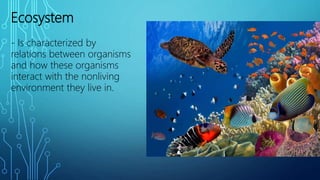
Ecosystem
- Is characterized by
relations between organisms
and how these organisms
interact with the nonliving
environment they live in.
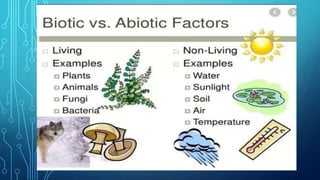
Ecosystem is formed by:
• Biotic (living) components
• Abiotic (nonliving) components
- Energy, water, nutrients, temperature,
humidity, atmosphere and soil condition.
Ecological Structure
A community is an association or interaction of two or more
populations of different species in an area.
Community are found in place called habitats, the areas
where the abiotic components present are suited for the
needs of certain populations in a community.
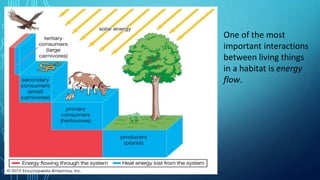
One of the most
important interactions
between living things
in a habitat is energy
flow.
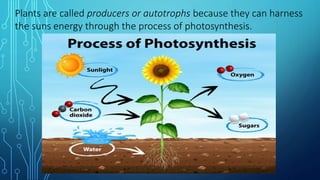
Plants are called producers or autotrophs because they can harness
the suns energy through the process of photosynthesis.
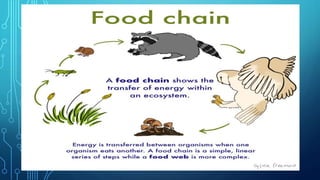
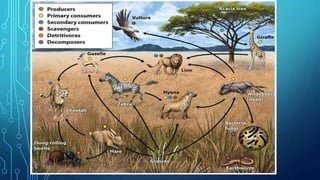
Food web – is the natural interconnection of food
chain.
Decomposers such as bacteria, fungi, and worms also
play an important role.
Trophic level – the position each organism occupies in the
chain.
Food chain – the sequencing on how energy is passed from
producers to consumers.
Ecological Balance
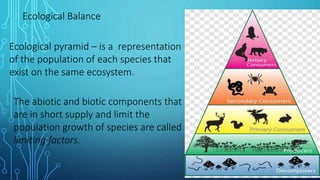
Ecological pyramid – is a representation
of the population of each species that
exist on the same ecosystem.
The abiotic and biotic components that
are in short supply and limit the
population growth of species are called
limiting factors.
Ecological Collapse
When the ecological balance is greatly disturbed, ecological
collapse may occur. This is characterized by the mass
extinction of different species in a community.

Ecosystem

  • 1.
  • 2.
    Ecosystem - Is characterizedby relations between organisms and how these organisms interact with the nonliving environment they live in.
  • 3.
    Ecosystem is formedby: • Biotic (living) components • Abiotic (nonliving) components - Energy, water, nutrients, temperature, humidity, atmosphere and soil condition.
  • 5.
    Ecological Structure A communityis an association or interaction of two or more populations of different species in an area. Community are found in place called habitats, the areas where the abiotic components present are suited for the needs of certain populations in a community.
  • 6.
    One of themost important interactions between living things in a habitat is energy flow.
  • 7.
    Plants are calledproducers or autotrophs because they can harness the suns energy through the process of photosynthesis.
  • 8.
    Food web –is the natural interconnection of food chain. Decomposers such as bacteria, fungi, and worms also play an important role. Trophic level – the position each organism occupies in the chain. Food chain – the sequencing on how energy is passed from producers to consumers.
  • 11.
    Ecological Balance Ecological pyramid– is a representation of the population of each species that exist on the same ecosystem. The abiotic and biotic components that are in short supply and limit the population growth of species are called limiting factors.
  • 12.
    Ecological Collapse When theecological balance is greatly disturbed, ecological collapse may occur. This is characterized by the mass extinction of different species in a community.